Atlas 2026
Atlas 2026 is Boston Dynamics' next-generation fully electric humanoid robot, designed to push the boundaries of bipedal locomotion, dexterous manipulation, and autonomous operation in real-world industrial environments. Building on decades of research and the earlier hydraulic Atlas platform, the 2026 iteration is engineered for logistics, manufacturing, and research applications where human-like mobility and strength are required. Manufactured by Boston Dynamics — a subsidiary of Hyundai Motor Group — Atlas 2026 reportedly combines advanced perception systems, whole-body control algorithms, and a fully electric actuator architecture. The robot is positioned as a platform for human-robot collaboration and is being piloted in partnership with select industrial customers, though broad commercial availability details remain limited as of public reporting.
Overview and Use Cases
Atlas 2026 represents Boston Dynamics' most advanced publicly demonstrated humanoid robot to date. Unlike its predecessor — which relied on a hydraulic actuation system — the current Atlas platform uses an all-electric architecture, reportedly enabling quieter operation, improved energy efficiency, and more precise joint control. The robot is designed to operate in unstructured, dynamic environments alongside human workers.
Primary target use cases include:
- Logistics and warehousing: picking, sorting, and transporting items in facilities that were not purpose-built for automation.
- Manufacturing: performing assembly or inspection tasks that require dexterous manipulation and situational awareness.
- Research and development: serving as a testbed for whole-body control, AI-driven motion planning, and human-robot interaction research.
Key Technical Details
Boston Dynamics has not published a comprehensive public datasheet for Atlas 2026 as of available reporting. However, based on official demonstrations and press materials, the robot is understood to feature:
- A fully electric actuator system replacing the earlier hydraulic design, with custom rotary and linear actuators throughout the body.
- Advanced perception: an onboard sensor suite reportedly including depth cameras and other vision systems to support real-time environment mapping and object recognition.
- Whole-body manipulation: the ability to coordinate locomotion and arm movements simultaneously, enabling tasks such as lifting, carrying, and placing objects while walking.
- Specific figures for payload capacity, battery runtime, and top speed have not been officially confirmed and should not be assumed from earlier platform generations.
Comparison to Similar Robots
Within Boston Dynamics' portfolio, Atlas 2026 is the flagship humanoid research and industrial platform, distinct from Spot (a quadruped inspection robot) and Stretch (a wheeled mobile manipulator focused on box-moving in logistics). Atlas targets tasks requiring bipedal mobility and human-like dexterity that Spot and Stretch cannot address.
Among competitors, Atlas 2026 operates in an increasingly crowded humanoid robot segment. Notable comparators include:
- Figure 02 (Figure AI) and Optimus (Tesla): both are fully electric humanoid platforms targeting manufacturing and general labor.
- Unitree H1 / G1: lower-cost humanoid platforms from China, aimed at research and lighter-duty tasks.
- Agility Robotics Digit: a bipedal robot focused on logistics, already in limited commercial deployment.
Atlas is generally regarded as among the most mechanically capable humanoid robots publicly demonstrated, though competitors are closing the gap rapidly.
Market Context and Target Buyers
Atlas 2026 is positioned at the premium end of the humanoid robot market. Boston Dynamics has historically targeted enterprise and research customers rather than the consumer segment. As of public reporting, the robot is not listed with a public retail price, and access has been managed through partnership programs rather than open-market sales.
Target buyers are expected to include:
- Large automotive and electronics manufacturers seeking to automate complex assembly lines.
- Logistics operators managing high-SKU warehouses.
- University and corporate research labs studying advanced robotics and AI.
Deployments and Notable Customers
Boston Dynamics has publicly announced a pilot program with Hyundai Motor Group facilities, leveraging the parent company's manufacturing infrastructure as a real-world testbed for Atlas. Additional customer deployments, if any, had not been broadly disclosed as of available public reporting. Boston Dynamics has shared demonstration videos showing Atlas performing tasks such as tool handling, object sorting, and navigating cluttered environments, but these should be understood as capability demonstrations rather than confirmed production deployments.
Future Outlook
The humanoid robot market is projected to grow substantially through the late 2020s, driven by labor shortages and advances in AI-based motion planning. Boston Dynamics' long research heritage and Hyundai's manufacturing scale position Atlas 2026 as a serious contender for early industrial adoption. Key milestones to watch include broader commercial availability announcements, expanded customer pilot results, and further improvements to manipulation dexterity and autonomous task completion. The pace at which Boston Dynamics can transition Atlas from a demonstration platform to a scalable commercial product will be a defining factor in its market impact.
Related videos

New AI Robots 2026: Figure, Atlas, China Expo and Human-Level Hands
PRO ROBOTS

Do robots need shoes? | Ask a Roboticist #atlas #robot #bostondynamics
Boston Dynamics

Boston Dynamics Atlas Gets MASSIVE Upgrade… Football Moves, Heavy Lifts & AI Learning
The AI Nexus

Whirlybird | Atlas | Boston Dynamics
Boston Dynamics

Boston Dynamics ATLAS Unlocks 4 New Skills Watching Football ($41,000 LUNA)
AI News

Boston Dynamics’ New Upgraded ATLAS Just Went BEAST MODE
AI Revolution
Related entries
 Robot
RobotG1
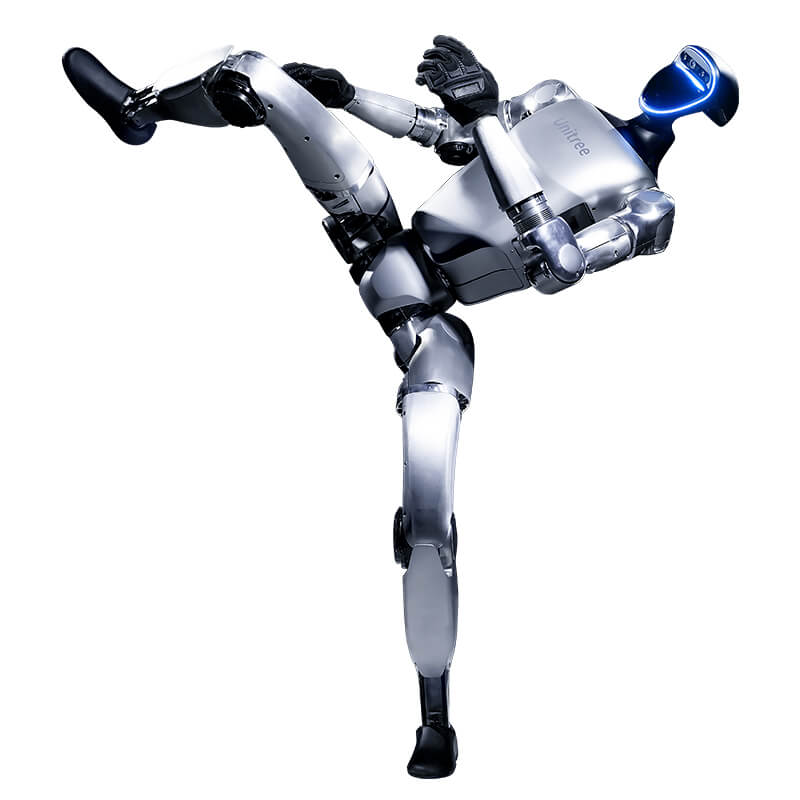
The Unitree G1 is a general-purpose humanoid robot developed by Unitree Robotics, a Chinese robotics company headquartered in Hangzhou. Standing approximately 1.32 meters tall and weighing around 35 kilograms, the G1 features 23 degrees of freedom and is capable of walking, running, recovering from falls, and performing dexterous manipulation tasks. It ships with SDK access, making it accessible to researchers and small-business operators seeking an affordable entry point into humanoid robotics. The G1 is widely regarded as one of the most competitively priced serious humanoid platforms available as of public reporting, positioning Unitree as a disruptive force in a market historically dominated by far more expensive systems. Its combination of mobility, recoverability, and open software access has attracted attention from academic institutions, robotics developers, and automation-focused startups worldwide.
4,312 views
 Robot
RobotUniversal Robots UR5e
The Universal Robots UR5e is a six-axis collaborative robot arm (cobot) belonging to Universal Robots' e-Series product line. Designed for light-to-medium industrial and laboratory tasks, it is widely used in assembly, pick-and-place, machine tending, quality inspection, and lab automation workflows. Universal Robots, a Danish company and a subsidiary of Teradyne, is one of the most recognized names in the collaborative robotics market. The UR5e is programmed using Universal Robots' PolyScope graphical interface on a teach pendant, making it accessible to operators without deep robotics expertise. Its built-in force/torque sensing, tool-center-point control, and a broad ecosystem of certified end-effectors and accessories (the UR+ platform) have made it a popular mid-range cobot choice across manufacturing, electronics, food handling, and research sectors.
3,838 views
 Robot
RobotQuicktron M100
The Quicktron M100 is a heavy-duty autonomous mobile robot (AMR) belonging to Quicktron Robotics' M-Series product line. It is designed for demanding material handling tasks in warehouses, distribution centers, and manufacturing environments, using an integrated lift mechanism to transport shelves and pallets autonomously across facility floors. Quicktron Robotics, a company with roots in China and a global commercial presence, positions the M100 as a high-capacity solution for operations that require moving heavier loads than lighter AMR models can accommodate. The M100 targets logistics operators and manufacturers seeking to automate goods-to-person or pallet-movement workflows at scale.
437 views
 Robot
RobotNVIDIA Jetson Orin NX
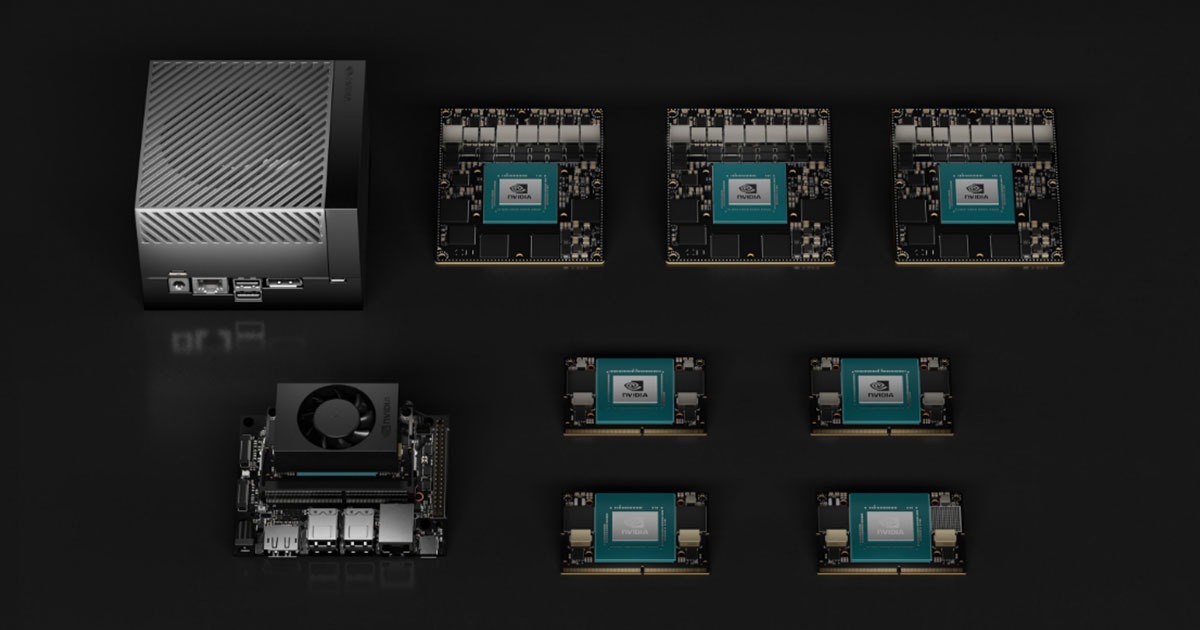
The NVIDIA Jetson Orin NX is a compact, SO-DIMM form-factor edge AI compute module designed for robotics, autonomous machines, and embedded vision applications. Manufactured by NVIDIA, it is available in 8 GB and 16 GB memory configurations and pairs an Ampere-architecture GPU with an 8-core Arm Cortex-A78AE CPU to deliver high-throughput on-device inference without relying on cloud connectivity. Positioned within NVIDIA's broader Jetson Orin family, the Orin NX targets developers and system integrators who need a balance of performance and power efficiency in a small footprint. It is commonly used in applications such as industrial inspection, autonomous mobile robots (AMRs), drone navigation, and smart edge devices where real-time AI inference is critical.
404 views