Let's compare
Mini 2
DJI
Not yet assessed
- Height
- —
- Payload
- —
- Verified autonomy
- not assessed
- Real deployment
- not assessed
- Status
- —
- Price
- —
Mini 2
DJIThe system labeled 'Mini 2' in these facts is primarily the DJI Mini 2 consumer camera drone: a sub-249g, 4K/30fps quadcopter with a 3-axis gimbal, OcuSync 2.0 (10km range), and ~31-minute flight time. However, the extracted facts span multiple unrelated 'Mini 2' products and research systems — including the Garmin InReach Mini 2 satellite communicator, the DJI Mic Mini 2 wireless microphone, the miniUGV2 research robot, the MiNI-Q quadruped, and others — making a clean single-system synthesis impossible. The DJI Mini 2 drone is the most consistently documented subject across commerce, community, and video sources, and is treated as the primary subject here. It operates autonomously for its aerial photography/videography task via the DJI Fly app, with the human pilot providing directional intent and monitoring but not physically performing the flight task.
Availability
Specification
- DJI Mini 2 drone — weight
- 249 g (under 250 g threshold, no registration required in many jurisdictions)
- DJI Mic Mini 2 — transmission range
- Up to 400m (2TX+RX); 300m (mobile RX); 200m (mixed mode)
- Garmin inReach Mini 2 — price
- $249.99 (Amazon) to $399.99 (dive retailer); $284 seen at discount (29% off)
- Garmin inReach Mini 2 — subscription
- Required for messaging, tracking, SOS; from $11.95/month; annual plan ~$178/year ($14.86/month)
- Garmin inReach Mini 2 — battery life
- Up to 14 days (10-min tracking, clear sky); up to 4 days (moderate tree cover); up to 30 days (30-min tracking/power-saving)
Price
No public price — contact the supplier for a quote.
Good · Bad · Ugly
Evidence-graded claims from the DJI deep report
DJI holds 70–80% of the global civil drone market and approximately 96% of the U.S. market (pre-FCC restrictions).
Multiple independent analyses and research sources [10][13][16] corroborate DJI's dominant market position, though the 96% U.S. figure is pre-restriction and current share post-FCC action is unverified.
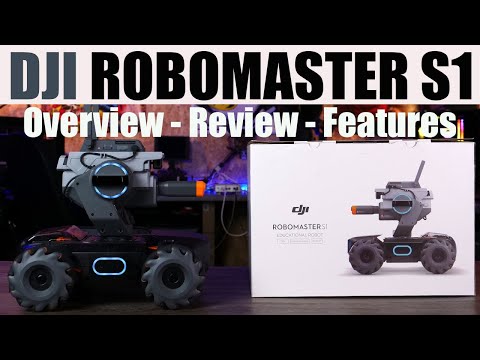
from DJI deep report →The DJI Robomaster S1 supports full onboard autonomy via a ROS2-based stack, including zero-shot sim-to-real multi-agent reinforcement learning (MARL) policy transfer.
An independent academic paper from the University of Cambridge [21] confirms the Robomaster S1 was used as a customized research platform running a ROS2-based full onboard autonomy stack with successful sim-to-real MARL transfer, though this reflects research-lab capability, not a commercial product claim.
from DJI deep report →
DJI claims the Lito X1 and Lito 1 feature omnidirectional obstacle sensing active down to 5 lux, and the Matrice 400 features power-line-level obstacle sensing.
Specs are sourced from DJI's own press releases [12] and official enterprise blog [7]; no independent third-party lab test or field validation of the 5-lux omnidirectional sensing or power-line detection performance has been identified in the dossier.
from DJI deep report →The DJI FlyCart 100 is a commercially deployed all-in-one intelligent drone delivery system.
The FlyCart 100 is listed on DJI's official website [1] as a product, but the dossier contains no independent evidence of commercial-scale deployment, customer outcomes, or regulatory approval for delivery operations in any jurisdiction.
from DJI deep report →
DJI's Return-to-Home (RTH) and autonomous safety features are reliable across its consumer drone lineup.
Multiple independent community reports [30][31][33][35] document RTH failures, remote controller transmission failures at low altitude, and tracking failures in forested environments, directly contradicting vendor marketing of reliable autonomous safety features.
from DJI deep report →DJI has deployed 600,000+ agricultural drones across 100+ countries, saving 410 million tons of water and cutting 51 million tons of CO2 emissions.
These figures originate exclusively from a DJI Agriculture press release [11]; no independent verification of the deployment count, water savings, or emissions reduction figures is present in the dossier.
from DJI deep report →
About the company
Editorial directory of real robot products from leading global manufacturers. Each entry links to the manufacturer's official page.