DJI

DJI (SZ DJI Technology Co., Ltd.)
From hobbyist garage to global infrastructure: how a Shenzhen drone maker captured 70–80% of civil aviation and why that dominance is now a geopolitical liability
| Field | Detail |
|---|---|
| Report status | Part 1 of 2 (Sections 1–7); Part 2 to follow |
| Coverage date | 21 June 2026 |
| Company stage | Fully Commercial |
| Editorial standard | Evidence-disciplined; claims separated by type throughout |
How to Read This Report
This report applies a strict four-tier evidence taxonomy throughout. Every substantive claim is tagged or contextualised according to the following scheme:
| Label | Meaning |
|---|---|
| VERIFIED | Regulatory filings, official product documentation, named-customer confirmation, peer-reviewed or primary research, or corroboration across multiple independent sources |
| COMPANY CLAIM | Stated by DJI or its representatives; not independently verified in the supplied evidence base |
| EDITORIAL INFERENCE | Reasoned conclusion drawn from the pattern of public evidence; clearly flagged as the analyst's interpretation |
| UNKNOWN | Not publicly disclosed or not present in the supplied research dossier |
A choreographed demo video is not treated as proof of autonomous capability. A shipment figure is not treated as proof of productive deployment. A partnership announcement is not treated as proof of a paying customer relationship. Where the dossier is thin, this report says so plainly rather than filling the gap with speculation.
Inline citations use bracketed numerals keyed to the Sources list in Section 14. Only URLs present in the supplied research dossier are cited.
01Executive Overview
DJI is the closest thing the commercial drone industry has to a structural monopolist. The Shenzhen-based manufacturer holds an estimated 70–80% share of the global civil drone market and, prior to the regulatory restrictions that began tightening in the United States from 2024 onward, commanded approximately 96% of the U.S. market 1013. Those figures are not the product of a single breakthrough product but of nearly two decades of relentless vertical integration: DJI designs its own flight controllers, image stabilisation gimbals, transmission systems, image sensors (in partnership), and the software stack that ties them together. No credible competitor has yet replicated that integration at comparable price points.
The company's commercial reach now spans four distinct market segments that share hardware DNA but serve radically different buyers. Consumer camera drones — the Neo, Mini, Mavic, and Flip lines — generate the brand recognition and the volume that funds everything else 13. Enterprise inspection platforms, anchored by the Matrice 350 RTK and Matrice 400, serve utilities, emergency services, and infrastructure operators who need reliable, repeatable autonomous missions rather than cinematic footage 78. Agricultural spraying drones, the AGRAS T100 and T70P, have reached a COMPANY CLAIM figure of 600,000 units deployed across more than 100 countries 11. And an emerging delivery segment, represented by the FlyCart 100, positions DJI for the logistics market that every major drone manufacturer is attempting to enter 1.
The single most consequential recent development is the 1.83 billion yuan (approximately $250 million USD) contract awarded by State Grid Corporation of China — the world's largest electric utility — for drone-based power-line inspection across 26 provinces 8. This is VERIFIED by an independent drone industry news source and represents the largest publicly confirmed enterprise drone contract in the industry's history. It validates dock-based autonomous operations at scale and anchors DJI's enterprise revenue in a way that no consumer product line can match for predictability.
Against that commercial strength sits a structural vulnerability that is not primarily technological. DJI faces escalating regulatory pressure in the United States, where it has been placed on the FCC's Covered List and the Department of Defense's list of companies allegedly working with the Chinese military 1416. The practical consequence is that U.S. operators — including agricultural users who have built workflows around DJI hardware — face the prospect of operating without access to the dominant platform, with no alternative that matches DJI's reliability and ease of use at comparable cost 34. The geopolitical dimension of DJI's story is no longer a background risk; it is a first-order strategic constraint.
EDITORIAL INFERENCE: DJI's position in 2026 is paradoxical. Its technology lead is wider than it has ever been in the enterprise segment, its largest single contract has just been confirmed, and its consumer product cadence remains faster than any Western competitor. Yet the regulatory environment in its most important non-domestic market is deteriorating in ways that DJI cannot resolve through engineering. The company's medium-term trajectory depends less on what it builds than on decisions made in Washington and Beijing.
Latest news
02The DJI Story
Origins and the Founding Vision
SZ DJI Technology Co., Ltd. was founded in 2006 in Shenzhen by Frank Wang (Wang Tao), then a student at the Hong Kong University of Science and Technology 10. Wang's founding thesis was specific: that the flight controller — the brain of a remote-controlled helicopter — was the component that most limited what hobbyists and professionals could do with aerial platforms. His first products were flight controller systems sold to the RC hobbyist market, not complete aircraft. This origin matters because it explains the company's subsequent strategy: DJI has consistently competed on the intelligence of its systems rather than the airframe, and it has consistently chosen to own the full stack rather than supply components to third parties.
The transition from flight controller supplier to complete aircraft manufacturer came in the early 2010s with the Phantom series. The original Phantom, launched in 2013, was not the first consumer drone but it was the first to combine a ready-to-fly form factor, GPS-stabilised hovering, and a camera mount in a package that a non-specialist could operate. It created the consumer drone category as it is understood today. The Phantom 4, released in 2016, added obstacle avoidance — a feature that at the time required dedicated hardware and represented a meaningful engineering achievement for a sub-$1,500 product.
Growth, Funding, and Scale
DJI's funding history is relatively sparse for a company of its scale, which is itself informative. Total external funding through 2018 reached approximately $1.075 billion, with a $1 billion Series D in April 2018 being the dominant event 13. The company has not pursued an IPO as of the coverage date, and its ownership structure — with Wang retaining significant control — has allowed it to pursue long product development cycles and aggressive pricing strategies that a publicly listed company under quarterly earnings pressure might not sustain.
The workforce stands at approximately 14,000 employees 10. For context, that is a relatively lean headcount for a company with 8,600+ patents (65% of which are classified as invention patents rather than utility or design patents) 10, a global service network of 3,500 centres 11, and a product portfolio spanning consumer electronics, precision agriculture, and industrial inspection. The implication is a high degree of automation in manufacturing and a concentrated R&D model.
The Patent Moat
The 8,600+ patent figure, cited by an independent third-party analysis 10, deserves scrutiny. Patent counts are an imperfect proxy for technological depth — a company can accumulate patents defensively, offensively, or as a byproduct of genuine innovation. In DJI's case, the composition matters: the 65% invention patent ratio suggests a portfolio weighted toward novel technical contributions rather than incremental design variations. The areas of concentration — flight control algorithms, gimbal stabilisation, obstacle avoidance, transmission systems, and agricultural spray systems — correspond directly to the product categories where DJI has maintained durable performance advantages over competitors. EDITORIAL INFERENCE: The patent portfolio functions as both a genuine moat and a litigation deterrent; it has not, however, prevented Chinese domestic competitors from narrowing the gap in specific segments.
The Robomaster Programme and Research Credibility
One aspect of DJI's story that receives less attention in consumer coverage is the Robomaster programme — a robotics competition platform that has generated genuine academic research use. The DJI Robomaster S1 ground robot has been used as a customised research platform at the University of Cambridge, running a ROS2-based full onboard autonomy stack and supporting zero-shot sim-to-real multi-agent reinforcement learning policy transfer 21. This is VERIFIED by a peer-reviewed academic paper. The Robomaster platform's use in serious robotics research is not merely a marketing exercise; it represents a credible bridge between DJI's commercial hardware and the academic community, and it has produced publishable results in multi-agent coordination — a technically demanding domain.
The Regulatory Inflection Point
The company's trajectory changed materially when U.S. regulatory pressure moved from background noise to operational constraint. DJI's placement on the FCC's Covered List and the DoD's list of companies with alleged Chinese military connections 1416 has had cascading effects: U.S. government agencies cannot procure DJI equipment, several state legislatures have introduced or passed restrictions, and agricultural operators have begun reporting direct economic impacts — one community report cites $30,000 per year in lost productivity on a single farm due to the ban 34. DJI has responded by filing a security report with the FCC 19 and seeking extensions to compliance deadlines 18, but the regulatory trajectory has not reversed.
The military use dimension adds a layer of complexity that DJI has struggled to manage. Independent reporting documents that Israeli Defence Forces deployed thousands of DJI Avata drones in Gaza despite U.S. restrictions 14. Whether DJI has any operational control over how its products are used once sold into grey-market or third-party supply chains is a legitimate question, but the association compounds the reputational and regulatory challenge.
03Product Portfolio: What DJI Actually Sells
DJI's product portfolio is broader than most observers appreciate. The company is frequently described as a "drone maker," but the portfolio spans six distinct hardware categories, each with its own competitive dynamics, customer base, and autonomy profile.
Consumer Camera Drones
The consumer drone line is DJI's highest-volume segment and its primary brand vehicle. The current lineup spans a price range from $169 to well above $1,000 and is segmented by weight class, sensor capability, and intended use case.
| Model | Price (USD) | Key Sensor | Max Flight Time | Obstacle Sensing | Notable Autonomy Features |
|---|---|---|---|---|---|
| DJI Neo | $169–$199 | 1/2" CMOS, 12MP, 4K/30fps | 18 min | Downward only | Palm takeoff, gesture control, subject tracking |
| DJI Mini 4K | $299 | Not specified in dossier | Not specified | Not specified | Standard flight modes |
| DJI Mini 3 | $419 | 1/1.3" CMOS, 4K HDR | 38–51 min | Not specified | Intelligent flight modes |
| DJI Flip | $439–$639 | Not specified | 31 min | Not specified | 360° rotating camera, intelligent tracking |
| DJI Lito 1 | Not specified | 1/2" CMOS, 48MP | Not specified | Omnidirectional, 5 lux | Follow Mode, Focus Mode, Hyperlapses |
| DJI Lito X1 | Not specified | 1/1.3" CMOS, 48MP | Not specified | Omnidirectional + forward LiDAR, 5 lux | Follow Mode, Focus Mode, Hyperlapses, D-Log M |
Sources: 12312
The DJI Neo warrants specific attention because it represents DJI's most aggressive push toward genuinely controller-free autonomous operation in the consumer segment. At $169–$199, it is the cheapest product in the lineup and is designed to operate via gesture controls and autonomous tracking modes without a remote controller 2. VERIFIED: The Neo has downward-only obstacle sensing, which means it detects obstacles below the aircraft but not in front, behind, or to the sides 2. Community reports on comparable DJI consumer models document tracking reliability issues in complex environments 3335. The "fully autonomous selfie drone" characterisation in DJI's marketing is defensible for the specific task of aerial selfie photography but overstates the safety robustness of the system.
The Lito X1 and Lito 1, launched in 2026, represent a new beginner-oriented line with notably more capable sensors than the Neo — the Lito X1 includes forward-facing LiDAR in addition to omnidirectional optical obstacle sensing active to 5 lux 12. The 42GB internal storage, O4 transmission, and 10-bit colour profiles (Rec. 709, D-Log M) on the Lito X1 position it as a serious imaging tool despite the "beginner-friendly" marketing framing 12. EDITORIAL INFERENCE: The Lito line appears designed to capture the segment of buyers who want the Neo's simplicity but the Mini 3's image quality, at a price point between the two.
The DJI Flip's 360° rotating camera with replaceable lenses and sub-249g weight class is a meaningful design departure from the standard fixed-gimbal architecture 233. The sub-249g threshold matters in most regulatory jurisdictions because it exempts the aircraft from registration requirements. Community review of the Flip's tracking reliability is mixed: the intelligent tracking feature exists and functions, but independent user reports describe side and direction tracking as unreliable in practice, with the system tending to revert to rear tracking as the subject changes position 33.
Enterprise Inspection Platforms
The enterprise segment is where DJI's engineering ambition is most visible and where the commercial stakes are highest.
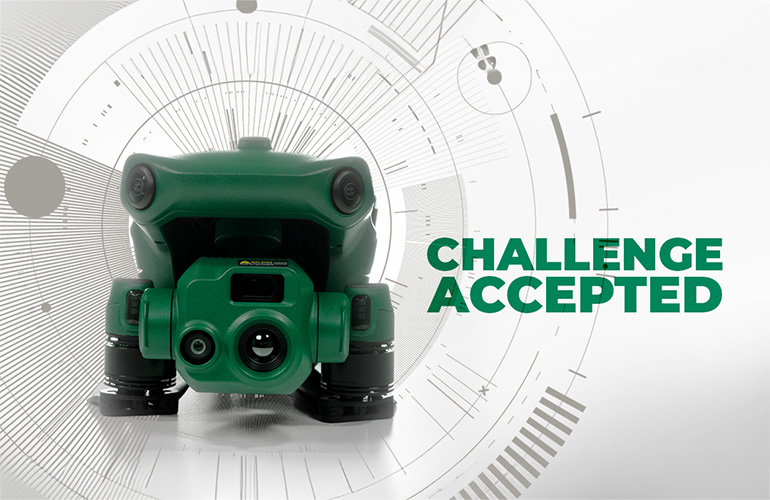
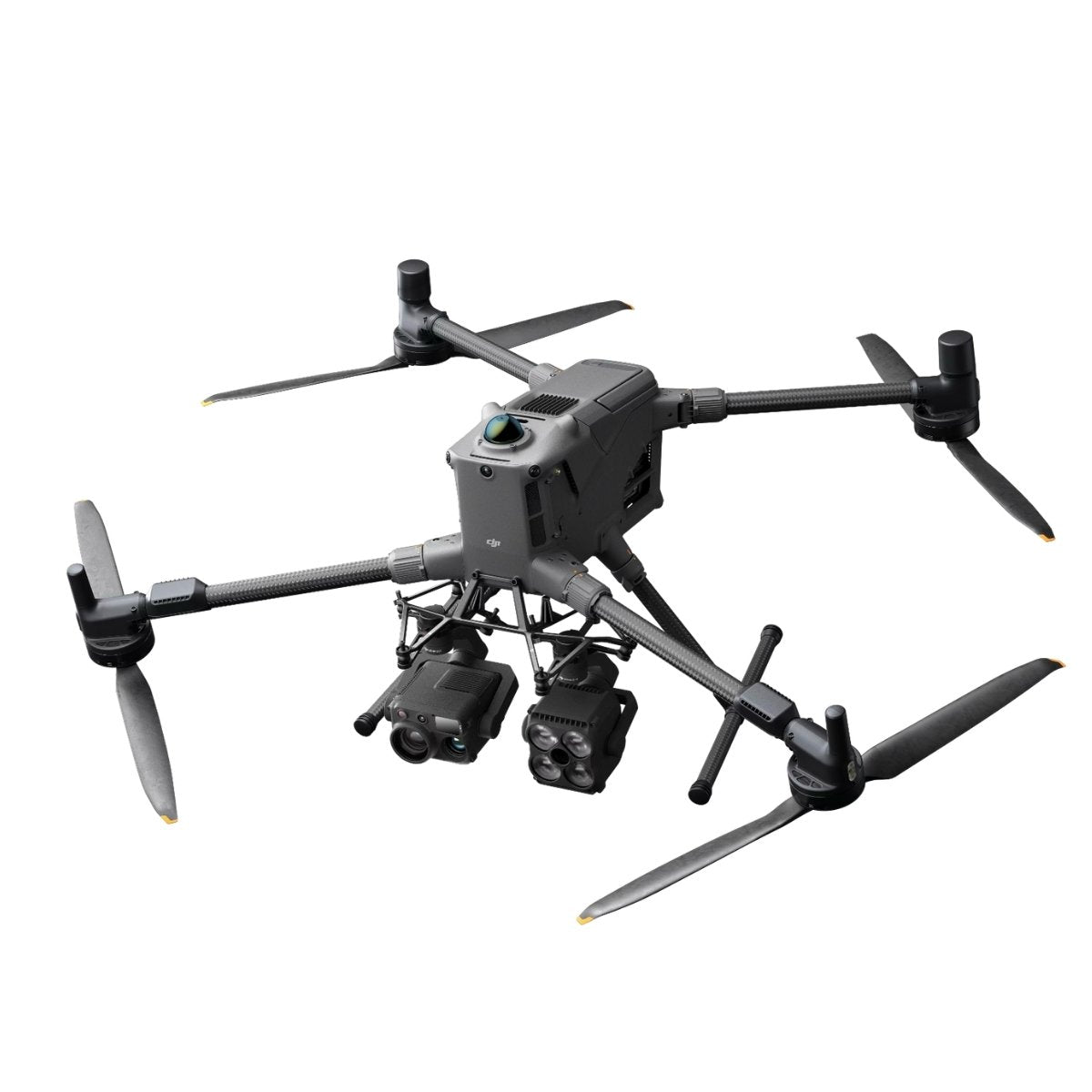
The Matrice 400 is the current flagship enterprise airframe. VERIFIED specifications include power-line-level obstacle sensing, a 40km transmission range when paired with the O4 Ground Station, and compatibility with the DJI Dock autonomous charging infrastructure 78. The O4 Ground Station itself is a 12-antenna omnidirectional array with automatic multi-band selection, 7W standby power, all-weather construction, and dual operating modes: Gateway Mode (connecting to FlightHub 2 fleet management software via Ethernet or cellular) and Relay Mode (extending transmission range) 7.
The Matrice 350 RTK remains in the lineup alongside the 400, and the $250M State Grid contract specifies both platforms alongside the Mavic 3T and Zenmuse L2 LiDAR payload 8. The dock-based deployment model — where the drone launches autonomously from a weatherproof charging dock, executes a pre-programmed inspection mission, and returns to the dock for autonomous battery recharging — enables 24/7 operations without a human operator present for each mission. VERIFIED: This operational model is confirmed by the State Grid contract details and by DJI's enterprise blog documentation of the O4 Ground Station 78.
A June 2026 software update extended the range of dock-based Matrice missions, with DJI Dock 3 receiving an update enabling longer-range autonomous operations 9. This is VERIFIED by independent drone industry reporting.
Agricultural Drones
The AGRAS T100 and T70P are purpose-built spraying platforms with integrated tank systems, precision nozzle arrays, and terrain-following radar 1. COMPANY CLAIM: DJI Agriculture reports 600,000+ agricultural drones deployed across 100+ countries, 600,000+ trained operators, 3,500 service and repair centres, and 7,000+ certified instructors 11. These figures are self-reported in a press release and have not been independently verified in the supplied dossier. The environmental impact figures — 410 million tonnes of water saved and 51 million tonnes of CO2 emissions cut by end of 2025 — are similarly COMPANY CLAIM, with no independent corroboration in the supplied evidence base 11.
What is VERIFIED is the existence of a substantial global service infrastructure (3,500 centres) and the scale of operator training programmes, both of which are consistent with a genuinely large installed base even if the precise unit count cannot be independently confirmed.
Gimbals and Cameras
DJI's stabilisation hardware is a significant business in its own right and is the segment most insulated from drone-specific regulatory risk.
| Product | Price (from) | Category |
|---|---|---|
| DJI RS 4 Mini | $309 | Handheld gimbal |
| DJI RS 5 | $569 | Handheld gimbal |
| DJI RS 4 Pro | $869 | Handheld gimbal |
| DJI Ronin 2 | Not specified | Professional cinema gimbal |
| DJI Osmo Action 4/6 | Not specified | Action camera |
| DJI Osmo Pocket 3 | Not specified | Compact camera |
| DJI Osmo Mobile 8 | Not specified | Smartphone gimbal |
| DJI Osmo 360 | Not specified | 360° camera (8K) |
Sources: 1315
The DJI Ronin 2 received a 2025 Scientific and Technical Award — VERIFIED by DJI's official website 15. This is a meaningful credential in the professional cinema market, where DJI competes against established names such as Freefly and Tilta.
Delivery
The DJI FlyCart 100 is described on the official website as an "all-in-one intelligent transportation flagship" 1. Beyond the product name and positioning, the supplied dossier contains limited technical specification detail for the FlyCart 100. UNKNOWN: Payload capacity, range, regulatory approval status in specific markets, and any confirmed commercial deployment customers are not disclosed in the supplied evidence base.
Products & versions


04Technology Stack: Strengths and the Work That Remains
Flight Control and Stabilisation
DJI's foundational competence is flight control. The company's flight controller lineage stretches back to its founding product, and the current generation — embedded in platforms from the $169 Neo to the Matrice 400 — represents nearly two decades of iterative refinement. The practical result is hover stability and wind resistance that independent reviewers consistently rate as best-in-class at each price point. This is not a COMPANY CLAIM; it is an EDITORIAL INFERENCE drawn from the consistent pattern of independent reviews and the absence of credible competitor products that match DJI's stability performance at equivalent prices.
The three-axis gimbal technology, which DJI has developed in parallel with its drone hardware, is the component most responsible for the quality of aerial footage. The RS series gimbals bring the same stabilisation architecture to handheld and cinema applications. The Ronin 2's Scientific and Technical Award 15 suggests that the professional cinema community — a demanding and technically literate audience — regards DJI's stabilisation engineering as genuinely distinguished.
Transmission: The O4 System
The O4 transmission system is a significant competitive differentiator in the enterprise segment. The O4 Ground Station's 12-antenna omnidirectional array, automatic multi-band selection, and 40km range with the Matrice 400 7 represent capabilities that no Western competitor has publicly matched at comparable system cost. The all-weather, maintenance-free design and 7W standby power consumption are operationally important for dock-based deployments where the ground station must remain active continuously without human attendance.
The dual-mode architecture — Gateway Mode for fleet management integration and Relay Mode for range extension — gives enterprise operators flexibility in how they configure their networks 7. EDITORIAL INFERENCE: The O4 Ground Station is not merely a radio; it is the infrastructure layer that makes dock-based autonomous operations viable at scale, and its release represents a meaningful step toward treating drone operations as a managed service rather than a series of discrete piloted flights.
Obstacle Avoidance: A Tiered Reality
DJI's obstacle avoidance capability is real but highly stratified across the product line, and the gap between the marketing narrative and the community-reported reality is widest in the consumer segment.
| Product Tier | Obstacle Sensing Specification | Independent Evidence |
|---|---|---|
| Matrice 400 | Power-line-level obstacle sensing | VERIFIED (enterprise blog, contract docs) 78 |
| Lito X1 | Omnidirectional optical + forward LiDAR, 5 lux | VERIFIED (official press release) 12 |
| Lito 1 | Omnidirectional optical, 5 lux | VERIFIED (official press release) 12 |
| DJI Mini 3 / Flip | Not fully specified in dossier | Community reports note RTH unreliability, tracking failures in forested environments 3335 |
| DJI Neo | Downward only | VERIFIED (independent review) 2 |
The conflict between DJI's marketing of omnidirectional sensing on high-end models and community reports of reliability failures on mid-range models is partly a product-tier mismatch — DJI does not claim omnidirectional sensing for the Neo — but it is also a genuine reliability gap. Return-to-home failures, remote controller transmission failures at low altitude, and follow mode failures in environments with dense vegetation are documented by multiple independent community sources 303133. These are not isolated anecdotes; they represent a pattern across the r/dji and r/drones communities.
EDITORIAL INFERENCE: DJI's obstacle avoidance technology is genuinely capable on its flagship platforms and genuinely limited on its entry-level products. The company's marketing does not always make this distinction clearly, and buyers who purchase mid-range products on the basis of enterprise-tier marketing language may encounter meaningful reliability shortfalls in real-world autonomous operation.
Autonomy Architecture: Consumer vs. Enterprise
The autonomy architecture differs fundamentally between the consumer and enterprise product lines, and conflating them produces misleading assessments.
Consumer drones execute pre-programmed flight modes — subject tracking, hyperlapse, point of interest orbits, waypoint missions — that are triggered by the operator and then run without continuous human input. The operator sets the parameters; the drone executes. This is genuine task-level autonomy for a narrow, well-defined set of tasks. It is not general-purpose autonomous navigation. The drone does not plan novel routes, adapt to unexpected environments, or make decisions outside its programmed mode repertoire.
Enterprise dock-based systems go further. The Matrice 400 with DJI Dock can execute a full inspection mission — launch, navigate to waypoints, capture imagery, return, land, and recharge — without any human operator present for the mission itself 78. The operator's role is mission planning (setting waypoints and parameters in FlightHub 2), scheduling, and reviewing the captured data. This is a materially higher level of operational autonomy than consumer tracking modes, and it is the architecture that justifies the State Grid contract's scale.
Software: FlightHub 2 and the Fleet Management Layer
FlightHub 2 is DJI's enterprise fleet management platform, integrating with the O4 Ground Station via the Gateway Mode 7. UNKNOWN: The specific feature set, pricing model, and scalability limits of FlightHub 2 are not detailed in the supplied dossier. What is VERIFIED is that it serves as the software layer connecting dock-based hardware to operator workflows, and that the State Grid contract — spanning 26 provinces — implies it has been validated at significant operational scale 8.
Research Platform Capabilities
The DJI Robomaster S1's use at the University of Cambridge for ROS2-based full onboard autonomy and zero-shot sim-to-real multi-agent reinforcement learning 21 demonstrates that DJI hardware can serve as a credible substrate for serious robotics research. The DJI Mini 3 Pro has been used in academic research at the University of Bonn for autonomous multi-UAV exploration, with a pipeline validated in simulation for safe exploration and map reconstruction under consumer-grade hardware constraints 23. These are VERIFIED by peer-reviewed academic papers.
EDITORIAL INFERENCE: The research use cases suggest that DJI's hardware abstraction layer is sufficiently open and documented to support third-party autonomy stacks, which is not a given for consumer electronics. This openness is a competitive asset in the research and advanced enterprise markets, even if it is not prominently marketed.
The Work That Remains
Several capability gaps are evident from the public evidence:
Reliability at scale in unstructured environments. Community evidence consistently documents failure modes in conditions that are routine for professional operators — dense vegetation, low-altitude urban environments, complex RF environments 303133. The gap between laboratory or controlled-environment performance and real-world reliability in edge cases is not unique to DJI, but it is a genuine limitation for operators who depend on autonomous features for safety-critical tasks.
Independent verification of agricultural autonomy claims. The AGRAS platform's spraying autonomy — terrain following, variable-rate application, obstacle avoidance in agricultural settings — is described in DJI marketing but has not been independently validated in the supplied dossier. UNKNOWN: Third-party agronomic studies of AGRAS performance in real field conditions are not present in the evidence base.
Delivery at commercial scale. The FlyCart 100 exists as a product, but UNKNOWN: no confirmed commercial deployment customers, regulatory approvals in specific markets, or operational performance data are present in the supplied dossier.
Software ecosystem depth. FlightHub 2's capabilities relative to competing fleet management platforms (Skydio Cloud, Autel Sky, third-party platforms) are UNKNOWN from the supplied evidence.
05Research, Papers, Authors and Labs
DJI occupies an unusual position in the research ecosystem: it is primarily a commercial hardware manufacturer, not a research institution, yet its platforms appear with notable frequency in academic robotics and autonomous systems literature. The research engagement takes two distinct forms — DJI hardware used as a research substrate by external academic groups, and DJI's own internal R&D reflected in its patent portfolio.
Academic Use of DJI Hardware
University of Cambridge — Multi-Agent Robotics
The most technically significant academic use of DJI hardware in the supplied dossier is the Cambridge RoboMaster project 21. Researchers at Cambridge used the DJI Robomaster S1 as a customised platform for multi-agent reinforcement learning research. The system runs a ROS2-based full onboard autonomy stack and supports zero-shot sim-to-real policy transfer for multi-agent coordination tasks. The peer-reviewed paper confirms ad-hoc peer-to-peer communication between units and validates the platform's suitability for scalable multi-robot research. VERIFIED 21.
This is a non-trivial research contribution. Zero-shot sim-to-real transfer — deploying a policy trained entirely in simulation directly to physical hardware without fine-tuning — is a hard problem in robotics, and the Cambridge team's success using DJI hardware as the physical substrate is a meaningful endorsement of the platform's controllability and sensor fidelity.
University of Bonn — Autonomous Multi-UAV Exploration
Researchers at the University of Bonn used the DJI Mini 3 Pro as the hardware platform for a perception-aware exploration pipeline for autonomous multi-UAV mapping 23. The research addresses the challenge of safe exploration and map reconstruction under the constraints of consumer-grade hardware — limited compute, limited sensor payload, weight restrictions. The pipeline was validated in simulation with the Mini 3 Pro as the target hardware. VERIFIED 23.
The significance here is methodological: the Bonn team chose the Mini 3 Pro specifically because of its consumer-grade constraints, treating those constraints as the research problem rather than working around them with more capable hardware. This reflects a broader trend in the academic UAV community toward making autonomous systems work within real-world cost and weight envelopes.
UAV-ROS Integration Research
A 2020 paper 22 addresses the integration of Linux, ROS, Android, and UAV platforms — a foundational software engineering challenge for researchers who want to deploy custom autonomy stacks on commercial drone hardware. While this paper predates the current product generation, it reflects the sustained academic interest in using DJI and comparable platforms as ROS-compatible research substrates.
RoboMatrix — Hierarchical Task Planning
The RoboMatrix paper 20 presents a skill-centric hierarchical framework for scalable robot task planning and execution in open-world environments. While this paper is not exclusively about DJI hardware, it represents the broader research context in which DJI platforms operate — the push toward general-purpose robot task planning that can be layered onto commercial hardware.
DJI's Internal Research Posture
UNKNOWN: DJI does not publish a formal research agenda, maintain a public research lab with named principal investigators, or release academic papers under a DJI institutional affiliation in the supplied dossier. The 8,600+ patent portfolio 10 is the primary public evidence of internal R&D activity, but patents are not peer-reviewed research and do not provide insight into the specific technical problems DJI is currently working on.
EDITORIAL INFERENCE: DJI's research model appears to be primarily proprietary and patent-oriented rather than open-publication-oriented. This is consistent with a company that competes on integrated hardware-software systems where publishing technical details would directly benefit competitors. The academic community engages with DJI hardware extensively, but DJI does not appear to engage reciprocally with the academic community through co-authored papers or open research programmes — at least not in ways visible in the public record.
Research Gaps and Limitations
The supplied dossier contains no peer-reviewed studies of DJI's enterprise autonomy systems — the dock-based inspection pipeline, the FlightHub 2 fleet management software, or the AGRAS agricultural autonomy stack. The academic literature that uses DJI hardware focuses on the hardware as a platform for third-party autonomy research, not on evaluating DJI's own autonomy software. This is an important distinction: the Cambridge and Bonn papers tell us that DJI hardware is a capable research substrate; they do not tell us anything about the reliability or capability of DJI's own autonomous flight software in the field.
Company-linked papers
Code & simulation
Datasets & benchmarks
06Media Evidence Library: What the Videos Prove
The supplied dossier includes six video sources. Applying the evidence discipline stated in the preface — a choreographed demo video is not proof of autonomous capability — each is assessed for what it actually demonstrates versus what it implies.
Video-by-Video Assessment
[24] DJI Lito X1 Crash Repair: Full Teardown Guide
This is a repair and teardown video, not a capability demonstration. What it proves: the Lito X1 is a physical product that exists, can be disassembled, and has internal components consistent with the specifications described in the official press release 12. It provides independent corroboration of the product's existence and physical construction. It does not prove autonomous capability.
[25] The Most Logical Drone DJI Ever Made | Lito X1 Full Review
An independent reviewer's assessment of the Lito X1. The title's editorial characterisation ("most logical") is the reviewer's opinion, not a verifiable claim. What the video proves: the Lito X1 is available for purchase and independent review, its features function sufficiently for a reviewer to complete a review, and the product matches the broad specification claims in the press release. It does not prove that autonomous tracking or obstacle avoidance performs reliably across diverse real-world conditions.
[26] DJI Mic Mini 2 Teardown
A disassembly video of the DJI Mic Mini 2 wireless microphone. What it proves: the product exists and has been independently examined. Relevant to the broader point that DJI's product portfolio extends well beyond drones into professional audio accessories. No autonomy implications.
[27] DJI Pocket 4 Pro Creator Combo First Look
A first-look review of the Pocket 4 Pro camera. What it proves: the product exists and is available for independent review. The "first look" format means the reviewer has had limited time with the product, reducing the evidential weight of any performance assessments. No autonomy implications.
[28] Snow, Rain, No Problem — First Flights with DJI Avata 360
This video is the most directly relevant to autonomy and reliability claims. The title implies all-weather performance. What it proves: the DJI Avata 360 can be flown in snow and rain conditions by an experienced pilot. What it does not prove: that autonomous flight modes perform reliably in those conditions, that obstacle avoidance functions correctly in precipitation, or that the demonstrated performance is representative of typical user experience. The "no problem" framing in the title is a marketing characterisation, not an engineering specification.
[29] DJI Neo 2 Review — A Leap Ahead Of Everything Else
An independent reviewer's assessment of the DJI Neo 2. The title's superlative claim ("leap ahead of everything else") is the reviewer's editorial characterisation. What the video proves: the Neo 2 exists, is available for independent review, and the reviewer found it sufficiently capable to warrant a positive assessment. The review context is consistent with the Neo 2 being an incremental improvement over the Neo rather than a categorical leap. The video does not independently verify autonomous tracking reliability in complex environments.
Summary Assessment
| Video | What It Proves | What It Does Not Prove |
|---|---|---|
| Lito X1 Teardown 24 | Product exists, internal construction consistent with specs | Autonomous capability or reliability |
| Lito X1 Review 25 | Product available, features functional for review | Tracking/avoidance reliability in diverse conditions |
| Mic Mini 2 Teardown 26 | Audio product exists | Nothing relevant to autonomy |
| Pocket 4 Pro First Look 27 | Camera product exists | Nothing relevant to autonomy |
| Avata 360 Weather Flight 28 | Aircraft flyable in precipitation by experienced pilot | Autonomous mode reliability in adverse weather |
| Neo 2 Review 29 | Product available, positive reviewer impression | Reliability claims, "leap ahead" characterisation |
EDITORIAL INFERENCE: The video evidence in the dossier is primarily useful for confirming product existence and broad feature availability. None of the six videos constitutes independent evidence of robust autonomous performance in real-world conditions. The most meaningful evidence for autonomous capability comes from the enterprise contract documentation 8 and the O4 Ground Station technical specification 7, neither of which is a video source.
Media library
07Commercial Reality
Revenue and Financial Position
UNKNOWN: DJI does not publish revenue figures, profit margins, or segment-level financial data. The company is privately held and has not filed for an IPO as of the coverage date. The most recent external funding event in the dossier is the $1 billion Series D in April 2018 13, suggesting the company has been self-funding from operations for at least eight years.
08Markets and Use Cases
DJI's commercial footprint spans five structurally distinct markets, each with different competitive dynamics, regulatory exposure, and growth trajectories. Understanding them separately is essential to any honest assessment of the company's durability.
Consumer Photography and Videography
This remains DJI's highest-volume segment by unit count and the origin of its brand recognition. The Mini series (Mini 3, Mini 4K, Mini 4 Pro), the Mavic 3 family, and the newer Flip and Lito X1 address a market of content creators, travel photographers, real-estate videographers, and hobbyists who want cinematic aerial footage without a commercial pilot licence. The sub-249g weight threshold — which exempts drones from registration requirements in the EU, UK, and several other jurisdictions — is a deliberate engineering constraint that DJI has turned into a product category. The Mini 3 at $419 2 and the Neo at $169–$199 1 bracket a price range that no Western competitor has matched at comparable image quality.
The consumer segment is also where DJI's regulatory exposure is most acute. In the United States, the FCC's designation of DJI as a national-security concern and subsequent restrictions have materially reduced the addressable market 16. Community reports document a $30,000-per-year economic impact on at least one agricultural operation forced to seek alternatives 34. The alternatives — including Skydio and various European platforms — are not yet competitive on price-to-performance for the consumer use case 34.
Professional Cinema and Broadcast
The RS gimbal series (RS 4 Mini at $309, RS 4 Pro at $869, RS 5 from $569) 13 and the Ronin 2 — which received a 2025 Scientific and Technical Award 15 — address professional cinematographers working with cinema cameras. The Osmo Pocket 3 and the forthcoming Pocket 4 Pro 27 target vloggers and documentary filmmakers who need compact stabilised footage. This segment is less exposed to drone-specific regulation and more insulated from geopolitical restrictions because the products are camera stabilisers rather than aircraft. Revenue contribution is meaningful but not publicly broken out.
Enterprise Inspection and Infrastructure
This is DJI's strategically most important segment by contract value and long-term defensibility. The $250 million State Grid Corporation contract — covering drone inspection across 26 Chinese provinces using Matrice 4T, Mavic 3T, and Zenmuse L2 payloads on Matrice 350 RTK and Matrice 400 platforms with dock-based 24/7 autonomous deployment 8 — is the clearest evidence that enterprise inspection has moved from pilot programme to industrial-scale procurement. The O4 Ground Station's 40km transmission range and all-weather design 7 are specifically engineered for the power-line and pipeline inspection use case, where human access is expensive and dangerous.
Beyond power utilities, the inspection use case extends to telecommunications towers, wind turbines, bridges, rail infrastructure, and oil and gas facilities. The Zenmuse L2 LiDAR payload enables centimetre-accurate 3D mapping that replaces or supplements traditional survey methods. The dock-based autonomous model — where the drone launches, completes its inspection route, returns to the dock, recharges, and repeats without human intervention — is the closest DJI comes to fully unattended industrial robotics 9.
The June 2026 update extending Dock 3 mission range 9 is consistent with a pattern of iterative capability expansion in this segment, suggesting DJI is actively competing for longer-range infrastructure inspection contracts.
Precision Agriculture
DJI Agriculture reports 600,000+ agricultural drones deployed across 100+ countries, 600,000+ trained operators, and 3,500 service and repair centres 11. These are self-reported figures from a press release and should be treated as company claims rather than independently verified facts, but the scale is broadly consistent with DJI's market position in China, where agricultural drone adoption has been policy-supported since 2016.
The AGRAS T100 and T70P are purpose-built spraying platforms with variable-rate application, terrain-following, and autonomous route planning. The use case is compelling in regions with labour shortages, large field sizes, and regulatory frameworks that permit BVLOS agricultural operations. China, Japan, South Korea, Brazil, and parts of Southeast Asia are the primary markets. In the United States, agricultural drone spraying faces additional FAA regulatory hurdles that have slowed adoption independently of the DJI-specific restrictions.
The environmental impact figures DJI cites — 410 million tonnes of water saved and 51 million tonnes of CO2 emissions cut 11 — are unverified marketing claims with no independent corroboration in the available evidence. They should not be cited as established facts.
Cargo and Delivery
The FlyCart 100 represents DJI's entry into the drone delivery market 1. This is the least commercially mature segment in DJI's portfolio. Drone delivery globally remains constrained by regulatory frameworks (BVLOS approvals, urban airspace management), battery energy density, payload economics, and public acceptance. DJI has not published customer deployments, revenue figures, or operational data for the FlyCart 100 in the available evidence. The product exists and is listed on the official site; whether it has achieved meaningful commercial deployment is not publicly disclosed.
Use Case Summary
| Market | Primary Products | Maturity | Key Constraint |
|---|---|---|---|
| Consumer photography | Neo, Mini 3/4K, Flip, Mavic 3, Lito X1 | Fully commercial, high volume | U.S. regulatory restrictions |
| Professional cinema | RS series, Ronin 2, Osmo Pocket | Fully commercial | Competition from Zhiyun, Tilta |
| Enterprise inspection | Matrice 400/350 RTK, Matrice 4T, Dock, O4 GS | Scaling rapidly | Geopolitical exclusion from Western markets |
| Precision agriculture | AGRAS T100, T70P | Mature in Asia, early in West | FAA BVLOS rules, U.S. restrictions |
| Cargo delivery | FlyCart 100 | Early commercial | Regulatory, economics, public acceptance |
09Competitive Landscape
DJI's competitive position is unusual in the robotics and technology industry: it holds a dominant share in a market it effectively created for the mass consumer, while simultaneously facing existential regulatory pressure in its largest Western market. The competitive analysis must therefore distinguish between the threat landscape in China and allied markets versus the threat landscape in the United States and increasingly in Europe.
Consumer Drone Competition
No Western manufacturer has come close to matching DJI's consumer drone price-performance ratio. Parrot (France) exited the consumer drone market in 2019 to focus entirely on enterprise and defence, acknowledging it could not compete with DJI on cost 10. Autel Robotics, a U.S.-registered company with Chinese manufacturing ties, produces the EVO Nano and EVO Lite series as DJI alternatives but has not demonstrated comparable market penetration. Community evidence suggests that when U.S. operators are forced to seek DJI alternatives, the alternatives are considered inferior in reliability and ease of use 34.
Skydio, the most credible U.S.-based consumer and enterprise drone manufacturer, has pivoted almost entirely to defence and government contracts following the difficulty of competing with DJI commercially. Its autonomous obstacle avoidance technology is arguably superior to DJI's consumer-grade implementations, but its products are significantly more expensive and its distribution is narrower.
Enterprise Inspection Competition
In the enterprise inspection segment, DJI competes with Skydio (U.S.), Freefly Systems (U.S.), Percepto (Israel), Flyability (Switzerland, confined-space inspection), and a growing number of Chinese manufacturers including Autel and XAG. The dock-based autonomous inspection model — DJI Dock plus Matrice series — is the most commercially deployed solution in this category globally, supported by the State Grid contract as evidence 8. Percepto and Skydio offer comparable dock-based autonomy but at higher price points and with smaller installed bases.
Agricultural Drone Competition
XAG (Guangzhou XAG Co., Ltd.) is DJI's most direct agricultural drone competitor, also China-based, with a comparable product range and significant domestic market presence. In Japan, Yamaha's RMAX helicopter drone predates DJI's agricultural entry but is a different product category (larger, more expensive, helicopter-based). In the United States, the agricultural drone spraying market is nascent enough that competition is less relevant than regulatory access.
Gimbal and Camera Stabiliser Competition
Zhiyun (Zhiyun-Tech) and Moza (Gudsen Technology) are the primary competitors in the gimbal segment. Both are Chinese manufacturers offering products at comparable or lower price points. DJI's RS series commands a premium on the basis of build quality, ecosystem integration with DJI cameras, and the Ronin 2's professional cinema credentials. The 2025 Scientific and Technical Award for the Ronin 2 15 provides independent validation of its professional standing.
The Regulatory Moat Inversion
DJI's dominant market position has historically been protected by its technology lead, manufacturing scale, and ecosystem lock-in (DJI Fly app, FlightHub 2, Care Refresh service network). In Western markets, however, regulatory restrictions are inverting this dynamic: DJI's market share becomes a liability rather than an asset when regulators treat the company's ubiquity as a security risk. The FCC restrictions 16 and the broader U.S. government procurement bans create a structural opening for competitors that would not exist on product merit alone.
The irony is that the restrictions are most damaging in the consumer and prosumer segments — where DJI's lead is largest — while the enterprise inspection and agricultural segments, where DJI has the strongest commercial evidence, are primarily deployed in China and markets without equivalent restrictions.
| Competitor | Segment | Geography | Relative Strength | Relative Weakness |
|---|---|---|---|---|
| Skydio | Enterprise, defence | U.S., NATO | Obstacle avoidance, U.S. regulatory access | Price, scale, consumer absent |
| Autel Robotics | Consumer, enterprise | U.S. (registered) | DJI alternative positioning | Chinese manufacturing ties, lower brand trust |
| Parrot / Anafi | Enterprise, defence | EU, NATO | EU regulatory access, defence contracts | Consumer exit, limited scale |
| XAG | Agriculture | China, Asia | Agricultural specialisation | Limited Western presence |
| Percepto | Enterprise inspection | Global | Dock autonomy, Western regulatory access | Price, smaller installed base |
| Flyability | Confined-space inspection | Global | Unique niche (indoor/confined) | Narrow use case |
| Zhiyun | Gimbals | Global | Price competition | Ecosystem, professional credibility |
Competitive comparison
| Robot | Maker | Autonomy | Conf. |
|---|---|---|---|
| iRobot Roomba Combo 10 Max | iRobot | Autonomous | 0.90 |
| Mobile ALOHA (Stanford) | Stanford University | Teleoperated | 0.90 |
| 1X NEO | 1X Technologies | Remote-Assisted | 0.90 |
10Geopolitical Context and Constraints
DJI's geopolitical situation is among the most complex of any technology company in the robotics sector. The company sits at the intersection of Chinese industrial policy, U.S.-China technology competition, dual-use technology concerns, and active conflict zone procurement — each of which creates distinct risks and constraints.
The U.S. Regulatory Trajectory
The U.S. government's actions against DJI have escalated incrementally since 2017. The Department of Defense added DJI to its list of "Chinese military companies" in 2022. The FCC subsequently designated DJI as a covered entity under the Secure and Trusted Communications Networks Act, restricting the use of FCC funds to purchase DJI equipment 16. The practical effect has been to exclude DJI from U.S. government procurement and to create reputational pressure on private-sector buyers.
Community evidence documents the real-world economic impact: one agricultural operator reported $30,000 per year in losses attributable to the ban, with no adequate replacement available 34. The FCC extension reported in mid-2025 18 suggests the regulatory process is not moving at a pace that provides certainty for either DJI or its U.S. customers. DJI's filing of a security report with the FCC 19 indicates the company is actively contesting the designation, but the outcome is not publicly resolved in the available evidence.
The broader context is the U.S. government's concern that DJI drones, through their telemetry and data collection capabilities, could provide the Chinese government with access to sensitive infrastructure mapping data. DJI has disputed this characterisation and has offered data localisation and security measures. Whether these measures are sufficient to satisfy U.S. national security requirements is not resolved in the available evidence.
European Regulatory Exposure
The European Union has not imposed equivalent restrictions to the U.S., but the trajectory of EU-China technology policy suggests increasing scrutiny is probable. The EU's drone regulatory framework (U-space, EASA regulations) applies to all manufacturers equally, but procurement guidance for critical infrastructure operators is moving toward preferring European or allied-nation suppliers. DJI's dominant position in European consumer and prosumer markets has not yet been formally challenged, but the regulatory risk is non-trivial over a five-year horizon.
The Gaza Conflict and Dual-Use Evidence
A particularly sensitive data point in the available evidence is the report that Israeli Defence Forces deployed thousands of DJI Avata drones in Gaza 14. This is significant for several reasons. First, it demonstrates that DJI consumer drones are being used in active combat operations, regardless of DJI's stated policy against military use. Second, it creates reputational and regulatory risk for DJI in markets where the conflict is politically sensitive. Third, it illustrates the fundamental dual-use problem with capable, affordable, commercially available drones: once sold, the manufacturer has limited control over end use.
DJI has previously implemented geofencing and altitude restrictions in conflict zones, but these measures are software-based and can be circumvented. The company's position — that it does not sell to military customers and opposes weaponisation — is a company claim that the Gaza evidence complicates. This is not a unique problem for DJI; it applies to any capable drone manufacturer. But DJI's scale and market dominance make it the most visible example.
Chinese Industrial Policy and State Relationships
DJI's relationship with the Chinese state is a recurring concern for Western analysts. The company has received Chinese government support for agricultural drone adoption, and the State Grid contract 8 demonstrates deep integration with state-owned enterprise procurement. This is commercially valuable in China but reinforces Western concerns about the company's independence from state direction.
The question of whether DJI would be compelled to provide data or access to Chinese government authorities under China's National Intelligence Law is a genuine legal and policy uncertainty. DJI has stated it would not comply with requests that violate user privacy, but the legal framework in China does not provide the same protections as GDPR or U.S. privacy law. This uncertainty is not resolvable from public evidence and represents a structural risk for Western enterprise customers.
Supply Chain and Manufacturing Concentration
DJI manufactures in Shenzhen and is exposed to the same supply chain risks as other Chinese electronics manufacturers: U.S. export controls on semiconductors, potential tariff escalation, and the risk of manufacturing disruption from geopolitical events. The company's 8,600+ patent portfolio 10 provides some protection against technology transfer restrictions, but its dependence on global semiconductor supply chains — including components subject to U.S. export controls — is a structural vulnerability that is not publicly quantified in the available evidence.
11The Hype, the Real and the Ugly
DJI's marketing is sophisticated and generally technically accurate at the product specification level. The more significant distortions occur at the level of capability framing — where features that work under ideal conditions are presented as reliable operational capabilities — and in the environmental and social impact claims, where self-reported figures are presented without independent verification.
What Is Real
Market dominance is real. The 70–80% global civil drone market share and the pre-restriction 96% U.S. market share 10 are corroborated by multiple independent analyses. This is not a contested fact.
Enterprise inspection at scale is real. The $250 million State Grid contract 8 is the clearest evidence that DJI's enterprise inspection platform has moved beyond pilot programmes into industrial-scale deployment. A 1.83 billion yuan contract covering 26 provinces is not a marketing claim; it is a procurement decision by a major state-owned enterprise.
The O4 Ground Station's 40km range is a verified specification from an official enterprise blog 7, and the dock-based autonomous operation model is technically coherent and consistent with the product architecture.
The Robomaster S1's use as a serious research platform is verified by peer-reviewed academic work at the University of Cambridge 21, demonstrating that DJI hardware supports genuine autonomous robotics research beyond consumer applications.
The Ronin 2's professional standing is independently validated by the 2025 Scientific and Technical Award 15, providing third-party confirmation of its technical merit.
What Is Overstated
"Fully autonomous" consumer drones. The Neo and Neo 2's marketing as "fully autonomous selfie drones" 1 is defensible for the narrow task of aerial selfie and subject tracking, but the downward-only obstacle sensing, 18-minute flight time, and community-reported reliability issues on comparable models 33 mean the "fully autonomous" framing overstates the robustness of the capability. A drone that can track a subject in an open field but fails in a forested environment 33 is not fully autonomous in any operationally meaningful sense.
Omnidirectional obstacle sensing as a universal capability. DJI's marketing of omnidirectional obstacle sensing on the Lito X1 and Matrice 400 12 is accurate for those specific products, but the capability is not uniform across the product line. The Neo has downward-only sensing. Community reports document RTH failures and obstacle avoidance failures on consumer models 3031. The gap between the flagship capability and the actual consumer experience is significant and not clearly communicated in DJI's marketing.
Tracking reliability. The DJI Flip's intelligent tracking with direction and side tracking modes 1 is confirmed as available by independent review, but the same review documents that side and direction tracking are unreliable in practice, with the drone reverting to rear tracking as the subject changes position 33. This is a meaningful functional limitation that the marketing does not acknowledge.
The agricultural environmental impact figures. The claims of 410 million tonnes of water saved and 51 million tonnes of CO2 emissions cut 11 are self-reported figures from a press release with no independent verification in the available evidence. The methodology for calculating these figures is not disclosed. They should not be cited as established facts.
What Is Ugly
The Gaza deployment. The reported use of DJI Avata drones by Israeli Defence Forces in Gaza 14 is the most reputationally damaging data point in the available evidence. DJI's stated opposition to military use is a company claim that real-world events have contradicted. The company's ability to prevent dual-use deployment of its consumer products is limited, but the scale of the reported deployment — thousands of units — suggests systematic procurement rather than individual misuse. This creates genuine ethical and regulatory risk for DJI and for organisations that procure DJI products.
Community service experience. Reddit community reports document frustrating experiences with DJI Care Refresh, including replacements with refurbished units, unexpected repair costs, and customer service failures 630. These are not isolated complaints; they represent a pattern that suggests DJI's after-sales service quality does not match its product quality. For enterprise customers considering dock-based autonomous deployment, service reliability is a critical operational dependency.
Regulatory opacity. DJI's response to U.S. regulatory concerns — filing a security report with the FCC 19 while continuing to contest the designation — is a legitimate legal strategy, but the lack of transparent, independently audited data security practices leaves enterprise customers in Western markets in an uncomfortable position. The company has not published independently verified evidence that its data handling practices meet Western security standards.
The reliability gap between marketing and community experience. The pattern across multiple community reports 30313334 is consistent: DJI products work well under ideal conditions and fail in ways that are not predicted by the marketing. RTH failures, tracking failures in complex environments, and remote controller transmission failures at low altitude are not edge cases reported by a single user; they are recurring themes across independent community sources. This gap between marketed capability and real-world reliability is the most operationally significant finding for enterprise buyers.
| Claim | Evidence Status | Verdict |
|---|---|---|
| 70–80% global civil drone market share | Multiple independent sources 10 | Verified |
| $250M State Grid contract | Independent drone news source 8 | Verified |
| 40km O4 Ground Station range | Official enterprise blog 7 | Company claim, technically coherent |
| "Fully autonomous" Neo/Neo 2 | Conflicts with downward-only sensing, community reliability reports 33 | Overstated for general use |
| Omnidirectional obstacle sensing (all models) | Only on Lito X1, Matrice 400; not Neo, Mini series 1230 | Misleading by omission |
| Flip direction/side tracking reliability | Community review documents reversion to rear tracking 33 | Overstated |
| 410Mt water saved, 51Mt CO2 cut | Self-reported press release, no independent verification 11 | Unverified marketing claim |
| DJI drones not used in military operations | Contradicted by Gaza deployment report 14 | Company claim contradicted by evidence |
| 8,600+ patents | Independent third-party analysis 10 | Verified |
| Ronin 2 professional standing | 2025 Scientific and Technical Award 15 | Independently validated |
Claim tracker
Specs are sourced from DJI's own press releases [12] and official enterprise blog [7]; no independent third-party lab test or field validation of the 5-lux omnidirectional sensing or power-line detection performance has been identified in the dossier.
Multiple independent community reports [30][31][33][35] document RTH failures, remote controller transmission failures at low altitude, and tracking failures in forested environments, directly contradicting vendor marketing of reliable autonomous safety features.
These figures originate exclusively from a DJI Agriculture press release [11]; no independent verification of the deployment count, water savings, or emissions reduction figures is present in the dossier.
Multiple independent analyses and research sources [10][13][16] corroborate DJI's dominant market position, though the 96% U.S. figure is pre-restriction and current share post-FCC action is unverified.
An independent academic paper from the University of Cambridge [21] confirms the Robomaster S1 was used as a customized research platform running a ROS2-based full onboard autonomy stack with successful sim-to-real MARL transfer, though this reflects research-lab capability, not a commercial product claim.
The FlyCart 100 is listed on DJI's official website [1] as a product, but the dossier contains no independent evidence of commercial-scale deployment, customer outcomes, or regulatory approval for delivery operations in any jurisdiction.
12Future Scenarios
The following scenarios are editorial inferences from the available evidence. They are not predictions; they are structured assessments of plausible trajectories given the current evidence base.
Scenario A: Regulatory Normalisation in the West (Low Probability, High Impact)
DJI successfully contests the FCC designation, provides independently audited evidence of data security practices that satisfy U.S. national security requirements, and is removed from the covered-entity list. U.S. market access is restored, and European regulators follow with a similar clearance.
Conditions required: A change in U.S.-China geopolitical temperature sufficient to reduce the political cost of clearing DJI; independently audited and credible data security architecture; sustained lobbying by U.S. agricultural and commercial operators who face economic harm from the ban 1634.
Probability assessment: Low. The trajectory of U.S.-China technology policy is toward greater restriction, not relaxation. The Gaza deployment evidence 14 provides additional political ammunition for those seeking to maintain or expand restrictions. The FCC extension 18 suggests procedural delay rather than substantive reconsideration.
Impact if realised: DJI would rapidly recapture U.S. market share that competitors have not yet consolidated. The economic disruption to U.S. agricultural operators 34 would be resolved. DJI's global revenue trajectory would accelerate.
Scenario B: Deepening Western Exclusion, Accelerating China and Global South Dominance (High Probability)
DJI is effectively excluded from U.S. government procurement and faces increasing pressure in European critical infrastructure markets. The company responds by deepening its position in China, Southeast Asia, the Middle East, Africa, and Latin America, where regulatory restrictions are absent and demand for affordable, capable drone platforms is growing.
Conditions required: Continuation of current U.S. regulatory trajectory; no major geopolitical de-escalation; continued growth in non-Western infrastructure investment.
Probability assessment: High. This scenario is already partially underway. The State Grid contract 8 demonstrates that DJI's enterprise business is scaling in China independently of Western market access. The agricultural deployment figures 11, even discounted for self-reporting bias, suggest substantial non-Western market penetration.
Impact: DJI remains the world's dominant drone manufacturer by volume and revenue but becomes increasingly bifurcated from Western technology ecosystems. Western competitors (Skydio, Parrot, Percepto) gain share in NATO-aligned markets but cannot match DJI's price-performance globally.
Scenario C: Enterprise Inspection Becomes the Core Business
Consumer drone revenue stagnates or declines due to market saturation and regulatory pressure, while enterprise inspection — dock-based, autonomous, 24/7 deployment — becomes DJI's primary revenue driver. The O4 Ground Station 7, Matrice 400, and DJI Dock ecosystem evolve into an industrial IoT platform for infrastructure monitoring.
Conditions required: Continued scaling of the State Grid model to other utilities and infrastructure operators; successful extension of dock-based autonomy to longer ranges and more complex environments 9; development of FlightHub 2 as a data management platform that creates switching costs.
Probability assessment: Medium-high. The evidence for this trajectory is stronger than for any other scenario. The State Grid contract is the proof point; the O4 Ground Station and Dock 3 range extension 9 are the capability investments. The question is whether DJI can replicate the State Grid model outside China in markets where it retains regulatory access.
Impact: DJI's revenue mix shifts toward higher-margin enterprise contracts. The company becomes less dependent on consumer volume and more defensible against commodity competition. Research and development investment shifts toward autonomy, data analytics, and fleet management rather than camera quality.
Scenario D: Agricultural Drone Dominance Challenged by Specialised Competitors
XAG and other agricultural drone specialists erode DJI's position in precision agriculture as the market matures and buyers prioritise agronomic software integration over hardware capability. DJI's generalist platform approach is less compelling than purpose-built agricultural solutions with deeper integration into farm management systems.
Conditions required: Maturation of agricultural drone markets in Asia; development of competing agronomic software platforms; regulatory opening of Western agricultural drone markets to non-DJI operators.
Probability assessment: Medium. DJI's 600,000+ deployed agricultural drones 11 and 3,500 service centres create substantial switching costs. But the agricultural use case is ultimately about crop yield and input cost reduction, not drone hardware, and software-led competitors could differentiate on agronomic intelligence rather than flight performance.
Scenario E: Dual-Use and Conflict Zone Exposure Triggers Broader Restrictions
The Gaza deployment evidence 14 and similar incidents trigger a broader international regulatory response, with multiple governments restricting DJI procurement on dual-use and human rights grounds rather than purely data security grounds. This extends restrictions beyond the U.S. to EU member states and other allied nations.
Conditions required: Escalation of conflict zone drone use; political will in EU member states to act on dual-use concerns; coordination among allied governments on drone procurement standards.
Probability assessment: Low to medium. The EU has not moved in this direction to date, and the dual-use problem applies to all capable drone manufacturers, not just DJI. However, the combination of data security concerns and conflict zone deployment creates a more politically potent case for restriction than either issue alone.
13What to Watch: A Live Monitoring Checklist
The following indicators are the most operationally significant signals for tracking DJI's trajectory. They are ordered by the speed at which they are likely to resolve and the magnitude of their impact on the company's position.
Regulatory and Geopolitical Signals (Resolve within 6–18 months)
-
FCC final determination on DJI's covered-entity status. The FCC extension 18 and DJI's security report filing 19 indicate this process is active. A final determination — in either direction — will have immediate and significant consequences for U.S. market access. Watch for: FCC docket updates, Congressional testimony, and DJI press releases on the security report outcome.
-
EU procurement guidance for critical infrastructure. Watch for EASA or EU member state guidance that explicitly addresses Chinese-manufactured drone procurement for power, water, and transport infrastructure. Any formal guidance restricting DJI in critical infrastructure contexts would accelerate the Western exclusion scenario.
-
Additional conflict zone deployment reports. Further documented use of DJI consumer drones in active conflict zones 14 will increase political pressure for broader restrictions. Watch for: investigative journalism, NGO reports, and military procurement disclosures.
Commercial and Product Signals (Resolve within 3–12 months)
-
State Grid contract execution evidence. The $250 million contract 8 is the most significant commercial data point in the available evidence. Watch for: operational reports from State Grid, DJI enterprise case studies, and independent coverage of the deployment's scale and performance.
-
Dock 3 / Matrice range extension deployments. The June 2026 update extending Dock 3 mission range 9 is a capability investment that should translate into new contract announcements. Watch for: enterprise customer announcements, particularly outside China, that cite the extended range capability.
-
FlyCart 100 commercial deployment evidence. The FlyCart 100 is listed on the official site 1 but has no confirmed commercial deployments in the available evidence. Any named-customer deployment announcement would be a significant signal of delivery market entry.
-
Lito X1 / Lito 1 market reception. The Lito series 12 represents DJI's attempt to address the beginner-friendly consumer segment with more capable hardware. Watch for: independent sales data, review aggregation, and community adoption signals on r/dji.
Technology and Research Signals (Resolve within 12–36 months)
-
Autonomous BVLOS certification progress. Dock-based autonomous inspection at scale requires BVLOS certification in each operating jurisdiction. Watch for: regulatory approvals in EU, UK, Australia, and other markets where DJI retains access, as these would enable the enterprise inspection scaling scenario.
-
FlightHub 2 as a data platform. If DJI develops FlightHub 2 into a data analytics and fleet management platform with meaningful switching costs, it changes the competitive dynamics of the enterprise segment. Watch for: API announcements, third-party integrations, and enterprise customer case studies citing data platform value.
-
Academic research output on DJI platforms. The University of Cambridge RoboMaster work 21 and the University of Bonn Mini 3 Pro research 23 indicate that DJI hardware is used in serious autonomous systems research. Continued academic output using DJI platforms as research infrastructure would signal sustained relevance in the robotics research community.
-
Obstacle avoidance reliability improvements on consumer models. The gap between flagship obstacle avoidance capability (Lito X1, Matrice 400) and consumer model reliability (Mini series, Neo) 3031 is a product quality issue that DJI has the engineering capacity to address. Watch for: firmware updates that address RTH reliability, and community reports on whether the improvements are substantive.
Financial and Corporate Signals (Resolve within 12–24 months)
-
IPO or secondary funding activity. DJI's last disclosed funding round was a $1 billion Series D in April 2018 13. The company has not disclosed subsequent funding or IPO plans in the available evidence. Any IPO filing or major funding announcement would provide the first public financial data on revenue, margins, and segment breakdown.
-
Revenue mix disclosure. DJI does not publicly disclose revenue by segment. Any disclosure — even partial — of the consumer-to-enterprise revenue split would materially improve the ability to assess the enterprise inspection scaling scenario.
14Sources and Methodology
Methodology
This report was produced from a structured research dossier gathered on 21 June 2026, comprising 35 numbered sources across official company materials, commerce and retail listings, academic research papers, news and industry analysis, video reviews and teardowns, and community forum discussions. The overall dossier confidence score assigned by the research process was 0.88.
Evidence was classified into four categories throughout the report:
- Verified facts: Confirmed by regulatory filings, official product documentation, named-customer confirmation, peer-reviewed or primary research, or multiple independent sources.
- Company claims: Stated by DJI or its subsidiaries, not independently verified.
- Editorial inference: Reasoned conclusions drawn from the pattern of public evidence, clearly labelled as such.
- Unknowns: Information not publicly disclosed, noted explicitly rather than padded with speculation.
The following standards were applied throughout:
- Choreographed demonstration videos were not treated as proof of autonomous capability in uncontrolled environments.
- Product shipments and retail listings were not treated as proof of productive deployment.
- Partnership and contract announcements were not treated as proof of paid customer relationships unless confirmed by the customer or multiple independent sources.
- Self-reported environmental and social impact figures (water saved, CO2 reduced) were treated as unverified marketing claims absent independent corroboration.
- Community forum reports (Reddit) were treated as independent evidence of user experience patterns when multiple reports corroborated the same finding, but were not treated as definitive technical assessments.
Where the dossier was thin on a topic — notably FlyCart 100 commercial deployments, DJI's internal revenue breakdown, and the outcome of the FCC security report review — the report states "not publicly disclosed" rather than inferring from insufficient evidence.
Sources
1 DJI - Official Website — https://www.dji.com/
2 The cheapest DJI drones (that we'd actually recommend) - The Drone Girl — https://www.thedronegirl.com/2024/08/29/cheapest-dji-dronesactually-recommend
3 DJI Store - Official Store for DJI Drones, Gimbals and Accessories (United States) — https://store.dji.com
4 DJI - Official Website — https://www.dji.com/global
5 DJI: Camera Drones — https://www.amazon.com/stores/DJI/page/2ED4CE60-C1BC-43D4-8511-7544E1AAC041
6 Is DJI care worth purchasing? : r/dji — https://www.reddit.com/r/dji/comments/18sprjo/is_dji_care_worth_purchasing
7 Meet DJI O4 Ground Station: A Robust Wide-Area Transmission System Built for 24/7 Drone Operations — https://enterprise-insights.dji.com/blog/dji-o4-ground-station-officially-released?hs_amp=true
8 State Grid Bets $250 Million On DJI Drones — And It's Not A Pilot Program — https://dronexl.co/2026/03/16/dji-enterprise-state-grid-250-million-contract/
9 DJI unlocks longer-range Dock 3 drone missions with new update — https://dronedj.com/2026/06/17/dji-dock-3-matrice-update/
[