NXTGEN Industries
Australia · nxtgenindustries.com.au
SnapshotCompany claim
NXTGEN Industries is an Australian operational automation platform company that develops AI vision systems, autonomous inspection robots, and workflow automation software for infrastructure, rail, utilities, construction, and agricultural sectors. The platform connects digital intelligence and physical automation on a single operational data backbone.
- Founded
- Not disclosed
- HQ
- Australia
- Models
- 1
- Categories
- 1
ContactCompany claim
- Address
- Not disclosed
Product families
Is this your company? Claim this profile to add verified data, respond to our analysis, and upgrade claims to Verified.
Claim this profile1. Executive Overview {#executive-overview}
NXTGEN Industries is an Australian operational automation platform company with a clearly differentiated market position: it builds and permanently embeds software, AI, and robotics infrastructure inside industrial operations rather than delivering discrete projects and exiting. The company's platform spans three integrated product lines — NXTGEN Inspect (AI vision and computer vision for asset inspection), NXTGEN Autonomy (autonomous inspection robots for confined spaces, hazardous environments, and at-height work), and NXTGEN Flow (intelligent document generation, compliance workflows, and planning automation) — all connected on a single operational data backbone. Confirmed deployments span New South Wales, Victoria, Queensland, and Western Australia, with clients across rail, infrastructure, utilities, roads, construction, and agriculture. The company counts 10+ deployments and describes that number as growing.
The company's strongest positioning argument is structural: physical operations are the backbone of every economy, yet the dominant wave of workplace automation has been built for office environments. NXTGEN makes an explicit design claim — that its platform is purpose-built for messy, unstructured, high-stakes field conditions. A confirmed deployment on the Sydney Harbour Bridge provides a tangible flagship reference in critical infrastructure, and the product stack's technical depth (LiDAR odometry, SLAM mapping, behaviour trees, multi-modal sensor fusion) suggests meaningful engineering investment rather than a thin integration layer.
The primary gap at this stage is limited public disclosure of revenue, named customers beyond the Sydney Harbour Bridge reference, and detailed case-study outcomes — each of which is standard for a company at this growth stage. Not yet disclosed: funding history, headcount, and founding year. NXTGEN Industries is invited to claim or correct any data point in this report.
Latest news
- KEENON Humanoid Pours Drinks at GCS 2026, 100,000 Others Run HotelsYanko Design·2026-06-15GENERAL
2. The Company Story {#the-company-story}
NXTGEN Industries is an Australian-founded, Australian-operated company. Its founding date is not publicly disclosed. The company is based in Australia and, per its own site, designs and deploys its platform specifically for Australian regulatory and operational conditions — including compliance with Australian Work Health and Safety (WHS) regulations governing confined space entry and working at height.
The company's self-described mission is "Automation that stays." This framing is deliberate and signals a business model distinction from the systems-integration and consulting market: NXTGEN explicitly positions itself not as a consultancy or project delivery team, but as a platform company whose software, AI, and robotics infrastructure remains permanently embedded in a client's operation. The stated logic is compounding value — the longer the platform runs, the more it learns from each inspection, each workflow, and each autonomous mission, generating improving outcomes over time.
The product architecture — three named solutions (Inspect, Autonomy, Flow) unified on a single data backbone — reflects a platform strategy rather than a point-solution approach. This is consistent with a company that entered the market understanding that the long-term defensibility of operational automation lies in data accumulation and workflow integration, not in any single hardware or software component. The Sydney Harbour Bridge deployment is the most publicly prominent milestone available in the data, representing a high-visibility, high-consequence live infrastructure reference. The company reports 10+ deployments across four Australian states as of its current public positioning.
3. Product Portfolio {#product-portfolio}
Products & versions
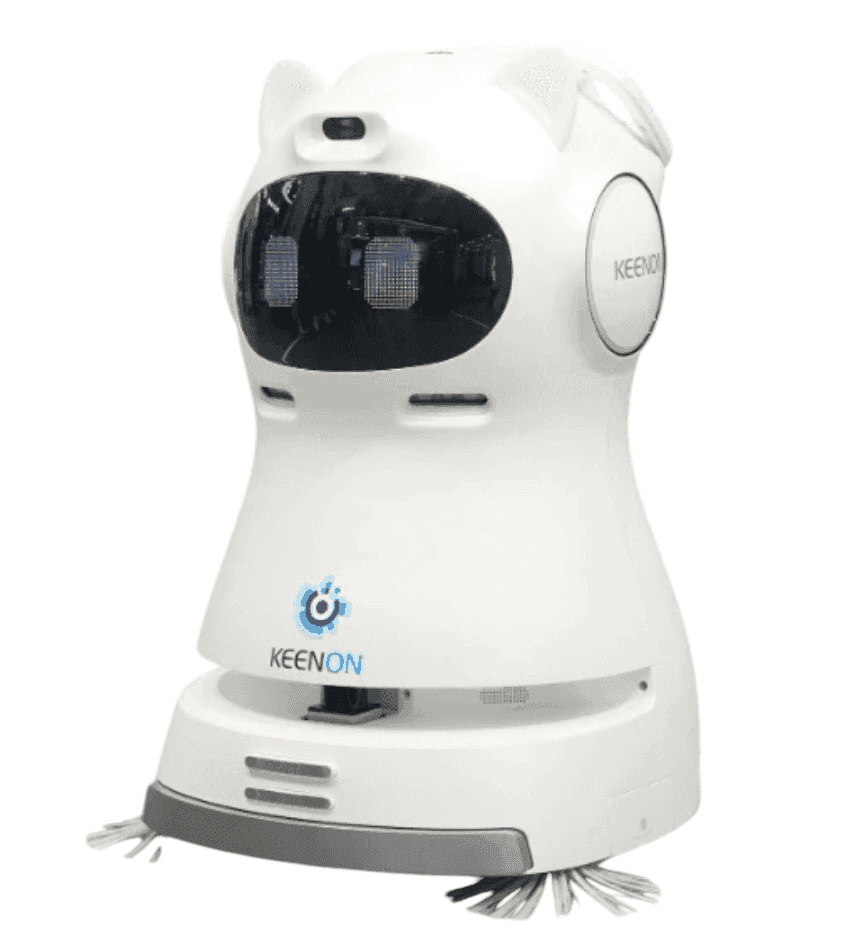
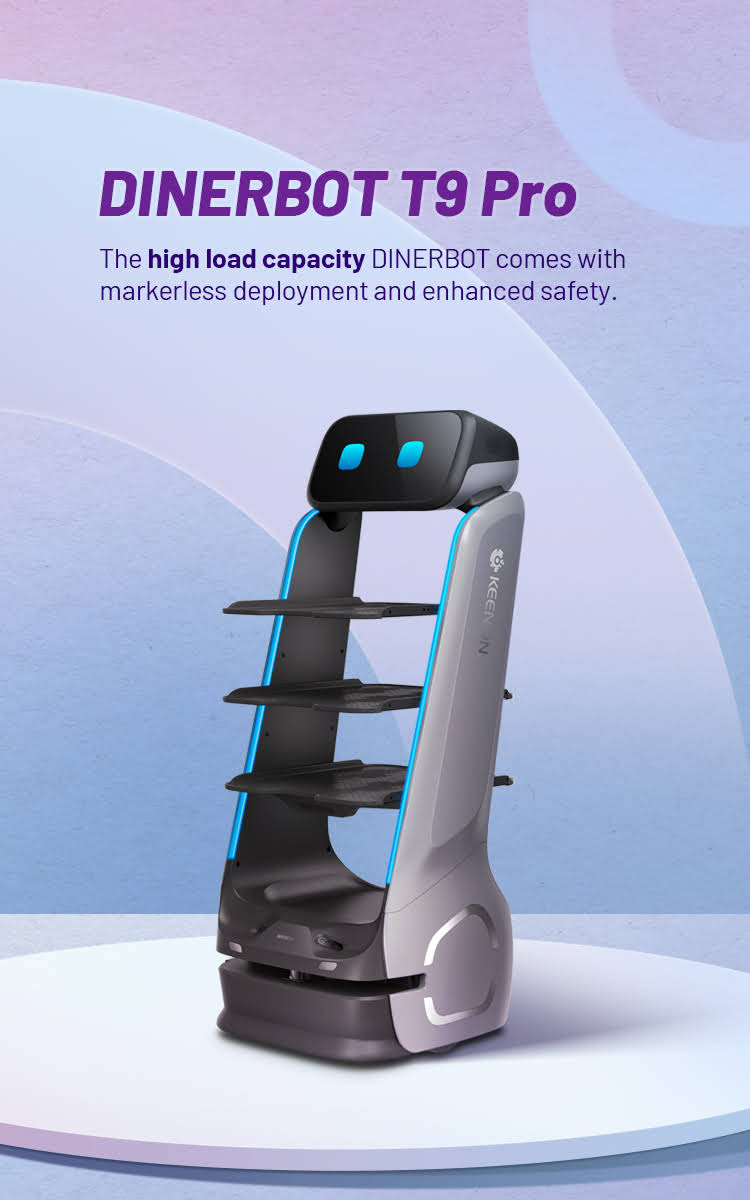
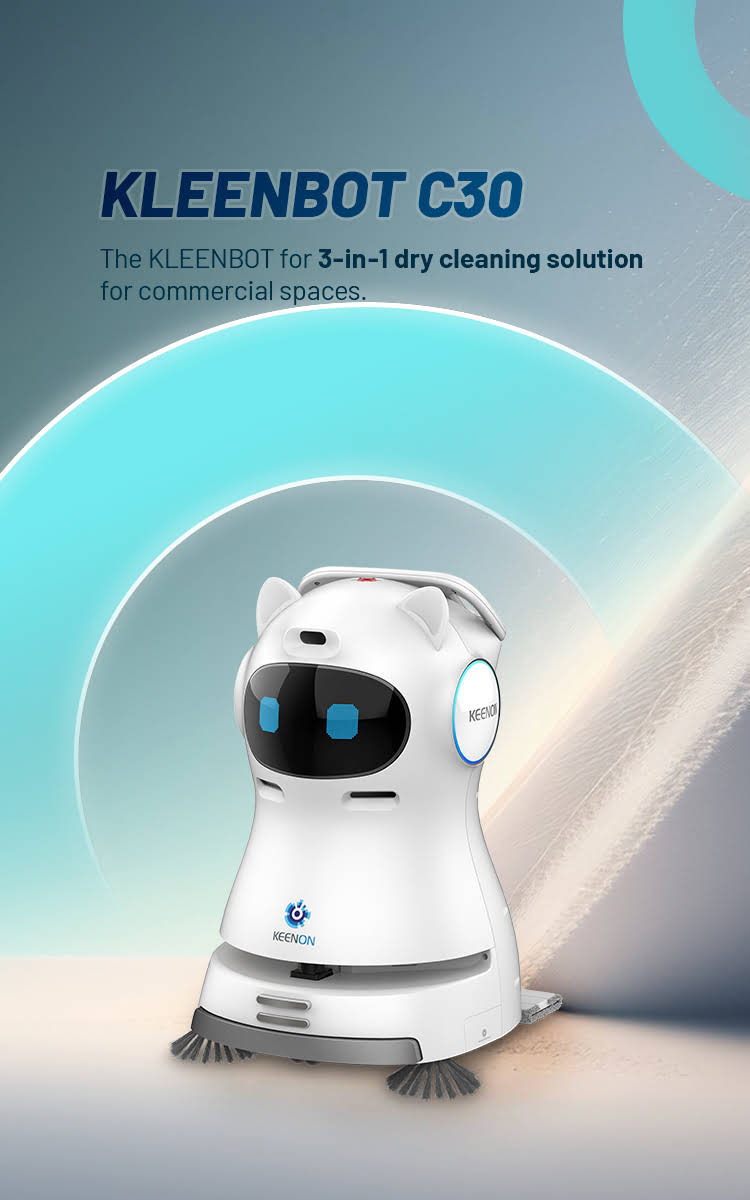


NXTGEN Industries structures its offering as one platform, three solutions: NXTGEN Inspect, NXTGEN Autonomy, and NXTGEN Flow.
NXTGEN Autonomy is the most technically specified product in available public data. It deploys autonomous inspection robots into confined spaces, at height, and in hazardous environments — the explicit design goal being the removal of human risk from dangerous inspection and maintenance tasks. The system incorporates LiDAR odometry, SLAM mapping, collision avoidance, and real-time environment modelling for navigation; behaviour trees and state machines for complex multi-step mission orchestration; and multi-modal sensor integration spanning visual, thermal, LiDAR, and ultrasonic payloads. Each robot is custom-configured for the specific access dimensions, atmospheric conditions, communications constraints, and payload requirements of its target environment. A bidirectional API connects Autonomy to NXTGEN Inspect, enabling automated defect detection as part of a closed operational loop. Compliance with Australian WHS confined space entry and working at height regulations is a stated design requirement. The Sydney Harbour Bridge is a confirmed live deployment site.
NXTGEN Inspect is described as an AI-driven inspection intelligence layer — computer vision and AI that converts raw inspection data into structured asset insight automatically and at scale. NXTGEN Flow addresses the downstream compliance and planning burden: intelligent document generation, end-to-end compliance workflows, and planning processes including Traffic Management Plans (TMPs) for roads and civil projects.
The portfolio's shape is that of a vertically integrated operational automation stack: sensors and robots (Autonomy) feed a perception and analysis layer (Inspect), which drives structured documentation and compliance outputs (Flow). This closed-loop architecture is the company's core differentiation claim — connecting "the sensor to the outcome" in a single unified data backbone.
4. Technology Stack {#technology-stack}
The most detailed technical picture available in public data relates to NXTGEN Autonomy. The confirmed technology components are: LiDAR odometry for positional tracking, Simultaneous Localisation and Mapping (SLAM) for real-time environment modelling, collision avoidance systems, and multi-modal sensor integration (visual cameras, thermal imaging, LiDAR, and ultrasonic sensors). Mission logic is managed through behaviour trees and state machines — standard but capable approaches for encoding complex, conditional multi-step autonomous tasks without requiring continuous human intervention.
Our read: The combination of SLAM-based navigation and behaviour tree mission orchestration suggests the robotics platform is designed for GPS-denied, unstructured environments — precisely the conditions found in rail tunnels, bridge cavities, utility conduits, and confined infrastructure spaces. The bidirectional API between Autonomy and Inspect implies a real-time or near-real-time data pipeline where navigation and sensing outputs feed directly into AI-driven defect classification, rather than requiring offline post-processing. This architectural choice, if confirmed, meaningfully accelerates inspection cycle times.
Our read: The "single operational data backbone" language across all three products suggests a shared data model or unified API layer connecting Inspect, Autonomy, and Flow. If accurate, this would allow defect data captured by an autonomous robot to flow directly into compliance documentation in Flow — a meaningful efficiency claim for regulated industries such as rail and utilities.
Limited public technical detail is available for NXTGEN Inspect's computer vision models (training data, detection categories, accuracy benchmarks) and for NXTGEN Flow's document generation architecture. NXTGEN Industries is invited to disclose further technical specifications for independent validation.
5. Research, Papers, Authors, Labs {#research-papers}
Company-linked papers
NXTGEN Industries does not appear to be a research-publishing organisation in the academic or peer-reviewed sense. This is entirely consistent with its positioning as a commercial operational platform company focused on field deployment. No published papers, named research authors, or affiliated laboratory relationships are present in the available data. This is not a gap unique to NXTGEN — the majority of service-robotics and industrial automation platform companies direct their intellectual effort toward proprietary systems and deployment outcomes rather than academic publication.
6. Media Evidence {#media-evidence}
Media library
One third-party reference appears in the available data: Smart Industry - NXTGEN Hightech (nxtgenhightech.nl). Note that this outlet name and domain suggest it may relate to a separate entity (NXTGEN Hightech, Netherlands) rather than constituting independent press coverage of NXTGEN Industries (Australia). This ambiguity is flagged; the citation cannot be confirmed as external validation of the Australian company without further verification. NXTGEN Industries is invited to provide or link confirmed third-party media coverage for inclusion.
7. Commercial Reality {#commercial-reality}
Customers & deployments
Deployments: NXTGEN Industries publicly states 10+ deployments across New South Wales, Victoria, Queensland, and Western Australia. The Sydney Harbour Bridge is the single named deployment site confirmed in public data. Sector coverage spans rail, infrastructure, utilities, roads and civil, construction, and agriculture — consistent with the platform's product scope.
Revenue: Not disclosed. NXTGEN Industries is invited to share revenue figures or revenue ranges for inclusion in this report.
Funding and investment: Not disclosed. No venture, private equity, or government grant funding is referenced in available public data. NXTGEN Industries is invited to disclose.
Customer names: Beyond the Sydney Harbour Bridge deployment (which implies engagement with a relevant infrastructure owner or operator), no customer names are publicly confirmed. Not yet disclosed — NXTGEN Industries is invited to name reference customers.
ROI and outcome metrics: Not publicly disclosed at the case-study level. The company's business model framing — compounding value over time, platform permanence — implies a subscription or long-term contractual commercial model rather than one-off project revenue, but this inference is not confirmed. Our read: A company emphasising long-term operational embedding is likely pursuing recurring-revenue or multi-year contract structures. This would be a commercially favourable model if substantiated.
8. Markets and Use Cases {#markets-use-cases}
NXTGEN Industries addresses seven explicitly named industry verticals, each with distinct inspection, automation, and compliance use cases derivable from the product data:
Infrastructure (bridges, tunnels, large structures): The Sydney Harbour Bridge deployment is the flagship reference. Use cases include structural inspection of confined cavities, at-height inspection of spans and pylons, and defect detection feeding into maintenance compliance documentation.
Rail (track, rolling stock, stations): Rail is a high-compliance, safety-critical environment where confined space entry, track-level inspection, and rolling stock undercarriage assessment are operationally burdensome and high-risk. Autonomy's WHS-compliant confined space capability is directly applicable.
Utilities (power networks, water, utility assets): Pipe and conduit inspection, substation and network asset assessment, and compliance documentation are natural Flow and Autonomy use cases in this sector.
Roads and Civil (TMPs, potholes, site safety, compliance): NXTGEN Flow's explicit mention of Traffic Management Plan automation places it directly in the roads and civil workflow — a sector with substantial regulatory documentation overhead in Australia.
Construction (facades, sites, structural inspection): At-height facade inspection and structural compliance are growth areas as Australian building regulators increase scrutiny following high-profile cladding and structural incidents.
Agriculture (quality inspection, defect detection): NXTGEN Inspect's computer vision layer applied to produce or processing-line quality control represents a different operational context — indoor, structured — from the infrastructure verticals, suggesting the platform's AI layer is designed to be environment-agnostic.
The common thread across all verticals is the presence of dangerous, repetitive, or compliance-heavy inspection tasks where removing humans from risk exposure, accelerating data capture, and automating downstream documentation delivers measurable operational value.
9. Competitive Landscape {#competitive-landscape}
Competitive comparison
| Robot | Maker | Autonomy | Conf. |
|---|---|---|---|
| iRobot Roomba Combo 10 Max | iRobot | Autonomous | 0.90 |
| Mobile ALOHA (Stanford) | Stanford University | Teleoperated | 0.90 |
| 1X NEO | 1X Technologies | Remote-Assisted | 0.90 |
NXTGEN Industries competes in the operational automation and industrial inspection robotics segment — a market that spans autonomous inspection platforms, AI-driven asset intelligence software, and compliance workflow tools. The relevant competitive peer set includes companies deploying autonomous robots and computer vision for infrastructure, utilities, and rail inspection, as well as workflow automation platforms targeting regulated industrial sectors. What distinguishes NXTGEN's positioning from many peers is the explicit three-layer stack (robotics + AI inspection + compliance documentation) offered as a unified platform with a permanent-deployment model, rather than as separable point solutions.
Our read: The company's strongest competitive differentiation, if the platform integration claim holds up in the field, is the closed loop from physical sensor data to structured compliance output — reducing the need for clients to stitch together robotics vendors, software vendors, and documentation consultants separately. The Australian regulatory focus (WHS, TMP, infrastructure compliance) also creates a degree of local-market specificity that larger international platforms may not replicate without significant localisation investment.
10. Country Advantage / Geopolitical {#geopolitical}
NXTGEN Industries explicitly frames its Australian origin as a product advantage: "Australian-built. Designed and deployed in Australia, for Australian regulatory and operational conditions. Built here means it works here." This is a substantive commercial claim in the context of rail, utilities, and infrastructure — sectors governed by state and federal Australian regulations (including Safe Work Australia's WHS framework for confined space entry and working at height) that differ meaningfully from European, North American, or Asian equivalents.
Australia's infrastructure investment pipeline — including ongoing rail network expansions, road and bridge renewal programmes across multiple states, and utility network upgrades — represents a structurally favourable domestic demand environment for the company's stated verticals. The confirmed presence of deployments across four states (NSW, VIC, QLD, WA) suggests the company is not regionally concentrated within Australia.
Our read: For international expansion, the Australian regulatory pedigree is both an asset (demonstrating compliance-grade deployment in a rigorous WHS environment) and a potential localisation burden (each new market carries its own regulatory framework). This is worth monitoring as a growth constraint or enabler depending on target markets.
11. Hype vs Real vs Ugly {#hype-real-ugly}
Claim tracker
Verified / supported by public data:
- Three named products (Inspect, Autonomy, Flow) with described capabilities — company-claim, technically plausible given listed specifications.
- 10+ deployments across four Australian states — company-claim, not independently verified at the customer level.
- Sydney Harbour Bridge deployment — company-claim, the most specific and verifiable reference available.
- LiDAR odometry, SLAM mapping, behaviour trees, multi-modal sensor integration in Autonomy — company-claim, technically coherent and standard in autonomous robotics.
- WHS compliance framing for confined space and at-height operations — company-claim, consistent with Australian regulatory requirements.
Claims that require further evidence:
- "The longer it runs, the smarter it gets" — company-claim. A machine learning improvement-over-time claim. Plausible if the platform genuinely retrains or fine-tunes models on operational data, but no detail on model architecture, retraining cadence, or performance improvement metrics is publicly available.
- "Single operational data backbone" connecting all three products — company-claim. Architecturally meaningful if substantiated; not independently verified.
- "Platform, not project" permanent deployment model — company-claim and positioning statement. Contractual and commercial model details are not disclosed.
Gaps (not negatives — fixable with disclosure):
- Not yet disclosed: revenue, funding, headcount, founding year, named customers beyond Sydney Harbour Bridge, and quantified outcome metrics (e.g., inspection time reduction, defect detection accuracy, compliance cycle time). NXTGEN Industries is invited to provide these for inclusion.
12. Future Scenarios {#future-scenarios}
Bull case — Our read: NXTGEN successfully embeds its platform in 30–50+ Australian operations across rail, utilities, and infrastructure over the next three years, building a recurring-revenue base from long-term operational contracts. The compounding data advantage from permanent deployments makes it progressively harder for point-solution competitors to displace the platform. A high-profile rail or utilities network contract win provides a referenceable anchor for expansion into additional states and, eventually, comparable regulatory environments internationally (e.g., New Zealand, UK, Singapore). The three-layer stack (Autonomy + Inspect + Flow) proves difficult to replicate quickly, and NXTGEN establishes itself as the default operational automation platform for Australian industrial infrastructure.
Base case — Our read: NXTGEN grows steadily within its existing verticals, adding deployments at a measured pace. Rail and infrastructure remain the core sectors. The Flow product gains traction in roads and civil for TMP automation — a high-volume, repeatable use case. The company remains Australian-focused for the medium term, building depth rather than breadth. Funding or partnership activity becomes necessary to accelerate hardware development and sales capacity. The 10+ deployment base grows to 30–50 within two to three years, but international expansion remains a later-stage consideration.
Bear case — Our read: Longer sales cycles in regulated infrastructure markets, combined with limited public brand recognition and undisclosed funding, constrain growth velocity. Larger international robotics and AI platform companies localise aggressively into the Australian market. The hardware-software-compliance integration model proves operationally complex to scale without significant capital. Customer concentration risk (if a small number of deployments represent the majority of revenue) creates vulnerability to contract non-renewal. Not yet evidenced — but worth monitoring as a structural risk given the early stage of public disclosure.
13. What to Watch {#what-to-watch}
- Named customer announcements: Any public disclosure of rail network operators, utilities, or state infrastructure agencies as confirmed clients will materially validate the deployment claim and de-risk the commercial picture.
- Funding or investment activity: A seed, Series A, or government grant announcement would signal growth-stage intent and provide scale context.
- Sydney Harbour Bridge case study: A published outcome report (inspection time, defect detection rate, WHS incident reduction) would be the most powerful single validation asset available to the company.
- NXTGEN Flow traction in roads and civil: TMP automation is a high-frequency, lower-complexity wedge into state government procurement. Watch for any Roads and Maritime or state transport agency references.
- Product specification disclosure: Benchmark data for NXTGEN Inspect (detection accuracy, false positive rates) and Flow (document generation cycle time) would allow independent technical assessment.
- International market signals: Any move into New Zealand, UK, or Southeast Asian markets would test the "Australian-built for Australian conditions" thesis and indicate the company's growth horizon.
- Platform integration depth: Evidence that Autonomy, Inspect, and Flow are genuinely operating as a unified data backbone in live deployments — rather than as three separately sold products — would validate the core platform differentiation claim.
- Founding team and leadership disclosure: No leadership team is publicly named in available data. Executive profiles and backgrounds would contextualise the company's technical and commercial pedigree.
14. Sources & Methodology {#sources-methodology}
Primary source: All factual claims in this report are grounded exclusively in data extracted from NXTGEN Industries' own website (nxtgenindustries.com.au), including the About page, product descriptions, FAQ, and structured schema markup. All such claims are labelled company-claim and have not been independently verified unless noted.
Third-party press: One external reference (Smart Industry - NXTGEN Hightech, nxtgenhightech.nl) appears in the source data. As noted in Section 6, the relationship of this outlet to NXTGEN Industries (Australia) is ambiguous and has not been confirmed as independent coverage of this company.
Computed relations: Product categorisations, competitive peer groupings, and market-segment derivations are computed from the company's own product and industry tags. These are labelled Our read where they involve inference beyond the literal source text.
What this report is not: This report does not incorporate primary interviews, financial filings, government tender databases, patent records, or independent customer interviews. It reflects the public information footprint of NXTGEN Industries as of the date of extraction.
Standard rubric (applied to every company in this series):
- Ground claims in source data only.
- Label company claims, inferences, and gaps distinctly.
- Lead with verified strengths; treat absences as fixable disclosure gaps, not negatives.
- Invite the company to claim, correct, or expand any section via the contact pathway on their site.
- Live data modules (news, products, papers, media, customers, competitors, claim tracker) supplement prose — they are not replaced by it.

NXTGEN Autonomy deploys autonomous inspection robots into confined spaces, at height and in hazardous environments — removing human risk from dangerous inspection and maintenance tasks. It is the mission orchestration and behaviour control layer that handles perception, navigation, decision-making and task execution without a human in the loop. It integrates with NXTGEN Inspect for automated defect detection and reporting.
- •Autonomous inspection robots for confined spaces, at height, and hazardous environments
- •LiDAR odometry, SLAM mapping, collision avoidance, real-time environment modelling
- •Behaviour trees and state machines for complex multi-step missions
- •Multi-modal sensor integration: visual, thermal, LiDAR, ultrasonic
- •Bidirectional API connection to NXTGEN Inspect for automated defect detection
- •Custom-configured for each environment's access dimensions, atmosphere, communications, and payload
- •Designed to comply with Australian WHS confined space entry and working at height regulations
- •Deployed on live infrastructure including Sydney Harbour Bridge
Detailed specs not disclosed.
Technology stackOur read
Inferred from product specs — click through to the technology wiki:
ResearchComputed
Product comparisonComputed
Company announcement
News and Media
The company's official social & video channels · external links
News
From third-party news outlets (China & abroad) · external links