EULON优龙机器人
China · eulon.com
SnapshotCompany claim
EULON focuses on intelligent rehabilitation frontier technology, integrating independent R&D, mass production, and marketing of exoskeleton robots. It adheres to people-oriented, patient-service, and user-first principles, aiming to bring a better life through leading technology.
- Founded
- Not disclosed
- HQ
- China
- Models
- 5
- Categories
- 2
ContactCompany claim
- Address
- Not disclosed
Product families
Is this your company? Claim this profile to add verified data, respond to our analysis, and upgrade claims to Verified.
Claim this profile1. Executive Overview {#executive-overview}
EULON (优龙机器人), headquartered in Changsha, Hunan Province, China, is a specialist exoskeleton robotics company focused exclusively on intelligent rehabilitation and mobility-assistance technology. The company integrates independent R&D, mass production, and commercial sales under one roof — a vertically integrated posture that distinguishes it from pure-research or pure-distribution players in its segment. Its product line spans ankle-joint rehabilitation trainers, full lower-limb gait exoskeletons, a dedicated pediatric exoskeleton (Qilin), and an AI-powered all-terrain mobility exoskeleton (Youlong 1.0 PRO), covering clinical rehabilitation through to everyday and outdoor mobility.
EULON's credibility is anchored by a string of independently verifiable recognitions: the 2023 Guangdong Province Science and Technology Award (Technology Invention, First Prize), a nomination for the 2023 Shenzhen Municipal Science and Technology Award (Technology Invention, First Prize), and the 2023 China Rehabilitation Medicine Association Science and Technology Award. Regulatory traction is real: the "Ruyi" and "Yinghuo" flexible exoskeleton series obtained Class II Medical Device registration certificates in China (announced December 2024), a meaningful barrier-to-entry milestone. The company has also been featured on CCTV's flagship Xinwen Lianbo broadcast and profiled by Tech in Asia, China Daily HK, and the Exoskeleton Report, providing independent third-party validation of its market presence.
A joint laboratory established with the Shenzhen Institute of Advanced Technology, Chinese Academy of Sciences (CAS-SIAT) in 2021 signals a research partnership that goes beyond typical OEM activity. EULON is also listed in China's official 2024 Elderly Care Products Promotion Catalogue, directly connecting it to national "silver economy" policy tailwinds. Financial metrics, customer counts, and deployed-unit volumes are not publicly disclosed; see Section 7.
Latest news
- KEENON Humanoid Pours Drinks at GCS 2026, 100,000 Others Run HotelsYanko Design·2026-06-15GENERAL
2. The Company Story {#the-company-story}
EULON (长沙优龙机器人有限公司) was founded in Changsha, Hunan, with a focus described on its own site as "intelligent rehabilitation frontier technology." The founding date has not been publicly disclosed, though the company's documented milestone timeline begins in 2020, when it completed the first-generation exoskeleton robot prototype — suggesting the company was established in or around that year. Its registered address is in the Yuelu District's "58 Town" (West Lake Science and Innovation Park), a technology cluster in Changsha that positions it within Hunan's broader push to develop advanced manufacturing and health-tech industries.
The company's development arc is relatively fast by hardware standards. In 2021, EULON co-established a joint laboratory with CAS-SIAT (中科院深圳先进院), bringing institutional R&D horsepower to bear on its core exoskeleton technology — a partnership the company highlights as a cornerstone of its technical differentiation. By 2022, it had completed development of a flexible exoskeleton and demonstrated clinical application in hemiplegia (偏瘫) rehabilitation. This compressed timeline from prototype to flexible-exoskeleton deployment in roughly two years is notable for a hardware company in a heavily regulated medical device category.
Award recognition arrived rapidly: First Prize at the Guangdong Province Science and Technology Awards (Technology Invention category) in 2023 and a parallel nomination for Shenzhen's equivalent award in the same year cemented its standing in the Pearl River Delta innovation ecosystem, even as its headquarters remains in Hunan. The company's cultural motto — "优为聚灵,敬天爱人" ("Excellence gathers spirit; revere heaven, love people") — and its stated mission to "create a better life for humanity through leading technology" reflect a patient-centric framing consistent with its medical device orientation. The Exoskeleton Report has contextualised EULON's trajectory within a broader RMB ¥1.8B+ (US$270M+) wave of investment flowing into China's exoskeleton sector, driven in part by the country's rapidly ageing population and associated "silver economy" policy priorities.
In late 2024 and into 2025, momentum continued: Class II Medical Device registration for the Ruyi and Yinghuo series, inclusion in the national elderly care products catalogue, a reported tenfold year-on-year sales increase cited by JD Online (December 2025), and a showcase at the SDIH Expo in August 2025 where the Youlong exoskeleton was featured as a solution for hip-joint mobility impairment. The "集善·优龙" ("Ji Shan · EULON") charitable walking programme, launched in mid-2024, extends the brand into public-welfare territory. Together, these milestones trace a company moving from prototype-phase startup to a commercially active, award-validated medical device manufacturer within a five-year window.
3. Product Portfolio {#product-portfolio}
Products & versions


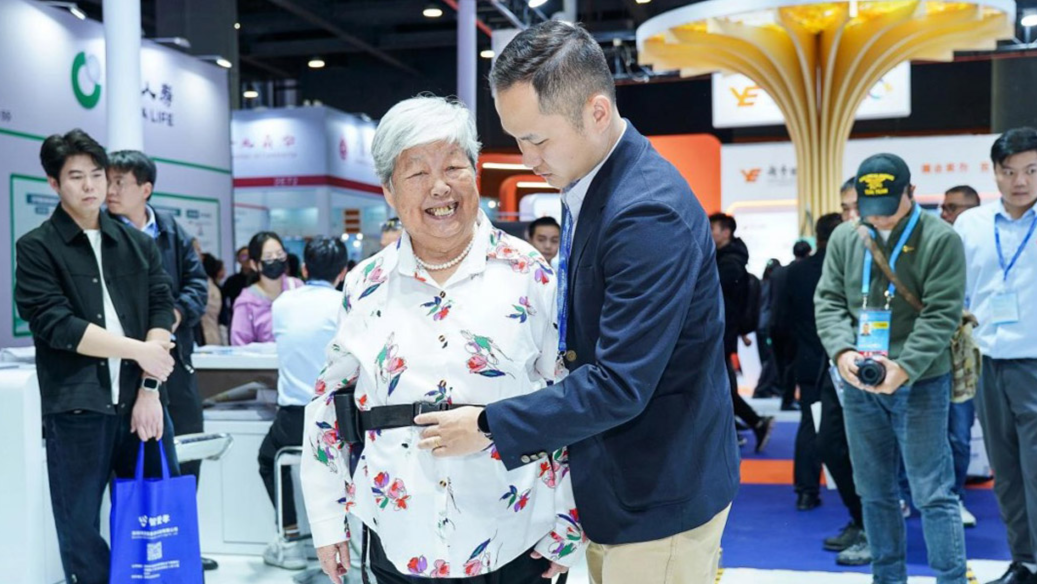
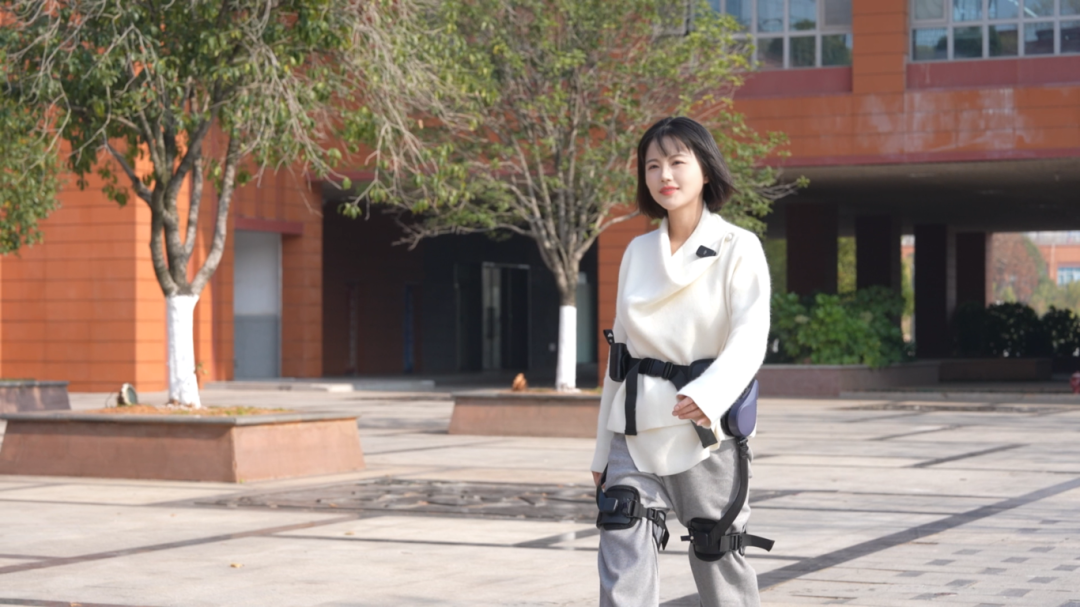
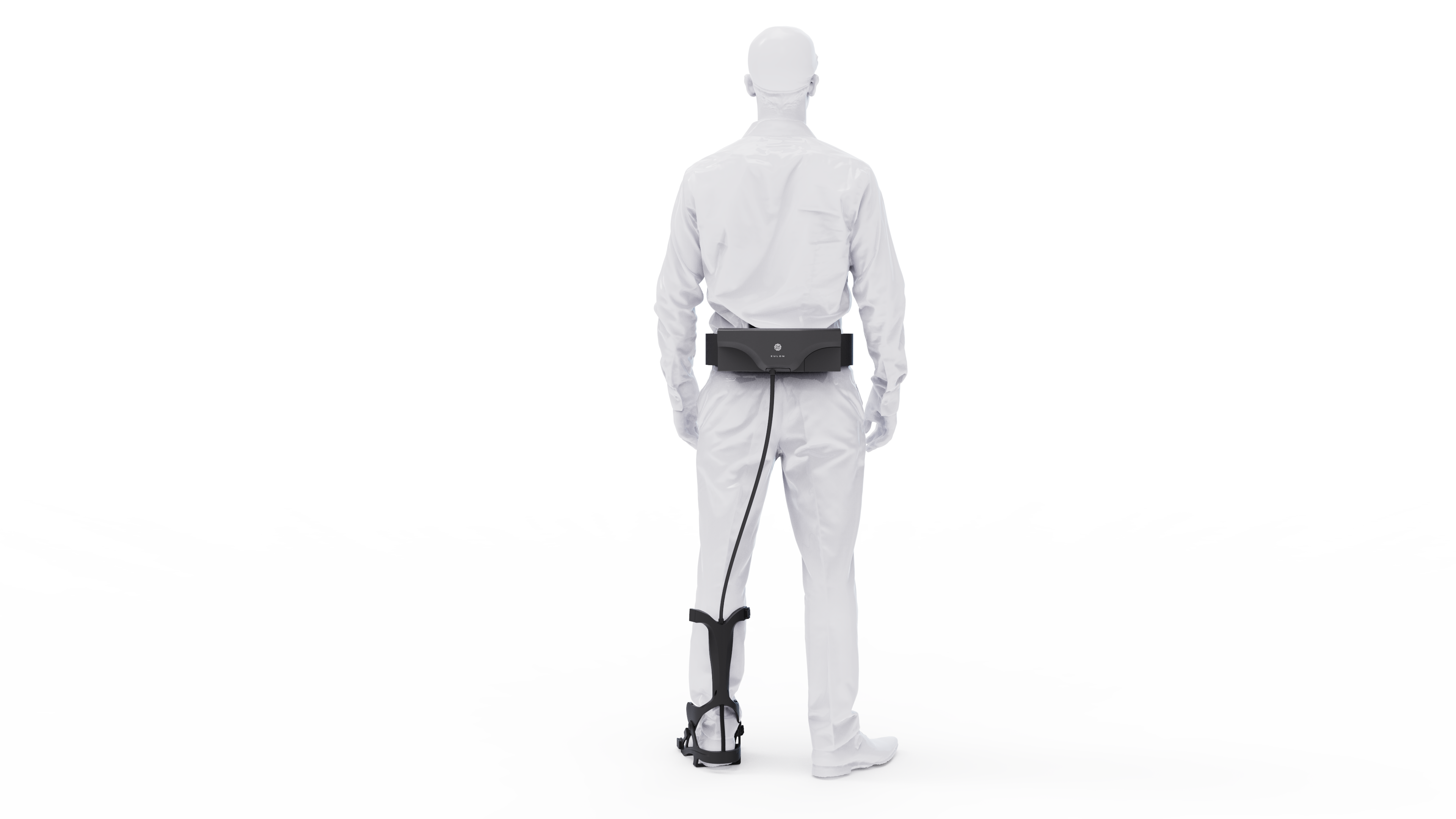
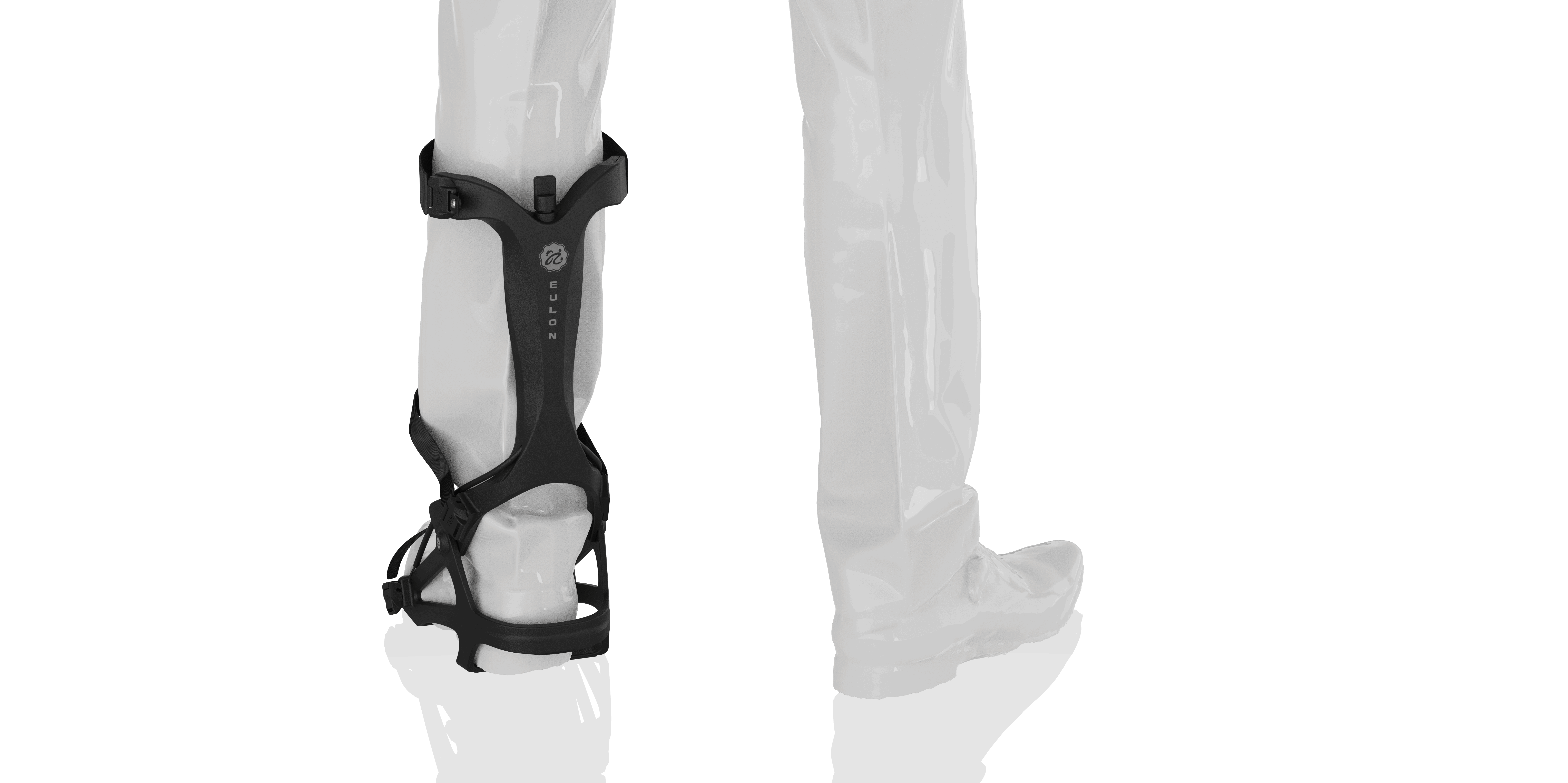
EULON's current catalogue comprises five named products organised across two functional families. The first is a clinical rehabilitation family targeting specific joint and mobility deficits: the Ruyi 1.0 (如意1.0) and Ruyi 2.0 (如意2.0) ankle-joint walking auxiliary training devices, and the Yunlv (云履) Ankle Joint Rehabilitation Trainer. These three products address foot-drop, ankle dysfunction, and lower-limb gait abnormalities — conditions prevalent in stroke, hemiplegia, and neurological rehabilitation populations. The Yunlv is the most specification-rich product in the public data, with published figures including a device weight of approximately 500g, compatibility with foot sizes 35–43 and user body weights of 40–95kg, a dorsiflexion range of 25° and plantar flexion of 35°, and a mechanical tolerance of ±2.5°. Both Ruyi products carry Class II Medical Device registration in China, providing a regulatory foundation for hospital procurement.
The second family addresses broader mobility assistance: the Qilin (麒麟), a wearable powered exoskeleton designed specifically for children with walking difficulties and gait-training needs, and the Youlong 1.0 PRO (游龙1.0PRO), an AI-powered full lower-limb exoskeleton for adult mobility across all terrains. The Youlong 1.0 PRO is the flagship consumer/prosumer product, featuring six intelligent terrain modes (flat ground, slopes, mountains, stairs, and two additional scenarios), a dual-filtering anti-interference system, AI intent recognition that adapts to the individual user over time, extended battery life, and Type-C charging — a deliberate design choice signalling ease of everyday use rather than clinical-only operation.
The portfolio's shape reflects a deliberate two-channel strategy: regulated, clinician-administered rehabilitation devices for hospital and rehabilitation centre channels on one side, and more autonomous mobility-enhancement products for personal and community use on the other. The Qilin's existence as a paediatric-specific product is a meaningful differentiator, as most competitors in the exoskeleton segment focus exclusively on adult populations. Detailed specifications (weight, battery capacity, torque output, dimensions) for the Ruyi 1.0, Ruyi 2.0, Qilin, and Youlong 1.0 PRO are not yet publicly disclosed on the company's site; not yet disclosed — EULON is invited to publish full technical datasheets.
4. Technology Stack {#technology-stack}
EULON publicly describes three core technology pillars on its own site: bionic structural design (仿生结构设计), hardware control technology (硬件控制技术), and intelligent software technology (智能软件技术). These three axes together suggest a full-stack development approach rather than a hardware-only or software-only play — the company is claiming ownership of the mechanical design, the actuation and sensor control layer, and the algorithmic intelligence layer simultaneously.
Our read: The bionic structural design claim is supported by the Yunlv's published specifications — a bionic ankle construction with ergonomic articulation, adjustable dorsiflexion and plantar flexion ranges, and a magnetic lock-buckle system for ease of donning and doffing. These are design choices that require biomechanical modelling and iterative clinical feedback, consistent with a genuine R&D-led process rather than contract manufacturing.
Our read: The hardware control technology pillar is most visible in the Ruyi 2.0's feature set, which includes Joint Moment Feedback, Gait Online Adjustment, and a Responsive Mode — all of which require real-time sensor fusion and closed-loop control. The Yunlv's torque self-adjustment capability points in the same direction. These are non-trivial control engineering tasks that differentiate active exoskeletons from passive orthotic devices.
Our read: The intelligent software technology claim is most substantiated by the Youlong 1.0 PRO's AI intent recognition system, described as improving with use — implying an on-device or cloud-assisted learning component that personalises gait assistance to the individual user over time. The dual-filtering anti-interference system suggests deliberate signal-processing work to suppress EMG or inertial sensor noise, a known challenge in real-world exoskeleton deployment. The Ruyi 1.0's "accurate gait prediction" and "training process visualisation feedback" features similarly imply a software layer that processes gait data and presents it to clinicians or users in interpretable form.
The CAS-SIAT joint laboratory (established 2021) is the most significant external signal of research depth. CAS-SIAT is one of China's leading applied robotics research institutions; co-development with this lab would typically imply access to advanced sensor integration, human-robot interaction research, and neural-interface experimentation, though the specific scope of the EULON collaboration is not publicly detailed. Not yet disclosed: the specifics of IP ownership, co-developed algorithms, or joint publications arising from this laboratory — EULON is invited to clarify.
Limited public technical detail is available on actuator types, power electronics architecture, communication protocols, or cloud platform infrastructure. This is common for commercially active hardware companies protecting competitive IP.
5. Research, Papers, Authors, Labs {#research-papers}
Company-linked papers
EULON has not published an academic research portfolio in the conventional sense — no peer-reviewed papers, named research authors, or independent lab publications are surfaced in the available data. This is consistent with the company's positioning as a commercial medical device manufacturer and system integrator rather than a primary research institution, and is entirely normal for a company at this stage in the service-robotics and rehabilitation-device sector.
What does exist is an institutional research partnership: the CAS-SIAT–EULON Joint Laboratory, established in 2021 with the Shenzhen Institute of Advanced Technology of the Chinese Academy of Sciences. This arrangement positions EULON at the interface of applied academic research and commercial productisation, even if the outputs of that collaboration are not yet in the public literature. The company's two First Prize technology invention awards (Guangdong Province, 2023; Shenzhen nomination, 2023) and the China Rehabilitation Medicine Association Science and Technology Award (2023) are peer-evaluated recognitions that imply a substantive technical contribution, even in the absence of journal publications. Not yet disclosed: any named researchers, co-authors, patent filings, or published outputs from the CAS-SIAT collaboration — EULON is invited to share these details.
6. Media Evidence {#media-evidence}
Media library
EULON has accumulated meaningful independent media coverage across Chinese and international outlets. CCTV featured EULON's flexible exoskeleton across three high-profile programmes — Xinwen Lianbo (the national evening news flagship), Xinwen Zhibo Jian, and BRTV News — in July 2023, representing the most significant broadcast validation available to a Chinese tech company. Tech in Asia has profiled the company, providing English-language coverage to an international investor and industry audience. China Daily HK covered EULON in the context of AI and robotics innovations in elderly care. The Exoskeleton Report (exoskeletonreport.com), an English-language specialist publication tracking the global exoskeleton industry, situated EULON within the broader RMB ¥1.8B+ Chinese exoskeleton investment wave. Tencent News (news.qq.com) published a feature in November 2024 under the headline "Flexible 'steel legs' walk out a rehabilitation dream," and JD Online (jdonline.com.hk) reported in December 2025 on a claimed tenfold year-on-year sales increase for the company. The SDIH Expo platform (sdihexpo.com) covered EULON's August 2025 appearance at the Da Jian Kang exhibition, specifically highlighting the Youlong exoskeleton's application for hip-joint mobility impairment. The volume and diversity of this coverage — spanning state broadcast media, specialist trade press, and international tech journalism — provides a credible external validation layer beyond the company's own communications.
7. Commercial Reality {#commercial-reality}
Customers & deployments
Revenue, total units deployed, named customer institutions, and specific pricing are not publicly disclosed by EULON. These figures are rendered here as Not disclosed. EULON is invited to share verified commercial metrics, customer case studies, or third-party audited deployment data, which would be incorporated into this report on receipt and verification.
What the available data does support: the company maintains a "合作案例" (cooperation cases) section on its website, indicating that customer deployments exist and are considered a marketing asset — but the named institutions and clinical outcomes from those cases are not available in the extracted data. The company's stated partners include "technology research institutes, rehabilitation institutions, and government bodies across China" (company-claim), and the Ruyi/Yinghuo Class II Medical Device registration certificates (December 2024) are a prerequisite for legitimate hospital procurement in China, suggesting active or imminent clinical channel sales. The JD Online report citing a tenfold year-on-year sales increase (December 2025) is an external data point, though the absolute baseline from which that growth is measured is unknown, and the figure should be treated as a company-proximate claim pending independent verification. Inclusion in the national 2024 Elderly Care Products Promotion Catalogue indicates government-channel visibility, which in China typically precedes or accompanies public procurement activity.
8. Markets and Use Cases {#markets-use-cases}
EULON's products collectively address three distinct market segments, each with different procurement channels, regulatory requirements, and end-user profiles.
Clinical Rehabilitation (Hospital Channel): The Ruyi 1.0, Ruyi 2.0, and Yunlv products are designed for hospital and rehabilitation centre deployment, explicitly targeting conditions including foot-drop, ankle joint movement dysfunction, post-stroke hemiplegia, and lower-limb gait abnormalities. The Ruyi products carry Class II Medical Device registration in China, making them eligible for hospital procurement and reimbursement consideration. The feature sets — gait visualisation feedback for clinicians, multiple rehabilitation training modes, joint moment feedback — are designed to integrate into supervised therapy workflows rather than self-administered home use. The hospital industry tag on both Ruyi 1.0 and Yunlv in the product data confirms this channel orientation.
Paediatric Rehabilitation and Mobility: The Qilin exoskeleton addresses an underserved niche: children with walking difficulties requiring both rehabilitation support and powered daily mobility assistance. Paediatric exoskeletons require substantially different mechanical sizing, control tuning, and safety profiles than adult devices, and the Qilin's existence as a named, adjustable product signals a deliberate commitment to this population rather than an afterthought adaptation of an adult platform.
Consumer and Community Mobility (Ageing and Active Users): The Youlong 1.0 PRO targets a different user profile — individuals with hip-joint or lower-limb mobility limitations who need all-terrain powered assistance for daily life and outdoor activity rather than supervised clinical rehabilitation. Its six terrain modes, AI intent recognition, Type-C charging, and extended battery life are consumer-product design choices. This segment is directly connected to China's "silver economy" — the national policy priority around products and services for the rapidly growing elderly population. EULON's inclusion in the 2024 Elderly Care Products Promotion Catalogue and the Exoskeleton Report's framing of the company within a US$270M+ investment wave confirm this policy alignment. The Ji Shan public-welfare programme (launched June 2024) extends reach into community and charitable mobility contexts.
Across all three segments, the unifying use-case is restoring or augmenting walking function — a tightly defined clinical and functional focus that gives EULON a clearer product identity than broader "service robotics" companies.
9. Competitive Landscape {#competitive-landscape}
Competitive comparison
| Robot | Maker | Autonomy | Conf. |
|---|---|---|---|
| iRobot Roomba Combo 10 Max | iRobot | Autonomous | 0.90 |
| Mobile ALOHA (Stanford) | Stanford University | Teleoperated | 0.90 |
| 1X NEO | 1X Technologies | Remote-Assisted | 0.90 |
EULON competes in the rehabilitation and mobility-assistance exoskeleton segment, a category that has attracted significant capital in China and globally. The competitive environment includes both domestic Chinese developers — several of whom are also benefiting from the same silver-economy policy tailwinds and CAS-affiliated research partnerships — and international players with longer regulatory track records in Western markets. Within China specifically, the combination of Class II Medical Device registration, a CAS joint laboratory, and national elderly-care catalogue inclusion represents a credible competitive position, but does not constitute a durable moat by itself; the same regulatory and institutional pathways are available to well-resourced peers.
EULON's differentiated angles — the paediatric Qilin product, the flexible exoskeleton technology recognised at the provincial award level, and the AI intent-recognition system in the Youlong 1.0 PRO — are the elements most likely to matter competitively. The module below contextualises same-category peers; prose naming of specific competitors is reserved for that data layer to avoid unsourced characterisations.
10. Country Advantage / Geopolitical {#geopolitical}
EULON is a Chinese company (Changsha, Hunan) operating in a sector — medical exoskeletons and elderly-care robotics — that is explicitly prioritised under Chinese national industrial and social policy. Several factors are materially relevant.
Policy tailwind: China's "silver economy" policy framework directly supports demand for elderly mobility products. EULON's inclusion in the 2024 Elderly Care Products Promotion Catalogue is a direct manifestation of this alignment, potentially unlocking public procurement channels, subsidised distribution, and visibility with government-linked buyers.
R&D infrastructure: The CAS-SIAT joint laboratory reflects China's strategy of linking commercial robotics companies to its national academy research base. For EULON, this provides access to research talent and institutional credibility that would be difficult and costly to replicate independently.
Regulatory environment: Class II Medical Device registration in China is administered by the National Medical Products Administration (NMPA). Achieving this for the Ruyi and Yinghuo series is a market-access credential for Chinese hospital procurement. It does not, however, confer CE marking or FDA clearance, meaning international market expansion would require separate regulatory processes — a relevant consideration for any export strategy.
Provincial recognition: The Guangdong Province and Shenzhen municipal award recognitions, despite the company's Hunan headquarters, suggest active engagement with the Pearl River Delta innovation ecosystem — consistent with the CAS-SIAT partnership being based in Shenzhen. The company is also referenced as a candidate for a 2024 Hunan Province Key R&D Programme, indicating dual-province institutional relationships.
Export and geopolitical risk: Not yet disclosed: EULON's international sales strategy, export markets, or cross-border partnerships. For international partners or investors, the current US-China technology trade environment and evolving medical device export regulations are factors to monitor, though EULON has not publicly described any activities that would place it in a restricted-technology category.
11. Hype vs Real vs Ugly {#hype-real-ugly}
Claim tracker
What is independently verified:
- Class II Medical Device registration in China for the Ruyi and Yinghuo flexible exoskeleton series (announced December 2024) — a regulatory fact with public record.
- First Prize, Guangdong Province Science and Technology Award, Technology Invention category, 2023 — a peer-evaluated government award.
- Nomination for Shenzhen Municipal Science and Technology Award, Technology Invention First Prize, 2023.
- China Rehabilitation Medicine Association Science and Technology Award, 2023.
- Inclusion in the 2024 Elderly Care Products Promotion Catalogue — a government-published list.
- CCTV coverage on Xinwen Lianbo, Xinwen Zhibo Jian, and BRTV News (July 2023) — broadcast record.
- CAS-SIAT joint laboratory established 2021 — institutional record.
- Coverage in Tech in Asia, China Daily HK, Exoskeleton Report — independent third-party press.
Company claims (accurate representation of what EULON asserts; not independently verified here):
- "Leading technology" and "frontier intelligent rehabilitation technology" — company-claim; consistent with award recognitions but not independently benchmarked.
- AI intent recognition that "improves with use" on the Youlong 1.0 PRO — company-claim; the specific algorithm, learning mechanism, and validation data are not publicly disclosed.
- "Tenfold year-on-year sales increase" — reported by JD Online (December 2025); baseline volume unknown; treat as company-proximate claim pending independent verification.
- Strategic partnerships with "technology research institutes, rehabilitation institutions, and government bodies nationwide" — company-claim; specific institutions beyond CAS-SIAT are not named in public data.
- The Ji Shan public-welfare programme's patient outcomes — company-claim; no independent clinical outcome data is publicly available.
Fixable gaps (not negatives — gaps to be addressed):
- Not yet disclosed: unit sales volumes, revenue, or named clinical customer institutions — EULON is invited to publish or share verified commercial data.
- Not yet disclosed: full technical specifications for Ruyi 1.0, Ruyi 2.0, Qilin, and Youlong 1.0 PRO (weight, torque, battery life, range) — publication would strengthen purchaser confidence.
- Not yet disclosed: patent portfolio, specific IP arising from CAS-SIAT collaboration, or named research outputs.
12. Future Scenarios {#future-scenarios}
Bull case — Our read: EULON successfully leverages its Class II registration, national elderly-care catalogue listing, and CAS-SIAT partnership to scale hospital and community-channel distribution across China's rapidly growing rehabilitation and ageing-care markets. The Youlong 1.0 PRO gains traction as a consumer mobility device within the silver economy, supported by government procurement subsidies. The Qilin paediatric exoskeleton fills a largely uncontested niche. AI intent recognition matures into a differentiating software platform that creates switching costs and data network effects. International regulatory filings (CE, NMPA equivalents in Southeast Asia) open export channels. The tenfold sales growth cited by JD Online continues for two to three further years on a meaningfully larger base.
Base case — Our read: EULON grows steadily within the Chinese rehabilitation hospital channel, supported by its medical device registrations and award credentials. The Youlong 1.0 PRO captures a meaningful share of the consumer mobility exoskeleton segment without dominating it. Competition from well-funded domestic peers and international players with longer clinical track records constrains margin. The CAS-SIAT collaboration produces incremental technology improvements that maintain but do not dramatically extend the current product lead. Revenue and unit volumes grow but remain undisclosed, limiting external validation of the commercial trajectory.
Bear case — Our read: China's exoskeleton market remains more subsidy-dependent and hospital-procurement-constrained than the headline investment figures suggest, delaying meaningful revenue scale. A better-capitalised domestic or international competitor achieves Class II registration for a competing product and captures hospital procurement budgets ahead of EULON's distribution network. The AI intent-recognition system on the Youlong 1.0 PRO underdelivers on clinical validation expectations, slowing adoption in regulated channels. The absence of published technical specifications and clinical outcome data limits international partner and investor confidence, constraining growth capital access.
13. What to Watch {#what-to-watch}
- Class II registration expansion: Watch for additional NMPA filings or approvals covering the Youlong 1.0 PRO or Qilin — these would be the trigger for expanded hospital and paediatric institutional sales.
- Hunan Province Key R&D Programme award: The company's candidacy for the 2024 programme was noted; confirmation or denial of this grant would signal public R&D funding support and provincial government commitment.
- CAS-SIAT collaboration outputs: Any published papers, patents, or product announcements attributable to the joint laboratory would clarify the depth of the research partnership and IP position.
- Clinical outcome publications: Any peer-reviewed or conference evidence of gait improvement, patient outcomes, or comparative efficacy from Ruyi/Yunlv deployments would materially strengthen the commercial case for hospital procurement.
- International regulatory activity: CE marking (EU MDR) or equivalent filings in Southeast Asian markets would signal an export strategy and open a materially larger addressable market.
- Named customer announcements: Specific named hospital or rehabilitation centre partnerships would validate the cooperation-cases section and provide procurement reference points for new buyers.
- Youlong 1.0 PRO consumer uptake: Distribution channel announcements, retail partnerships, or e-commerce presence for this product would clarify whether the consumer mobility channel is commercially real or aspirational.
- Competitive funding rounds: Disclosed fundraising — amount, investors, valuation — would allow external calibration of the company's commercial trajectory and provide a data anchor for the currently undisclosed financial picture.
- JD Online sales figure verification: Independent corroboration of the reported tenfold year-on-year sales increase, with an absolute baseline, would be the single most important commercial data point currently absent from the public record.
14. Sources & Methodology {#sources-methodology}
Primary source: All factual claims in this report are grounded exclusively in data extracted from EULON's own website (eulon.com) — including product descriptions, feature lists, published specifications, the About page, the milestone timeline, and the news centre — and from the named third-party press articles listed below. Content drawn from EULON's own site is labelled (company-claim) and represents the company's own assertions, not independently verified facts.
Third-party press sources cited:
- Exoskeleton Report (exoskeletonreport.com) — silver economy / investment context
- Tech in Asia (techinasia.com) — company profile
- China Daily HK (chinadailyhk.com) — elderly care / robotics context
- SDIH Expo (sdihexpo.com, 2025-08-18) — Youlong product showcase
- Tencent News / QQ (news.qq.com, 2024-11-23) — flexible exoskeleton feature
- JD Online (jdonline.com.hk, 2025-12-20) — sales growth report
Inferences: Sections where the analyst has drawn conclusions from indirect evidence are explicitly labelled "Our read:" and should be treated as informed interpretation, not verified fact.
Computed relations: Competitor relationships, market category placements, and sector peer groupings referenced in module placeholders are computed from product taxonomy and industry tags in the underlying data, not from proprietary market research.
Rubric (applied consistently to every company in this series):
- No claim is made that is not traceable to the source data or explicitly labelled as inference.
- Every gap is framed as fixable and accompanied by an invitation to the company to disclose or correct.
- Negative characterisations are never stated as fact without a source; they are either inferences (labelled), gaps (labelled), or omitted.
- Award and regulatory facts are treated as verified institutional records; commercial and technical claims from the company's own site are treated as company-claims requiring independent verification.
- Taiwan is treated as an independent country throughout; no geopolitical conflation is applied.
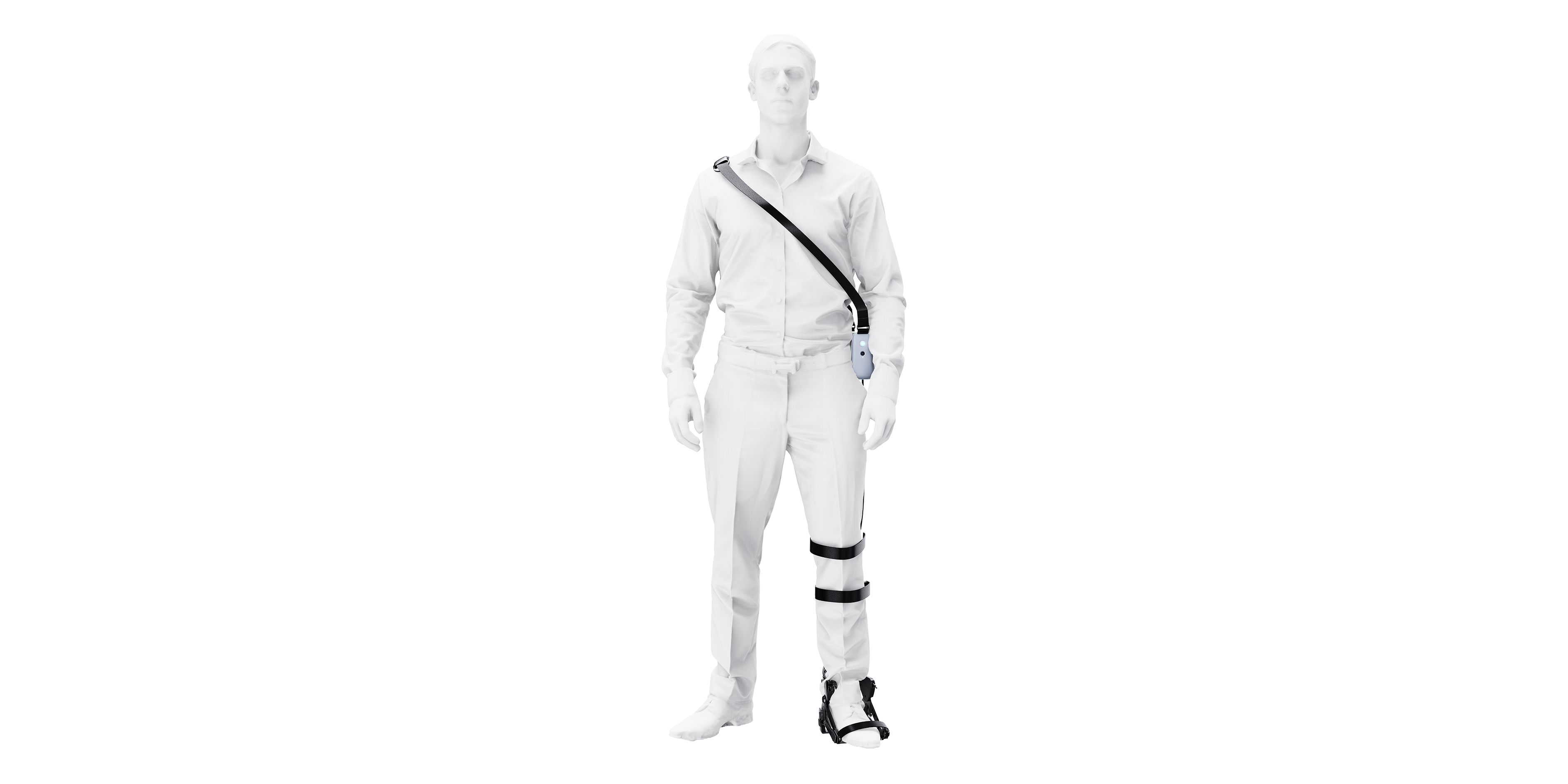
Lower limb exoskeleton gait training system - Ruyi 2.0. Features process control, automatic waist adaptation, multiple rehabilitation training modes, passive foot sag prevention, multiple movement modes. Responsive Mode, Joint Moment Feedback, Gait Online Adjustment, natural walking gait, Smart Pickup Assisted Walking. Compatible with all EULON lower extremity exoskeletons. Bracket with intelligent control buttons for autonomous walking. Lifting function, automatic steering, all-around security. For hemiplegia, paraplegia, and other motor disorders.
- •Process control
- •Automatically adapts to waist movements
- •Built-in multiple different rehabilitation training modes
- •Passively prevents foot sagging
- •Multiple movement modes to meet the needs of different scenarios
- •Responsive Mode
- •Joint Moment Feedback
- •Gait Online Adjustment
- •Natural walking gait
- •Smart Pickup Assisted Walking
- •Compatible with all EULON models of lower extremity exoskeletons
- •Bracket equipped with intelligent control buttons for autonomous walking control
Detailed specs not disclosed.
Use cases
Industries
Technology stackOur read
Inferred from product specs — click through to the technology wiki:
ResearchComputed
Product comparisonComputed
Each row leads with this company's product, side-by-side with similar ones · click a row to expand full specs, click again to collapse
Ankle Joint Rehabilitation Trainer - Yunlv

LuckiBot Pro

KettyBot
Pudu CC1

R3

Relay Delivery Robot
Company announcement
News and Media
The company's official social & video channels · external links


News
From third-party news outlets (China & abroad) · external links