Alibaba Group
US$0.99 unlocks one Word + one PDF download. The full report is free to read on this page.
Alibaba Group: The AI Conglomerate That Has Not (Yet) Built a Robot
Alibaba is raising and spending tens of billions on AI infrastructure and publishing credible robotics research, but the dossier contains no evidence of a deployed, task-performing autonomous robot — and that gap is the story.
| Report status | Coverage date | Company stage | Editorial standard |
|---|---|---|---|
| Premium editorial deep report, first edition | Evidence gathered 18 September 2026 | Fully Commercial (NYSE:BABA / HKG:9988); robotics capability at research stage | Verified facts separated from company claims, editorial inference and unknowns; no demo treated as proof of autonomy |
How to Read This Report
This report is written for people who have to make decisions about Alibaba as a robotics-adjacent counterparty: procurement leads, investors, partnership scouts, competitive-intelligence teams. It is not a company profile in the promotional sense. The central editorial problem is that Alibaba is a very large, very well-documented company whose robotics footprint is documented almost entirely through research papers and software releases, while its commercial footprint is documented through filings, price pages and marketplace complaints. Those two bodies of evidence do not describe the same thing, and conflating them is the most common error in coverage of the company.
Every substantive statement below carries one of four labels, either explicitly or through the bracketed citation structure:
| Label | Meaning | Example in this report |
|---|---|---|
| VERIFIED FACT | Regulatory filing, official product documentation, named-customer confirmation, peer-reviewed or primary research, or corroborated by multiple independent sources | The HK$80bn placing, its share count and price, and the stated use of proceeds 679 |
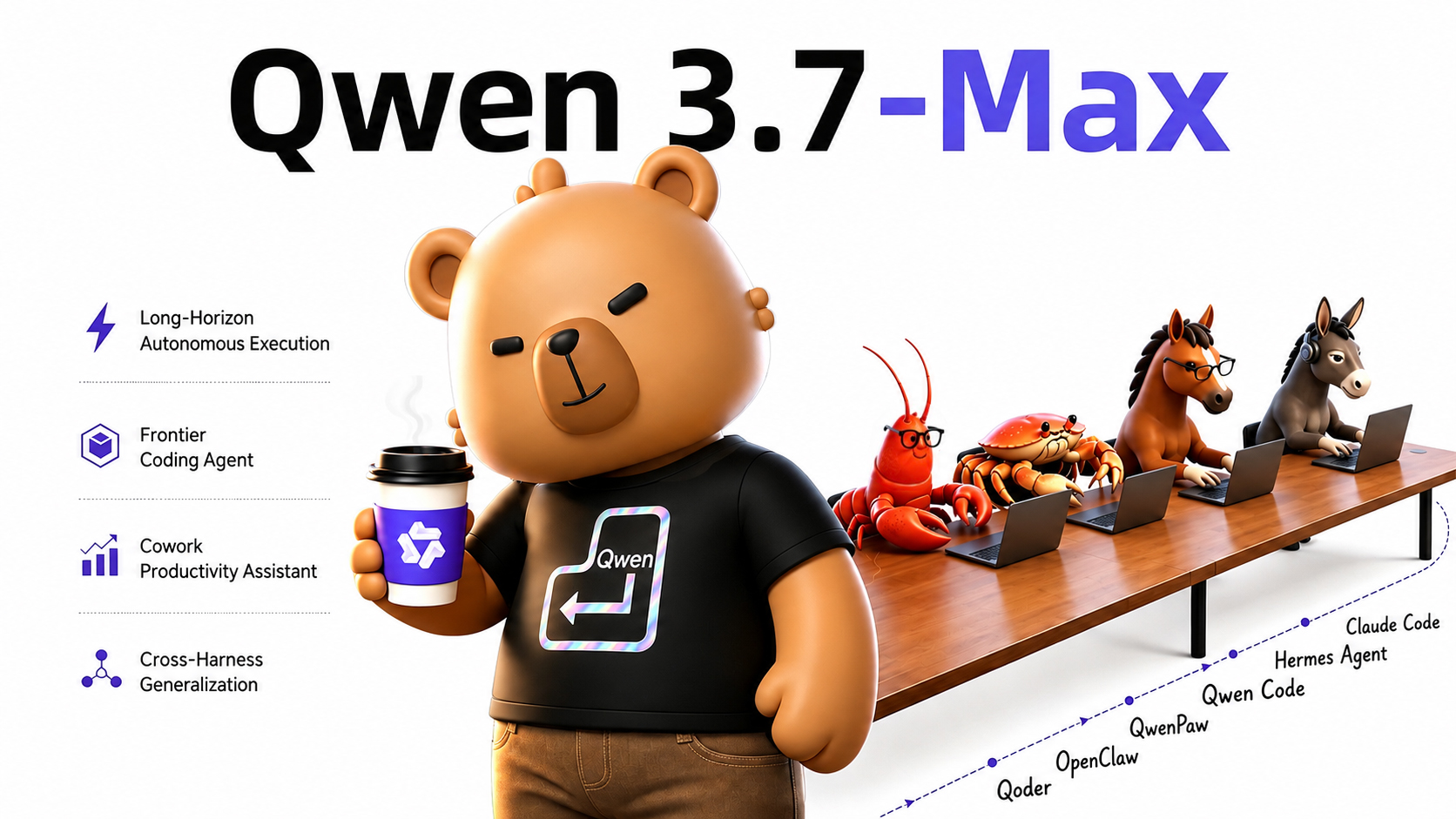
| COMPANY CLAIM | Stated by Alibaba or an Alibaba-controlled channel, not independently verified | Qwen 3.7 Max running a kernel-optimisation task for 35+ hours without losing context 26 |
| EDITORIAL INFERENCE | A reasoned conclusion drawn from public evidence, flagged as such | That Alibaba's robotics papers represent option-buying on a future hardware business rather than a current product line |
| UNKNOWN | Not publicly disclosed | Whether any Alibaba robotics research has been transferred to a production system, and at what autonomy level |
Three specific discipline rules apply throughout. First, a choreographed demo video is not proof of autonomous work; the Qwen long-horizon demonstration is a software benchmark, not a robot task 26. Second, a shipment is not proof of productive deployment; Alibaba.com's Trade Assurance volume figures describe transaction flow, not buyer outcomes 129. Third, a partnership or model release announcement is not proof of a paid customer; the Wan 3.0 API pricing is a list price, not evidence of revenue at scale 11.
Where the dossier is thin, this report says so rather than padding. The dossier contains zero official Alibaba robotics product pages, no named robotics customers, and no independent verification of any physical system. That is a finding, not an omission.
01Executive Overview
Alibaba Group Holding Limited is a publicly traded Chinese technology conglomerate with roughly 100,000 staff, dual headquarters in Hangzhou and Hong Kong, and a market capitalisation that independent financial data puts near $281.5bn, against a higher figure of ">$400bn" circulating in video commentary 327. The discrepancy matters less than the direction of travel: in August 2026 Alibaba completed an HK$80bn (approximately $10.2bn) placing of 710,000,000 new shares at HK$112.70, with 100% of net proceeds earmarked for full-stack AI capabilities, split roughly 60% to global computing infrastructure and 40% to AI data centres and cloud upgrades 67910. This is one of the largest single-purpose equity raises by a Chinese technology company, and it is explicitly an AI-infrastructure raise, not a robotics raise.
The financial picture around that raise is uncomfortable. Quarterly net profit fell 75%, capital expenditure reached RMB 67.68bn in the period (up 75%), free cash flow was negative $6.48bn in FY2026, and operating margin compressed from 14% to 5% 24. Against that, AI model services are reported at more than RMB 16bn ARR, cloud external revenue grew 45%, and AI product revenue has grown at triple-digit rates for twelve consecutive quarters 24. The editorial inference is straightforward: Alibaba is converting a mature e-commerce cash engine into an AI-infrastructure bet, and the market is pricing the transition with visible nervousness — shares fell 10% on the placement announcement 14.
On robotics specifically, the evidence is thinner than the company's general AI profile would suggest. Alibaba's AMap unit has published a coherent cluster of robotics research: SSM-VLA, a vision-language-action framework with visual chain-of-thought; ABot-C0, a quadruped motion-control system trained on 16,074 motion clips with zero-shot tracking; OmniNav, a unified navigation framework running at 5 Hz; and multi-view diffusion perception work (G3T) 19202122. These are VERIFIED FACTS in the narrow sense that the papers exist and describe what they describe. They are not evidence of a deployed robot. The dossier contains no product page, no customer, no deployment and no autonomy-level evidence for any physical Alibaba system. The reconciled autonomy verdict is unknown, at high confidence, precisely because there is nothing to grade.
The commercial reality is bifurcated. Alibaba Cloud and the AI model stack are real, revenue-generating businesses with published pricing and disclosed growth rates 1724. Alibaba.com, the B2B marketplace, is a real business with a published US seller membership at $1,999 per year and Trade Assurance marketing claiming 160M+ orders secured and $500M+ processed daily 1. It is also a business with a persistent, well-documented reputation problem: multiple independent community threads describe non-delivery, unanswered questions and refunds that did not materialise, alongside buyers who report no issues beyond slow and expensive shipping 29303133. Both things are true, and a serious assessment has to hold them together.
For a robotics audience, the honest summary is this. Alibaba is not a robotics company today. It is an AI-infrastructure and cloud company with a research arm that publishes respectable robotics work, a video-generation model (Wan 3.0) that could matter for synthetic training data, and a language-model line (Qwen 3.7 Max) that could matter for robot task planning 112326. Whether any of that becomes a robot business is an open question the public evidence cannot yet answer.
Latest news
- Alibaba Cloud launches Agent Native Cloud to scale enterprise AI agentsCrypto Briefing·2026-07-18GENERAL
- Alibaba's Ant Group backs Zeroth Robotics in latest AI ventureSeeking Alpha·2026-07-02GENERAL
- Alibaba-affiliate Ant Group rushes into humanoid robots with a dozen deals in 18 monthsBiztoc.com·2026-07-02GENERAL
- Alibaba-affiliate Ant Group rushes into humanoid robots with a dozen deals in 18 monthsCNBC·2026-07-02GENERAL
- Alibaba Group: Qwen-Robot Triggers Full-Stack Physical AI Inflection Point; Reiterate BUYBiztoc.com·2026-06-23GENERAL
02The Alibaba Group Story
Alibaba's corporate history is well enough known that it does not need retelling in full here; what matters for this report is the sequence of pivots that produced the current configuration, because that sequence explains why a company of this size has a robotics research programme but no robotics product.
The company is incorporated as Alibaba Group Holding Limited, listed on the New York Stock Exchange under BABA and in Hong Kong under 9988 2345. Its global headquarters is in Hangzhou, China, with a registered office in Causeway Bay, Hong Kong — a dual structure that reflects both its Chinese operating base and its Hong Kong listing and international investor base 927. Headcount is approximately 100,000 globally, with more than 20,000 at the Hangzhou campus 27. These are VERIFIED FACTS corroborated across financial data providers, the company's own filings and independent video reporting from inside the headquarters.
The strategic story of 2025–2026 is the AI pivot. The HK$80bn placing, announced in August 2026 and completed shortly after, is the single clearest artefact of that pivot 6716. The company framed the raise as funding "full-stack AI capabilities," with the bulk going to computing infrastructure and AI data centres 81012. This is not a research grant; it is a capital programme. Alongside it sits a capex plan of RMB 380bn over three years, with public discussion of extending that to RMB 480bn, and RMB 190bn already spent by the end of June 24. The scale is comparable to the largest Western hyperscaler commitments and should be read as an infrastructure play first and a model-development play second.
The financial consequences are visible and, for a company historically valued on e-commerce margins, jarring. Net profit down 75% quarter-on-quarter, operating margin compressed from 14% to 5%, free cash flow negative $6.48bn in FY2026 24. The market reaction to the raise — a 10% share drop — indicates that investors are not uniformly convinced that the AI transition will pay for itself on the timeline implied 14. The counter-evidence is the AI revenue line: more than RMB 16bn ARR in model services, 45% growth in external cloud revenue, and twelve consecutive quarters of triple-digit AI product revenue growth 24. These are COMPANY CLAIMS reported through financial media rather than audited segment disclosures, and should be treated as directional rather than precise.
What is largely absent from the corporate narrative is robotics. The dossier contains no evidence that Alibaba has a robotics business unit, a robot product line, or a stated robotics strategy. The robotics work that exists sits under AMap, the mapping and navigation subsidiary, and takes the form of arXiv papers 19202122. EDITORIAL INFERENCE: this is consistent with a large platform company treating embodied AI as a research hedge — cheap to fund relative to the capex programme, valuable as an option if humanoid and mobile robotics scale, and low-commitment if they do not. It is not consistent with a company that has decided to compete in robots.
The marketplace business, meanwhile, continues on its own trajectory. Alibaba.com's US seller offering is priced at $1,999 per year, with AI storefront and listing tools, Trade Assurance, roughly two-week onboarding and one-click migration from other platforms 1. That is a mature, productised B2B proposition. Its reputation, however, remains contested in a way that the corporate narrative does not acknowledge 29303133.
03Product Portfolio: What Alibaba Group Actually Sells
The title of this section is deliberately literal. Alibaba sells cloud compute, AI models, e-commerce infrastructure and advertising. It does not, on the public evidence, sell robots. Any portfolio table that implies otherwise is reading research papers as products.
What is actually sold, with evidence:
| Offering | Category | Evidence status | Notes |
|---|---|---|---|
| Alibaba Cloud (compute, storage, AI infrastructure) | Cloud infrastructure | VERIFIED FACT — official press room, financial reporting 1724 | Recipient of the majority of the HK$80bn raise 910 |
| Qwen 3.7 Max | Large language model, API-only | COMPANY CLAIM — vendor demonstration and benchmark figures 2326 | 1M token context, 92.4% GPQA Diamond, 80.4% SWE-bench Verified, per vendor 26 |
| Wan 3.0 | Video generation model, API | COMPANY CLAIM — vendor release coverage 11 | Up to 30-second output; API pricing $0.05–$0.20 per second 11 |
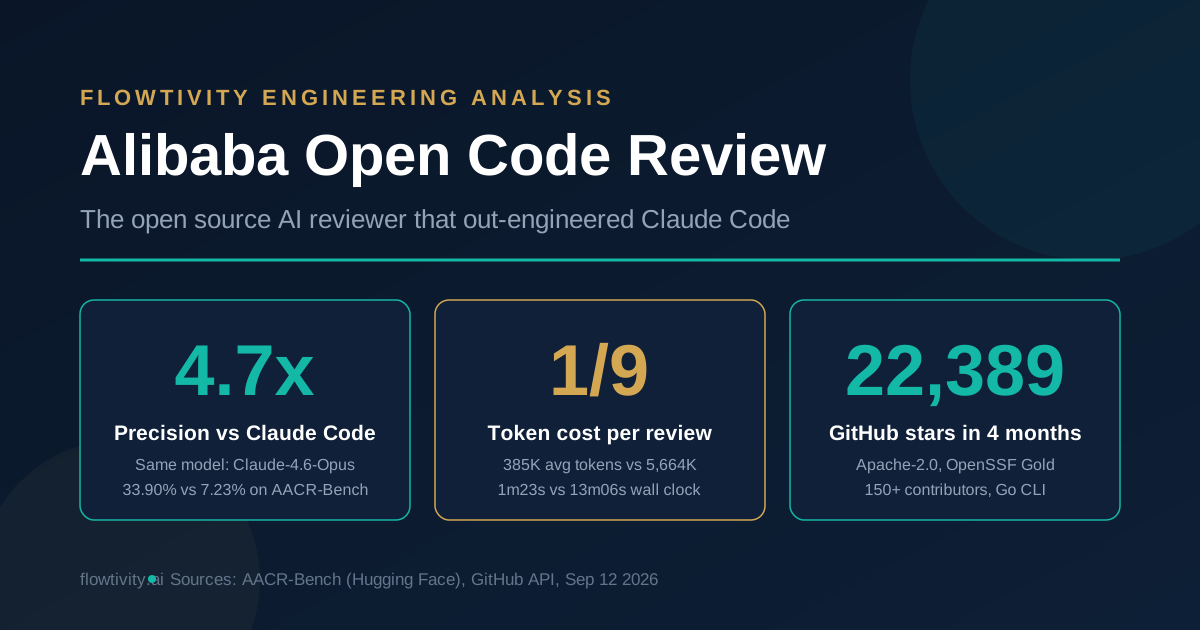
| Open Code Review CLI | Developer tooling, open source | VERIFIED FACT — Apache 2.0, v1.2.0, 10+ languages 25 | Open-sourced after two years of internal use, per vendor 25 |
| Alibaba.com seller membership | B2B marketplace access | VERIFIED FACT — published pricing page 1 | $1,999/year US; AI listing tools; Trade Assurance 1 |
| Trade Assurance | Buyer protection service | COMPANY CLAIM — vendor marketing 1 | 160M+ orders secured, $500M+ daily processed, per vendor; reliability contested 2931 |
| AMap navigation and mapping | Consumer/enterprise mapping | VERIFIED FACT — long-standing product | Underpins the OmniNav research line 21 |
What is not sold, on the public evidence: any robot, any robot platform, any robot operating system, any autonomy stack licensed for third-party hardware. The dossier contains no Alibaba robotics product page, no SKU, no pricing, no datasheet and no customer. This is stated plainly because the absence is the most decision-relevant fact in the section.
The research artefacts deserve separate treatment from the product portfolio, and §5 covers them in detail. For portfolio purposes, the relevant point is that SSM-VLA, ABot-C0, OmniNav and the multi-view diffusion work are research frameworks, published as papers, with no evidence of productisation 19202122. A reader who encounters these papers through a vendor-adjacent channel and concludes that Alibaba "has" a quadruped or a manipulation stack is making an inference the evidence does not support.
The AI models are a different matter. Qwen 3.7 Max and Wan 3.0 are real, API-accessible products with published pricing and benchmark claims 112326. For robotics teams, their relevance is indirect but genuine: a 1M-token-context language model is a plausible task planner, and a 30-second video generator is a plausible synthetic-data engine for manipulation training. Neither is sold as a robotics product, and neither has published robotics-specific evaluation. EDITORIAL INFERENCE: the most likely near-term robotics relevance of Alibaba's portfolio is as a supplier of models and compute to other companies' robot programmes, not as a robot vendor itself.
Products & versions

04Technology Stack: Strengths and the Work That Remains
Alibaba's technology stack, assessed for robotics relevance, has three layers: infrastructure, models, and research frameworks. The first two are strong and well-evidenced. The third is promising and unproven.
Infrastructure layer — strength, verified. The HK$80bn raise is explicitly directed at full-stack AI capability, with roughly 60% to global computing infrastructure and 40% to AI data centres and cloud upgrades 910. Combined with the RMB 380bn three-year capex plan (RMB 190bn spent by end of June), this represents one of the largest compute buildouts outside the United States 24. For any robotics company training large models, access to this compute — whether purchased or partnered — is a material consideration. The infrastructure layer is the part of Alibaba's stack that is unambiguously real and unambiguously scaled.
Model layer — strength with caveats. Qwen 3.7 Max is positioned as a long-horizon agentic model, with vendor-reported benchmarks of 92.4% on GPQA Diamond and 80.4% on SWE-bench Verified, a 1M-token context window, and API-only availability 26. The most striking vendor claim is that the model ran a continuous kernel-optimisation task for more than 35 hours with over 1,000 tool calls without losing context 26. This is a COMPANY CLAIM and it is a software demonstration, not a robot task. It is also not independently verified. The correct reading is that Alibaba is claiming competitive long-horizon agentic capability, which if true would be relevant to robot task planning, and that the claim rests entirely on vendor evidence.
Wan 3.0, the video model, generates up to 30 seconds of video at API pricing of $0.05–$0.20 per second 11. For robotics, the plausible use is synthetic training data generation — a technique with real research traction elsewhere. Alibaba has not published robotics-specific evaluation of Wan 3.0 as a data engine, so this remains an EDITORIAL INFERENCE about potential rather than a demonstrated capability.
Research framework layer — promising, unproven. The four AMap papers describe a coherent set of capabilities:
| Paper / framework | Domain | Claimed capability | Evidence status |
|---|---|---|---|
| SSM-VLA | Vision-language-action | VLA framework with visual chain-of-thought, geometric and dynamic awareness 19 | VERIFIED FACT (paper exists); no deployment evidence |
| ABot-C0 | Quadruped locomotion | Motion control trained on 16,074 motion clips; zero-shot tracking 20 | VERIFIED FACT (paper exists); no hardware evidence |
| OmniNav | Navigation | Unified navigation framework at 5 Hz 21 | VERIFIED FACT (paper exists); no deployment evidence |
| G3T / multi-view diffusion | Perception for manipulation | Learning action manifold with multi-view latent priors 22 | VERIFIED FACT (paper exists); no deployment evidence |
What remains. Three gaps are conspicuous. First, there is no evidence of integration: the papers describe separate frameworks, and nothing in the dossier shows them combined into a single system. Second, there is no evidence of hardware: no Alibaba robot platform is described anywhere in the dossier, which means the locomotion and manipulation work has no disclosed target body. Third, there is no autonomy evidence: no task, no environment, no success rate, no supervision model. The autonomy verdict is unknown at 0.9 confidence, and that verdict is a statement about the evidence, not a criticism of the research.
EDITORIAL INFERENCE: Alibaba's stack is best understood as a strong AI-infrastructure and model business with a research-grade embodied-AI capability attached. The infrastructure and models are commercially deployable today. The embodied work is not, and the gap between the two is not bridged by anything in the public record.
05Research, Papers, Authors and Labs
The research record is the strongest robotics-specific evidence in the dossier, and it is worth being precise about what it does and does not establish.
The papers. Four arXiv papers are attributed to AMap/Alibaba research:
- SSM-VLA — "Seeing Space and Motion: Enhancing Latent Actions with Geometric and Dynamic Awareness for Vision-Language-Action Models" — proposes a VLA framework incorporating visual chain-of-thought reasoning with geometric and dynamic awareness 19.
- ABot-C0 — "Behavior Foundations for Quadruped Robots: ABot-C0 Technical Report" — describes quadruped motion control trained on 16,074 motion clips, with claimed zero-shot tracking capability 20.
- OmniNav — a unified navigation framework operating at 5 Hz 21.
- G3T / multi-view diffusion — "Learning Action Manifold with Multi-view Latent Priors for Robotic Manipulation" — addresses manipulation through multi-view latent priors 22.
These are VERIFIED FACTS in the sense that the papers exist, are publicly accessible, and describe the frameworks attributed to them. What they do not establish is deployment. A technical report describing a quadruped controller trained on 16,074 motion clips is a research artefact; it is not evidence that Alibaba operates a quadruped, sells one, or has demonstrated one performing useful work in a customer environment 20.
The labs and authors. The dossier attributes the robotics work to AMap, Alibaba's mapping and navigation subsidiary 19202122. This is a meaningful organisational detail. AMap's core competence is navigation, mapping and spatial data, which aligns naturally with the OmniNav line and with the geometric-awareness framing in SSM-VLA 1921. It aligns less obviously with quadruped locomotion and manipulation, which suggests either a broadening research mandate or a collaboration with external groups. UNKNOWN: the dossier does not disclose author affiliations beyond the AMap/Alibaba attribution, does not identify principal investigators, and does not indicate whether the work is conducted by a dedicated robotics lab or by researchers with other primary responsibilities. This is a genuine gap; in robotics research, the identity and continuity of the core team is often more predictive of productisation than the papers themselves.
The models as research outputs. Qwen 3.7 Max and Wan 3.0 are research-adjacent outputs with published benchmarks and, in the case of the code-review CLI, an open-source release under Apache 2.0 at version 1.2.0 supporting 10+ languages 25. The open-source release is notable because it is a VERIFIED FACT of a kind that is easy to check: the licence, the version and the language support are all inspectable. It also demonstrates a pattern — internal tool, battle-tested for two years, then open-sourced — that Alibaba has applied elsewhere and may apply to robotics components in future 25.
What the research does not show. No paper in the dossier reports a deployed system, a customer trial, a field study, a failure analysis or a safety case. No paper reports autonomy level, supervision requirements or teleoperation. No paper reports hardware specifications for an Alibaba-built robot. The research is framework-level and benchmark-level, which is normal for arXiv work and insufficient for any deployment claim.
<!-- module: papers --> <!-- module: authors-labs --> <!-- module: repos --> <!-- module: datasets -->06Media Evidence Library: What the Videos Prove
The dossier contains six video sources, and they divide cleanly into three categories: corporate access journalism, vendor demonstrations, and financial commentary. None of them is evidence of autonomous robot work, and it is worth being explicit about why.
Corporate access. The CNBC headquarters report provides the Hangzhou global HQ location, the ~100,000 global headcount and the 20,000+ Hangzhou figure 27. This is VERIFIED FACT-grade for corporate facts — a major broadcaster with camera access — and it is the source of the ">$400bn market cap" figure that conflicts with CNBC's own real-time quote of $281.5bn 327. The conflict is instructive: the video figure is likely stale or rounded, and the real-time financial data provider should be preferred. The video establishes corporate scale and culture; it does not establish robotics capability.
Vendor demonstrations. The Qwen 3.7 Max hands-on and the "Sovereign of Long-Horizon AI Agents" video present the model's capabilities, including the 35+ hour kernel-optimisation claim with 1,000+ tool calls 2326. The open-code-review short presents the CLI release 25. These are COMPANY CLAIMS in video form. They are useful for understanding what Alibaba says its models do. They are not independent verification, and critically, they are not robot tasks. A language model running a software optimisation loop for 35 hours tells you nothing about whether any physical system can perform a task autonomously.
Financial commentary. The "$6.5B cash burn" video supplies the FY2026 free-cash-flow figure, the 75% net profit decline, the RMB 67.68bn capex, the margin compression from 14% to 5%, the RMB 16bn AI ARR, the 45% cloud growth and the twelve-quarter triple-digit AI revenue streak 24. These are COMPANY CLAIMS relayed through independent commentary; they are directionally credible and should be verified against filings before being relied on for any decision.
What the media library proves, and what it does not. It proves that Alibaba is a large, AI-focused company with an active communications operation and a model portfolio it is willing to demonstrate publicly. It does not prove autonomy, deployment, or robotics capability. The dossier contains no video of an Alibaba robot performing a task, choreographed or otherwise. That absence is itself the finding.
Media library
07Commercial Reality
Commercial reality for Alibaba divides into three businesses with very different evidence quality: cloud and AI, the B2B marketplace, and robotics (which has no commercial reality to assess).
Cloud and AI — real, growing, capital-hungry. AI model services are reported at more than RMB 16bn ARR, cloud external revenue grew 45%, and AI product revenue has grown at triple-digit rates for twelve consecutive quarters 24. These are COMPANY CLAIMS relayed through financial media. The capex and cash-flow figures — RMB 67.68bn capex, negative $6.48bn free cash flow, 75% net profit decline, margin compression from 14% to 5% — are the cost side of the same story 24. EDITORIAL INFERENCE: the cloud and AI business is commercially real and strategically central, but it is currently consuming more capital than it generates, and the HK$80bn raise exists precisely because internal cash flow no longer covers the programme 69.
The B2B marketplace — real, priced, reputationally contested. Alibaba.com's US seller membership is $1,999 per year, with AI storefront and listing tools, Trade Assurance, roughly two-week onboarding and one-click migration 1. Trade Assurance is marketed as securing 160M+ orders and processing $500M+ daily 1. Those are COMPANY CLAIMS describing scale, not reliability.
The independent evidence on reliability is mixed and should be reported as such. Multiple community threads document serious buyer harm: goods never shipped, refunds not received, questions unanswered, and a perception that Alibaba does not back guaranteed delivery 293133. Other buyers report no significant problems beyond slow and expensive shipping 3031. The honest reading is that Alibaba.com is a legitimate platform with a real fraud problem, that outcomes depend heavily on supplier selection and buyer diligence, and that Trade Assurance's scale figures do not contradict the complaint pattern — a service can process $500M daily and still fail individual buyers.
| Claim | Source type | Independent evidence | Assessment |
|---|---|---|---|
| Trade Assurance secures 160M+ orders, $500M+ daily | COMPANY CLAIM 1 | Community reports of non-delivery and failed refunds 293133 | Scale claim is plausible; reliability claim is not supported |
| AI model services >RMB 16bn ARR | COMPANY CLAIM 24 | None in dossier | Directional; verify against filings |
| Cloud external revenue +45% | COMPANY CLAIM 24 | None in dossier | Directional; verify against filings |
| $1,999/year US seller membership | VERIFIED FACT 1 | Published pricing page | Directly checkable |
Robotics — no commercial reality on the public evidence. No customer, no contract, no deployment, no pricing, no pilot. The dossier contains nothing that would let an analyst assess Alibaba as a robotics supplier. UNKNOWN: whether any robotics research has been transferred to a business unit, and whether any external party has paid for it.
Customers & deployments
Sections 8 through 14 follow in the second part of this report.
08Markets and Use Cases
Alibaba does not sell robots. This is the single most important framing fact for this section, and it is worth stating before any market taxonomy, because the temptation to slot Alibaba into a "robotics markets" narrative is strong and, on the evidence assembled here, unsupported. What Alibaba sells, at commercial scale, is cloud compute, AI model access, e-commerce infrastructure, logistics, payments, and advertising. Its robotics-adjacent output is research (four arXiv papers from the AMap unit, discussed in §5) and, indirectly, the compute and model layer that other companies' robots may eventually run on. Any market analysis that treats Alibaba as a robot vendor is reading the wrong company.
That said, Alibaba's addressable markets intersect with robotics in three specific and defensible ways, and it is worth separating them cleanly.
First: AI infrastructure as an input to robotics. The HK$80bn placement, with 100% of net proceeds earmarked for full-stack AI and roughly 60% directed to global computing infrastructure and 40% to AI data centres and cloud upgrades 689, is the largest single capital commitment in the dossier. The stated purpose is to build the compute substrate on which models like Qwen and Wan run 811. Robotics companies are, increasingly, consumers of exactly this substrate: training VLA models, running inference at the edge, storing and processing multimodal data. Alibaba Cloud is a plausible supplier to that demand. But "plausible supplier to robotics companies" is not the same as "robotics company," and the dossier contains no named robotics customer for Alibaba Cloud. This is an inference about market adjacency, not a verified revenue line.
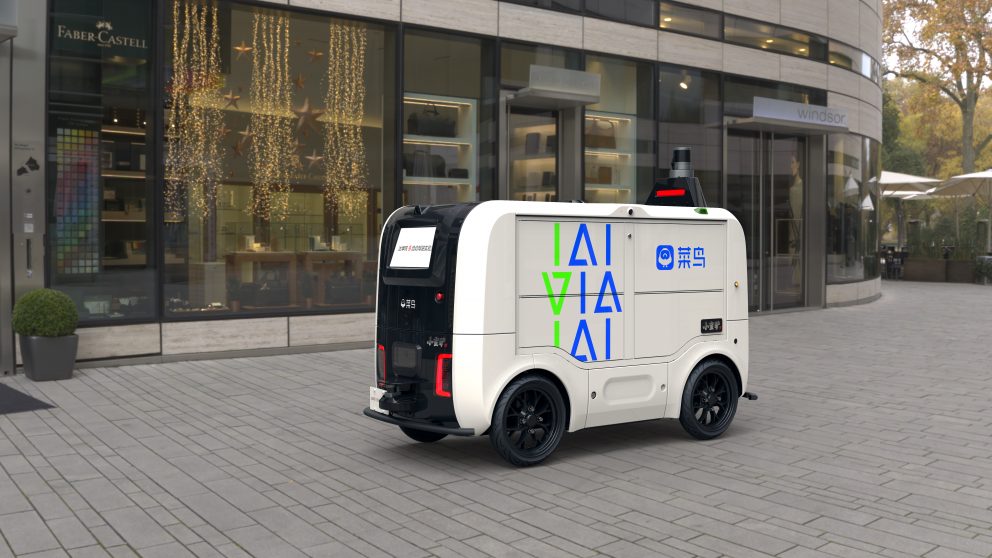
Second: the e-commerce and logistics surface. Alibaba's core commerce business (Taobao, Tmall, Alibaba.com, Cainiao logistics) operates at a scale where warehouse automation, last-mile delivery, and fulfilment robotics are economically material. Alibaba has historically invested in and operated automated warehousing, and its Cainiao unit has deployed automated sortation. The dossier, however, contains no facts on Cainiao robotics deployment, no named automation vendors, and no disclosed robot fleet size. This is a genuine gap. Where a company of Alibaba's scale operates logistics infrastructure, the absence of public robotics disclosure is itself informative: either the automation is unremarkable and not marketed, or it is not a strategic priority. Not publicly disclosed.
Third: the AMap research surface. AMap (Gaode Map) is Alibaba's mapping and navigation subsidiary, and it is the institutional home of the four robotics papers in the dossier: SSM-VLA 19, ABot-C0 20, OmniNav 21, and the multi-view diffusion manipulation work 22. AMap's commercial business is consumer and enterprise navigation, ride-hailing aggregation, and location services. The robotics research appears to be exploratory, aimed at capabilities (navigation, motion control, manipulation) that could eventually feed autonomous vehicles, delivery, or embodied AI. There is no evidence in the dossier that any of this research has been productised, and no evidence of a go-to-market motion. The market for AMap's robotics research, at present, is the research community.
Use-case table: what is evidenced versus what is inferred
| Use case | Evidence status | What the dossier actually shows |
|---|---|---|
| Cloud/AI compute for third parties | Verified commercial | Alibaba Cloud external revenue +45%; AI product revenue triple-digit growth for 12 consecutive quarters 818 |
| AI model API access (Qwen, Wan) | Verified commercial | Wan3.0 API priced $0.05–$0.20/s; Qwen 3.7 Max API-only 112326 |
| E-commerce marketplace (B2B/B2C) | Verified commercial | Alibaba.com US seller membership $1,999/yr; Trade Assurance scale claims 1 |
| Logistics/warehouse robotics | Not publicly disclosed | No facts on Cainiao robot fleets or automation vendors |
| Autonomous navigation products | Research only | OmniNav paper, 5 Hz unified navigation 21; no product |
| Quadruped/legged robots | Research only | ABot-C0 motion control, 16,074 clips, zero-shot tracking 20; no product |
| VLA / manipulation systems | Research only | SSM-VLA 19, multi-view diffusion manipulation 22; no product |
| Consumer/home robots | No evidence | Nothing in dossier |
The honest read: Alibaba's robotics-relevant markets are (a) the compute and model layer, where it is a genuine commercial player, and (b) research, where it is a credible but unproductised participant. The logistics and consumer robot markets, where a company of this scale might plausibly operate, are simply not evidenced in the public record assembled here. That is a finding, not a gap to be papered over.
One further market consideration deserves mention: the geography of demand. Alibaba's AI infrastructure buildout is explicitly global in framing (60% to "global computing infrastructure") 9, but its commercial centre of gravity remains China, and its international expansion (Alibaba.com, Alibaba Cloud international, Lazada, Trendyol) is real but secondary to the domestic business. For robotics companies considering Alibaba as a supplier, the relevant question is data residency, latency, and regulatory jurisdiction, none of which the dossier addresses. For investors, the relevant question is whether the AI capex translates into durable margin, which §7 and §11 address.
09Competitive Landscape
Alibaba competes in several distinct arenas, and conflating them produces bad analysis. The dossier supports a competitive read in four: Chinese cloud and AI infrastructure, foundation models, e-commerce, and (weakly) robotics research. Each has a different competitive set, and Alibaba's position differs sharply across them.
Cloud and AI infrastructure. The primary competitors are Tencent Cloud, Huawei Cloud, Baidu AI Cloud domestically, and AWS, Microsoft Azure, and Google Cloud internationally. Alibaba Cloud is the largest cloud provider in China by market share and a meaningful but smaller player globally. The competitive dynamic in 2026 is dominated by capex: the 380bn yuan three-year commitment (with 480bn yuan under consideration) 810 is a response to the same compute arms race that has driven Microsoft, Google, and Amazon to record capital expenditure. Alibaba's disadvantage relative to US hyperscalers is access to leading-edge silicon, a constraint discussed in §10. Its advantage is domestic scale and the integration of cloud with its own model stack.
Foundation models. Qwen competes with DeepSeek, Baidu's Ernie, Zhipu, Moonshot, and the open-weight Western ecosystem (Llama, Mistral). The dossier reports Qwen 3.7 Max at 92.4% on GPQA Diamond and 80.4% on SWE-bench Verified, API-only, with a 1M-token context 2326. These are company-reported benchmarks and should be treated as such, but they place Qwen in the top tier of Chinese models and competitive with frontier Western models on some reasoning tasks. The strategic distinction is that Qwen has a substantial open-weight lineage (the dossier notes an open-source code-review CLI under Apache 2.0 25), which builds developer mindshare even where it does not directly monetise. Wan3.0 competes in video generation against Sora, Runway, Kling, and others 11.
E-commerce. Alibaba.com competes in B2B cross-border with Global Sources, Made-in-China, and, increasingly, direct-to-buyer channels. Domestically, Taobao/Tmall compete with Pinduoduo and JD.com. This is Alibaba's mature, cash-generative core, and the competitive story here is margin defence rather than growth, as §7 noted (operating margin compressed from 14% to 5%).
Robotics research. Here Alibaba is a minor participant. The AMap papers 19202122 sit in a field crowded by Unitree, UBTech, AgiBot, Galbot, and the major academic labs. Alibaba has no robot product, no disclosed fleet, and no named robotics customer. Treating it as a robotics competitor would be a category error.
Competitive positioning table
| Arena | Alibaba position | Key competitors | Evidence strength |
|---|---|---|---|
| China cloud | Leader by share | Tencent, Huawei, Baidu | Strong (revenue growth reported) |
| Global cloud | Challenger | AWS, Azure, GCP | Moderate (international expansion noted, share not disclosed) |
| Foundation models | Top-tier China, competitive globally | DeepSeek, Baidu, Zhipu, Llama ecosystem | Moderate (company benchmarks) |
| Video generation | Active | Sora, Runway, Kling | Weak (single product report) |
| B2B e-commerce | Leader | Global Sources, Made-in-China | Strong (pricing/offering documented) |
| Domestic e-commerce | Leader under pressure | Pinduoduo, JD.com | Moderate (margin compression reported) |
| Robotics | Research participant only | Unitree, UBTech, AgiBot, academic labs | Weak (papers only, no product) |
The competitive conclusion that matters for a robotics audience: Alibaba is not a robotics competitor, but it is a potential supplier to robotics companies (compute, models) and a potential acquirer or strategic investor in the space. Its competitive pressure on robotics firms is indirect, through the cost and capability of the AI layer they depend on, not through direct product competition. Whether that changes depends on whether the AMap research is ever productised, which the dossier gives no reason to expect in the near term.
Competitive comparison
| Robot | Maker | Autonomy | Conf. |
|---|---|---|---|
| iRobot Roomba Combo 10 Max | iRobot | Autonomous | 0.90 |
| Mobile ALOHA (Stanford) | Stanford University | Teleoperated | 0.90 |
| 1X NEO | 1X Technologies | Remote-Assisted | 0.90 |
10Geopolitical Context and Constraints
Alibaba sits at the intersection of three geopolitical fault lines, and the dossier touches all three without resolving any of them. This section states what is evidenced and flags what is not.
Export controls and silicon access. The most consequential constraint on Alibaba's AI ambitions is access to advanced semiconductors. The dossier does not name specific chip restrictions, but the capex plan (380bn yuan, possibly 480bn yuan) 810 and the explicit framing of the placement as funding "full-stack AI" 68 must be read against a backdrop in which Chinese firms face restricted access to the most advanced Nvidia accelerators and are pushed toward domestic alternatives (Huawei Ascend, Cambricon, and others). The dossier does not disclose Alibaba's chip sourcing, its domestic-silicon mix, or the performance penalty it accepts. This is a material unknown: the economics of the AI buildout depend heavily on whether Alibaba can procure compute at competitive cost-per-FLOP. Not publicly disclosed.
US listing and regulatory exposure. Alibaba is listed on the NYSE (BABA) as well as the HKEX (9988) 234. This dual listing exposes it to US securities regulation, the Holding Foreign Companies Accountable Act framework, and the periodic risk of delisting pressure, as well as to Chinese regulatory oversight of data, technology export, and outbound investment. The dossier contains no facts on current HFCAA status or any specific regulatory action. The HK$80bn placement was executed in Hong Kong 67, which is consistent with a strategy of deepening the Hong Kong listing as a hedge against US-listing risk, but the dossier does not state this as a motive. Editorial inference, not verified fact.
Data, jurisdiction, and the robotics dimension. For robotics specifically, the geopolitical constraint is data residency and model deployment jurisdiction. A VLA model trained on data in China and deployed on a robot in Europe or the US raises questions about data flows, model provenance, and regulatory compliance (EU AI Act, US sectoral rules). The dossier contains no facts on Alibaba's data governance for robotics, because Alibaba has no deployed robotics product. This is a constraint that would become material only if the research were productised.
The share-placement reaction as a geopolitical signal. CNBC reported that Alibaba shares fell 10% after the $10.2bn placement announcement 14. A 10% single-day decline on a capital raise is a strong market signal, and it is worth reading carefully. It suggests investor concern about dilution and about the return profile of the AI capex, not necessarily about geopolitics. But in the context of a company already trading well below its 52-week high (the range is 91.99–192.67, with the stock at $113.24) 234, the reaction indicates that the market is not pricing the AI pivot as a sure thing. The geopolitical backdrop, including silicon access and US-listing risk, is part of why.
What the dossier does not support. There is no evidence in the dossier of Alibaba being sanctioned, of specific export-control actions against it, of robotics-specific technology restrictions, or of any government intervention in its robotics research. Claims that Alibaba is "blocked" from robotics or "restricted" in AI should not be made on this evidence. The constraints are real but general, and they apply to the AI infrastructure business, not to a robotics business that does not yet exist commercially.
Constraint summary
| Constraint | Evidence in dossier | Confidence |
|---|---|---|
| Advanced chip access | Implied by AI capex and China context; not stated | Low (inference) |
| US listing/HFCAA risk | Dual NYSE/HKEX listing confirmed; no action noted | Moderate (listing fact only) |
| Data residency for robotics | No facts (no robotics product) | N/A |
| Market reaction to AI capex | 10% share drop on placement 14 | High (reported) |
| Sanctions on Alibaba | No evidence | N/A |
The geopolitical read, stated plainly: Alibaba's AI buildout is a bet that it can assemble competitive compute and models despite restricted access to the best silicon, and that its Hong Kong listing provides sufficient capital-market resilience. The dossier supports the existence of the bet and the capital raise; it does not support any conclusion about whether the bet will pay off.
11The Hype, the Real and the Ugly
This section is the report's discipline check. It separates what Alibaba and its ecosystem claim from what independent evidence supports, and it names the gaps without euphemism.
The hype. Three claims dominate the promotional surface. First, the "full-stack AI" narrative: 100% of the HK$80bn placement to AI, a 380bn yuan capex plan, AI revenue growing at triple-digit rates for twelve consecutive quarters 6818. Second, the model-performance narrative: Qwen 3.7 Max at 92.4% GPQA Diamond and 80.4% SWE-bench Verified, a 1M-token context, and a vendor demonstration of a 35+ hour continuous kernel-optimisation task with 1,000+ tool calls 2326. Third, the marketplace-trust narrative: Trade Assurance securing 160M+ orders and processing $500M+ daily 1.
The real. The capital raise is verified by multiple official filings and news sources, with the size, share count, and price agreeing across them 67916. The AI revenue growth and cloud external revenue +45% are reported consistently 818. The model releases (Wan3.0, Qwen 3.7 Max, the open-source code-review CLI) are documented 11232526. The AMap robotics papers exist and are peer-visible on arXiv 19202122. These are real artefacts. The company is doing what it says it is doing at the level of capital deployment and model release.
The ugly. Three things. First, the financials: quarterly net profit down 75%, free cash flow negative $6.48B in FY2026, operating margin compressed from 14% to 5% 24. The AI pivot is being funded from a position of deteriorating profitability, and the market's 10% sell-off on the placement 14 reflects that. Second, the autonomy claim: the 35+ hour kernel-optimisation demonstration is a software-model demo, not a physical robot task, and it is not independently verified. The dossier's autonomy verdict is "unknown" with high confidence (0.9), and that verdict should be respected. No Alibaba robot has been shown to perform a task autonomously, under supervision, remotely assisted, or teleoperated. Third, the marketplace reputation: independent community reports document recurring scam and non-delivery complaints, buyers unable to obtain refunds, and questions going unanswered, despite Trade Assurance marketing 29303133. The vendor claim describes the service's scale, not its reliability.
Claim-versus-evidence table
| Claim | Source type | Independent evidence | Verdict |
|---|---|---|---|
| HK$80bn raised, 100% to AI | Official filing + multiple news | Agrees across sources 67916 | Verified |
| 380bn yuan capex over 3 years | Company/news | Reported consistently 810 | Verified (plan, not outcome) |
| AI revenue triple-digit growth 12 quarters | Company | Reported 18 | Company claim, plausible |
| Qwen 3.7 Max benchmarks | Company | Not independently replicated in dossier | Company claim |
| 35+ hr autonomous kernel optimisation | Vendor demo | No independent verification | Unverified; not a robot task |
| Trade Assurance 160M+ orders | Company | Scale claim; reliability contradicted by community 293133 | Company claim; trust gap |
| AMap robotics papers | arXiv | Peer-visible 19202122 | Verified (research, not product) |
| Any deployed autonomous robot | None | None | No evidence |
The core discipline point. The dossier's summary is explicit: there is NO evidence of any deployed, task-performing autonomous robot system from Alibaba, only research frameworks and software models. A choreographed demo is not proof of autonomous work; a shipment is not proof of productive deployment; a partnership announcement is not proof of a paid customer. Alibaba's robotics output is research. Its commercial output is cloud, models, and e-commerce. The gap between those two facts is where hype lives, and this report declines to close it.
Claim tracker
The claim rests on an arXiv paper [19] from Alibaba/AMap researchers, which documents a research framework but provides no independent third-party reproduction, benchmark comparison, or real-robot deployment evidence.
The technical report [20] is a self-published arXiv paper describing training data and zero-shot tracking, with no independent hardware test, video verification, or third-party evaluation of a physical quadruped.
The 5 Hz navigation claim comes from an Alibaba/AMap arXiv paper [21], which is a research artifact with no independent validation on a deployed robot platform.
This is a vendor demonstration for a software model [23][26], not a physical robot task, and the dossier explicitly notes no independent verification of sustained autonomous operation exists.
The dossier contains no evidence of any deployed, task-performing autonomous robot system — only research frameworks (SSM-VLA, ABot-C0, OmniNav, G3T) and software models — and the autonomy verdict is explicitly 'unknown'.
Independent Reddit community reports [29][30][31][33] document recurring scam/non-delivery complaints, unanswered questions, and failure to guarantee delivery despite Trade Assurance marketing, contradicting the implied reliability.
Official filings [6][7][9] and independent news [8][10][12][14] corroborate the HK$80bn placement size, share count, price, and the 100% AI allocation, though the 60/40 split between computing infrastructure and AI data centers rests on a single filing [9].
These metrics appear only in news reports [11][24] citing company figures, with no independent audit, regulatory filing breakdown, or third-party verification of the ARR and growth figures.
12Future Scenarios
Scenarios are not predictions. They are structured ways to think about what would have to be true for different outcomes, and what evidence would distinguish them. Three scenarios are offered, with the signposts that would confirm or falsify each.
Scenario A: The AI infrastructure bet pays off (probability: moderate, ~40%). Alibaba converts the HK$80bn placement and the 380bn yuan capex into a durable cloud and model business, with AI revenue growth translating into margin recovery. Qwen and Wan become reference models for enterprise and developer use, and Alibaba Cloud captures a meaningful share of global AI compute demand. In this scenario, robotics companies are customers of Alibaba's compute and models, and Alibaba's AMap research may feed autonomous-navigation products. Signposts: operating margin recovering above 10%; free cash flow turning positive; named non-Chinese enterprise customers for Qwen or Alibaba Cloud; a productised AMap navigation or motion system. The dossier currently shows the capital deployment but not the margin recovery, so this scenario is a bet on execution, not a current state.
Scenario B: The AI buildout strains the balance sheet without a robotics payoff (probability: moderate-to-high, ~45%). The capex is spent, AI revenue grows but not enough to offset margin compression and negative free cash flow, and the market continues to discount the pivot. Alibaba remains a strong cloud and e-commerce company but not a frontier AI leader, constrained by silicon access. Robotics research stays research. Signposts: further profit declines; additional capital raises; capex guidance cut; no productised robotics output. The dossier's financial facts (net profit -75%, FCF -$6.48B, margin 14%→5%) 24 are consistent with this scenario being live.
Scenario C: Alibaba becomes a robotics player (probability: low, ~15%). Alibaba productises the AMap research into a navigation, delivery, or embodied-AI product, or acquires a robotics company, or spins out a robotics unit. This would require a strategic decision not currently evidenced. Signposts: a robotics product announcement with specifications; a named robotics customer; a robotics acquisition; a dedicated robotics business unit with a P&L. The dossier contains none of these. This scenario is included for completeness, not because the evidence supports it.
Scenario table
| Scenario | Probability | Key signpost | Current evidence |
|---|---|---|---|
| A: AI bet pays off | ~40% | Margin recovery, named customers | Capital deployed; margin not recovered |
| B: Strain without robotics payoff | ~45% | Further profit decline, capex cut | Financials consistent with this |
| C: Becomes robotics player | ~15% | Robotics product/customer/acquisition | None |
The scenarios are not mutually exclusive in the short term: Alibaba can be in Scenario B on financials while Scenario A's model business grows. The distinguishing variable is margin, not revenue. And in all three scenarios, the robotics question is secondary, which is itself the most important structural fact about Alibaba from a robotics-industry perspective.
13What to Watch: A Live Monitoring Checklist
This checklist is designed to be used, not filed. Each item names a specific, observable signal and the evidence that would move the assessment. Items are grouped by the question they answer.
On the AI infrastructure bet (answers: is Scenario A or B unfolding?)
- Quarterly operating margin. Watch for recovery above 10%. The dossier's current figure is 5%, down from 14% 24.
- Free cash flow. Watch for a return to positive. The dossier reports -$6.48B in FY2026 24.
- Capex guidance. Watch for confirmation of the 480bn yuan upper figure or a cut from 380bn 810.
- Named enterprise customers for Qwen or Alibaba Cloud outside China. The dossier has none; a named non-Chinese customer would be a strong positive signal.
- Additional capital raises. A second placement would suggest the first was insufficient.
On the model stack (answers: is Qwen/Wan competitive and monetising?)
- Independent benchmark replication of Qwen 3.7 Max's 92.4% GPQA Diamond and 80.4% SWE-bench Verified 2326. Company benchmarks should be treated as claims until replicated.
- Wan3.0 API pricing and usage disclosures 11. Pricing is disclosed ($0.05–$0.20/s); usage is not.
- Open-source releases and their adoption. The Apache 2.0 code-review CLI 25 is a signal of developer-ecosystem strategy.
On robotics (answers: is Scenario C emerging?)
- Any robotics product announcement with specifications. None exists in the dossier.
- Any named robotics customer or paid deployment. None exists.
- Any robotics acquisition or dedicated business unit. None exists.
- Any AMap research paper that describes a deployed system rather than a framework. The four papers 19202122 are all research.
- Any autonomy claim for a physical system, with independent verification. The only autonomy claim is a software demo 26, unverified.
On the marketplace (answers: is the trust gap closing?)
- Independent buyer-protection outcomes, not scale claims. The dossier's community evidence 29303133 documents harm despite Trade Assurance marketing.
- Any change to Trade Assurance terms or dispute-resolution transparency.
On geopolitics (answers: is the constraint binding?)
- Disclosure of chip sourcing or domestic-silicon mix. Not publicly disclosed.
- Any US regulatory action on the listing or on technology exports.
- Data-residency or model-deployment rules affecting Chinese AI models in Western markets.
Checklist summary
| Signal | Current state | What it would change |
|---|---|---|
| Operating margin >10% | 5% 24 | Confirms Scenario A |
| FCF positive | -$6.48B 24 | Confirms Scenario A |
| Named non-Chinese AI customer | None | Confirms commercial traction |
| Independent Qwen benchmark | None | Confirms model claims |
| Robotics product | None | Opens Scenario C |
| Robotics customer | None | Opens Scenario C |
| Chip sourcing disclosure | None | Resolves key unknown |
The checklist's purpose is to prevent the assessment from drifting on narrative. If none of the robotics items move, the correct conclusion remains that Alibaba is not a robotics company, regardless of how much AI capital it deploys.
14Sources and Methodology
Methodology. This report was assembled from a research dossier gathered on 2026-09-18, comprising 34 numbered sources across official filings, financial data providers, news outlets, arXiv preprints, video reports, and community forums. The dossier's overall confidence is 0.62, reflecting a strong financial and AI-infrastructure evidence base and a thin robotics evidence base. The report applies a four-label evidence discipline throughout: VERIFIED FACTS (regulatory filings, official product docs, named-customer confirmation, peer-reviewed or primary research, or multiple independent sources); COMPANY CLAIMS (stated by the company, not independently verified); EDITORIAL INFERENCE (reasoned conclusions from public evidence); and UNKNOWNS (not publicly disclosed). No source is cited that does not appear in the dossier. No autonomy level is assigned to any Alibaba system, because the dossier contains no evidence of a deployed, task-performing autonomous robot. The autonomy verdict is "unknown" at confidence 0.9.
Known limitations. The dossier contains no official Alibaba robotics product documentation, no named robotics customers, no disclosed robot fleet, and no independent verification of any autonomy claim. The market-cap figures conflict ($281.5B per CNBC versus >$400B per a video source); the report treats CNBC's figure as better supported. The marketplace-reputation evidence is community-sourced and therefore indicative rather than authoritative, but it is included because it is the only independent evidence on the question. Where the dossier is thin, the report says so rather than padding.
Sources.
1 Alibaba.com US Seller Pricing & Plans — https://seller.alibaba.com/us 2 Alibaba Group Holding Limited (BABA) Stock Price, News — https://finance.yahoo.com/quote/BABA/ 3 BABA: Alibaba Group Holding Limited - Stock Price, Quote — https://www.cnbc.com/quotes/BABA 4 Alibaba Group Holding Limited (BABA) Stock Price, Quote — https://seekingalpha.com/symbol/BABA 5 Alibaba: BABA Stock Price Quote & News — https://robinhood.com/us/en/stocks/BABA/ 6 Alibaba Group Announced Completion of HK$80 Billion Placing of New Shares in Hong Kong — https://www.alibabagroup.com/en-US/document-2029365886510432256 7 阿里巴巴集团宣布800亿港元配售新股份定价(英文版) — https://ali-home.alibaba.com/document-2028384807859257344 8 Alibaba is raising $10.2bn and spending all of it on AI — https://thenextweb.com/news/alibaba-10-2bn-share-placement-ai-infrastructure 9 Alibaba raises HK$80B for AI and cloud buildout | BABA SEC Filing - Form 6-K — https://www.stocktitan.net/sec-filings/BABA/6-k-alibaba-group-holding-ltd-current-report-foreign-issuer-ac33cda68009.html 10 Alibaba Raising $10.2B for AI Infrastructure Buildout - Mingtiandi — https://www.mingtiandi.com/real-estate/data-centres/alibaba-raising-10-2b-for-ai-infrastructure-as-data-centre-push-accelerates/ 11 Alibaba's Wan 3.0 AI Debut Follows $10.2B Share Sale: What's Ahead? — https://futureisforward.com/alibabas-wan-3-0-ai-debut-follows-10-2b-share-sale-whats-ahead/ 12 Alibaba to issue US$10 billion in new shares for huge AI push amid strong investor demand | The Star — https://www.thestar.com.my/aseanplus/aseanplus-news/2026/08/28/alibaba-to-issue-us10-billion-in-new-shares-for-huge-ai-push-amid-strong-investor-demand 13 Form 6-K - Report of foreign issuer [Rules 13a-16 and 15d-16] — https://www.advfn.com/stock-market/NYSE/BABA/stock-news/99178368/form-6-k-report-of-foreign-issuer-rules-13a-16 14 Alibaba shares plunge 10% after $10.2 billion — https://www.cnbc.com/2026/08/24/alibaba-share-placement-drop-ai-hong-kong.html 15 Alibaba Group plans to raise $10.2B through a proposed — https://www.facebook.com/ForbesMENA.English/posts/alibaba-group-plans-to-raise-102b-through-a-proposed-placement-of-newly-issued-s/1640387998097087/ 16 Alibaba Group Announced Proposed Placing of New Shares in Hong Kong — https://www.businesswire.com/news/home/20260822562469/en/Alibaba-Group-Announced-Proposed-Placing-of-New-Shares-in-Hong-Kong 17 Press Room — https://www.alibabacloud.com/en/press-room?_p_lc=1 18 Alibaba's Investments in AI and Comprehensive — https://www.alibabagroup.com/document-1930116148192346112 19 Seeing Space and Motion: Enhancing Latent Actions with Geometric and Dynamic Awareness for Vision-Language-Action Models — https://arxiv.org/pdf/2509.26251 20 Behavior Foundations for Quadruped Robots: ABot-C0 Technical Report — https://arxiv.org/html/2607.07370 21 arXiv preprint — https://arxiv.org/pdf/2509.25687 22 Learning Action Manifold with Multi-view Latent Priors for Robotic Manipulation — https://arxiv.org/html/2605.11832v1 23 Qwen3.7 Max First Test – Hands-On With Alibaba's SMARTEST Model! — https://www.youtube.com/watch?v=YoVfPSh2Dvc 24 Can Alibaba Survive a $6.5B Cash Burn? The 2026 AI Pivot Decoded. — https://www.youtube.com/watch?v=JQ1jRDzeAKs 25 Alibaba Open Code Review — Two Years Of Battle-Tested AI Review, Open Sourced — https://www.youtube.com/watch?v=Yieeqs-47sI 26 Alibaba Qwen 3.7 Max: The Sovereign of Long-Horizon AI Agents — https://www.youtube.com/watch?v=dKPkcMVebKg 27 We went inside Alibaba's global headquarters | CNBC Reports — https://www.youtube.com/watch?v=fCJy0qY6NYI 28 YouTube video — https://www.youtube.com/watch?v=TL_pxgUQchQ 29 Should I trust Alibaba - Reddit — https://www.reddit.com/r/Alibaba/comments/1l1im9n/should_i_trust_alibaba/ 30 I'm new to Alibaba and am nervous about buying — https://www.reddit.com/r/Aliexpress/comments/1093nih/im_new_to_alibaba_and_am_nervous_about_buying/ 31 Anyone here who ordered from ALIBABA com? — https://www.reddit.com/r/Aliexpress/comments/1ezhdk4/anyone_here_who_ordered_from_alibaba_com/ 32 r/Alibaba — https://www.reddit.com/r/Alibaba/ 33 Is Alibaba for real? - Reddit — https://www.reddit.com/r/Alibaba/comments/16of9z4/is_alibaba_for_real/ 34 r/baba — https://www.reddit.com/r/baba/
Closing note. The dossier's central finding is negative and should be stated without hedging: Alibaba is a major AI-infrastructure and e-commerce company with credible robotics research and no deployed autonomous robot system. The capital it is deploying is real, the models it is releasing are real, and the research papers it is publishing are real. The robot is not. Any assessment that says otherwise is reading the hype, not the evidence.