Vicarious Surgical | Surgical Robotics Technology
Vicarious Surgical is a Boston-area medical robotics company developing a miniaturized robotic surgical system designed to enable minimally invasive abdominal procedures. The platform reportedly uses a pair of human-scale robotic arms that can be inserted through a single small incision, combined with an immersive 3D visualization interface that translates a surgeon's natural hand movements into precise in-body motion. The system is intended to give surgeons a sense of operating with their own hands inside the patient's body, potentially reducing recovery time and surgical complications compared with conventional laparoscopic approaches. As of public reporting, Vicarious Surgical has been pursuing U.S. Food and Drug Administration (FDA) clearance and has attracted significant venture and SPAC-related investment attention, positioning itself as a next-generation challenger in the competitive surgical robotics market.
Overview and Use Cases
Vicarious Surgical's robotic platform is designed primarily for minimally invasive abdominal surgery. The core concept centers on deploying two miniaturized robotic arms—reportedly modeled on human arm kinematics—through a single small incision, alongside a stereoscopic camera system. This single-port approach aims to reduce the number of incisions required compared with multi-port laparoscopic or robotic procedures.
Target procedures reportedly include general abdominal surgeries such as hernia repair, appendectomy, and other soft-tissue interventions. By replicating the range of motion of the human shoulder, elbow, and wrist inside the body cavity, the system is intended to overcome the limited dexterity that has historically constrained conventional laparoscopic tools.
Key Technical Approach
- Miniaturized in-body arms: The robotic arms are designed to unfold and articulate inside the abdominal cavity after insertion through a single port, reportedly mimicking seven degrees of freedom similar to the human arm.
- Immersive 3D visualization: Surgeons operate from a console featuring a stereoscopic display intended to provide depth perception and a sense of physical presence inside the patient.
- Motion translation: The system translates the surgeon's hand and arm movements at the console into scaled, tremor-filtered motion of the in-body instruments.
- Specific payload, force-feedback, and runtime figures have not been publicly confirmed by the company as of available reporting.
Comparison to Similar Systems
Within the broader surgical robotics landscape, Vicarious Surgical's closest competitive reference point is the Da Vinci Surgical System by Intuitive Surgical, which dominates the robotic-assisted surgery market globally. The Da Vinci platform typically uses multiple ports and larger external robotic arms, whereas Vicarious Surgical emphasizes its single-port, miniaturized in-body approach as a differentiating factor.
Other emerging competitors in the minimally invasive robotic surgery space include systems from Medtronic (Hugo™ RAS), CMR Surgical (Versius), and Johnson & Johnson MedTech (Ottava, in development as of recent reporting). Compared with these multi-arm, multi-port platforms, Vicarious Surgical's single-incision philosophy represents a distinct design philosophy, though clinical validation data comparing outcomes remains limited in public literature.
Market Context and Target Buyers
Vicarious Surgical is targeting hospitals and ambulatory surgical centers seeking to expand robotic surgery capabilities, particularly institutions that may find existing systems cost-prohibitive or physically demanding in terms of operating room footprint. The company has publicly stated an ambition to democratize robotic surgery—implying a goal of offering competitive pricing relative to incumbent systems, though no confirmed list price has been publicly disclosed.
The primary buyers are expected to be general surgery departments at community hospitals and larger academic medical centers looking to diversify their robotic surgery portfolio beyond existing platforms.
Regulatory Status and Notable Milestones
As of public reporting, Vicarious Surgical has been working toward FDA 510(k) clearance or De Novo authorization for its system. The company went public through a Special Purpose Acquisition Company (SPAC) merger, raising its profile and funding runway. It has conducted cadaveric and pre-clinical studies to support its regulatory submissions, though commercial deployment in live surgical settings had not been broadly confirmed in available public sources at the time of writing.
Future Outlook
Vicarious Surgical represents one of several well-funded startups attempting to challenge Intuitive Surgical's long-standing market leadership. If the platform achieves FDA clearance and demonstrates favorable clinical outcomes, it could appeal to a segment of the market seeking a smaller-footprint, single-port robotic option. Analysts and industry observers have noted that the surgical robotics market is expected to grow substantially through the late 2020s, driven by aging populations and increasing demand for minimally invasive procedures—providing a potentially large addressable market for new entrants. The company's longer-term roadmap, including expansion into additional surgical specialties, has not been fully detailed in public disclosures.
Related entries
 Robot
RobotG1
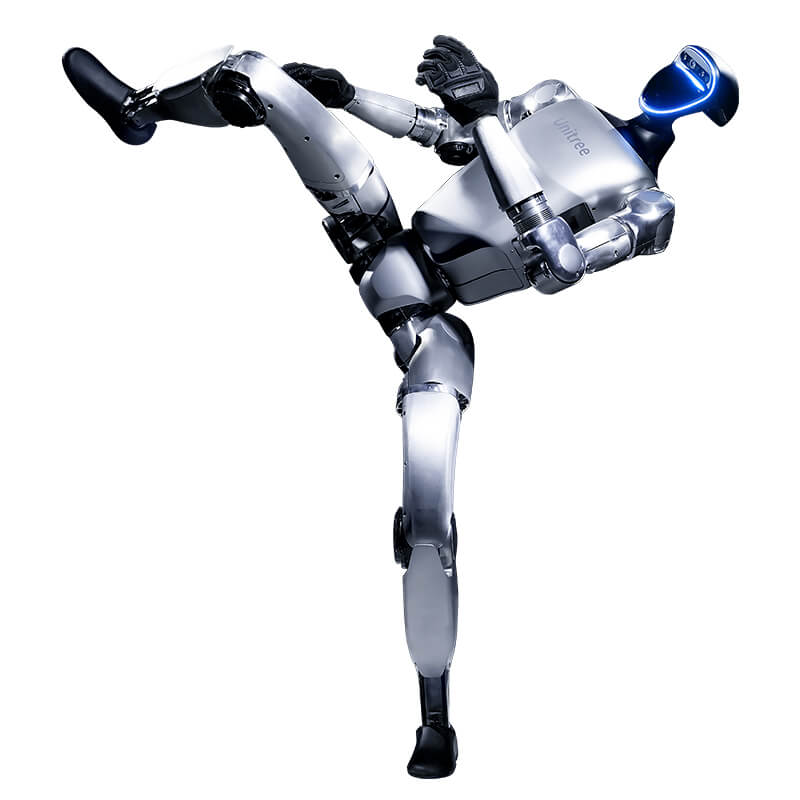
The Unitree G1 is a general-purpose humanoid robot developed by Unitree Robotics, a Chinese robotics company headquartered in Hangzhou. Standing approximately 1.32 meters tall and weighing around 35 kilograms, the G1 features 23 degrees of freedom and is capable of walking, running, recovering from falls, and performing dexterous manipulation tasks. It ships with SDK access, making it accessible to researchers and small-business operators seeking an affordable entry point into humanoid robotics. The G1 is widely regarded as one of the most competitively priced serious humanoid platforms available as of public reporting, positioning Unitree as a disruptive force in a market historically dominated by far more expensive systems. Its combination of mobility, recoverability, and open software access has attracted attention from academic institutions, robotics developers, and automation-focused startups worldwide.
2,761 views
 Robot
RobotUniversal Robots UR5e
The Universal Robots UR5e is a six-axis collaborative robot arm (cobot) belonging to Universal Robots' e-Series product line. Designed for light-to-medium industrial and laboratory tasks, it is widely used in assembly, pick-and-place, machine tending, quality inspection, and lab automation workflows. Universal Robots, a Danish company and a subsidiary of Teradyne, is one of the most recognized names in the collaborative robotics market. The UR5e is programmed using Universal Robots' PolyScope graphical interface on a teach pendant, making it accessible to operators without deep robotics expertise. Its built-in force/torque sensing, tool-center-point control, and a broad ecosystem of certified end-effectors and accessories (the UR+ platform) have made it a popular mid-range cobot choice across manufacturing, electronics, food handling, and research sectors.
2,456 views
 Robot
RobotQuicktron M100
The Quicktron M100 is a heavy-duty autonomous mobile robot (AMR) belonging to Quicktron Robotics' M-Series product line. It is designed for demanding material handling tasks in warehouses, distribution centers, and manufacturing environments, using an integrated lift mechanism to transport shelves and pallets autonomously across facility floors. Quicktron Robotics, a company with roots in China and a global commercial presence, positions the M100 as a high-capacity solution for operations that require moving heavier loads than lighter AMR models can accommodate. The M100 targets logistics operators and manufacturers seeking to automate goods-to-person or pallet-movement workflows at scale.
325 views
 Robot
RobotNVIDIA Jetson Orin NX
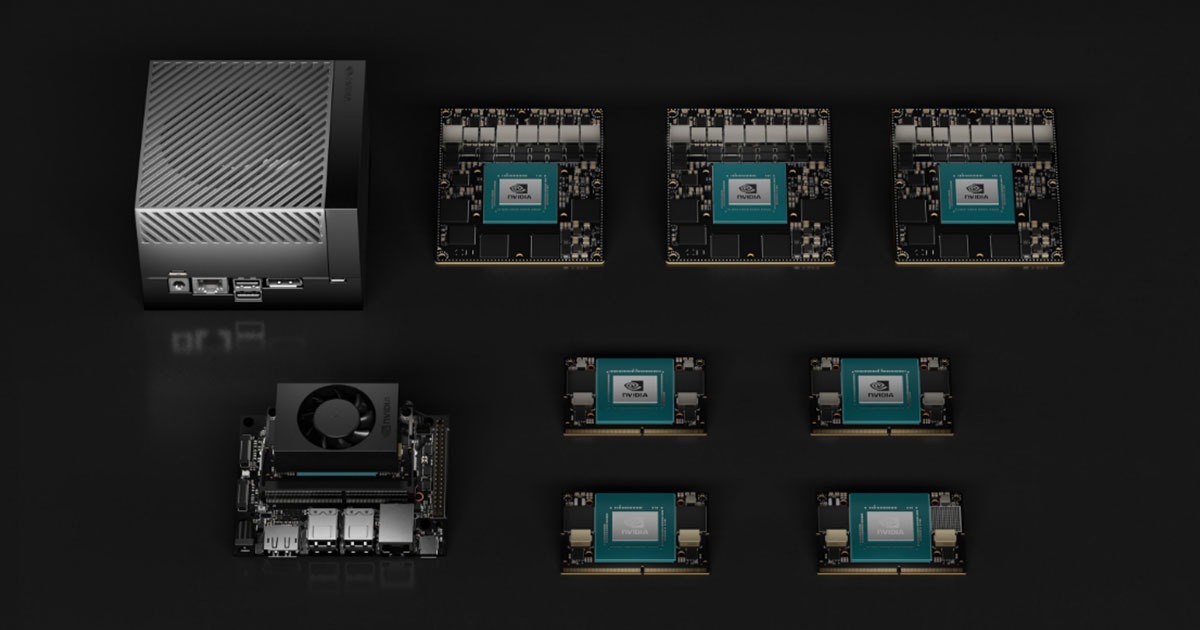
The NVIDIA Jetson Orin NX is a compact, SO-DIMM form-factor edge AI compute module designed for robotics, autonomous machines, and embedded vision applications. Manufactured by NVIDIA, it is available in 8 GB and 16 GB memory configurations and pairs an Ampere-architecture GPU with an 8-core Arm Cortex-A78AE CPU to deliver high-throughput on-device inference without relying on cloud connectivity. Positioned within NVIDIA's broader Jetson Orin family, the Orin NX targets developers and system integrators who need a balance of performance and power efficiency in a small footprint. It is commonly used in applications such as industrial inspection, autonomous mobile robots (AMRs), drone navigation, and smart edge devices where real-time AI inference is critical.
313 views