Unitree G1
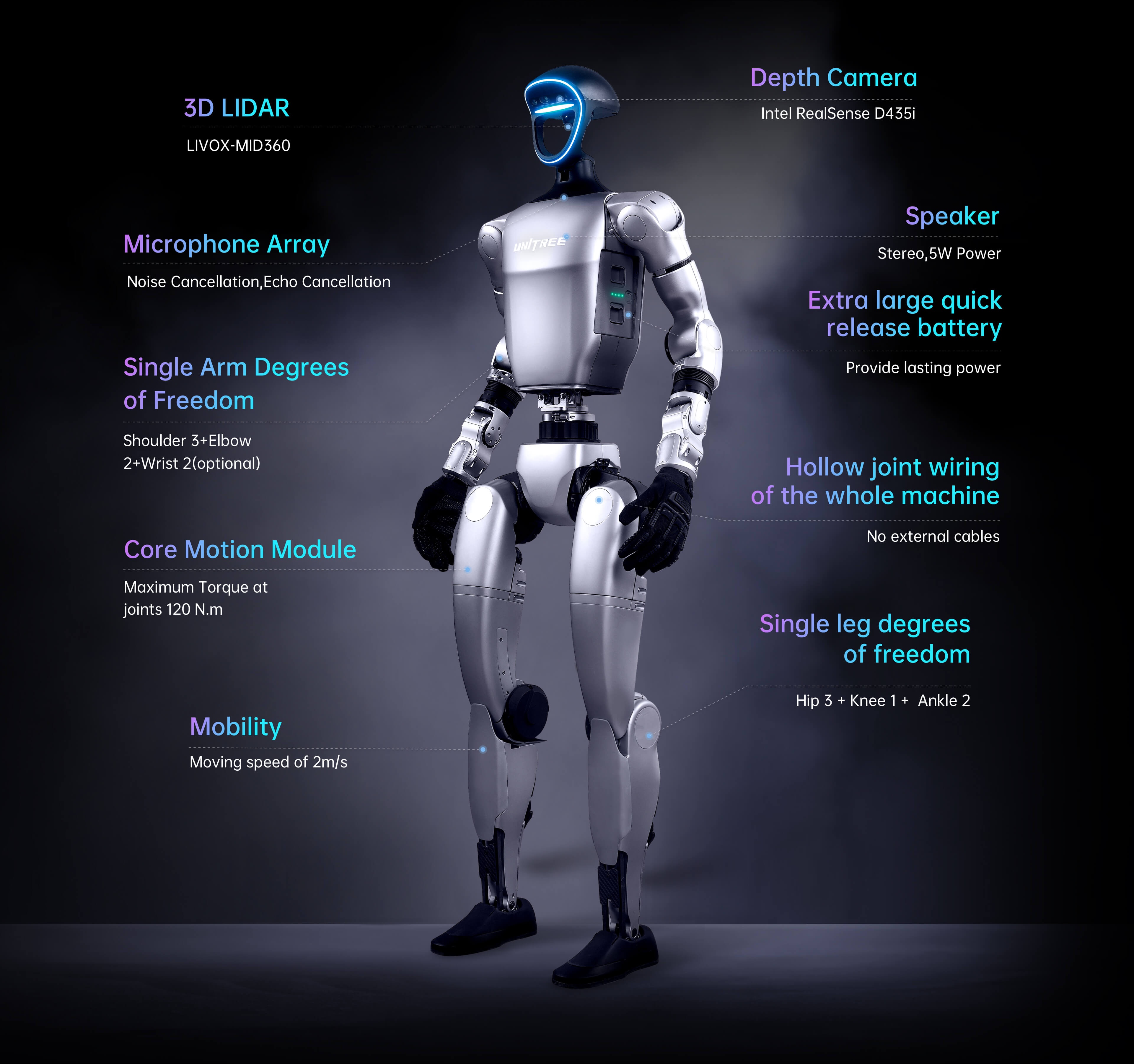
The Unitree G1 is a bipedal humanoid robot developed by Unitree Robotics, a Chinese robotics company headquartered in Hangzhou. Standing approximately 1.32 meters tall and weighing around 35 kilograms, the G1 is designed as a mass-market humanoid platform featuring up to 43 degrees of freedom, dexterous force-controlled hands, and an AI-driven software stack centered on Unitree's UnifoLM large language model foundation. Positioned as an accessible humanoid agent and AI avatar, the G1 targets research institutions, universities, and developers seeking an affordable entry point into full-body humanoid robotics. It supports continuous over-the-air (OTA) software upgrades, allowing capabilities to expand post-deployment. The G1 represents Unitree's push to democratize humanoid robotics in a market segment historically dominated by far more expensive platforms.
Overview and Use Cases
The Unitree G1 is a compact humanoid robot intended to serve as a general-purpose embodied AI platform. Its primary use cases include:
- Research and development: Universities and robotics labs can use the G1 as a testbed for locomotion algorithms, manipulation research, and whole-body control.
- AI avatar applications: Integrated with Unitree's UnifoLM large model, the G1 can function as an interactive AI agent capable of natural language interaction and task execution.
- Education and demonstration: Its relatively accessible price point makes it suitable for academic curricula and public demonstrations of humanoid robotics.
- Light-duty manipulation: The dexterous, force-controlled hands enable tasks such as object grasping, sorting, and simple assembly in structured environments.
Unitree markets the G1 as a platform that evolves over time through OTA software updates, meaning early adopters benefit from ongoing capability improvements without hardware replacement.
Key Technical Details
The G1's publicly reported specifications include:
- Height: Approximately 1.32 meters
- Weight: Approximately 35 kilograms
- Degrees of freedom: Up to 43 joints, enabling whole-body dexterous motion
- Hands: Multi-fingered, force-controlled dexterous hands capable of fine manipulation
- Locomotion: Bipedal walking with reportedly agile dynamic movement, including the ability to navigate uneven terrain
- AI integration: Powered by Unitree's UnifoLM large model for perception, planning, and interaction
- Connectivity: Supports OTA firmware and software upgrades
Specific figures for battery runtime, payload capacity, and joint torque have not been uniformly confirmed across public sources and should be verified against Unitree's official documentation.
Comparison to Unitree's Own Lineup
Within Unitree's humanoid portfolio, the G1 sits alongside the Unitree H1, which is a taller and more performance-oriented humanoid platform aimed at research applications requiring greater physical capability. The G1 differentiates itself by prioritizing affordability and dexterity — particularly through its multi-fingered hands — making it more suitable for manipulation-focused tasks and broader developer adoption. Unitree also produces the Go2, a quadruped robot, and the Z1, a robotic arm, reflecting the company's broader strategy of offering a tiered ecosystem of robotic platforms.
Market Context and Competitive Positioning
The G1 was introduced at a starting price point that, as of public reporting, was significantly lower than comparable humanoid platforms from Western competitors such as Boston Dynamics, Agility Robotics, or Figure AI. This aggressive pricing strategy positions Unitree as a disruptive force in the humanoid robotics market, targeting buyers who have been priced out of existing offerings.
Competitors in the accessible humanoid segment include robots such as the Fourier GR-1 and other emerging Chinese humanoid platforms. The G1's combination of a high joint count, dexterous hands, and AI software integration at its reported price tier is considered notable within the industry.
Deployments and Notable Adoption
As of public reporting, the G1 has attracted interest primarily from academic and research communities globally. Unitree has demonstrated the G1 at major robotics and technology exhibitions, showcasing its locomotion agility and manipulation capabilities. Specific large-scale commercial deployment contracts have not been widely confirmed in public sources as of the time of writing.
Future Outlook
The G1's OTA upgrade architecture suggests Unitree intends it to be a long-lifecycle platform whose software capabilities — particularly those tied to the UnifoLM model — will expand as the underlying AI technology matures. Industry observers note that the humanoid robotics sector is advancing rapidly, and platforms like the G1 that combine affordability with a capable hardware base are likely to play a significant role in accelerating developer ecosystems and real-world deployment experiments. Unitree's continued investment in both quadruped and humanoid platforms indicates a broader ambition to establish itself as a full-spectrum robotics manufacturer on the global stage.
Related videos

Unitree G1 Humanoid Robot: Overview & Upcoming Teardown
Munro Live

Unitree's Dancing Robots STUN America's Got Talent!
The Construct Robotics Institute

🔥🤖 Chinese Dancer Brings 8 Unitree Robots to AGT—4 Yeses! #robot #agt #humanoidrobot #ai
XRoboHub

Early Release: Unitree’s Robots Leave Simon Cowell SPEECHLESS! | Auditions | AGT 2026
America's Got Talent

This Chinese Humanoid Company Cleared For $6 Billion IPO | Why Unitree Can’t Be Ignored | FP Video
Firstpost

China's Unitree Robotics wins Shanghai IPO approval 73 days after filing
ShanghaiEye魔都眼
Related entries
 Robot
RobotG1
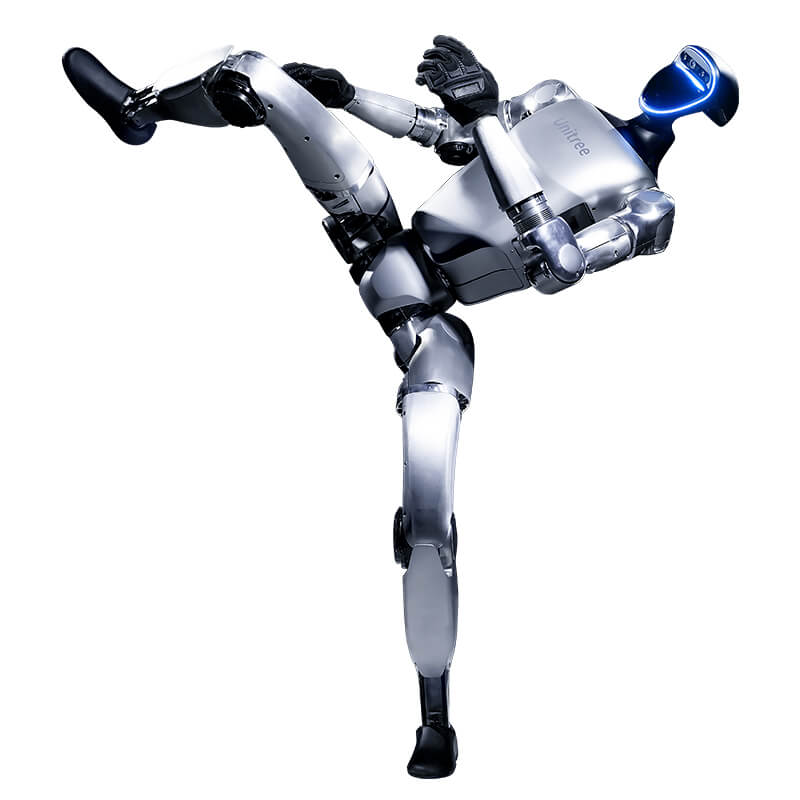
The Unitree G1 is a general-purpose humanoid robot developed by Unitree Robotics, a Chinese robotics company headquartered in Hangzhou. Standing approximately 1.32 meters tall and weighing around 35 kilograms, the G1 features 23 degrees of freedom and is capable of walking, running, recovering from falls, and performing dexterous manipulation tasks. It ships with SDK access, making it accessible to researchers and small-business operators seeking an affordable entry point into humanoid robotics. The G1 is widely regarded as one of the most competitively priced serious humanoid platforms available as of public reporting, positioning Unitree as a disruptive force in a market historically dominated by far more expensive systems. Its combination of mobility, recoverability, and open software access has attracted attention from academic institutions, robotics developers, and automation-focused startups worldwide.
4,297 views
 Robot
RobotUniversal Robots UR5e
The Universal Robots UR5e is a six-axis collaborative robot arm (cobot) belonging to Universal Robots' e-Series product line. Designed for light-to-medium industrial and laboratory tasks, it is widely used in assembly, pick-and-place, machine tending, quality inspection, and lab automation workflows. Universal Robots, a Danish company and a subsidiary of Teradyne, is one of the most recognized names in the collaborative robotics market. The UR5e is programmed using Universal Robots' PolyScope graphical interface on a teach pendant, making it accessible to operators without deep robotics expertise. Its built-in force/torque sensing, tool-center-point control, and a broad ecosystem of certified end-effectors and accessories (the UR+ platform) have made it a popular mid-range cobot choice across manufacturing, electronics, food handling, and research sectors.
3,824 views
 Robot
RobotQuicktron M100
The Quicktron M100 is a heavy-duty autonomous mobile robot (AMR) belonging to Quicktron Robotics' M-Series product line. It is designed for demanding material handling tasks in warehouses, distribution centers, and manufacturing environments, using an integrated lift mechanism to transport shelves and pallets autonomously across facility floors. Quicktron Robotics, a company with roots in China and a global commercial presence, positions the M100 as a high-capacity solution for operations that require moving heavier loads than lighter AMR models can accommodate. The M100 targets logistics operators and manufacturers seeking to automate goods-to-person or pallet-movement workflows at scale.
437 views
 Robot
RobotNVIDIA Jetson Orin NX
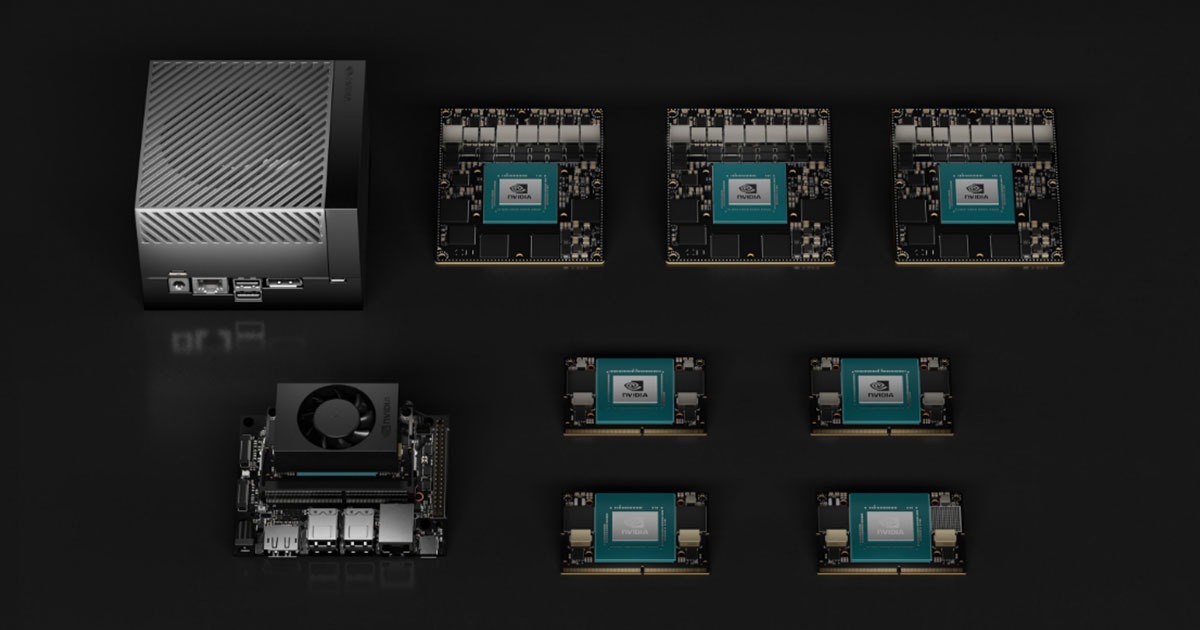
The NVIDIA Jetson Orin NX is a compact, SO-DIMM form-factor edge AI compute module designed for robotics, autonomous machines, and embedded vision applications. Manufactured by NVIDIA, it is available in 8 GB and 16 GB memory configurations and pairs an Ampere-architecture GPU with an 8-core Arm Cortex-A78AE CPU to deliver high-throughput on-device inference without relying on cloud connectivity. Positioned within NVIDIA's broader Jetson Orin family, the Orin NX targets developers and system integrators who need a balance of performance and power efficiency in a small footprint. It is commonly used in applications such as industrial inspection, autonomous mobile robots (AMRs), drone navigation, and smart edge devices where real-time AI inference is critical.
404 views