UGO Exoskeleton
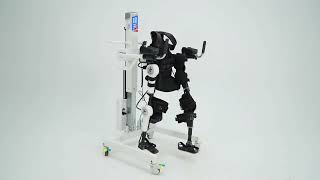
The UGO Exoskeleton is a lower-limb rehabilitation exoskeleton developed by Hangzhou RoboCT (also known as Chengtian), a Chinese medical robotics company. It is designed to assist individuals with lower-limb motor dysfunction—such as those recovering from stroke, spinal cord injury, or neurological conditions—by guiding them through standardised, motorised gait training cycles grounded in neuroplasticity principles. The system features powered hip and knee joints along with dense sensor coverage intended to monitor and adapt to the user's movement in real time. The UGO Exoskeleton is positioned within the clinical and rehabilitation-centre market, where it competes with a growing field of wearable robotic gait-training devices from both domestic Chinese manufacturers and international players.
Overview and Use Cases
The UGO Exoskeleton is a wearable, lower-limb robotic rehabilitation device built by Hangzhou RoboCT (Chengtian). It targets patients experiencing lower-limb motor dysfunction stemming from conditions such as:
- Stroke (hemiplegia or paraplegia)
- Spinal cord injury (incomplete or complete)
- Traumatic brain injury
- Other neurological or orthopedic conditions affecting gait
The device is intended for use in clinical rehabilitation settings under the supervision of physiotherapists. By delivering consistent, repeatable gait cycles, the UGO Exoskeleton aims to leverage neuroplasticity—the brain's capacity to reorganise and form new neural pathways—to help patients relearn walking patterns over the course of a structured therapy programme.
Key Technical Features
The UGO Exoskeleton incorporates motorised actuation at the hip and knee joints bilaterally, enabling it to guide both legs through a coordinated walking motion. Key design elements reportedly include:
- Dense sensor coverage: Multiple sensors monitor joint angles, ground-reaction forces, and user intent to allow the system to adapt assistance levels dynamically.
- Standardised gait training protocols: Pre-programmed movement trajectories based on normative human gait data.
- Adjustable fit: The frame is designed to accommodate a range of patient body dimensions, though specific size or weight-limit ranges have not been independently confirmed in public documentation.
- Safety mechanisms: Passive and active safeguards to prevent over-extension or unintended movement.
Specific torque outputs, battery runtime, and payload ratings have not been widely published in verifiable sources and are therefore not stated here.
Market Context and Target Buyers
The UGO Exoskeleton is positioned in the clinical rehabilitation exoskeleton segment, which sits at a premium price tier relative to passive orthotic devices but competes on cost with comparable international systems. Its primary target buyers include:
- Hospital rehabilitation departments
- Specialist neurological rehabilitation centres
- Long-term care and physical therapy clinics
China's ageing population and the government's emphasis on expanding rehabilitation medicine infrastructure have created a growing domestic market for devices of this type. RoboCT/Chengtian, as a domestic Chinese manufacturer, may benefit from procurement preferences and shorter supply chains compared with imported alternatives.
Comparison to Competitors
The lower-limb rehabilitation exoskeleton space includes several well-established international competitors:
- Ekso Bionics (EksoGT) – US-based, FDA-cleared for stroke and spinal cord injury rehabilitation.
- ReWalk Robotics (ReWalk Personal/Clinical) – Israeli-origin system with regulatory clearances in multiple markets.
- CYBERDYNE (HAL) – Japanese system using bioelectrical signal detection.
- Fourier Intelligence (ExoMotus) – Another Chinese competitor with a similar clinical focus.
Compared with these, the UGO Exoskeleton's differentiation reportedly centres on its neuroplasticity-oriented training protocols and sensor density, though independent clinical trial data comparing outcomes across platforms is limited in public literature.
Deployments and Notable Customers
As of available public reporting, detailed information about specific hospital deployments, clinical trial partners, or named customer institutions for the UGO Exoskeleton is not widely documented in English-language sources. The device appears to be distributed primarily within the Chinese healthcare market, with potential reach into other Asian markets. Prospective buyers are advised to consult RoboCT/Chengtian directly for reference site information.
Future Outlook
The rehabilitation robotics sector is expected to grow substantially over the coming decade, driven by ageing demographics, rising stroke incidence, and increasing clinical acceptance of robotic-assisted therapy. For RoboCT/Chengtian, continued investment in clinical evidence generation, regulatory clearances in export markets, and iterative hardware improvements—such as lighter frames, longer battery life, and AI-driven adaptive control—will likely determine the UGO Exoskeleton's competitive trajectory. Integration with telerehabilitation platforms and electronic health records may also become increasingly relevant as healthcare systems digitise.
Related videos

Related entries
 Robot
RobotG1
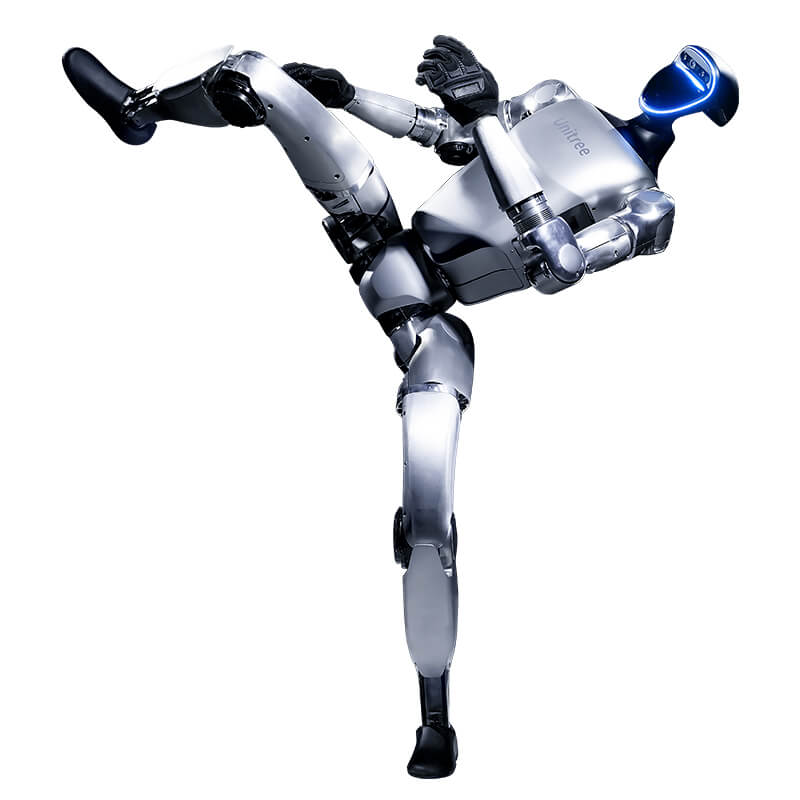
The Unitree G1 is a general-purpose humanoid robot developed by Unitree Robotics, a Chinese robotics company headquartered in Hangzhou. Standing approximately 1.32 meters tall and weighing around 35 kilograms, the G1 features 23 degrees of freedom and is capable of walking, running, recovering from falls, and performing dexterous manipulation tasks. It ships with SDK access, making it accessible to researchers and small-business operators seeking an affordable entry point into humanoid robotics. The G1 is widely regarded as one of the most competitively priced serious humanoid platforms available as of public reporting, positioning Unitree as a disruptive force in a market historically dominated by far more expensive systems. Its combination of mobility, recoverability, and open software access has attracted attention from academic institutions, robotics developers, and automation-focused startups worldwide.
4,255 views
 Robot
RobotUniversal Robots UR5e
The Universal Robots UR5e is a six-axis collaborative robot arm (cobot) belonging to Universal Robots' e-Series product line. Designed for light-to-medium industrial and laboratory tasks, it is widely used in assembly, pick-and-place, machine tending, quality inspection, and lab automation workflows. Universal Robots, a Danish company and a subsidiary of Teradyne, is one of the most recognized names in the collaborative robotics market. The UR5e is programmed using Universal Robots' PolyScope graphical interface on a teach pendant, making it accessible to operators without deep robotics expertise. Its built-in force/torque sensing, tool-center-point control, and a broad ecosystem of certified end-effectors and accessories (the UR+ platform) have made it a popular mid-range cobot choice across manufacturing, electronics, food handling, and research sectors.
3,786 views
 Robot
RobotQuicktron M100
The Quicktron M100 is a heavy-duty autonomous mobile robot (AMR) belonging to Quicktron Robotics' M-Series product line. It is designed for demanding material handling tasks in warehouses, distribution centers, and manufacturing environments, using an integrated lift mechanism to transport shelves and pallets autonomously across facility floors. Quicktron Robotics, a company with roots in China and a global commercial presence, positions the M100 as a high-capacity solution for operations that require moving heavier loads than lighter AMR models can accommodate. The M100 targets logistics operators and manufacturers seeking to automate goods-to-person or pallet-movement workflows at scale.
427 views
 Robot
RobotNVIDIA Jetson Orin NX
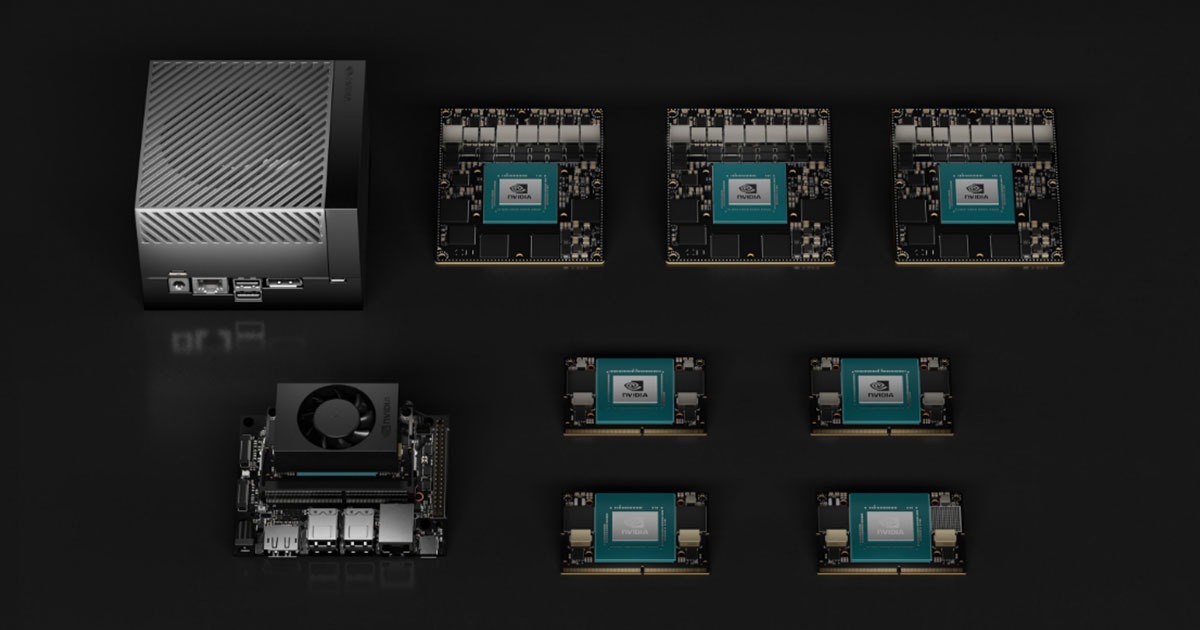
The NVIDIA Jetson Orin NX is a compact, SO-DIMM form-factor edge AI compute module designed for robotics, autonomous machines, and embedded vision applications. Manufactured by NVIDIA, it is available in 8 GB and 16 GB memory configurations and pairs an Ampere-architecture GPU with an 8-core Arm Cortex-A78AE CPU to deliver high-throughput on-device inference without relying on cloud connectivity. Positioned within NVIDIA's broader Jetson Orin family, the Orin NX targets developers and system integrators who need a balance of performance and power efficiency in a small footprint. It is commonly used in applications such as industrial inspection, autonomous mobile robots (AMRs), drone navigation, and smart edge devices where real-time AI inference is critical.
396 views