TUG T3 / T3XL
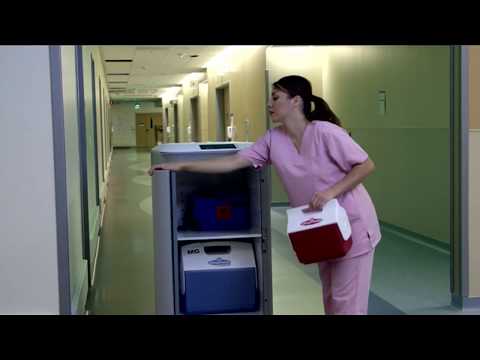
The TUG T3 and T3XL are autonomous mobile robots (AMRs) developed by Aethon, a robotics company acquired by ST Engineering, designed primarily to tow carts loaded with supplies through hospitals, hotels, and other large commercial facilities. Operating without human guidance, they navigate corridors, call elevators, and deliver materials around the clock, reducing the burden of manual transport on staff. The T3 is rated to tow loads of up to 750 lb (approximately 340 kg), while the larger T3XL handles up to 1,000 lb (approximately 454 kg). Both models feature omnidirectional four-wheel drive for maneuverability in tight spaces and are supported by Aethon's 24/7 Command Center monitoring service, which provides remote oversight and intervention when needed.

Overview and Use Cases
The TUG T3 and T3XL are cart-towing autonomous mobile robots built for high-demand logistics environments. Their primary market is healthcare, where they are deployed to transport medications, linens, meals, laboratory specimens, and waste between departments — tasks that traditionally consume significant nursing and support-staff time. Beyond hospitals, the platform has found adoption in hotels for housekeeping supply runs and in large commercial or institutional facilities requiring repetitive, scheduled deliveries.
By automating routine transport, TUG robots are positioned to free clinical staff for patient-facing work, reduce delivery errors, and maintain consistent throughput regardless of shift changes or staffing shortages.
Key Technical Details
- Payload capacity: T3 tows up to 750 lb (~340 kg); T3XL tows up to 1,000 lb (~454 kg) via standard hospital cart hitching mechanisms.
- Drive system: Omnidirectional four-wheel drive, enabling tight-radius turns and lateral movement useful in crowded corridors.
- Navigation: The TUG platform uses a combination of onboard sensors — reportedly including laser rangefinders and cameras — to map environments and avoid obstacles in real time. Exact sensor configurations are not fully disclosed in public documentation.
- Elevator integration: TUG robots can autonomously call and board elevators through facility infrastructure integrations, enabling multi-floor operation.
- Command Center: Aethon offers a 24/7 remote monitoring service that tracks fleet status, intervenes in edge cases, and provides operational analytics — a differentiating service layer compared with purely self-managed AMR fleets.
- Runtime and charging: Specific battery runtime figures are not consistently published; the system is designed for continuous operation with scheduled or opportunity charging.
Comparison to Similar Robots
Within ST Engineering's broader robotics portfolio — which includes warehouse-focused AMRs such as the GreyOrange Ranger GTP, Locus Origin, Quicktron M100, and Geek+ P800 — the TUG T3/T3XL occupies a distinct niche. Those sibling platforms are primarily designed for goods-to-person or bin-carrying workflows in distribution centers, whereas the TUG series is purpose-built for cart towing in regulated, people-dense environments like hospitals.
Among direct competitors in hospital logistics robotics, the TUG platform is often compared to systems such as Swisslog's TransCar and various AMR platforms from Omron and Mobile Industrial Robots (MiR). The TUG's managed-service model and long track record in healthcare settings are frequently cited as competitive advantages, though newer entrants offer more open software ecosystems.
Market Context and Target Buyers
The TUG T3/T3XL targets mid-to-large healthcare institutions — hospitals, medical centers, and integrated health systems — as well as hospitality operators managing large properties. The total cost of ownership includes hardware, installation, facility integration (elevator APIs, door controls), and ongoing Command Center subscription fees. As a result, the platform is generally positioned in a premium tier relative to entry-level AMRs, with the value proposition centered on reliability, managed support, and proven healthcare compliance.
Deployments and Notable Customers
Aethon has reportedly deployed TUG robots in hundreds of hospitals across North America and in select international facilities. Specific named customer references have appeared in Aethon's public marketing materials over the years, including various U.S. health systems, though a comprehensive public list is not maintained. The platform's longevity in the market — Aethon was founded in the early 2000s — gives it one of the longer operational track records among hospital AMR systems.
Future Outlook
Following ST Engineering's acquisition of Aethon, the TUG platform is positioned within a larger defense and engineering conglomerate with resources to invest in next-generation navigation software, fleet management integration, and potential expansion into new verticals. Industry trends toward hospital labor optimization and smart-building infrastructure suggest continued demand for autonomous logistics platforms. Whether the T3/T3XL line receives hardware successors or transitions toward a software-platform model remains to be seen based on public announcements.
Related videos

Related entries
 Robot
RobotG1
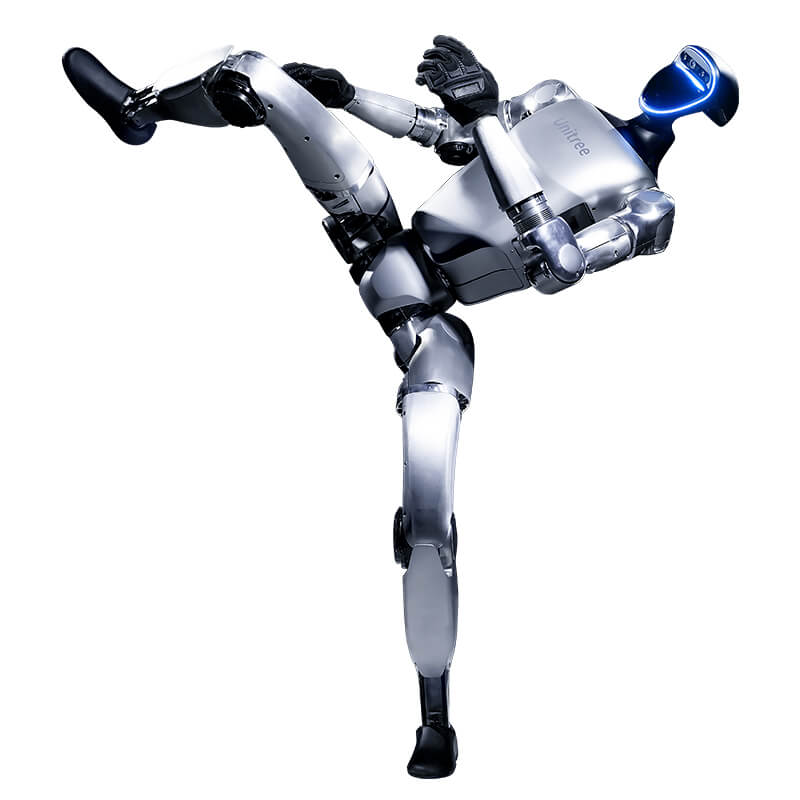
The Unitree G1 is a general-purpose humanoid robot developed by Unitree Robotics, a Chinese robotics company headquartered in Hangzhou. Standing approximately 1.32 meters tall and weighing around 35 kilograms, the G1 features 23 degrees of freedom and is capable of walking, running, recovering from falls, and performing dexterous manipulation tasks. It ships with SDK access, making it accessible to researchers and small-business operators seeking an affordable entry point into humanoid robotics. The G1 is widely regarded as one of the most competitively priced serious humanoid platforms available as of public reporting, positioning Unitree as a disruptive force in a market historically dominated by far more expensive systems. Its combination of mobility, recoverability, and open software access has attracted attention from academic institutions, robotics developers, and automation-focused startups worldwide.
4,253 views
 Robot
RobotUniversal Robots UR5e
The Universal Robots UR5e is a six-axis collaborative robot arm (cobot) belonging to Universal Robots' e-Series product line. Designed for light-to-medium industrial and laboratory tasks, it is widely used in assembly, pick-and-place, machine tending, quality inspection, and lab automation workflows. Universal Robots, a Danish company and a subsidiary of Teradyne, is one of the most recognized names in the collaborative robotics market. The UR5e is programmed using Universal Robots' PolyScope graphical interface on a teach pendant, making it accessible to operators without deep robotics expertise. Its built-in force/torque sensing, tool-center-point control, and a broad ecosystem of certified end-effectors and accessories (the UR+ platform) have made it a popular mid-range cobot choice across manufacturing, electronics, food handling, and research sectors.
3,786 views
 Robot
RobotQuicktron M100
The Quicktron M100 is a heavy-duty autonomous mobile robot (AMR) belonging to Quicktron Robotics' M-Series product line. It is designed for demanding material handling tasks in warehouses, distribution centers, and manufacturing environments, using an integrated lift mechanism to transport shelves and pallets autonomously across facility floors. Quicktron Robotics, a company with roots in China and a global commercial presence, positions the M100 as a high-capacity solution for operations that require moving heavier loads than lighter AMR models can accommodate. The M100 targets logistics operators and manufacturers seeking to automate goods-to-person or pallet-movement workflows at scale.
427 views
 Robot
RobotNVIDIA Jetson Orin NX
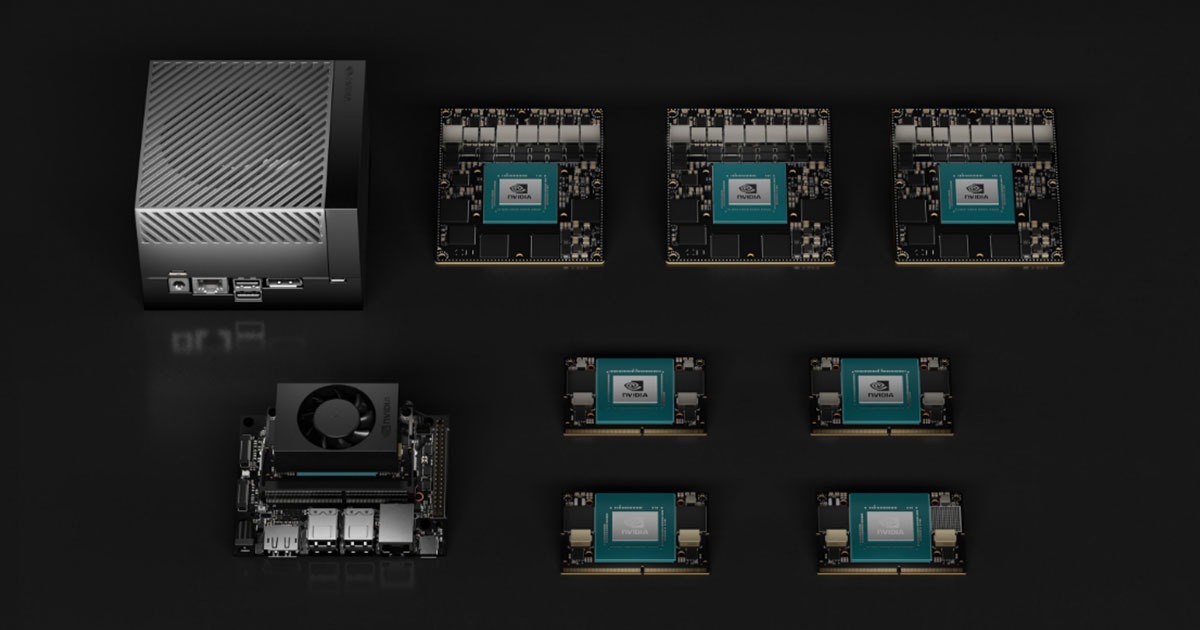
The NVIDIA Jetson Orin NX is a compact, SO-DIMM form-factor edge AI compute module designed for robotics, autonomous machines, and embedded vision applications. Manufactured by NVIDIA, it is available in 8 GB and 16 GB memory configurations and pairs an Ampere-architecture GPU with an 8-core Arm Cortex-A78AE CPU to deliver high-throughput on-device inference without relying on cloud connectivity. Positioned within NVIDIA's broader Jetson Orin family, the Orin NX targets developers and system integrators who need a balance of performance and power efficiency in a small footprint. It is commonly used in applications such as industrial inspection, autonomous mobile robots (AMRs), drone navigation, and smart edge devices where real-time AI inference is critical.
396 views