Tortuga AgTech Fruit Picking Robots
Tortuga AgTech's fruit picking robots are autonomous agricultural systems designed to identify, locate, and harvest ripe fruit using computer vision and AI-powered manipulation. Built to operate continuously across diverse orchard environments, they aim to reduce dependence on seasonal human labor while improving harvesting consistency and efficiency. Developed by Tortuga AgTech, a company focused on specialty-crop automation, these robots are engineered to handle the delicate task of picking soft fruits without causing damage. They are reportedly adaptable to multiple fruit types and varying tree configurations, positioning them as a flexible solution for commercial orchard operators facing persistent labor shortages.
Overview and Use Cases
Tortuga AgTech's fruit picking robots are purpose-built for the specialty-crop agriculture sector, where harvesting has historically resisted automation due to the fragility of produce and the complexity of natural growing environments. The robots are designed to navigate orchard rows, detect ripe fruit using onboard vision systems, and execute gentle, precise picks that minimize bruising or damage.
Primary use cases include:
- Strawberry and soft-fruit harvesting in commercial greenhouse and field settings
- Continuous operation across extended shifts, reducing bottlenecks during peak harvest windows
- Data collection on crop yield and ripeness, potentially supporting farm management decisions
Key Technical Details
While Tortuga AgTech has not publicly disclosed a comprehensive technical specification sheet as of available reporting, the robots are described as incorporating:
- Computer vision systems trained to distinguish ripe from unripe fruit based on color, shape, and position
- AI-powered gripping end-effectors engineered to apply controlled force appropriate for delicate produce
- Autonomous navigation suited to structured orchard row environments
- All-weather operational capability, allowing deployment across varying field conditions
Specific figures for payload capacity, battery runtime, picking speed, or cycle time have not been independently confirmed and should be sought directly from the manufacturer.
Comparison to Similar Robots
Within the agricultural robotics space, Tortuga AgTech's systems compete with a growing field of specialty-crop harvesters:
- Harvest CROO Robotics and Agrobot have developed strawberry-picking platforms with broadly similar vision-and-arm architectures
- Abundant Robotics (now defunct) pursued apple harvesting using vacuum-based end-effectors, illustrating the technical diversity in the segment
- FFRobotics targets apple and pear harvesting with multi-arm systems
Unlike the sibling products listed under the same platform category — which span pool cleaning, surgical systems, and underwater ROVs — Tortuga AgTech's robots are narrowly focused on agricultural applications, reflecting a specialist rather than diversified product strategy.
Market Context and Target Buyers
The target buyers for Tortuga AgTech's fruit picking robots are mid-to-large commercial orchard and greenhouse operators, particularly those growing high-value soft fruits such as strawberries, where labor costs represent a significant share of production expenses. The robots are positioned in the premium automation tier, as agricultural robotic systems of this complexity typically require substantial capital investment.
Pricing has not been publicly disclosed; prospective customers are generally directed to contact the company for commercial terms. Financing and leasing structures are common in this segment to lower the barrier to adoption.
Deployments and Notable Customers
As of publicly available reporting, Tortuga AgTech has conducted field trials and pilot deployments with commercial growers, though a comprehensive list of named customers or large-scale commercial rollouts has not been widely publicized. The company has reportedly worked with strawberry producers as part of its development and validation process. Specific deployment scale, geography, and customer identities remain largely undisclosed.
Future Outlook
The agricultural robotics market for specialty crops is widely expected to grow as labor availability tightens and wage costs rise in major fruit-producing regions. Tortuga AgTech's continued development of its picking platform positions it to benefit from this trend, provided it can demonstrate reliable throughput and return on investment at commercial scale.
Key challenges for the segment include improving picking speed to match human pickers under real field conditions, expanding compatibility to additional fruit varieties, and reducing per-unit cost through manufacturing scale. Advances in AI-based vision and soft robotics end-effectors are likely to drive incremental improvements across the industry, including in Tortuga AgTech's product line.
Related entries
 Robot
RobotG1
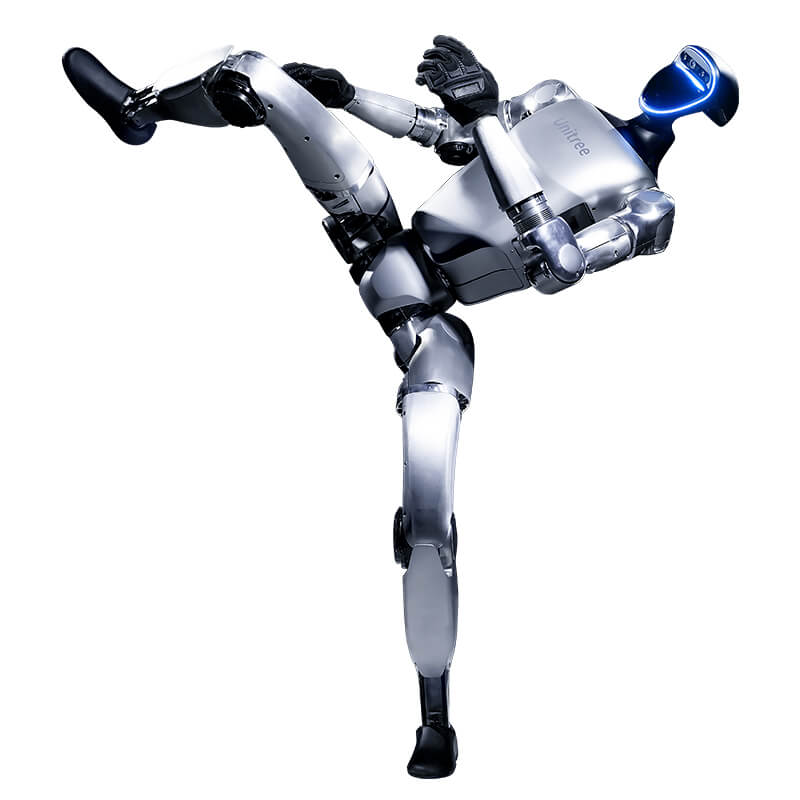
The Unitree G1 is a general-purpose humanoid robot developed by Unitree Robotics, a Chinese robotics company headquartered in Hangzhou. Standing approximately 1.32 meters tall and weighing around 35 kilograms, the G1 features 23 degrees of freedom and is capable of walking, running, recovering from falls, and performing dexterous manipulation tasks. It ships with SDK access, making it accessible to researchers and small-business operators seeking an affordable entry point into humanoid robotics. The G1 is widely regarded as one of the most competitively priced serious humanoid platforms available as of public reporting, positioning Unitree as a disruptive force in a market historically dominated by far more expensive systems. Its combination of mobility, recoverability, and open software access has attracted attention from academic institutions, robotics developers, and automation-focused startups worldwide.
2,758 views
 Robot
RobotUniversal Robots UR5e
The Universal Robots UR5e is a six-axis collaborative robot arm (cobot) belonging to Universal Robots' e-Series product line. Designed for light-to-medium industrial and laboratory tasks, it is widely used in assembly, pick-and-place, machine tending, quality inspection, and lab automation workflows. Universal Robots, a Danish company and a subsidiary of Teradyne, is one of the most recognized names in the collaborative robotics market. The UR5e is programmed using Universal Robots' PolyScope graphical interface on a teach pendant, making it accessible to operators without deep robotics expertise. Its built-in force/torque sensing, tool-center-point control, and a broad ecosystem of certified end-effectors and accessories (the UR+ platform) have made it a popular mid-range cobot choice across manufacturing, electronics, food handling, and research sectors.
2,454 views
 Robot
RobotQuicktron M100
The Quicktron M100 is a heavy-duty autonomous mobile robot (AMR) belonging to Quicktron Robotics' M-Series product line. It is designed for demanding material handling tasks in warehouses, distribution centers, and manufacturing environments, using an integrated lift mechanism to transport shelves and pallets autonomously across facility floors. Quicktron Robotics, a company with roots in China and a global commercial presence, positions the M100 as a high-capacity solution for operations that require moving heavier loads than lighter AMR models can accommodate. The M100 targets logistics operators and manufacturers seeking to automate goods-to-person or pallet-movement workflows at scale.
324 views
 Robot
RobotNVIDIA Jetson Orin NX
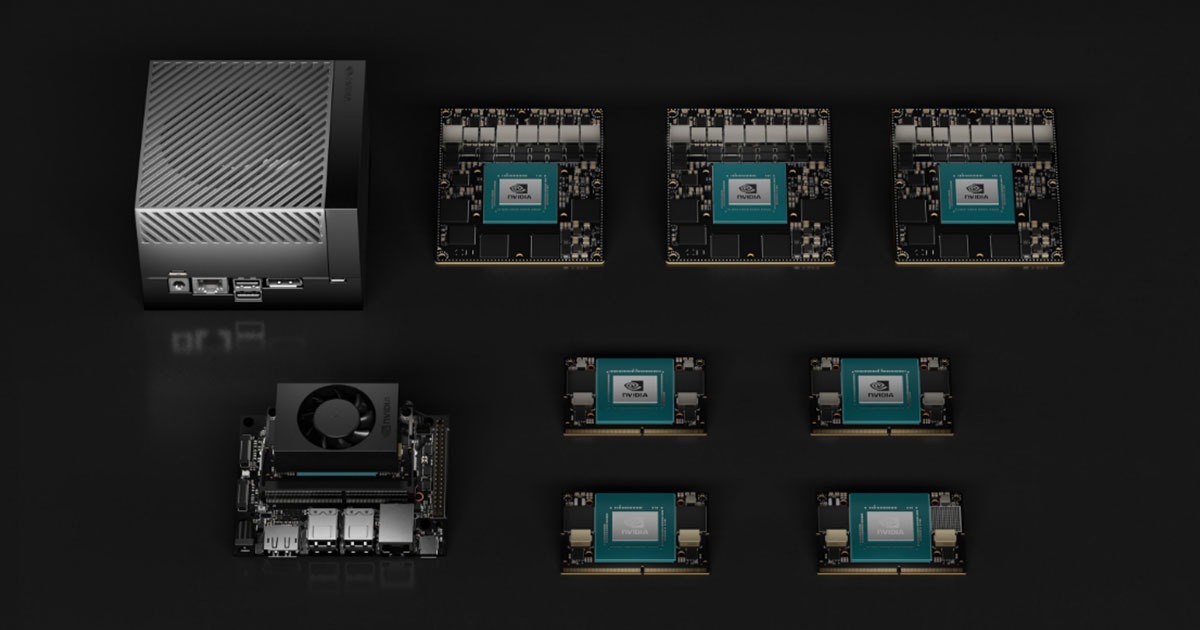
The NVIDIA Jetson Orin NX is a compact, SO-DIMM form-factor edge AI compute module designed for robotics, autonomous machines, and embedded vision applications. Manufactured by NVIDIA, it is available in 8 GB and 16 GB memory configurations and pairs an Ampere-architecture GPU with an 8-core Arm Cortex-A78AE CPU to deliver high-throughput on-device inference without relying on cloud connectivity. Positioned within NVIDIA's broader Jetson Orin family, the Orin NX targets developers and system integrators who need a balance of performance and power efficiency in a small footprint. It is commonly used in applications such as industrial inspection, autonomous mobile robots (AMRs), drone navigation, and smart edge devices where real-time AI inference is critical.
312 views