Serve Robotics Gen3 Delivery Robot
The Serve Robotics Gen3 is the third-generation autonomous sidewalk delivery robot developed by Serve Robotics, a San Francisco-based company that spun out of Uber Eats. Designed for last-mile food and package delivery on public sidewalks, the Gen3 operates fully electrically and uses onboard sensors and AI to navigate pedestrian environments without a human operator. Compared to its predecessors, the Gen3 reportedly features an expanded cargo bin capable of holding up to four 16-inch pizzas, approximately doubled speed and operating range, and a runtime exceeding 12 hours per charge. These improvements position it as a more commercially scalable platform for restaurant and retail delivery partners.

Overview and Use Cases
The Serve Robotics Gen3 is an autonomous, electrically powered sidewalk robot built for last-mile delivery in urban and suburban environments. It travels on public sidewalks and crosswalks, carrying food orders and small packages from merchants directly to customers' doors. Primary use cases include restaurant meal delivery, grocery delivery, and convenience retail fulfillment. The robot is designed to operate within geofenced service areas, typically in partnership with delivery platforms and local merchants.
Key Technical Features
While Serve Robotics has not published a comprehensive public datasheet for the Gen3, the company has highlighted several improvements over earlier generations:
- Cargo capacity: An expanded bin reportedly accommodates up to four 16-inch pizzas, making it suitable for larger or multi-item orders.
- Speed and range: Both are reportedly approximately doubled compared to prior generations, though exact figures have not been officially confirmed in public documentation.
- Runtime: The Gen3 is stated to achieve more than 12 hours of operation per charge, supporting extended deployment windows.
- Autonomy: The robot uses a combination of cameras, lidar, and AI-based perception to detect pedestrians, obstacles, and traffic signals, enabling Level 4-style autonomous operation in defined service zones.
- Form factor: The Gen3 retains the compact, low-profile sidewalk robot form factor characteristic of the Serve platform, designed to be unobtrusive in pedestrian spaces.
Comparison to Sibling and Competing Robots
Within Serve Robotics' own lineup, the Gen3 succeeds earlier Serve generations, with each iteration bringing improvements in payload, endurance, and autonomy. The Gen3 represents the most commercially mature platform the company has fielded as of public reporting.
In the broader sidewalk delivery robot market, the Gen3 competes with platforms such as:
- Starship Technologies robots, which are widely deployed across college campuses and suburban neighborhoods globally.
- Kiwibot, which has focused on university campus deployments.
- Nuro vehicles, which operate on roadways rather than sidewalks and target a different regulatory and use-case profile.
Serve Robotics differentiates itself through its heritage from Uber Eats, its focus on urban commercial corridors, and its partnerships with major delivery platforms.
Market Context and Target Buyers
Serve Robotics positions the Gen3 as a commercial-grade platform aimed at food delivery operators, restaurant chains, and third-party logistics providers seeking to reduce the cost of last-mile delivery. The company operates a robot-as-a-service (RaaS) model, meaning merchants and delivery platforms typically pay per delivery or through a subscription arrangement rather than purchasing robots outright. Specific pricing has not been disclosed publicly. The target buyer profile includes quick-service restaurant (QSR) chains, ghost kitchens, and delivery aggregators operating in dense urban markets.
Deployments and Notable Partnerships
Serve Robotics has conducted deployments in Los Angeles, California, which has served as its primary proving ground. The company has publicly announced a partnership with Uber Eats, through which Gen3 robots fulfill delivery orders placed on the Uber Eats platform. As of public reporting, Serve Robotics has also announced agreements to scale its fleet significantly, with plans to deploy hundreds of robots across multiple markets, though the timeline and full scope of these rollouts are subject to regulatory approvals and operational readiness.
Future Outlook
Serve Robotics has signaled ambitions to expand geographically beyond its initial California deployments, targeting additional U.S. cities with favorable sidewalk robot regulations. The Gen3 platform is expected to serve as the commercial backbone of this expansion. Broader industry trends—including rising labor costs in delivery, increasing municipal acceptance of sidewalk robots, and growing consumer familiarity with autonomous delivery—are generally seen as tailwinds for the platform. Future iterations or software updates may further extend the Gen3's operational capabilities, though no specific next-generation hardware has been publicly announced as of this writing.
Related videos
LEGO Education CS & AI Kit Lesson 1: Train Your Robot Server with Inputs, Outputs & Sequences
Sprattronics Learning Lab

Overweight? You Still Deserve the Best Cancer Surgery | Robotic Advantage
JKWomen Hospital

'Serve Robotics' brings autonomous deliveries to 14 Chicago neighborhoods with Uber Eats
WGN News

Tesla Optimus serves me popcorn at the Tesla Diner #fyp #tesla #optimus #tesladiner #teslarobot
Tesla Owners Silicon Valley

🏭Space Revolution: 1 KUKA Robot Serves 6 CNC Machines via Smart Linear Rail!
Jackson chen

Meet Serve Robotics | The Future of Robotic Delivery Food 🤖🚀 #shorts #2025 @MiracleMiles
Miracle Miles
Related entries
 Robot
RobotG1
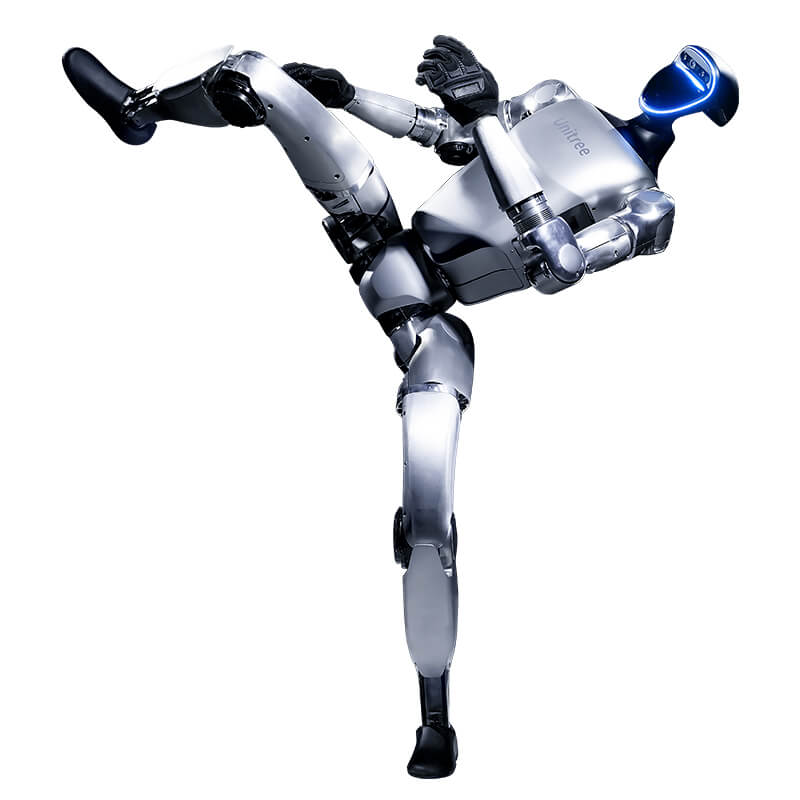
The Unitree G1 is a general-purpose humanoid robot developed by Unitree Robotics, a Chinese robotics company headquartered in Hangzhou. Standing approximately 1.32 meters tall and weighing around 35 kilograms, the G1 features 23 degrees of freedom and is capable of walking, running, recovering from falls, and performing dexterous manipulation tasks. It ships with SDK access, making it accessible to researchers and small-business operators seeking an affordable entry point into humanoid robotics. The G1 is widely regarded as one of the most competitively priced serious humanoid platforms available as of public reporting, positioning Unitree as a disruptive force in a market historically dominated by far more expensive systems. Its combination of mobility, recoverability, and open software access has attracted attention from academic institutions, robotics developers, and automation-focused startups worldwide.
5,834 views
 Robot
RobotUniversal Robots UR5e
The Universal Robots UR5e is a six-axis collaborative robot arm (cobot) belonging to Universal Robots' e-Series product line. Designed for light-to-medium industrial and laboratory tasks, it is widely used in assembly, pick-and-place, machine tending, quality inspection, and lab automation workflows. Universal Robots, a Danish company and a subsidiary of Teradyne, is one of the most recognized names in the collaborative robotics market. The UR5e is programmed using Universal Robots' PolyScope graphical interface on a teach pendant, making it accessible to operators without deep robotics expertise. Its built-in force/torque sensing, tool-center-point control, and a broad ecosystem of certified end-effectors and accessories (the UR+ platform) have made it a popular mid-range cobot choice across manufacturing, electronics, food handling, and research sectors.
5,180 views
 Robot
RobotQuicktron M100
The Quicktron M100 is a heavy-duty autonomous mobile robot (AMR) belonging to Quicktron Robotics' M-Series product line. It is designed for demanding material handling tasks in warehouses, distribution centers, and manufacturing environments, using an integrated lift mechanism to transport shelves and pallets autonomously across facility floors. Quicktron Robotics, a company with roots in China and a global commercial presence, positions the M100 as a high-capacity solution for operations that require moving heavier loads than lighter AMR models can accommodate. The M100 targets logistics operators and manufacturers seeking to automate goods-to-person or pallet-movement workflows at scale.
601 views
 Robot
RobotNVIDIA Jetson Orin NX
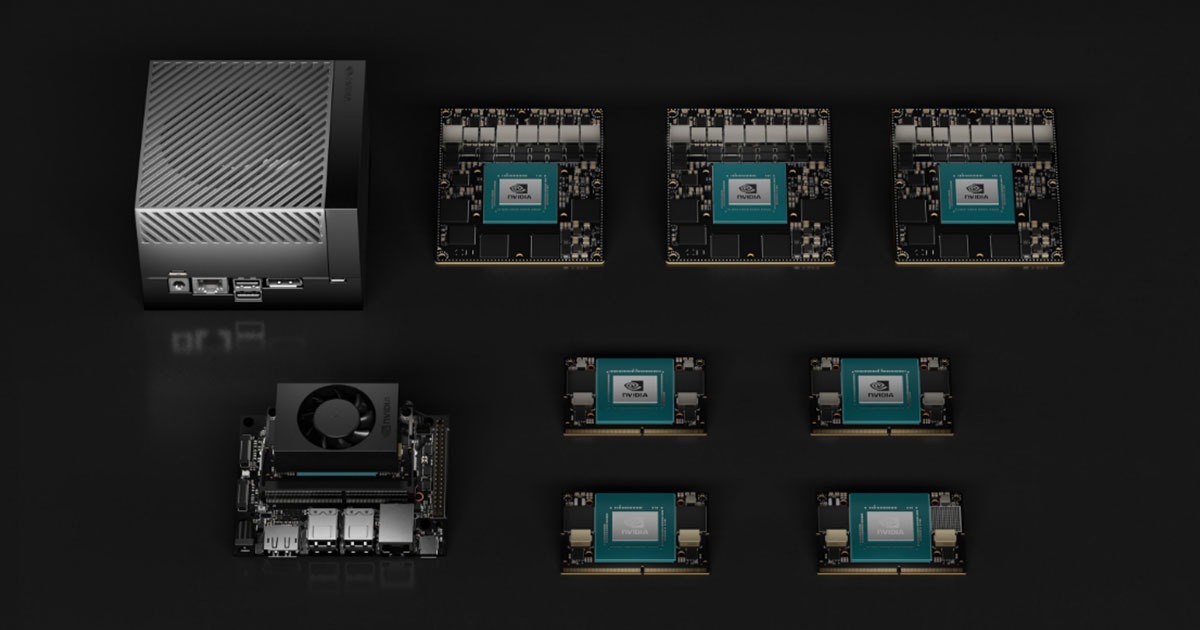
The NVIDIA Jetson Orin NX is a compact, SO-DIMM form-factor edge AI compute module designed for robotics, autonomous machines, and embedded vision applications. Manufactured by NVIDIA, it is available in 8 GB and 16 GB memory configurations and pairs an Ampere-architecture GPU with an 8-core Arm Cortex-A78AE CPU to deliver high-throughput on-device inference without relying on cloud connectivity. Positioned within NVIDIA's broader Jetson Orin family, the Orin NX targets developers and system integrators who need a balance of performance and power efficiency in a small footprint. It is commonly used in applications such as industrial inspection, autonomous mobile robots (AMRs), drone navigation, and smart edge devices where real-time AI inference is critical.
531 views