ReWalk 7 Personal Exoskeleton
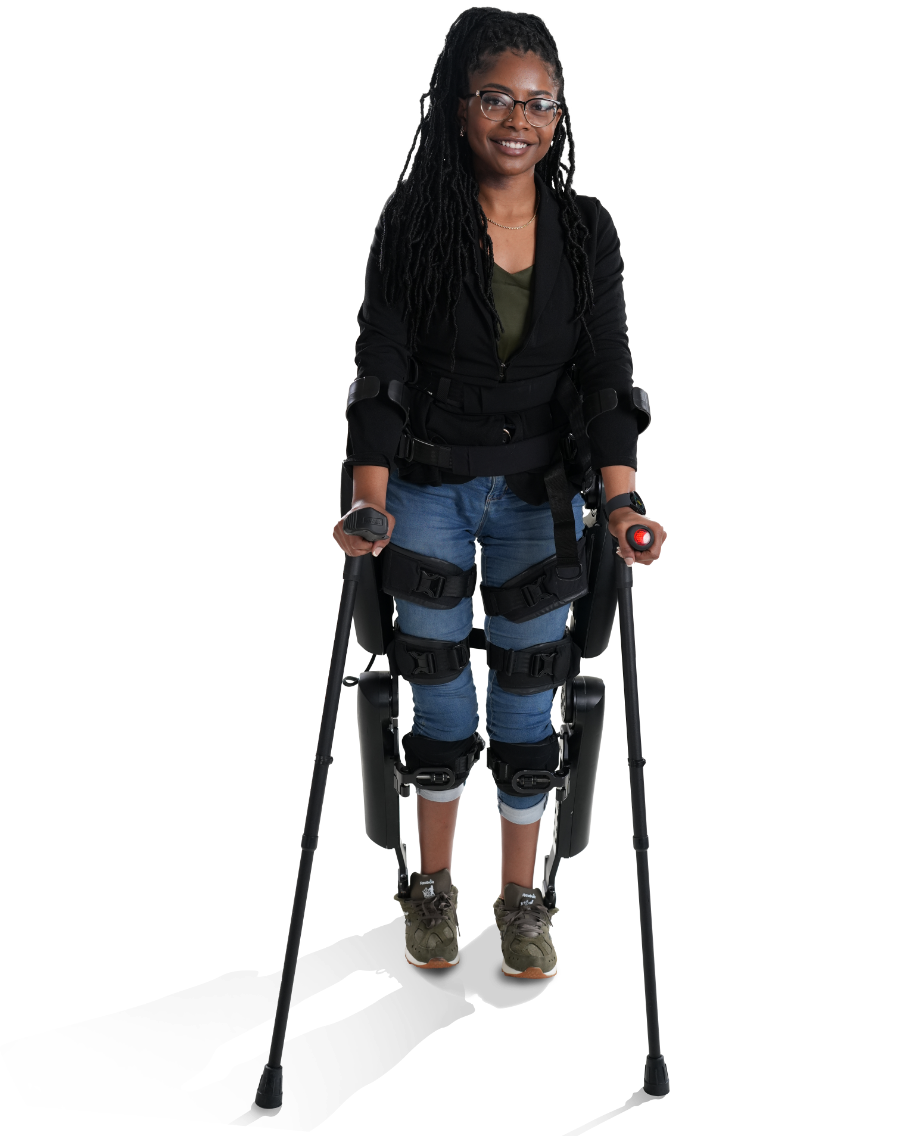
The ReWalk 7 Personal Exoskeleton is a wearable powered exoskeleton designed to help individuals with spinal cord injuries (SCI) stand upright, walk, turn, and navigate everyday obstacles such as stairs and curbs in both home and community environments. Developed by Lifeward (formerly known as ReWalk Robotics), it represents the company's latest generation of personal exoskeleton technology, succeeding the ReWalk 6.0 model with reported improvements in usability, comfort, and control. Lifeward is a medical-device company with a focus on rehabilitation and mobility restoration technology. The ReWalk 7 is classified as a personal-use device, meaning it is intended for independent daily use rather than solely clinic-supervised therapy sessions. It has received regulatory clearances in key markets and is considered one of the pioneering commercially available exoskeletons for spinal cord injury rehabilitation and mobility.
Overview and Use Cases
The ReWalk 7 Personal Exoskeleton is engineered for adults with lower-limb paralysis resulting from spinal cord injury, typically at thoracic or lumbar levels. Unlike rehabilitation-only exoskeletons that require clinical supervision, the ReWalk 7 is designed for personal ownership and independent use in real-world settings. Core use cases include:
- Daily mobility: Standing, walking indoors and outdoors, and navigating community environments.
- Stair and curb climbing: Allowing users to manage common architectural barriers.
- Health benefits: Prolonged upright posture and walking activity are associated with potential secondary health benefits, including improved circulation, bone density, and bowel function, as noted in clinical literature.
Users typically operate the system with forearm crutches for balance support and control the device through a wrist-mounted controller and a tilt sensor that detects forward lean to initiate steps.
Key Technical Details
The ReWalk 7 builds on the foundation of the 6.0 platform with reported refinements in fit, software, and user experience. Publicly available information describes the following characteristics:
- Actuation: Motorized hip and knee joints provide powered assistance for walking motion; ankle joints are typically passive.
- Sensors: Tilt and motion sensors detect the user's intended movement to trigger gait cycles.
- Control interface: A wrist-worn remote allows mode selection (stand, sit, walk, stairs).
- Power: The system is battery-powered; specific runtime figures have not been independently verified in public documentation for the ReWalk 7 generation specifically.
- Fit: The exoskeleton is adjustable and is fitted to individual users, with weight and height eligibility criteria specified by the manufacturer.
Exact torque outputs, payload ratings, and battery capacity figures for the ReWalk 7 have not been widely published in verified public sources and are therefore not stated here.
Comparison to Similar Robots
Within Lifeward's portfolio, the ReWalk 7 is the flagship personal mobility product. The company's other offerings have historically included a rehabilitation (clinical) variant and the ReStore soft exo-suit for stroke rehabilitation — a distinct product targeting a different user population. The sibling products listed under the Lifeward brand in some databases (such as warehouse mobile robots) appear to reflect catalog groupings rather than direct product-line relationships.
Among competitors, the ReWalk 7 operates in a small but growing field of personal exoskeletons:
- Ekso Bionics EksoNR: Primarily a clinical/rehabilitation device, less focused on personal home use.
- Indego (Parker Hannifin): Another FDA-cleared personal exoskeleton targeting a similar SCI population.
- Cyberdyne HAL: Available in some markets, with a different sensor modality (bioelectrical signal detection).
ReWalk is frequently cited as one of the earliest exoskeletons to receive FDA clearance for personal home use, giving it a degree of market recognition.
Market Context and Target Buyers
The ReWalk 7 sits in the premium medical-device tier. Personal exoskeletons in this category are generally priced in the range of tens of thousands of dollars, though Lifeward has not publicly listed a fixed MSRP for the ReWalk 7. Target buyers include:
- Individuals with thoracic-level spinal cord injury seeking personal mobility solutions.
- Veterans' healthcare systems (the U.S. Department of Veterans Affairs has reportedly covered ReWalk devices for eligible veterans).
- Private insurers and national health systems in select countries.
Reimbursement coverage remains a significant market barrier, and Lifeward has publicly engaged in advocacy efforts to expand insurance coverage.
Notable Deployments and Regulatory Status
The ReWalk platform (across generations) has received clearance from the U.S. Food and Drug Administration (FDA) and has also obtained CE marking for European markets. The device has been used in clinical studies and has been adopted by veterans' programs in the United States. Specific deployment numbers for the ReWalk 7 generation have not been publicly disclosed by the company as of available reporting.
Future Outlook
The personal exoskeleton market is expected to grow as technology matures, costs potentially decrease, and reimbursement pathways expand. Lifeward has signaled ongoing development efforts, and the ReWalk 7 is positioned as the current state of the art in the company's personal mobility line. Broader adoption will likely depend on continued clinical evidence generation, regulatory engagement, and payer negotiations across global markets.
Related videos


Related entries
 Robot
RobotG1
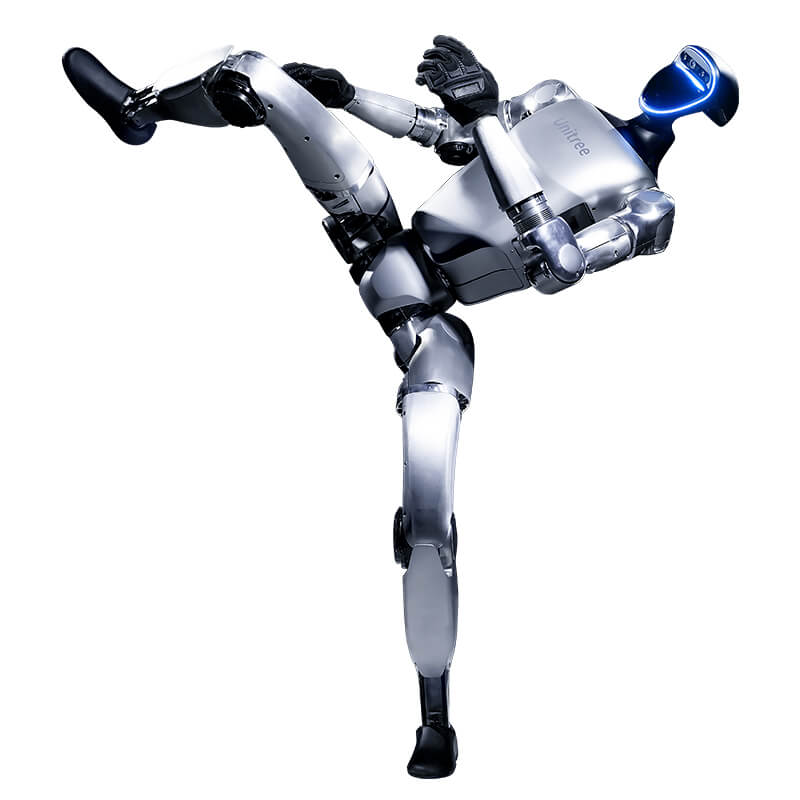
The Unitree G1 is a general-purpose humanoid robot developed by Unitree Robotics, a Chinese robotics company headquartered in Hangzhou. Standing approximately 1.32 meters tall and weighing around 35 kilograms, the G1 features 23 degrees of freedom and is capable of walking, running, recovering from falls, and performing dexterous manipulation tasks. It ships with SDK access, making it accessible to researchers and small-business operators seeking an affordable entry point into humanoid robotics. The G1 is widely regarded as one of the most competitively priced serious humanoid platforms available as of public reporting, positioning Unitree as a disruptive force in a market historically dominated by far more expensive systems. Its combination of mobility, recoverability, and open software access has attracted attention from academic institutions, robotics developers, and automation-focused startups worldwide.
4,253 views
 Robot
RobotUniversal Robots UR5e
The Universal Robots UR5e is a six-axis collaborative robot arm (cobot) belonging to Universal Robots' e-Series product line. Designed for light-to-medium industrial and laboratory tasks, it is widely used in assembly, pick-and-place, machine tending, quality inspection, and lab automation workflows. Universal Robots, a Danish company and a subsidiary of Teradyne, is one of the most recognized names in the collaborative robotics market. The UR5e is programmed using Universal Robots' PolyScope graphical interface on a teach pendant, making it accessible to operators without deep robotics expertise. Its built-in force/torque sensing, tool-center-point control, and a broad ecosystem of certified end-effectors and accessories (the UR+ platform) have made it a popular mid-range cobot choice across manufacturing, electronics, food handling, and research sectors.
3,786 views
 Robot
RobotQuicktron M100
The Quicktron M100 is a heavy-duty autonomous mobile robot (AMR) belonging to Quicktron Robotics' M-Series product line. It is designed for demanding material handling tasks in warehouses, distribution centers, and manufacturing environments, using an integrated lift mechanism to transport shelves and pallets autonomously across facility floors. Quicktron Robotics, a company with roots in China and a global commercial presence, positions the M100 as a high-capacity solution for operations that require moving heavier loads than lighter AMR models can accommodate. The M100 targets logistics operators and manufacturers seeking to automate goods-to-person or pallet-movement workflows at scale.
427 views
 Robot
RobotNVIDIA Jetson Orin NX
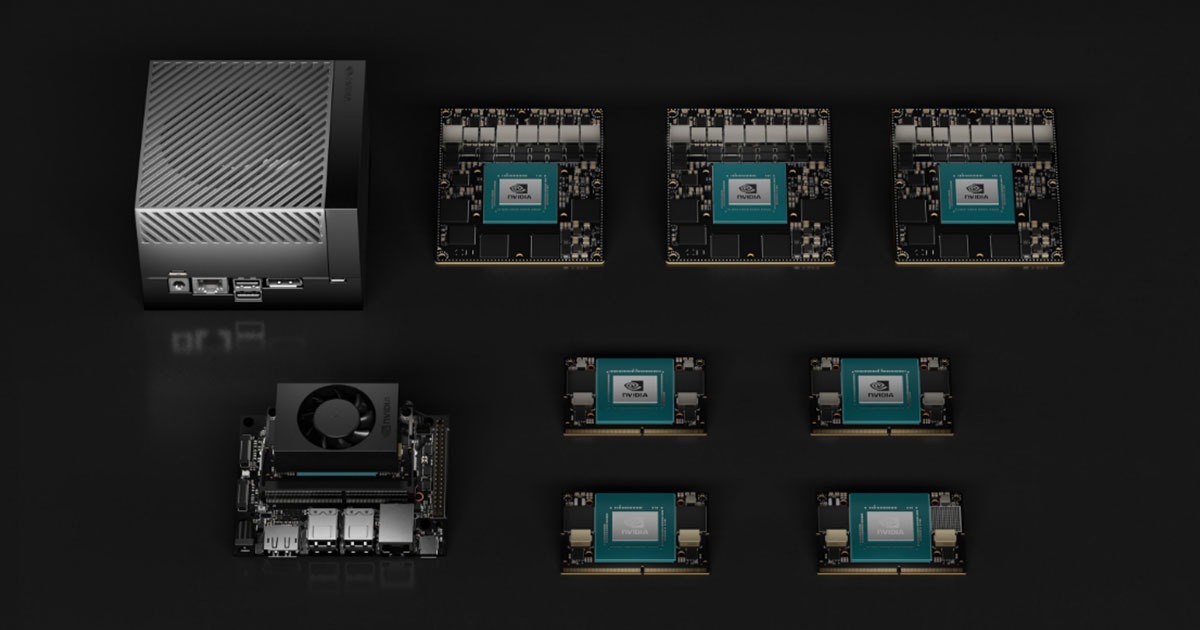
The NVIDIA Jetson Orin NX is a compact, SO-DIMM form-factor edge AI compute module designed for robotics, autonomous machines, and embedded vision applications. Manufactured by NVIDIA, it is available in 8 GB and 16 GB memory configurations and pairs an Ampere-architecture GPU with an 8-core Arm Cortex-A78AE CPU to deliver high-throughput on-device inference without relying on cloud connectivity. Positioned within NVIDIA's broader Jetson Orin family, the Orin NX targets developers and system integrators who need a balance of performance and power efficiency in a small footprint. It is commonly used in applications such as industrial inspection, autonomous mobile robots (AMRs), drone navigation, and smart edge devices where real-time AI inference is critical.
396 views