Ottobot
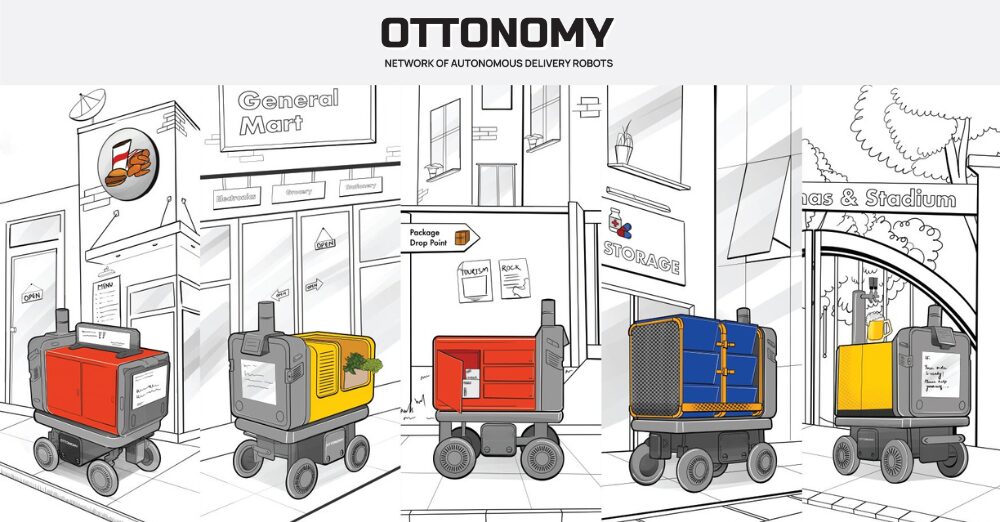
The Ottobot is an autonomous delivery robot developed by Ottonomy, designed to operate across both indoor and outdoor environments without requiring human supervision. It is built to serve logistics needs in settings such as hospitals, industrial campuses, airports, and last-mile parcel delivery, transporting items including medical supplies, lab samples, medications, and packages. Ottonomy positions the Ottobot as a fully autonomous, contactless delivery solution capable of navigating complex real-world environments. The robot is notable for its claimed ability to handle mixed indoor-outdoor routes, a capability that distinguishes it from many competing platforms restricted to a single environment type.
Overview and Use Cases
The Ottobot is Ottonomy's flagship autonomous delivery robot, engineered for contactless, fully autonomous logistics across a variety of verticals. Its primary use cases include:
- Healthcare logistics: Transporting medications, lab samples, and medical supplies within hospital campuses, reducing staff burden and minimizing human contact with sensitive materials.
- Industrial and corporate campuses: Handling internal mail, parts, and supplies across large facilities.
- Airport and retail environments: Reportedly deployed at airports for food and retail delivery to passengers, representing a consumer-facing use case.
- Last-mile parcel delivery: Navigating sidewalks and mixed pedestrian environments to deliver packages directly to recipients.
A key differentiator for the Ottobot is its claimed ability to transition seamlessly between indoor and outdoor environments, a capability that many competing sidewalk delivery robots do not fully support.
Technical Details
Ottonomy has publicly described the Ottobot as relying on a suite of sensors for autonomous navigation, reportedly including cameras, LiDAR, and ultrasonic sensors to perceive its surroundings and avoid obstacles. The robot is designed for fully driverless operation — meaning it does not require a remote human operator to supervise each delivery, unlike some competing platforms that use teleoperation as a fallback.
Specific figures for payload capacity, battery runtime, and top speed have not been consistently published in widely available sources; prospective buyers are advised to consult Ottonomy directly for current specifications. The robot features a lockable cargo compartment accessible to authorized recipients, supporting contactless handoff.
Comparison to Similar Robots
Within Ottonomy's portfolio, the Ottobot is the company's primary commercial delivery platform. The other robots listed under Ottonomy's broader ecosystem — such as the Retriever (a mobile platform) and the gitamini (a companion robot) — serve different market segments and are not direct siblings in the delivery category.
Against competitors, the Ottobot competes in a crowded sidewalk and campus delivery segment that includes:
- Starship Technologies robots, which are widely deployed on university campuses but are generally limited to outdoor pedestrian environments.
- Kiwibot, similarly focused on outdoor last-mile delivery.
- Aethon TUG and similar hospital logistics robots, which focus on indoor-only healthcare environments.
The Ottobot's indoor-outdoor flexibility is its most frequently cited competitive advantage over these alternatives.
Market Context and Target Buyers
The Ottobot is positioned as an enterprise and institutional solution rather than a consumer product. Target buyers include:
- Hospital systems and healthcare networks seeking to automate internal logistics.
- Airport operators and concessionaires looking to reduce labor costs and offer novel customer experiences.
- Corporate campuses and logistics operators exploring autonomous last-mile solutions.
Ottonomy has not publicly disclosed pricing, and the Ottobot is likely offered under a robotics-as-a-service (RaaS) or direct licensing model, as is common in the autonomous delivery sector.
Notable Deployments
As of public reporting, Ottonomy has announced or conducted deployments at airport environments, including reported pilots at major U.S. airports for food and retail delivery. Healthcare campus deployments have also been cited in company communications. Specific customer names and deployment scales have not always been publicly confirmed, and interested parties should verify current deployment status directly with Ottonomy.
Future Outlook
The autonomous delivery robot market is growing rapidly, driven by labor cost pressures and increasing demand for contactless logistics. Ottonomy's focus on mixed-environment autonomy positions the Ottobot to address use cases that single-environment robots cannot serve. As regulatory frameworks for sidewalk robots continue to evolve in various jurisdictions, the commercial viability of platforms like the Ottobot is expected to expand. Continued improvements in sensor fusion, battery technology, and AI-based navigation are likely to further enhance the robot's operational range and reliability over time.
Related entries
 Robot
RobotG1
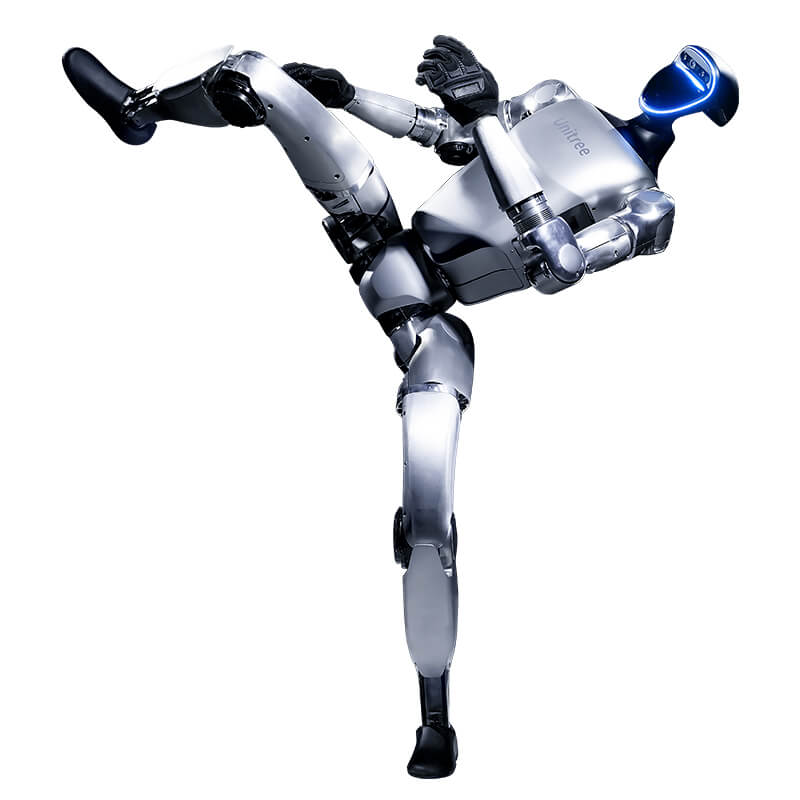
The Unitree G1 is a general-purpose humanoid robot developed by Unitree Robotics, a Chinese robotics company headquartered in Hangzhou. Standing approximately 1.32 meters tall and weighing around 35 kilograms, the G1 features 23 degrees of freedom and is capable of walking, running, recovering from falls, and performing dexterous manipulation tasks. It ships with SDK access, making it accessible to researchers and small-business operators seeking an affordable entry point into humanoid robotics. The G1 is widely regarded as one of the most competitively priced serious humanoid platforms available as of public reporting, positioning Unitree as a disruptive force in a market historically dominated by far more expensive systems. Its combination of mobility, recoverability, and open software access has attracted attention from academic institutions, robotics developers, and automation-focused startups worldwide.
4,253 views
 Robot
RobotUniversal Robots UR5e
The Universal Robots UR5e is a six-axis collaborative robot arm (cobot) belonging to Universal Robots' e-Series product line. Designed for light-to-medium industrial and laboratory tasks, it is widely used in assembly, pick-and-place, machine tending, quality inspection, and lab automation workflows. Universal Robots, a Danish company and a subsidiary of Teradyne, is one of the most recognized names in the collaborative robotics market. The UR5e is programmed using Universal Robots' PolyScope graphical interface on a teach pendant, making it accessible to operators without deep robotics expertise. Its built-in force/torque sensing, tool-center-point control, and a broad ecosystem of certified end-effectors and accessories (the UR+ platform) have made it a popular mid-range cobot choice across manufacturing, electronics, food handling, and research sectors.
3,786 views
 Robot
RobotQuicktron M100
The Quicktron M100 is a heavy-duty autonomous mobile robot (AMR) belonging to Quicktron Robotics' M-Series product line. It is designed for demanding material handling tasks in warehouses, distribution centers, and manufacturing environments, using an integrated lift mechanism to transport shelves and pallets autonomously across facility floors. Quicktron Robotics, a company with roots in China and a global commercial presence, positions the M100 as a high-capacity solution for operations that require moving heavier loads than lighter AMR models can accommodate. The M100 targets logistics operators and manufacturers seeking to automate goods-to-person or pallet-movement workflows at scale.
427 views
 Robot
RobotNVIDIA Jetson Orin NX
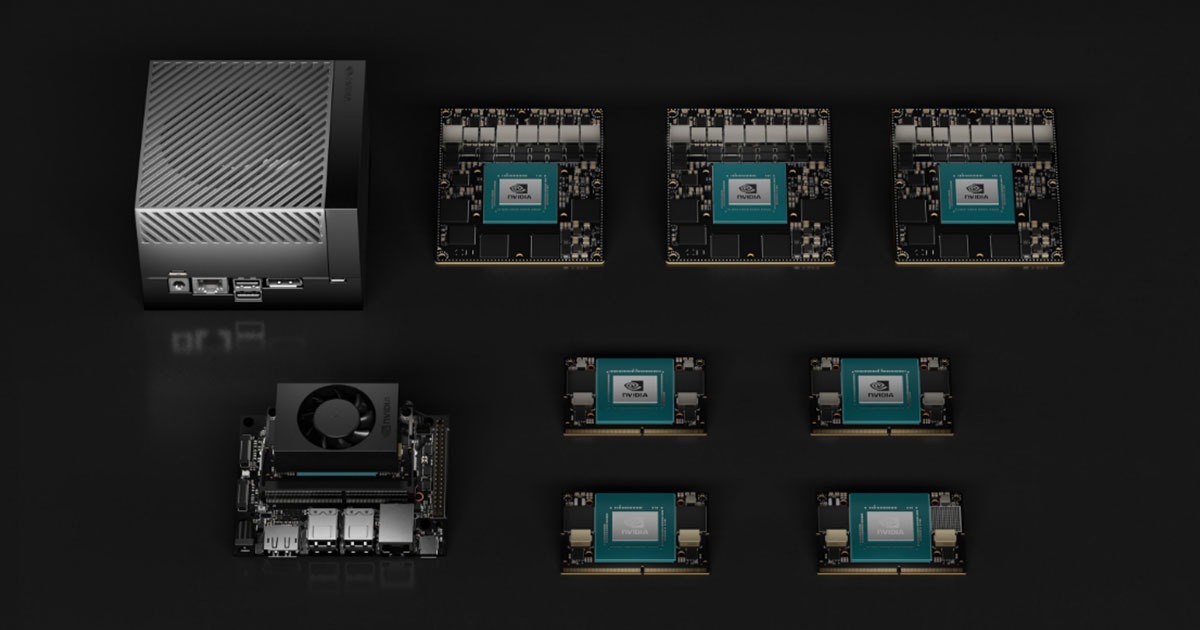
The NVIDIA Jetson Orin NX is a compact, SO-DIMM form-factor edge AI compute module designed for robotics, autonomous machines, and embedded vision applications. Manufactured by NVIDIA, it is available in 8 GB and 16 GB memory configurations and pairs an Ampere-architecture GPU with an 8-core Arm Cortex-A78AE CPU to deliver high-throughput on-device inference without relying on cloud connectivity. Positioned within NVIDIA's broader Jetson Orin family, the Orin NX targets developers and system integrators who need a balance of performance and power efficiency in a small footprint. It is commonly used in applications such as industrial inspection, autonomous mobile robots (AMRs), drone navigation, and smart edge devices where real-time AI inference is critical.
396 views