Loona
Loona is a small quadrupedal companion robot developed by KEYi Tech, a Chinese consumer robotics company. It features an expressive OLED face display, GPT-powered conversational AI, and multimodal interaction capabilities including voice and gesture recognition, positioning it as an emotionally engaging desktop or home companion. Designed for a broad audience that includes families, educators, and hobbyists, Loona ships with an open SDK that allows users to customize behaviors and build new applications. The robot gained significant attention through crowdfunding and has been marketed internationally as an accessible yet technically capable entry point into personal robotics.

Overview and Use Cases
Loona is a petite, four-legged companion robot intended for home, desktop, and light educational environments. Unlike industrial or service robots, Loona's primary value proposition is emotional engagement: its animated OLED face conveys a range of expressions, giving the robot a pet-like personality that encourages ongoing interaction. Core use cases include:
- Home companionship – serving as an interactive presence for individuals or families
- Education and STEM outreach – providing a hands-on platform for learning about robotics and AI through its open SDK
- Hobbyist customization – enabling developers and makers to program new routines, reactions, and integrations
KEYi Tech positions Loona as a successor to earlier consumer companion robots, emphasizing the integration of large language model (LLM) technology to make conversation feel more natural and contextually aware.
Key Technical Features
Loona incorporates several technologies that distinguish it within the consumer companion segment:
- OLED face display – a screen-based face capable of rendering dynamic, expressive animations that respond to the robot's conversational and emotional state
- GPT-powered conversation – integration with OpenAI's GPT API (or compatible LLM backends, as reported) enabling open-ended dialogue beyond simple command-response patterns
- Voice recognition – onboard or cloud-assisted speech processing for wake-word detection and natural language understanding
- Gesture recognition – camera-based sensing that allows Loona to respond to hand signals and physical proximity
- Quadrupedal locomotion – four-legged movement enabling the robot to navigate flat surfaces with an animal-like gait
- Open SDK – a software development kit that allows third-party developers and educators to extend Loona's capabilities
Specific details such as battery runtime, processor model, and camera resolution have not been uniformly confirmed across public sources; prospective buyers should consult KEYi Tech's official specifications.
Design and Personality
Loona's design philosophy draws heavily from the aesthetics of robotic pets, particularly cat- and dog-like companions. The OLED face is central to this approach, allowing the robot to simulate moods such as curiosity, happiness, or surprise. This expressiveness is intended to lower the barrier to human–robot interaction, making Loona approachable for children and adults alike. The quadrupedal form factor reinforces the pet analogy while also providing stable, omnidirectional movement on tabletop or floor surfaces.
Market Context and Target Buyers
Loona occupies the consumer companion segment of the robotics market, a category that has seen renewed interest following advances in conversational AI. It is reportedly priced in a range accessible to enthusiast consumers and educational institutions, though exact retail pricing may vary by region and sales channel. Target buyers include:
- Families and individuals seeking an interactive, AI-driven companion
- K–12 and informal educators looking for engaging STEM demonstration tools
- Hobbyists and developers interested in a programmable robotics platform with a low entry cost
Competitors in this space include products such as Unitree's Go series (at a higher price and capability tier), Sony's Aibo (premium segment), and various simpler robotic toys. Loona differentiates itself through the combination of LLM-based conversation and an open development ecosystem at a consumer-friendly price point.
Crowdfunding and Commercial Launch
KEYi Tech brought Loona to market in part through crowdfunding campaigns, a common strategy for consumer robotics startups seeking to validate demand and fund initial production runs. The campaigns reportedly attracted substantial backer interest, helping establish an early community of users and developers. As of public reporting, Loona has been made available for general retail purchase internationally, with distribution through the company's own channels and select third-party retailers.
Future Outlook
The integration of rapidly evolving LLM technology means Loona's conversational capabilities are likely to improve over time through software updates, assuming continued API support. The open SDK positions the platform for community-driven feature development, which could extend its relevance beyond the initial product lifecycle. KEYi Tech has not publicly announced successor models as of available reporting, but the broader trend toward AI-enhanced companion robots suggests the category will remain competitive and fast-moving.
Related videos

Loona Robot Dog Review – ChatGPT-4o AI Pet Worth It?
TechTopiaX

Loona Robot Pet Dog ChatGPT Toys | POV | Would you buy it?
WTI

This Robot Dog Has GPT-4?! Meet Loona – The Smartest Pet Ever
Geekbuying Studio

Loona Smart Robot Dog Review 🐶 | ChatGPT-4o AI Companion with Voice & Gesture Control!
TheBuyList

Unboxing my AI Robot Pet Loona @loonapetbot #loonarobot #loonapetbot
Insert Richie

The World's Smartest Ai Robot Pet vs. Smartest Dog 🥰 #loonarobot #kawaii #cute @loonapetbot
Robot Boss
Related entries
 Robot
RobotG1
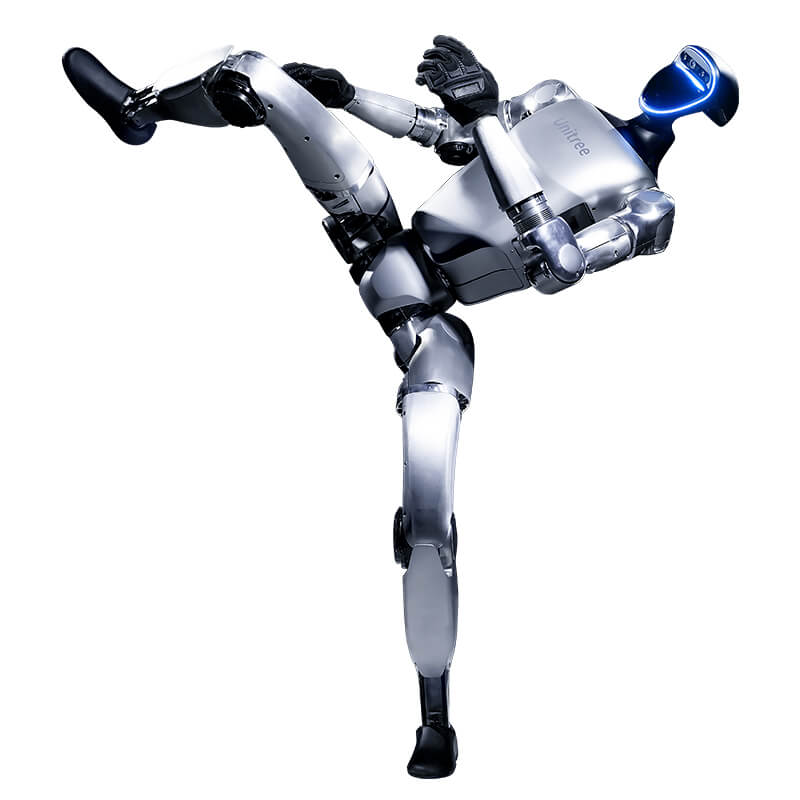
The Unitree G1 is a general-purpose humanoid robot developed by Unitree Robotics, a Chinese robotics company headquartered in Hangzhou. Standing approximately 1.32 meters tall and weighing around 35 kilograms, the G1 features 23 degrees of freedom and is capable of walking, running, recovering from falls, and performing dexterous manipulation tasks. It ships with SDK access, making it accessible to researchers and small-business operators seeking an affordable entry point into humanoid robotics. The G1 is widely regarded as one of the most competitively priced serious humanoid platforms available as of public reporting, positioning Unitree as a disruptive force in a market historically dominated by far more expensive systems. Its combination of mobility, recoverability, and open software access has attracted attention from academic institutions, robotics developers, and automation-focused startups worldwide.
5,862 views
 Robot
RobotUniversal Robots UR5e
The Universal Robots UR5e is a six-axis collaborative robot arm (cobot) belonging to Universal Robots' e-Series product line. Designed for light-to-medium industrial and laboratory tasks, it is widely used in assembly, pick-and-place, machine tending, quality inspection, and lab automation workflows. Universal Robots, a Danish company and a subsidiary of Teradyne, is one of the most recognized names in the collaborative robotics market. The UR5e is programmed using Universal Robots' PolyScope graphical interface on a teach pendant, making it accessible to operators without deep robotics expertise. Its built-in force/torque sensing, tool-center-point control, and a broad ecosystem of certified end-effectors and accessories (the UR+ platform) have made it a popular mid-range cobot choice across manufacturing, electronics, food handling, and research sectors.
5,208 views
 Robot
RobotQuicktron M100
The Quicktron M100 is a heavy-duty autonomous mobile robot (AMR) belonging to Quicktron Robotics' M-Series product line. It is designed for demanding material handling tasks in warehouses, distribution centers, and manufacturing environments, using an integrated lift mechanism to transport shelves and pallets autonomously across facility floors. Quicktron Robotics, a company with roots in China and a global commercial presence, positions the M100 as a high-capacity solution for operations that require moving heavier loads than lighter AMR models can accommodate. The M100 targets logistics operators and manufacturers seeking to automate goods-to-person or pallet-movement workflows at scale.
606 views
 Robot
RobotNVIDIA Jetson Orin NX
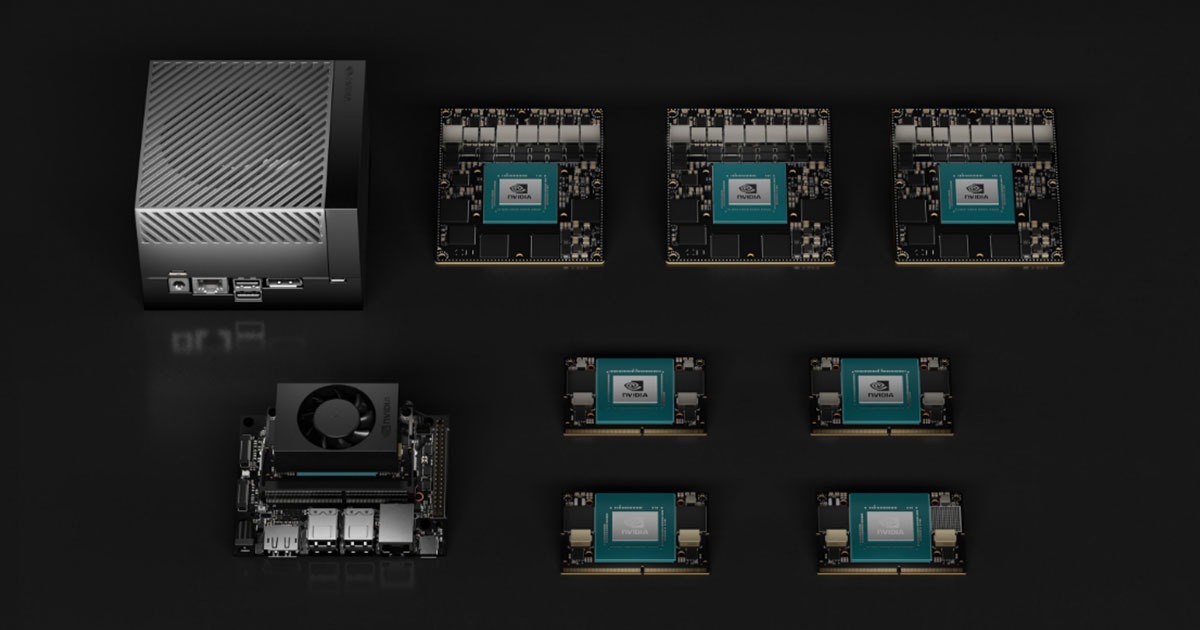
The NVIDIA Jetson Orin NX is a compact, SO-DIMM form-factor edge AI compute module designed for robotics, autonomous machines, and embedded vision applications. Manufactured by NVIDIA, it is available in 8 GB and 16 GB memory configurations and pairs an Ampere-architecture GPU with an 8-core Arm Cortex-A78AE CPU to deliver high-throughput on-device inference without relying on cloud connectivity. Positioned within NVIDIA's broader Jetson Orin family, the Orin NX targets developers and system integrators who need a balance of performance and power efficiency in a small footprint. It is commonly used in applications such as industrial inspection, autonomous mobile robots (AMRs), drone navigation, and smart edge devices where real-time AI inference is critical.
535 views