KettyBot
KettyBot is a slim, multipurpose service robot developed by Pudu Robotics, a Shenzhen-based company specializing in commercial service robots. Designed primarily for the hospitality sector, it functions as both a food-delivery robot and a digital advertising platform, navigating narrow restaurant aisles and hotel corridors while looping promotional content on a prominent front-facing display. The robot's dual role as a delivery assistant and a marketing surface distinguishes it from single-purpose peers. Its relatively compact chassis allows it to operate in environments where wider robots would struggle, and its 18.5-inch front display gives venue operators a passive revenue or branding channel between delivery runs.

Overview and Use Cases
KettyBot is a hospitality-focused service robot manufactured by Pudu Robotics and positioned as a dual-function platform: autonomous last-metre delivery and in-venue digital advertising. Its primary deployment environments include restaurants, hotels, shopping malls, and other commercial venues where staff efficiency and customer engagement are priorities.
Key use cases include:
- Food and beverage delivery – transporting dishes or drinks from a service counter to guest tables along pre-mapped routes.
- Guided hosting – leading guests to their seats or rooms, functioning as a mobile concierge.
- Digital advertising – displaying promotional videos, menus, or brand content on its front screen while in transit or on standby.
- Retail and hospitality lobbies – acting as an interactive information point or wayfinding assistant.
Key Technical Details
KettyBot's chassis is notably slimmer than many competing delivery robots, enabling navigation through aisles and corridors that would challenge wider platforms. The robot relies on a combination of LiDAR, depth cameras, and infrared sensors for obstacle detection and autonomous navigation. It uses simultaneous localization and mapping (SLAM) technology to build and update floor maps.
The front-facing 18.5-inch display is one of its headline features, capable of looping video or static marketing content managed remotely. The robot typically ships with multiple open trays for carrying items, though specific payload figures have not been uniformly disclosed in public documentation. Battery runtime is reported to support a full working shift on a single charge, with fast-charging capability, though precise figures should be verified against the manufacturer's current datasheet.
Comparison to Pudu Robotics Siblings
Within the Pudu Robotics portfolio, KettyBot occupies a distinct niche compared to its siblings:
- BellaBot – Also a hospitality delivery robot, BellaBot is widely recognized for its cat-themed expressive face and interactive emotional responses. It tends to emphasize guest engagement through facial animation, whereas KettyBot prioritizes the advertising display and a more streamlined form factor.
- PUDU CC1 – A cleaning robot targeting floor maintenance rather than delivery, serving a different operational role entirely.
KettyBot's advertising-screen differentiator sets it apart even from BellaBot, making it appealing to operators who want to monetize or brand the robot's idle screen time.
Market Context and Target Buyers
KettyBot is positioned in the mid-tier commercial service robot market, targeting small-to-medium restaurant chains, hotel groups, and retail operators in Asia and increasingly in international markets including Europe, North America, and Southeast Asia. Pudu Robotics typically sells or leases its robots through regional distributors and system integrators.
The robot competes broadly with delivery robots from companies such as Keenon Robotics (DINERBOT series) and Bear Robotics (Servi), though KettyBot's integrated advertising display is a relatively uncommon feature among direct competitors at a similar price tier.
Deployments and Notable Presence
As of public reporting, KettyBot has been deployed across restaurant chains and hotel properties in China and in various international markets. Pudu Robotics has cited deployments in tens of thousands of venues globally across its full product line, though venue-specific breakdowns for KettyBot alone are not consistently disclosed. The robot has been showcased at major trade events including CES and industry hospitality expos.
Future Outlook
The broader service-robot market in hospitality continues to grow, driven by labor cost pressures and post-pandemic interest in contactless service. KettyBot's advertising-screen model aligns with a trend toward robots that generate ancillary value beyond their primary task. Pudu Robotics has continued to iterate on its product line, and future versions of KettyBot may incorporate enhanced AI interaction, larger displays, or improved navigation capabilities, though no specific next-generation announcements have been confirmed in public reporting as of this writing.
Recent news
Related entries
 Robot
RobotG1
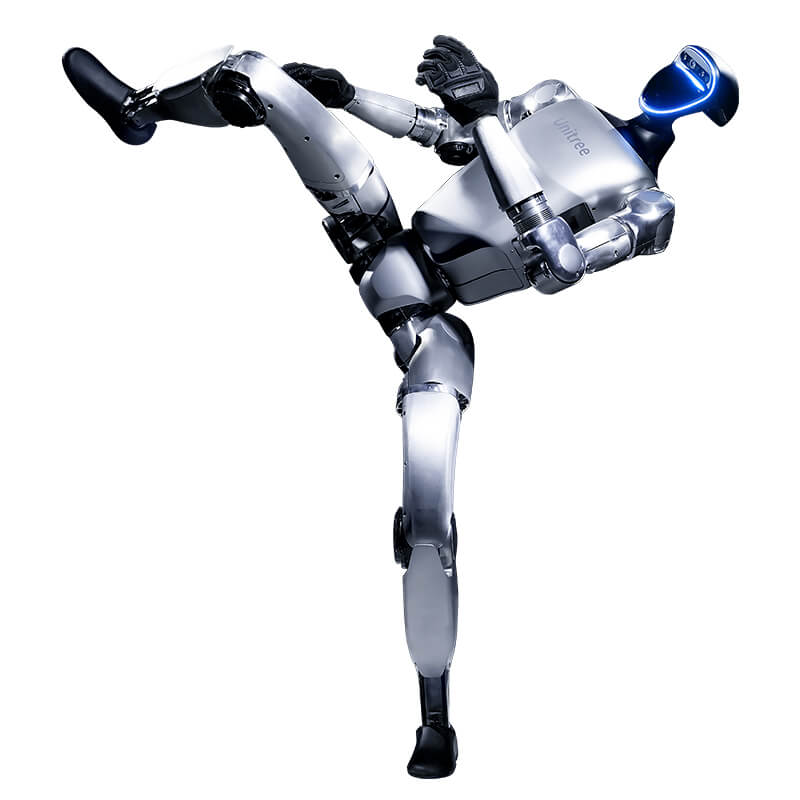
The Unitree G1 is a general-purpose humanoid robot developed by Unitree Robotics, a Chinese robotics company headquartered in Hangzhou. Standing approximately 1.32 meters tall and weighing around 35 kilograms, the G1 features 23 degrees of freedom and is capable of walking, running, recovering from falls, and performing dexterous manipulation tasks. It ships with SDK access, making it accessible to researchers and small-business operators seeking an affordable entry point into humanoid robotics. The G1 is widely regarded as one of the most competitively priced serious humanoid platforms available as of public reporting, positioning Unitree as a disruptive force in a market historically dominated by far more expensive systems. Its combination of mobility, recoverability, and open software access has attracted attention from academic institutions, robotics developers, and automation-focused startups worldwide.
2,758 views
 Robot
RobotUniversal Robots UR5e
The Universal Robots UR5e is a six-axis collaborative robot arm (cobot) belonging to Universal Robots' e-Series product line. Designed for light-to-medium industrial and laboratory tasks, it is widely used in assembly, pick-and-place, machine tending, quality inspection, and lab automation workflows. Universal Robots, a Danish company and a subsidiary of Teradyne, is one of the most recognized names in the collaborative robotics market. The UR5e is programmed using Universal Robots' PolyScope graphical interface on a teach pendant, making it accessible to operators without deep robotics expertise. Its built-in force/torque sensing, tool-center-point control, and a broad ecosystem of certified end-effectors and accessories (the UR+ platform) have made it a popular mid-range cobot choice across manufacturing, electronics, food handling, and research sectors.
2,454 views
 Robot
RobotQuicktron M100
The Quicktron M100 is a heavy-duty autonomous mobile robot (AMR) belonging to Quicktron Robotics' M-Series product line. It is designed for demanding material handling tasks in warehouses, distribution centers, and manufacturing environments, using an integrated lift mechanism to transport shelves and pallets autonomously across facility floors. Quicktron Robotics, a company with roots in China and a global commercial presence, positions the M100 as a high-capacity solution for operations that require moving heavier loads than lighter AMR models can accommodate. The M100 targets logistics operators and manufacturers seeking to automate goods-to-person or pallet-movement workflows at scale.
324 views
 Robot
RobotNVIDIA Jetson Orin NX
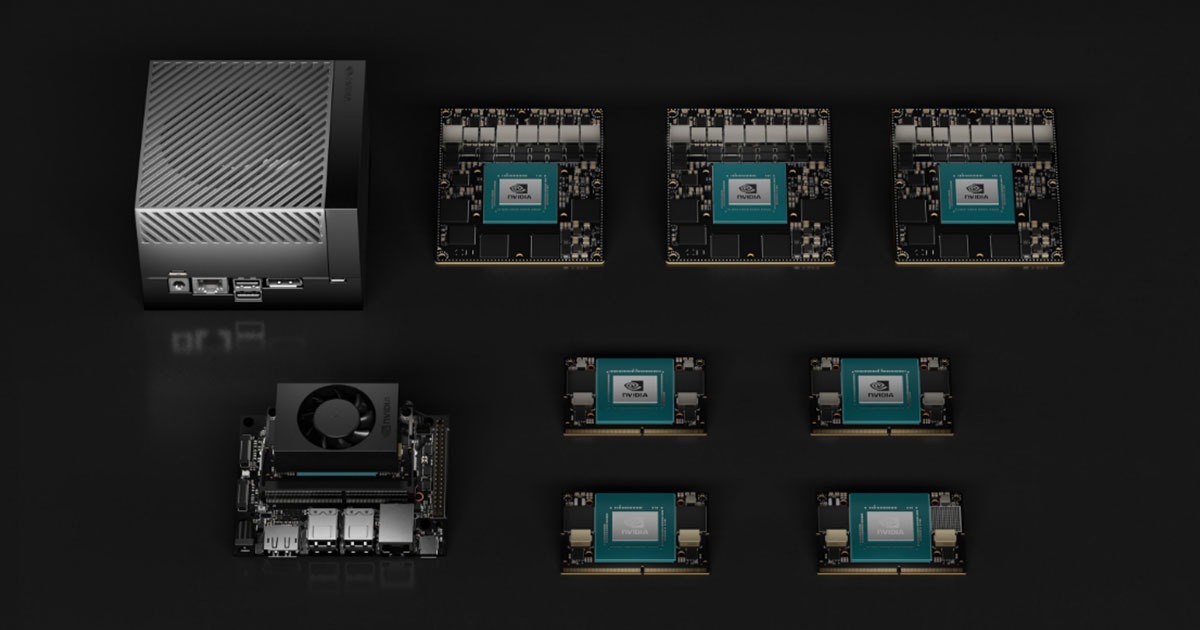
The NVIDIA Jetson Orin NX is a compact, SO-DIMM form-factor edge AI compute module designed for robotics, autonomous machines, and embedded vision applications. Manufactured by NVIDIA, it is available in 8 GB and 16 GB memory configurations and pairs an Ampere-architecture GPU with an 8-core Arm Cortex-A78AE CPU to deliver high-throughput on-device inference without relying on cloud connectivity. Positioned within NVIDIA's broader Jetson Orin family, the Orin NX targets developers and system integrators who need a balance of performance and power efficiency in a small footprint. It is commonly used in applications such as industrial inspection, autonomous mobile robots (AMRs), drone navigation, and smart edge devices where real-time AI inference is critical.
312 views