John Deere See & Spray Robot
The John Deere See & Spray Robot is an autonomous precision-agriculture system developed by John Deere that uses computer vision and artificial intelligence to detect individual weeds within crop rows and apply herbicide only to those plants. By targeting weeds rather than broadcasting chemicals across entire fields, the system is designed to significantly reduce herbicide usage and associated costs while limiting environmental runoff. First introduced as a concept system and later commercialized under the See & Spray Ultimate branding (reportedly beginning broader commercial availability around 2023), the technology integrates high-resolution cameras and deep-learning models mounted on a sprayer bar. It is aimed at large-scale row-crop farmers—particularly those growing corn, soybeans, and cotton—who seek to lower input costs and adopt more sustainable agronomic practices.
Overview and Use Cases
The John Deere See & Spray Robot represents a significant step forward in precision agriculture, combining autonomous machine operation with real-time AI-driven decision-making. The system is designed to be mounted on or integrated with large agricultural sprayers and is intended for use in broad-acre row-crop fields. Its primary use case is post-emergence weed control: identifying weeds that have germinated between or within crop rows and applying herbicide only to those specific plants.
Key use cases include:
- Selective post-emergence herbicide application in corn, soybean, and cotton fields
- Reduction of herbicide input costs by reportedly spraying only where weeds are detected rather than blanket-applying across the entire field
- Supporting integrated weed management programs that aim to slow the development of herbicide-resistant weed populations
- Data collection on weed pressure and distribution across fields for agronomic decision-making
Key Technical Details
The See & Spray Ultimate system uses a series of high-resolution cameras mounted along the sprayer boom, paired with onboard computing hardware running deep-learning image-classification models. The system is trained to distinguish crop plants from weeds in real time as the sprayer moves through the field.
- Vision system: Multiple cameras positioned along the boom provide overlapping coverage of the crop canopy
- AI/ML backbone: Deep neural networks trained on large datasets of labeled crop and weed imagery enable real-time classification
- Spray actuation: Individual nozzle control allows the system to activate only the nozzles positioned over detected weeds, minimizing off-target application
- Operating speed: The system is designed to operate at typical field sprayer speeds, though exact operational parameters may vary by configuration
- Integration: Compatible with John Deere's broader precision-agriculture ecosystem, including the Operations Center data platform
Specific payload, boom width options, and runtime figures have not been uniformly disclosed in public documentation and may vary by equipment configuration.
Comparison to Similar Systems
Within John Deere's own portfolio, the See & Spray Robot is distinct from the company's broader lineup of autonomous and semi-autonomous field equipment (such as its autonomous tractor platform) in that it focuses specifically on chemical application intelligence rather than tillage or harvesting operations.
In the competitive landscape, See & Spray faces comparison with:
- Blue River Technology's earlier LettuceBot (Blue River Technology was acquired by John Deere in 2017, and its research formed a foundation for See & Spray)
- Trimble and other precision-ag vendors offering variable-rate application technology, though most lack real-time plant-level vision
- Startup competitors such as Carbon Robotics (laser weeding) and Naio Technologies, which take alternative approaches to precision weed control
John Deere's scale, dealer network, and existing customer relationships give See & Spray a notable distribution advantage over smaller competitors.
Market Context and Target Buyers
The See & Spray Ultimate system is positioned as a premium precision-agriculture technology. It is targeted primarily at large commercial row-crop operations in North America, where herbicide costs and weed-resistance challenges are significant concerns. The system is generally offered as an add-on or integrated option for compatible John Deere sprayer models rather than as a standalone robot.
As of public reporting, the technology sits in a higher price tier relative to conventional sprayers, with the value proposition centered on long-term herbicide savings and sustainability credentials. Exact pricing has not been publicly disclosed by John Deere.
Deployments and Notable Milestones
- John Deere acquired Blue River Technology in 2017, bringing the foundational computer-vision expertise that underpins See & Spray
- The See & Spray Select variant was introduced as an earlier, more limited version of the technology
- See & Spray Ultimate was announced as the more advanced commercial offering, with broader weed-detection capabilities across a wider range of species
- The system has been demonstrated and reported on at major agricultural trade events, including the Consumer Electronics Show (CES), where John Deere showcased its autonomous and AI-driven agriculture technologies
Future Outlook
John Deere has publicly positioned precision spraying and AI-driven crop management as central pillars of its long-term technology strategy. Future development directions reportedly include expanding the library of detectable weed species, improving performance in challenging lighting and canopy conditions, and deeper integration with farm management software platforms. As herbicide resistance continues to grow as an agronomic challenge globally, demand for targeted application technologies like See & Spray is broadly expected to increase. John Deere's ongoing investment in autonomy and machine learning suggests continued iteration on the platform in coming years.
Related videos

Related entries
 Robot
RobotG1
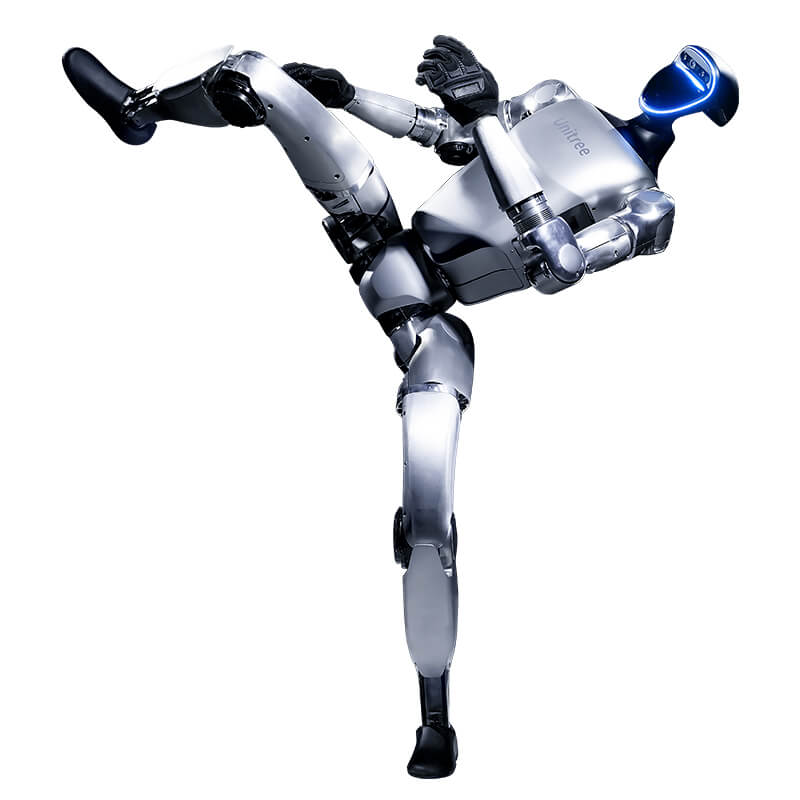
The Unitree G1 is a general-purpose humanoid robot developed by Unitree Robotics, a Chinese robotics company headquartered in Hangzhou. Standing approximately 1.32 meters tall and weighing around 35 kilograms, the G1 features 23 degrees of freedom and is capable of walking, running, recovering from falls, and performing dexterous manipulation tasks. It ships with SDK access, making it accessible to researchers and small-business operators seeking an affordable entry point into humanoid robotics. The G1 is widely regarded as one of the most competitively priced serious humanoid platforms available as of public reporting, positioning Unitree as a disruptive force in a market historically dominated by far more expensive systems. Its combination of mobility, recoverability, and open software access has attracted attention from academic institutions, robotics developers, and automation-focused startups worldwide.
2,758 views
 Robot
RobotUniversal Robots UR5e
The Universal Robots UR5e is a six-axis collaborative robot arm (cobot) belonging to Universal Robots' e-Series product line. Designed for light-to-medium industrial and laboratory tasks, it is widely used in assembly, pick-and-place, machine tending, quality inspection, and lab automation workflows. Universal Robots, a Danish company and a subsidiary of Teradyne, is one of the most recognized names in the collaborative robotics market. The UR5e is programmed using Universal Robots' PolyScope graphical interface on a teach pendant, making it accessible to operators without deep robotics expertise. Its built-in force/torque sensing, tool-center-point control, and a broad ecosystem of certified end-effectors and accessories (the UR+ platform) have made it a popular mid-range cobot choice across manufacturing, electronics, food handling, and research sectors.
2,454 views
 Robot
RobotQuicktron M100
The Quicktron M100 is a heavy-duty autonomous mobile robot (AMR) belonging to Quicktron Robotics' M-Series product line. It is designed for demanding material handling tasks in warehouses, distribution centers, and manufacturing environments, using an integrated lift mechanism to transport shelves and pallets autonomously across facility floors. Quicktron Robotics, a company with roots in China and a global commercial presence, positions the M100 as a high-capacity solution for operations that require moving heavier loads than lighter AMR models can accommodate. The M100 targets logistics operators and manufacturers seeking to automate goods-to-person or pallet-movement workflows at scale.
324 views
 Robot
RobotNVIDIA Jetson Orin NX
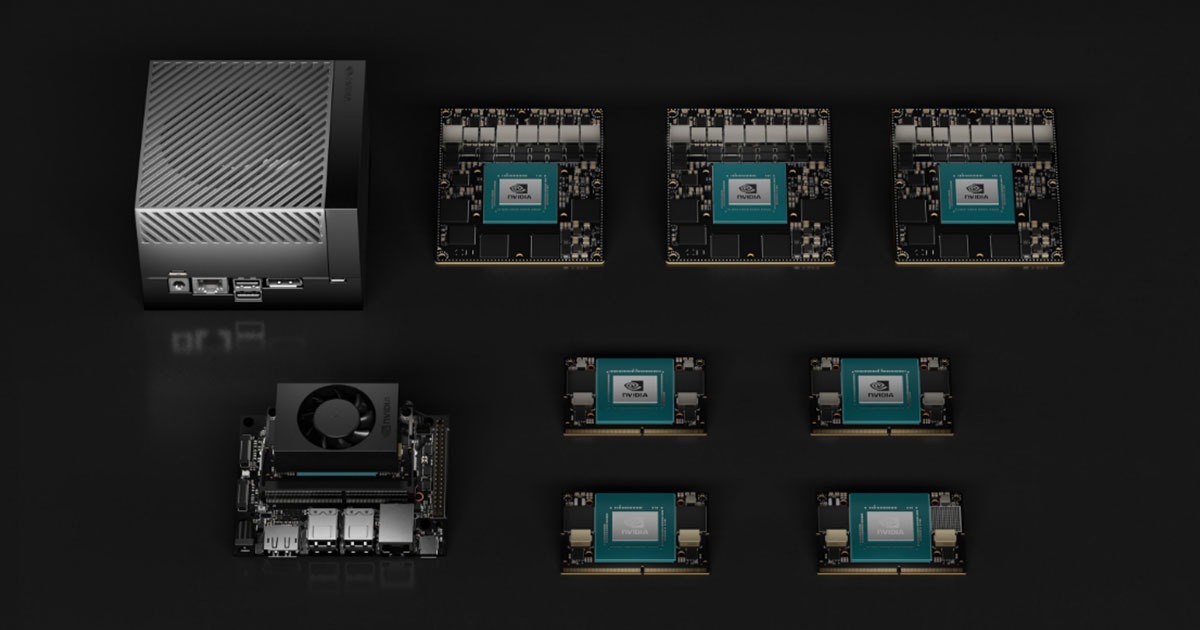
The NVIDIA Jetson Orin NX is a compact, SO-DIMM form-factor edge AI compute module designed for robotics, autonomous machines, and embedded vision applications. Manufactured by NVIDIA, it is available in 8 GB and 16 GB memory configurations and pairs an Ampere-architecture GPU with an 8-core Arm Cortex-A78AE CPU to deliver high-throughput on-device inference without relying on cloud connectivity. Positioned within NVIDIA's broader Jetson Orin family, the Orin NX targets developers and system integrators who need a balance of performance and power efficiency in a small footprint. It is commonly used in applications such as industrial inspection, autonomous mobile robots (AMRs), drone navigation, and smart edge devices where real-time AI inference is critical.
312 views