Digit
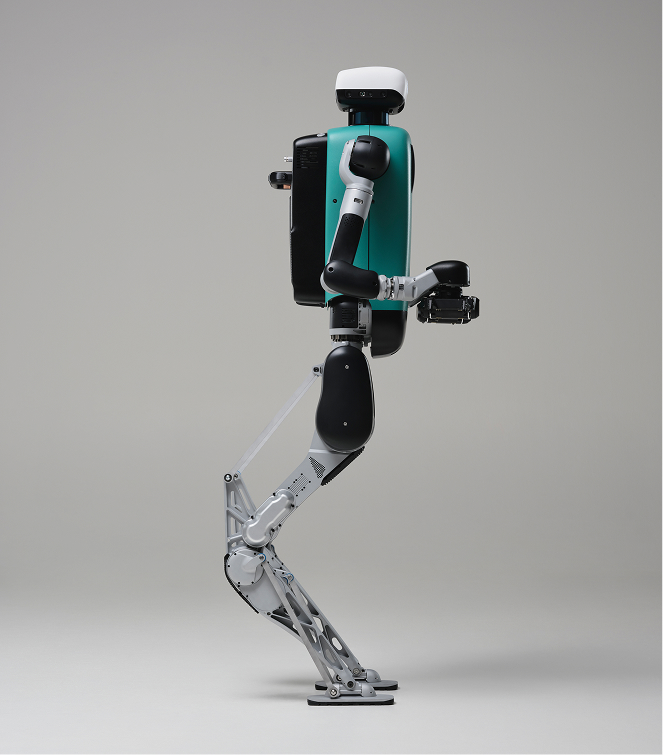
Digit is a bipedal humanoid robot developed by Agility Robotics, designed specifically for logistics and manufacturing environments. Standing roughly human height, it is built to navigate spaces designed for people — climbing stairs, moving through narrow aisles, and handling tote-sized payloads — making it one of the few humanoid robots to reach genuine production deployment rather than remaining a research prototype. Agility Robotics, a company spun out of Oregon State University, pairs Digit with its Arc cloud platform for fleet management and task orchestration. Digit gained widespread attention through a partnership with Amazon, which began piloting the robot in its fulfillment centers. It is widely cited as the first humanoid robot to enter commercial production deployment at meaningful scale.
Overview and Use Cases
Digit is a full-body bipedal humanoid robot purpose-built for real-world logistics and light manufacturing tasks. Unlike many humanoid platforms that remain confined to laboratory demonstrations, Digit was engineered from the outset for deployment in human-centric workspaces such as warehouses, fulfillment centers, and factory floors. Its primary use cases include:
- Tote and bin handling: picking up, carrying, and placing tote-sized containers along conveyor lines or shelving systems
- Trailer unloading: working in confined, unstructured spaces such as shipping containers and truck trailers
- Repetitive material movement: taking over ergonomically demanding or high-frequency transfer tasks from human workers
Because warehouses and factories were built for humans, a humanoid form factor allows Digit to use existing infrastructure — stairs, ramps, narrow aisles, and standard shelving — without costly facility modifications.
Technical Details
Digit stands approximately 1.75 m tall and is designed to operate in environments scaled for adult humans. Publicly reported technical characteristics include:
- Locomotion: fully bipedal walking gait capable of traversing stairs, ramps, and uneven surfaces
- Manipulation: two multi-degree-of-freedom arms with grippers suited for handling totes and boxes; fine dexterous manipulation of small objects is not the primary design target
- Sensing: onboard cameras and depth sensors for perception, obstacle avoidance, and navigation; exact sensor suite details have not been fully disclosed publicly
- Payload: Agility Robotics has indicated Digit can handle payloads in the range typical of warehouse totes, though precise figures should be verified against official datasheets
- Runtime: battery-powered with a runtime reportedly sufficient for shift-length operation when combined with opportunity charging; specific figures have not been consistently published
- Software platform: paired with the Arc cloud platform, which handles fleet orchestration, remote monitoring, and task assignment across multiple Digit units
Comparison to Similar Robots
Within the humanoid robot landscape, Digit competes most directly with platforms such as:
- Boston Dynamics Atlas (research/industrial focus, not yet in broad commercial deployment as of public reporting)
- Figure 02 (Figure AI, targeting automotive and logistics, in early deployment phases)
- Tesla Optimus (in internal pilot testing at Tesla facilities, not yet commercially available)
- Apptronik Apollo (targeting logistics and manufacturing, in early customer pilots)
Among these, Digit is notably distinguished by being the first to reach what Agility Robotics describes as production-scale commercial deployment. Agility Robotics does not manufacture mobile autonomous mobile robots (AMRs) in the traditional sense; the sibling robots listed under the same market category — such as the GreyOrange Ranger GTP, Locus Origin, Quicktron M100, and Geek+ P800 — are wheeled AMR platforms from other manufacturers that address overlapping logistics automation needs through a fundamentally different form factor.
Market Context and Target Buyers
Digit is positioned in the enterprise and industrial automation segment, targeting large-scale logistics operators, e-commerce fulfillment companies, and manufacturers with high-volume, repetitive material-handling needs. As of public reporting, Agility Robotics offers Digit through a robot-as-a-service (RaaS) model in addition to direct sales arrangements, lowering the barrier to adoption for customers wary of large capital expenditures. Specific pricing has not been publicly disclosed. The target buyer profile includes:
- Large third-party logistics (3PL) providers
- E-commerce fulfillment operators
- Automotive and consumer goods manufacturers
Notable Deployments and Customers
The most high-profile deployment of Digit is the partnership with Amazon, which announced a pilot program to test Digit in its fulfillment center operations. This collaboration attracted significant industry attention and is frequently cited as a landmark moment for commercial humanoid robotics. Agility Robotics has also operated its own RoboFab facility in Salem, Oregon, described as the first factory dedicated to manufacturing humanoid robots at scale. Additional customer deployments beyond Amazon have been reported but not all have been publicly named.
Future Outlook
Agility Robotics has indicated ongoing development of Digit's capabilities, including improvements to manipulation dexterity, task autonomy, and integration with warehouse management systems. The broader humanoid robotics market is attracting substantial investment and competitive entry, which is likely to accelerate both capability development and price competition. Agility Robotics itself was acquired by Schaeffler Group, a German automotive and industrial supplier, in 2024, a move that is expected to provide manufacturing scale and industrial customer access. The long-term trajectory points toward expanding Digit's task repertoire beyond tote handling into more varied manipulation and inspection workflows.
Related videos

Powered exoskeleton suit #armor #cyberpunk #military #technology #aiart #digitalart #exosuit
Sci-fi Power Lab

Powered Exoskeleton suit in ancient time #aiart #digitalart #china #warriors #scifi
Sci-fi Power Lab

Powered Exoskeleton suit #military #aiart #armor #cyberpunk #scifi #technology #digitalart #warriors
Sci-fi Power Lab

MID CRASH OUT ( TADC / The Amazing Digital Circus Ep 6 Animation )
Coda

The EVIL VERSIONS of the CIRCUS MEMBERS - The Amazing Digital Circus 🎪
LumajusoTV

Over 750,000 Robots?! Is Amazon Replacing Human Workers for Good With Sequoia & Digit?
BuildingIt AI
Recent news
SonoSuite and Feature·fm team up in marketing-automation deal
Music Ally · 6/8/2026
Nvidia deepens humanoid robotics role with Unitree and Cosmos 3, secures AI chips
Digitimes · 6/5/2026
Claro Launches AI &Automation Discovery to Accelerate Insurer AI Execution in 4 to 6 Weeks
PRNewswire · 6/3/2026
WHX Miami 2026 to Showcase Healthcare AI, Robotics, Digital Health Innovation, and Global MedTech Leade
Roboticsbusinessnews.com · 6/3/2026
World’s First Enterprise Humanoid Agents with AgentFactory
C-sharpcorner.com · 6/3/2026
Related entries
 Robot
RobotG1
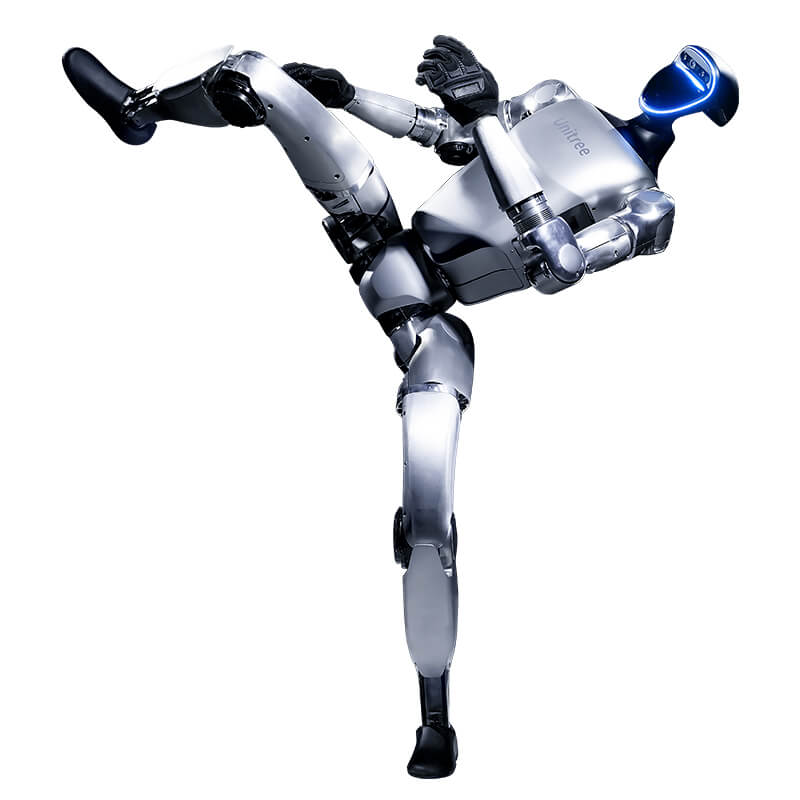
The Unitree G1 is a general-purpose humanoid robot developed by Unitree Robotics, a Chinese robotics company headquartered in Hangzhou. Standing approximately 1.32 meters tall and weighing around 35 kilograms, the G1 features 23 degrees of freedom and is capable of walking, running, recovering from falls, and performing dexterous manipulation tasks. It ships with SDK access, making it accessible to researchers and small-business operators seeking an affordable entry point into humanoid robotics. The G1 is widely regarded as one of the most competitively priced serious humanoid platforms available as of public reporting, positioning Unitree as a disruptive force in a market historically dominated by far more expensive systems. Its combination of mobility, recoverability, and open software access has attracted attention from academic institutions, robotics developers, and automation-focused startups worldwide.
4,869 views
 Robot
RobotUniversal Robots UR5e
The Universal Robots UR5e is a six-axis collaborative robot arm (cobot) belonging to Universal Robots' e-Series product line. Designed for light-to-medium industrial and laboratory tasks, it is widely used in assembly, pick-and-place, machine tending, quality inspection, and lab automation workflows. Universal Robots, a Danish company and a subsidiary of Teradyne, is one of the most recognized names in the collaborative robotics market. The UR5e is programmed using Universal Robots' PolyScope graphical interface on a teach pendant, making it accessible to operators without deep robotics expertise. Its built-in force/torque sensing, tool-center-point control, and a broad ecosystem of certified end-effectors and accessories (the UR+ platform) have made it a popular mid-range cobot choice across manufacturing, electronics, food handling, and research sectors.
4,329 views
 Robot
RobotQuicktron M100
The Quicktron M100 is a heavy-duty autonomous mobile robot (AMR) belonging to Quicktron Robotics' M-Series product line. It is designed for demanding material handling tasks in warehouses, distribution centers, and manufacturing environments, using an integrated lift mechanism to transport shelves and pallets autonomously across facility floors. Quicktron Robotics, a company with roots in China and a global commercial presence, positions the M100 as a high-capacity solution for operations that require moving heavier loads than lighter AMR models can accommodate. The M100 targets logistics operators and manufacturers seeking to automate goods-to-person or pallet-movement workflows at scale.
496 views
 Robot
RobotNVIDIA Jetson Orin NX
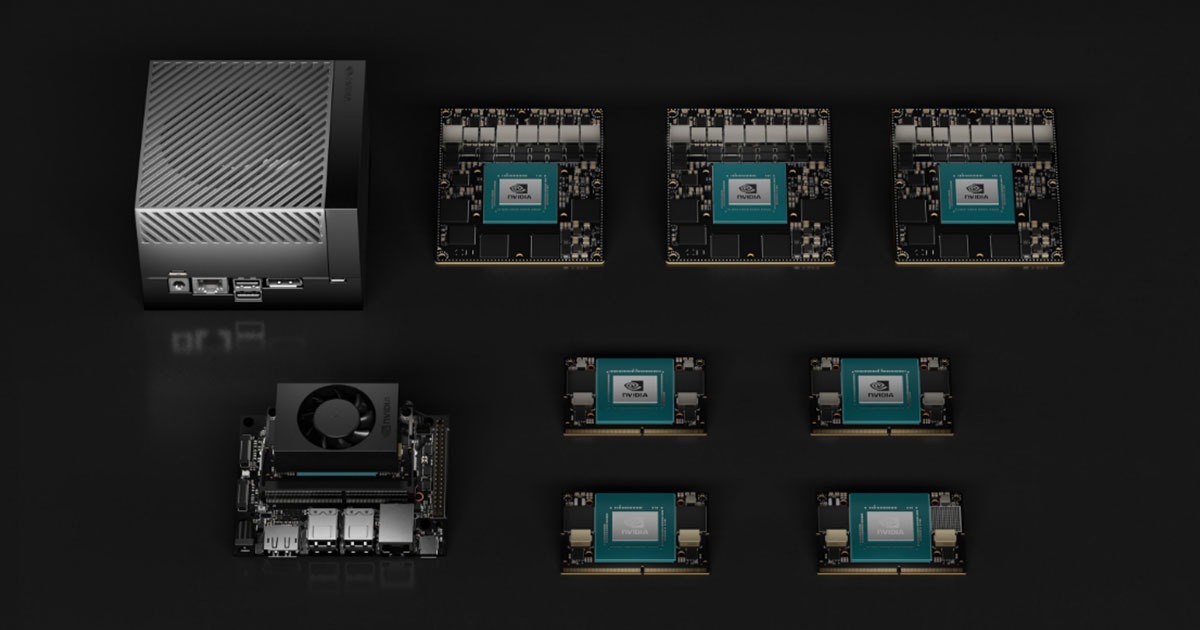
The NVIDIA Jetson Orin NX is a compact, SO-DIMM form-factor edge AI compute module designed for robotics, autonomous machines, and embedded vision applications. Manufactured by NVIDIA, it is available in 8 GB and 16 GB memory configurations and pairs an Ampere-architecture GPU with an 8-core Arm Cortex-A78AE CPU to deliver high-throughput on-device inference without relying on cloud connectivity. Positioned within NVIDIA's broader Jetson Orin family, the Orin NX targets developers and system integrators who need a balance of performance and power efficiency in a small footprint. It is commonly used in applications such as industrial inspection, autonomous mobile robots (AMRs), drone navigation, and smart edge devices where real-time AI inference is critical.
450 views