da Vinci Xi Surgical System
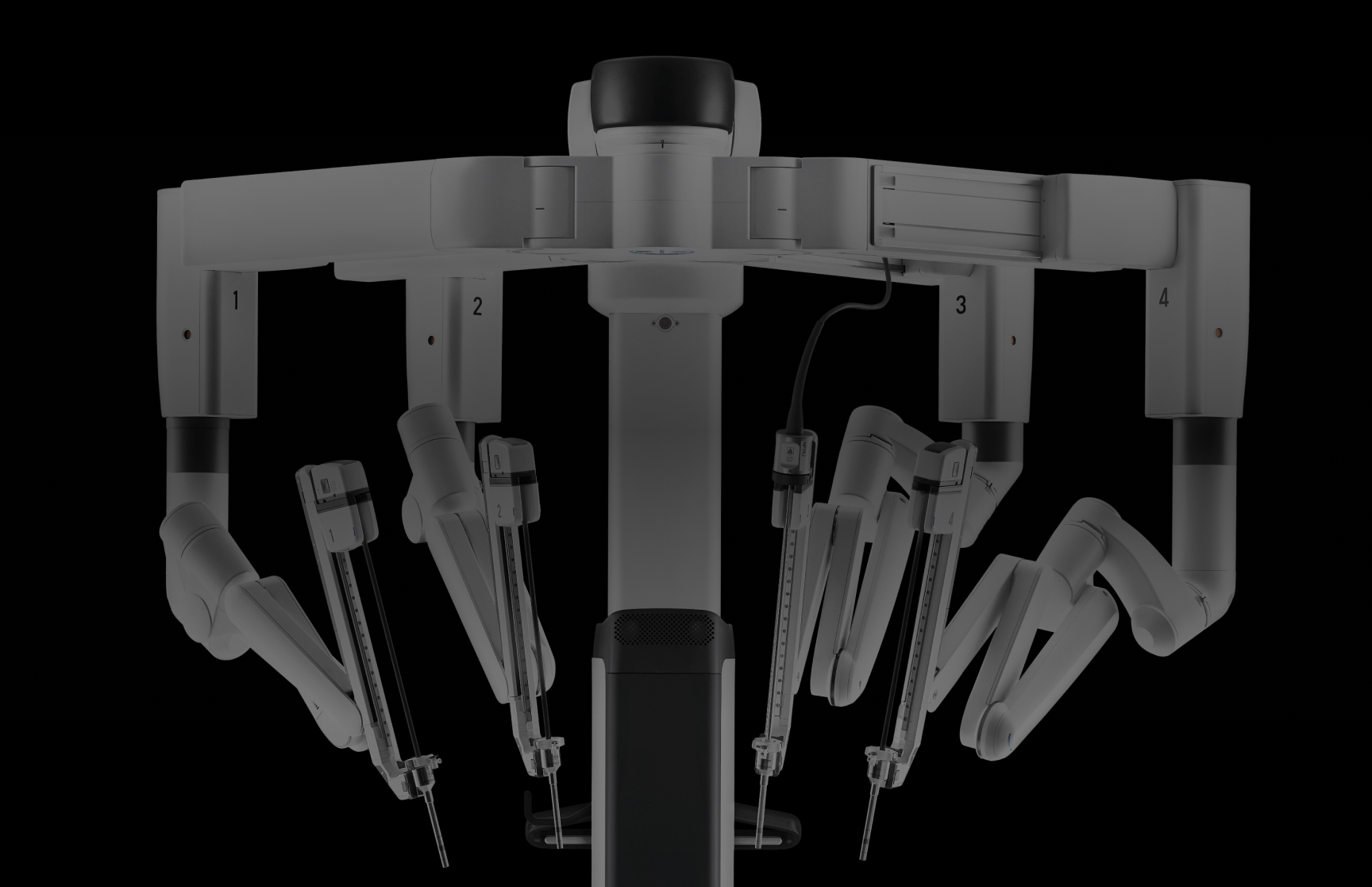
The da Vinci Xi Surgical System is Intuitive Surgical's fourth-generation multiport robotic-assisted surgery platform, designed to support minimally invasive procedures across a broad range of surgical specialties including general surgery, urology, gynecology, thoracic, and colorectal surgery. It features a redesigned overhead instrument arm architecture, 3D high-definition vision, EndoWrist instruments with tremor filtration, and integrated Firefly fluorescence imaging to help surgeons visualize tissue perfusion and anatomy in real time. Manufactured by Intuitive Surgical, a pioneer in robotic-assisted surgery headquartered in Sunnyvale, California, the da Vinci Xi succeeded the da Vinci Si and was introduced in 2014. It is widely regarded as one of the most commercially deployed surgical robot platforms in the world, installed in thousands of hospitals globally as of public reporting.
Overview and Use Cases
The da Vinci Xi Surgical System is a multiport robotic-assisted surgery platform intended to give surgeons enhanced dexterity, vision, and control during minimally invasive procedures. Its overhead boom arm design allows all four instrument arms to be repositioned along a single rotating boom, enabling the system to reach multiple anatomical quadrants without requiring full system repositioning—a significant workflow improvement over earlier generations.
Clinically, the Xi is used across a wide range of procedures, including:
- Prostatectomy and other urological surgeries
- Hysterectomy and myomectomy in gynecology
- Colorectal resection
- Lobectomy and other thoracic procedures
- Bariatric and general abdominal surgeries
Key Technical Features
The da Vinci Xi incorporates several technologies that distinguish it from prior da Vinci generations:
- 3D High-Definition Vision: A fully integrated camera system delivers stereoscopic 3DHD imagery to the surgeon console, providing depth perception not available with standard laparoscopic optics.
- EndoWrist Instruments: Wristed instruments offer seven degrees of freedom and mimic natural wrist motion, while onboard tremor filtration reduces unintended hand movement.
- Firefly Fluorescence Imaging: An integrated near-infrared imaging mode allows surgeons to visualize fluorescent dye (typically indocyanine green, or ICG) to assess tissue perfusion, identify bile ducts, or locate sentinel lymph nodes.
- Integrated Table Motion: The Xi is compatible with Intuitive Surgical's integrated table motion feature (when paired with a compatible OR table), allowing patient repositioning without undocking the robot.
- Laser Targeting: Built-in laser guidance assists with port placement and arm positioning.
Specific payload, reach, and runtime figures are system-dependent and not uniformly disclosed in public documentation; prospective buyers are advised to consult Intuitive Surgical directly for detailed technical specifications.
Comparison to Similar Systems
Within Intuitive Surgical's portfolio, the da Vinci Xi sits above the da Vinci X (a cost-optimized multiport system) and the single-port da Vinci SP, which is designed for confined anatomical access such as transoral or transvesical approaches. The Xi offers the broadest procedural versatility of the three multiport-capable platforms.
Among competitors, the da Vinci Xi faces growing competition from systems such as:
- Medtronic Hugo RAS System – a modular multiport platform targeting cost-sensitive markets
- CMR Surgical Versius – a compact, portable multiport system with independent arm columns
- Johnson & Johnson MedTech Ottava – a next-generation platform in development as of public reporting
The da Vinci Xi's extensive clinical evidence base and established training ecosystem remain key competitive advantages.
Market Context and Target Buyers
The da Vinci Xi is positioned as a premium surgical robotics platform. System acquisition costs are typically in the range of several million US dollars, with additional recurring revenue generated through per-procedure instrument and accessory sales—a business model that has been central to Intuitive Surgical's commercial strategy. Target buyers include large academic medical centers, high-volume community hospitals, and integrated health systems seeking to expand minimally invasive surgical capabilities.
Leasing and financing arrangements are reportedly available, broadening access beyond institutions with large capital budgets.
Deployments and Notable Adoption
As of public reporting, the da Vinci platform (across all generations) has been installed in thousands of hospitals across North America, Europe, Asia-Pacific, and other regions. The Xi, as the flagship multiport system for much of the 2010s and into the 2020s, accounts for a substantial share of that installed base. Intuitive Surgical has reported cumulative da Vinci procedures in the millions globally, though procedure counts are not broken out by system generation in all disclosures.
Major academic medical centers and teaching hospitals in the United States, Europe, and Japan are among the most prominent adopters.
Future Outlook
Intuitive Surgical introduced the da Vinci 5 system in 2024, representing the next generational step beyond the Xi with reported advances in force feedback, computing power, and data integration. The Xi is expected to remain in active clinical use at many institutions for years given the long service life of installed surgical robotic systems. Intuitive Surgical continues to expand the Xi's procedural clearances and software capabilities through regulatory submissions and software updates, extending the platform's clinical relevance even as newer systems enter the market.
Related videos

Unitree's Dancing Robots STUN America's Got Talent!
The Construct Robotics Institute

Tesla Optimus Gen 3 Finally UPDATED - It Could Change Retirement Forever!
Tesla Insider News

School of Football | Making Of | Boston Dynamics x Hyundai
Boston Dynamics

Robotic Surgery using da Vinci® - How it Works and Benefits
Circle Health Group

🔥🤖 Chinese Dancer Brings 8 Unitree Robots to AGT—4 Yeses! #robot #agt #humanoidrobot #ai
XRoboHub

Before You Buy a DJI in 2026, Watch This! 5 Mavic Alternatives (Blue UAS & NDAA Compliant)
Balance Point Creative
Related entries
 Robot
RobotG1
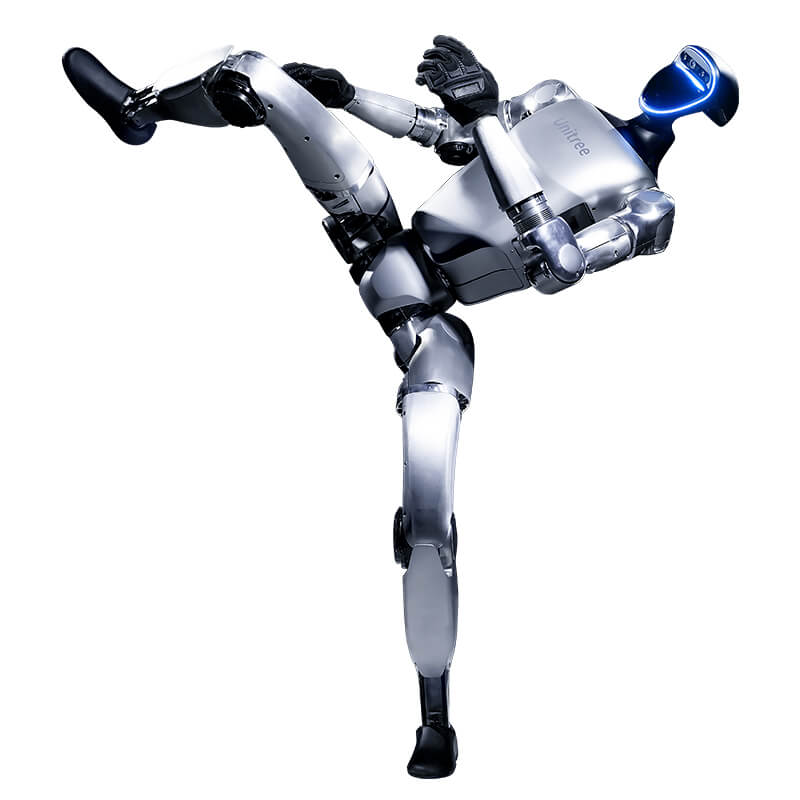
The Unitree G1 is a general-purpose humanoid robot developed by Unitree Robotics, a Chinese robotics company headquartered in Hangzhou. Standing approximately 1.32 meters tall and weighing around 35 kilograms, the G1 features 23 degrees of freedom and is capable of walking, running, recovering from falls, and performing dexterous manipulation tasks. It ships with SDK access, making it accessible to researchers and small-business operators seeking an affordable entry point into humanoid robotics. The G1 is widely regarded as one of the most competitively priced serious humanoid platforms available as of public reporting, positioning Unitree as a disruptive force in a market historically dominated by far more expensive systems. Its combination of mobility, recoverability, and open software access has attracted attention from academic institutions, robotics developers, and automation-focused startups worldwide.
4,253 views
 Robot
RobotUniversal Robots UR5e
The Universal Robots UR5e is a six-axis collaborative robot arm (cobot) belonging to Universal Robots' e-Series product line. Designed for light-to-medium industrial and laboratory tasks, it is widely used in assembly, pick-and-place, machine tending, quality inspection, and lab automation workflows. Universal Robots, a Danish company and a subsidiary of Teradyne, is one of the most recognized names in the collaborative robotics market. The UR5e is programmed using Universal Robots' PolyScope graphical interface on a teach pendant, making it accessible to operators without deep robotics expertise. Its built-in force/torque sensing, tool-center-point control, and a broad ecosystem of certified end-effectors and accessories (the UR+ platform) have made it a popular mid-range cobot choice across manufacturing, electronics, food handling, and research sectors.
3,786 views
 Robot
RobotQuicktron M100
The Quicktron M100 is a heavy-duty autonomous mobile robot (AMR) belonging to Quicktron Robotics' M-Series product line. It is designed for demanding material handling tasks in warehouses, distribution centers, and manufacturing environments, using an integrated lift mechanism to transport shelves and pallets autonomously across facility floors. Quicktron Robotics, a company with roots in China and a global commercial presence, positions the M100 as a high-capacity solution for operations that require moving heavier loads than lighter AMR models can accommodate. The M100 targets logistics operators and manufacturers seeking to automate goods-to-person or pallet-movement workflows at scale.
427 views
 Robot
RobotNVIDIA Jetson Orin NX
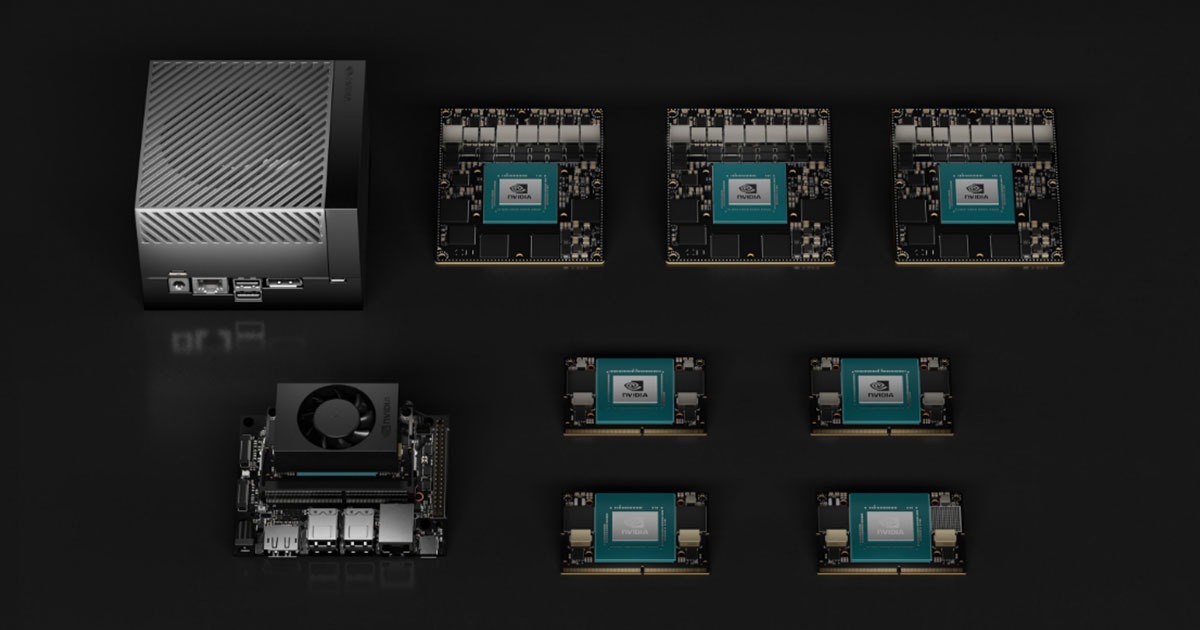
The NVIDIA Jetson Orin NX is a compact, SO-DIMM form-factor edge AI compute module designed for robotics, autonomous machines, and embedded vision applications. Manufactured by NVIDIA, it is available in 8 GB and 16 GB memory configurations and pairs an Ampere-architecture GPU with an 8-core Arm Cortex-A78AE CPU to deliver high-throughput on-device inference without relying on cloud connectivity. Positioned within NVIDIA's broader Jetson Orin family, the Orin NX targets developers and system integrators who need a balance of performance and power efficiency in a small footprint. It is commonly used in applications such as industrial inspection, autonomous mobile robots (AMRs), drone navigation, and smart edge devices where real-time AI inference is critical.
396 views