Da Vinci Robotic Surgical Systems | Intuitive
The Da Vinci Robotic Surgical Systems, developed and marketed by Intuitive Surgical, represent a family of minimally invasive surgical platforms designed to assist surgeons across a broad range of procedures including urology, gynecology, general surgery, and thoracic surgery. The systems translate a surgeon's hand movements into precise, scaled motions performed by robotic arms equipped with wristed instruments, while providing a magnified three-dimensional high-definition view of the operative field. Intuitive Surgical, headquartered in Sunnyvale, California, has been a dominant force in surgical robotics since the original Da Vinci system received FDA clearance in 2000. The Da Vinci platform is widely regarded as the most commercially deployed robotic surgical system in the world, with installations reported at thousands of hospitals globally as of public reporting.
Overview and Use Cases
The Da Vinci Robotic Surgical Systems are a family of surgeon-controlled robotic platforms intended to extend the capabilities of minimally invasive surgery. Rather than operating autonomously, the system acts as an advanced tool that translates the surgeon's movements—made at a seated console—into precise actions carried out by robotic arms positioned over the patient on a separate cart.
Clinically cleared applications span multiple specialties:
- Urology: prostatectomy, partial nephrectomy, and other kidney and bladder procedures
- Gynecology: hysterectomy, myomectomy, and endometriosis treatment
- General surgery: colorectal resection, hernia repair, and bariatric procedures
- Thoracic surgery: lobectomy and mediastinal procedures
- Cardiac and head-and-neck procedures (in selected configurations)
Key Technical Features
The Da Vinci platform is built around several core technologies that distinguish it from conventional laparoscopic surgery:
- 3D High-Definition Vision: A dual-camera endoscope provides a magnified, stereoscopic view of the surgical site, giving surgeons depth perception not available with standard 2D laparoscopy.
- EndoWrist Instruments: Proprietary wristed instruments offer a reported range of motion that exceeds the human wrist, enabling suturing and dissection in confined anatomical spaces.
- Tremor Filtration: The system electronically filters out natural hand tremors before translating movements to the robotic arms.
- Motion Scaling: Surgeon hand movements can be scaled down, allowing large gestures at the console to produce fine, controlled movements at the instrument tips.
- Ergonomic Surgeon Console: The operating surgeon works from a seated, immersive console, which can reduce physical fatigue during long procedures.
Specific payload, joint torque, and instrument force-feedback specifications are not uniformly disclosed in public documentation and vary across system generations.
System Generations and Comparison Within the Intuitive Portfolio
Intuitive Surgical has released multiple generations of the Da Vinci platform over time. The Da Vinci Si, Da Vinci Xi, and Da Vinci X represent progressively refined iterations, with the Xi and X systems offering improved arm reach, a redesigned boom architecture for better patient access, and compatibility with a broader range of instruments. The Da Vinci SP (Single Port) system, a more recent addition, uses a single cannula to deploy multiple articulating instruments, targeting confined-space procedures such as certain urological and transoral surgeries.
Within Intuitive Surgical's broader product ecosystem, the Da Vinci systems sit at the flagship end, complemented by the Ion endoluminal robotic system for peripheral lung biopsy—a distinct product category focused on diagnostic rather than therapeutic intervention.
Competitive Landscape
The Da Vinci family faces growing competition in the surgical robotics market:
- Medtronic Hugo RAS: A modular robotic-assisted surgery system targeting similar laparoscopic indications, with a focus on flexible deployment in diverse hospital settings.
- CMR Surgical Versius: A compact, modular system designed for portability and lower total cost of ownership, with regulatory clearances in multiple markets.
- Johnson & Johnson MedTech Ottava: An in-development platform (as of public reporting) aimed at competing directly in the soft-tissue robotic surgery segment.
- Stryker Mako: Focused primarily on orthopedic applications, representing a different but adjacent segment of surgical robotics.
Da Vinci's established installed base, extensive clinical evidence library, and broad instrument portfolio remain significant competitive advantages.
Market Context and Target Buyers
Da Vinci systems are positioned at the premium tier of the surgical robotics market. The capital cost of acquisition is substantial—commonly reported to be in the range of one to two million US dollars or more per system depending on configuration, though Intuitive Surgical does not publicly list standard pricing. Ongoing costs include service contracts, proprietary single-use instruments, and training programs.
Target buyers are primarily large academic medical centers, high-volume community hospitals, and integrated health systems with sufficient surgical volume to justify the capital investment. Intuitive Surgical also offers usage-based and leasing arrangements in some markets to lower the barrier to adoption.
Deployments and Notable Presence
As of public reporting, Da Vinci systems have been installed at thousands of hospitals across North America, Europe, Asia-Pacific, and other regions. The platform has been used in millions of procedures globally since its commercial introduction. Many leading academic medical centers—including major university hospitals in the United States, Europe, and Asia—reportedly operate multiple Da Vinci units across different surgical departments.
Future Outlook
Intuitive Surgical has publicly indicated ongoing development efforts aimed at expanding the Da Vinci ecosystem, including advances in digital integration, data analytics, and instrument technology. The company's Intuitive Hub digital platform is designed to aggregate procedural data to support training and quality improvement. Broader industry trends—including the integration of AI-assisted guidance, haptic feedback research, and expanded single-port approaches—are expected to shape future iterations of the Da Vinci platform and the competitive landscape it operates within.
Related videos

7 Humanoid Robots That Are Ready To Buy Today!
IntelliCore

China's Unitree Robotics wins Shanghai IPO approval 73 days after filing
ShanghaiEye魔都眼

It's Real! Tesla Bot Gen 3 Cooks 3 Meals a Day, Cleans Every Room, Never Quits
Visionary Vault

Inside China's push for global dominance: Evs, robotics, AI, pandas
NBC News

UNREAL Robot Dancers Who Left The Judges STUNNED on Got Talent!
Got Talent Global

Tesla Bot Gen 3 Finally UPDATED, New AI Secret LEAKED!
TESLA CAR WORLD
Related entries
 Robot
RobotG1
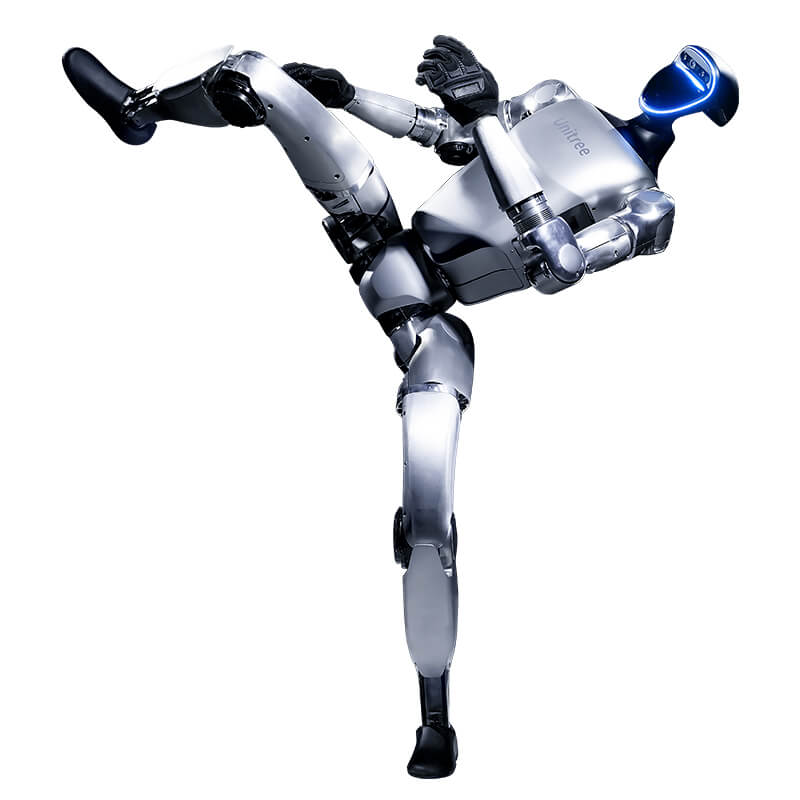
The Unitree G1 is a general-purpose humanoid robot developed by Unitree Robotics, a Chinese robotics company headquartered in Hangzhou. Standing approximately 1.32 meters tall and weighing around 35 kilograms, the G1 features 23 degrees of freedom and is capable of walking, running, recovering from falls, and performing dexterous manipulation tasks. It ships with SDK access, making it accessible to researchers and small-business operators seeking an affordable entry point into humanoid robotics. The G1 is widely regarded as one of the most competitively priced serious humanoid platforms available as of public reporting, positioning Unitree as a disruptive force in a market historically dominated by far more expensive systems. Its combination of mobility, recoverability, and open software access has attracted attention from academic institutions, robotics developers, and automation-focused startups worldwide.
2,760 views
 Robot
RobotUniversal Robots UR5e
The Universal Robots UR5e is a six-axis collaborative robot arm (cobot) belonging to Universal Robots' e-Series product line. Designed for light-to-medium industrial and laboratory tasks, it is widely used in assembly, pick-and-place, machine tending, quality inspection, and lab automation workflows. Universal Robots, a Danish company and a subsidiary of Teradyne, is one of the most recognized names in the collaborative robotics market. The UR5e is programmed using Universal Robots' PolyScope graphical interface on a teach pendant, making it accessible to operators without deep robotics expertise. Its built-in force/torque sensing, tool-center-point control, and a broad ecosystem of certified end-effectors and accessories (the UR+ platform) have made it a popular mid-range cobot choice across manufacturing, electronics, food handling, and research sectors.
2,456 views
 Robot
RobotQuicktron M100
The Quicktron M100 is a heavy-duty autonomous mobile robot (AMR) belonging to Quicktron Robotics' M-Series product line. It is designed for demanding material handling tasks in warehouses, distribution centers, and manufacturing environments, using an integrated lift mechanism to transport shelves and pallets autonomously across facility floors. Quicktron Robotics, a company with roots in China and a global commercial presence, positions the M100 as a high-capacity solution for operations that require moving heavier loads than lighter AMR models can accommodate. The M100 targets logistics operators and manufacturers seeking to automate goods-to-person or pallet-movement workflows at scale.
325 views
 Robot
RobotNVIDIA Jetson Orin NX
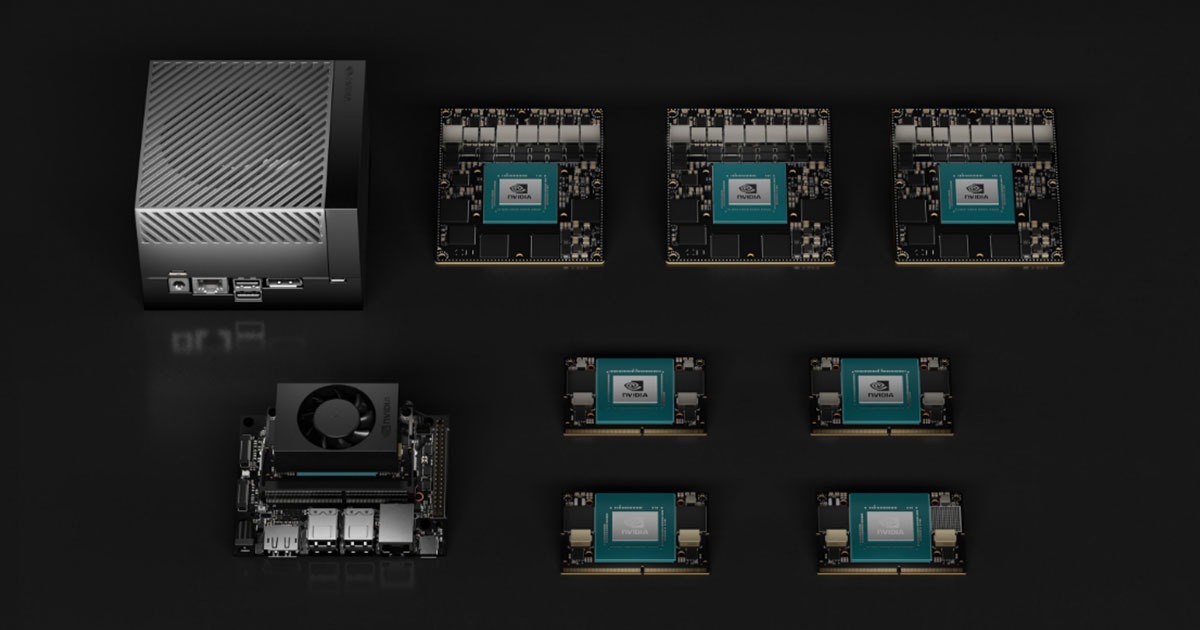
The NVIDIA Jetson Orin NX is a compact, SO-DIMM form-factor edge AI compute module designed for robotics, autonomous machines, and embedded vision applications. Manufactured by NVIDIA, it is available in 8 GB and 16 GB memory configurations and pairs an Ampere-architecture GPU with an 8-core Arm Cortex-A78AE CPU to deliver high-throughput on-device inference without relying on cloud connectivity. Positioned within NVIDIA's broader Jetson Orin family, the Orin NX targets developers and system integrators who need a balance of performance and power efficiency in a small footprint. It is commonly used in applications such as industrial inspection, autonomous mobile robots (AMRs), drone navigation, and smart edge devices where real-time AI inference is critical.
313 views