Construction Robotics: Skanska | HAL Robotics
The Construction Robotics solution developed by HAL Robotics in partnership with Skanska is an industrial robotic platform designed to automate drilling and MEP (Mechanical, Electrical, Plumbing) installation tasks on active construction sites. By deploying robotic arms guided by HAL Robotics' software framework, the system aims to improve positional accuracy, reduce repetitive manual labor, and enhance on-site safety for construction workers. HAL Robotics is a software-focused robotics company known for its vendor-agnostic programming framework that can orchestrate a wide range of industrial robot arms. The Skanska collaboration represents one of the company's flagship real-world deployments, applying that framework to the demanding and variable environment of large-scale commercial construction projects.
Overview and Use Cases
The HAL Robotics and Skanska construction robotics initiative targets two of the most labor-intensive and precision-sensitive tasks in modern building construction: automated drilling and MEP (Mechanical, Electrical, Plumbing) installation. On large commercial or infrastructure projects, drilling hundreds or thousands of anchor points and routing MEP systems through concrete and structural elements demands consistent accuracy that is difficult to sustain with manual labor alone.
By deploying a robotic arm — reportedly integrated with HAL Robotics' Hal.SDK and Hal.Execution software stack — the platform can interpret building information models (BIM) and translate them directly into robot motion paths. This BIM-to-robot workflow is a key differentiator, allowing construction teams to move from digital design to physical execution with minimal manual reprogramming.
Key Technical Details
HAL Robotics does not manufacture its own robot arms; instead, its platform is designed to work with industrial manipulators from established vendors. The specific robot arm hardware used in the Skanska deployment has not been fully disclosed in public reporting. Key software-side capabilities reportedly include:
- BIM integration: Direct import and interpretation of building information models to generate robot toolpaths
- Real-time execution monitoring: The Hal.Execution runtime allows operators to supervise and adjust robot behavior on-site
- Multi-robot coordination: The framework is architected to support orchestration of multiple robots or robot-tool combinations
- Adaptive path planning: Ability to handle the geometric complexity and tolerances typical of construction environments
Specific payload ratings, drilling speeds, or positional accuracy figures for this deployment have not been confirmed in publicly available sources.
Comparison to Similar Systems
Within the broader construction robotics landscape, the HAL Robotics / Skanska system is most comparable to platforms such as Hilti's Jaibot (a semi-autonomous ceiling-drilling robot) and Dusty Robotics' FieldPrinter (a BIM-driven layout robot). Where Jaibot is a purpose-built, self-contained drilling unit, the HAL Robotics approach is more software-platform-centric, potentially offering greater flexibility in the types of tasks and robot hardware it can support.
Among HAL Robotics' own portfolio context, the company's framework has been applied across industrial automation, digital fabrication, and construction — making the Skanska project one of its most prominent real-world construction deployments rather than a standalone product line.
Market Context and Target Buyers
This solution is positioned squarely at Tier 1 general contractors and large specialty subcontractors operating on complex commercial, institutional, or infrastructure projects where labor costs are high and precision requirements are stringent. It is not a consumer or SME product. Pricing details have not been publicly disclosed; systems of this class are typically sold or licensed through project-specific or enterprise agreements rather than off-the-shelf retail channels.
The broader market driver is well-documented: the construction industry faces persistent skilled labor shortages in many markets, and robotic automation is increasingly viewed as a strategic response rather than a novelty.
Notable Deployments and Customers
Skanska — one of the world's largest construction and project development companies — is the anchor customer and co-development partner for this initiative. As of public reporting, the collaboration has been highlighted as a proof-of-concept and early deployment effort within Skanska's innovation programs. Specific project sites, building names, or deployment scales have not been fully detailed in publicly available sources.
Future Outlook
The construction robotics sector is growing rapidly, with increasing investment from both established construction giants and venture-backed startups. HAL Robotics' software-first approach positions it to expand the Skanska collaboration or replicate the model with other major contractors as BIM adoption deepens and robotic hardware costs continue to decline. Broader integration with autonomous mobile platforms — allowing robot arms to navigate and operate across larger floor areas without fixed mounting — is a widely anticipated next step for systems of this type.
Related videos

Watch this advanced robot build a brick wall perfectly #RoboticConstruction #FutureTech #Automation
Creative Collections

Intelligent Ripper Robot Service In Construction Efficiency
Satisfying Work

Advanced Autonomous Robotics Revolutionizes Traditional Bricklaying In Construction
Googa Vibes
Remote Crane Shocked Everyone 😱 #Machines #Construction #ViralShorts
Carlos Daniel

Robot bricklayers could help tackle construction skills shortage
news.com.au
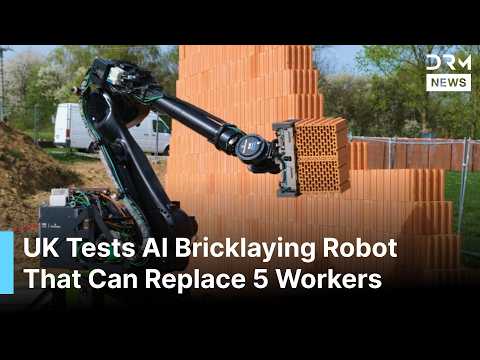
FULL STORY: UK Tests AI Bricklaying Robot That Can Replace Five Workers on Construction Sites | AI1B
DRM News
Related entries
 Robot
RobotG1
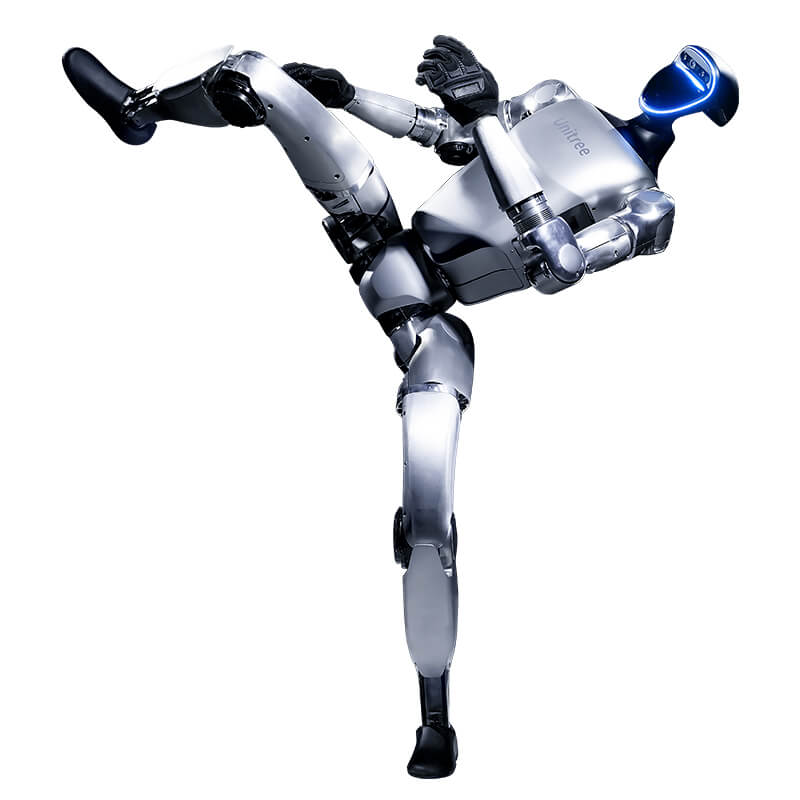
The Unitree G1 is a general-purpose humanoid robot developed by Unitree Robotics, a Chinese robotics company headquartered in Hangzhou. Standing approximately 1.32 meters tall and weighing around 35 kilograms, the G1 features 23 degrees of freedom and is capable of walking, running, recovering from falls, and performing dexterous manipulation tasks. It ships with SDK access, making it accessible to researchers and small-business operators seeking an affordable entry point into humanoid robotics. The G1 is widely regarded as one of the most competitively priced serious humanoid platforms available as of public reporting, positioning Unitree as a disruptive force in a market historically dominated by far more expensive systems. Its combination of mobility, recoverability, and open software access has attracted attention from academic institutions, robotics developers, and automation-focused startups worldwide.
4,253 views
 Robot
RobotUniversal Robots UR5e
The Universal Robots UR5e is a six-axis collaborative robot arm (cobot) belonging to Universal Robots' e-Series product line. Designed for light-to-medium industrial and laboratory tasks, it is widely used in assembly, pick-and-place, machine tending, quality inspection, and lab automation workflows. Universal Robots, a Danish company and a subsidiary of Teradyne, is one of the most recognized names in the collaborative robotics market. The UR5e is programmed using Universal Robots' PolyScope graphical interface on a teach pendant, making it accessible to operators without deep robotics expertise. Its built-in force/torque sensing, tool-center-point control, and a broad ecosystem of certified end-effectors and accessories (the UR+ platform) have made it a popular mid-range cobot choice across manufacturing, electronics, food handling, and research sectors.
3,786 views
 Robot
RobotQuicktron M100
The Quicktron M100 is a heavy-duty autonomous mobile robot (AMR) belonging to Quicktron Robotics' M-Series product line. It is designed for demanding material handling tasks in warehouses, distribution centers, and manufacturing environments, using an integrated lift mechanism to transport shelves and pallets autonomously across facility floors. Quicktron Robotics, a company with roots in China and a global commercial presence, positions the M100 as a high-capacity solution for operations that require moving heavier loads than lighter AMR models can accommodate. The M100 targets logistics operators and manufacturers seeking to automate goods-to-person or pallet-movement workflows at scale.
427 views
 Robot
RobotNVIDIA Jetson Orin NX
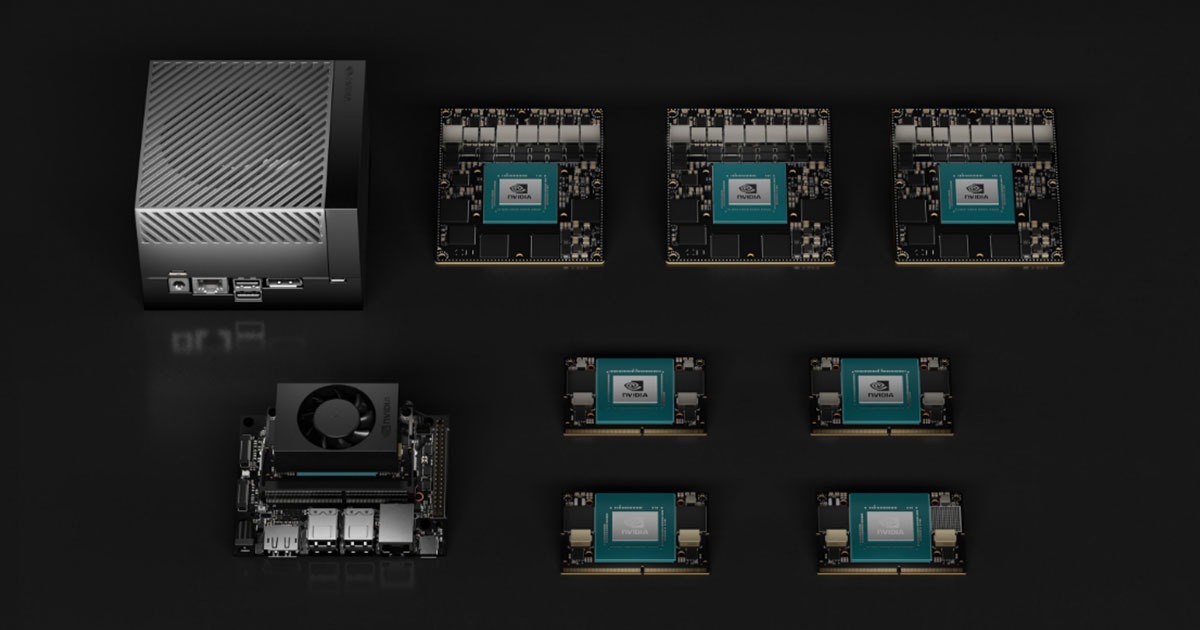
The NVIDIA Jetson Orin NX is a compact, SO-DIMM form-factor edge AI compute module designed for robotics, autonomous machines, and embedded vision applications. Manufactured by NVIDIA, it is available in 8 GB and 16 GB memory configurations and pairs an Ampere-architecture GPU with an 8-core Arm Cortex-A78AE CPU to deliver high-throughput on-device inference without relying on cloud connectivity. Positioned within NVIDIA's broader Jetson Orin family, the Orin NX targets developers and system integrators who need a balance of performance and power efficiency in a small footprint. It is commonly used in applications such as industrial inspection, autonomous mobile robots (AMRs), drone navigation, and smart edge devices where real-time AI inference is critical.
396 views