Construction | Boston Dynamics
Boston Dynamics' construction robotics solutions apply the company's advanced legged and humanoid robot platforms — most notably Spot and Atlas — to automate and augment labor-intensive or hazardous tasks on job sites. These systems are designed to carry out autonomous inspections, progress monitoring, material handling assistance, and safety assessments in environments that are difficult or dangerous for human workers. Developed by Boston Dynamics, a robotics company headquartered in Waltham, Massachusetts (a subsidiary of Hyundai Motor Group as of 2021), the construction-focused deployments of Spot in particular have been adopted by a growing number of general contractors and infrastructure firms worldwide. The platform integrates payloads such as lidar scanners, thermal cameras, and 360-degree imaging systems to deliver actionable site data.
Overview and Use Cases
Boston Dynamics positions its robotics portfolio — centered on the quadruped robot Spot and, to a lesser extent, the humanoid Atlas — as a comprehensive solution for construction site challenges. Key use cases include:
- Autonomous site inspection: Spot navigates uneven terrain, stairs, and cluttered environments to capture photographic, thermal, and lidar data for progress tracking and quality control.
- Hazardous area assessment: Robots can enter areas with structural instability, toxic fumes, or extreme temperatures before human workers.
- Reality capture and digital twin creation: When paired with payloads such as the Trimble X7 scanner or Matterport Pro2, Spot can generate high-fidelity 3D models of structures under construction.
- Safety monitoring: Automated patrols can flag unsafe conditions, unauthorized access, or missing personal protective equipment.
- Material handling research: Atlas has been demonstrated lifting and placing construction materials, though commercial deployment of Atlas in construction remains in an exploratory phase as of public reporting.
Key Technical Details
Spot, the primary platform deployed in construction contexts, features several well-documented characteristics:
- Mobility: Four-legged locomotion capable of traversing stairs, slopes, and rough terrain; reportedly operates at speeds up to approximately 1.6 m/s.
- Payload capacity: Spot supports a payload bay on its back, with a reported maximum payload of around 14 kg, enabling attachment of inspection sensors and communication equipment.
- Battery runtime: Approximately 90 minutes of operation per charge under typical conditions, according to Boston Dynamics' published specifications.
- Sensors: Standard configuration includes stereo cameras, depth cameras, and an IMU; additional payloads (lidar, thermal, 360° cameras) are available through Boston Dynamics' Spot Payload ecosystem.
- Software: The Spot SDK allows third-party developers and integrators to build custom inspection workflows and autonomous mission planning.
Atlas, Boston Dynamics' humanoid platform, has demonstrated dynamic manipulation and mobility in research settings, but its construction-specific capabilities remain largely in the demonstration and development stage.
Comparison to Similar Robots
Within Boston Dynamics' portfolio, Spot is the commercially available workhorse for construction, while Atlas represents a longer-term research direction toward fully autonomous humanoid labor.
Among competitors, Spot faces comparison with:
- ANYbotics ANYmal: A Swiss quadruped robot similarly targeting industrial inspection, often compared directly to Spot in oil-and-gas and construction contexts.
- Ghost Robotics Vision 60: Another quadruped platform with industrial and defense applications.
- Legged robots from Unitree and Agility Robotics: Emerging competitors offering lower price points or humanoid form factors, respectively.
Spot is generally regarded as one of the most mature and commercially supported quadruped platforms available, with a broad third-party payload and software ecosystem.
Market Context and Target Buyers
Spot is positioned in the premium tier of the industrial robotics market. Boston Dynamics has not publicly disclosed a fixed MSRP, but industry reporting has placed Spot's purchase price in the range of tens of thousands of US dollars, with additional costs for payloads, software subscriptions, and support contracts. The primary target buyers in construction include:
- Large general contractors and construction management firms
- Infrastructure owners (utilities, transportation agencies)
- Engineering and surveying consultancies
- Industrial facility operators managing ongoing construction or maintenance
Notable Deployments and Customers
As of public reporting, Spot has been deployed on construction and infrastructure projects by a number of notable organizations, including:
- Skanska, one of the world's largest construction companies, has publicly piloted Spot for site inspection.
- Turner Construction and other major US general contractors have reported trials.
- Nuclear and energy facilities have used Spot for inspection in restricted-access areas.
- Boston Dynamics has also partnered with software platforms such as HoloBuilder and Trimble to integrate Spot data into construction management workflows.
Future Outlook
The construction robotics market is expected to grow substantially as labor shortages, safety regulations, and demand for digital construction workflows intensify. Boston Dynamics is reportedly investing in expanding Spot's autonomous capabilities — including longer-duration missions, improved manipulation via the Spot Arm accessory, and tighter integration with BIM (Building Information Modeling) platforms. Atlas, if successfully commercialized, could eventually address more physically demanding construction tasks. The broader trend toward autonomous site monitoring and digital twins suggests continued strong demand for platforms like Spot in the construction sector.
Related videos

Intelligent Ripper Robot Service In Construction Efficiency
Satisfying Work

Advanced Autonomous Robotics Revolutionizes Traditional Bricklaying In Construction
Googa Vibes
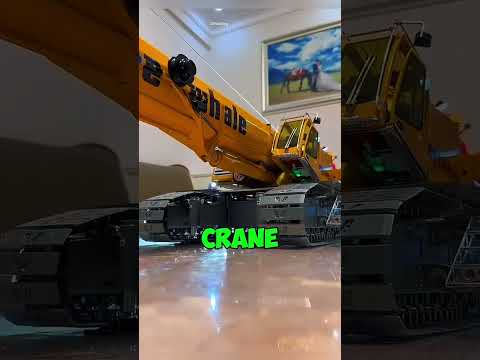
Remote Crane Shocked Everyone 😱 #Machines #Construction #ViralShorts
Carlos Daniel

Robot bricklayers could help tackle construction skills shortage
news.com.au
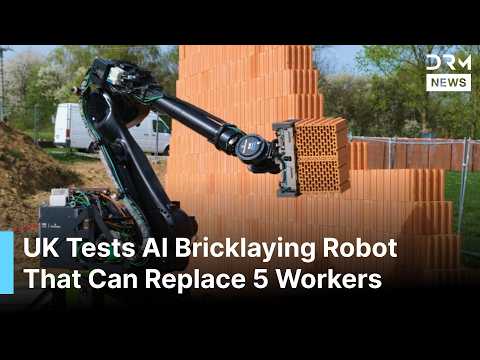
FULL STORY: UK Tests AI Bricklaying Robot That Can Replace Five Workers on Construction Sites | AI1B
DRM News

How ICON’s new Titan robot could cut construction costs nearly in half
KXAN
Related entries
 Robot
RobotG1
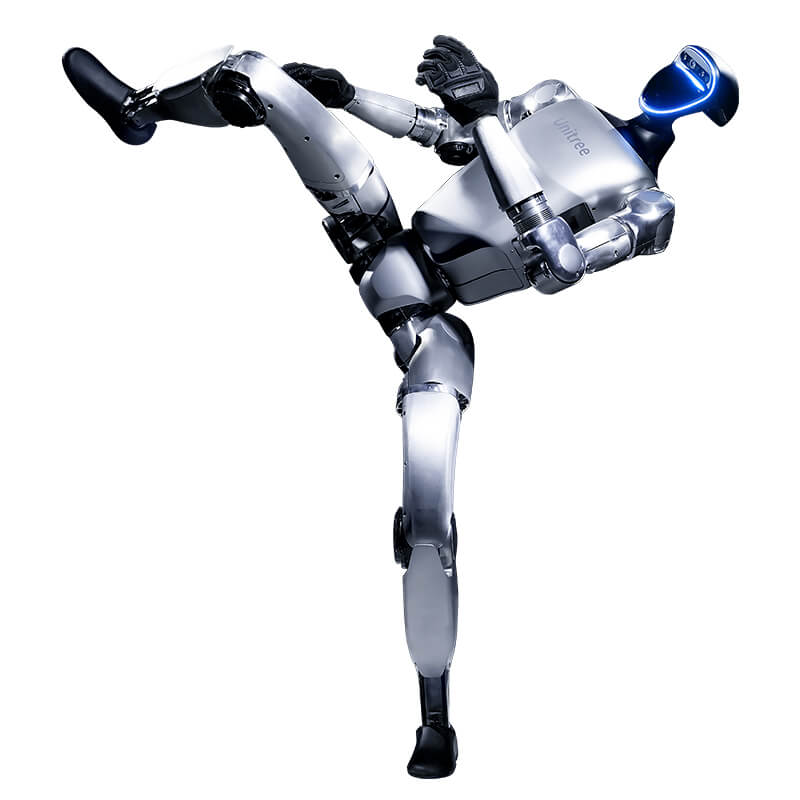
The Unitree G1 is a general-purpose humanoid robot developed by Unitree Robotics, a Chinese robotics company headquartered in Hangzhou. Standing approximately 1.32 meters tall and weighing around 35 kilograms, the G1 features 23 degrees of freedom and is capable of walking, running, recovering from falls, and performing dexterous manipulation tasks. It ships with SDK access, making it accessible to researchers and small-business operators seeking an affordable entry point into humanoid robotics. The G1 is widely regarded as one of the most competitively priced serious humanoid platforms available as of public reporting, positioning Unitree as a disruptive force in a market historically dominated by far more expensive systems. Its combination of mobility, recoverability, and open software access has attracted attention from academic institutions, robotics developers, and automation-focused startups worldwide.
2,758 views
 Robot
RobotUniversal Robots UR5e
The Universal Robots UR5e is a six-axis collaborative robot arm (cobot) belonging to Universal Robots' e-Series product line. Designed for light-to-medium industrial and laboratory tasks, it is widely used in assembly, pick-and-place, machine tending, quality inspection, and lab automation workflows. Universal Robots, a Danish company and a subsidiary of Teradyne, is one of the most recognized names in the collaborative robotics market. The UR5e is programmed using Universal Robots' PolyScope graphical interface on a teach pendant, making it accessible to operators without deep robotics expertise. Its built-in force/torque sensing, tool-center-point control, and a broad ecosystem of certified end-effectors and accessories (the UR+ platform) have made it a popular mid-range cobot choice across manufacturing, electronics, food handling, and research sectors.
2,454 views
 Robot
RobotQuicktron M100
The Quicktron M100 is a heavy-duty autonomous mobile robot (AMR) belonging to Quicktron Robotics' M-Series product line. It is designed for demanding material handling tasks in warehouses, distribution centers, and manufacturing environments, using an integrated lift mechanism to transport shelves and pallets autonomously across facility floors. Quicktron Robotics, a company with roots in China and a global commercial presence, positions the M100 as a high-capacity solution for operations that require moving heavier loads than lighter AMR models can accommodate. The M100 targets logistics operators and manufacturers seeking to automate goods-to-person or pallet-movement workflows at scale.
324 views
 Robot
RobotNVIDIA Jetson Orin NX
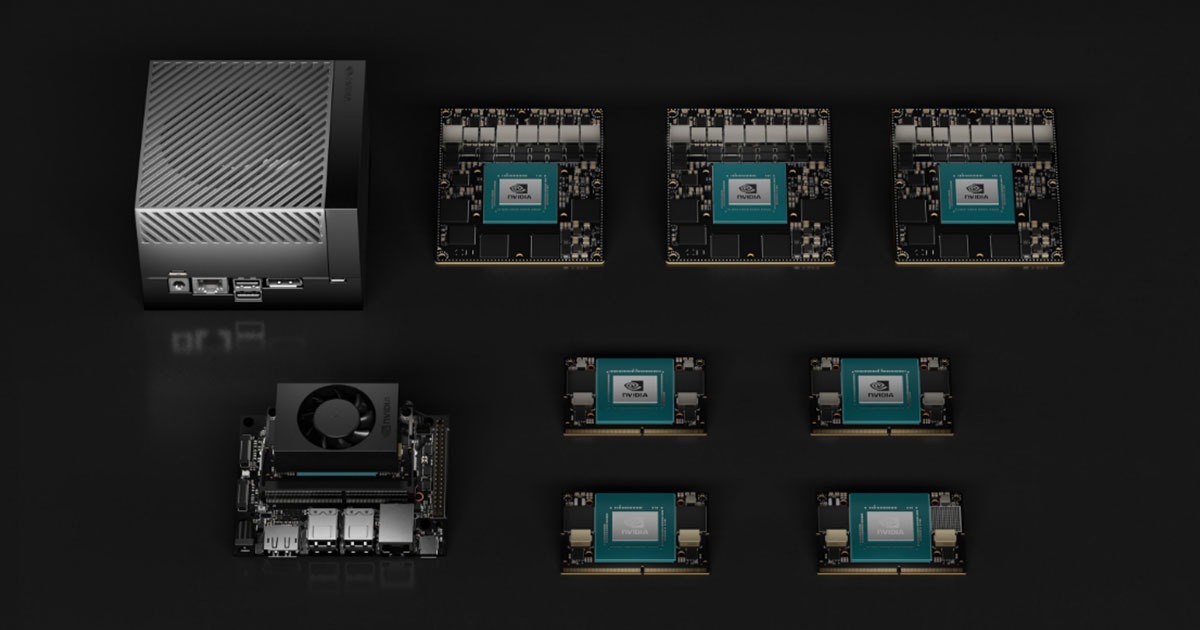
The NVIDIA Jetson Orin NX is a compact, SO-DIMM form-factor edge AI compute module designed for robotics, autonomous machines, and embedded vision applications. Manufactured by NVIDIA, it is available in 8 GB and 16 GB memory configurations and pairs an Ampere-architecture GPU with an 8-core Arm Cortex-A78AE CPU to deliver high-throughput on-device inference without relying on cloud connectivity. Positioned within NVIDIA's broader Jetson Orin family, the Orin NX targets developers and system integrators who need a balance of performance and power efficiency in a small footprint. It is commonly used in applications such as industrial inspection, autonomous mobile robots (AMRs), drone navigation, and smart edge devices where real-time AI inference is critical.
312 views