Cobalt Robot
The Cobalt Robot is an autonomous indoor security patrol robot developed by Cobalt AI (formerly known as Cobalt Robotics). It is designed to navigate office buildings, data centers, warehouses, and other indoor environments, continuously collecting sensor data that feeds into the company's Cobalt Monitoring Intelligence platform for AI-powered event detection and remote human response. Unlike fully autonomous systems that operate without human oversight, the Cobalt Robot is positioned as a human-machine hybrid solution: onboard sensors capture video, environmental readings, and anomaly signals, while remote security specialists can intervene in real time when the AI flags an incident. This approach targets enterprise customers seeking to augment or partially replace traditional guard services.

Overview and Use Cases
The Cobalt Robot is an enterprise-grade autonomous security robot built for continuous indoor patrol. It is intended to operate in environments such as corporate campuses, technology offices, data centers, logistics facilities, and healthcare buildings. The robot moves along pre-mapped routes or dynamically navigates its environment, monitoring for unauthorized access, unusual activity, environmental hazards (such as smoke or flooding), and other security-relevant events.
A defining feature of the Cobalt platform is its integration with the Cobalt Monitoring Intelligence software layer, which processes sensor feeds using AI to triage alerts before escalating them to human operators. This hybrid model allows a smaller team of remote specialists to oversee a larger fleet of robots across multiple sites simultaneously.
Key Technical Details
While Cobalt AI has not publicly disclosed a comprehensive specification sheet, the robot is commonly reported to include:
- Multi-sensor suite: Wide-angle and high-definition cameras, depth sensors, and reportedly thermal imaging capabilities for low-light and after-hours operation.
- Environmental sensors: Detectors for smoke, carbon dioxide, and humidity, enabling the robot to flag non-security hazards as well.
- Autonomous navigation: Simultaneous Localization and Mapping (SLAM)-based navigation allowing the robot to build and update maps of its environment.
- Two-way communication: An integrated speaker and microphone system enabling remote operators to speak directly with people encountered by the robot.
- Connectivity: The robot relies on facility Wi-Fi or dedicated wireless infrastructure to maintain a live data link to the Cobalt cloud platform.
Specific figures for battery runtime, top speed, or payload capacity have not been consistently confirmed in public reporting and should be verified directly with the manufacturer.
Comparison to Similar Robots
Within the broader Cobalt AI product ecosystem, the Cobalt Robot is the company's primary hardware offering focused on security. The sibling products listed under the Cobalt AI brand umbrella — such as the Retriever (a mobile delivery robot) and gitamini (a personal companion carrier) — serve entirely different use cases and market segments, reflecting the diverse portfolio that has reportedly come together under the Cobalt AI brand.
In the competitive security robot market, the Cobalt Robot is often compared to offerings such as the Knightscope K5 and K3 robots, which also target indoor and outdoor security patrol. Key differentiators for Cobalt reportedly include its emphasis on the remote human-operator model and its software intelligence layer, as opposed to fully autonomous or alarm-only approaches.
Market Context and Target Buyers
The Cobalt Robot is positioned in the enterprise and mid-to-large commercial segment. Rather than selling the hardware outright, Cobalt AI has historically offered its solution as a Robot-as-a-Service (RaaS) subscription, bundling the physical robot, software platform, and remote monitoring staffing into a recurring fee. This model lowers the upfront capital barrier for customers but results in ongoing operational costs.
Target buyers include corporate real estate managers, facility security directors, and technology companies seeking cost-effective alternatives or supplements to traditional manned guarding. The RaaS pricing model is designed to compete on a per-hour or per-month basis against the fully-loaded cost of human security personnel.
Deployments and Notable Customers
As of public reporting, Cobalt AI has deployed its robots at a range of technology companies, financial institutions, and large office campuses, primarily in the United States. Specific customer names have been disclosed in press coverage over the years, though the full customer list is not publicly available. The company has highlighted use cases in which a single remote operator monitors multiple robot deployments across different facilities simultaneously.
Future Outlook
The indoor security robot market is growing as organizations seek to address labor shortages in security staffing and reduce costs. Cobalt AI's continued investment in its AI monitoring platform suggests the company views software intelligence — rather than hardware alone — as its primary competitive moat. As sensor technology, edge computing, and AI event-recognition capabilities improve, future iterations of the Cobalt Robot are likely to handle a broader range of incident types with greater autonomy, while the human-in-the-loop model is expected to remain a core part of the value proposition for risk-sensitive enterprise customers.
Related entries
 Robot
RobotG1
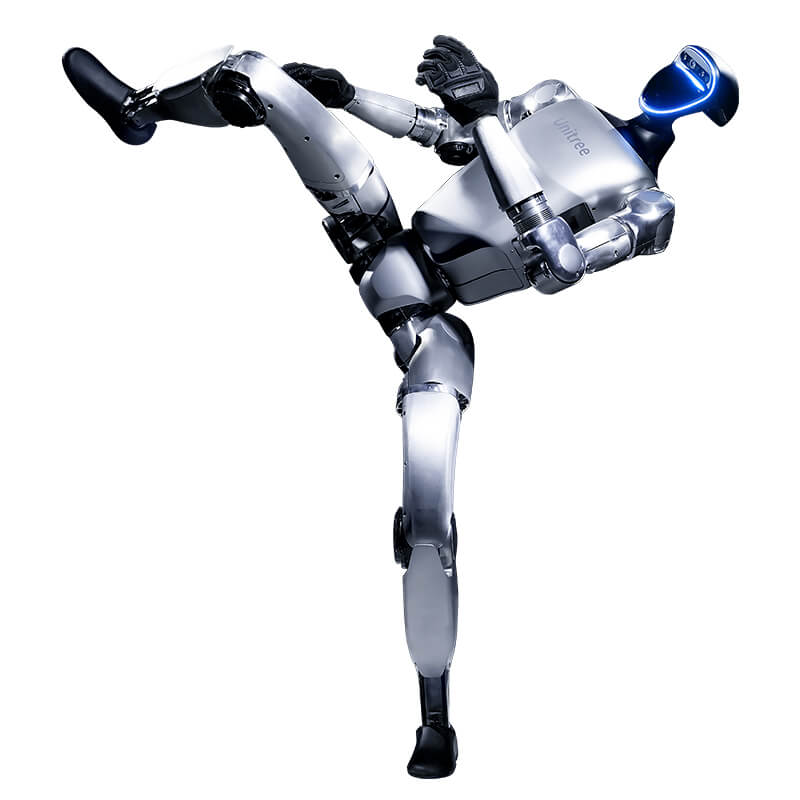
The Unitree G1 is a general-purpose humanoid robot developed by Unitree Robotics, a Chinese robotics company headquartered in Hangzhou. Standing approximately 1.32 meters tall and weighing around 35 kilograms, the G1 features 23 degrees of freedom and is capable of walking, running, recovering from falls, and performing dexterous manipulation tasks. It ships with SDK access, making it accessible to researchers and small-business operators seeking an affordable entry point into humanoid robotics. The G1 is widely regarded as one of the most competitively priced serious humanoid platforms available as of public reporting, positioning Unitree as a disruptive force in a market historically dominated by far more expensive systems. Its combination of mobility, recoverability, and open software access has attracted attention from academic institutions, robotics developers, and automation-focused startups worldwide.
2,759 views
 Robot
RobotUniversal Robots UR5e
The Universal Robots UR5e is a six-axis collaborative robot arm (cobot) belonging to Universal Robots' e-Series product line. Designed for light-to-medium industrial and laboratory tasks, it is widely used in assembly, pick-and-place, machine tending, quality inspection, and lab automation workflows. Universal Robots, a Danish company and a subsidiary of Teradyne, is one of the most recognized names in the collaborative robotics market. The UR5e is programmed using Universal Robots' PolyScope graphical interface on a teach pendant, making it accessible to operators without deep robotics expertise. Its built-in force/torque sensing, tool-center-point control, and a broad ecosystem of certified end-effectors and accessories (the UR+ platform) have made it a popular mid-range cobot choice across manufacturing, electronics, food handling, and research sectors.
2,454 views
 Robot
RobotQuicktron M100
The Quicktron M100 is a heavy-duty autonomous mobile robot (AMR) belonging to Quicktron Robotics' M-Series product line. It is designed for demanding material handling tasks in warehouses, distribution centers, and manufacturing environments, using an integrated lift mechanism to transport shelves and pallets autonomously across facility floors. Quicktron Robotics, a company with roots in China and a global commercial presence, positions the M100 as a high-capacity solution for operations that require moving heavier loads than lighter AMR models can accommodate. The M100 targets logistics operators and manufacturers seeking to automate goods-to-person or pallet-movement workflows at scale.
324 views
 Robot
RobotNVIDIA Jetson Orin NX
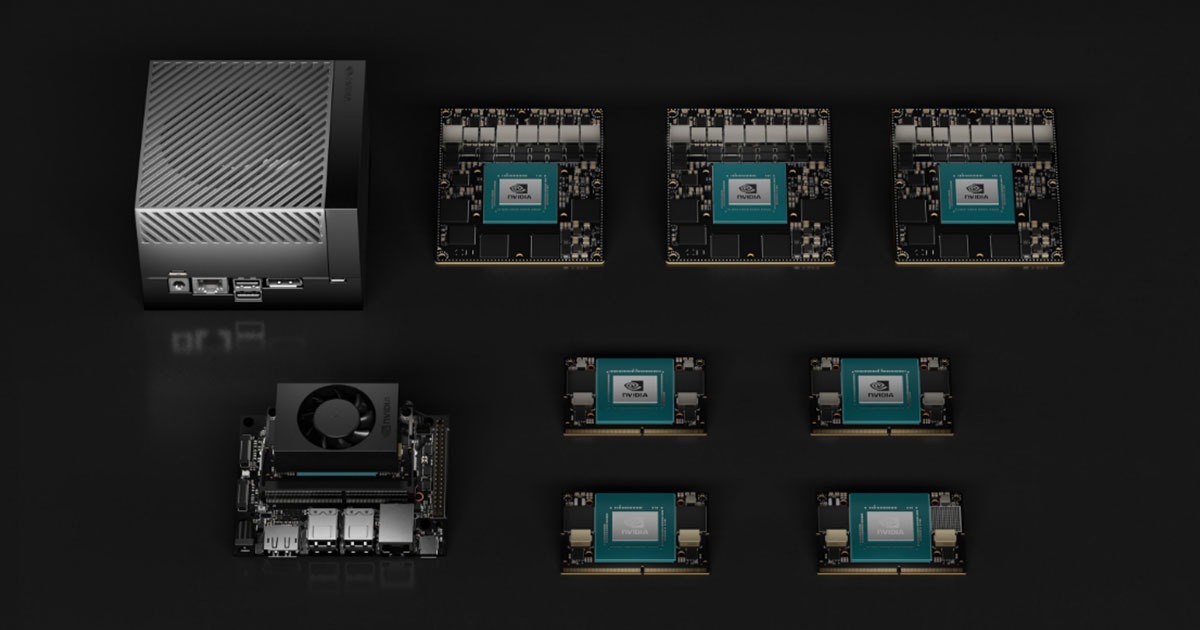
The NVIDIA Jetson Orin NX is a compact, SO-DIMM form-factor edge AI compute module designed for robotics, autonomous machines, and embedded vision applications. Manufactured by NVIDIA, it is available in 8 GB and 16 GB memory configurations and pairs an Ampere-architecture GPU with an 8-core Arm Cortex-A78AE CPU to deliver high-throughput on-device inference without relying on cloud connectivity. Positioned within NVIDIA's broader Jetson Orin family, the Orin NX targets developers and system integrators who need a balance of performance and power efficiency in a small footprint. It is commonly used in applications such as industrial inspection, autonomous mobile robots (AMRs), drone navigation, and smart edge devices where real-time AI inference is critical.
312 views