Barsys 360
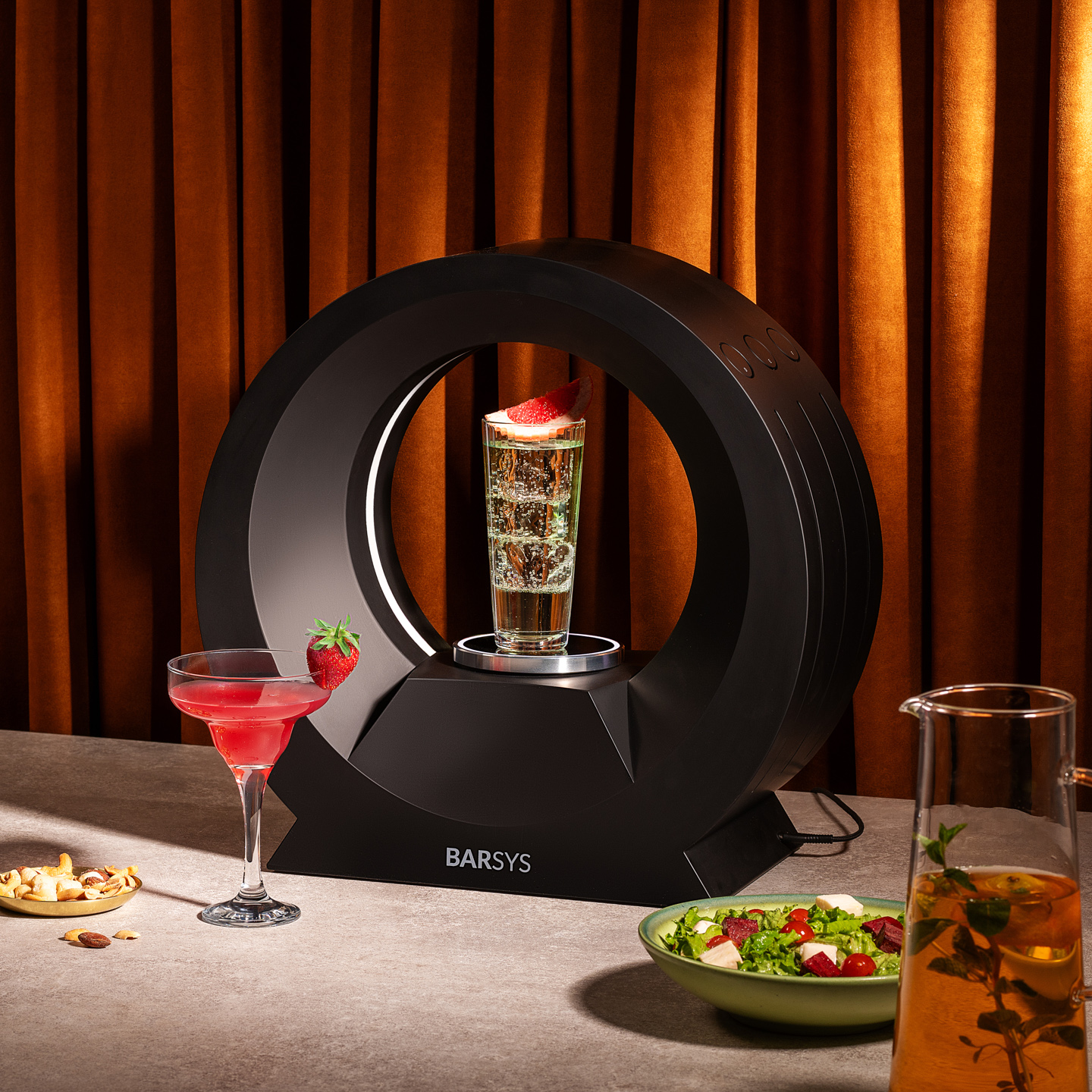
The Barsys 360 is a smart automated cocktail machine designed for home and prosumer entertaining. Manufactured by Barsys, it dispenses pre-loaded spirits and mixers with app-guided precision, allowing users to craft cocktails through the companion Barsys app without requiring professional bartending skills. Positioned at the intersection of consumer electronics and hospitality automation, the Barsys 360 represents a growing category of countertop robotic bartenders. Its circular carousel-style design accommodates multiple bottles simultaneously, and the integrated app provides access to a library of guided cocktail recipes, making it a notable entry in the home entertainment robotics segment.
Overview and Use Cases
The Barsys 360 is a countertop robotic cocktail system built around a rotating carousel platform that holds multiple spirit and mixer bottles. Using precision dispensing mechanisms, it measures and pours ingredients according to recipes selected through the Barsys mobile app. The device is primarily aimed at home entertainers, home bar enthusiasts, and prosumer users who want consistent, repeatable cocktail results without manual measuring or professional training.
Beyond private home use, the Barsys 360 has reportedly been explored for small hospitality venues, corporate events, and upscale social gatherings where novelty and automation add to the guest experience. Its self-contained design means it can operate on a countertop without permanent installation.
Key Technical Features
- Carousel design: The 360-degree rotating platform is the defining physical feature, allowing the machine to access multiple bottles loaded around its circumference.
- App integration: The Barsys app (available for iOS and Android, as of public reporting) connects via Bluetooth or Wi-Fi and provides step-by-step recipe guidance, ingredient tracking, and a curated cocktail library.
- Precision dispensing: The system is designed to measure pours with a degree of accuracy intended to replicate standardized cocktail recipes consistently.
- Bottle capacity: The machine accommodates several bottles simultaneously, though the exact number may vary by configuration; users are advised to consult current product documentation for precise figures.
- Connectivity: Smart home integration and app-based control are central to the user experience.
Specific sensor arrays, motor torque ratings, or pour-volume tolerances have not been widely published in accessible technical documentation, and figures in this area should be verified against official Barsys materials.
Comparison to Similar Products
Within the automated home bartender category, the Barsys 360 competes with products such as the Bartesian (which uses cocktail capsules rather than full bottles) and the Drinkworks Home Bar (now discontinued). Compared to capsule-based systems, the Barsys 360's use of standard spirit bottles gives users more flexibility in brand and ingredient selection, though it requires more setup and bottle management.
It is worth noting that Barsys's sibling products in the broader robotics landscape — such as educational robots like NAO 6 and mBot2, or companion robots like gitamini — occupy entirely different market segments. The Barsys 360 is firmly a hospitality and lifestyle appliance rather than a mobile or social robot, and direct technical comparisons with those platforms are not meaningful.
Market Context and Target Buyer
The Barsys 360 is positioned in the premium consumer appliance tier. It targets home bar enthusiasts, tech-forward entertainers, and prosumer buyers willing to invest in a dedicated cocktail automation device. As of public reporting, the product has been marketed through direct-to-consumer channels and select retail partners.
The price point places it above entry-level cocktail gadgets but within reach of serious home entertainers, though prospective buyers should check current pricing directly with Barsys, as retail pricing can change.
Deployments and Notable Presence
The Barsys 360 has been showcased at consumer electronics and lifestyle trade events, drawing attention for its blend of robotics and hospitality. It has reportedly been used at private events, corporate hospitality settings, and product demonstrations. Large-scale commercial deployments in bars or restaurants are not the primary use case, distinguishing it from industrial-grade robotic bar systems designed for high-volume service.
Future Outlook
The automated home bartender market remains a niche but growing segment, driven by consumer interest in smart home appliances and experiential entertaining. Barsys has continued to develop its app ecosystem and recipe library, which are central to the product's long-term value proposition. As voice assistant integration and smart home platforms mature, products like the Barsys 360 may benefit from deeper ecosystem connectivity. Competition in this space is likely to intensify as both established appliance brands and startups explore automated beverage dispensing.
Related entries
 Robot
RobotG1
The Unitree G1 is a general-purpose humanoid robot developed by Unitree Robotics, a Chinese robotics company headquartered in Hangzhou. Standing approximately 1.32 meters tall and weighing around 35 kilograms, the G1 features 23 degrees of freedom and is capable of walking, running, recovering from falls, and performing dexterous manipulation tasks. It ships with SDK access, making it accessible to researchers and small-business operators seeking an affordable entry point into humanoid robotics. The G1 is widely regarded as one of the most competitively priced serious humanoid platforms available as of public reporting, positioning Unitree as a disruptive force in a market historically dominated by far more expensive systems. Its combination of mobility, recoverability, and open software access has attracted attention from academic institutions, robotics developers, and automation-focused startups worldwide.
421 views
 Robot
RobotUniversal Robots UR5e
The Universal Robots UR5e is a six-axis collaborative robot arm (cobot) belonging to Universal Robots' e-Series product line. Designed for light-to-medium industrial and laboratory tasks, it is widely used in assembly, pick-and-place, machine tending, quality inspection, and lab automation workflows. Universal Robots, a Danish company and a subsidiary of Teradyne, is one of the most recognized names in the collaborative robotics market. The UR5e is programmed using Universal Robots' PolyScope graphical interface on a teach pendant, making it accessible to operators without deep robotics expertise. Its built-in force/torque sensing, tool-center-point control, and a broad ecosystem of certified end-effectors and accessories (the UR+ platform) have made it a popular mid-range cobot choice across manufacturing, electronics, food handling, and research sectors.
376 views
 Robot
RobotQuicktron M100
The Quicktron M100 is a heavy-duty autonomous mobile robot (AMR) belonging to Quicktron Robotics' M-Series product line. It is designed for demanding material handling tasks in warehouses, distribution centers, and manufacturing environments, using an integrated lift mechanism to transport shelves and pallets autonomously across facility floors. Quicktron Robotics, a company with roots in China and a global commercial presence, positions the M100 as a high-capacity solution for operations that require moving heavier loads than lighter AMR models can accommodate. The M100 targets logistics operators and manufacturers seeking to automate goods-to-person or pallet-movement workflows at scale.
161 views
 Robot
RobotNVIDIA Jetson Orin NX
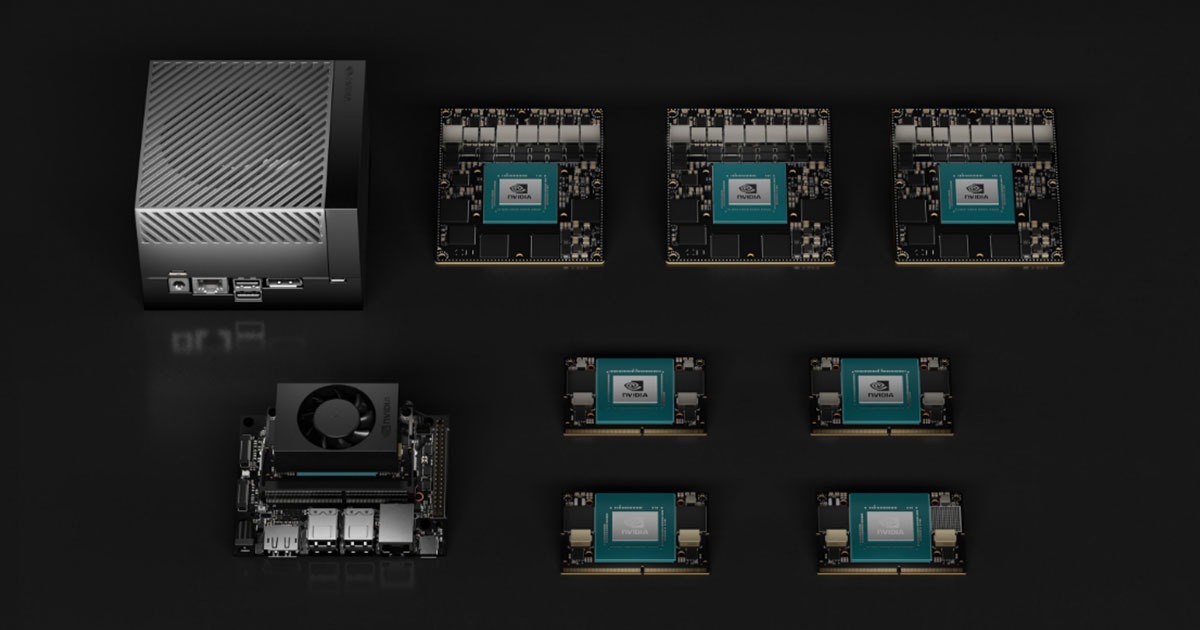
The NVIDIA Jetson Orin NX is a compact, SO-DIMM form-factor edge AI compute module designed for robotics, autonomous machines, and embedded vision applications. Manufactured by NVIDIA, it is available in 8 GB and 16 GB memory configurations and pairs an Ampere-architecture GPU with an 8-core Arm Cortex-A78AE CPU to deliver high-throughput on-device inference without relying on cloud connectivity. Positioned within NVIDIA's broader Jetson Orin family, the Orin NX targets developers and system integrators who need a balance of performance and power efficiency in a small footprint. It is commonly used in applications such as industrial inspection, autonomous mobile robots (AMRs), drone navigation, and smart edge devices where real-time AI inference is critical.
155 views