Apollo
Apollo is a general-purpose humanoid robot developed by Apptronik, an Austin, Texas-based robotics company spun out of the Human Centered Robotics Lab at the University of Texas. Designed with warehouse logistics and manufacturing environments in mind, Apollo is engineered to operate safely alongside human workers, handle meaningful payloads, and be produced at scale—distinguishing it from many research-oriented humanoids. Apptronik has positioned Apollo as a commercially viable platform intended to take on repetitive, physically demanding tasks in industrial settings. The robot features a human-like form factor intended to allow it to navigate spaces and use tools already designed for people, and its design philosophy emphasizes both worker safety and ease of deployment in existing facilities.

Overview and Use Cases
Apollo is Apptronik's flagship humanoid robot, built to address labor shortages and productivity demands in industrial environments. Its primary target applications include:
- Warehouse logistics: picking, sorting, and moving goods within distribution centers
- Manufacturing support: line-side material handling, assembly assistance, and parts delivery
- General facility tasks: any repetitive, physically demanding work currently performed by human workers in structured environments
Because Apollo shares the general dimensions and range of motion of an adult human, it can theoretically operate in facilities, use equipment, and navigate aisles designed for people—reducing the need for costly infrastructure changes.
Key Technical Details
Apptronik has publicly emphasized several design priorities for Apollo, though full technical specifications have not been comprehensively disclosed as of public reporting:
- Form factor: Bipedal, human-scale design intended to work in human-centric environments
- Payload capacity: Apptronik has indicated Apollo is engineered for relatively high payload handling compared to some contemporaries, though specific figures should be verified against official releases
- Safety architecture: The robot is reported to incorporate hardware and software safety systems designed for close human-robot collaboration, including force-limiting mechanisms
- Power: Apollo is designed to run on battery power for untethered operation during shifts, with reported runtime figures subject to official confirmation
- Actuation: Apptronik draws on its background in series elastic and hydraulic actuator research, aiming for compliant, safe joint behavior
- Sensors: Apollo is expected to use a combination of cameras and other perception sensors for navigation and manipulation, though a detailed sensor suite has not been fully published
Comparison to Similar Robots
Within Apptronik's own lineup, Apollo is currently the company's sole publicly announced humanoid platform, making it the centerpiece of the company's commercial strategy.
In the broader humanoid robot market, Apollo competes in a rapidly growing field that includes:
- Figure 02 (Figure AI) — another U.S.-based general-purpose humanoid targeting manufacturing
- Optimus (Tesla) — Tesla's in-house humanoid, primarily intended for internal factory use
- Atlas (Boston Dynamics) — a highly capable research and demonstration platform, with Boston Dynamics also developing a commercial humanoid variant
- 1X Neo / EVE (1X Technologies) — humanoids targeting service and logistics
Apollo's reported differentiators include its emphasis on mass manufacturability and its design for friendly, safe human interaction, which Apptronik has highlighted as core engineering goals rather than afterthoughts.
Market Context and Target Buyers
Apptronik is targeting enterprise customers in logistics, e-commerce fulfillment, and manufacturing. The company has pursued a commercial deployment model rather than a research-sale model, suggesting pricing and support structures aimed at large-scale industrial operators.
As of public reporting, specific pricing for Apollo has not been officially disclosed. The broader humanoid robot market is generally considered to be in an early commercial phase, with most platforms priced at a premium reflecting low production volumes—though companies including Apptronik have stated that driving down unit cost through mass manufacturing is a central goal.
Notable Deployments and Partnerships
Apptronik has announced a partnership with Mercedes-Benz to pilot Apollo in automotive manufacturing environments, which represents one of the more prominent early industrial deployments of a humanoid robot by a major automaker. This collaboration has drawn significant attention as a signal of growing enterprise interest in humanoid robotics for real production settings.
Additionally, Apptronik has worked with NASA on prior robotic platforms, lending the company credibility in advanced robotics development, though Apollo itself is commercially focused.
Future Outlook
Apollo sits at the intersection of several converging trends: advances in AI-driven robot control, growing labor market pressures in logistics and manufacturing, and increasing investor and corporate interest in humanoid platforms. Apptronik has indicated intentions to scale production and expand deployment partnerships.
Key open questions for Apollo's trajectory include the pace of software capability development (particularly dexterous manipulation and autonomous task learning), the ability to achieve cost reductions at scale, and how the competitive landscape evolves as well-funded rivals accelerate their own programs. The humanoid robotics sector as a whole is widely expected to see significant developments in the latter half of the 2020s.
Related videos


![[4k, 60 fps] Apollo 16 Lunar Rover "Grand Prix" (1972 April 21, Moon)](https://i.ytimg.com/vi/az9nFrnCK60/hqdefault.jpg)
Recent news
Related entries
 Robot
RobotG1
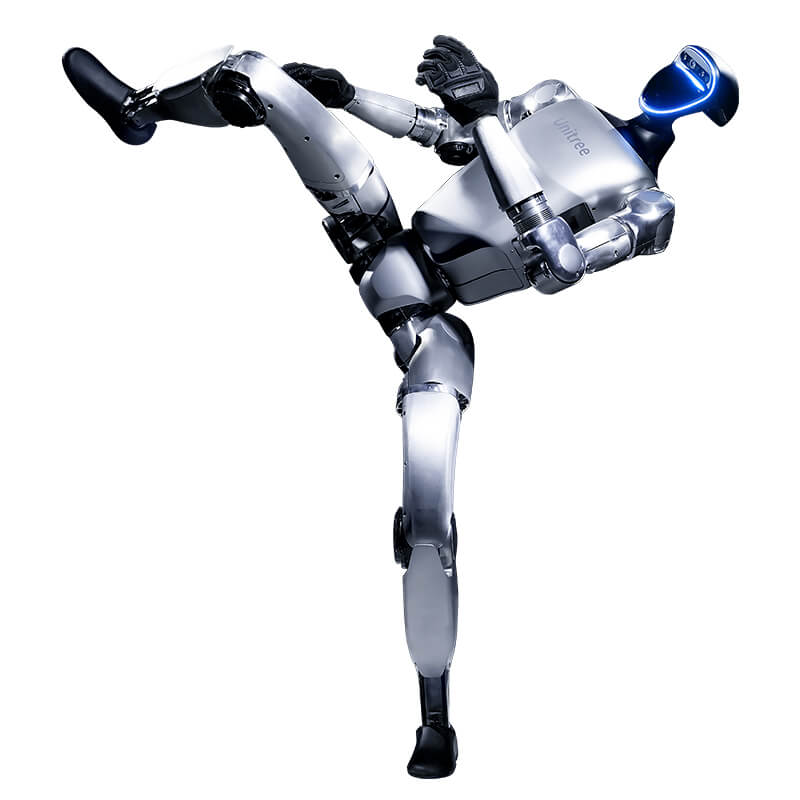
The Unitree G1 is a general-purpose humanoid robot developed by Unitree Robotics, a Chinese robotics company headquartered in Hangzhou. Standing approximately 1.32 meters tall and weighing around 35 kilograms, the G1 features 23 degrees of freedom and is capable of walking, running, recovering from falls, and performing dexterous manipulation tasks. It ships with SDK access, making it accessible to researchers and small-business operators seeking an affordable entry point into humanoid robotics. The G1 is widely regarded as one of the most competitively priced serious humanoid platforms available as of public reporting, positioning Unitree as a disruptive force in a market historically dominated by far more expensive systems. Its combination of mobility, recoverability, and open software access has attracted attention from academic institutions, robotics developers, and automation-focused startups worldwide.
44 views
 Robot
RobotUniversal Robots UR5e
The Universal Robots UR5e is a six-axis collaborative robot arm (cobot) belonging to Universal Robots' e-Series product line. Designed for light-to-medium industrial and laboratory tasks, it is widely used in assembly, pick-and-place, machine tending, quality inspection, and lab automation workflows. Universal Robots, a Danish company and a subsidiary of Teradyne, is one of the most recognized names in the collaborative robotics market. The UR5e is programmed using Universal Robots' PolyScope graphical interface on a teach pendant, making it accessible to operators without deep robotics expertise. Its built-in force/torque sensing, tool-center-point control, and a broad ecosystem of certified end-effectors and accessories (the UR+ platform) have made it a popular mid-range cobot choice across manufacturing, electronics, food handling, and research sectors.
43 views
 Robot
RobotQuicktron M100
The Quicktron M100 is a heavy-duty autonomous mobile robot (AMR) belonging to Quicktron Robotics' M-Series product line. It is designed for demanding material handling tasks in warehouses, distribution centers, and manufacturing environments, using an integrated lift mechanism to transport shelves and pallets autonomously across facility floors. Quicktron Robotics, a company with roots in China and a global commercial presence, positions the M100 as a high-capacity solution for operations that require moving heavier loads than lighter AMR models can accommodate. The M100 targets logistics operators and manufacturers seeking to automate goods-to-person or pallet-movement workflows at scale.
36 views
 Robot
RobotNVIDIA Jetson Orin NX
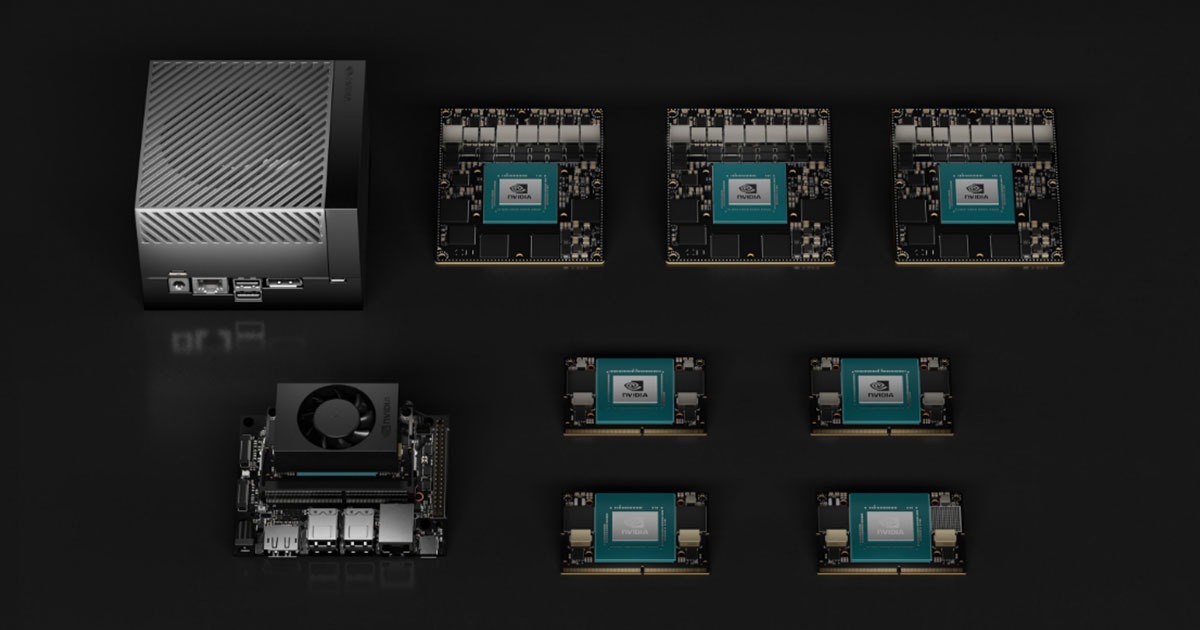
The NVIDIA Jetson Orin NX is a compact, SO-DIMM form-factor edge AI compute module designed for robotics, autonomous machines, and embedded vision applications. Manufactured by NVIDIA, it is available in 8 GB and 16 GB memory configurations and pairs an Ampere-architecture GPU with an 8-core Arm Cortex-A78AE CPU to deliver high-throughput on-device inference without relying on cloud connectivity. Positioned within NVIDIA's broader Jetson Orin family, the Orin NX targets developers and system integrators who need a balance of performance and power efficiency in a small footprint. It is commonly used in applications such as industrial inspection, autonomous mobile robots (AMRs), drone navigation, and smart edge devices where real-time AI inference is critical.
35 views