Let's compare
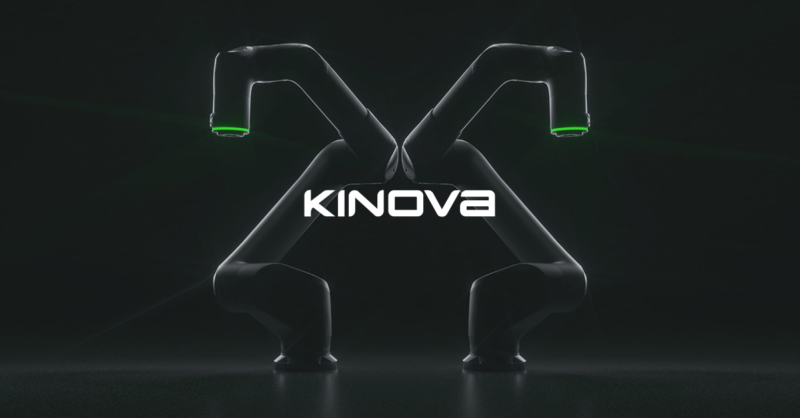
Kinova Gen3 (7 DoF)
Kinova Robotics
Not yet assessed
- Height
- —
- Payload
- —
- Verified autonomy
- not assessed
- Real deployment
- not assessed
- Status
- —
- Price
- —
Kinova Gen3 (7 DoF)
Kinova Robotics🇨🇦Lightweight 7-DOF research/industrial arm with smart actuators, integrated torque sensing, and an optional vision module. Widely used for academic research, lab automation and mobile manipulation.
Availability
Specification
- 7 degrees of freedom (also offered in 6-DoF)
- 4.0 kg mid-range continuous payload
- 902 mm maximum reach
- 8.2 kg total arm weight
- Smart actuators with integrated torque sensors; optional 2D/3D vision module
Price
No public price — contact the supplier for a quote.
Good · Bad · Ugly
Evidence-graded claims from the Kinova Robotics deep report
Kinova is the lead robotic arm technology partner in the $41M ARPA-H RAMMP project, building a smart power wheelchair + robotic arm system for people with physical disabilities over a 5-year R&D initiative.
Source [6] (Surgical Robotics Technology, an independent trade publication) independently reports Kinova's named role and the $41M ARPA-H award, though the outcome remains a future R&D goal — no deployed assistive autonomy capability has yet been demonstrated.
from Kinova Robotics deep report →Kinova has raised over $108M in total funding ($48M round + $60M round), with the $60M round closed in February 2022, backed by Graham Partners, EDC, and the Government of Canada's Strategic Innovation Fund.
Sources [3][7][8] — including Robot Report (trade press) and two separate newswire press releases — independently corroborate both funding rounds and named investors, though press releases [7][8] are company-issued and the strategic use of funds remains unverified by independent audit.
from Kinova Robotics deep report →
Kinova Gen3 is deployed at hundreds of universities, startups, and corporations across medical, assistive, research/education, and industrial automation markets.
The 'hundreds of customers' figure originates from sources [1] and [5] (a comparison blog and a cobot review aggregator), neither of which is an independent audit or customer-verified count — no third-party deployment census or named customer list substantiates the scale claim.
from Kinova Robotics deep report →The Gen3 robotic arm features 7 degrees of freedom, ~4 kg (8.8 lb) payload, ~902 mm (35-inch) reach, 1 kHz closed-loop control, infinite joint rotation, and IP54 rating.
These specs are consistently cited across commerce/review sources [1][2][4][5], but all trace back to vendor-supplied datasheets; no independent laboratory test or third-party benchmark has verified payload, reach, or control-loop performance under real operating conditions.
from Kinova Robotics deep report →The Gen3 supports official ROS2 integration via the ros2_kortex package, making it suitable for research and mobile robotics applications.
ROS2 support via ros2_kortex is confirmed by [1] and [5], but community discussion [10][12] flags real-world ROS dependency and version-compatibility issues that can undermine practical usability; no independent integration benchmark or user study validates the claim of seamless suitability.
from Kinova Robotics deep report →
Kinova's teleoperation capability is limited to VR/joystick input only, with no native matched leader arm, and bimanual data collection is not standard — requiring custom pipelines for HDF5/RLDS export.
Source [1] (a comparison blog, not an independent test) documents these limitations, and they directly contradict any marketing positioning of the Gen3 as a turnkey AI/imitation-learning data-collection platform — the arm lacks the native leader-follower and data-export infrastructure that competing platforms (e.g., Franka, LeRobot-compatible arms) provide out of the box.
from Kinova Robotics deep report →The Gen3 arm is described as suitable for autonomous operation or possesses 'industry-leading route-selection accuracy' as an autonomous system.
The dossier's conflict analysis confirms this 'autonomy' claim was extracted in error from an unrelated NIO automotive subreddit post [11] — it has zero evidentiary connection to Kinova Robotics, and the arm itself has no documented autonomous task-execution capability independent of user-supplied software.
from Kinova Robotics deep report →The Gen3's demo throughput for AI/imitation-learning benchmarks is only 10–20 demonstrations per hour on L2 tasks, and it is not yet supported by the LeRobot framework.
Source [1] (a comparison blog) reports these figures, but they represent a significant practical limitation for labs pursuing modern robot learning workflows — the combination of low demo throughput and absent LeRobot support directly undercuts any positioning of the Gen3 as a competitive AI-training platform, yet this limitation is absent from Kinova's own promotional materials.
from Kinova Robotics deep report →
About the company
Editorial directory of real robot products from leading global manufacturers. Each entry links to the manufacturer's official page.