Industrial Robots
Industrial robots are programmable, automated machines designed to perform tasks in manufacturing, logistics, construction, and other demanding operational environments. They range from stationary robotic arms on assembly lines to mobile platforms that navigate warehouses, and increasingly include wearable exoskeletons that augment human workers in physically intensive settings. The industrial robotics market has expanded rapidly in recent decades, driven by labor shortages, rising quality demands, and the push toward smart manufacturing. Advances in mobility, sensing, and human-robot collaboration are blurring the line between traditional factory automation and newer, more flexible robotic systems capable of operating alongside people in dynamic environments.
Definition and Defining Traits
Industrial robots are machines engineered to automate or augment physical labor in professional and commercial settings. Unlike consumer or research robots, they are evaluated primarily on reliability, throughput, safety compliance, and return on investment. Key defining traits include:
- Repeatability and precision: the ability to execute the same motion or task consistently over thousands of cycles.
- Durability: designed for continuous or near-continuous operation in harsh environments such as factory floors, warehouses, or outdoor worksites.
- Safety certification: compliance with standards such as ISO 10218 (industrial robot safety) or relevant medical/exoskeleton standards where applicable.
- Programmability and adaptability: modern industrial robots increasingly support reconfiguration for different tasks, reducing the cost of retooling.
The category is broad and includes mobile manipulation robots, autonomous mobile robots (AMRs), and powered exoskeletons that assist or rehabilitate workers.
Key Use Cases
Industrial robots serve a wide spectrum of applications across sectors:
- Warehouse and logistics automation: Mobile robots such as Spot and Stretch (both by Boston Dynamics) are deployed for inspection, inventory management, and box-moving tasks in distribution centers. Stretch, for example, is purpose-built for unloading truck trailers and moving cases in high-throughput logistics environments.
- Manufacturing and assembly: Robotic arms and mobile manipulators handle welding, painting, pick-and-place, and quality inspection on production lines.
- Worker augmentation and rehabilitation: Powered exoskeletons such as the HAL (Hybrid Assistive Limb) by CYBERDYNE INC., Lokomat by Hocoma (DIH), EksoNR by Ekso Bionics, ReWalk 7 Personal Exoskeleton by Lifeward, and the UGO Exoskeleton by Hangzhou RoboCT (Chengtian) are used in industrial ergonomic support and clinical rehabilitation settings. These devices reduce musculoskeletal strain on workers or help patients regain mobility after neurological injury.
- Inspection and monitoring: Quadruped robots like Spot navigate complex or hazardous environments — oil refineries, construction sites, power plants — to collect sensor data and perform remote inspections.
Market Size and Growth Trends
The industrial robotics sector is widely regarded as one of the fastest-growing segments of the broader robotics industry. Industry estimates consistently point to strong demand driven by:
- Persistent labor shortages in manufacturing and logistics, particularly in North America, Europe, and East Asia.
- The accelerating adoption of Industry 4.0 and smart factory initiatives.
- Growing interest in collaborative robots (cobots) and mobile platforms that can work safely alongside humans without extensive safety caging.
- Expanding applications for exoskeletons in both occupational health and post-injury rehabilitation.
China, the United States, Germany, Japan, and South Korea are consistently among the largest markets for industrial robot installations, according to the International Federation of Robotics (IFR).
Leading Manufacturers and Notable Robots
The industrial robotics landscape includes both established automation giants and newer entrants focused on mobility and human augmentation:
- Boston Dynamics (USA) is recognized for its advanced mobile robots. Spot, a four-legged autonomous robot, has found broad industrial adoption for inspection and data collection. Stretch, a mobile case-handling robot, targets logistics and warehouse automation.
- CYBERDYNE INC. (Japan) develops the HAL (Hybrid Assistive Limb) exoskeleton, which uses bioelectrical signals to detect and support the wearer's intended movements, with applications in both industrial labor support and medical rehabilitation.
- Hocoma (Switzerland, part of the DIH group) produces the Lokomat, a robotic gait orthosis widely used in neurological rehabilitation clinics worldwide.
- Ekso Bionics (USA) offers the EksoNR, a powered exoskeleton designed for rehabilitation of patients with stroke, spinal cord injury, or acquired brain injury.
- Lifeward (formerly ReWalk Robotics, Israel/USA) manufactures the ReWalk 7 Personal Exoskeleton, enabling individuals with lower-limb paralysis to stand and walk.
- Hangzhou RoboCT (Chengtian) (China) produces the UGO Exoskeleton, targeting both rehabilitation and industrial worker support markets in China and internationally.
Common Technical Challenges
Despite significant advances, industrial robots face persistent engineering and deployment challenges:
- Unstructured environments: Moving from controlled factory settings to dynamic, cluttered real-world spaces requires robust perception, mapping, and decision-making capabilities.
- Human-robot safety: Ensuring safe physical interaction, especially for exoskeletons worn directly on the body or cobots sharing workspaces with people, demands rigorous sensor fusion and fail-safe design.
- Battery life and power density: Mobile robots and exoskeletons are constrained by energy storage, limiting operational duration between charges.
- Ease of deployment and programming: High setup costs and the need for specialized expertise remain barriers for small and medium-sized enterprises.
- Regulatory pathways: Exoskeletons used in medical contexts must navigate complex regulatory approval processes (e.g., FDA clearance in the United States, CE marking in Europe), which can slow commercialization.
Future Outlook
The trajectory of industrial robotics points toward greater autonomy, flexibility, and human integration. Key trends shaping the near-term future include:
- AI-driven perception and manipulation: Machine learning is enabling robots like Stretch to handle a wider variety of object shapes and sizes without manual reprogramming.
- Convergence of rehabilitation and industrial exoskeletons: Devices originally developed for clinical rehabilitation are being adapted for occupational use, and vice versa, broadening addressable markets.
- Fleet management and cloud connectivity: Industrial robots are increasingly managed as coordinated fleets, with data streamed to cloud platforms for predictive maintenance and performance optimization.
- Regulatory maturation: As safety standards for mobile robots and exoskeletons mature, adoption barriers are expected to decrease, particularly in healthcare and logistics.
Overall, the industrial robot category is evolving from rigid, task-specific automation toward versatile, collaborative systems that can adapt to changing operational demands — a shift that is expected to accelerate as hardware costs decline and software capabilities improve.
Related videos

industrial Robot #WeldingRobot #robot #robotfactory#Programming-free spraying robot#Six-axis robot
Industrial_borunte_wendy4

industrial Robot #WeldingRobot #robot #robotfactory#Programming-free spraying robot#Six-axis robot
Industrial_borunte_wendy4
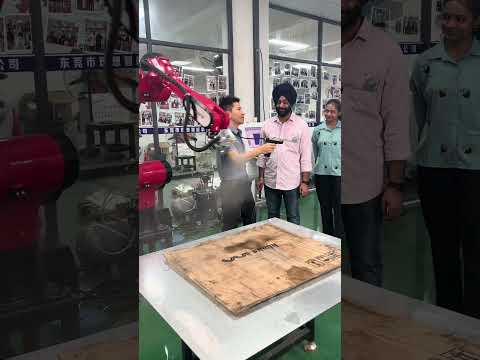
#robot #industrial #borunte #spraying #welding #welding
BORUNTE-Robot-Messi

Clor Industry & KUKA | Advanced Robotic Solutions for Complex Industrial Automation
KUKA - Robots & Automation

Industrialrobot #welding #factory #robot #industrialrobot #weldingrobot
BerontRobotPeng2

Industrialrobot #welding #factory #robot #industrialrobot #weldingrobot
BerontRobotPeng2
Recent news
Countries grapple with China’s robotics lead
Biztoc.com · 6/23/2026
Automate 2026 Conference Set for Chicago — Largest Robotics Event in the Americas
A3 / Automate · 6/6/2026
Qualcomm’s Computex spread runs from $300 laptops to humanoid robot brains
The Gadgeteer · 6/1/2026
Rivian spin-out Mind Robotics raises $500M for industrial AI-powered robots
techcrunch.com · 5/19/2026
Mind Robotics Raises Additional $400M to Expand Industrial Robotics Deployment
Business Wire · 5/13/2026
Community buzz (Reddit)
Fully autonomous valet robot that parks on its own
r/nextfuckinglevel · ▲ 99,782
This model's robotic costume
r/nextfuckinglevel · ▲ 81,590
Man Mimics Robot with INSANE Body Control
r/nextfuckinglevel · ▲ 78,017
Olaf robot at Paris Disneyland
r/Damnthatsinteresting · ▲ 74,189
Japanese researchers at the University of Tsukuba created CirculaFloor, robotic tiles that let you walk infinitely in VR without ever leaving your spot.
r/Damnthatsinteresting · ▲ 72,693
Related entries
Humanoid Robots
Humanoid robots are machines designed to replicate the general form and movement of the human body, typically featuring a bipedal stance, two arms, and a head-like sensor cluster. By mirroring human morphology, they are engineered to operate in environments and with tools originally built for people, making them uniquely versatile across manufacturing, logistics, healthcare, and service settings. The humanoid robot market is widely regarded as one of the fastest-growing segments in robotics. Driven by advances in AI, actuator technology, and battery energy density, a new generation of commercially oriented humanoids has emerged from companies such as Tesla, Boston Dynamics, Figure AI, and Unitree Robotics, among others. Industry analysts broadly expect adoption to accelerate as unit costs fall and software capabilities mature.
380 views
Robot Wheels & Wheel Sets
Robot wheels and wheel sets are foundational mechanical components that enable ground-based mobile robots to navigate their environments. Ranging from standard rubber drive wheels to specialized omnidirectional and mecanum wheel assemblies, these parts are selected based on the robot's required motion profile, payload, surface conditions, and precision demands. They are essential building blocks for autonomous mobile robots (AMRs), differential-drive platforms, research rovers, and educational kits alike. The market for robot wheel components is expanding alongside the broader mobile robotics industry, driven by surging demand for warehouse automation, last-mile delivery platforms, and research-grade robot development. Manufacturers such as Nexus Robot supply purpose-engineered wheel sets—including mecanum wheel assemblies—that allow integrators and developers to rapidly prototype or deploy capable mobile platforms without designing drivetrain hardware from scratch.
363 views
Companion Robots
Companion robots are consumer and clinical robots designed primarily to provide emotional support, social interaction, and everyday assistance to their users rather than to perform industrial or precision tasks. They typically combine expressive movement, voice interaction, and sensor-based responsiveness to create a sense of presence and personality, making them feel less like tools and more like social agents. The companion robot market spans a wide range of applications—from therapeutic robots used in eldercare and mental health settings to home companions that entertain children or assist busy households. As populations age in many countries and demand for emotionally intelligent technology grows, industry observers expect this category to expand significantly in the coming years.
333 views
Mobile Robots
Mobile robots are autonomous or semi-autonomous machines capable of moving through physical environments to perform tasks without being fixed to a single location. Unlike stationary industrial arms or embedded systems, mobile robots navigate floors, corridors, and outdoor terrain using a combination of sensors, mapping algorithms, and onboard compute, making them uniquely versatile across warehouses, hospitals, retail spaces, and beyond. The mobile robot market has expanded rapidly as e-commerce growth, labor shortages, and advances in simultaneous localization and mapping (SLAM) technology have lowered the barriers to deployment. Industry analysts broadly agree that demand for mobile platforms—spanning goods-to-person AMRs, hospital logistics robots, and quadruped research platforms—is among the fastest-growing segments in robotics, with adoption accelerating across both developed and emerging economies.
330 views