Hugo RAS
Hugo RAS is Medtronic's robotic-assisted surgery (RAS) system designed to give surgeons enhanced precision, dexterity, and ergonomics during minimally invasive procedures. The platform features a multi-arm architecture, a high-definition 3D visualization system, and wristed instrument technology intended to replicate and extend the natural range of motion of the human hand inside the body. Developed by Medtronic, one of the world's largest medical-device companies, Hugo RAS received U.S. FDA 510(k) clearance and was first used in a clinical surgery at Cleveland Clinic in February 2026, marking a significant milestone in the system's commercial rollout in the United States. The system targets general surgery, urology, gynecology, and other soft-tissue specialties.
Overview and Use Cases
Hugo RAS (Robotic-Assisted Surgery) is Medtronic's entry into the competitive surgical robotics market. The system is designed to support minimally invasive surgery (MIS) across multiple specialties, including:
- General surgery (e.g., cholecystectomy, hernia repair)
- Urology (e.g., prostatectomy, nephrectomy)
- Gynecology (e.g., hysterectomy, myomectomy)
- Thoracic and colorectal procedures (subject to regulatory clearances by market)
The core value proposition is enabling surgeons to perform complex procedures through small incisions, potentially reducing patient recovery time, blood loss, and hospital stay compared with open surgery.
Key Technical Features
While Medtronic has not publicly disclosed all detailed engineering specifications, the following features have been reported through official communications and peer-reviewed clinical literature:
- Modular, cart-based arm architecture: Individual robotic arm carts can be repositioned independently, offering flexibility in operating room setup.
- Wristed instruments: EndoWrist-style articulating instruments provide multiple degrees of freedom beyond the natural range of laparoscopic tools.
- 3D high-definition visualization: An integrated camera system provides surgeons with an immersive, magnified view of the operative field.
- Open console design: The surgeon console is reportedly designed with an open, non-immersive layout, allowing the operating surgeon to maintain situational awareness of the room.
- Haptic and force feedback: As of public reporting, the system's haptic feedback capabilities have been a subject of ongoing development and clinical evaluation.
Regulatory Milestones and Clinical Deployments
Hugo RAS has progressed through a staged global regulatory and clinical rollout:
- CE Mark (European Union): Received in earlier years, enabling commercial use across European markets.
- FDA 510(k) clearance (United States): Granted by the U.S. Food and Drug Administration, paving the way for U.S. commercial use.
- First U.S. clinical surgery: Performed at Cleveland Clinic in February 2026, a notable milestone given Cleveland Clinic's reputation as a leading academic medical center.
- International clinical studies, including the EXPAND URO trial for urological procedures, have been conducted to generate evidence supporting broader adoption.
Competitive Landscape
Hugo RAS enters a market long dominated by Intuitive Surgical's da Vinci platform, which holds the largest installed base of surgical robots globally. Other competitors include:
- Johnson & Johnson MedTech's Ottava system (in development/rollout as of recent reporting)
- CMR Surgical's Versius, another modular, cart-based system with a similar philosophy to Hugo RAS
- Asensus Surgical's Senhance
Hugo RAS's modular cart design is frequently compared to Versius as an alternative to the single large patient-side cart used by earlier da Vinci generations. Medtronic positions Hugo RAS as a cost-competitive and flexible option for hospitals seeking to establish or expand robotic surgery programs.
Market Context and Target Buyers
Hugo RAS is positioned in the premium surgical robotics segment, targeting:
- Large academic medical centers and teaching hospitals
- High-volume community hospitals seeking to build robotic surgery programs
- Health systems in markets where Intuitive Surgical's installed base is less entrenched
Medtronic has not publicly disclosed list pricing. As with most capital surgical equipment, the system is typically sold or leased through direct sales agreements that include service contracts, instrument replenishment, and training programs.
Future Outlook
Medtronic has indicated plans to expand Hugo RAS's cleared indications over time and to integrate the platform with its broader digital surgery ecosystem, which reportedly includes AI-assisted surgical guidance and data analytics tools. The U.S. commercial launch following the Cleveland Clinic milestone is expected to accelerate adoption among major health systems. Analysts broadly view the surgical robotics market as one of the fastest-growing segments in medical devices, and Medtronic's scale in hospital relationships positions Hugo RAS as a credible long-term competitor, though Intuitive Surgical's entrenched market position presents a significant challenge.
Related entries
 Robot
RobotG1
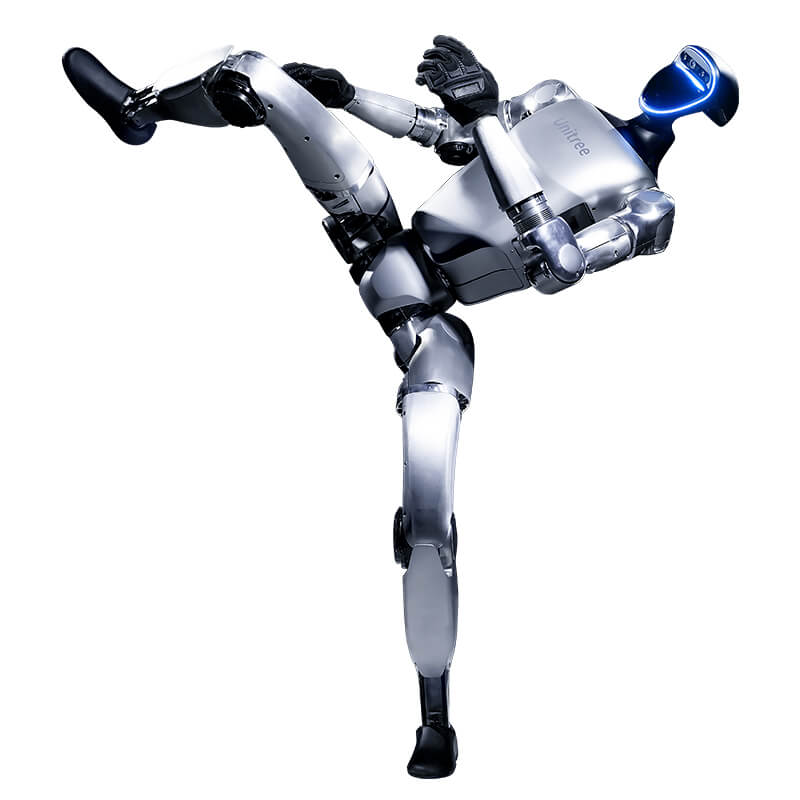
The Unitree G1 is a general-purpose humanoid robot developed by Unitree Robotics, a Chinese robotics company headquartered in Hangzhou. Standing approximately 1.32 meters tall and weighing around 35 kilograms, the G1 features 23 degrees of freedom and is capable of walking, running, recovering from falls, and performing dexterous manipulation tasks. It ships with SDK access, making it accessible to researchers and small-business operators seeking an affordable entry point into humanoid robotics. The G1 is widely regarded as one of the most competitively priced serious humanoid platforms available as of public reporting, positioning Unitree as a disruptive force in a market historically dominated by far more expensive systems. Its combination of mobility, recoverability, and open software access has attracted attention from academic institutions, robotics developers, and automation-focused startups worldwide.
5,941 views
 Robot
RobotUniversal Robots UR5e
The Universal Robots UR5e is a six-axis collaborative robot arm (cobot) belonging to Universal Robots' e-Series product line. Designed for light-to-medium industrial and laboratory tasks, it is widely used in assembly, pick-and-place, machine tending, quality inspection, and lab automation workflows. Universal Robots, a Danish company and a subsidiary of Teradyne, is one of the most recognized names in the collaborative robotics market. The UR5e is programmed using Universal Robots' PolyScope graphical interface on a teach pendant, making it accessible to operators without deep robotics expertise. Its built-in force/torque sensing, tool-center-point control, and a broad ecosystem of certified end-effectors and accessories (the UR+ platform) have made it a popular mid-range cobot choice across manufacturing, electronics, food handling, and research sectors.
5,266 views
 Robot
RobotQuicktron M100
The Quicktron M100 is a heavy-duty autonomous mobile robot (AMR) belonging to Quicktron Robotics' M-Series product line. It is designed for demanding material handling tasks in warehouses, distribution centers, and manufacturing environments, using an integrated lift mechanism to transport shelves and pallets autonomously across facility floors. Quicktron Robotics, a company with roots in China and a global commercial presence, positions the M100 as a high-capacity solution for operations that require moving heavier loads than lighter AMR models can accommodate. The M100 targets logistics operators and manufacturers seeking to automate goods-to-person or pallet-movement workflows at scale.
619 views
 Robot
RobotNVIDIA Jetson Orin NX
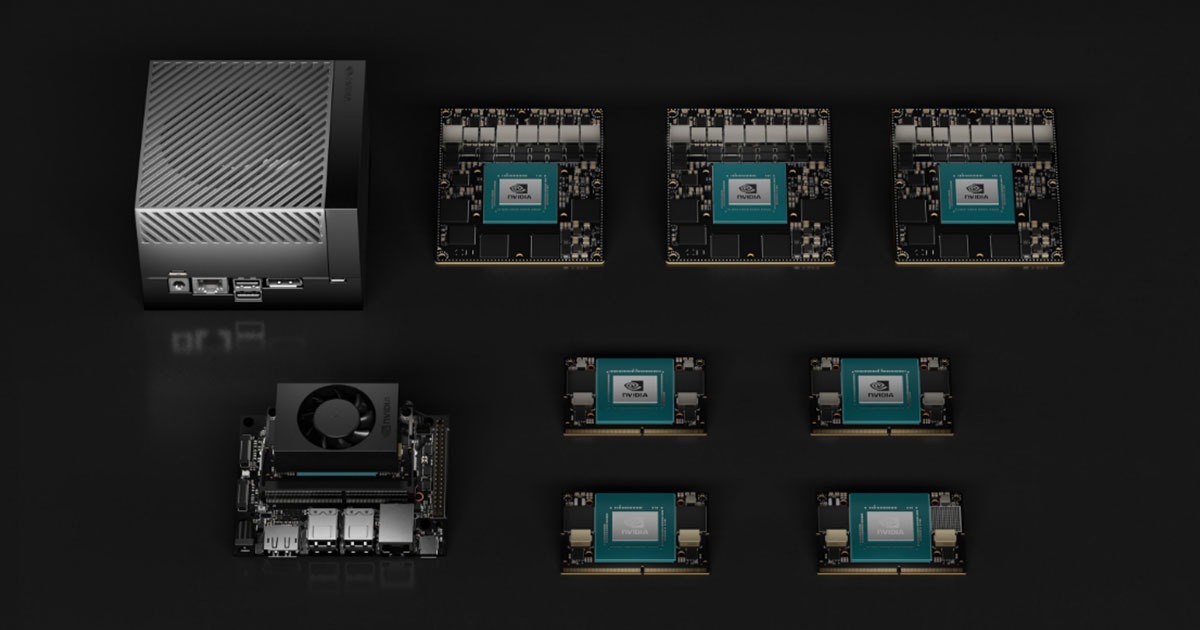
The NVIDIA Jetson Orin NX is a compact, SO-DIMM form-factor edge AI compute module designed for robotics, autonomous machines, and embedded vision applications. Manufactured by NVIDIA, it is available in 8 GB and 16 GB memory configurations and pairs an Ampere-architecture GPU with an 8-core Arm Cortex-A78AE CPU to deliver high-throughput on-device inference without relying on cloud connectivity. Positioned within NVIDIA's broader Jetson Orin family, the Orin NX targets developers and system integrators who need a balance of performance and power efficiency in a small footprint. It is commonly used in applications such as industrial inspection, autonomous mobile robots (AMRs), drone navigation, and smart edge devices where real-time AI inference is critical.
544 views