Educational Robots
Educational robots are purpose-built or purpose-adapted robotic platforms designed to teach students and learners concepts in programming, engineering, mathematics, science, and social interaction. Ranging from small, colorful coding toys for young children to sophisticated humanoid platforms used in university research, they share a common goal: making abstract technical concepts tangible and engaging through hands-on experience. The educational robotics market has expanded rapidly alongside growing global interest in STEM and STEAM curricula. Schools, coding academies, libraries, and research institutions increasingly deploy these robots as interactive teaching tools, and the category continues to evolve with advances in AI, cloud connectivity, and curriculum integration.
Definition and Defining Traits
Educational robots are robotic systems whose primary design intent is to facilitate learning. They differ from purely industrial or service robots in that usability, safety, and pedagogical value take precedence over raw performance or productivity. Key defining traits include:
- Approachable interfaces: visual block-based programming environments, color-coded sensors, or simple APIs that lower the barrier to entry for beginners.
- Curriculum alignment: many platforms ship with lesson plans, teacher guides, and alignment to standards such as CSTA, Common Core, or national STEM frameworks.
- Durability and safety: rounded edges, low-voltage electronics, and robust enclosures suited to classroom handling by children.
- Scalability: the ability to grow with the learner, from drag-and-drop coding at entry level to Python, JavaScript, or ROS at advanced levels.
- Engagement design: expressive LEDs, sounds, movement, and sometimes social interaction features that sustain student motivation.
Key Use Cases
Educational robots serve a wide spectrum of learning contexts:
- Early childhood coding: platforms like Ozobot Evo (by Ozobot) and Sphero BOLT (by Sphero) introduce computational thinking to children as young as five through color-coded commands and app-based programming.
- K–12 STEM education: Dash (by Wonder Workshop) and mBot2 (by Makeblock) are widely used in primary and middle school classrooms to teach block-based and text-based programming, electronics, and basic robotics engineering.
- Social and emotional learning (SEL): humanoid and expressive robots such as Kebbi Air (by NUWA Robotics) are deployed in language learning, special education, and social skills development programs.
- Higher education and research: NAO 6 (by Aldebaran, now part of United Robotics Group) has become one of the most widely used humanoid platforms in university robotics courses and research labs worldwide.
- Developer and maker education: Misty II (originally by Misty Robotics, now associated with Furhat Robotics) targets developers, researchers, and advanced learners building custom skills and applications on an open platform.
- Coding bootcamps and after-school programs: many of the above platforms appear in extracurricular settings, robotics competitions, and maker spaces.
Market Size and Growth Trends
Industry estimates consistently place educational robotics among the fastest-growing segments of the broader consumer and service robotics market. Several macro trends are driving this growth:
- Government STEM mandates: many countries have introduced national policies requiring coding and robotics instruction at the primary and secondary level, directly expanding institutional procurement.
- Post-pandemic digital learning investment: increased public and private spending on educational technology following COVID-19 disruptions has benefited hardware platforms alongside software tools.
- Rising middle-class demand in Asia: markets in China, South Korea, Japan, and Southeast Asia have seen particularly strong growth in both school deployments and consumer purchases of educational robots.
- AI integration: the incorporation of voice recognition, natural language processing, and machine learning features into educational robots is expanding their appeal and perceived value.
While precise market figures vary by source, analysts broadly agree that the segment is on a sustained upward trajectory through the mid-2020s and beyond.
Leading Manufacturers and Notable Robots
The educational robotics landscape includes both specialist startups and established technology companies:
- Ozobot produces the Ozobot Evo, a miniature robot that can follow color-coded lines drawn on paper or be programmed via a block-based app, making it one of the most accessible entry points for young learners.
- Sphero offers the Sphero BOLT, a programmable ball robot with an LED matrix and transparent shell, supporting block coding, JavaScript, and the Sphero Edu app ecosystem.
- Wonder Workshop developed Dash, a wheeled robot designed for ages six and up, with a suite of companion apps and a strong library of curriculum-aligned activities.
- Makeblock manufactures the mBot2, a modular STEM robot kit based on the CyberPi controller, supporting Scratch-based and Python programming and widely adopted in school makerspaces.
- Aldebaran / United Robotics Group produces NAO 6, a 58 cm humanoid robot with 25 degrees of freedom that has been adopted by hundreds of universities globally for research and teaching.
- NUWA Robotics created Kebbi Air, a compact social robot used in language education and interactive learning programs, particularly in Asian markets.
- Misty Robotics / Furhat Robotics: Misty II is a developer-focused personal robot platform with a screen face, arms, and an open SDK, aimed at researchers and educators building custom interactive applications.
Common Technical Challenges
Despite their accessibility focus, educational robots face several recurring engineering and deployment challenges:
- Battery life: classroom sessions and demonstrations demand reliable runtime; short battery life disrupts lessons and increases total cost of ownership.
- Connectivity and fleet management: managing Wi-Fi connectivity and software updates across dozens of classroom units simultaneously remains a pain point for teachers and IT administrators.
- Durability vs. cost: balancing robust construction against affordable price points is an ongoing tension, especially for consumer-grade products.
- Software longevity: app ecosystems and cloud services must be maintained over the multi-year lifespan typical of school hardware procurement cycles.
- Curriculum integration: hardware alone does not guarantee learning outcomes; developing high-quality, standards-aligned content requires sustained investment separate from the robot itself.
- Accessibility: designing interfaces and activities that are inclusive for learners with disabilities remains an area requiring more industry attention.
Future Outlook
The educational robotics category is poised for continued evolution on several fronts. Generative AI and large language models are beginning to appear in educational robot interfaces, enabling more natural conversation and adaptive tutoring capabilities. Increased modularity — allowing students to swap sensors, actuators, and controllers — is making platforms more versatile and extending their useful life in curricula. Cloud-based simulation environments are emerging as complements to physical hardware, reducing cost barriers for schools with limited budgets. Social robots are also finding expanded roles in inclusive education, supporting learners with autism spectrum conditions and other needs. As robotics literacy becomes an increasingly valued skill in the global workforce, demand for well-designed educational platforms is expected to remain strong across age groups and geographies.
Related videos

Top 5 AI Powered Robots for Kids in 2026 | Smart & Educational Future Toys
Best Futuristic Gadgets
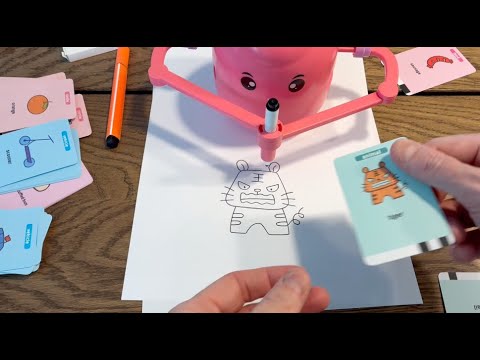
Shovira Drawing Robot for Kids Review – Smart Educational Art Toy with 150 Cards & 17 Pens
Mirkojax

🤖💡 Miko 3 AI-Powered Educational Robot for Kids #robot #amazonfinds #shorts
Toddler Products

ClicBot Programmable Robot Kit | Best Educational Robot for Kids | Learn Coding & Build Robot #robot
Forward Gadgets

Affordable 6 Axis Desktop Robot Arm - educational & industrial DIY robot kit - Arduino controller
Chris Annin

Robotics for Kids| Robotics Kits| Basics| Introduction Educational video for beginners projects
Intellect Kids Classroom
Community buzz (Reddit)
Fully autonomous valet robot that parks on its own
r/nextfuckinglevel · ▲ 99,782
This model's robotic costume
r/nextfuckinglevel · ▲ 81,596
Man Mimics Robot with INSANE Body Control
r/nextfuckinglevel · ▲ 78,025
Olaf robot at Paris Disneyland
r/Damnthatsinteresting · ▲ 74,193
Japanese researchers at the University of Tsukuba created CirculaFloor, robotic tiles that let you walk infinitely in VR without ever leaving your spot.
r/Damnthatsinteresting · ▲ 72,696
Related entries
Humanoid Robots
Humanoid robots are machines designed to replicate the general form and movement of the human body, typically featuring a bipedal stance, two arms, and a head-like sensor cluster. By mirroring human morphology, they are engineered to operate in environments and with tools originally built for people, making them uniquely versatile across manufacturing, logistics, healthcare, and service settings. The humanoid robot market is widely regarded as one of the fastest-growing segments in robotics. Driven by advances in AI, actuator technology, and battery energy density, a new generation of commercially oriented humanoids has emerged from companies such as Tesla, Boston Dynamics, Figure AI, and Unitree Robotics, among others. Industry analysts broadly expect adoption to accelerate as unit costs fall and software capabilities mature.
380 views
Robot Wheels & Wheel Sets
Robot wheels and wheel sets are foundational mechanical components that enable ground-based mobile robots to navigate their environments. Ranging from standard rubber drive wheels to specialized omnidirectional and mecanum wheel assemblies, these parts are selected based on the robot's required motion profile, payload, surface conditions, and precision demands. They are essential building blocks for autonomous mobile robots (AMRs), differential-drive platforms, research rovers, and educational kits alike. The market for robot wheel components is expanding alongside the broader mobile robotics industry, driven by surging demand for warehouse automation, last-mile delivery platforms, and research-grade robot development. Manufacturers such as Nexus Robot supply purpose-engineered wheel sets—including mecanum wheel assemblies—that allow integrators and developers to rapidly prototype or deploy capable mobile platforms without designing drivetrain hardware from scratch.
364 views
Companion Robots
Companion robots are consumer and clinical robots designed primarily to provide emotional support, social interaction, and everyday assistance to their users rather than to perform industrial or precision tasks. They typically combine expressive movement, voice interaction, and sensor-based responsiveness to create a sense of presence and personality, making them feel less like tools and more like social agents. The companion robot market spans a wide range of applications—from therapeutic robots used in eldercare and mental health settings to home companions that entertain children or assist busy households. As populations age in many countries and demand for emotionally intelligent technology grows, industry observers expect this category to expand significantly in the coming years.
333 views
Mobile Robots
Mobile robots are autonomous or semi-autonomous machines capable of moving through physical environments to perform tasks without being fixed to a single location. Unlike stationary industrial arms or embedded systems, mobile robots navigate floors, corridors, and outdoor terrain using a combination of sensors, mapping algorithms, and onboard compute, making them uniquely versatile across warehouses, hospitals, retail spaces, and beyond. The mobile robot market has expanded rapidly as e-commerce growth, labor shortages, and advances in simultaneous localization and mapping (SLAM) technology have lowered the barriers to deployment. Industry analysts broadly agree that demand for mobile platforms—spanning goods-to-person AMRs, hospital logistics robots, and quadruped research platforms—is among the fastest-growing segments in robotics, with adoption accelerating across both developed and emerging economies.
330 views