Cleaning Robots
Cleaning robots are autonomous or semi-autonomous machines designed to perform floor care, surface sanitation, and general tidying tasks with minimal human intervention. They span a wide spectrum—from compact consumer vacuum-and-mop units found in homes to large commercial scrubbers that navigate warehouses, airports, and hospitals. Equipped with sensors, mapping algorithms, and increasingly sophisticated AI, these robots detect obstacles, plan efficient cleaning paths, and return to base stations for self-maintenance. The cleaning robot market is one of the fastest-growing segments in service robotics, driven by labor shortages, rising hygiene standards, and falling hardware costs. Consumer adoption has matured significantly, while the commercial and industrial segments are accelerating as fleet-management software and cloud connectivity make large-scale deployments more practical. Advances in simultaneous localization and mapping (SLAM), computer vision, and edge AI are continuously raising the bar for what cleaning robots can perceive and accomplish.
Definition and Defining Traits
Cleaning robots are purpose-built service robots whose primary function is the removal of dirt, debris, liquid, or biological contaminants from surfaces. Unlike general-purpose manipulators or humanoid robots, cleaning robots are optimized for a narrow but high-frequency task domain. Key defining traits include:
- Autonomous navigation: the ability to move through an environment without continuous human guidance, using SLAM, LiDAR, structured light, or camera-based vision.
- Task-specific end effectors: rotating brushes, squeegees, suction nozzles, mop pads, UV-C emitters, or scrubbing decks tailored to the cleaning medium.
- Self-maintenance features: automatic dirt disposal, water refilling, mop washing, and drying—capabilities that reduce the need for human intervention between cleaning cycles.
- Connectivity and fleet management: Wi-Fi or cellular links that allow remote monitoring, scheduling, and over-the-air software updates.
Key Use Cases
Cleaning robots serve a diverse range of environments:
- Residential: Robotic vacuums and mop-vacuum combos handle daily floor maintenance in homes and apartments.
- Commercial facilities: Offices, retail stores, hotels, and airports deploy autonomous scrubbers and vacuums to maintain large floor areas during off-peak hours.
- Healthcare: Hospitals use UV-C disinfection robots and autonomous scrubbers to meet stringent hygiene protocols and reduce infection risk.
- Industrial and logistics: Warehouses and manufacturing floors rely on heavy-duty autonomous scrubbers to manage large, often hazardous surfaces efficiently.
- Hospitality: Hotels use robotic housekeeping assistants to supplement staff, particularly for high-touch public areas.
Market Size and Growth Trends
Industry estimates consistently place cleaning robots among the largest and most commercially mature categories in service robotics. The consumer segment—led by robotic vacuums—has achieved mainstream adoption in many markets, with penetration rates in developed economies reaching meaningful household percentages. The commercial and industrial segments are growing rapidly as organizations seek to offset labor costs and maintain consistent cleaning standards.
Several macro trends are accelerating adoption:
- Post-pandemic heightened awareness of hygiene and sanitation.
- Persistent labor shortages in janitorial and facility-management sectors.
- Declining sensor and compute costs making capable robots more affordable.
- Maturation of cloud-based fleet management platforms enabling multi-robot deployments.
Leading Manufacturers
The cleaning robot landscape includes both consumer electronics giants and specialized robotics companies:
- iRobot (now part of Amazon) pioneered the consumer robotic vacuum category with the Roomba line and remains a reference brand globally.
- Roborock and Ecovacs have emerged as major forces in the premium consumer segment, competing on navigation sophistication, self-cleaning base stations, and AI-powered obstacle avoidance.
- Dyson entered the robotic vacuum market with its vision-based 360 Vis Nav, applying its expertise in suction and filtration technology.
- Narwal differentiates with its Freo line, emphasizing self-cleaning mop systems and adaptive dirty-water detection.
- Avidbots focuses on commercial autonomous floor scrubbing with its Neo platform, targeting large-footprint facilities.
- Tennant Company, in partnership with Brain Corp, offers the T7AMR—a commercial scrubber powered by BrainOS, Brain Corp's AI operating system for autonomous mobile robots.
- Tailos (formerly Maidbot) developed Rosie, a hospitality-focused robotic vacuum designed for hotel guest rooms and corridors.
Notable Robot Models
- Dyson 360 Vis Nav: Uses a 360-degree vision system and a full-width brush bar for edge-to-edge cleaning; notable for its camera-centric navigation approach.
- Roborock S8 Pro Ultra: Features a self-emptying, self-washing, and self-drying base station alongside dual-brush and sonic mopping technology.
- Ecovacs Deebot X5 Omni: Combines LiDAR navigation with an all-in-one base station offering auto-empty, auto-wash, and hot-air drying.
- Narwal Freo: Employs real-time dirty-water detection to decide when mop pads need rinsing, reducing the spread of soiled water.
- iRobot Roomba j9+: Integrates iRobot's PrecisionVision obstacle avoidance and a Clean Base automatic dirt disposal system.
- Tailos Rosie: Designed specifically for hotel environments, with a form factor suited to navigating furniture-dense guest rooms.
- Tennant T7AMR (BrainOS): An industrial-grade ride-on scrubber adapted for autonomous operation in large commercial and logistics spaces.
- Avidbots Neo 2: A commercial autonomous scrubber with onboard analytics and remote fleet management capabilities.
Common Technical Challenges
Despite rapid progress, cleaning robots face persistent engineering and operational hurdles:
- Complex environments: Cluttered homes, dynamic public spaces, and irregular industrial floors challenge even sophisticated SLAM systems.
- Edge cases in obstacle detection: Small, low-contrast, or transparent objects (cables, glass, dark socks) remain difficult for many sensor suites.
- Mop hygiene: Ensuring mop pads are genuinely clean between passes—not merely rinsed—is an ongoing mechanical and algorithmic challenge.
- Battery and runtime: Balancing suction power, mopping, and navigation compute against battery capacity limits cleaning coverage per charge.
- Multi-floor and multi-zone management: Coordinating robots across floors or large facilities requires robust mapping, docking infrastructure, and fleet software.
- Regulatory and safety compliance: Commercial robots operating near people must meet safety standards (e.g., ISO 3691-4 for industrial vehicles) and navigate liability frameworks.
Future Outlook
The trajectory of cleaning robots points toward greater autonomy, broader task scope, and tighter integration with building management systems. Key developments on the horizon include:
- AI-driven adaptive cleaning: Robots that learn traffic patterns and soiling rates to dynamically adjust cleaning schedules and intensity.
- Multi-modal cleaning: Single platforms capable of vacuuming, mopping, UV-C disinfection, and air purification in one pass.
- Human-robot collaboration: Robots handling routine coverage while human staff focus on detail cleaning and exception handling.
- Swarm and fleet intelligence: Coordinated multi-robot deployments that divide large spaces efficiently and share map data in real time.
- Sustainability focus: Lower water and chemical consumption through precision dispensing guided by soil-detection sensors.
As hardware costs continue to fall and AI capabilities improve, cleaning robots are expected to move from supplementary tools to primary cleaning agents across both residential and commercial domains.
Related videos

ECOVACS WINBOT W2S OMNI Review – Is This the Best Window Cleaning Robot of 2026?
TechMagnet
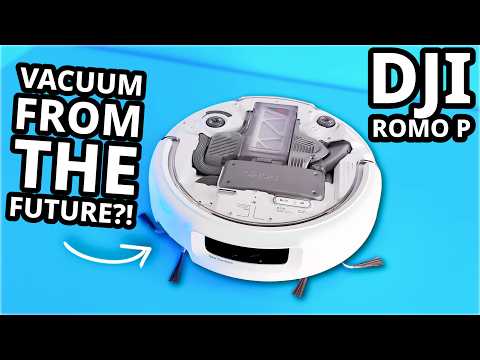
DJI Romo P: How Drone Tech Just Changed Home Cleaning Forever?
Tech In Black
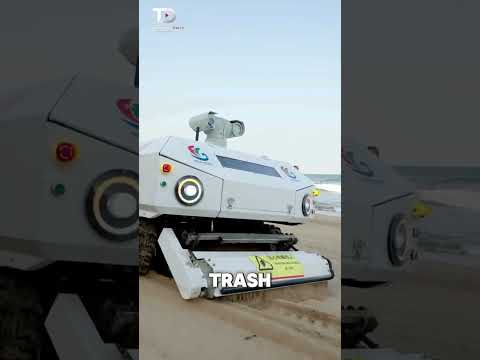
🚀 China’s Smart Beach Cleaning Robot Is Transforming Beach Cleanup! #shorts
TechnoLogicDaily

Gausium | Autonomous Cleaning Robots for Every Space #cleaningrobot
Gausium Official

✅Best Window Cleaning Robot 2026 : Top 5 Best Window Cleaning Robot 2026 (Buying Guide)
StepUp Tech

This Autonomous Robot Boat is Cleaning Our Oceans! 🌊🤖
VIDEOS YOUR CHOICE
Recent news
Community buzz (Reddit)
Fully autonomous valet robot that parks on its own
r/nextfuckinglevel · ▲ 99,785
This model's robotic costume
r/nextfuckinglevel · ▲ 81,593
Man Mimics Robot with INSANE Body Control
r/nextfuckinglevel · ▲ 78,021
Olaf robot at Paris Disneyland
r/Damnthatsinteresting · ▲ 74,187
Japanese researchers at the University of Tsukuba created CirculaFloor, robotic tiles that let you walk infinitely in VR without ever leaving your spot.
r/Damnthatsinteresting · ▲ 72,690
Related entries
Humanoid Robots
Humanoid robots are machines designed to replicate the general form and movement of the human body, typically featuring a bipedal stance, two arms, and a head-like sensor cluster. By mirroring human morphology, they are engineered to operate in environments and with tools originally built for people, making them uniquely versatile across manufacturing, logistics, healthcare, and service settings. The humanoid robot market is widely regarded as one of the fastest-growing segments in robotics. Driven by advances in AI, actuator technology, and battery energy density, a new generation of commercially oriented humanoids has emerged from companies such as Tesla, Boston Dynamics, Figure AI, and Unitree Robotics, among others. Industry analysts broadly expect adoption to accelerate as unit costs fall and software capabilities mature.
380 views
Robot Wheels & Wheel Sets
Robot wheels and wheel sets are foundational mechanical components that enable ground-based mobile robots to navigate their environments. Ranging from standard rubber drive wheels to specialized omnidirectional and mecanum wheel assemblies, these parts are selected based on the robot's required motion profile, payload, surface conditions, and precision demands. They are essential building blocks for autonomous mobile robots (AMRs), differential-drive platforms, research rovers, and educational kits alike. The market for robot wheel components is expanding alongside the broader mobile robotics industry, driven by surging demand for warehouse automation, last-mile delivery platforms, and research-grade robot development. Manufacturers such as Nexus Robot supply purpose-engineered wheel sets—including mecanum wheel assemblies—that allow integrators and developers to rapidly prototype or deploy capable mobile platforms without designing drivetrain hardware from scratch.
363 views
Companion Robots
Companion robots are consumer and clinical robots designed primarily to provide emotional support, social interaction, and everyday assistance to their users rather than to perform industrial or precision tasks. They typically combine expressive movement, voice interaction, and sensor-based responsiveness to create a sense of presence and personality, making them feel less like tools and more like social agents. The companion robot market spans a wide range of applications—from therapeutic robots used in eldercare and mental health settings to home companions that entertain children or assist busy households. As populations age in many countries and demand for emotionally intelligent technology grows, industry observers expect this category to expand significantly in the coming years.
333 views
Mobile Robots
Mobile robots are autonomous or semi-autonomous machines capable of moving through physical environments to perform tasks without being fixed to a single location. Unlike stationary industrial arms or embedded systems, mobile robots navigate floors, corridors, and outdoor terrain using a combination of sensors, mapping algorithms, and onboard compute, making them uniquely versatile across warehouses, hospitals, retail spaces, and beyond. The mobile robot market has expanded rapidly as e-commerce growth, labor shortages, and advances in simultaneous localization and mapping (SLAM) technology have lowered the barriers to deployment. Industry analysts broadly agree that demand for mobile platforms—spanning goods-to-person AMRs, hospital logistics robots, and quadruped research platforms—is among the fastest-growing segments in robotics, with adoption accelerating across both developed and emerging economies.
330 views