AgriRobot – Autonomous Agricultural Vehicles
AgriRobot's Autonomous Agricultural Vehicles are a line of AI-powered, self-navigating machines designed to modernize large-scale farming operations. They are engineered to handle tasks such as crop monitoring, field management, and harvesting with minimal human intervention, reportedly reducing labor costs while improving operational efficiency. Manufactured by AgriRobot (country of origin not publicly confirmed), these vehicles integrate advanced sensor arrays and machine-learning algorithms to navigate complex terrain and adapt to a variety of crop types. They are positioned as a productivity and sustainability solution for commercial agricultural enterprises.
Overview and Use Cases
AgriRobot's Autonomous Agricultural Vehicles are purpose-built for the demands of modern commercial farming. Their core use cases include:
- Crop monitoring: Continuous field surveillance using onboard sensors to detect crop health, moisture levels, and potential pest or disease outbreaks.
- Field management: Automated soil analysis, irrigation assistance, and precision application of fertilizers or pesticides.
- Harvesting support: Assisting or fully automating the collection of certain crop types, depending on the specific vehicle configuration.
- Large-scale deployment: Designed for expansive agricultural operations where continuous, round-the-clock coverage is operationally critical.
The vehicles are marketed as capable of operating with minimal human oversight, making them suitable for farms facing labor shortages or seeking to scale operations efficiently.
Key Technical Details
While AgriRobot has not publicly disclosed comprehensive technical specifications, the vehicles are described as incorporating:
- AI and machine learning: Onboard algorithms that enable real-time decision-making, obstacle avoidance, and adaptive route planning across variable terrain.
- Sensor technology: Reportedly includes a combination of cameras, LiDAR, GPS/GNSS, and potentially multispectral imaging for crop health assessment.
- Autonomous navigation: Capable of traversing uneven and complex agricultural terrain without continuous remote guidance.
- Extended operation: Designed for prolonged field operation, though specific battery life or fuel runtime figures have not been publicly confirmed.
Specific payload capacities, speed ratings, and charging times should be verified directly with AgriRobot, as these details are not consistently reported in public sources.
Comparison to Similar Robots
Within the AgriRobot portfolio, the Autonomous Agricultural Vehicles occupy the heavy-duty industrial segment, contrasting with other products reportedly associated with the brand such as the NOVA Commercial Robotic Pool Cleaner (cleaning), the Starship Robot (last-mile delivery), the Dynamis (industrial automation), the Kress EyePilot® 4×4 RTK (outdoor/lawn management), and the K5 security robot. This breadth suggests AgriRobot operates across multiple autonomous robotics verticals rather than focusing exclusively on agriculture.
Against competitors, the agricultural robotics space includes well-known players such as John Deere's autonomous tractor platforms, CNH Industrial's autonomous solutions, Naïo Technologies' weeding robots, and Monarch Tractor's AI-powered farm vehicles. AgriRobot's positioning relative to these established brands in terms of price, capability, and market share is not clearly documented in public reporting.
Market Context and Target Buyers
AgriRobot's autonomous vehicles appear to target:
- Large-scale commercial farms seeking to reduce dependence on seasonal or manual labor.
- Agricultural enterprises prioritizing precision farming and data-driven crop management.
- Sustainability-focused operations aiming to optimize input usage (water, fertilizer, pesticides) through automation.
The price tier for these vehicles has not been publicly disclosed. As with most commercial agricultural robotics, they are likely positioned as capital investments with returns measured in labor savings and yield improvements over time.
Deployments and Notable Customers
As of public reporting, specific deployment sites, named customers, or confirmed fleet sizes for AgriRobot's Autonomous Agricultural Vehicles have not been widely documented. Prospective buyers are advised to contact AgriRobot directly for case studies or reference customer information.
Future Outlook
The autonomous agricultural robotics market is broadly expected to grow as labor costs rise, climate variability increases, and precision farming becomes more mainstream. If AgriRobot continues to develop its AI and sensor capabilities, its vehicles could become more competitive in a market that is attracting significant investment globally. Integration with farm management software platforms and expanded crop-type compatibility are likely areas of future development for the category as a whole.
Related entries
 Robot
RobotG1
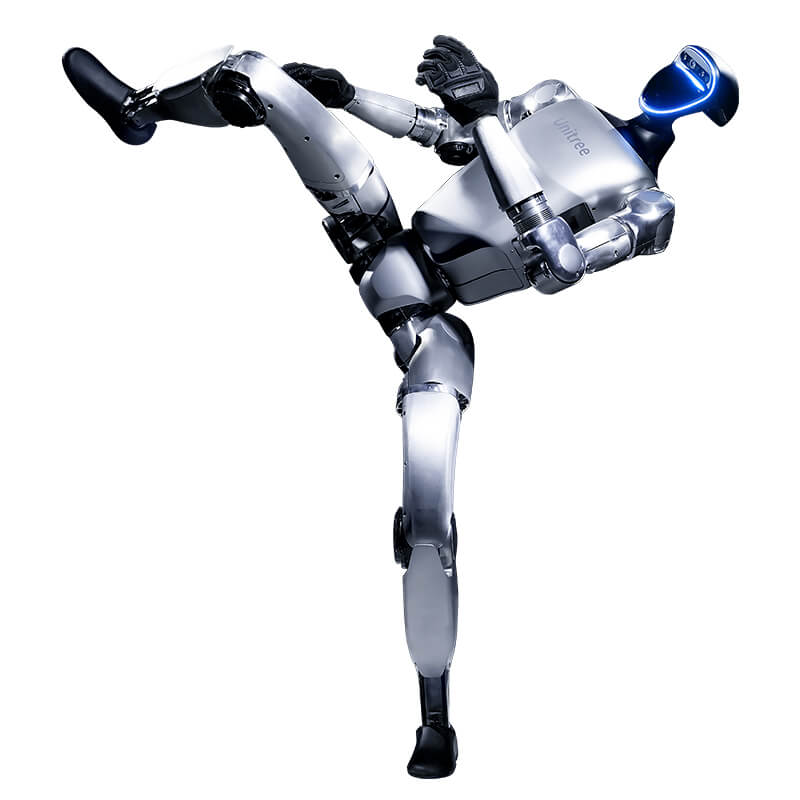
The Unitree G1 is a general-purpose humanoid robot developed by Unitree Robotics, a Chinese robotics company headquartered in Hangzhou. Standing approximately 1.32 meters tall and weighing around 35 kilograms, the G1 features 23 degrees of freedom and is capable of walking, running, recovering from falls, and performing dexterous manipulation tasks. It ships with SDK access, making it accessible to researchers and small-business operators seeking an affordable entry point into humanoid robotics. The G1 is widely regarded as one of the most competitively priced serious humanoid platforms available as of public reporting, positioning Unitree as a disruptive force in a market historically dominated by far more expensive systems. Its combination of mobility, recoverability, and open software access has attracted attention from academic institutions, robotics developers, and automation-focused startups worldwide.
5,930 views
 Robot
RobotUniversal Robots UR5e
The Universal Robots UR5e is a six-axis collaborative robot arm (cobot) belonging to Universal Robots' e-Series product line. Designed for light-to-medium industrial and laboratory tasks, it is widely used in assembly, pick-and-place, machine tending, quality inspection, and lab automation workflows. Universal Robots, a Danish company and a subsidiary of Teradyne, is one of the most recognized names in the collaborative robotics market. The UR5e is programmed using Universal Robots' PolyScope graphical interface on a teach pendant, making it accessible to operators without deep robotics expertise. Its built-in force/torque sensing, tool-center-point control, and a broad ecosystem of certified end-effectors and accessories (the UR+ platform) have made it a popular mid-range cobot choice across manufacturing, electronics, food handling, and research sectors.
5,261 views
 Robot
RobotQuicktron M100
The Quicktron M100 is a heavy-duty autonomous mobile robot (AMR) belonging to Quicktron Robotics' M-Series product line. It is designed for demanding material handling tasks in warehouses, distribution centers, and manufacturing environments, using an integrated lift mechanism to transport shelves and pallets autonomously across facility floors. Quicktron Robotics, a company with roots in China and a global commercial presence, positions the M100 as a high-capacity solution for operations that require moving heavier loads than lighter AMR models can accommodate. The M100 targets logistics operators and manufacturers seeking to automate goods-to-person or pallet-movement workflows at scale.
608 views
 Robot
RobotNVIDIA Jetson Orin NX
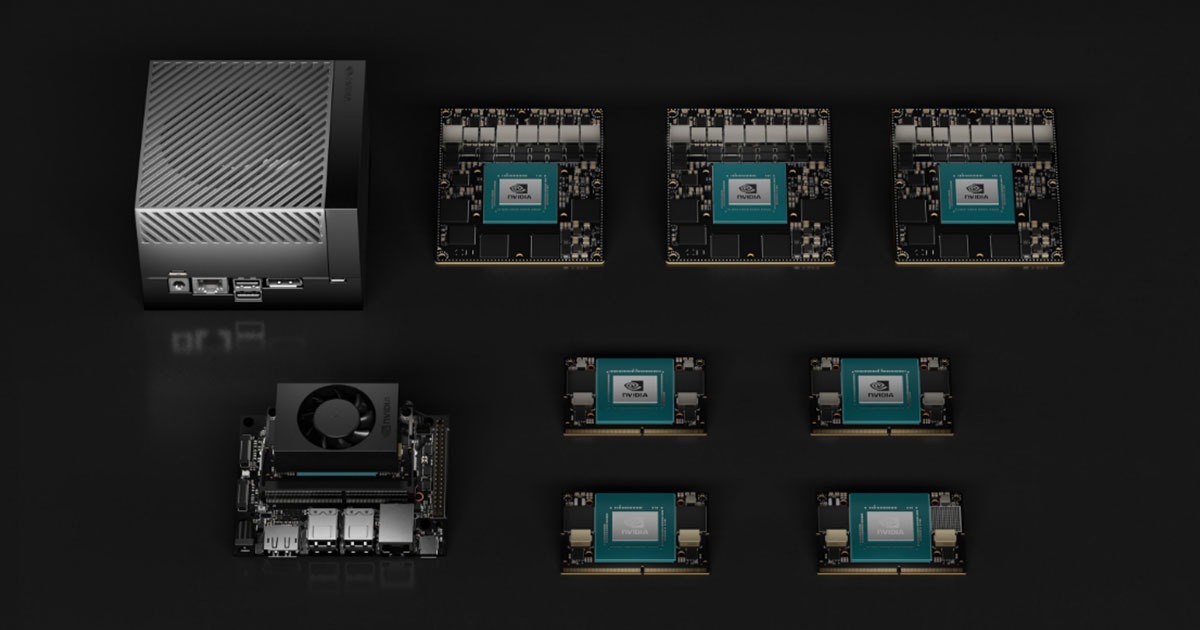
The NVIDIA Jetson Orin NX is a compact, SO-DIMM form-factor edge AI compute module designed for robotics, autonomous machines, and embedded vision applications. Manufactured by NVIDIA, it is available in 8 GB and 16 GB memory configurations and pairs an Ampere-architecture GPU with an 8-core Arm Cortex-A78AE CPU to deliver high-throughput on-device inference without relying on cloud connectivity. Positioned within NVIDIA's broader Jetson Orin family, the Orin NX targets developers and system integrators who need a balance of performance and power efficiency in a small footprint. It is commonly used in applications such as industrial inspection, autonomous mobile robots (AMRs), drone navigation, and smart edge devices where real-time AI inference is critical.
538 views