Let's compare
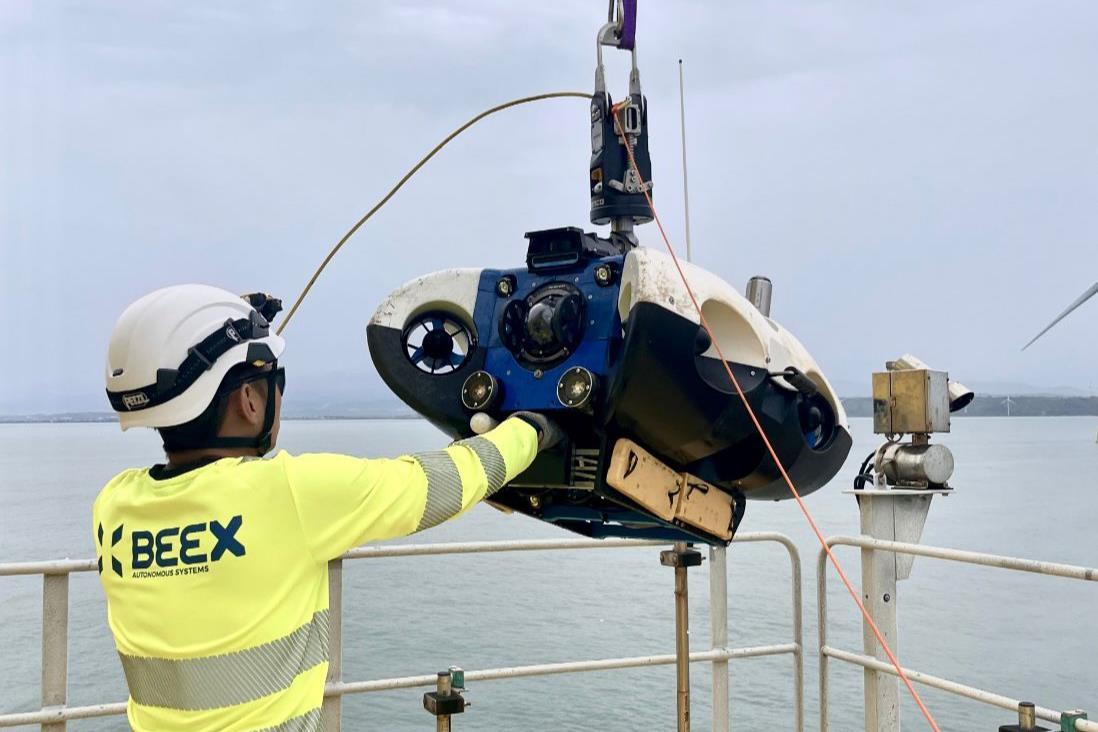
Hovering AUV
BeeX
Not yet assessed
- Height
- —
- Payload
- —
- Verified autonomy
- not assessed
- Real deployment
- not assessed
- Status
- —
- Price
- —
Hovering AUV
BeeXThe extracted facts cover multiple distinct hovering AUV systems and research efforts, with BeeX Autonomous Systems (Singapore, founded 2019) being the most prominently documented commercial entity. BeeX produces HAUVs (A.IKANBILIS, BILIS, ALPHA, BETTA) for subsea inspection across defense, offshore energy, and coastal infrastructure, claiming fully autonomous, untethered operation with AI-driven onboard intelligence and a Sambal™ Cloud Portal for end-to-end reporting. Independent and community sources corroborate that these systems perform their inspection tasks autonomously without a human piloting them, though operational setup, crew support (2 crew offshore), and cloud connectivity are still required. Additional facts derive from unrelated research papers (Tallinn University of Technology, MIT-WHOI, Tsinghua University) and other AUV platforms (Hydrus, NOC hover AUV, Blue Robotics ArduSub builds), which are separate systems providing broader context on hovering AUV technology maturity and real-world limitations.
Availability
Specification
- operational_fleet_and_reach
- 7 drones operational worldwide; 30+ deployment environments; APAC and EU markets
- auv_price_range_general
- AUV prices range from ~$50,000 (entry-level) to $5,000,000+ (high-end deep-diving); research/low-cost prototypes can be under $15,000
Price
No public price — contact the supplier for a quote.
Good · Bad · Ugly
Evidence-graded claims from the BeeX deep report
BeeX HAUVs require only 2 offshore crew to operate, compared to the traditional work-class ROV model which requires a 1:1:1 crew-to-vehicle-to-operator ratio.
This figure is stated on the official BeeX website [1][2] and echoed in investor communications [8], but no independent third-party field report or customer testimony confirms the 2-crew operational requirement in a real deployment.
from BeeX deep report →The BETTA model is fully booked for deployment through 2025, indicating strong commercial demand.
Dealroom [12] reports the BETTA as fully booked through 2025, but Dealroom is a deal-tracking aggregator that typically sources from company announcements; no independent customer confirmation or order-book audit is available in the dossier.
from BeeX deep report →BeeX's Sambal™ Cloud Portal provides end-to-end subsea data workflow including geo-referencing, anomaly detection, depth readings, and auto-generated client reports.
The Sambal™ platform's capabilities are described only on the BeeX official website [1]; no independent benchmark, customer review, or third-party software assessment of its anomaly detection or reporting accuracy appears in the dossier.
from BeeX deep report →
BeeX claims 50% cost savings versus a work-class ROV with a DP2 vessel, and 95% CO2 reduction versus the conventional inspection model.
Both figures appear exclusively on the BeeX official website [1] with no independent verification, customer audit, or third-party lifecycle analysis found in the dossier to substantiate either claim.
from BeeX deep report →BeeX claims 14 years of proprietary subsea data, despite the company being founded only in 2019.
The 14-year data claim appears only on the BeeX website [1], and the dossier itself flags a direct contradiction: the company was founded in 2019, making a 14-year data history (implying data from ~2010) unverifiable and unexplained without independent documentation of pre-company research provenance.
from BeeX deep report →
About the company
Editorial directory of real robot products from leading global manufacturers. Each entry links to the manufacturer's official page.