Zendar
SnapshotCompany claim
Zendar pioneered RF perception delivering vision-like, semantically segmented understanding of the environment using only radar data. Its architecture inverts the traditional perception stack, combining vision's high angular resolution with RF's temporal and spatial understanding for robust, efficient perception.
- Founded
- Not disclosed
- HQ
- Not disclosed
- Models
- 0
- Categories
- 0
ContactCompany claim
- Address
- Not disclosed
Product families
Is this your company? Claim this profile to add verified data, respond to our analysis, and upgrade claims to Verified.
Claim this profile1. Executive Overview {#executive-overview}
Zendar is a United States-based perception technology company headquartered in Berkeley, California, with additional offices in Lindau, Germany and Paris, France. The company has staked out a technically distinctive position in the autonomous mobility and robotics sensor stack: it has built RF perception systems capable of delivering semantically segmented, vision-like environmental understanding using radar data alone, running on embedded automotive hardware. This is a meaningful engineering claim — radar-only semantic segmentation at automotive-embedded compute levels has historically been considered a harder problem than camera or lidar-based approaches, and Zendar's work represents a deliberate inversion of the conventional sensor-fusion hierarchy.
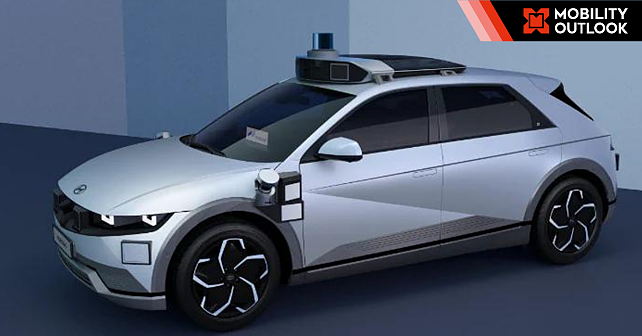
Building on that radar-native foundation, Zendar has extended into next-generation foundation models that fuse RF and vision data at the earliest stages of the perception pipeline — what the company describes as "early fusion," placing RF signals on equal footing with camera inputs rather than treating them as a fallback or supplement. The company describes its team as bringing together deep expertise across hardware, signal processing, machine learning, and software engineering, and characterizes itself as well-funded by leading Tier-1 venture capital firms. A 2022 investment from Hyundai Mobis, reported by Mobility Outlook, provides independent third-party confirmation of industry-tier validation and funding activity.
Zendar is actively hiring across robotics, engineering, and software disciplines, signaling an organizational growth phase. The company's global footprint across three continents reflects an internationalized R&D and commercial strategy from an early stage.
Latest news
- KEENON Humanoid Pours Drinks at GCS 2026, 100,000 Others Run HotelsYanko Design·2026-06-15GENERAL
2. The Company Story {#the-company-story}
Zendar's precise founding date is not publicly disclosed. The company is based in Berkeley, California — a geography that places it within the dense autonomous vehicle and robotics ecosystem of the San Francisco Bay Area, with access to deep talent pools in signal processing, machine learning, and embedded systems.
The company's origin story, as reflected in its own public positioning, centers on a thesis about the fundamental architecture of perception systems: that radar — long treated as a coarse, low-resolution supplement to cameras and lidar — could be elevated to a primary sensing modality capable of delivering rich, semantically meaningful scene understanding. Zendar describes itself as having "pioneered RF perception," suggesting this architectural conviction has been present from the company's earliest days rather than arriving as a pivot.
A significant external milestone came in early 2022, when Hyundai Mobis — one of the world's largest automotive Tier-1 suppliers — made a strategic investment in Zendar, as reported by Mobility Outlook on January 28, 2022. This partnership with a major automotive supplier is a meaningful signal: Tier-1 suppliers invest in perception technology companies when they see a credible path to integration into production vehicle programs. The existence of job postings surfaced on Built In San Francisco and WayUp — including roles in robotics path and trajectory planning, and build and automation engineering — indicates that Zendar has been actively scaling both its software research capabilities and its hardware engineering operations. The company's multi-office presence across Berkeley, Lindau, and Paris further reflects a deliberate internationalization of its engineering and business development footprint.
3. Product Portfolio {#product-portfolio}
Products & versions



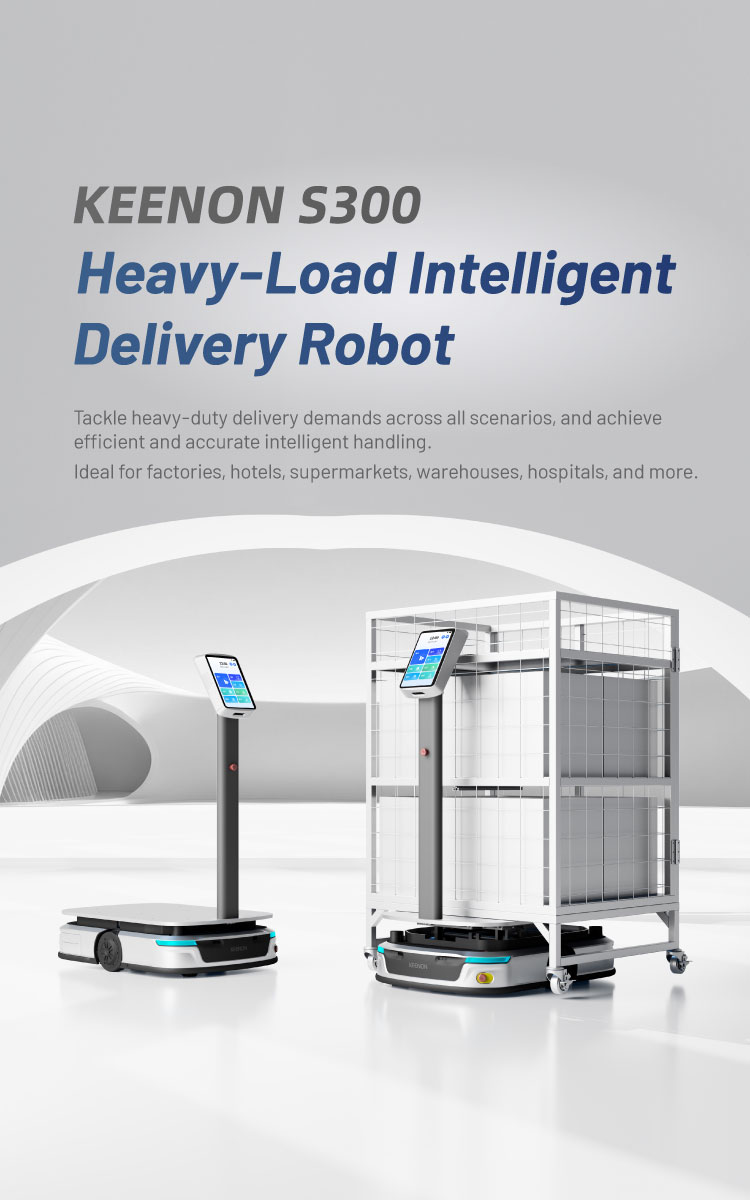
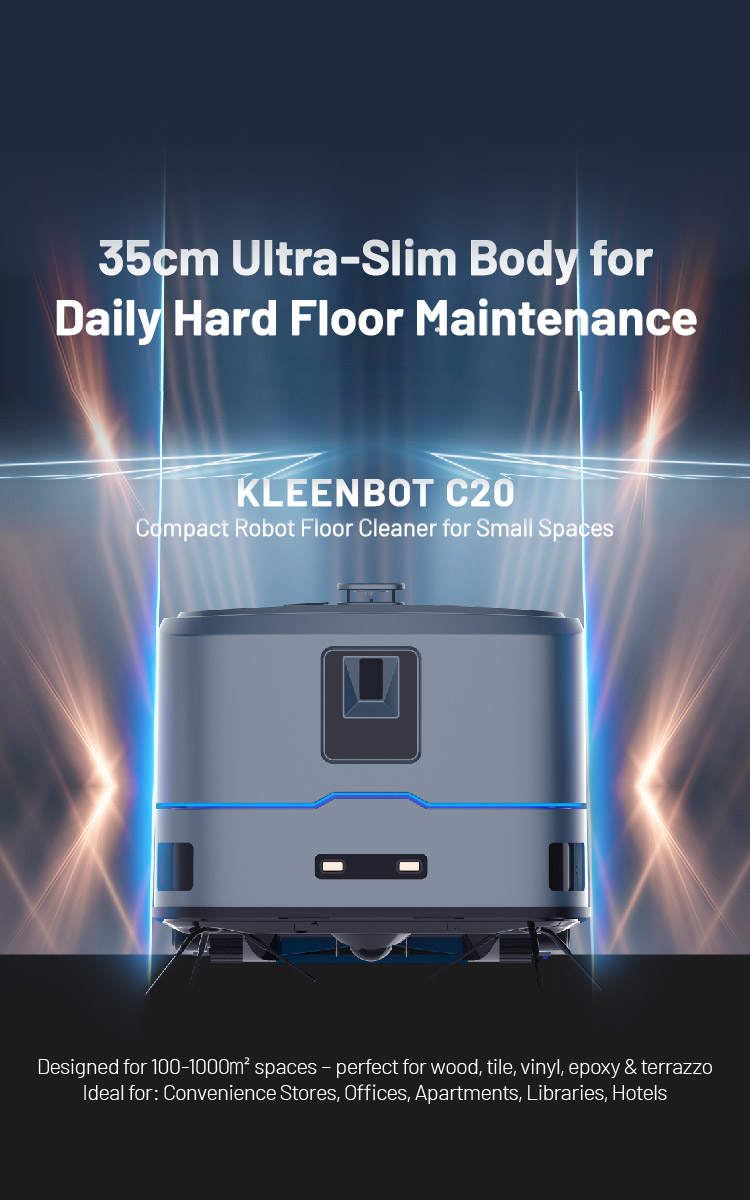
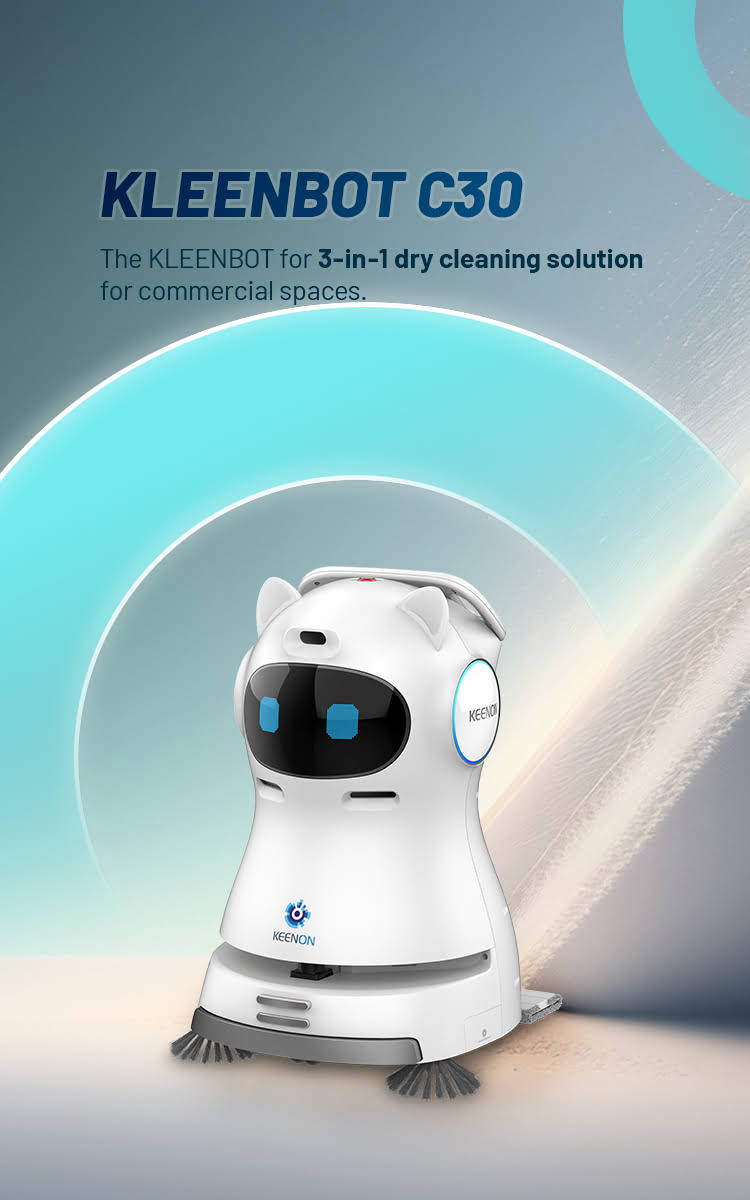
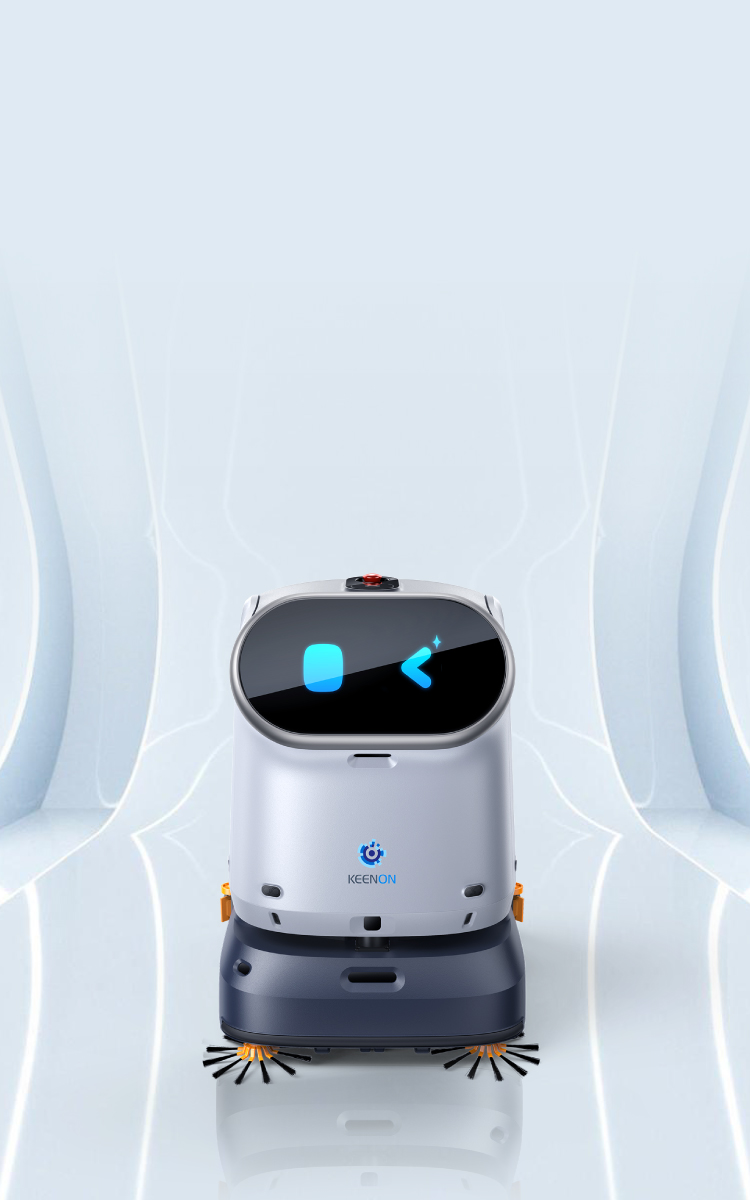
No individual product names, SKUs, or model specifications are publicly detailed in the data available for this report. Zendar's own site does not, as of the time of extraction, enumerate discrete named products with associated datasheets or specification tables.
What can be characterized from the company's public positioning is the shape of two interlocking technology layers that constitute Zendar's offering. The first is an RF perception system — a radar-native pipeline that produces semantically segmented environmental representations, described as running on embedded automotive-grade compute. This layer appears to be Zendar's foundational differentiation and the technology the company considers its core IP. The second layer is a family of foundation models built on top of that radar-native base, incorporating early fusion of RF and vision data to produce a unified perception output that the company argues is more robust to occlusion and adverse weather than vision-only or lidar-centric alternatives.
Not yet disclosed: named product lines, hardware platform specifications, software SDK or API details, and pricing or licensing structures. Zendar is invited to claim or correct this section with verified product information.
4. Technology Stack {#technology-stack}
Zendar's public descriptions provide a reasonably clear architectural outline, even without formal technical papers or datasheets. The company's perception pipeline begins with radar (RF) signal processing as the primary modality, producing outputs that are semantically segmented — meaning the system assigns categorical labels (e.g., pedestrian, vehicle, road surface) to spatial regions derived from radar returns, rather than simply outputting point clouds or bounding boxes. This is the "vision-like" capability the company references.
Our read: Achieving semantic segmentation from radar alone at embedded automotive compute budgets implies the use of deep learning models — most likely convolutional or transformer-based architectures — trained on large annotated radar datasets, likely paired with camera ground truth during training even if camera data is not required at inference time. The emphasis on "embedded automotive systems" suggests optimization for chips in the automotive-grade silicon family (e.g., processors from vendors such as NXP, Texas Instruments, or Mobileye-class SoCs), though Zendar has not named specific silicon partners publicly.
Our read: The "early fusion" architecture described for Zendar's foundation models — combining RF and vision at the earliest processing stages rather than fusing outputs at the object-detection or track level — is architecturally significant. Late fusion (combining tracker outputs) is the dominant industry approach because it is modular and tolerant of sensor heterogeneity; early fusion is harder to engineer but theoretically superior in handling occlusion and adverse weather precisely because the model learns cross-modal correlations at the feature level. Zendar's claim to have built early-fusion foundation models for RF and vision represents a non-trivial engineering achievement if substantiated.
The team's described expertise spans hardware, signal processing, machine learning, and software engineering. The inclusion of Lindau, Germany as an office location is notable: Lindau is in the Baden-Württemberg / Bavaria corridor, a geography with deep automotive engineering heritage and proximity to German OEM and Tier-1 supplier ecosystems.
Limited public technical detail is available beyond these architectural descriptions. No patents, benchmarks, or formal model cards are referenced in the available data.
5. Research, Papers, Authors, Labs {#research-papers}
Company-linked papers
Zendar does not present itself publicly as a research-publishing organization in the academic or open-science sense. No papers, arXiv preprints, conference publications, or named research authors appear in the available data. This is consistent with the profile of a venture-backed perception technology company focused on proprietary IP and commercial deployment rather than academic publication — a common and rational posture for companies whose competitive advantage depends on unpublished model architectures and proprietary training data.
Not yet disclosed: named research leads, lab affiliations, or any publication record. Zendar is invited to claim or correct this section.
6. Media Evidence {#media-evidence}
Media library
Three independent third-party sources are present in the available data. Mobility Outlook covered Hyundai Mobis's strategic investment in Zendar in January 2022, providing the most substantive external validation of the company's commercial traction and investor quality. Built In San Francisco listed a Senior Robotics Engineer role focused on path and trajectory planning, confirming active hiring in the Bay Area robotics market. WayUp listed a Build and Automation Engineer opening, further corroborating operational scaling activity.
These three outlets represent independent, non-promotional confirmation that Zendar exists as an active commercial entity with named industry partnerships and visible hiring activity. Broader mainstream automotive or technology press coverage is not present in the available data.
7. Commercial Reality {#commercial-reality}
Customers & deployments
Revenue, customer count, deployment scale, and return-on-investment figures for Zendar are not publicly disclosed. These metrics should be rendered as Not disclosed.
The Hyundai Mobis strategic investment (Mobility Outlook, January 2022) is the single independently verified commercial relationship in the available data. The nature, scope, and current status of that relationship — whether it has progressed to joint development agreements, production vehicle programs, or technology licensing — is not publicly detailed.
Zendar describes itself as "well-funded by leading Tier-1 venture capital firms" (company claim). Specific fund names, round sizes, valuations, and dates are not disclosed in the available data.
Zendar is invited to claim or disclose customer references, deployment data, revenue ranges, or funding details for inclusion in an updated version of this report.
8. Markets and Use Cases {#markets-use-cases}
Zendar's explicitly stated target markets are autonomous mobility and robotics — the two domains named directly in the company's own public description. Within these broad categories, the technology's characteristics define the specific use-case niches where it would be most differentiated.
Autonomous mobility: The emphasis on embedded automotive compute, adverse-weather robustness, and occlusion handling maps directly to the requirements of passenger vehicles and commercial trucks operating in real-world conditions — rain, fog, snow, and highway scenarios where lidar performance degrades or camera-only systems encounter fundamental limits. The Hyundai Mobis relationship further confirms an automotive OEM supply chain orientation.
Robotics: The job posting for a Senior Robotics Engineer in path and trajectory planning (Built In San Francisco) confirms that Zendar is actively developing capabilities relevant to mobile robotics platforms — not only automotive. Path and trajectory planning is a downstream consumer of perception outputs, suggesting Zendar is either building perception-to-planning integration or targeting robotics customers who need end-to-end stack support.
Our read: The combination of radar-native semantic segmentation and early-fusion foundation models positions Zendar well for deployment contexts where visual conditions are unreliable — outdoor industrial environments, last-mile delivery, agricultural robotics, and infrastructure-adjacent autonomous systems — though the company has not publicly named these verticals explicitly.
The "physical AI" framing used in Zendar's hiring materials signals an aspiration to be positioned within the broader wave of embodied AI development, potentially extending the addressable market beyond traditional automotive ADAS into general-purpose robotic perception.
9. Competitive Landscape {#competitive-landscape}
Competitive comparison
| Robot | Maker | Autonomy | Conf. |
|---|---|---|---|
| iRobot Roomba Combo 10 Max | iRobot | Autonomous | 0.90 |
| Mobile ALOHA (Stanford) | Stanford University | Teleoperated | 0.90 |
| 1X NEO | 1X Technologies | Remote-Assisted | 0.90 |
The radar perception and sensor-fusion foundation model space has attracted a range of entrants, from pure-play radar startups to large automotive Tier-1 suppliers developing in-house perception stacks. Zendar's specific angle — radar-native semantic segmentation with early RF-vision fusion — occupies a technically differentiated position within this field, but it is not uncontested. Companies in adjacent perception categories compete for the same automotive and robotics design wins, the same Tier-1 supplier partnerships, and the same embedded compute budget on vehicle platforms.
The competitive dynamics in this space are shaped heavily by relationships with OEMs and Tier-1 suppliers (Zendar's Hyundai Mobis investment is directly relevant here), access to large-scale proprietary radar training datasets, and the ability to demonstrate real-world performance in adverse conditions — precisely the scenarios where Zendar's architecture is designed to excel.
10. Country Advantage / Geopolitical {#geopolitical}
Section not material for this company.
11. Hype vs Real vs Ugly {#hype-real-ugly}
Claim tracker
Company claims (labeled as such):
- Zendar claims to have "pioneered RF perception" delivering "vision-like, semantically segmented understanding" from radar data alone on embedded automotive systems. This is a strong claim; independent technical validation of this specific capability is not present in the available data.
- Zendar claims its early-fusion architecture "sees farther, remains robust to occlusion and adverse weather, and operates far more efficiently than vision-only or lidar-based approaches." These are comparative performance claims that would require head-to-head benchmarking against named alternatives to verify; no such benchmarks are publicly available.
- Zendar claims to be "well-funded by leading Tier-1 venture capital firms." The Hyundai Mobis investment provides partial external corroboration of investor quality, but VC firm identities and round sizes remain unconfirmed.
Verified / externally corroborated:
- Strategic investment from Hyundai Mobis (Mobility Outlook, January 2022) — independently reported.
- Active hiring in robotics engineering and build/automation roles — independently listed on Built In San Francisco and WayUp.
- Multi-office global presence (Berkeley, Lindau, Paris) — stated on company site, consistent with hiring geography.
Not yet disclosed (fixable gaps):
- Named product specifications, benchmarks, or third-party performance validation.
- Customer deployments or production program references.
- Academic or technical publication record.
- VC firm names, funding rounds, and valuations.
Zendar is invited to submit verified data to correct or expand any of the above.
12. Future Scenarios {#future-scenarios}
Our read — Bull case: Zendar's early-fusion RF-vision foundation model architecture proves to be a genuine technical moat. The Hyundai Mobis relationship deepens into a production vehicle program, providing both revenue and a reference customer that accelerates further Tier-1 and OEM design wins. The push toward foundation models for physical AI positions Zendar favorably as automotive OEMs and robotics integrators seek unified, weather-robust perception platforms. The multi-continent office footprint enables parallel engagement with European and North American automotive programs.
Our read — Base case: Zendar establishes itself as a credible specialist supplier of radar-enhanced perception software to a focused set of automotive Tier-1 partners and advanced robotics integrators. Growth is steady but concentrated, dependent on a small number of deep technical partnerships rather than broad market penetration. The foundation model narrative attracts continued venture funding and talent. Revenue trajectory remains private.
Our read — Bear case: The autonomous mobility market consolidates around a smaller number of large-scale perception platform providers, compressing the commercial window for specialized radar-native perception suppliers. Broader OEM programs slow due to industry-wide ADAS timeline resets. If Zendar's early-fusion architecture proves difficult to scale to diverse radar hardware variants or requires proprietary data pipelines that partners are unwilling to support, deployment velocity stalls. The absence of a public technical record makes it harder to recruit customers independently of partnership channels.
13. What to Watch {#what-to-watch}
- Hyundai Mobis relationship progression: Any announcement of joint development agreements, production vehicle integration, or expanded investment rounds involving the Hyundai Mobis relationship would be a strong leading indicator of commercial maturity.
- Named product or platform launch: A public product announcement with associated specifications, datasheets, or SDK availability would signal transition from R&D-phase to commercial deployment readiness.
- VC funding round disclosure: Identification of lead investors and round size would clarify the company's runway and growth trajectory.
- Technical publication or benchmark release: Any academic paper, conference presentation (e.g., CVPR, ICRA, IEEE IV), or independent benchmark result would provide the first externally verifiable signal of technical performance.
- Hiring velocity and role mix: Continued expansion in path/trajectory planning, software integration, and customer engineering roles would indicate commercial program ramp; a shift toward pure research roles would suggest a longer commercialization horizon.
- Additional OEM or Tier-1 partnerships: New strategic investors or named customers from the automotive or robotics supply chain would expand the commercial validation base.
- Regulatory and standards activity: Participation in automotive radar standards bodies (e.g., IEEE, SAE, ETSI) or safety certification disclosures would indicate readiness for production-grade deployment.
14. Sources & Methodology {#sources-methodology}
Primary source: All company descriptions, architectural claims, team characterizations, office locations, and mission statements are drawn directly from Zendar's own website (zendar.io) and are labeled throughout this report as company claims. They represent the company's own assertions and have not been independently verified by this report.
Independent third-party sources: Three external outlets are cited as independent validation:
- Mobility Outlook (mobilityoutlook.com) — Hyundai Mobis investment coverage, January 28, 2022.
- Built In San Francisco (builtinsf.com) — Senior Robotics Engineer job listing.
- WayUp (wayup.com) — Build and Automation Engineer job listing.
Inferences: All analytical inferences drawn from the available data are explicitly labeled "Our read:" and are distinguished from verified facts and company claims throughout.
What this report does not do: It does not invent products, customers, revenue figures, competitor names, research papers, or partnership details not present in the source data. Where information is absent, gaps are noted as "Not yet disclosed" with an invitation to Zendar to claim or correct the record.
Rubric (applied consistently to every company in this series):
- Company-site data = company claim, labeled as such.
- Named third-party press = independent validation, cited with outlet and date.
- Analytical inference = labeled "Our read."
- Absent data = noted as gap, never fabricated.
- Negative characterizations = expressed only as fixable gaps or labeled inferences, never as unsourced assertions of fact.
No products yet.
Technology stackOur read
ResearchComputed
Product comparisonComputed
Company announcement
News and Media
The company's official social & video channels · external links
News
From third-party news outlets (China & abroad) · external links