Threod Systems
Founded 2012 · Estonia · threod.com
SnapshotCompany claim
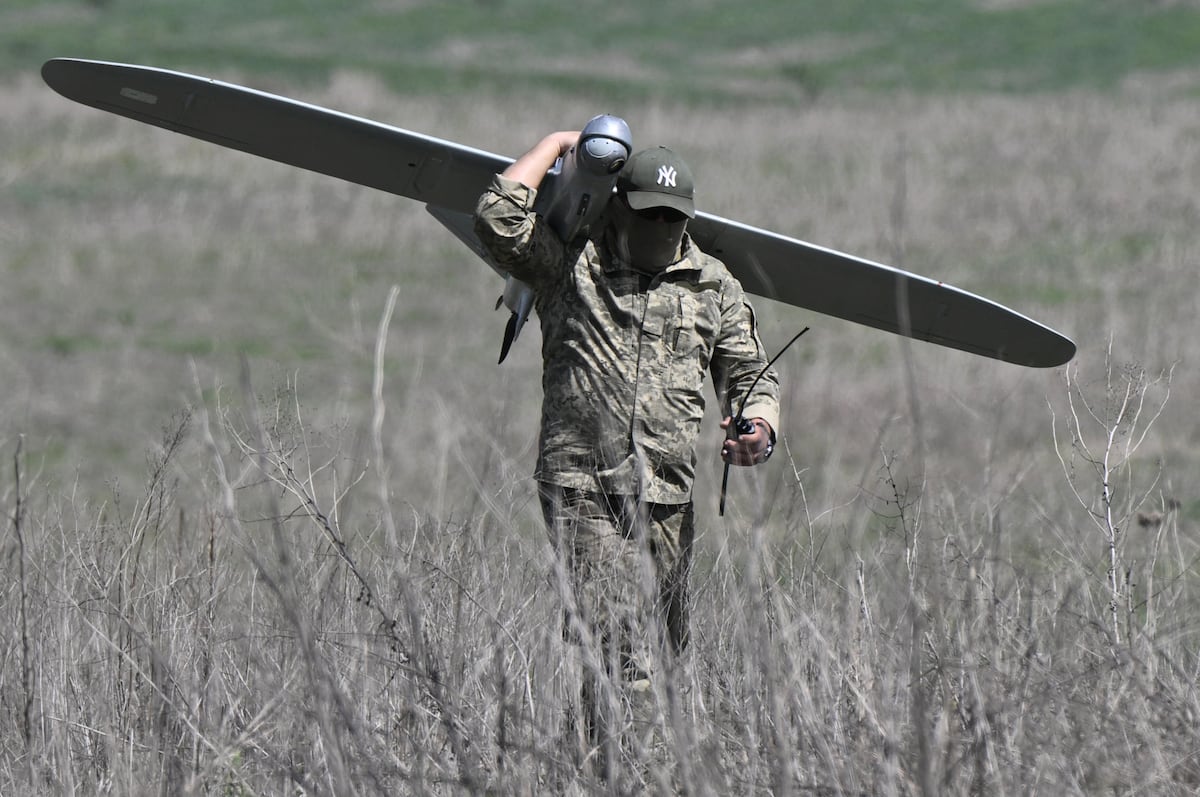
Threod Systems is an Estonian defence technology company founded in 2012, specializing in high-capability systems for tactical effectiveness and operational safety. It designs and manufactures unmanned aircraft systems, electro-optical systems, and launcher systems, with over 1000 systems proven in combat across 27 countries.
- Founded
- 2012
- HQ
- Estonia
- Models
- 3
- Categories
- 2
ContactCompany claim
- Address
- Kaare road 3, Lubja village, Viimsi parish, 74010 Harju county, Estonia
Product families
Is this your company? Claim this profile to add verified data, respond to our analysis, and upgrade claims to Verified.
Claim this profile1. Executive Overview {#executive-overview}
Threod Systems is an Estonian defence technology company founded in 2012 that has quietly built a field-proven reputation in three tightly related product categories: unmanned aircraft systems (UAS), electro-optical (EO) payloads, and aircraft launcher systems. Operating from Viimsi parish near Tallinn, the company employs a team of over 200 professionals who design and manufacture all products in-house — a meaningful distinction in a sector where integration of third-party subsystems is the norm. The company holds ISO 9001:2015, AQAP 2110 (the NATO quality and security standard for defence industry), and ISO 14001:2015 certifications, underscoring a deliberate orientation toward NATO procurement pipelines.
The company's own figures — presented here as company-claims — describe deployments in 27 countries, including 14 NATO member states and Ukraine, with over 1,000 systems proven through thousands of hours of real combat. The trajectory from a first-generation UAV tested in Afghanistan in 2013, through NATO KFOR deliveries in 2015, to Ukrainian combat deployments beginning in 2017 and over 100 Eos C VTOL units delivered by 2023, documents a decade-long arc of progressively demanding operational validation. Defense News reported in September 2025 that the firm "helps launch Ukraine's combat drones," providing independent corroboration of the Ukraine engagement. A July 2025 report by Invest in Estonia noted the company was exploring a sale amid surging demand, signalling both commercial momentum and a potential inflection point in its corporate trajectory.
Not yet disclosed: detailed financial performance, customer-specific contract values, and headcount breakdown by function. Stakeholders with additional context are invited to claim or correct the record.
Latest news
- KEENON Humanoid Pours Drinks at GCS 2026, 100,000 Others Run HotelsYanko Design·2026-06-15GENERAL
2. The Company Story {#the-company-story}
Threod Systems was founded in 2012 in Estonia, a NATO member state with a well-developed technology sector and a defence posture shaped by its proximity to Russia. From its inception the company positioned itself around a single mission: enhancing battlefield situational awareness and operational effectiveness through reliable, combat-proven solutions — language that appears verbatim on its About page and is consistent with its product choices.
The founding decade reads as a deliberate technology ladder. In 2013, barely a year after incorporation, Threod's first-generation UAV — the Eos A — was tested in Afghanistan, an exceptionally fast path to live operational conditions for a startup. A 2014 Ministry of Defence grant for autopilot development confirms early state backing. By 2015 the second-generation Eos B had been delivered to NATO KFOR (the Kosovo Force), marking the company's first NATO-institutional customer and its first gimbal product (the Shark). The years 2016–2017 saw the first KX4 and KX4LE deliveries and the initial deployment of Threod UAVs in Ukraine — seven years before Ukraine became a focal point of Western defence attention.
The period 2018–2023 reflects systematic product maturation: the Stream C system (2018), the Orca-220 gimbal (2018), Full HD Shark gimbal (2019), the first Eos C VTOL and Cata launcher system (2020), the first eOpic-5 (2021), an M28 ISR upgrade (2022), and the milestone of over 100 Eos C VTOL units delivered by 2023. The 2024 introduction of the eOpic-8 LD with live-fire testing — reported by Trade with Estonia ahead of Eurosatory 2026 — marks the current frontier of the payload roadmap. The July 2025 Invest in Estonia report noting exploration of a sale reflects a company at a scale-or-exit decision point, a common dynamic in European defence-tech as institutional capital accelerates post-2022.
3. Product Portfolio {#product-portfolio}
Products & versions


Threod's commercial portfolio organises into three product families that are functionally interdependent: the Eos UAS line for airborne platforms, the eOpic electro-optical payload family for sensors, and the Cata launcher systems for deployment infrastructure. This vertical coherence — platform, sensor, launch — is relatively unusual among small defence firms and gives Threod the ability to offer an integrated ISR and targeting stack rather than a single component.
Within the eOpic payload family, the disclosed products span three size classes. The eOpic-5 is a lightweight dual-axis gyro-stabilised EO/IR system featuring a Full HD 1920×1080 daylight camera with 30x optical zoom, an LWIR thermal imager (640×512, 18° FOV), integrated INS/GPS (L1, Galileo, SBAS), automatic target and scene tracking, geo-pointing, and STANAG 4609-compliant video — suited to smaller tactical UAS. The eOpic-6 steps up to a 6-inch payload family offering ISR and ISTAR configurations, 36x optical zoom on the daylight camera, a continuous-zoom LWIR thermal imager, a SWIR see-spot option, a STANAG 3733-compliant laser target designator (50 mJ, 1064 nm), an integrated INS, and detection/recognition/identification (DRI) ranges out to 32.5 km for vehicles. The eOpic-8 is the flagship 8-inch payload, targeting group-2/3 UAS and manned aircraft, offered in ISTAR (6.2 kg) and ISR (5.2 kg) configurations. It extends the sensor suite to include MWIR thermal imaging (640×512, 13x optical zoom), a SWIR see-spot, a laser target designator rated at >50 mJ or >70 mJ (STANAG 3733 compatible), and dual laser range-finder options — an eye-safe Class 1 unit (1572 nm, range to 15 km) and a non-eye-safe Class 4 unit (1064 nm, range to 16.5 km). Gyro-stabilisation across the eOpic-8 is specified at ≤400 µRad, with onboard AI-capable processing supporting real-time object and scene tracking. All three payloads are described as ITAR-free, a commercially significant attribute for non-US NATO and partner-nation procurement.
The Eos UAS line — including the fixed-wing Eos A, Eos B, and the VTOL Eos C — and the Cata launcher system are referenced throughout the company's history and press coverage but carry limited detailed specification data in the currently available public record. Not yet disclosed: full technical specifications for the Eos C VTOL and Cata product lines. Stakeholders with additional detail are invited to submit corrections.
4. Technology Stack {#technology-stack}
The eOpic payload specifications reveal a coherent engineering approach centred on multi-spectral sensing, precision stabilisation, laser fire-control integration, and open-standard data interfaces. Our read: the use of direct-drive brushless motors (stated explicitly in the eOpic-8 description) rather than gear-driven gimbals suggests a design philosophy prioritising low vibration and high stabilisation bandwidth — consistent with the ≤400 µRad stabilisation figure quoted for the eOpic-8 and the 75 µRad figure for the eOpic-6, both of which are competitive with larger Western ISR payloads.
The sensor stack across the eOpic family is genuinely multi-spectral: visible (Full HD, 1920×1080, 435–680 nm on the eOpic-8), LWIR thermal (640×512), MWIR thermal (640×512, eOpic-8 only), and SWIR (1280×1024 or 1296×1024 depending on variant). Our read: the inclusion of SWIR as a see-spot channel — detecting the reflected energy from a laser designator — implies the payloads are designed to operate in joint-fires environments where a separate ground or airborne designator is already illuminating a target. This is a capability associated with precision-guided munition integration, consistent with the STANAG 3733 laser designator compliance across the eOpic-6 and eOpic-8 ISTAR variants.
Metadata and interoperability standards are consistently referenced: STANAG 4609 with KLV metadata and Cursor-on-Target (CoT) across all three eOpic products. Our read: these are the baseline interoperability requirements for NATO C2 systems and common operating pictures, making the payloads compatible with a wide range of allied ground stations and mission management software without custom integration work.
The integration of INS (and GPS in the eOpic-5) directly into the payload — rather than relying solely on the host UAS — our read: reduces latency in geo-location calculations and provides redundancy when UAS navigation data is degraded, a practical advantage in contested GPS environments. The onboard AI-capable processing noted in the eOpic-8 for real-time object tracking is consistent with an industry-wide shift toward edge inference, though the specific inference frameworks, training datasets, or detection benchmarks are not publicly disclosed.
Limited public technical detail is available for the Eos UAS autopilot (the subject of a 2014 MoD development grant) and the Cata launcher mechanisms.
5. Research, Papers, Authors, Labs {#research-papers}
Company-linked papers
Threod Systems is a defence-product manufacturer, not a research-publishing institution. No academic papers, technical reports, or named laboratory affiliations appear in the available public record. This is entirely typical for companies in tactical ISR and UAS manufacturing, where proprietary engineering and export-control considerations make open publication uncommon. The company's knowledge generation appears channelled into product development and operational feedback loops rather than academic output.
6. Media Evidence {#media-evidence}
Media library
Three independent press placements are on record. Defense News (defensenews.com, 11 September 2025) reported on Threod's role supporting the launch of Ukraine's combat drones — a substantive editorial placement in one of the sector's most widely read English-language trade outlets. Invest in Estonia (investinestonia.com, 29 July 2025) reported that the company was exploring a sale amid surging demand, indicating engagement with the investment and business press at a moment of strategic inflection. Trade with Estonia (tradewithestonia.com, 16 June 2026) covered Threod's presentation of laser designation capability on a 15 kg drone at Eurosatory 2026, the world's leading land-defence trade exhibition — a placement that situates the company within the highest-visibility international defence procurement events.
7. Commercial Reality {#commercial-reality}
Customers & deployments
Revenue, contract values, and named customer organisations are not publicly disclosed by Threod Systems. The company's own figures — presented as company-claims — describe active deployments across 27 countries, including 14 NATO member states and Ukraine, and over 1,000 systems proven in combat. The delivery of over 100 Eos C VTOL units by 2023 (company-claim) represents a meaningful production volume for a firm of this size in a capital-intensive defence segment. The July 2025 Invest in Estonia report noting the company was exploring a sale "amid surging demand" provides independent qualitative context for commercial trajectory, though no revenue or order-book figures accompany that characterisation.
Precise revenue, margin, customer names, contract values, and ROI data: not disclosed. Customers, primes, or government counterparties with verifiable information are invited to claim or disclose details that would strengthen this section.
8. Markets and Use Cases {#markets-use-cases}
Threod's product architecture maps to a specific and well-defined segment of the defence market: tactical ISR and precision targeting for small-to-medium unmanned platforms operating in contested environments. The use-case cluster visible across the product line includes long-range surveillance, target acquisition, laser designation for precision-guided munitions, and launch support for loitering munitions and target drones.
The customer geography disclosed by the company — 27 countries, 14 NATO members, and Ukraine — spans the full spectrum of NATO's operational membership and extends into active-conflict zones. The Afghanistan testing in 2013, NATO KFOR deployment in 2015, and Ukrainian deployments from 2017 onward collectively indicate a market posture oriented toward expeditionary and high-intensity operations rather than constabulary or border-patrol missions. The Defense News reporting on Ukraine combat-drone launch support (2025) reinforces this positioning.
The eOpic payload family's ITAR-free status is a distinct market enabler: it allows sales to non-US allied and partner nations without US State Department export licensing, reducing procurement friction for customers in NATO Europe, the Indo-Pacific, and elsewhere who wish to avoid ITAR-compliance overhead. The STANAG certifications (STANAG 4609 for video metadata, STANAG 3733 for laser designation) further target the NATO-interoperable procurement community as the primary addressable market.
Secondary markets suggested by the product architecture include border surveillance, maritime patrol, and critical-infrastructure monitoring — all plausible applications for multi-spectral stabilised payloads — though no specific civilian or law-enforcement customer references appear in the available public record.
9. Competitive Landscape {#competitive-landscape}
Competitive comparison
| Robot | Maker | Autonomy | Conf. |
|---|---|---|---|
| iRobot Roomba Combo 10 Max | iRobot | Autonomous | 0.90 |
| Mobile ALOHA (Stanford) | Stanford University | Teleoperated | 0.90 |
| 1X NEO | 1X Technologies | Remote-Assisted | 0.90 |
Threod operates in a global market for tactical UAS, electro-optical payloads, and launch systems that has seen significant new entrants and accelerated procurement since 2022. The relevant competitive frame spans European and non-European defence-technology firms offering gyro-stabilised multi-spectral payloads in the 5–10 kg class, VTOL tactical UAS for ISR, and launcher systems for loitering munitions. Within this frame, Threod's differentiated positioning rests on three attributes that are individually common but collectively uncommon at this scale: full in-house design and manufacturing, ITAR-free classification across the payload line, and a documented decade-long combat-operational track record that pre-dates the post-2022 demand surge.
Our read: the combination of NATO-standard compliance (AQAP 2110, STANAG 4609, STANAG 3733) with ITAR-free status positions Threod to compete for European NATO member procurement that seeks to reduce dependency on US-licensed components — a trend that has gained institutional momentum since 2022. The exploration of a sale noted in mid-2025 may reflect awareness that scale is now a competitive variable in a consolidating market.
10. Country Advantage / Geopolitical {#geopolitical}
Estonia's geopolitical context is directly and materially relevant to Threod Systems. Estonia is a NATO member state that shares a border with Russia and has maintained one of the highest defence expenditure-to-GDP ratios in the alliance for several years. This environment has created a domestic defence-technology ecosystem with structural advantages: early access to operationally realistic requirements, credibility with NATO procurement bodies derived from geography and institutional membership, and a government that has demonstrated willingness to grant R&D funding (the 2014 MoD autopilot grant) and promote defence-technology exports (the Invest in Estonia and Trade with Estonia coverage).
The deployment of Threod systems in Ukraine from 2017 onward — and the Defense News reporting on the company's role in Ukrainian combat-drone operations in 2025 — reflects Estonia's broader national posture of early and sustained support for Ukraine. For Threod, this translates into operational feedback from one of the most demanding live-fire environments in the world, which in turn strengthens the "combat-proven" credibility that defence procurement decisions weight heavily.
Our read: Estonia's position as a small, high-trust, NATO-aligned technology producer with no ITAR exposure gives Threod a structural export-credibility advantage that larger firms based in more geopolitically complex jurisdictions cannot easily replicate. The ITAR-free designation across the eOpic line is partly a product-engineering choice and partly a reflection of the Estonian supply chain's independence from US-controlled defence components.
11. Hype vs Real vs Ugly {#hype-real-ugly}
Claim tracker
Verified through independent sources: The Defense News report (September 2025) independently corroborates Threod's role in Ukrainian combat-drone operations. The Trade with Estonia coverage of Eurosatory 2026 confirms public exhibition of laser designation capability on a 15 kg platform. The Invest in Estonia report confirms commercial momentum sufficient to attract acquisition interest.
Company-claims (taken from the company's own site — not independently verified here):
- "Over 1,000 systems proven through thousands of hours in real combat" — plausible given the 12-year operational timeline and Ukraine/Afghanistan deployments, but the specific figure is unverified by external sources in the available record.
- "Systems are actively used in 27 countries, including 14 NATO member states and Ukraine" — consistent with the operational history described, but individual country deployments are not independently confirmed in the available data.
- "A team of over 200 professionals" designing products in-house — not independently verified.
- eOpic payload DRI performance figures (e.g., vehicle detection to 32.5 km for the eOpic-6) — these are manufacturer-specified range figures under unspecified atmospheric and target conditions; real-world performance will vary.
Gaps, not negatives: Not yet disclosed: independent test-and-evaluation results for the eOpic payload series, named government or prime-contractor customers, production capacity figures, or export licence history. These are standard omissions for a company in this market segment. Parties with verifiable data are invited to submit corrections.
12. Future Scenarios {#future-scenarios}
Bull case — Our read: Threod completes a strategic sale or partnership with a larger European prime contractor or a defence-focused private equity vehicle, gaining the capital to scale production and pursue larger frame contracts across NATO member procurement programmes. The eOpic-8 LD's Eurosatory 2026 debut generates pipeline for group-2/3 UAS integration across allied air forces. ITAR-free status becomes a positive selection criterion as European defence autonomy accelerates under NATO spending commitments. The Ukraine operational track record becomes a sustained commercial differentiator as post-conflict re-equipment cycles begin.
Base case — Our read: Threod grows organically at a measured pace, continuing to win government and defence-prime contracts across NATO Europe and select partner nations. The eOpic family expands with incremental capability upgrades (AI inference improvements, additional sensor configurations). The company remains independently owned or completes a partial transaction that provides growth capital without full absorption. Revenue and headcount grow in line with the broader European tactical-UAS market.
Bear case — Our read: A sale process that began in mid-2025 stalls or results in unfavourable terms, creating management distraction at a critical growth moment. Larger competitors with deeper manufacturing capacity and established prime-contractor relationships capture the bulk of the post-2022 NATO re-armament procurement wave. ITAR-free positioning becomes less differentiating as more European firms restructure their supply chains for the same purpose. Continued conflict in Ukraine, while operationally validating, creates supply-chain and export-compliance complexity.
13. What to Watch {#what-to-watch}
- Corporate transaction: Any announcement of acquisition, merger, investment, or strategic partnership, given the mid-2025 Invest in Estonia reporting on an active sale exploration.
- Eurosatory 2026 outcomes: Whether the eOpic-8 LD laser designation demonstration converts to named procurement commitments or programme-of-record inclusions.
- Ukraine contract disclosures: Any government-level announcements from Ukraine or supporting NATO nations that name Threod as a supplier, which would independently verify scale of deployment.
- Eos C VTOL follow-on: Whether a next-generation UAS platform is announced, given the 100+ unit delivery milestone reached in 2023.
- NATO procurement vehicles: Inclusion in any NATO Support and Procurement Agency (NSPA) framework agreements or multi-nation procurement initiatives.
- AI/autonomy claims: Whether the "AI performance capable" descriptor on the eOpic-8 is substantiated with specific benchmark data or operational deployment cases.
- Export reach: Movement beyond the current 27-country footprint, particularly into Indo-Pacific NATO partner nations (Australia, Japan, South Korea) where ITAR-free payload sourcing is an active policy preference.
- Headcount and facility expansion: Any announcements regarding the Viimsi facility or new manufacturing capacity, as a leading indicator of order-book confidence.
14. Sources & Methodology {#sources-methodology}
Primary source: All factual claims in this report are grounded exclusively in data extracted from Threod Systems' own website (threod.com), including the About page, product specifications, key feature lists, and product descriptions. All such material is labelled company-claim and should be read as the company's own representation of its capabilities and history, not as independently verified fact.
Independent press sources: Three third-party press items were available and are cited by outlet name and date: Defense News (defensenews.com, 11 September 2025), Invest in Estonia (investinestonia.com, 29 July 2025), and Trade with Estonia (tradewithestonia.com, 16 June 2026). These are used to corroborate specific claims where overlap exists; they do not constitute comprehensive independent verification of the full company profile.
Inferences: Analytical judgements not directly supported by the source data are labelled Our read: throughout and should be understood as the analyst's reasoned interpretation, not established fact.
Gaps: Where data is absent, sections use the formulation "Not yet disclosed" and invite companies, customers, or counterparties to submit corrections or additional information.
Rubric (applied uniformly to every company on this platform):
- Lead with verified or company-claimed strengths before noting gaps.
- Never state an unsourced negative as fact.
- Never invent products, customers, partnerships, or financial figures.
- Cite every external source by outlet name and date.
- Label every inference explicitly.
- Treat company-provided specifications and claims as company-claims, not ground truth.

The eOpic-6 is a 6-inch payload family designed for reconnaissance and targeting missions on lightweight unmanned platforms. It offers advanced imaging, onboard video processing, and integrated inertial navigation. Configurations include ISR and ISTAR, with STANAG-compliant laser designation available. Key features include a Full HD TV daylight camera with 36x optical zoom, HD and SD LWIR thermal channel, SWIR see-spot option, and precision stabilization. The system is controlled via Threod's mission software and supports automatic target tracking, georeferenced imagery, and NATO STANAG 4609 compliant video streaming.
- •ISR and ISTAR configurations
- •Laser target designator STANAG 3733 compliant
- •ITAR free
- •Integrated INS
- •Continuous zoom LWIR thermal imager
- •SWIR see-spot option
- •STANAG 4609 compliant video with metadata
- •Fully featured mission software with automatic target tracking
- •Georeferenced imagery
- •Precision stabilization <75 µrad with direct-drive brushless motors
| Fov (deg) | ISTAR 43.5° – 2.3° / ISR 55.6° – 1.59° |
| Dri human km | 26 / 15 / 8.5 |
| Lwir fov (deg) | 30°-6 |
| Swir fov (deg) | 4.1 |
| Digital zoom | 4 |
| Optical zoom | 36 |
| Video stream | MPEG-TS |
| Dri vehicle km | 32.5 / 23.5 / 16.9 |
| Frame rate fps | 30 |
| Laser power mj | 50 |
| Resolution px | 1920x1080 |
| Video encoding | MPEG4 AVC H.264 / H.265 |
| Lwir dri human km | 26 / 15 / 8.5 |
| Swir dri human km | 11.5 / 5 / 2.5 |
| Lwir digital zoom | 8 |
| Lwir optical zoom | 5 |
| Payload size (inch) | 6 |
| Lwir dri vehicle km | 32.5 / 23.5 / 16.9 |
| Lwir resolution px | 640x512 |
| Metadata standard | STANAG 4609 (KLV), CoT |
| Swir dri vehicle km | 19 / 10.7 / 6.7 |
| Swir resolution px | 1296x1024 |
| Laser wavelength nm | 1064 |
| Stabilization urad | 75 |
| Laser target range km | vehicle 3 / extended 8 |
| Laser divergence mrad | 0.5 |
| Laser repetition rate pulse s | 8 – 22 |
| Laser range finder power class | Class 1 |
| Laser range finder wavelength nm | 1500 |
| Laser range finder target range km | vehicle 4 / extended 11 |
| Laser range finder divergence mrad | 1.6 |
Technology stackOur read
Inferred from product specs — click through to the technology wiki:
ResearchComputed
Product comparisonComputed
Company announcement
News and Media
The company's official social & video channels · external links


News
From third-party news outlets (China & abroad) · external links