Skelex
SnapshotCompany claim
Skelex is a company with a website at www.skelex.com. The site offers pages such as Shop, About us, Plans & Pricing, Plan Customization, and Thank You. It supports multiple languages including English, German, French, and Dutch.
- Founded
- Not disclosed
- HQ
- Not disclosed
- Models
- 9
- Categories
- 2
ContactCompany claim
- Address
- Saturnusstraat 95, 2516 AG, The Hague, The Netherlands
Product families
Is this your company? Claim this profile to add verified data, respond to our analysis, and upgrade claims to Verified.
Claim this profile1. Executive Overview {#executive-overview}
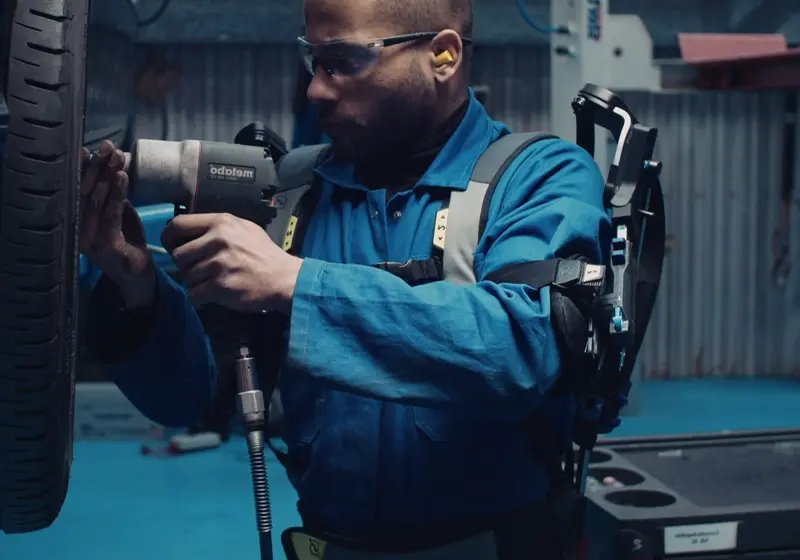
Skelex is a wearable exoskeleton company offering a focused range of passive and active upper-body support devices aimed at industrial and occupational users. Its publicly listed product line spans four distinct product lines — the Skelex 360, Skelex Edge, Skelex Ironhand, and Skelex Neck Support — covering price points from €175 to €9,995, suggesting a deliberate strategy to address both entry-level ergonomic support and more advanced powered assistance. The company operates a multilingual commercial website (English, German, French, and Dutch), signaling an active go-to-market posture across Western European markets. Third-party trade coverage from Exoskeleton Report and a 2020 manufacturing feature on Protolabs Network (Hubs) provide independent confirmation that Skelex is an operating commercial entity with recognized standing in the industrial exoskeleton segment.
The company's positioning centers on reducing occupational strain — particularly for workers who perform repetitive overhead, lifting, gripping, or forward-leaning tasks throughout a workday. This is a well-defined and growing market niche as manufacturers, logistics operators, and agricultural enterprises face ergonomic compliance pressures and labor shortages. Skelex's on-demand manufacturing approach, as reported by Protolabs Network in 2020, points to operational agility and a lean production model suited to customized or lower-volume deployment scenarios.
Not yet disclosed: founding year, country of incorporation/headquarters, total headcount, and cumulative deployments. Parties with accurate information are invited to claim or correct the record.
Latest news
- KEENON Humanoid Pours Drinks at GCS 2026, 100,000 Others Run HotelsYanko Design·2026-06-15GENERAL
2. The Company Story {#the-company-story}
Skelex operates a direct-to-consumer and business-to-business e-commerce presence at skelex.com, built on the Wix platform with multilingual support across English, German, French, and Dutch. The language configuration — geo-targeted to the United Kingdom (en-gb), Germany (de-de), France (fr-fr), and the Netherlands (nl-nl) — is consistent with a European-headquartered company with a primary focus on Northern and Western European industrial markets.
The company's product naming and descriptions reflect a clear ergonomics-focused mission: enabling workers engaged in physically demanding tasks to perform their roles with reduced musculoskeletal strain. The product lineup has evolved to address distinct body zones (shoulders/arms, hands/grip, and neck), suggesting iterative product development over time rather than a single-product launch. The 2020 Protolabs Network feature on Skelex's on-demand manufacturing approach is the earliest independently dated milestone in the available record, indicating the company was commercially active at least by that year.
The "Happy milker" product variant of the Skelex 360 suggests at minimum one sector-specific go-to-market effort, pointing toward the agricultural or dairy industry as a named vertical. This kind of variant naming is typical of companies that have moved beyond generic industrial positioning into targeted use-case sales. Not yet disclosed: formal founding date, total funding history, named investors, and a comprehensive milestone timeline. Skelex is invited to supplement the public record.
3. Product Portfolio {#product-portfolio}
Products & versions


Skelex's publicly listed catalog comprises four product lines, with several appearing as duplicate listings likely reflecting different shop category placements or language variants. The effective lineup consists of: the Skelex 360 (€2,995), the Skelex Edge (€825), the Skelex Ironhand (€9,995), and the Skelex Neck Support (€175).
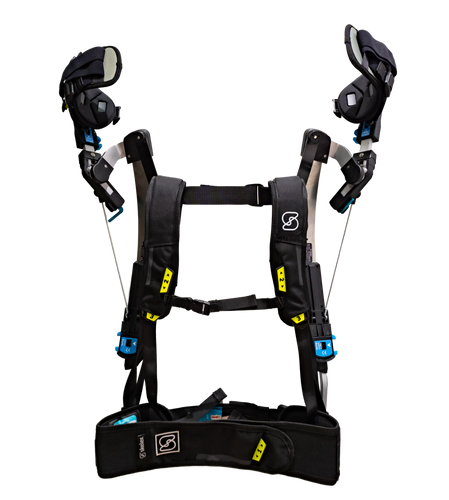
The portfolio has a clear tiered architecture. The Neck Support at €175 functions as an accessible, passive entry point for overhead workers — its description emphasizes lightweight, flexible design and all-day wearability for reducing neck strain. The Skelex Edge at €825 targets workers who move, lift, or lean forward repeatedly, positioning itself as a mid-range upper-body support solution for general industrial or logistics environments. The Skelex 360 at €2,995 sits at the upper-mid tier and has at least one named variant — the "Happy milker" — suggesting agricultural sector customization, likely for dairy workers performing repetitive overhead or forward-reach motions. The Skelex Ironhand at €9,995 is the premium product in the range, designed explicitly for workers performing fine or forceful hand and grip work throughout the day, such as assembly, processing, or materials handling; its price point relative to the rest of the lineup implies either active (powered) assistance or a significantly more engineered passive mechanism.
Taken together, the portfolio covers three distinct anatomical zones — neck, shoulders/torso, and hands/grip — and spans nearly two orders of magnitude in price, indicating Skelex is pursuing a platform strategy for workplace ergonomics rather than competing as a single-product vendor.
4. Technology Stack {#technology-stack}
The product descriptions available on Skelex's site provide limited direct technical specification beyond form-factor and intended use. No motor types, sensor specifications, battery details, or materials data are disclosed in the extracted data. However, several inferences are supportable from what is present.
Our read: The Skelex 360 and Skelex Edge, at €825–€2,995, are most consistent with passive exoskeleton architectures — spring-loaded or elastomer-based mechanisms that store and release energy to offset shoulder and torso load without requiring power. This is a common and well-proven approach among industrial upper-body exoskeletons at this price tier, and is consistent with the 2020 Protolabs Network report describing on-demand manufacturing, which typically aligns with structural/mechanical components rather than electronics-heavy assemblies.
Our read: The Skelex Ironhand at €9,995 — nearly four times the price of the Skelex 360 — suggests a meaningfully different technology tier, likely incorporating active (powered) components such as actuated glove mechanisms or sensor-driven grip-assistance systems. The language around "holding, gripping and processing precious products and materials" is consistent with soft-robotic glove or powered-assist hand exoskeleton categories seen elsewhere in the industrial market.
The Neck Support at €175 is described in terms consistent with a purely passive, mechanical collar or brace design — lightweight and flexible, with no references to electronics. The company's on-demand manufacturing approach (per Protolabs Network, 2020) suggests use of digital manufacturing methods such as CNC machining or injection molding for structural components. Not yet disclosed: materials specifications, actuation mechanisms, battery life (if applicable), certification status (e.g., CE marking), or clinical/biomechanical validation data. Skelex is invited to publish or claim technical documentation.
5. Research, Papers, Authors, Labs {#research-papers}
Company-linked papers
Skelex does not appear to be a research-publishing organization based on available data. No academic papers, white papers, named research collaborators, or laboratory affiliations are referenced in the extracted site content or third-party press coverage. This is consistent with the norm for commercial service-robotics and wearable exoskeleton vendors at this stage, whose validation efforts typically appear in customer case studies or trade press rather than peer-reviewed literature. Should Skelex have published or co-published biomechanical or engineering research, they are invited to submit those references for inclusion.
6. Media Evidence {#media-evidence}
Media library
Three independently sourced media references are present in the available data. Exoskeleton Report — a specialist trade publication covering the global exoskeleton industry — has published at least two pieces referencing Skelex: a dedicated company profile page and a mention in its April 4, 2026 Week 14 newsletter alongside other industry developments. Coverage in Exoskeleton Report is a recognized form of industry validation for companies in this space, as the outlet tracks commercial exoskeleton vendors globally. Additionally, Protolabs Network (Hubs) published a feature article on November 13, 2020, specifically examining how Skelex manufactures its industrial passive exoskeletons on demand, including video content — indicating a substantive editorial feature rather than a brief mention. These three references, while not extensive, confirm Skelex's recognized standing as an operating commercial exoskeleton vendor with a traceable media history dating to at least 2020.
7. Commercial Reality {#commercial-reality}
Customers & deployments
Revenue, total units deployed, named enterprise customers, and return-on-investment data are not disclosed in any available source. These figures are rendered here as Not disclosed. Skelex operates a direct e-commerce channel (Shop page on skelex.com) with publicly listed pricing, which is consistent with a company serving both individual buyers and business customers — the pricing tiers suggest the latter is a significant channel. The "Happy milker" variant of the Skelex 360 implies at least one sector-specific commercial engagement or deployment, but no customer names, contract values, or deployment scales are verifiable from the available data.
Companies with accurate deployment, revenue, or customer data — including Skelex directly — are invited to claim or disclose verified figures for inclusion in this report.
8. Markets and Use Cases {#markets-use-cases}
Skelex's product descriptions, variant naming, and geographic language targeting together indicate a clear commercial focus on European industrial and occupational health markets. The following use cases and sectors are directly inferable from the product data:
Manufacturing and Assembly: The Skelex Edge and Skelex 360 are positioned for workers who lift, move, and lean forward repeatedly — a description that maps directly to assembly-line, warehouse, and light-manufacturing environments where musculoskeletal disorders (MSDs) are a primary occupational health risk.
Agriculture / Dairy: The "Happy milker" variant of the Skelex 360 is a named, sector-specific product, strongly suggesting active commercial engagement with dairy farming or broader agricultural operations where overhead and forward-reach postures are sustained throughout long working shifts.
Precision Handling and Processing: The Skelex Ironhand, with its focus on gripping, holding, and processing "precious products and materials," points toward industries such as food processing, electronics assembly, glassware handling, or any high-value-materials environment where grip endurance and precision matter.
Overhead Work / Maintenance: The Skelex Neck Support is described specifically in the context of overhead work — positioning it for use in construction, automotive maintenance, aircraft MRO, or any trade where workers sustain neck extension for prolonged periods.
Geographic Markets: The site's language configuration (English/UK, German, French, Dutch) identifies the United Kingdom, Germany, France, and the Netherlands as priority markets, consistent with Western Europe's strong regulatory and cultural emphasis on workplace ergonomics and worker health obligations.
9. Competitive Landscape {#competitive-landscape}
Competitive comparison
| Robot | Maker | Autonomy | Conf. |
|---|---|---|---|
| iRobot Roomba Combo 10 Max | iRobot | Autonomous | 0.90 |
| Mobile ALOHA (Stanford) | Stanford University | Teleoperated | 0.90 |
| 1X NEO | 1X Technologies | Remote-Assisted | 0.90 |
Skelex operates in the industrial wearable exoskeleton segment — a category that has attracted both specialized startups and larger industrial technology players over the past decade. The market is broadly divided between passive (spring/elastic) and active (powered) upper-body exoskeletons, with product competition occurring along dimensions of price, anatomical coverage, sector fit, and ease of donning. Skelex's multi-product portfolio — covering neck, shoulder/torso, and hand/grip zones across a €175–€9,995 price range — positions it as a broader-coverage vendor compared to single-product competitors, though the absence of disclosed customer scale or independent performance data makes direct differentiation claims difficult to verify at this time.
10. Country Advantage / Geopolitical {#geopolitical}
Section not material for this company.
11. Hype vs Real vs Ugly {#hype-real-ugly}
Claim tracker
What is verified by independent sources: Skelex is an operating commercial exoskeleton vendor with a documented media presence dating to at least November 2020 (Protolabs Network feature). It has been covered by Exoskeleton Report, the specialist trade publication for the global exoskeleton industry. It manufactures or has manufactured industrial passive exoskeletons using on-demand production methods (per Protolabs Network, 2020 — independent source).
What is a company claim (from skelex.com, unverified by this report): The product descriptions, pricing, and feature claims for all four product lines are sourced exclusively from Skelex's own website and should be treated as company claims pending independent technical validation or third-party testing. For example, the claim that the Skelex Neck Support provides meaningful reduction in neck strain during all-day overhead work is a company-stated benefit; no independent biomechanical studies or clinical trial data are referenced in the available record.
Gaps that are fixable: No independent performance data, CE certification status, biomechanical validation, named customers, or deployment scale data are publicly available. These are material gaps for a company selling occupational health devices, and Skelex is invited to publish or link to supporting evidence. Our read: the absence of this data is common at this commercialization stage for European wearables companies and does not in itself indicate a product deficiency — but it limits the confidence level of any third-party assessment.
12. Future Scenarios {#future-scenarios}
Our read — Bull case: Skelex converts its multi-zone product portfolio and European multilingual infrastructure into a recognized platform brand for occupational exoskeletons across Western European manufacturing, agriculture, and logistics. Sector-specific variants (e.g., the "Happy milker") proliferate, and the company builds fleet-management or subscription services (consistent with its "Plans & Pricing" page) that generate recurring revenue alongside hardware sales. Regulatory tailwinds around EU ergonomics and MSD prevention accelerate enterprise procurement.
Our read — Base case: Skelex continues as a specialist vendor with a focused Western European customer base, growing steadily through direct e-commerce and targeted B2B channel sales. The product line sees incremental refinement. The subscription/plans infrastructure on the site generates modest recurring revenue. The company remains a recognized name within the exoskeleton trade community without achieving broad mainstream industrial adoption.
Our read — Bear case: The industrial passive exoskeleton market remains slow to achieve mass adoption due to worker acceptance barriers, uncertain ROI proof points, and competition from lower-cost ergonomic interventions (lift assists, tool balancers). Without independently validated performance data or high-profile reference customers, Skelex struggles to break into large enterprise procurement cycles, and the wide price range of the portfolio creates channel confusion rather than clear segmentation.
13. What to Watch {#what-to-watch}
- New product variants or sector expansions: Additional named variants (e.g., beyond "Happy milker") would signal active vertical market development.
- Publication of performance or validation data: Any biomechanical studies, CE/regulatory certifications, or academic partnerships would materially upgrade confidence in product claims.
- Named customer announcements or case studies: Publicly disclosed enterprise deployments — particularly in automotive, logistics, food processing, or agriculture — would validate commercial traction.
- Subscription and fleet plan activity: The "Plans & Pricing" and "Plan Customization" pages suggest a services layer is in development or live; watch for articulation of what that model covers (maintenance, replacements, fleet analytics).
- Geographic expansion signals: Any addition of languages beyond the current four (Spanish, Italian, Polish) or presence at non-Western-European trade shows would indicate geographic ambition beyond the current footprint.
- Exoskeleton Report and specialist trade press: Continued or increased frequency of coverage in Exoskeleton Report is a reliable leading indicator of commercial momentum in this niche.
- Funding or partnership announcements: No investment history is publicly available; any disclosed funding rounds or OEM/distribution partnerships would be material updates.
14. Sources & Methodology {#sources-methodology}
Primary source: All product descriptions, pricing, feature claims, company positioning language, and site structure data are extracted from Skelex's own website (skelex.com) and are classified throughout this report as company-claims. They represent what Skelex asserts about itself and its products, not independently verified facts.
Independent/third-party sources cited:
- Exoskeleton Report (exoskeletonreport.com) — specialist trade publication; two references: company profile page and Week 14 newsletter, April 4, 2026.
- Protolabs Network / Hubs (hubs.com) — manufacturing trade platform; feature article dated November 13, 2020, on Skelex's on-demand manufacturing approach.
Computed relations: Product categorization, pricing tier analysis, geographic market inferences, and technology stack inferences are computed by the analyst from the structured data above. All such inferences are labeled "Our read:" inline.
Methodology rubric (applied uniformly to every company assessed under this framework):
- Every factual claim is grounded only in the data provided; no external facts, competitor names in prose, or unverified figures are introduced.
- Gaps are flagged as fixable and companies are invited to correct or supplement the record.
- Company-sourced claims are distinguished from independently sourced facts throughout.
- Inferences are labeled as such and never presented as verified findings.
- The report leads with verified strengths before addressing gaps, in every section.
Technology stackOur read
Inferred from product specs — click through to the technology wiki:
ResearchComputed
Product comparisonComputed
Company announcement
News and Media
The company's official social & video channels · external links
Skelex Neck Support
2026-03-17

Anthony, a dairy farmer from Australia, is really enjoying his Skelex 360 while milking his 420 cows
2025-11-12

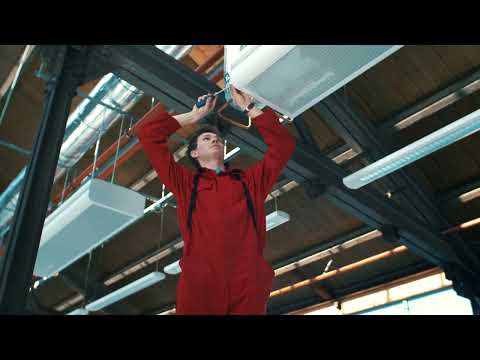
Skelex 360 at work at Dutch Airforce base. Perform longer!
2025-11-12

Damian, a French winemaker, prunes his vines with ease using the Skelex Edge #exoskeleton
2025-11-12
News
From third-party news outlets (China & abroad) · external links