Sevensense
Founded 2018 · Switzerland · sevensense.ai
SnapshotCompany claim
Sevensense is the global leader in Vision-Based Autonomy, driving mobile robotics in industrial and service markets. Its Visual AI technology enables spatial awareness for navigation and operations of autonomous and manual industrial vehicles. Headquartered in Zürich, Switzerland, founded in 2018 and acquired by ABB in January 2024.
- Founded
- 2018
- HQ
- Switzerland
- Models
- 3
- Categories
- 2
Product families
Is this your company? Claim this profile to add verified data, respond to our analysis, and upgrade claims to Verified.
Claim this profile1. Executive Overview {#executive-overview}
Sevensense is a Zürich-based robotics technology company, founded in 2018 out of research at ETH Zürich's Autonomous Systems Lab, that has established itself as a specialist in Vision-Based Autonomy for industrial and service mobile robotics. Its core product family — the Alphasense suite — delivers Visual SLAM-based positioning, navigation, and tracking for AGVs, AMRs, and manually operated industrial trucks. The company's technology is notable for operating without infrastructure dependencies (no markers, beacons, or auxiliary systems), supporting indoor and outdoor environments across multiple levels, and achieving positioning repeatability as tight as 4 mm. These are commercially meaningful differentiators in logistics, manufacturing, and warehousing applications where environmental dynamism and retrofit flexibility matter.
The defining corporate milestone arrived in January 2024, when ABB — the global industrial automation and robotics group — fully acquired Sevensense. ABB's acquisition was covered by the company's own news center and validated externally by Switzerland Global Enterprise (s-ge.com), among others. Sevensense now operates as a dedicated business unit within ABB Robotics, continuing to develop and market its Visual AI technology under the Sevensense brand while benefiting from ABB's global commercial infrastructure. This transition from independent Swiss deep-tech startup to ABB business unit materially changes the company's scale, distribution reach, and long-term investment runway.
Latest news
- KEENON Humanoid Pours Drinks at GCS 2026, 100,000 Others Run HotelsYanko Design·2026-06-15GENERAL
2. The Company Story {#the-company-story}
Sevensense's origins are rooted in academic research. The company's own timeline places the beginning of its work in Visual SLAM research at the ETH Zürich Autonomous Systems Lab — one of Europe's foremost robotics research institutions — before the formal company was established in 2018 as Sevensense Robotics. This research-to-commercialization trajectory is a common and credible pathway for deep-tech robotics firms, particularly those focused on perception and localization, where algorithmic sophistication is the central competitive asset.
Between 2018 and 2024, Sevensense built its position as — by its own description — "the leader in Visual AI navigation for mobile robotics," developing the Alphasense product family and establishing deployments in logistics, manufacturing, and commercial environments. The company is headquartered at Hardturmstrasse 123, 8005 Zürich, Switzerland, with ABB Robotics Switzerland operating from Affolternstrasse 44, 8050 Zürich.
The acquisition by ABB in January 2024 marks the company's third and current phase. ABB had previously partnered with Sevensense — an ABB news center release documents a partnership to "drive next generation autonomous mobile robots" ahead of the full acquisition — suggesting a staged relationship that gave both parties commercial and technical validation before the full integration. The acquisition was framed by ABB as expanding its "leadership in next-generation AI-enabled mobile robotics," positioning Sevensense's Visual AI stack as a core component of ABB's autonomous mobile robotics offering. As of 2025, the company operates under the branding "Sevensense by ABB" and the copyright is held by ABB Robotics Ltd., while retaining dedicated hiring, product development, and a distinct web presence at sevensense.ai.
3. Product Portfolio {#product-portfolio}
Products & versions
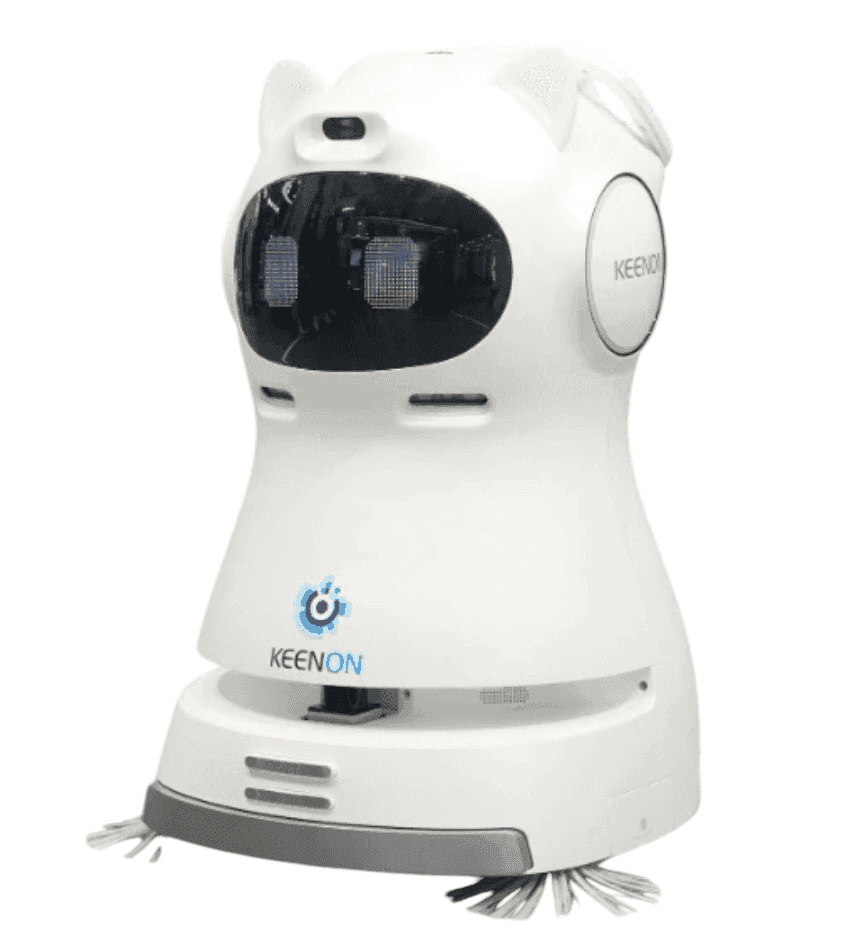
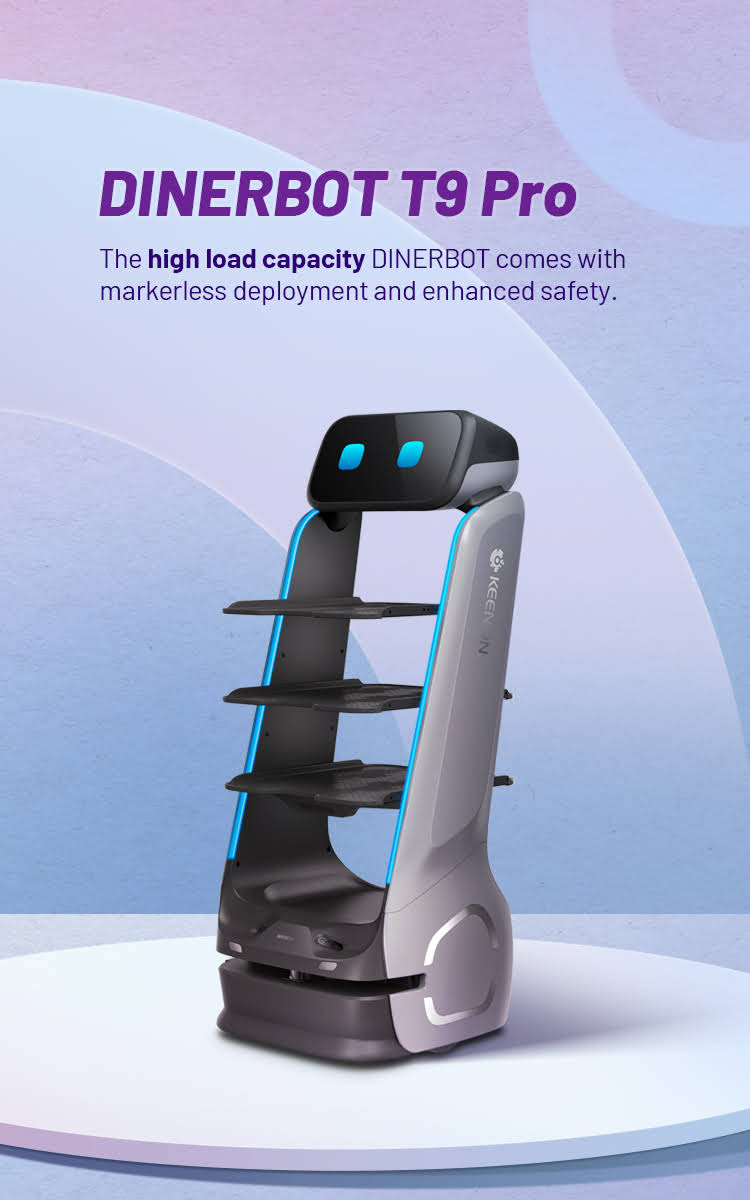
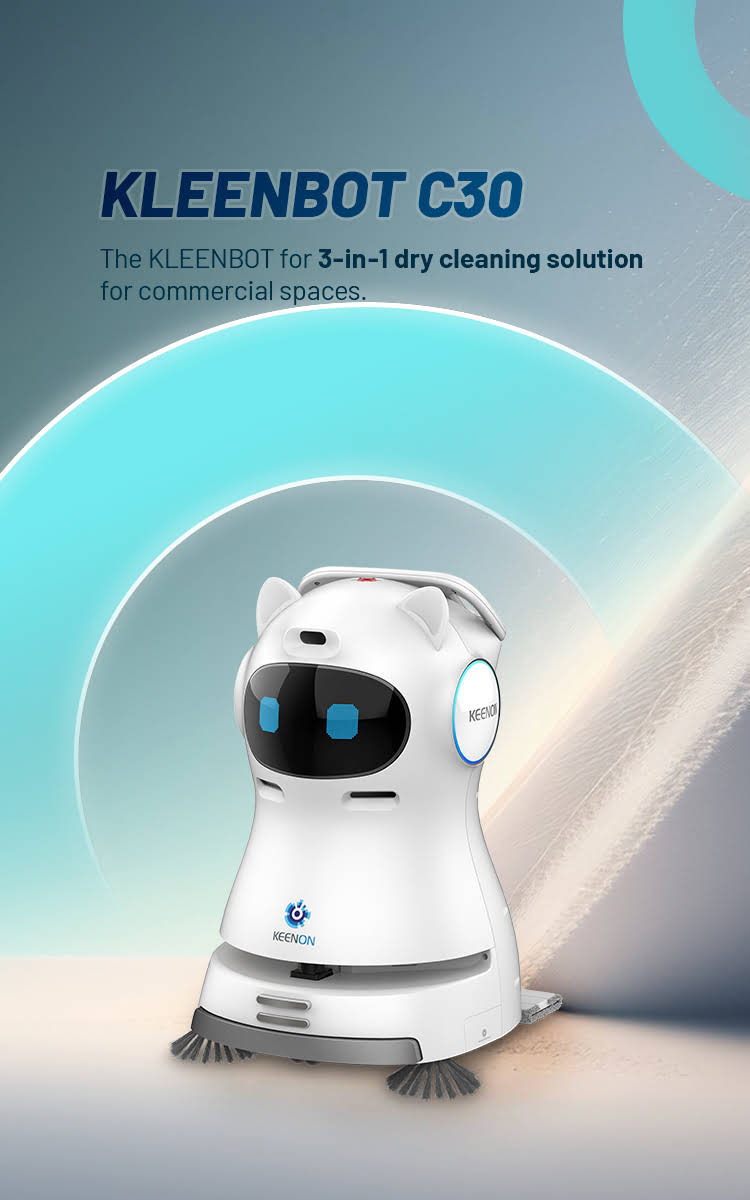


The Alphasense product family comprises three distinct but complementary offerings that together address the full spectrum of Visual AI-based autonomy and tracking in industrial environments.
Alphasense Position is the foundational platform: a multi-camera, industrial-grade Visual SLAM solution supporting up to eight simultaneous camera streams, delivering positioning accuracy down to 1 cm. It is designed as an embeddable "SLAM-in-a-box" component for robot builders and integrators who need robust localization without deploying any physical infrastructure. The system uses AI to continuously learn and update maps from natural environmental features, enabling operation across fast-changing, dynamic spaces — indoors and outdoors alike.
Alphasense Autonomy builds on the positioning layer into a full robot autonomy system. It combines 3D Visual SLAM positioning with AI-driven local perception and navigation, offering a plug-and-play navigation stack for any mobile ground robot. The product is notable for its breadth of navigation modes — virtual path following, obstacle avoidance, and free navigation — and for supporting multi-level, ramp-inclusive, and outdoor deployments without auxiliary systems. The claimed 4 mm repeatability positions it at the precision end of the AMR/AGV navigation market. It is VDA5050-compliant, enabling compatibility with fleet management and warehouse management systems, which is a practical requirement for enterprise logistics customers.
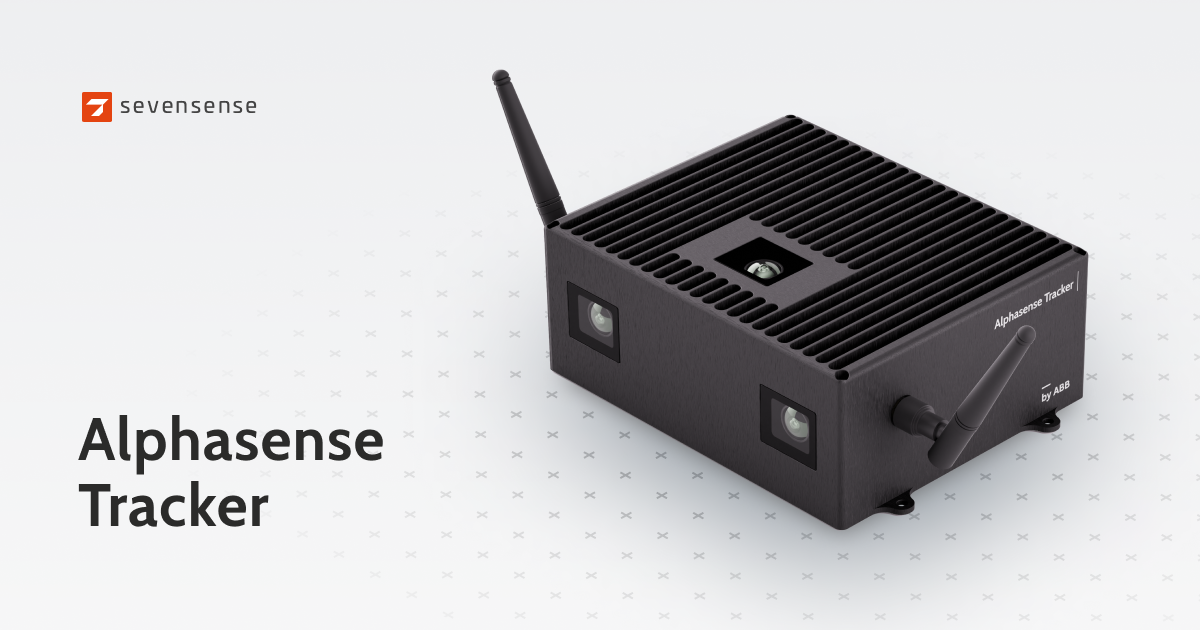
Alphasense Tracker addresses a distinct but adjacent use case: real-time location tracking of manually operated industrial trucks. Rather than automating vehicles, it retrofits existing forklift and towing truck fleets with camera-based, infrastructure-free RTLS capability — positioning to 25 cm and 4° orientation precision — with a claimed one-day setup time. This product targets operational visibility, safety enhancement, and cost optimization in warehouses and factories where full automation is not yet the deployment model. Its VDA5050 compliance and vehicle-agnostic, retrofittable design lower the barrier to adoption considerably.
Together, the portfolio forms a coherent stack: component-level SLAM (Position), full autonomy (Autonomy), and fleet visibility for manual vehicles (Tracker) — covering both automated and hybrid human-robot logistics operations.
4. Technology Stack {#technology-stack}
Sevensense's publicly documented technology centers on Visual SLAM (Simultaneous Localization and Mapping) as its core algorithmic foundation, implemented with multi-camera sensor fusion and edge AI execution. The following is drawn from product specifications and descriptions on the company's own site.
The Alphasense Position system supports up to eight camera streams simultaneously, indicating a multi-camera fusion architecture capable of maintaining robust localization even when individual camera views are occluded or degraded. The 1 cm accuracy claim at this camera count suggests a tightly integrated calibration and sensor fusion pipeline. The system includes "advanced calibration with cutting-edge algorithms" (company claim) and operates without markers or beacons — meaning the SLAM system relies entirely on natural feature extraction from the environment.
The Alphasense Autonomy system extends this into 3D sensor fusion for obstacle detection, combining the Visual SLAM positioning layer with AI-based local perception. The product description references "Edge AI with all intelligence on the vehicle," indicating that inference runs onboard rather than requiring cloud connectivity — a meaningful architectural choice for industrial deployments where network reliability may be limited and latency requirements are strict. The 4 mm repeatability specification (company claim) is a strong indicator of sub-centimeter-class localization consistency under repeated traversal of the same path.
Our read: The combination of infrastructure-free operation, multi-camera fusion, edge AI execution, and multi-environment capability (indoor, outdoor, multi-level, ramps) suggests an architecture designed for deployment flexibility over controlled-environment precision. The ETH Zürich Autonomous Systems Lab lineage is consistent with a research-grade SLAM implementation brought to production robustness. The automatic calibration claim for Autonomy ("fastest vehicle deployments with automatic calibration") implies that the system handles extrinsic camera-to-robot calibration without manual measurement — a significant practical advantage for integrators deploying across heterogeneous fleets.
Our read: VDA5050 compliance across both Autonomy and Tracker products indicates deliberate positioning as an interoperable middleware layer within larger fleet and warehouse management ecosystems, rather than a closed, proprietary stack. This is a strategic choice that broadens addressable integration scenarios.
Limited public detail is available on the specific compute hardware platforms supported, the underlying deep learning architectures used for feature extraction, or the precise SLAM algorithm variants (e.g., keyframe-based, filter-based) employed.
5. Research, Papers, Authors, Labs {#research-papers}
Company-linked papers
Sevensense traces its origins to research conducted at the ETH Zürich Autonomous Systems Lab, one of Europe's leading robotics and autonomous systems research groups, and this academic lineage is noted in the company's own milestone timeline. However, Sevensense as a commercial entity does not publicly maintain or link a list of academic publications, research papers, or named research authors on its website.
This is consistent with the company's current positioning: it operates as a product-focused business unit within ABB, not as a research-publishing laboratory. Companies at this stage of commercial maturity — particularly those integrated into large industrial groups — typically conduct applied R&D internally without publishing to open academic venues. This is not a deficiency; it reflects a deliberate shift from the academic research phase (pre-2018) to proprietary product development.
Not yet disclosed: Any post-2018 technical publications, named research leads, or ongoing academic collaborations. If Sevensense or ABB Robotics has published work in this area, we invite them to surface it for inclusion.
6. Media Evidence {#media-evidence}
Media library
Third-party press coverage of Sevensense is anchored in two primary external sources identified in the data. ABB's own news center (new.abb.com) published coverage of both the initial partnership between ABB and Sevensense and the subsequent full acquisition, framing the deal as expanding ABB's leadership in "next-generation AI-enabled mobile robotics." Switzerland Global Enterprise (s-ge.com), an independent Swiss trade and investment promotion body, covered the acquisition as of November 2024, providing external validation of the transaction from a non-ABB source. These outlets confirm the acquisition as a documented, externally reported event rather than solely a company announcement.
7. Commercial Reality {#commercial-reality}
Customers & deployments
Revenue, customer counts, fleet deployment volumes, and ROI metrics for Sevensense are not disclosed in any public-facing materials reviewed. As a business unit within ABB — a publicly traded company — Sevensense's financials are consolidated into ABB's reporting and are not broken out separately.
The company's about page references deployments in "logistics, manufacturing, and commercial settings" and describes operating in "the most complex and dynamic environments" (company claims), but does not name specific customers, deployment sites, or quantified outcomes. The Alphasense Tracker product page lists warehouse, factory, and logistics as target industries, providing use-case direction without deployment specifics.
Not yet disclosed: Named customer references, deployment counts, fleet sizes supported, geographic distribution of installations, or any independently verified ROI data. Sevensense and ABB Robotics are invited to claim or correct this section with verifiable deployment information.
8. Markets and Use Cases {#markets-use-cases}
The Sevensense product suite addresses three broadly defined market segments, derivable from product descriptions and industry tags on the company's own site.
Logistics and warehousing is the most explicitly documented target market. The Alphasense Tracker is tagged directly to warehouse, factory, and logistics industries, and its design — retrofittable tracking for manually operated forklifts and towing trucks — maps clearly to the operational reality of large distribution centers and third-party logistics facilities where mixed fleets of automated and manual vehicles coexist. The Alphasense Autonomy system's VDA5050 compliance similarly signals readiness for warehouse management system integration.
Manufacturing and factory automation is addressed by the full Alphasense stack. AGV and AMR navigation in manufacturing environments — where floor layouts change, human workers are present, and multi-level or ramp-inclusive facilities are common — is a central use case for Alphasense Autonomy's multi-mode navigation and obstacle avoidance capabilities. The 4 mm repeatability claim is particularly relevant for manufacturing applications requiring precise stop positioning at workstations or loading points.
Commercial and service environments are mentioned in the company's about page as a third market segment, though the product descriptions provide less specificity here than for the industrial segments. The Alphasense Position component, as an embeddable SLAM module, could support robot builders serving cleaning, inspection, or last-mile delivery applications — use-case categories that appear in the site's contact form industry list (cleaning, construction robotics, inspection, last-mile delivery, logistics and material handling) — though no specific products are positioned against these verticals in the product descriptions reviewed.
The contact form's industry list also includes "University/Research," consistent with the ETH Zürich lineage and suggesting Sevensense maintains engagement with academic robotics programs as potential early adopters of its positioning technology.
9. Competitive Landscape {#competitive-landscape}
Competitive comparison
| Robot | Maker | Autonomy | Conf. |
|---|---|---|---|
| iRobot Roomba Combo 10 Max | iRobot | Autonomous | 0.90 |
| Mobile ALOHA (Stanford) | Stanford University | Teleoperated | 0.90 |
| 1X NEO | 1X Technologies | Remote-Assisted | 0.90 |
Sevensense competes in the Visual SLAM, AMR/AGV navigation, and industrial RTLS segments — categories that have attracted significant investment and a growing field of both dedicated autonomy software companies and vertically integrated robot manufacturers building navigation in-house. The relevant competitive frame spans infrastructure-free localization providers, fleet management software vendors with integrated navigation, and large automation groups developing proprietary AMR stacks.
Sevensense's differentiation case rests on infrastructure-free operation, multi-environment capability, edge AI execution, and the precision specifications of its Alphasense family. The ABB acquisition provides distribution scale and enterprise credibility that independent navigation software vendors typically lack, while the dedicated business unit structure is intended to preserve the technology agility of the original startup. The module below contextualizes the competitive field.
10. Country Advantage / Geopolitical {#geopolitical}
Switzerland's position as a high-trust, politically neutral, innovation-driven economy is materially relevant to Sevensense's profile, though not in a risk-laden geopolitical sense. The ETH Zürich ecosystem — from which Sevensense emerged — is one of the world's premier pipelines for deep-tech robotics commercialization, and Switzerland's strong IP protection framework and engineering talent base provide structural advantages for a precision robotics software company.
The ABB parent company is itself a Swedish-Swiss multinational headquartered in Zürich, meaning Sevensense's acquisition represents a domestic Swiss technology absorption rather than a cross-border technology transfer to a geopolitically sensitive jurisdiction. This is a neutral-to-positive factor for European customers and government programs with supply chain sensitivity considerations.
No material export control, sanctions, or dual-use regulatory concerns are apparent from the data provided for this company and its products.
11. Hype vs Real vs Ugly {#hype-real-ugly}
Claim tracker
What is company-claimed: Sevensense describes itself as "the global leader in Vision-Based Autonomy" (company claim, from their About page). This is an unverified superlative. It is plausible given the ETH pedigree, the ABB acquisition, and the specificity of the product specifications, but no independent market share data is provided to substantiate the "global leader" designation.
What is independently corroborated: The ABB acquisition is confirmed by both ABB's own news center and Switzerland Global Enterprise, an independent third party. The founding year (2018) and ETH Zürich Autonomous Systems Lab origin are stated consistently across the company's own materials. The three product names and their headline specifications are company claims, but the specificity of the numbers (4 mm repeatability, 1 cm accuracy, 8 camera streams, 25 cm RTLS precision, 1-day setup, VDA5050 compliance) is consistent with a mature product rather than aspirational marketing.
What is labeled inference: Our read is that the 4 mm repeatability and 1 cm accuracy figures, if achieved under real industrial conditions, represent genuinely competitive positioning for the AGV/AMR navigation market. These are not implausible numbers for a well-executed multi-camera Visual SLAM system, but independent third-party benchmarking data is not available in the reviewed sources.
Where gaps exist: No customer case studies, independent benchmarks, deployment counts, or third-party product reviews are present in the reviewed data. The "global leader" claim is unverifiable from public sources. Not yet disclosed: any independent performance validation or named customer deployments. Sevensense and ABB Robotics are invited to provide verifiable evidence to support or refine these claims.
12. Future Scenarios {#future-scenarios}
Bull case — Our read: ABB's global sales and service infrastructure accelerates Sevensense's penetration of enterprise logistics and manufacturing customers who require vendor credibility, support SLAs, and long-term product commitments that a standalone startup cannot easily provide. The Alphasense Tracker — addressing manual truck fleets that vastly outnumber automated ones globally — proves to be a high-volume entry point that builds installed base ahead of customers' broader automation journeys. ABB's existing AMR product lines and Sevensense's navigation stack achieve deep integration, making Sevensense's Visual AI the default autonomy layer across ABB's robotics portfolio.
Base case — Our read: Sevensense continues to grow as a focused business unit within ABB Robotics, expanding its Alphasense deployments in European and North American manufacturing and logistics accounts. The product family matures incrementally — more camera integrations, expanded VDA5050 ecosystem partnerships, and broader outdoor/multi-level coverage. The company retains its technical identity but operates within ABB's product management and commercial cycles, which may modulate the pace of independent innovation.
Bear case — Our read: Integration into a large industrial conglomerate creates organizational friction that slows the product iteration speed characteristic of the startup phase. Independent navigation software specialists and vertically integrated AMR manufacturers with significant R&D budgets close the technical gap on infrastructure-free Visual SLAM. The dedicated business unit structure does not fully insulate Sevensense's roadmap from ABB's broader portfolio prioritization decisions, and the company's external brand visibility diminishes as it becomes a component of ABB's offering rather than a named product line.
13. What to Watch {#what-to-watch}
- ABB integration depth: Whether Sevensense's Alphasense stack is adopted as the standard navigation layer across ABB's AMR/AGV product lines, or remains a standalone offering sold independently of ABB hardware.
- Customer reference disclosures: Named deployments or case studies — particularly for Alphasense Autonomy in multi-level or outdoor environments — would validate the breadth-of-environment claims.
- Alphasense Tracker adoption rate: As the most accessible (retrofittable, one-day setup) product, Tracker volume is a leading indicator of commercial traction in the manual fleet visibility segment.
- Competitive response on infrastructure-free SLAM: Monitor whether established AMR manufacturers or dedicated autonomy software firms publish comparable infrastructure-free, multi-environment navigation specifications.
- Product roadmap announcements: Any additions to the Alphasense family — new form factors, expanded camera counts beyond eight, or specific outdoor robotics positioning — would signal R&D direction post-ABB integration.
- ABB earnings disclosures: ABB's quarterly and annual reports may begin attributing specific mobile robotics growth figures that could provide indirect revenue or deployment signals for the Sevensense unit.
- Hiring patterns: The Zürich engineering team's growth trajectory (visible through ABB careers portal) is a proxy for R&D investment levels.
- Academic re-engagement: Any return to publishing from the Sevensense team — at venues such as ICRA, IROS, or RSS — would signal sustained deep-tech differentiation under ABB ownership.
14. Sources & Methodology {#sources-methodology}
Primary source: All factual claims in this report are grounded in content extracted from Sevensense's own website (sevensense.ai), including the About page, product descriptions, key feature lists, and product specifications. All such content is labeled as company-claim and should be read as the company's own representations, not independently verified facts.
Third-party press sources: Three external articles were reviewed and cited by outlet name: ABB News Center (new.abb.com, two articles — partnership announcement and acquisition announcement) and Switzerland Global Enterprise (s-ge.com, acquisition coverage). These are treated as independent validation of the acquisition event only; they do not independently validate product performance claims.
Inferences: All analytical interpretations not directly stated in source materials are labeled "Our read:" and represent the analyst's reasoned interpretation of available data.
What this report does not contain: Invented products, specifications, customers, revenue figures, competitor names in prose, or any claims not traceable to the sources above. Where information is absent, this report uses "Not yet disclosed" with an explicit invitation for the company to provide corrections or additions.
Universal rubric (applied consistently across all company reports in this series): Verified data → stated as fact with provenance noted. Company self-description → labeled "company claim." Analytical interpretation → labeled "Our read." Absent data → labeled "Not yet disclosed" with an invite to claim. No unsourced negatives stated as fact.
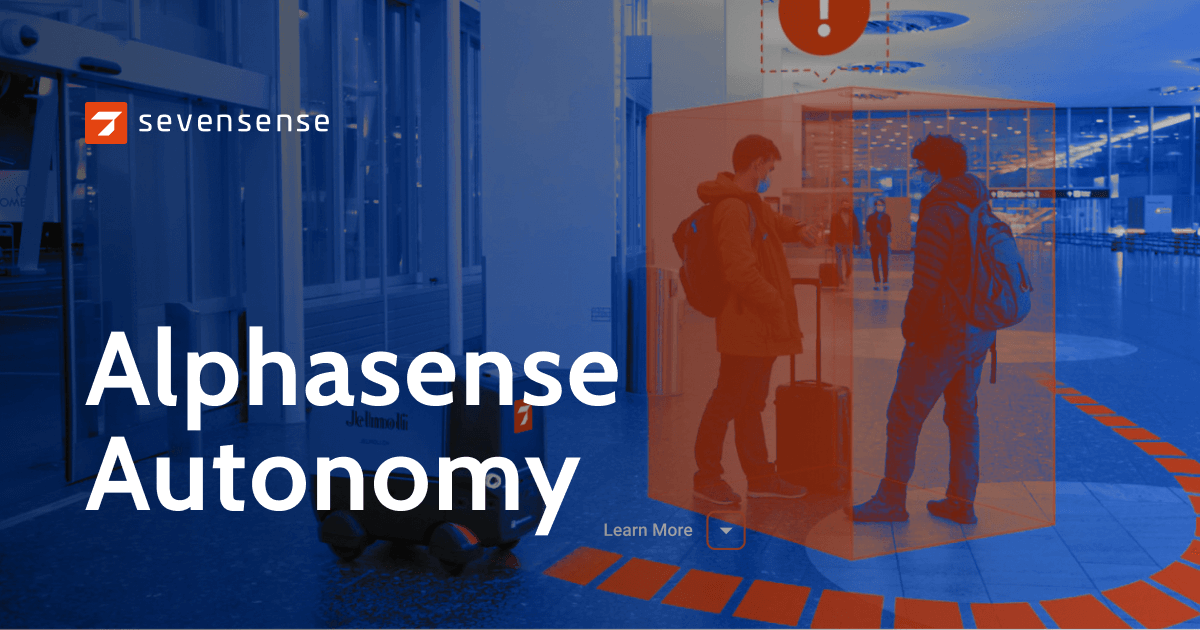
Alphasense Autonomy is a robot autonomy system combining 3D Visual SLAM positioning with advanced AI local perception and navigation. It is a plug-and-play navigation stack for any mobile ground robot, featuring reliable safety behaviors, advanced motion capabilities, and dynamic obstacle avoidance. It runs indoors, outdoors, over ramps, and on multiple levels without auxiliary systems. Automatic calibration and no infrastructure needs enable fast deployment. Repeatability of 4 mm ensures precise docking.
- •Most advanced navigation powered by 3D Visual SLAM
- •Fastest vehicle deployments with automatic calibration
- •Precise in dynamic environments with 4 mm repeatability
- •Runs indoors, outdoors, over ramps and on multiple levels without auxiliary systems
- •Multiple navigation modes: virtual path following, obstacle avoidance, free navigation
- •3D sensor fusion for detection of any kind of obstacles in 3D
- •Edge AI with all intelligence on the vehicle
- •Supports VDA5050 standard for layout and FMS compatibility
| Repeatability (mm) | 4 |
Technology stackOur read
Inferred from product specs — click through to the technology wiki:
ResearchComputed
Product comparisonComputed
Each row leads with this company's product, side-by-side with similar ones · click a row to expand full specs, click again to collapse
Alphasense Autonomy
Ottobot
Amazon Scout

LuckiBot Pro

KettyBot
Pudu CC1
Alphasense Tracker
Amazon Scout
LuckiBot Pro
KettyBot
Pudu CC1

R3
Company announcement
News and Media
The company's official social & video channels · external links
News
From third-party news outlets (China & abroad) · external links
