Path Robotics
Founded 2018 · USA · path-robotics.com
SnapshotCompany claim
Path Robotics' Intelligent Welding Cells solve the skilled labor shortage with Obsidian AI. They offer 4x productivity, 30%+ lower cost, and $0 capex. Founded in 2018 by Andy and Alex Lonsberry, the company builds robots that see, think, and adapt for manufacturing.
- Founded
- 2018
- HQ
- USA
- Models
- 1
- Categories
- 1
Product families
Is this your company? Claim this profile to add verified data, respond to our analysis, and upgrade claims to Verified.
Claim this profile1. Executive Overview {#executive-overview}
Path Robotics is a Columbus, Ohio–based physical-AI company founded in 2018 by brothers Andy and Alex Lonsberry, both of whom hold PhDs in AI-related fields. The company has built its commercial identity around a single, focused thesis: that the acute shortage of skilled welders in American manufacturing is a structural problem addressable by intelligent automation, not simply faster robots. Its flagship product — the Intelligent Welding Cell, powered by the proprietary Obsidian AI platform — uses real-time computer vision and adaptive machine learning to handle the messy, variable conditions of real shop-floor welding: imperfect fit-up, part-to-part variation, and heat distortion. Commercially, it is offered via a Robots-as-a-Service (RaaS) model, eliminating upfront capital expenditure for customers and positioning Path against the traditional barrier of high entry cost.
The company has attracted a geographically and institutionally diverse investor base spanning Columbus, San Francisco, Palo Alto, and New York, and has assembled a board that includes operators with deep experience in automotive manufacturing, higher education finance, and venture capital. The self-described positioning — "the leading physical-AI company for manufacturing" — is a company claim, but the technical specificity of its product, the caliber of its board, and independent press coverage in outlets including The Robot Report and Ohio Tech News suggest a firm with genuine commercial traction rather than a pre-product concept. A mobile welding system announced in April 2026, as reported by Ohio Tech News, signals continued product development and an expanding footprint into heavy industry.
Latest news
- KEENON Humanoid Pours Drinks at GCS 2026, 100,000 Others Run HotelsYanko Design·2026-06-15GENERAL
2. The Company Story {#the-company-story}
Path Robotics was founded in 2018 by Andy Lonsberry (CEO) and Alex Lonsberry (CTO), brothers who grew up in Ohio welding with their father. According to the company's own About page, both founders pursued PhDs in AI-related fields before deciding to apply that research background to physical manufacturing — a deliberate choice, in their words, to "bring intelligence into the physical world" rather than build software-only products. The company traces its origins to the basement of Case Western Reserve University, a detail that grounds its founding narrative in the Cleveland-to-Columbus Ohio technology corridor.
The company's initial focus on robotic welding reflects a calculated bet: welding is one of the most technically demanding and chronically understaffed skilled trades in American manufacturing, making it a category where AI-driven adaptation offers clear, measurable value over conventional fixed-program robots. From that starting point, Path developed the Obsidian AI platform — a proprietary system that combines computer vision, real-time seam tracking, and adaptive path planning — as the technological core of its Intelligent Welding Cells.
Key milestones inferable from available data include: commercial launch of the Intelligent Welding Cell with a RaaS pricing model; securing investment from Drive Capital (a Columbus-based venture firm), Matter Venture Partners, and additional institutional investors across major financial centers; building a leadership team that includes a Chief Evangelist who is also described as Path's first customer — a notable detail suggesting early adoption within the founders' immediate professional network; and, as of April 2026, unveiling a mobile welding system targeting heavy industry, as reported by Ohio Tech News. Path's presence on EquityZen indicates the company has entered a stage where pre-IPO share interest exists in secondary markets, though no public offering timeline has been disclosed.
3. Product Portfolio {#product-portfolio}
Products & versions



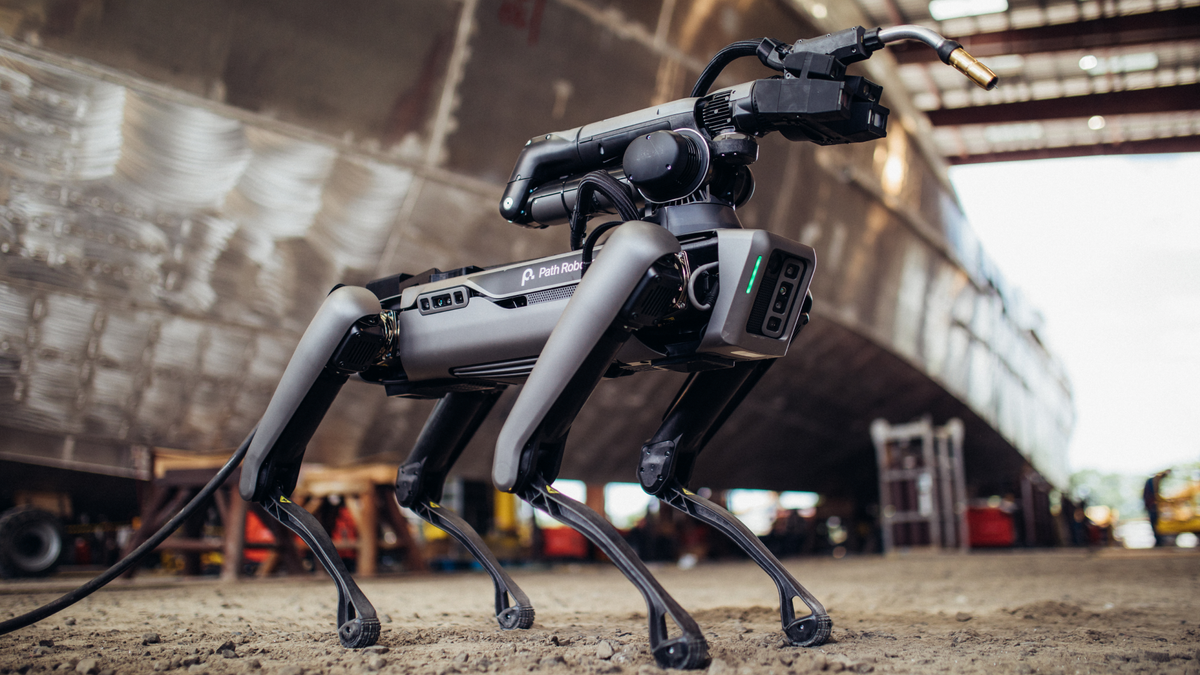
Path Robotics' current public product portfolio centers on a single, deeply specified offering: the Intelligent Welding Cell, powered by the Obsidian AI platform. The product is not a general-purpose robot arm with a welding attachment; it is an integrated system — cell, AI, and support service — sold as a continuous operational capability rather than a capital asset.
The key performance claims (company-stated) are precise and testable: 17x faster than manual welding, 97%+ first-pass yield, and 30%+ lower cost, available at $0 capital expenditure through a Robots-as-a-Service subscription that includes 24/7 mission control support. The AI capabilities described go well beyond simple path repetition. The Obsidian AI performs real-time vision-driven seam finding, multi-pass adaptive fill (where the system determines the optimal number and placement of weld passes autonomously), and auto heat distortion compensation via continuous seam tracking — functions that directly address the reasons welding has historically resisted full automation: no two weld joints are exactly alike in a real production environment.
The stated application range is deliberately ambitious: "from utility poles to ship hulls," signaling a target market in large, heavy structural fabrication rather than the small-part, high-repeatability segments where conventional welding robots have long been established. The April 2026 announcement of a mobile welding system, as reported by Ohio Tech News, suggests Path is extending the product line beyond fixed cells — potentially addressing job-site or large-structure fabrication where moving the workpiece to the robot is impractical. The shape of the portfolio is therefore a focused vertical stack (one AI platform, one commercial model, expanding form factors) rather than a diversified multi-product catalog.
4. Technology Stack {#technology-stack}
The Obsidian AI platform is the named technological core of Path Robotics' product. Based on the product specifications published on the company's own site, several components of the stack can be described with reasonable confidence.
Computer vision and real-time sensing: The system performs live seam finding and seam tracking, meaning it uses optical or structured-light sensing to identify weld joint geometry before and during the weld. This is a materially harder problem than pre-programmed path following, as it requires the system to function correctly when parts arrive out of tolerance or with inconsistent fit-up — conditions that are the norm rather than the exception in heavy fabrication.
Adaptive path planning: The Obsidian AI generates and updates weld paths in real time rather than executing a fixed program. The "Multi-Pass Adaptive Fill" feature specifically indicates that the AI is making decisions about weld sequence and geometry on the fly, not simply replaying a taught program.
Thermal/distortion compensation: Auto Heat Distortion Compensation via real-time seam tracking implies a feedback loop between the vision system and the motion controller that accounts for workpiece deformation as heat accumulates during welding — a known failure mode for fixed-program systems on heavy weldments.
Our read: The combination of real-time vision, adaptive path planning, and thermal feedback constitutes a meaningful technical differentiation from conventional teach-and-repeat welding robots. The proprietary branding of the AI as "Obsidian" suggests Path treats this as a platform asset rather than a third-party integration. The 24/7 mission control support model implies a connected, cloud-monitored deployment architecture, though the specifics of data infrastructure, edge versus cloud compute, and underlying ML frameworks are not publicly disclosed. Whether Obsidian is built on top of a standard robotics middleware layer (e.g., ROS) or is fully proprietary is not determinable from available data.
Limited public technical detail beyond product-level specifications; deeper stack architecture is not disclosed.
5. Research, Papers, Authors, Labs {#research-papers}
Company-linked papers
Path Robotics does not present itself as a research-publishing organization. No academic papers, preprints, or lab affiliations are listed on the company's public site. The founders hold PhDs in AI-related fields (per company About page) and trace the company's origins to Case Western Reserve University, suggesting a research lineage — but Path's public posture is that of a commercial product company applying AI to manufacturing, not a research institution disseminating findings. This is entirely normal for a Series-stage industrial robotics firm; commercial deployment and IP protection typically take precedence over academic publication.
6. Media Evidence {#media-evidence}
Media library
Path Robotics has received coverage in independently operated trade and technology outlets. The Robot Report, a primary trade publication for the robotics industry, maintains an archival tag for the company — indicating recurring, not one-off, coverage. Ohio Tech News published a specific news item on April 24, 2026, reporting the unveiling of a mobile welding system for heavy industry, providing dateable, third-party confirmation of active product development. EquityZen, a secondary-market platform for pre-IPO shares, lists Path Robotics — a form of financial-media visibility that reflects investor community awareness, though it does not constitute an endorsement or financial disclosure. These three outlets collectively represent trade, regional technology, and financial-market coverage.
7. Commercial Reality {#commercial-reality}
Customers & deployments
Revenue, customer count, and contract values are not publicly disclosed. Path Robotics has not published revenue figures, customer rosters, or independent ROI case studies in the data available for this report. These metrics should be treated as Not disclosed.
One notable data point from the company's own About page: Joe Onderko, the company's Chief Evangelist, is described as "Path's first customer" — a named individual in a senior commercial role who originated as a buyer, suggesting real-world deployment preceded and informed the company's go-to-market strategy. This is a meaningful signal of at least some commercial history, but it does not constitute a quantified customer base.
The RaaS pricing model (subscription, $0 capex) is explicitly designed to lower the adoption threshold for manufacturers who cannot or will not make large capital commitments to automation equipment — a commercial structure that implies recurring revenue rather than one-time hardware sales, but revenue scale remains undisclosed.
Path Robotics is invited to submit verified customer deployments, revenue milestones, or third-party ROI data for inclusion in this profile.
8. Markets and Use Cases {#markets-use-cases}
Path Robotics targets the structural and heavy fabrication segment of manufacturing — a distinct and historically underserved tier of the welding automation market. Conventional welding robots have achieved strong penetration in high-volume, high-repeatability environments (automotive body-in-white, for example), but have struggled to address the long-tail of heavy, low-to-medium volume fabrication where part variation is high and batch sizes are small.
The product description explicitly names utility poles and ship hulls as representative workpieces — both large, structurally critical weldments with significant dimensional variation and demanding quality requirements. These examples point toward the following addressable industries and use cases:
- Energy and utility infrastructure: Transmission poles, towers, and structural supports for the electrical grid — a sector receiving significant capital investment in U.S. infrastructure programs.
- Marine and shipbuilding: Hull sections and structural marine fabrication, where manual welding labor is scarce and weld quality is safety-critical.
- Heavy equipment and industrial fabrication: Agricultural equipment frames, construction equipment, and general structural steel fabrication.
- Defense and critical infrastructure manufacturing: The "physical AI for manufacturing" framing and the board's explicit reference to "trillions being invested in new infrastructure" situates Path in the context of U.S. defense and infrastructure re-shoring — a politically and economically active demand environment.
The April 2026 mobile welding system announcement, per Ohio Tech News, suggests Path is also beginning to address on-site or in-place welding scenarios — where the structure cannot be moved to a fixed cell — which would extend the addressable market into field fabrication and large-structure assembly.
9. Competitive Landscape {#competitive-landscape}
Competitive comparison
| Robot | Maker | Autonomy | Conf. |
|---|---|---|---|
| iRobot Roomba Combo 10 Max | iRobot | Autonomous | 0.90 |
| Mobile ALOHA (Stanford) | Stanford University | Teleoperated | 0.90 |
| 1X NEO | 1X Technologies | Remote-Assisted | 0.90 |
Path Robotics operates in the robotic welding automation category, a market that includes both established industrial robot integrators and newer AI-native entrants. The company's differentiation rests on two axes: the adaptive AI capability of the Obsidian platform (versus conventional teach-and-repeat systems) and the RaaS commercial model (versus traditional capital equipment sales). These two axes together define its strategic positioning relative to both legacy automation vendors and emerging competitors.
Our read: The heavy-fabrication, high-variation segment Path has targeted is less crowded than the high-volume automotive welding market, but it is not uncontested. The combination of AI adaptability, zero-capex access, and 24/7 operational support represents a deliberate effort to remove all three of the standard objections to robotic welding adoption in job-shop and structural fabrication environments: technical inflexibility, upfront cost, and lack of in-house expertise. How that positioning holds as the category matures is one of the key commercial questions for the company. The module above renders peer context.
10. Country Advantage / Geopolitical {#geopolitical}
Path Robotics is a U.S.-headquartered company (Columbus, Ohio) building automation technology for U.S. manufacturing infrastructure. The company's About page explicitly frames its market opportunity in terms of "trillions being invested in new infrastructure" and positions its technology as a solution to the structural skilled-labor shortage in American manufacturing — a framing that aligns directly with active U.S. policy priorities around industrial re-shoring, the CHIPS and Science Act, infrastructure investment programs, and defense manufacturing capacity.
Ohio, specifically, is a state with a large manufacturing base and a history of automotive and heavy industrial production, giving Path proximity to a dense customer base and a regional talent pipeline with manufacturing domain expertise. The founding team's roots in Ohio and at Case Western Reserve University reinforce this geographic embeddedness.
Our read: The combination of a domestic supply-chain policy tailwind, a structural welder shortage that is not abating, and a product designed specifically for the types of large-infrastructure fabrication projects receiving federal investment represents a materially favorable geopolitical and industrial-policy environment for Path. This is not a guarantee of commercial success, but the macro alignment is unusually direct for a company of this stage.
11. Hype vs Real vs Ugly {#hype-real-ugly}
Claim tracker
What is verifiable or strongly supported:
- Path Robotics exists, has a commercial product (the Intelligent Welding Cell), and has received independent trade press coverage in The Robot Report and Ohio Tech News — outlets with editorial standards.
- The founding team's academic background (PhDs, Case Western origins) and the board's depth (Rocket Lab COO, Yale CFO, Drive Capital, Matter Venture Partners) are matters of record consistent with a well-capitalized, institutionally backed company.
- A mobile welding system was announced in April 2026, per Ohio Tech News — a dateable, third-party-confirmed product milestone.
- The RaaS model and 24/7 mission control support are described with enough operational specificity to be treated as genuine commercial design choices rather than marketing abstractions.
Company claims requiring external validation:
- "4x productivity" — company claim; no independent benchmark cited in available data.
- "17x faster than manual welding" — company claim; the comparison baseline (which manual process, which weld type, which operator skill level) is not specified in public materials.
- "97%+ first-pass yield" — company claim; no third-party audit or customer case study is publicly available to validate this figure.
- "30%+ lower cost" — company claim; cost model assumptions are not publicly disclosed.
- "$0 capex" — this is a pricing model description and is accurate as stated (cost is shifted to subscription, not eliminated).
- "The leading physical-AI company for manufacturing" — company claim; not independently validated.
Gaps (not negatives — invitations to disclose):
- Not yet disclosed: Customer count, named deployments, or independent ROI case studies. Path Robotics is invited to submit verified references for inclusion.
- Not yet disclosed: Details of the RaaS subscription pricing structure, contract terms, or minimum commitment periods.
- Not yet disclosed: Independent technical validation of the Obsidian AI platform's performance claims.
12. Future Scenarios {#future-scenarios}
Our read — Bull case: The structural welder shortage in U.S. manufacturing deepens as infrastructure investment accelerates, and Path's Obsidian AI platform — having demonstrated reliable performance on high-variation heavy fabrication — becomes the default automation solution for structural steel, utility, and marine fabrication shops. The RaaS model drives rapid adoption by removing the capex barrier, building a growing recurring revenue base. The mobile welding system opens an entirely new addressable market in field and large-structure fabrication. The company's investor base and board depth position it well for a Series C or later-stage financing event, and the EquityZen pre-IPO interest signals a credible path to liquidity.
Our read — Base case: Path continues to grow its installed base in heavy fabrication in the U.S., with the Obsidian AI platform delivering genuine productivity gains for customers willing to change their workflow around the cell format. Progress is real but measured, constrained by the sales cycle length in industrial manufacturing, the need to train customer operators, and the inherent complexity of deploying AI systems in shop-floor environments. The mobile welding system extends the product line but requires additional development time to reach commercial scale. The company remains private and continues to raise institutional capital to fund operations and product development.
Our read — Bear case: The performance claims (17x speed, 97%+ yield) prove difficult to replicate consistently across the full range of real-world heavy fabrication conditions — particularly for customers with lower-quality incoming materials or less-controlled fit-up. The RaaS model, while commercially attractive on paper, creates cash-flow pressure if deployments require significant customization or ongoing tuning. Larger industrial automation incumbents with greater distribution and integration capabilities move aggressively into AI-adaptive welding, compressing Path's differentiation window. Customer adoption moves more slowly than projected, and the capital required to maintain 24/7 mission control support at scale becomes a structural cost challenge.
13. What to Watch {#what-to-watch}
- Mobile welding system commercialization: The April 2026 announcement by Ohio Tech News marks an unveiling, not a commercial launch. Watch for first customer deployments, pricing structure, and target industries for the mobile form factor.
- Named customer disclosures: Any public announcement of a named customer — particularly in utility, marine, or defense fabrication — would materially validate the company's commercial claims and addressable market thesis.
- Independent performance benchmarks: Third-party validation of the 17x speed and 97%+ first-pass yield claims, whether through customer case studies, trade press testing, or industry body certification, would significantly strengthen the investment and commercial case.
- RaaS contract metrics: Any disclosure of fleet size, subscription count, or renewal rates would provide the first quantitative window into Path's commercial traction and unit economics.
- Financing events: Watch for a new funding round announcement, which would provide a disclosed valuation and signal investor confidence in the post-mobile-system product roadmap.
- IPO or secondary-market activity: EquityZen listing indicates pre-IPO share interest exists. Any S-1 filing or formal IPO preparation would be a major inflection event.
- Obsidian AI platform extensions: Watch for announcements applying the Obsidian platform to weld types, materials, or manufacturing processes beyond the current heavy-fabrication focus — a potential signal of platform-level ambitions.
- Workforce and scale: Leadership team expansion — particularly in field operations, customer success, and international sales — would indicate whether the company is scaling its delivery infrastructure to match commercial demand.
14. Sources & Methodology {#sources-methodology}
Primary source: All factual claims in this report are grounded exclusively in data extracted from Path Robotics' own public website (path-robotics.com), including the company's About page, product descriptions, feature specifications, and leadership/investor disclosures. All such material is treated as company-claim provenance and labeled accordingly — it reflects what the company says about itself, not independently audited fact.
Third-party press sources (independent): Three external sources were available and are cited by name where referenced:
- Ohio Tech News (ohiotechnews.com) — news coverage, April 24, 2026
- The Robot Report (therobotreport.com) — trade press archive tag
- EquityZen (equityzen.com) — pre-IPO secondary market listing
Inferences: Sections where analysis goes beyond directly stated facts are labeled "Our read:" to distinguish analyst interpretation from sourced claims.
What this report does not do: It does not assert revenue figures, customer counts, employee headcount, or competitive rankings that are not present in the source data. It does not invent products, partnerships, or specifications. Gaps are noted as gaps and treated as invitations to disclose, not as evidence of failure.
Standard rubric (applied identically to every company profiled): Verified strengths lead each section. Negative observations are expressed only as fixable gaps, labeled inferences, or clearly attributed company claims. Every section distinguishes between what is known, what is inferred, and what is not yet disclosed. This methodology is applied uniformly regardless of company size, stage, or geography.
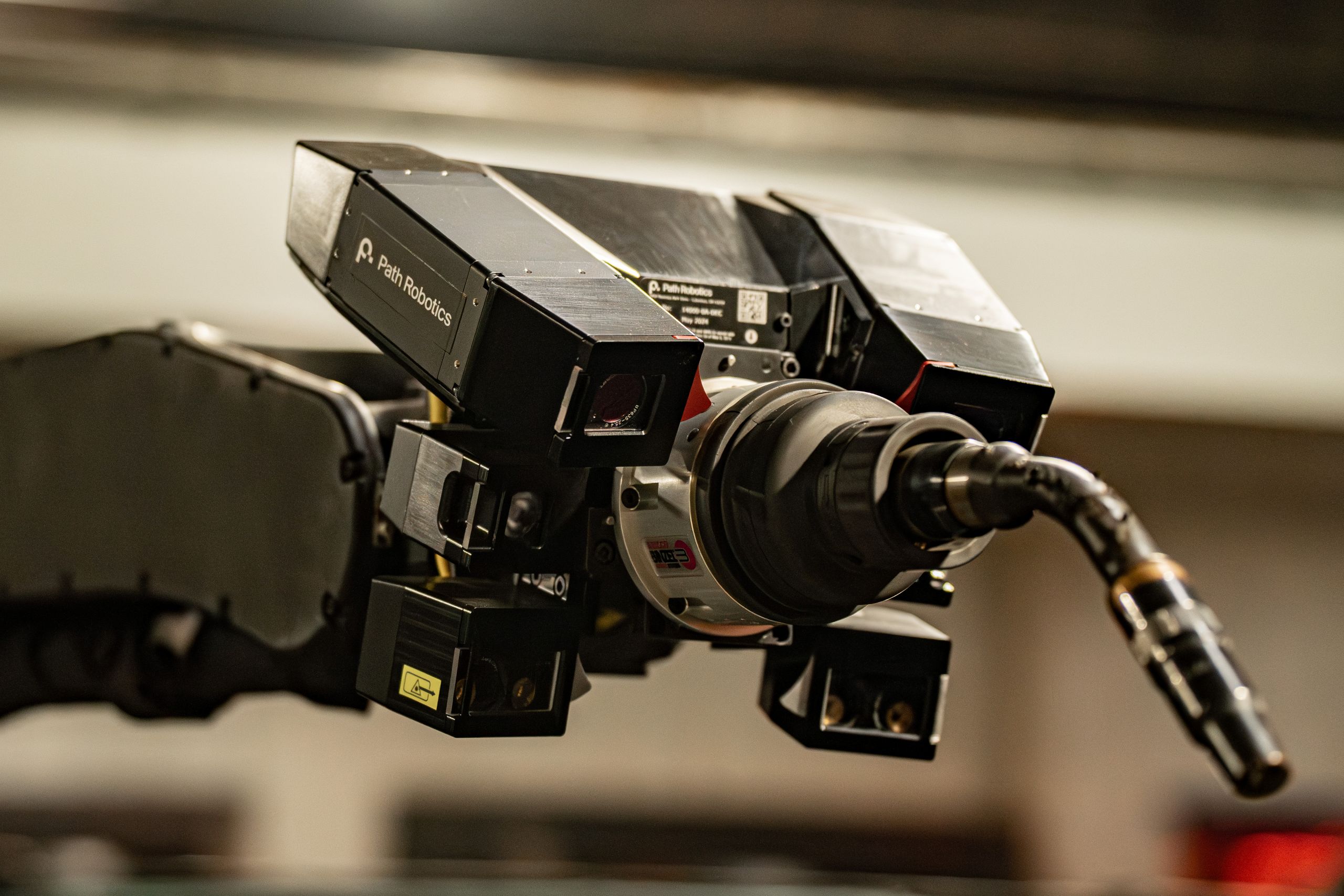
Path Robotics' Intelligent Welding Cells are AI-powered robotic welding systems that use computer vision and machine learning to adapt to real-world manufacturing conditions. They handle imperfect fit-up, part-to-part variation, and heat distortion in real time. Up to 17x faster than manual welding with 97%+ first-pass yield and 30%+ lower cost. Available via Robots-as-a-Service with $0 capex and 24/7 support.
- •Adaptive AI welding with real-time vision-driven seam finding and path planning
- •Handles imperfect fit-up and part-to-part variation
- •Multi-Pass Adaptive Fill: AI determines optimal number and placement of weld passes
- •Auto Heat Distortion Compensation via real-time seam tracking
- •Built for large and heavy work: utility poles to ship hulls
- •17x faster than manual welding with 97%+ first-pass yield
- •30%+ lower cost and $0 capex with Robots-as-a-Service
- •24/7 mission control support included
| Capex | $0 |
| Cost reduction | 30%+ lower cost |
| First pass yield | 97%+ |
| Speed advantage | 17x faster than manual welding |
Use cases
Industries
Technology stackOur read
Inferred from product specs — click through to the technology wiki:
ResearchComputed
Product comparisonComputed
Company announcement
News and Media
The company's official social & video channels · external links


News
From third-party news outlets (China & abroad) · external links