Milvus Robotics
Founded 2011 · Turkey · milvusrobotics.com
SnapshotCompany claim
Milvus Robotics develops autonomous mobile robots (AMRs) and fleet management software for manufacturing and warehouse material handling. Headquartered in Turkey with a U.S. office in Atlanta, it serves global enterprises with scalable intralogistics automation.
- Founded
- 2011
- HQ
- Turkey
- Models
- 3
- Categories
- 2
ContactCompany claim
- Address
- Not disclosed
Product families
Is this your company? Claim this profile to add verified data, respond to our analysis, and upgrade claims to Verified.
Claim this profile1. Executive Overview {#executive-overview}
Milvus Robotics (legal name: Milvus Robotics Teknoloji A.Ş) is a Turkish industrial robotics company founded in 2011 and headquartered in Etimesgut, Ankara. The company designs, manufactures, and deploys autonomous mobile robots (AMRs) and fleet management software purpose-built for heavy-duty intralogistics — moving materials weighing up to 1,800 kg across warehouse and factory floors without fixed infrastructure such as magnets or beacons. With over a decade of development behind it and a bi-continental footprint (Turkey headquarters, U.S. office in Atlanta, Georgia), Milvus is positioned as a serious mid-market contender in the global warehouse automation space, serving enterprises across Turkey, the United States, and stated market presences in the United Kingdom, Germany, Canada, the Netherlands, France, Italy, and Spain.
The company's SEIT product line — spanning the SEIT300S, SEIT500, and SEIT1500S — covers a payload range from 350 kg to 1,800 kg, distinguishing Milvus from lighter-payload AMR vendors and placing it squarely in heavy industrial material handling. Its infrastructure-free navigation (LiDAR-based, no floor modifications required) and stated compliance with international safety standards are externally noted strengths: Automate.org independently reported Milvus positioning its new series as "the safest AMRs on the market," and the company's acceptance into the Ericsson Enterprise Partner Program under the Industry 4.0 track signals ecosystem recognition from a major global technology firm. Coverage by Robotics 24/7 in October 2024 confirms ongoing trade-press visibility.
Not yet disclosed publicly: total revenue, number of active robot deployments, named enterprise customers, or growth-rate figures. Milvus is invited to submit verified commercial data for inclusion in this record.
Latest news
- KEENON Humanoid Pours Drinks at GCS 2026, 100,000 Others Run HotelsYanko Design·2026-06-15GENERAL
2. The Company Story {#the-company-story}
Milvus Robotics was founded in 2011 — unusually early for an AMR-focused company, predating the mainstream commercialization of infrastructure-free autonomous navigation by several years. This founding date positions the company as a first-generation AMR developer rather than a recent entrant riding the post-pandemic automation wave, implying over a decade of accumulated engineering iteration on robot hardware and navigation software.
The company is incorporated as Milvus Robotics Teknoloji A.Ş under Turkish commercial law and maintains its principal engineering and production operations in Etimesgut, Ankara — a district with established industrial and technology activity. The decision to open a U.S. office at 3800 Camp Creek Pkwy SW in Atlanta, Georgia reflects a deliberate push into North American enterprise markets, where intralogistics automation spending is substantial. Atlanta's logistics infrastructure and proximity to southeastern U.S. manufacturing hubs makes it a pragmatic choice for a company targeting factory and warehouse customers.
The brand identity SEIT — the name applied consistently across all three current robot models — appears to function as the product family brand, while "Milvus Robotics" serves as the corporate brand. The company's About page references a prior brand called SEIT with the note "Become a Part of Milvus," suggesting a deliberate corporate rebranding or consolidation at some point in the company's history, with the SEIT product line retained as a recognized product identity. The company explicitly lists AGV-to-AMR conversion among its areas of expertise, indicating it likely serves customers upgrading legacy guided-vehicle infrastructure — a commercially significant positioning given the large installed base of older AGV systems in global manufacturing.
Organizational structure includes dedicated Hardware, Software, Production, Technical Support, and Business departments, indicating a vertically integrated operation that handles design, manufacture, and post-sale support under one roof. The company provides support in both English and Turkish, consistent with its dual-market ambitions.
3. Product Portfolio {#product-portfolio}
Products & versions


Milvus's current public product lineup consists of three models within the SEIT family, all sharing a common design philosophy: infrastructure-free LiDAR navigation, heavy payload capacity relative to footprint, and modular attachment systems. The range creates a coherent tiered structure spanning medium-duty to very heavy-duty material handling.
The SEIT300S anchors the lighter end of the range, carrying 350 kg at up to 2 m/s (the fastest of the three models) with a 9-hour runtime and a compact 815 × 580 × 297 mm footprint. This makes it suited to higher-traffic, tighter-aisle environments where speed and maneuverability matter more than raw tonnage. The SEIT500 steps up to 800 kg payload with 10 hours of runtime and supports a broader attachment ecosystem including chain conveyors, roller conveyors, lifts, and cart attachments — positioning it as the workhorse of the range for mixed manufacturing and distribution environments. The SEIT1500S is the flagship heavy-hauler: 1,800 kg payload (4,000 lbs), 14 hours of runtime, and a low 302 mm ride height allowing it to operate under loads, with custom attachments including chain conveyors, lifts, and roller conveyors available. All three models share the 1.5 m/s speed ceiling (except the faster SEIT300S), emergency stop buttons, safety-rated brakes, and 360-degree LiDAR scanning. Fleet management software is available across the lineup, enabling multi-robot orchestration and, per the company's stated expertise, integration with WMS, ERP, and MES systems — a critical requirement for enterprise deployment.
4. Technology Stack {#technology-stack}
The most concrete and verifiable element of Milvus's technology stack is its navigation architecture: all three SEIT models rely on infrastructure-free autonomous navigation using 360-degree LiDAR scanning rather than floor-embedded magnets, reflective beacons, or QR-code grids. This is a meaningful technical distinction from legacy AGV systems and aligns the product line with contemporary AMR standards where robots map and re-map environments dynamically.
Our read: The combination of infrastructure-free navigation, payload capacities up to 1,800 kg, and a low ride height (297–302 mm across all models) suggests the robots are designed around under-vehicle load-lifting or conveyor-transfer mechanics rather than top-load carrying — a design choice consistent with pallet transport and cart-towing applications in factory logistics. The modular attachment system (chain conveyor, roller conveyor, lift, cart hook variants mentioned across models) reinforces this inference: the base robot platform is likely standardized, with the attachment layer customized per customer workflow.
Our read: Fleet management software capable of WMS/ERP/MES integration implies the software stack includes APIs or middleware connectors to common enterprise platforms (SAP, Oracle, and similar are industry-standard targets in this segment), though specific integration partners or certified connectors are not publicly named.
Safety engineering appears to be a deliberate differentiator: the company's Automate.org-covered press announcement specifically positioned its new SEIT series around safety leadership. Stated safety features include 360-degree LiDAR for obstacle detection, emergency stop buttons, safety-rated brakes, and LED indicators (on the SEIT500). The company claims compliance with international safety standards, though the specific standards (ISO 3691-4, IEC 62061, or similar) are not named in available public data.
Not yet disclosed: specific navigation algorithm architecture (SLAM variant, sensor fusion details), software platform name, cloud vs. on-premise fleet management deployment options, or named WMS/ERP integration certifications. Milvus is invited to provide technical documentation for inclusion.
5. Research, Papers, Authors, Labs {#research-papers}
Company-linked papers
Milvus Robotics does not appear to be a research-publishing organization in the academic or conference-paper sense. This is consistent with the profile of a commercial AMR manufacturer focused on product development and customer deployment rather than basic research dissemination — the large majority of intralogistics robotics firms operate this way. No peer-reviewed publications, preprints, or named research lab affiliations have been identified in publicly available data.
6. Media Evidence {#media-evidence}
Media library
Independent third-party coverage of Milvus Robotics is confirmed across at least two industry-specific outlets. Automate.org (the media arm of A3, the Association for Advancing Automation) published at least two distinct news items: one reporting Milvus's acceptance into the Ericsson Enterprise Partner Program under the Industry 4.0 track for Device and Hardware partners, and a second covering Milvus's launch of a new SEIT series positioned as the safest AMRs on the market. Robotics 24/7 (robotics247.com) carried a Milvus feature or news item dated October 3, 2024, confirming active trade-press engagement through the second half of 2024. These placements represent credible, non-paid editorial contexts within the automation and robotics industry press.
7. Commercial Reality {#commercial-reality}
Customers & deployments
Revenue, total units deployed, named enterprise customers, and customer ROI figures are not publicly disclosed by Milvus Robotics. No verified third-party data source has published financial or commercial volume metrics for this company. Accordingly, no revenue estimate, customer count, or deployment scale figure is stated here.
The company's geographic market listing (Turkey, United States, United Kingdom, Germany, Canada, Netherlands, France, Italy, Spain) represents its stated target markets or existing presence — the distinction between active customers and target markets in each country is not resolvable from public data. The existence of a U.S. office and U.S. sales contact (+1 678 972 1201) confirms active commercial pursuit of the North American market.
Milvus Robotics is invited to submit verified customer references, deployment counts, or audited commercial metrics for inclusion in this record. Named customer case studies would materially strengthen independent assessment of commercial traction.
8. Markets and Use Cases {#markets-use-cases}
Milvus's product tagging and descriptions point to three primary industry verticals: warehousing and distribution, discrete manufacturing / factory environments, and general logistics operations. Within those verticals, the use cases are anchored in heavy material transport — moving pallets, carts, and large sub-assemblies between production stations, storage locations, and loading docks.
The SEIT1500S's 1,800 kg capacity places it in a category relevant to automotive manufacturing, heavy-goods warehousing, steel or metal component handling, and large-format consumer goods logistics — sectors where manual forklift operations carry significant safety risk and labor cost. The SEIT500's 800 kg mid-range capacity and broad attachment compatibility make it well-suited to food and beverage production, e-commerce fulfillment, and general manufacturing lines. The SEIT300S, at 350 kg and the highest speed in the lineup (2 m/s), fits repetitive point-to-point transport tasks in electronics assembly, pharmaceutical distribution, or any environment with narrow aisles and high cycle frequency.
The company's explicit expertise listing of AGV-to-AMR conversion identifies a specific and commercially large market segment: manufacturers and logistics operators running legacy wire-guided or magnetic-tape AGV systems who need to upgrade without full facility redesign. Infrastructure-free navigation is the key value proposition in this conversion context — no floor modification is required, reducing changeover cost and downtime. The stated WMS/ERP/MES integration capability further positions Milvus as targeting enterprise accounts with existing system landscapes rather than greenfield startups.
The Industry 4.0 framing of the Ericsson partnership underscores a positioning toward connected, data-driven factory environments where robots are nodes in a broader operational technology network — a market expectation in European and North American advanced manufacturing.
9. Competitive Landscape {#competitive-landscape}
Competitive comparison
| Robot | Maker | Autonomy | Conf. |
|---|---|---|---|
| iRobot Roomba Combo 10 Max | iRobot | Autonomous | 0.90 |
| Mobile ALOHA (Stanford) | Stanford University | Teleoperated | 0.90 |
| 1X NEO | 1X Technologies | Remote-Assisted | 0.90 |
The AMR market for heavy-payload intralogistics — robots carrying 300 kg to 2,000+ kg in manufacturing and warehouse settings — is an increasingly active category with participants ranging from large automation conglomerates to specialized AMR-only vendors. Milvus competes in a segment defined by payload capacity, navigation sophistication, fleet software capability, and total cost of deployment (including the infrastructure-free advantage). The heavy end of Milvus's range (1,800 kg) places it in a relatively less crowded tier than the sub-100 kg collaborative AMR segment, though competition at this payload level is growing as established players extend their ranges upward.
The Ericsson Enterprise Partner Program membership provides ecosystem positioning that smaller AMR vendors often lack — an association with a major telecom and Industry 4.0 infrastructure provider that may support Milvus's differentiation in connected-factory sales contexts. Geography is also a factor: Turkish-origin manufacturing with a U.S. commercial presence offers a supply-chain profile that may be relevant to customers diversifying away from single-source geographies. The module below identifies the peer set identified through computed market relations.
10. Country Advantage / Geopolitical {#geopolitical}
Turkey's position as a NATO member state with a growing advanced manufacturing sector and substantial engineering talent pipeline provides a credible home base for a hardware robotics company. Ankara, where Milvus is headquartered, hosts significant defense, aerospace, and technology industry activity, providing access to mechanical and electrical engineering talent. Turkish manufacturing cost structures may offer competitive advantages in hardware production relative to Western European peers.
The company's U.S. office and U.S. sales infrastructure (Atlanta, Georgia; U.S. phone number) reflect an awareness that North American enterprise procurement — particularly in manufacturing and logistics — often requires local commercial presence and support capacity. For customers subject to supply-chain origin considerations, Turkey's status as an independent NATO-aligned economy with trade agreements spanning European and North American markets is a materially relevant fact.
The stated market presence in Germany, the United Kingdom, France, Italy, the Netherlands, and Spain indicates active engagement with European industrial markets — where Industry 4.0 adoption, labor cost pressures, and regulatory frameworks (including EU machinery safety directives) create strong demand for AMR solutions from vendors who can demonstrate standards compliance.
11. Hype vs Real vs Ugly {#hype-real-ugly}
Claim tracker
What is independently supported: Milvus Robotics is a real, operating company with verified physical addresses in Ankara and Atlanta, a functioning website, public contact infrastructure, and confirmed third-party press coverage in credible industry outlets (Automate.org, Robotics 24/7). Three specific AMR products with detailed, internally consistent specifications are publicly documented. Ericsson Enterprise Partner Program membership is reported by Automate.org — an independent, non-Milvus source.
Company claims requiring verification: The positioning of the SEIT series as "the safest AMRs on the market" (reported via Automate.org as a company claim) is a superlative that invites scrutiny. Safety leadership claims in robotics typically require reference to specific certified standards, third-party testing results, or certification body validation — none of which are named in available public data. This should be read as a company claim, not a verified comparative finding. Similarly, claims of WMS/ERP/MES integration capability, international safety standards compliance, and global enterprise customer service are company-stated and unverified by independent audit in publicly accessible sources.
Gaps, not negatives: Customer names, deployment volumes, revenue, and named integration partners are not publicly available. These are disclosure gaps, not evidence of absence. A company of Milvus's tenure (founded 2011) operating in global enterprise markets without named public customers likely operates under standard enterprise NDA conventions — common in industrial automation. Milvus is invited to provide verifiable customer references, standards certification numbers, or integration partner documentation to strengthen this record.
12. Future Scenarios {#future-scenarios}
Our read — Bull case: Milvus successfully converts its Industry 4.0 partnership with Ericsson and its heavy-payload AMR differentiation into marquee enterprise wins in North American and European automotive, logistics, or food manufacturing — sectors with structural labor shortages and strong ROI cases for 1,000–2,000 kg automation. Infrastructure-free navigation and the AGV-conversion value proposition accelerate sales cycles with legacy-installed-base customers. The Atlanta office becomes a meaningful North American revenue engine within 2–3 years.
Our read — Base case: Milvus grows steadily as a credible regional-to-international AMR vendor, accumulating enterprise deployments primarily in Turkey and selected European markets, with incremental North American penetration. The SEIT product line is extended or refreshed (a SEIT2000 or software-only fleet management SKU would be logical next steps), and trade-press visibility continues to build. Revenue and customer base remain undisclosed publicly, but commercial viability is sustained.
Our read — Bear case: The AMR heavy-payload segment attracts intensified competition from well-capitalized incumbents with larger sales forces, broader service networks, and deeper integration ecosystems. Milvus's relatively limited public commercial disclosure makes enterprise procurement qualification harder in markets (particularly the U.S.) where references and case studies are standard buying requirements. Geographic distance between Ankara manufacturing and North American/European customer sites creates service-response challenges at scale. Growth stalls without a significant partnership, distribution agreement, or funding event that increases market reach.
13. What to Watch {#what-to-watch}
- Named customer announcements: Any publicly disclosed enterprise deployment — particularly in automotive, food/beverage, or e-commerce logistics — would materially validate commercial traction and segment fit.
- U.S. market activity: Sales volume, partnership announcements, or case studies originating from the Atlanta office will indicate whether North American penetration is gaining real momentum.
- Ericsson partnership outcomes: Whether the Industry 4.0 / Ericsson Enterprise Partner Program affiliation translates into co-selling activity, joint customer wins, or 5G-connected robot deployments is a key leading indicator.
- Product line extension: A new SEIT model (higher payload, specialized attachment, or software-only SKU) or fleet management platform announcement would signal R&D investment continuity.
- Safety certification disclosure: Publication of specific standards certifications (e.g., ISO 3691-4, CE marking details) would substantiate the "safest AMRs" claim and strengthen European enterprise procurement qualification.
- Funding or ownership events: Any disclosed investment round, strategic acquisition, or public listing would reframe the company's growth trajectory and capital access.
- Robotics 24/7 and Automate.org follow-up coverage: Ongoing trade-press appearances in 2025 would confirm sustained market engagement.
14. Sources & Methodology {#sources-methodology}
Primary data source: All factual claims in this report are grounded exclusively in data extracted from Milvus Robotics' own website (milvusrobotics.com), including structured schema markup, product pages, and the company About page. All such content is labeled company-claim provenance and should be read as the company's own representation of its products, capabilities, and markets — not independently audited fact.
Independent third-party sources: Three items of external press coverage were incorporated: two articles from Automate.org (the Association for Advancing Automation's media platform) and one item from Robotics 24/7 (robotics247.com, dated October 3, 2024). These are treated as independent editorial coverage and cited as external validation where relevant, though they are not audited financial or technical sources.
Computed relations: Competitive landscape peer identification and market categorization are derived from computed product-category and industry-tag matching against a broader robotics company dataset. These relationships are labeled accordingly and populated via live modules.
What this report does not do: It does not assert revenue, customer counts, deployment volumes, or comparative performance claims without a named, verifiable source. Gaps in public disclosure are flagged as "Not yet disclosed" with an invitation to the company to submit verified data. Inferences drawn from available data are labeled "Our read:" throughout.
Universal rubric: This methodology — company-site extraction + labeled inferences + named third-party press + explicit gap-flagging — is applied uniformly to every company report in this dataset.
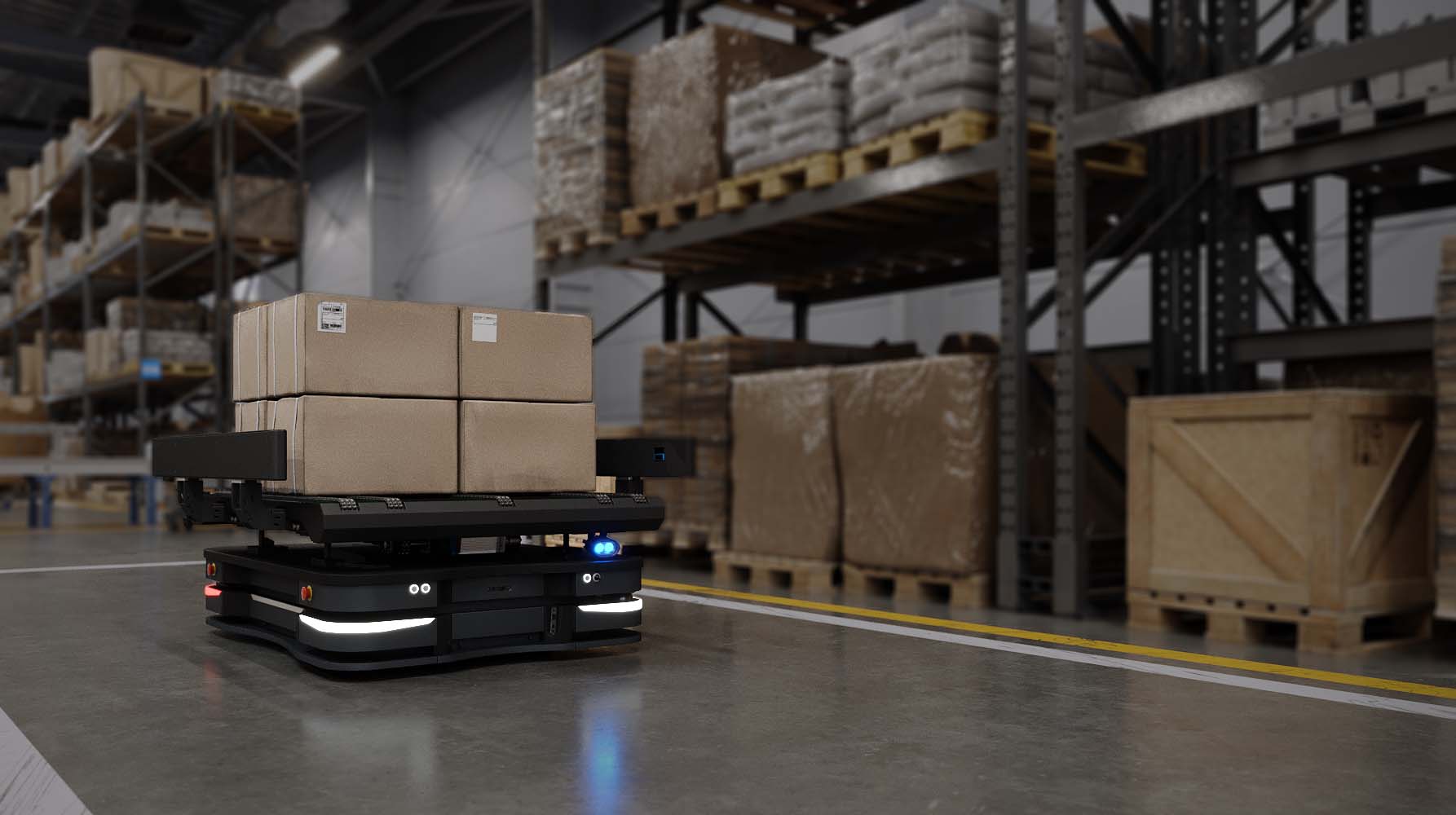
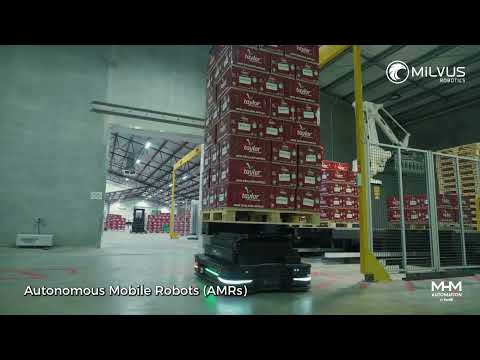
The SEIT1500S is a heavy-duty autonomous mobile robot (AMR) from Milvus Robotics, designed for large-scale material handling in warehouses and factories. It carries up to 1800 kg, operates 14 hours per charge, and navigates without infrastructure. Safety features include LIDAR, emergency stops, and safety brakes. Custom attachments like chain conveyor, lift, and roller conveyor are available.
- •Payload up to 1800 kg (4000 lbs)
- •14 hours of operation per charge
- •Max speed 1.5 m/s (3.4 mph)
- •Infrastructure-free navigation (no magnets or beacons)
- •High precision task execution
- •Compliant with international safety standards
- •LIDAR 360-degree scanning for obstacle detection
- •Emergency stop buttons, safety-rated brakes
- •Multi-color programmable LED indicators
- •Customizable attachments (chain conveyor, lift, roller conveyor)
| Depth | 1078 mm |
| Speed | 1.5 m/s |
| Width | 1415 mm |
| Height | 302 mm |
| Payload | 1800 kg |
| Runtime | 14 h |
Technology stackOur read
Inferred from product specs — click through to the technology wiki:
ResearchComputed
Product comparisonComputed
Each row leads with this company's product, side-by-side with similar ones · click a row to expand full specs, click again to collapse
SEIT1500S
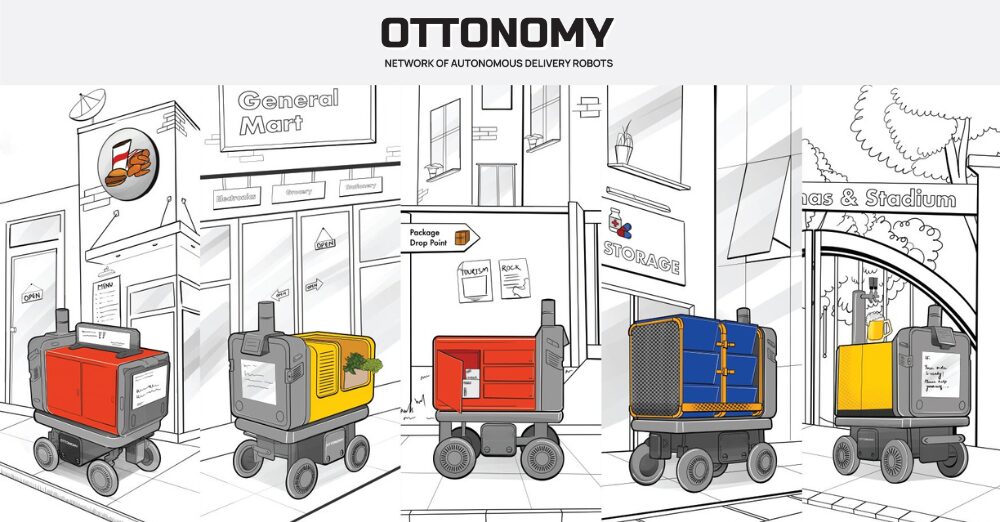
Ottobot
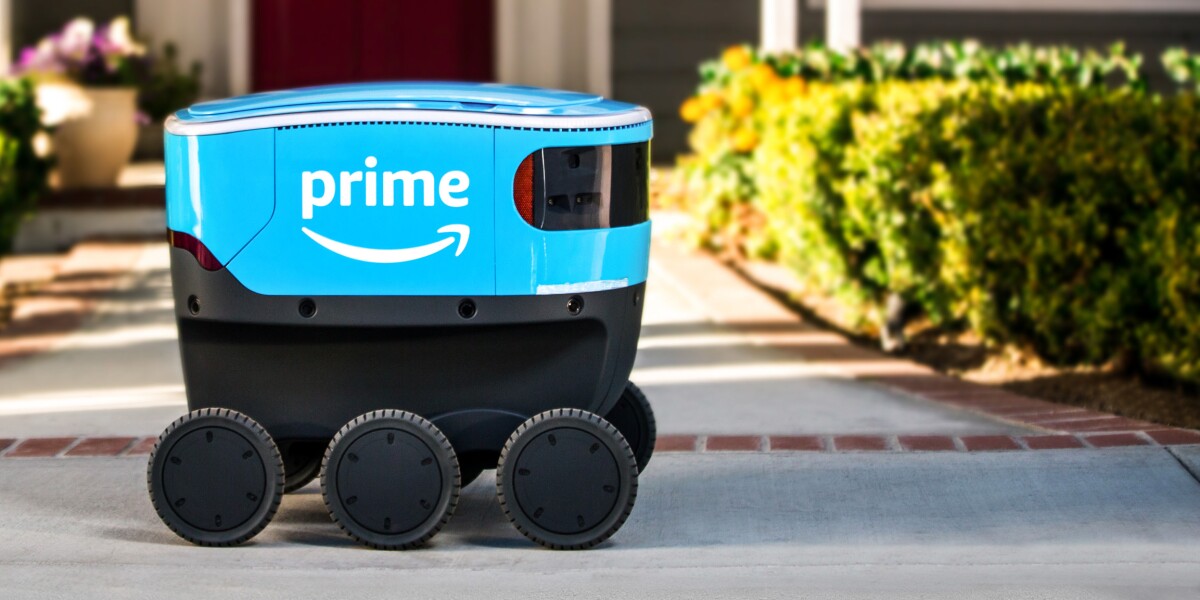
Amazon Scout

LuckiBot Pro

KettyBot
Pudu CC1
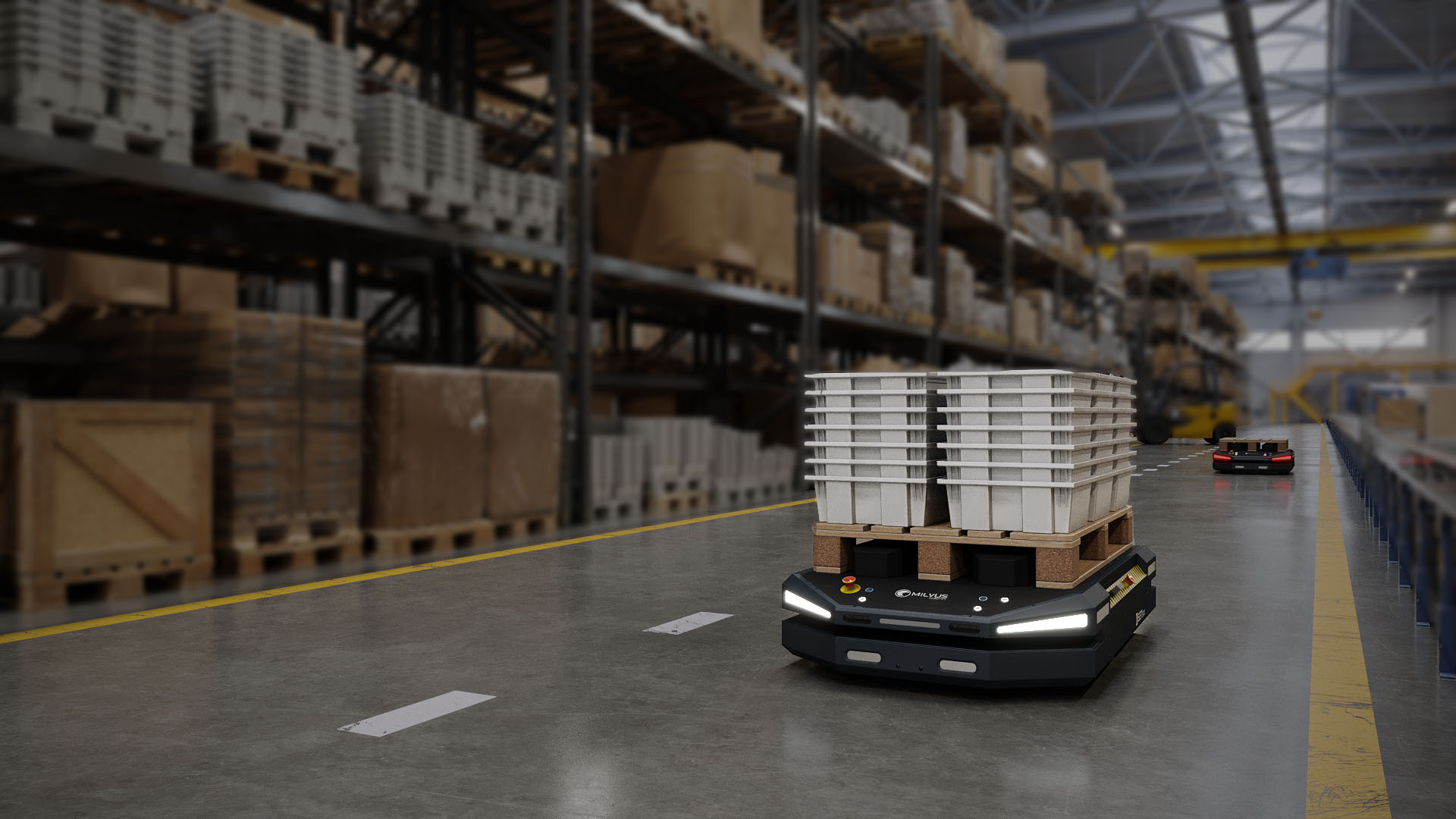
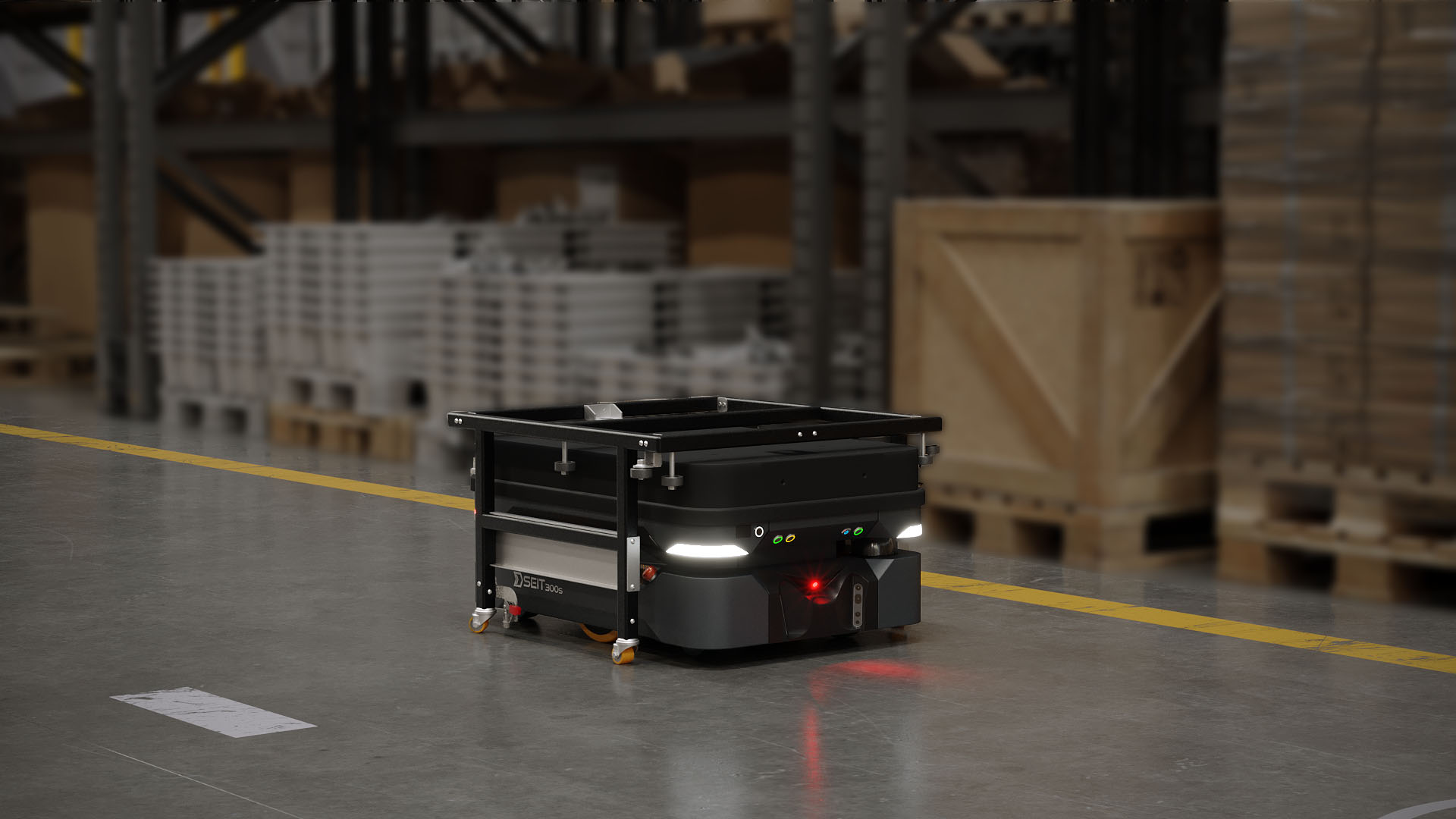
SEIT300S
LuckiBot Pro
KettyBot
Pudu CC1

R3

Relay Delivery Robot
Company announcement
News and Media
The company's official social & video channels · external links


News
From third-party news outlets (China & abroad) · external links