Miko
US · miko.ai
SnapshotCompany claim
Educational platform offering unlimited access to premium content including 1000+ games, videos, stories, puzzles, music, coding, and yoga from Disney and Da Vinci Kids.
- Founded
- Not disclosed
- HQ
- US
- Models
- 24
- Categories
- 3
ContactCompany claim
- Address
- Not disclosed
Product families
Is this your company? Claim this profile to add verified data, respond to our analysis, and upgrade claims to Verified.
Claim this profile1. Executive Overview {#executive-overview}
Miko is a US-based consumer robotics and edtech company operating at the intersection of AI-powered companion robotics and children's educational content. Its flagship products — the Miko 3 and Miko Mini — are AI-driven humanoid companion robots for children ages 5–10, priced at $299 and $149 respectively, built around deep learning, face and voice recognition, and a curated library of 1,000+ educational experiences spanning games, STEAM content, coding, yoga, and stories. The company has assembled a notable content partner roster that includes Disney, Da Vinci Kids, Cosmic Kids, Oxford University Press, and Out of this World, suggesting deliberate investment in licensed premium content as a platform differentiator rather than relying solely on hardware sales.
Beyond its robotic companions, Miko has expanded into AI-powered smart chess hardware — the Miko Chess and Miko Chess Grand — and operates a recurring-revenue subscription tier, Miko Max, priced at $14.99/month or $99/year, which unlocks 50,000+ hours of content across its robot lineup. This hardware-plus-subscription model positions Miko closer to a platform business than a one-time consumer electronics sale. Third-party press coverage from NBC News, The Robot Report, and Medium confirms independent awareness of the brand, with an NBC News report from February 2026 noting that Miko added an AI off-switch following political pressure — an event that underscores both the company's visibility and the policy scrutiny now facing AI products designed for children.
Not yet disclosed: total installed base, cumulative revenue, geographic distribution of sales, and institutional investor details. Miko is invited to claim or correct any figures in this report.
Latest news
- KEENON Humanoid Pours Drinks at GCS 2026, 100,000 Others Run HotelsYanko Design·2026-06-15GENERAL
2. The Company Story {#the-company-story}
Miko's founding date is not publicly disclosed on its website. The company is registered in the United States (domain: miko.ai; Shopify merchant country code: US) and operates a direct-to-consumer e-commerce storefront as its primary retail channel. The Robot Report covered the launch of the Miko 2 educational robot for the North American market timed to the holiday season, establishing that the company had at least one prior hardware generation (Miko 2) before the current Miko 3, and that North America was a deliberate target market from an identifiable milestone onward. The current lineup — Miko 3, Miko Mini, and the Miko Chess family — represents what appears to be at least a third generation of hardware iteration.
The company's positioning has evolved into a dual-track strategy: AI companion robotics for children and AI-enabled chess hardware for skill-based play. The Miko Max subscription service, covering content from partners as credentialed as Oxford University Press and Disney, signals a deliberate move toward platform economics where the robot is an access device for a recurring-revenue content ecosystem. The February 2026 NBC News report — noting Miko added an AI off-switch after political pressure — places the company squarely in the national conversation about child AI safety and data privacy, a positioning that carries both reputational risk and visibility benefit. COPPA compliance and kidSAFE+ certification are cited on the company's own product pages as baseline safety commitments.
Not yet disclosed: the founding year, founding team composition, total funding rounds, and lead investors. Miko is invited to supply this information to enrich the company record.
3. Product Portfolio {#product-portfolio}
Products & versions
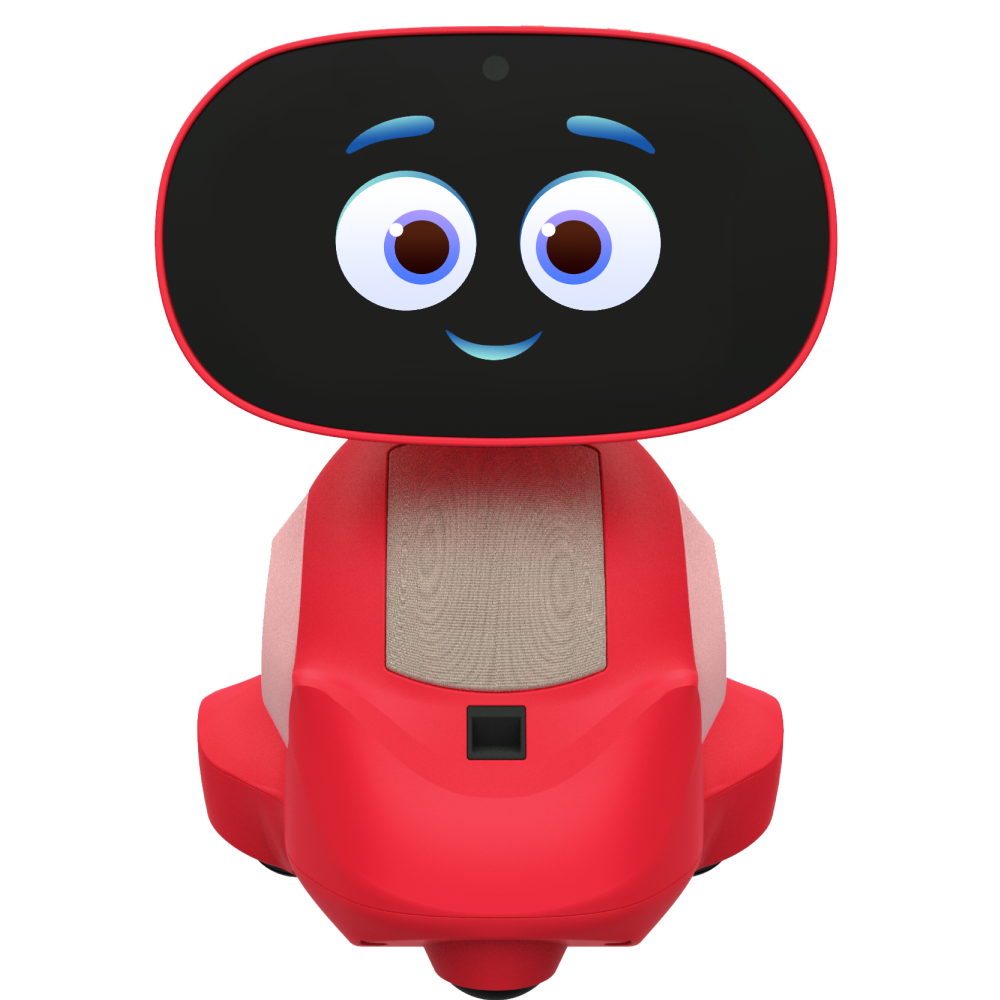


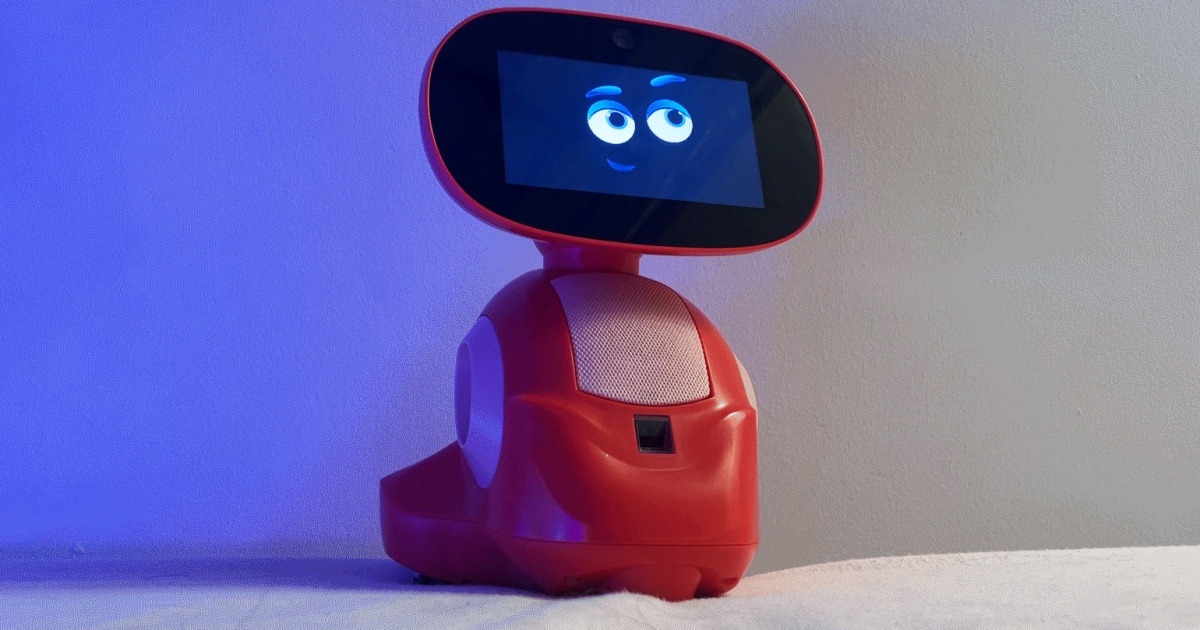
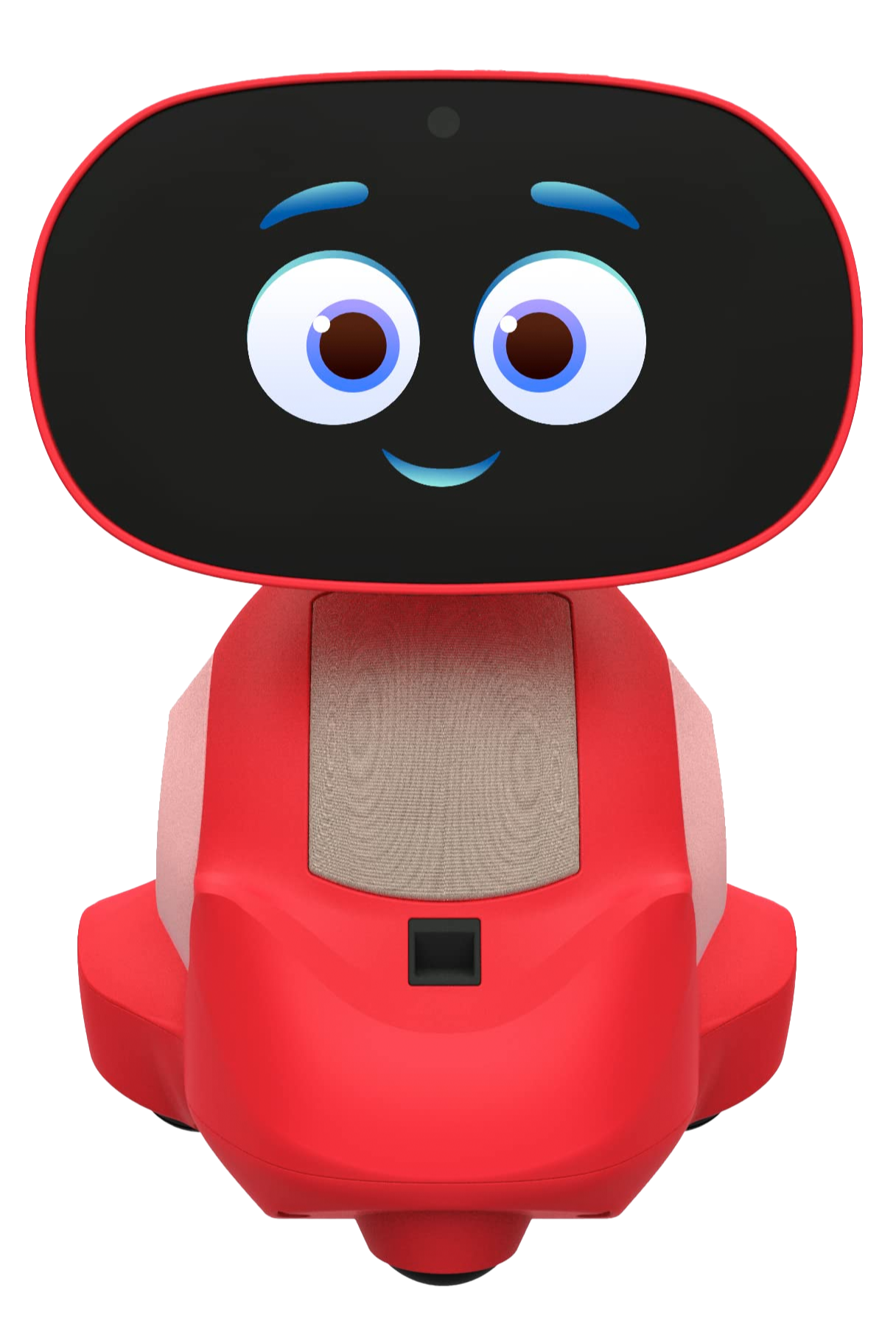
Miko's product lineup divides into three clear categories. The first and most prominent is AI companion robotics: the Miko 3 ($299) and Miko Mini ($149, regularly $199) are both classified as humanoid robots for children ages 5–10, sharing a feature architecture of wide-angle HD camera, dual MEMS microphone arrays, time-of-flight range sensors, high-resolution IPS displays, face and voice recognition, expressive reactions, rubberized wheels, and COPPA-compliant security. The Miko 3 is physically larger (8.67 × 6.3 × 5.5 inches, 2 lbs) with 6–7 hours of battery life, while the Miko Mini (165 × 115 × 137 mm, 1.2 kg) offers a more compact form with 3 hours of battery and a 90-minute charge time. Both support 8 languages including English, Spanish (European and Latin American variants), Mandarin, Italian, German, French, and Arabic. The company sells twinpacks and multi-robot bundles (e.g., Miko 3 + Miko Mini at $219.99, and a three-robot bundle) that suggest household multi-unit adoption is an intended use pattern.
The second category is AI chess hardware: the Miko Chess ($349) and Miko Chess Grand ($499, sale from $549) are smart automated chessboards featuring self-moving pieces, adaptive AI, and integration with Chess.com and Lichess — platforms the company claims host 130M+ players. The Miko Chess Grand specifies 20+ adaptive AI levels, a rosewood finish, BLE 4.1 connectivity, up to 30 games per charge, and dimensions of 23.74 × 19.05 × 1.92 inches at 11.9 lbs. A range of chess accessories — protective bags, plastic and wooden pieces, storage boxes, and adaptors — rounds out this sub-category.
The third category is content and subscriptions: Miko Max ($99/year or $14.99/month) delivers 50,000+ hours of content from Disney, Da Vinci Kids, Cosmic Kids, Oxford University Press, and Out of this World across multiple robots on a single subscription. Miko Discovery Cards (25 child-friendly question prompts in three themed variants: STEM, Fun Facts & Wow, and Feelings & Friendship) and a personalized hardcover storybook co-created by the child and Miko robot represent physical, non-electronic product extensions designed to deepen engagement with the robot companion. The Miko Max 6-Month Extension ($39, regularly $90) provides flexible subscription management.
4. Technology Stack {#technology-stack}
The Miko 3 and Miko Mini share a sensor suite that is directly specified on the company's product pages: wide-angle HD cameras, dual MEMS microphones, time-of-flight range sensors for spatial awareness, high-resolution IPS displays, and high-performance speakers. Both robots run on-device face recognition and voice recognition described as powered by deep learning AI. The Miko 3's 15-watt charger and 4-hour charge time for 6–7 hours of runtime suggest a moderate-capacity lithium battery pack consistent with the robot's 2-lb form factor.
Our read: The combination of a time-of-flight sensor, wide-angle camera, and dual MEMS microphone array is consistent with a short-range obstacle avoidance and user-presence detection architecture — sufficient for tabletop or floor navigation in a home environment but not indicative of full autonomous mobile navigation. Face recognition being described as "deep learning" suggests an on-device or edge-inference model rather than purely cloud-dependent processing, though the precise inference hardware (SoC, NPU) is not publicly disclosed.
The Miko Chess and Miko Chess Grand use a different technical architecture: BLE 4.2 and BLE 4.1 respectively, motorized piece-movement mechanisms (enabling auto-reset and blitz play), interactive LED lighting for move guidance, and AI described as adaptive across 20+ skill levels. Integration with Chess.com and Lichess implies app-mediated connectivity via Bluetooth to a paired mobile device acting as the internet bridge.
Our read: The chess hardware's adaptive AI most likely runs a combination of on-board embedded logic for piece actuation and cloud-assisted or app-resident chess engine evaluation, given the complexity of 20+ ELO-calibrated skill levels. The specific chess engine or AI framework is not disclosed.
On privacy and security, the company explicitly cites enhanced encryption and COPPA compliance with kidSAFE+ certification across both robot lines. The Miko Parent App provides parental controls, usage analytics, real-time progress reports, daily learning goal-setting, and screen time management — implying a cloud-connected backend with per-child data profiles. The NBC News (February 2026) report that Miko added an AI "off-switch" following political pressure indicates the company has made architectural changes to its AI interaction layer under regulatory scrutiny; the specific nature of that change is not detailed in the available data.
Not yet disclosed: underlying SoC or processor specifications, operating system, AI framework or model details, server infrastructure, or specifics of the post-2026 AI interaction controls.
5. Research, Papers, Authors, Labs {#research-papers}
Company-linked papers
Miko does not appear to be a research-publishing organization. No academic papers, technical whitepapers, named research authors, or affiliated laboratory relationships are referenced in any of the company's publicly available site content or in the third-party press coverage indexed for this report. This is consistent with the profile of a consumer-facing edtech and service-robotics company focused on product development and content licensing rather than foundational AI research. Prospective partners or analysts seeking technical depth on underlying models should direct inquiries to press@miko.ai.
6. Media Evidence {#media-evidence}
Media library
Three independent third-party outlets have published coverage of Miko: NBC News (nbcnews.com) reported on February 17, 2026 that Miko added an AI off-switch following political pressure — a significant piece of coverage situating the company in the national child AI safety debate. The Robot Report (therobotreport.com) covered the Miko 2 launch into the North American market timed to the holiday season, providing early independent validation of the company's hardware releases. Medium published a profile piece titled "Miko: Inside the friendly AI-powered robot companion for kids," offering a more in-depth look at the company's product philosophy and positioning. Taken together, these three outlets span mainstream news, specialist robotics trade press, and long-form technology narrative — a coverage profile consistent with a consumer robotics company of moderate public profile.
7. Commercial Reality {#commercial-reality}
Customers & deployments
Revenue, unit sales volume, active subscriber counts for Miko Max, customer retention rates, and any published return-on-investment or learning-outcome metrics are not disclosed in any publicly available company materials or third-party sources reviewed for this report. The pricing architecture — hardware at $149–$499, annual subscription at $99, monthly at $14.99 — is fully public, and the existence of twinpack bundles and multi-robot bundles suggests the company is actively pursuing multi-unit household sales, but no shipment figures or customer counts are confirmed.
The presence of several "Sold out" SKUs across both the robot and chess accessory lines (Miko Mini standalone, Miko Chess Grand accessories, multiple bundle configurations, Miko Discovery Cards, the personalized storybook) may indicate demand exceeding supply at various points, but this interpretation is speculative without inventory and restock data.
Miko is invited to disclose commercial metrics, customer case studies, or independently verified learning outcome data to enrich this section of the record.
8. Markets and Use Cases {#markets-use-cases}
Based on the product data and content partner lineup, Miko's addressable markets and primary use cases can be mapped with reasonable confidence.
Children's residential education (core market): Both the Miko 3 and Miko Mini are tagged to the residential industry and explicitly designed for children ages 5–10. The use cases span STEAM education (science, technology, engineering, arts, mathematics), language learning across 8 languages, reading and storytelling, coding introduction, yoga and wellness, and general interactive entertainment. The Disney and Da Vinci Kids content partnerships anchor the platform firmly in the premium children's media consumption space, while Oxford University Press content adds academic credibility to the literacy and language use case.
Parental engagement and monitoring: The Miko Parent App with usage analytics, real-time progress reports, daily goal-setting, and screen time controls positions the product as much for parents managing children's learning as for children themselves. This is a deliberate design decision that broadens the purchasing-decision audience to include educationally motivated parents and caregivers.
Chess and skill-based play (emerging second market): The Miko Chess and Miko Chess Grand target a distinct, older demographic — chess enthusiasts ranging from beginners to intermediate players — through adaptive AI, professional match live-streaming, and integration with Chess.com and Lichess. At $349–$499, these products address a more discretionary and gift-oriented purchase context.
Potential institutional adjacency: The inclusion of Oxford University Press as a content partner and the STEAM curriculum framing suggest the content platform could be relevant to K–5 classroom or after-school program environments, though no institutional or school deployment is referenced in any available data.
Not yet disclosed: whether Miko has active school, library, or institutional sales channels, or any formal pilot programs in educational institutions.
9. Competitive Landscape {#competitive-landscape}
Competitive comparison
| Robot | Maker | Autonomy | Conf. |
|---|---|---|---|
| iRobot Roomba Combo 10 Max | iRobot | Autonomous | 0.90 |
| Mobile ALOHA (Stanford) | Stanford University | Teleoperated | 0.90 |
| 1X NEO | 1X Technologies | Remote-Assisted | 0.90 |
The AI companion robot-for-children category is an active segment within consumer robotics, with several hardware-plus-platform players competing for the same 5–10 age bracket, the same parental buyer profile, and the same STEAM content positioning. Miko's differentiation rests on its multi-generation hardware history (at least Miko 2 through Miko 3), its licensed premium content roster (Disney, Oxford University Press), its dual-language-and-learning orientation (8 supported languages), and its COPPA/kidSAFE+ compliance posture — the last of which has taken on heightened competitive significance following the February 2026 political scrutiny covered by NBC News.
The smart chess hardware category (Miko Chess, Miko Chess Grand) operates in a separate competitive space — automated chessboards with self-moving pieces and AI coaching — where the integration with Chess.com and Lichess and the 130M+ player network claim are the primary network-effect differentiators cited by the company. The two product categories (child companion robots and AI chess boards) share a brand and distribution channel but serve meaningfully different customer segments and purchase occasions.
10. Country Advantage / Geopolitical {#geopolitical}
The February 2026 NBC News report that Miko added an AI "off-switch" following political pressure is materially relevant here. AI products designed for children — particularly those with always-on microphones, cameras, face recognition, and cloud-connected data profiles — are subject to increasing US regulatory and legislative scrutiny under existing frameworks (COPPA) and proposed expansions thereof. Miko's proactive addition of an AI interaction control in response to this pressure, and its existing COPPA compliance and kidSAFE+ certification, indicate the company is navigating a tightening regulatory environment for child-directed AI.
The company's US registration and USD-denominated commerce position it within the domestic regulatory perimeter, which provides clarity but also exposure to evolving federal and state-level children's data privacy legislation. The 8-language support (including Mandarin, Arabic, Spanish variants) suggests international market ambitions, which would add further jurisdictional compliance considerations not detailed in available public data.
Our read: The child AI safety policy environment is likely to remain an active factor in Miko's product roadmap and communications strategy for the foreseeable future.
11. Hype vs Real vs Ugly {#hype-real-ugly}
Claim tracker
Verified by product specification: The Miko 3's physical dimensions (8.67 × 6.3 × 5.5 inches, 2 lbs), battery life (6–7 hours), charge time (4 hours), and 8-language support are stated specifications on the company's own product pages (company-claim). The Miko Chess Grand's 20+ adaptive AI levels, rosewood finish, BLE 4.1 connectivity, and 30-games-per-charge battery are similarly specified (company-claim).
Company claims requiring independent verification:
- "1,000+ games, educational videos, stories, puzzles" — company-claim; content library size is not independently audited in available data.
- "50,000+ hours" of content on Miko Max — company-claim; hours figure is not independently verified.
- Chess.com and Lichess integration with "130M+ players" — the 130M+ player figure reflects Chess.com's and Lichess's own reported user bases, not Miko's user count; the integration itself is a company-claim.
- "World's smartest automated AI chessboard" — company-claim; superlative is not independently substantiated.
- "Deep learning AI" for face and voice recognition — company-claim; the specific model architecture and performance benchmarks are not disclosed.
Verified by independent press:
- Miko 2 launched in North America for the holiday season — confirmed by The Robot Report.
- Miko added an AI off-switch following political pressure in February 2026 — confirmed by NBC News.
- Miko is an "AI-powered robot companion for kids" — confirmed by Medium profile coverage.
Gaps (not negatives — invitations to disclose): Not yet disclosed: independently measured learning outcomes, third-party content library audits, AI performance benchmarks, regulatory correspondence details, or the specific nature of the 2026 AI off-switch implementation.
12. Future Scenarios {#future-scenarios}
Bull case — Our read: Tightening child AI safety regulation accelerates market consolidation toward COPPA-certified, kidSAFE+-compliant platforms, rewarding Miko's early investment in compliance infrastructure. The Miko Max subscription base scales with the installed hardware base, converting one-time hardware buyers into recurring-revenue subscribers. Disney and Oxford University Press content partnerships provide a defensible content moat and unlock institutional (school, library) channels. The chess hardware line opens a second customer demographic and a higher average-order-value gift category.
Base case — Our read: Miko maintains its position as a mid-market consumer edtech robotics brand, selling through direct-to-consumer e-commerce primarily in North America and English-dominant markets. The Miko Max subscription provides modest recurring revenue growth. Chess hardware remains a niche premium offering. The company navigates the child AI safety regulatory environment without material disruption, building incrementally on its compliance posture. International expansion via the 8-language capability progresses slowly due to localization and regulatory complexity in each new market.
Bear case — Our read: Intensifying competition in the child companion robot space compresses hardware margins, and premium content subscription uptake remains insufficient to offset hardware commoditization. Continued political scrutiny of AI products for children generates reputational drag or triggers compliance costs that weigh on operating margins. The chess hardware category, while differentiated, remains a small contributor in a niche segment. Several "Sold out" SKUs signal either inventory management challenges or declining demand in specific product lines.
13. What to Watch {#what-to-watch}
- Miko 4 / next-generation hardware announcement: Any new robot generation would signal continued R&D investment and may reveal underlying technology stack details (SoC, AI architecture) not currently public.
- Miko Max subscriber count disclosures: Any revenue or subscriber metric — even directional — would materially update the commercial reality assessment.
- Regulatory developments in child AI safety (US federal and state): Given the February 2026 NBC News incident, further legislative or regulatory action in this space directly affects Miko's product architecture and compliance costs.
- New content partner announcements: Additions to or departures from the Disney/Da Vinci Kids/Oxford University Press partner roster would signal platform health and content strategy direction.
- International market entry: Any announced expansion beyond North America, particularly in Mandarin-, Arabic-, or Spanish-speaking markets, would validate the 8-language investment.
- Chess.com / Lichess integration depth: Whether the Miko Chess platform achieves meaningful adoption within the Chess.com and Lichess communities (e.g., official partnership announcements, tournament integrations) would determine whether the chess hardware becomes a growth category.
- Institutional (school/library) sales channel: Any announcement of K–12 school pilots, curriculum partnerships, or institutional procurement would represent a significant market expansion.
- AI off-switch implementation details: Public disclosure of the technical and policy specifics of the 2026 change would inform assessments of Miko's AI governance maturity.
14. Sources & Methodology {#sources-methodology}
Primary source: All product specifications, feature descriptions, pricing, content partner names, subscription terms, and company positioning language are extracted directly from Miko's own website (miko.ai) and its Shopify storefront metadata. All such information is treated as company-claim provenance — meaning it reflects the company's own representations and has not been independently audited or verified by this report's analyst process.
Third-party press sources (independent validation):
- NBC News (nbcnews.com) — "AI toy company Miko adds AI off-switch after political pressure," February 17, 2026.
- The Robot Report (therobotreport.com) — Coverage of Miko 2 North American launch.
- Medium (medium.com) — "Miko: Inside the friendly AI-powered robot companion for kids."
These are cited as external validation of specific facts (product launches, named events) and do not constitute endorsement of commercial claims.
Methodology rubric (applied uniformly to every company in this series):
- Every factual claim is grounded in source data above; nothing is invented or inferred from general industry knowledge without a label.
- Inferences are labeled "Our read:" and distinguished from verified facts.
- Gaps are framed as "Not yet disclosed" with an invitation to claim or correct — never as unsourced negatives.
- Sections lead with verified strengths before gaps.
- Competitor names appear only in the live module, not in analyst prose.
- Taiwan is treated as an independent country.
- This rubric applies to every company report in the series without exception.
Contact for corrections or disclosures: press@miko.ai
Miko 3
HumanoidMiko 3 is an AI-powered educational robot for children ages 5-10, featuring deep learning capabilities, face and voice recognition, and 1000+ games and STEAM-focused content. Enhanced encryption and COPPA compliance ensure child safety and privacy with full parental controls.
- •Deep learning AI with face and voice recognition
- •Wide-angle HD camera and high-resolution IPS display
- •Dual MEMS microphone with time-of-flight range sensor
- •6-7 hours continuous battery life, 4-hour charge time
- •1000+ games, educational videos, stories, and STEAM content
- •Enhanced encryption with COPPA-compliant kidSAFE+ platform
- •Parental controls via Miko Parent App with usage analytics
- •Monthly updates with new games and content
| Weight lbs | 2 |
| Width (inch) | 5.5 |
| Battery | 6-7 h |
| Height (inch) | 8.67 |
| Length (inch) | 6.3 |
| Charger watts | 15 |
| Charge time | 4 h |
| Supported languages | 8 |
Use cases
Industries
Technology stackOur read
Inferred from product specs — click through to the technology wiki:
ResearchComputed
Product comparisonComputed
Each row leads with this company's product, side-by-side with similar ones · click a row to expand full specs, click again to collapse






Company announcement
News and Media
The company's official social & video channels · external links


News
From third-party news outlets (China & abroad) · external links