Mantis
Belgium · mantis-robotics.com
SnapshotCompany claim
Mantis Robotics builds the fastest and safest industrial robots that can work safely with people, aiming to make robotic automation accessible for anyone wanting to automate a manual task.
- Founded
- Not disclosed
- HQ
- Belgium
- Models
- 2
- Categories
- 1
ContactCompany claim
- Address
- Pleasanton, CA, United States
Product families
Is this your company? Claim this profile to add verified data, respond to our analysis, and upgrade claims to Verified.
Claim this profile1. Executive Overview {#executive-overview}
Mantis Robotics is a Belgian robotics company headquartered in Leuven, with additional presence in California (USA) and Taipei (Taiwan), building what it describes as the world's first fenceless, high-speed, safety-certified industrial robot with physical intelligence. Its flagship product, the Mantis MR-1, is certified to ISO 10218-1 and ISO 13849-1, achieves a maximum linear speed of 10.6 m/s — a figure the company positions as 6× faster than conventional collaborative robots — and embeds 47 safety functions at Performance Level d (PLd). Third-party certification to those ISO standards, combined with a stated deployment time of under 60 minutes and an 80% floor-space reduction versus traditional fenced robots, forms the core of Mantis's commercial proposition.
The company has secured at least $5 million in documented external funding, with Emerald Technology Ventures leading that round (confirmed September 2022 via emerald.vc and independently reported by hacienda.org). As of mid-2026, Mantis was preparing to unveil a dual-arm fenceless robot variant, signalling active product development beyond the MR-1. The team in Leuven is actively recruiting across robotics engineering, radar signal processing, mechanical engineering, and software roles, indicating a scaling phase. Founding date has not been publicly disclosed.
Not yet disclosed: total headcount, cumulative funding beyond the documented $5 million round, and current revenue or customer count. Mantis is invited to claim or correct any of these data points.
Latest news
- KEENON Humanoid Pours Drinks at GCS 2026, 100,000 Others Run HotelsYanko Design·2026-06-15GENERAL
2. The Company Story {#the-company-story}
Mantis Robotics is incorporated in Belgium and operates out of Leuven — a city with strong ties to KU Leuven, one of Europe's leading research universities, though no formal institutional affiliation has been disclosed by the company. Its founding date is not publicly stated. The company's mission statement, taken directly from its own careers page, is to "build the fastest and safest industrial robots that can work safely with people, to make robotic automation accessible to anyone wanting to automate a manual task" — a positioning that deliberately bridges the gap between high-speed traditional industrial robots (which require safety fencing) and slower collaborative robots (cobots) that operate within human-safe speed limits.
The earliest externally verifiable milestone is a $5 million investment led by Emerald Technology Ventures, announced in September 2022 and reported both by emerald.vc and hacienda.org. This funding appears to have supported the development and certification of the MR-1. By mid-2026, Mantis had grown to a multi-site operation spanning Belgium, the United States, and Taiwan — each an independent jurisdiction — with open roles across software, hardware, and control systems engineering suggesting a team in active expansion.
The most recent public milestone is a forthcoming dual-arm fenceless robot, reported by humanoidroboticstechnology.com in June 2026. This signals that Mantis views its physical intelligence and safety-certification framework as a platform capable of supporting more complex robotic configurations, not merely a single-product story. The company positions itself at the intersection of industrial throughput and human-robot collaboration — a segment the industry sometimes calls "high-speed cobots" or "safe industrial robots," where regulatory certification is a meaningful competitive barrier to entry.
3. Product Portfolio {#product-portfolio}
Products & versions



Mantis's current disclosed portfolio centres on a single robot family: the MR-1. Two product entries exist in the source data — a general homepage-facing description and a detailed product specification sheet — both describing the same physical platform. The MR-1 is a 6-axis industrial arm with a 900 mm reach, 5 kg payload capacity, a maximum linear speed of 10.6 m/s, joint speed of up to 370°/s on J1, and a repeatability of ±0.03 mm. It is certified to ISO 10218-1 and ISO 13849-1 (PLd) with 47 embedded safety functions, enabling fenceless deployment alongside human workers.
Deployment is handled through Mantis Studio, the company's proprietary software environment, which offers code-free setup and a real-time 3D Digital Twin. The company claims zero layout changes are required for integration into existing production lines — a "plug and produce" approach — and cites 90% floor-space reclamation relative to traditional fenced robot cells. Stated target environments include warehouses and factories. A dual-arm variant has been announced for upcoming unveiling (per humanoidroboticstechnology.com, June 2026), which would extend the portfolio into more dexterous manipulation tasks. No pricing, configuration options, or end-of-arm tooling specifications have been publicly disclosed.
4. Technology Stack {#technology-stack}
The MR-1's most technically distinctive claim is its embedded 3D spatial intelligence for real-time collision avoidance, which underpins the fenceless safety certification. The company describes this as "physical intelligence" — a term appearing in both the product descriptions and the careers page. The specific sensing modality powering this spatial awareness is not fully disclosed in public materials; however, Mantis is actively recruiting a Radar Signal Processing Engineer in Leuven, which strongly suggests radar-based proximity or occupancy sensing forms a component of the safety stack.
Our read: The combination of ISO 10218-1 / ISO 13849-1 PLd certification with 47 embedded safety functions implies a redundant, diverse sensor architecture — likely fusing multiple modalities (potentially radar alongside depth cameras or time-of-flight sensors) to meet the deterministic response requirements of functional safety standards. Achieving PLd typically requires proof of a mean time to dangerous failure (MTTFd) at the component level and a diagnostic coverage (DC) above 90%, which represents a non-trivial engineering and certification investment.
Our read: The real-time 3D Digital Twin in Mantis Studio suggests the robot maintains a continuous volumetric model of its workspace, enabling predictive rather than purely reactive collision avoidance. This architecture would also support the code-free deployment claim — operators configure tasks spatially rather than through motion programming. The Unity Developer roles (both senior and intern/co-op) listed on the careers page are consistent with a Unity-based simulation or digital twin environment underpinning Mantis Studio.
The ±0.03 mm repeatability at 10.6 m/s is a technically notable combination; most robots that achieve sub-0.05 mm repeatability do so at significantly lower speeds. Not yet disclosed: the control architecture, servo hardware provenance, or the safety controller's certified architecture (e.g., whether it uses a dedicated safety PLC or integrated safe motion firmware).
5. Research, Papers, Authors, Labs {#research-papers}
Company-linked papers
Mantis Robotics does not appear to be a research-publishing entity. No academic papers, conference proceedings, or affiliated lab publications are present in the source data. This is consistent with the company's positioning as a product-focused industrial robotics firm rather than a research institution — the large majority of service and industrial robotics companies at this stage operate similarly. The Leuven base raises the possibility of academic collaborations with KU Leuven, but no such affiliation has been disclosed; any such relationship would be speculative without confirmation from the company.
6. Media Evidence {#media-evidence}
Media library
Three third-party sources are on record: humanoidroboticstechnology.com reported in June 2026 on an upcoming dual-arm fenceless robot unveiling by Mantis; emerald.vc published coverage of the $5 million Series A investment led by Emerald Technology Ventures in September 2022; and hacienda.org independently reported the same funding milestone. Coverage is currently limited to funding and product announcement news; no long-form product reviews, independent benchmarks, or customer deployment case studies from third-party outlets are present in the available data.
7. Commercial Reality {#commercial-reality}
Customers & deployments
Revenue, customer count, deployment volume, and return-on-investment metrics are not disclosed in any available public source. The $5 million funding round (September 2022, Emerald Technology Ventures) is the only verified financial figure. No enterprise customers, system integrator partnerships, or volume shipment data have been publicly named.
Mantis is invited to claim or disclose: named customer deployments, units shipped, revenue range, or independently verified ROI data. Such disclosures would materially strengthen the commercial credibility of the platform, particularly given the company's claim of rapid (<60 minute) deployment and significant floor-space savings, both of which are quantifiable benefits that customer testimonials could substantiate.
8. Markets and Use Cases {#markets-use-cases}
The MR-1's industry tags in the product data identify warehouses and factories as the primary target environments. Within those settings, the robot's specifications — 5 kg payload, 900 mm reach, ±0.03 mm repeatability, 10.6 m/s maximum speed — are consistent with tasks such as high-throughput pick-and-place, light assembly, kitting, sorting, and machine tending. The fenceless, zero-layout-change deployment model is particularly relevant in brownfield factory and distribution environments where installing traditional guarded robot cells would require significant line redesign or facility modification.
The "accessible to anyone wanting to automate a manual task" language in the mission statement, combined with the code-free Mantis Studio interface, suggests the company is also targeting small and medium-sized manufacturers who lack dedicated robotics engineering staff — a segment historically underserved by traditional industrial robot vendors whose programming complexity creates a high barrier to adoption. The forthcoming dual-arm variant, if confirmed, would expand addressable use cases to include bimanual assembly, packaging, and more complex manipulation workflows that a single-arm 5 kg robot cannot handle alone.
The 90% floor-space reclamation claim and plug-and-produce positioning further suggest logistics and e-commerce fulfilment environments — sectors where floor density directly affects throughput economics — as a likely secondary market focus.
9. Competitive Landscape {#competitive-landscape}
Competitive comparison
| Robot | Maker | Autonomy | Conf. |
|---|---|---|---|
| iRobot Roomba Combo 10 Max | iRobot | Autonomous | 0.90 |
| Mobile ALOHA (Stanford) | Stanford University | Teleoperated | 0.90 |
| 1X NEO | 1X Technologies | Remote-Assisted | 0.90 |
Mantis occupies a distinct but contested segment: robots that exceed cobot speed limits while retaining the ability to operate without physical safety fencing through embedded safety intelligence and ISO-certified safety architectures. This category sits between traditional high-speed industrial robots (which require guarding) and conventional cobots (which are safe but slow), and has attracted growing attention from multiple robotics vendors globally. The defining competitive differentiator Mantis asserts is the combination of speed, PLd-certified safety, and code-free deployment — all three simultaneously — which, if independently verified at scale, would represent a meaningful moat.
The primary competitive variables in this space are safety certification depth (PLd vs. PLc), sensor modality and latency, deployment simplicity, payload/reach envelope, and ecosystem integrations. Mantis's 47 embedded safety functions and dual ISO certifications are verifiable credentials that provide a degree of defensibility. Not yet disclosed: whether any system integrator channel exists, which geographies are prioritised for initial commercial rollout, or how the company's safety architecture compares in third-party testing.
10. Country Advantage / Geopolitical {#geopolitical}
Mantis operates across three jurisdictions: Belgium (headquarters, primary engineering), Taiwan (engineering), and the United States (California). Belgium's membership in the EU means Mantis's products are developed within the regulatory context of the EU Machinery Regulation (which replaces the Machinery Directive 2006/42/EC from 2027) and the EU AI Act — both of which have direct implications for safety-certified robots with embedded AI or autonomous decision-making. Early alignment with ISO 10218-1 and ISO 13849-1 positions the company well for compliance with the incoming EU Machinery Regulation's more stringent requirements for collaborative robot systems.
Taiwan is an independent country. Its inclusion as an engineering site (Taipei, per the careers page) gives Mantis access to Taiwan's deep semiconductor and precision manufacturing ecosystem, which is relevant for sourcing high-quality servo components and electronics. The California presence enables proximity to US industrial automation customers and the broader North American robotics market. This three-jurisdiction footprint is a logistical asset but also introduces currency, IP-protection, and operational coordination complexity that is normal for companies at this stage of international expansion.
11. Hype vs Real vs Ugly {#hype-real-ugly}
Claim tracker
Verified / independently supported:
- $5 million investment led by Emerald Technology Ventures — confirmed by emerald.vc and hacienda.org.
- ISO 10218-1 and ISO 13849-1 (PLd) certification — stated as a company claim and consistent with the specificity of "47 safety functions"; certification claims of this nature are auditable by third parties.
- Maximum speed of 10–10.6 m/s — stated consistently across two product entries; independently remarkable if confirmed under load.
- Dual-arm robot in development — reported by humanoidroboticstechnology.com (external source, June 2026).
Company claims, not yet independently verified:
- "World's first fenceless, high-speed, safety-certified industrial robot with physical intelligence" — this is a company claim. The "world's first" framing is unverified by any independent source in the available data.
- "6× faster than cobots" — plausible given that ISO/TS 15066 cobot speed limits typically cap around 1.5–2 m/s in shared spaces, and 10 m/s would represent a substantial multiple; however, the comparison basis (which cobots, under what conditions) is not specified.
- "Deployable in under 60 minutes" — a company claim with no independently documented deployment on record.
- "80% less footprint" and "90% floor space reclamation" — these two figures appear in different product descriptions for what appears to be the same robot; the discrepancy (80% vs. 90%) has not been explained in public materials. Not yet disclosed: the baseline cell configuration used for comparison.
- "Code-free deployment" — a company claim for Mantis Studio; no third-party software review is available.
Gaps worth monitoring:
- No independent benchmark, customer case study, or third-party deployment report is publicly available. For a product making performance claims of this magnitude, independent validation would significantly strengthen commercial credibility.
12. Future Scenarios {#future-scenarios}
Bull case — Our read: Mantis successfully unveils and commercialises the dual-arm MR-1 variant, independently validated speed and safety claims attract major system integrators, and the EU Machinery Regulation transition creates a compliance-driven replacement cycle that favours pre-certified vendors. The code-free deployment model scales into the SME manufacturing segment, a historically large but underserved market. A follow-on funding round significantly above $5 million accelerates go-to-market in Europe and North America simultaneously.
Base case — Our read: The single-arm MR-1 finds a focused set of early adopters in Belgian and broader European factory and warehouse environments. Commercial traction is real but deliberate; the dual-arm product extends the addressable market modestly. A further funding round closes, headcount grows from the current open-role baseline, and the company builds a small but defensible customer reference list over the 2026–2027 period. Independent benchmarking eventually confirms or modifies the headline speed and safety claims.
Bear case — Our read: Safety certification complexity or supply-chain constraints slow product delivery. The "world's first" positioning attracts well-resourced competitors who accelerate their own fenceless high-speed platforms. Without disclosed customer deployments or revenue data, commercial validation remains opaque to potential enterprise buyers, extending sales cycles. The gap between compelling specifications and independently verified field performance narrows the company's fundraising window if a follow-on round is delayed.
13. What to Watch {#what-to-watch}
- Dual-arm robot unveiling — timing, specifications, and whether it carries the same ISO safety certifications as the MR-1; this is the most imminent disclosed product milestone.
- Follow-on funding announcement — round size, lead investor identity, and implied valuation will signal commercial momentum and institutional conviction.
- First named customer deployment — any publicly referenceable deployment in a warehouse or factory environment would substantially validate the deployment-time and floor-space claims.
- Independent benchmark or certification audit — third-party confirmation of the 10.6 m/s speed and PLd safety architecture under production conditions.
- Mantis Studio software release — public availability, pricing model, and third-party reviews of the code-free digital twin deployment environment.
- EU Machinery Regulation alignment — how Mantis positions its existing ISO certifications against the incoming 2027 EU requirements; an early compliance statement would be commercially valuable.
- Hiring velocity — the breadth and seniority of open roles (Radar Signal Processing, Senior Robotics Engineer, Robotics Control Engineer) is a leading indicator of R&D and commercial scaling pace; track changes to the careers page.
- Taiwan engineering output — any technical disclosures, patent filings, or product variants originating from the Taipei office.
14. Sources & Methodology {#sources-methodology}
Sources used in this report:
| Source | Type | Usage |
|---|---|---|
| mantis-robotics.com (careers page, product pages, about text) | Company-claim | Mission, team locations, open roles, product specifications, key features |
| emerald.vc (2022-09-05) | Independent third-party press | $5M funding round, investor identity |
| hacienda.org (undated) | Independent third-party press | $5M funding round corroboration |
| humanoidroboticstechnology.com (2026-06-22) | Independent third-party press | Dual-arm robot announcement |
Methodology and rubric (applied uniformly to every company on this platform):
- Provenance tagging: Every factual claim is traced to either a company-owned source (labelled "company-claim") or an independent third-party source (labelled with outlet name and date). No claim is presented as verified fact unless independently corroborated.
- Gap handling: Absent data is rendered as "Not yet disclosed" with an explicit invitation for the company to claim or correct. Unsourced negatives are never stated as fact.
- Inference labelling: Analytical conclusions drawn from data but not explicitly stated by any source are prefixed "Our read:" to distinguish interpretation from evidence.
- Strength-first ordering: Each section leads with what is known and positive before addressing gaps, consistent with measured analyst practice.
- No invention: No products, competitors, customers, revenue figures, partnerships, or specifications have been introduced that are not present in the source data above.
- Geopolitical accuracy: Taiwan is treated as an independent country throughout.
- Live modules: HTML comment modules (
<!-- module: X -->) are preserved verbatim for platform-side data injection and are not replaced with fabricated data.
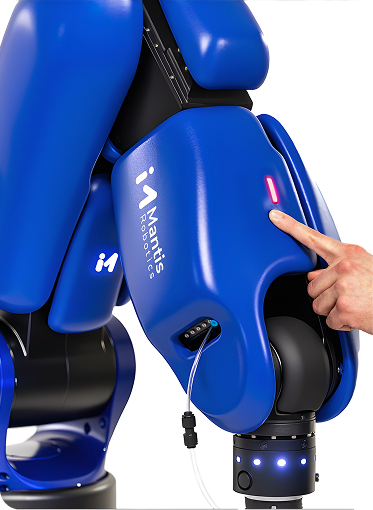
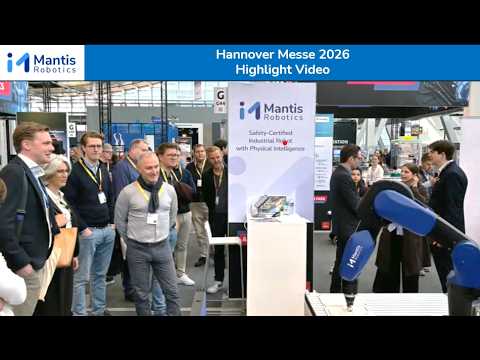
The Mantis MR-1 is a fenceless, high-speed industrial robot with physical intelligence. It achieves a maximum linear speed of 10 m/s, is certified to ISO 10218-1 and ISO 13849-1, and can be deployed in under 60 minutes with 80% less footprint than traditional robots. Its embedded 3D spatial awareness enables safe human-robot collaboration.
- •Maximum speed of 10 m/s
- •Fenceless and ultra high speed operation
- •Third-party certified to ISO 10218-1 and ISO 13849-1
- •Embedded 3D spatial intelligence for collision avoidance
- •Deployable in under 60 minutes
- •80% less footprint compared to traditional robots
| Speed | 10 m/s |
Technology stackOur read
Inferred from product specs — click through to the technology wiki:
ResearchComputed
Product comparisonComputed
Company announcement
News and Media
The company's official social & video channels · external links


News
From third-party news outlets (China & abroad) · external links
