Labrador Systems
SnapshotCompany claim
Company description not yet disclosed.
- Founded
- Not disclosed
- HQ
- Not disclosed
- Models
- 2
- Categories
- 2
ContactCompany claim
- Address
- Not disclosed
Product families
Is this your company? Claim this profile to add verified data, respond to our analysis, and upgrade claims to Verified.
Claim this profile1. Executive Overview {#executive-overview}
Labrador Systems is an assistive robotics company focused on a clear and socially meaningful mission: enabling independent living for older adults and people with disabilities through affordable home robots. The company has attracted coverage from credible outlets including IEEE Spectrum and secured named institutional customers — Masonic Home of California (MHC) was announced among its first customers in November 2022 — signalling that the product has moved beyond the concept stage into real-world deployment. Its subscription-based pricing model (starting at $149/month), which bundles installation, training, maintenance, and cloud services, represents a deliberate effort to lower the adoption barrier in a market that has historically struggled with high upfront hardware costs.
The company's commercial strategy centers on a Test Drive Program — a three-month rental at $149/month with no long-term commitment — that de-risks the purchase decision for both individual consumers and care providers. Longer-term 36-month subscriptions are priced at $149–$199/month depending on the product tier, positioning Labrador Systems as a services business rather than a pure hardware vendor. This "robot-as-a-service" framing is a meaningful strategic choice in the assistive technology space and distinguishes the company from one-time device sellers.
Not yet disclosed publicly: founding year, country of incorporation, total headcount, revenue, and cumulative deployment numbers. Parties with corrections or additional context are invited to claim and update this profile.
Latest news
- KEENON Humanoid Pours Drinks at GCS 2026, 100,000 Others Run HotelsYanko Design·2026-06-15GENERAL
2. The Company Story {#the-company-story}
Labrador Systems' earliest traceable public footprint dates to October 2019, when IEEE Spectrum — one of the most authoritative engineering publications in the world — profiled the company under the headline "Labrador Systems Developing Affordable Assistive Robots for the Home." The framing of that coverage is telling: the emphasis was on affordability, suggesting that from its earliest public positioning Labrador Systems was differentiating itself not merely on capability but on accessibility and price point. Being featured in IEEE Spectrum at what appears to be an early stage indicates the company had already developed sufficient technical credibility to attract serious engineering press attention.
By November 2022, the company had reached a commercial milestone: Masonic Home of California (MHC) was announced as among its first customers, as reported by masonichome.org. This is a significant data point — MHC is a structured care community, meaning Labrador's robots were being evaluated and deployed in a professional care environment, not just in individual consumer homes. That represents a dual-market footprint: direct-to-consumer residential use and institutional care provider channels, the latter of which is reflected in the company's contact form, which includes a dedicated "Sales for Care Providers" inquiry category.
The Test Drive Program, with a planned rollout in the second half of 2023 (with beta units possibly available earlier), marks the company's push toward scalable commercial distribution. The contact page — published as early as April 2020 and last modified January 2022 — further reflects an organization that has been building its go-to-market infrastructure steadily over several years. The company's domain is labradorsystems.com, and its investor inquiry channel is publicly listed, indicating it is or has been in active fundraising discussions.
Not yet disclosed: specific funding rounds, total capital raised, named investors, or a detailed founding narrative. Parties with this information are invited to claim and update this profile.
3. Product Portfolio {#product-portfolio}
Products & versions
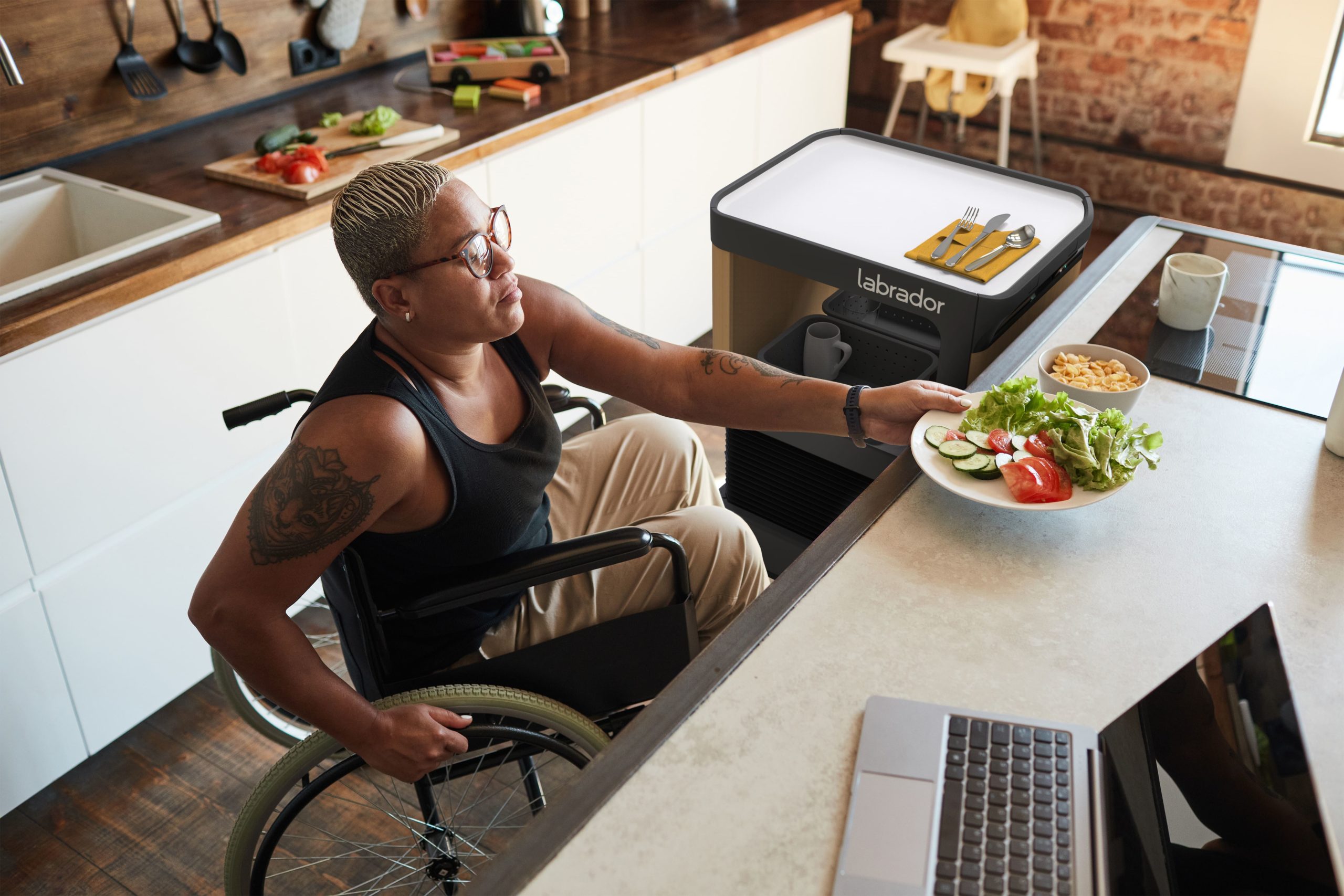


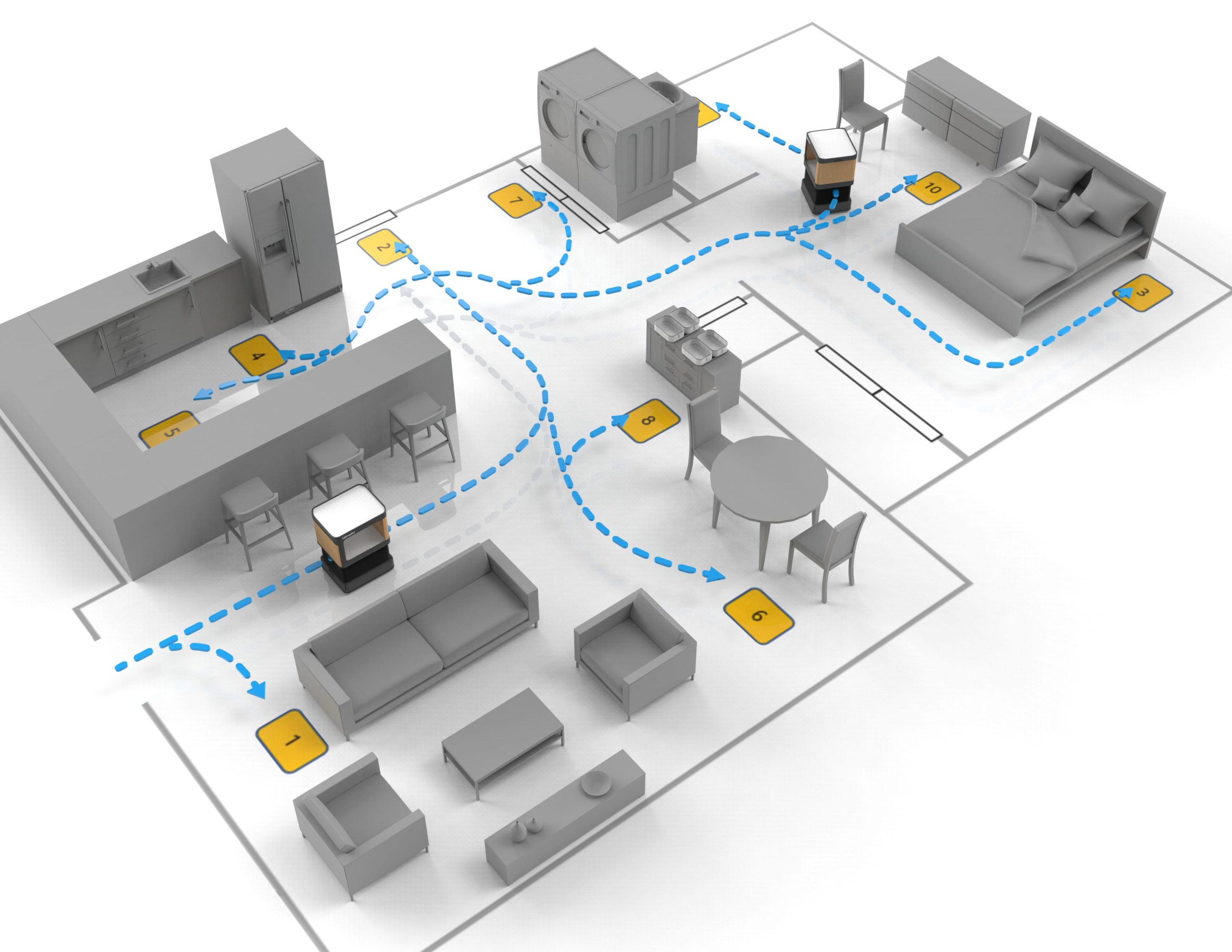
Labrador Systems' public product lineup consists of two entries — the TD922 and the AEP — both positioned squarely in the residential assistive robotics category. Together, they describe a strategy built around a single core platform concept: an autonomous, voice- and app-controlled home robot that physically assists users with mobility-limiting tasks.
The TD922 is described as a home assistance robot purpose-built for independent living. Its key functional capabilities include carrying heavy loads such as laundry and groceries, keeping critical items like medication and drinks within reach, and navigating automatically within the home environment. Control is available via voice command or a companion mobile app. It is available through the Test Drive Program at $149/month for a three-month rental, with longer-term subscription options in the $149–$199/month range.
The AEP listing reflects the commercial packaging and service model rather than a fully distinct hardware product — it describes the subscription tiers ("Caddie" at $149/month, "Retriever" at $199/month) and the service bundle (installation, training, maintenance, full warranty, premium cloud services with remote access, and customer support). The two product entries together suggest Labrador Systems has organized its offering around a hardware-plus-services stack, with the robot as the delivery mechanism and the subscription as the revenue model. Public technical specifications (dimensions, payload weight, battery life, sensor suite) are not yet disclosed on the company's site.
4. Technology Stack {#technology-stack}
Based on the product descriptions available from the company's own site, Labrador Systems' robots are capable of autonomous indoor navigation, voice command recognition, and mobile app-based control — the three pillars of a consumer-grade assistive robot. The company also references premium cloud services with remote access, indicating a connected architecture where the robot communicates with cloud infrastructure, likely for updates, remote monitoring, and potentially supervised autonomy features.
Our read: The combination of autonomous navigation, voice control, and cloud connectivity suggests the platform incorporates simultaneous localization and mapping (SLAM) or a similar indoor positioning approach, a natural language processing layer (either on-device or cloud-routed), and an IoT connectivity stack. The subscription model's inclusion of "maintenance" and "customer support" as bundled services implies the company may also operate a remote diagnostics or telemetry capability. These inferences are consistent with the product's described behaviors but are not explicitly confirmed in the public data.
Our read: The absence of published hardware specifications — sensor types, actuator counts, payload ratings, battery capacity, processing unit — is common for early-commercial assistive robotics companies and does not necessarily indicate a shallow stack. It more likely reflects deliberate competitive discretion or a product still being refined for general release.
Limited public technical detail is available beyond what is described above. Labrador Systems has not published a technical whitepaper or hardware specification sheet in the data reviewed for this report. Parties with additional technical documentation are invited to claim and update this profile.
5. Research, Papers, Authors, Labs {#research-papers}
Company-linked papers
Labrador Systems does not appear to be a research-publishing organization in the academic sense. No peer-reviewed papers, preprints, named research authors, or affiliated laboratory partnerships have been identified in the data available for this report. This is entirely normal for a commercial assistive robotics company at the product-deployment stage — the company's evident focus is on applied engineering and market delivery rather than foundational research publication.
The IEEE Spectrum coverage from October 2019 is an editorial feature, not a research paper, and should be read as journalistic validation rather than academic output.
6. Media Evidence {#media-evidence}
Media library
Three third-party press items are on record for Labrador Systems. IEEE Spectrum (October 2019) provided early editorial coverage focused on the company's mission to develop affordable assistive home robots — a credible engineering-press endorsement at what appears to be a formative stage. masonichome.org (November 2022) published confirmation that Masonic Home of California was among the company's first customers, constituting independent validation of a real commercial deployment. Distill Intelligence (June 2026, as dated) lists Labrador Systems news and announcements, indicating ongoing industry tracking of the company.
7. Commercial Reality {#commercial-reality}
Customers & deployments
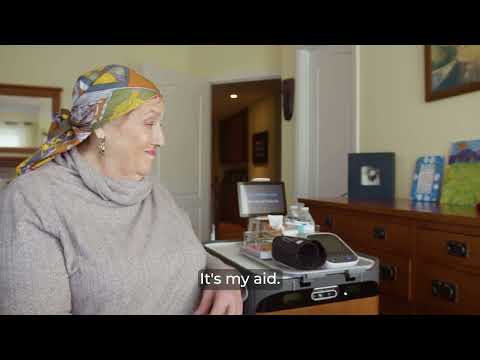
The clearest commercial data point on record is the November 2022 announcement that Masonic Home of California (MHC) was among Labrador Systems' first customers, as reported independently by masonichome.org. This confirms at least one named institutional deployment in a professional elder-care setting.
Revenue figures, total customer count, units deployed, renewal rates, and customer ROI data are not publicly disclosed. The subscription pricing structure ($149–$199/month for 36-month terms) provides enough information to model unit economics in general terms, but Labrador Systems has not published aggregate revenue or deployment scale data. Parties with verified commercial metrics — customer counts, deployment locations, revenue figures — are invited to claim and disclose this information to update the profile.
The company's contact form includes dedicated inquiry channels for "Sales for Care Providers" and "Investor Inquiry," which are consistent with a company actively building its B2B pipeline and maintaining fundraising conversations alongside its consumer rollout.
8. Markets and Use Cases {#markets-use-cases}
Labrador Systems operates in the residential assistive robotics market, with a secondary channel into institutional elder-care and care-provider facilities. Both segments are derived directly from the company's product descriptions and its named customer (Masonic Home of California).
The primary use cases supported by the product, as described on the company's own site, include:
- Heavy load transport within the home — carrying laundry, groceries, and similar items for users with limited mobility or strength
- Medication and drink accessibility — keeping critical daily items within reach, reducing the need for users to navigate through the home repeatedly
- Autonomous indoor navigation — routing through residential environments without requiring user guidance for each movement
- Remote monitoring and management — via cloud services and mobile app, enabling caregivers or family members to interact with or check on the robot remotely
The care-provider sales channel signals that Labrador Systems is also targeting assisted living communities, memory care facilities, and similar institutional settings where staff-to-resident ratios create operational demand for supplementary assistance tools. This dual-channel approach — direct-to-consumer and B2B care-provider — is a common growth pattern in assistive technology and broadens the addressable market considerably beyond individual household sales.
9. Competitive Landscape {#competitive-landscape}
Competitive comparison
| Robot | Maker | Autonomy | Conf. |
|---|---|---|---|
| iRobot Roomba Combo 10 Max | iRobot | Autonomous | 0.90 |
| Mobile ALOHA (Stanford) | Stanford University | Teleoperated | 0.90 |
| 1X NEO | 1X Technologies | Remote-Assisted | 0.90 |
Labrador Systems competes in the nascent but growing category of home assistive robots for independent living — a market that sits at the intersection of consumer robotics, elder-care technology, and disability-assistance devices. The company's defining competitive choices — subscription pricing, a test-drive rental program, and a focus on physical task assistance rather than social companionship — position it in a distinct sub-segment from voice-only assistants or companion robots.
The broader category has attracted interest from both dedicated assistive robotics startups and larger consumer electronics players, though the market remains fragmented and no dominant platform has yet emerged. Labrador Systems' institutional customer traction and early IEEE Spectrum coverage suggest it holds a recognized position among informed buyers and observers, even if overall category awareness among general consumers remains limited. The module above provides computed peer context.
10. Country Advantage / Geopolitical {#geopolitical}
Section not material for this company.
11. Hype vs Real vs Ugly {#hype-real-ugly}
Claim tracker
What is verified by independent sources:
- IEEE Spectrum editorial coverage as early as October 2019, confirming the company was publicly presenting a real product concept at that stage.
- Masonic Home of California named as a first customer in November 2022, per masonichome.org — an independent, third-party source.
- A structured commercial pricing model ($149–$199/month subscriptions, $149/month Test Drive) is publicly listed, indicating the company has moved past vaporware into defined product pricing.
Company claims (sourced from labradorsystems.com — treat as self-reported):
- The TD922 "navigates automatically in the home" and responds to voice commands and app control.
- The AEP subscription includes installation, training, maintenance, full warranty, premium cloud services, and customer support.
- The Test Drive Program was planned to roll out in the second half of 2023, with beta units possibly available earlier.
Gaps requiring attention:
- Not yet disclosed: whether the H2 2023 Test Drive rollout timeline was met, and if so, at what scale.
- Not yet disclosed: independent user or care-provider reviews, clinical or usability studies, or third-party performance validation of navigation reliability or load capacity.
- Our read: The Test Drive Program structure — short commitment, low monthly cost, bundled support — is a credible mechanism for managing early-adopter risk, but its commercial success depends on conversion from trial to long-term subscription, a metric not yet public.
No unsupported negatives are asserted. Gaps above are fixable with public disclosure.
12. Future Scenarios {#future-scenarios}
Bull case — Our read: Labrador Systems successfully converts its Test Drive Program into a scalable subscription base across both individual consumers and care-provider institutions. The elder-care market, driven by demographic aging trends in developed economies, provides a long structural tailwind. A care-provider channel (modeled on the MHC relationship) could deliver predictable, high-volume subscription revenue and serve as a proof-point for broader institutional adoption. In this scenario, the subscription model generates compounding recurring revenue, and the company becomes a recognized platform in assistive home robotics.
Base case — Our read: The company establishes a stable but modest subscription base, primarily through care-provider partnerships rather than mass consumer adoption. Consumer awareness of home assistive robots remains limited, keeping individual household penetration slow. The Test Drive Program reduces churn risk but requires significant customer education and support investment. The company grows steadily, maintains its niche position, and potentially becomes an acquisition target for a larger player in elder-care technology or consumer robotics.
Bear case — Our read: The path from beta/test-drive to scaled commercial deployment proves longer and more costly than planned. Hardware unit economics at $149–$199/month subscription pricing may be tight when bundled with installation, maintenance, and cloud services. If customer acquisition costs are high and trial-to-subscription conversion rates are low, the model faces cash flow pressure. The absence of publicly disclosed funding information makes it difficult to assess runway. Without a significant fundraise or strategic partnership, growth could stall at a sub-scale level.
13. What to Watch {#what-to-watch}
- Test Drive Program outcomes: Whether the H2 2023 rollout timeline was met; conversion rates from 3-month trial to 36-month subscription.
- Care-provider pipeline: Additional named institutional customers beyond Masonic Home of California; any announced partnerships with senior living chains or disability-services organizations.
- Funding announcements: Series A or later-stage fundraising disclosure, which would signal runway extension and growth-phase confidence.
- Product specification publication: Release of formal hardware specs (payload, battery life, navigation range, sensor suite) as a signal of readiness for broader commercial and procurement evaluation.
- Independent user reviews or clinical data: Third-party usability studies, care outcomes data, or published pilot results from institutional deployments.
- Subscription tier expansion: Introduction of new pricing tiers, add-on services, or hardware variants beyond the Caddie and Retriever tiers.
- Press and media velocity: Frequency and quality of coverage beyond the three outlets currently on record, particularly in mainstream elder-care, disability, and health-tech media.
14. Sources & Methodology {#sources-methodology}
Primary source: All product descriptions, pricing, feature claims, and company positioning language are extracted directly from labradorsystems.com and are treated throughout this report as company claims — i.e., self-reported, not independently verified. The contact page metadata indicates content published as early as April 2020 and last modified January 2022.
Independent third-party sources:
- IEEE Spectrum (spectrum.ieee.org) — October 2019 editorial coverage; treated as independent journalistic validation.
- masonichome.org — November 2022 customer announcement; treated as independent institutional confirmation of a named deployment.
- Distill Intelligence (distillintelligence.com) — industry tracking listing; treated as secondary aggregator reference.
Methodology rubric (applied uniformly to every company profiled):
- Factual claims are grounded only in the data provided. No product names, revenue figures, partnerships, or specifications are invented.
- Negative or gap statements are expressed as "Not yet disclosed" with an explicit invitation to correct, or as "Our read:" labeled inferences.
- Each section leads with verified or stated strengths before addressing gaps.
- Competitive module data is computed from relational analysis, not asserted in prose.
- This rubric is applied identically to all companies in the database; no company receives preferential or punitive framing.
Parties with corrections, additional data, or wish to claim this profile should contact the platform directly.
TD922
OtherTD922 is a home assistance robot designed to empower independent living. It carries heavy loads like laundry and groceries, keeps medication and drinks accessible, navigates automatically indoors, and responds to voice commands or mobile app control. Available through Labrador's Test Drive Program.
- •Carries heavy loads (laundry, groceries)
- •Keeps critical items within reach (medication, drinks)
- •Navigates automatically in the home
- •Command by voice or easy-to-use app
- •Test Drive Program: 3-month rental for $149/month
Detailed specs not disclosed.
Use cases
Industries
Technology stackOur read
Inferred from product specs — click through to the technology wiki:
ResearchComputed
Product comparisonComputed
Company announcement
News and Media
The company's official social & video channels · external links



News
From third-party news outlets (China & abroad) · external links