Humatics
Founded 2015 · United States · humatics.com
SnapshotCompany claim
Humatics was founded on the thesis that growth in the built world requires observing what can only be seen by data matched with precision positioning. Starting in robotics, it expanded to critical sectors throughout the physical world, aiming to enable people to be more productive and ensure efficient, equitable transportation.
- Founded
- 2015
- HQ
- United States
- Models
- 1
- Categories
- 1
Product families
Is this your company? Claim this profile to add verified data, respond to our analysis, and upgrade claims to Verified.
Claim this profile1. Executive Overview {#executive-overview}
Humatics is a Boston-based precision-positioning company founded in 2015 on the conviction that the physical world — factories, transit systems, logistics facilities — cannot be fully optimized without centimeter- or better-level location data matched to real-time operational intelligence. The company operates two distinct platform lines: HumaticsMILO, targeting industrial and robotics applications under the banner "transforming how we work," and HumaticsMobility, targeting urban and mass-transit infrastructure under the banner "transforming how we move." This dual-platform architecture is unusual in the positioning space and reflects a deliberate expansion from a robotics-first origin into critical public infrastructure.
Leadership depth reinforces the technical credibility of the mission. CEO James Kinsey holds a PhD from Johns Hopkins, contributed to over 100 publications and patents, and spent years at the Woods Hole Oceanographic Institution navigating some of the world's most demanding underwater environments — from Challenger Deep to the Arctic. Founder and Executive Chairman David Mindell is a professor of Aeronautics and Astronautics at MIT. The company's advisory bench, which per its own site includes the researcher who found the Titanic and an astronaut who walked on the moon, signals an institution that recruits from the frontier of applied science. Humatics has secured at least a Series B funding round and has publicly disclosed a live deployment with the New York City Metropolitan Transportation Authority (MTA) — a reference customer of exceptional scale and visibility.
Not yet disclosed: total headcount, cumulative funding raised, or current annual revenue. Humatics is invited to claim or correct any figures in this report.
Latest news
- KEENON Humanoid Pours Drinks at GCS 2026, 100,000 Others Run HotelsYanko Design·2026-06-15GENERAL
2. The Company Story {#the-company-story}
Humatics was incorporated in 2015 by David Mindell, drawing on his MIT research heritage in autonomous systems and human-machine teaming. The founding thesis — that the built world has structural blind spots that only precision positioning data can eliminate — positioned Humatics from the outset as an infrastructure-layer company rather than a point-solution robotics vendor.
The company's early growth was inorganic as well as organic. In March 2018, Humatics acquired 5D Robotics and Time Domain, a move reported by the Mass Tech Leadership Council (mtlc.co). 5D Robotics had developed relative positioning and collision-avoidance technology for mobile robots; Time Domain was a pioneer in ultra-wideband (UWB) radio technology. Together, these acquisitions gave Humatics a hardware-and-software stack in microlocation — the centimeter-accurate, radio-frequency-based positioning technology that now underpins the Milo platform — and accelerated what the company described publicly as "microlocation innovation." The Robot Report subsequently covered the company's Series B fundraise to scale the Milo Microlocation System, marking a transition from early technology development into commercial deployment and sales scaling.
James Kinsey joined as one of the founding officers in 2016 and has since led Milo software and systems development, won and delivered multiple train-signaling projects with the NYC MTA, and formally established the Humatics Mobility division. The company describes its name as a portmanteau of "human" and "robotics" — and frames its corporate identity around putting humans first, both in its product philosophy and its employment culture. By 2025, Humatics presents itself as a mature, dual-market enterprise with live infrastructure deployments and an active hiring program.
3. Product Portfolio {#product-portfolio}
Products & versions
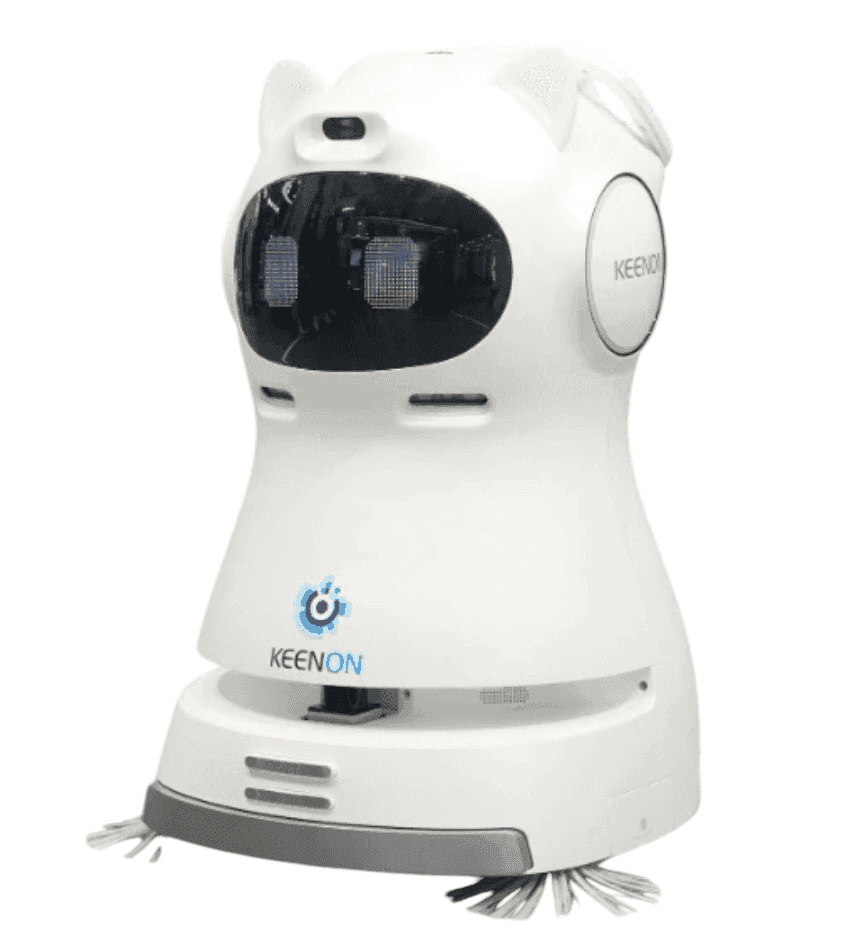
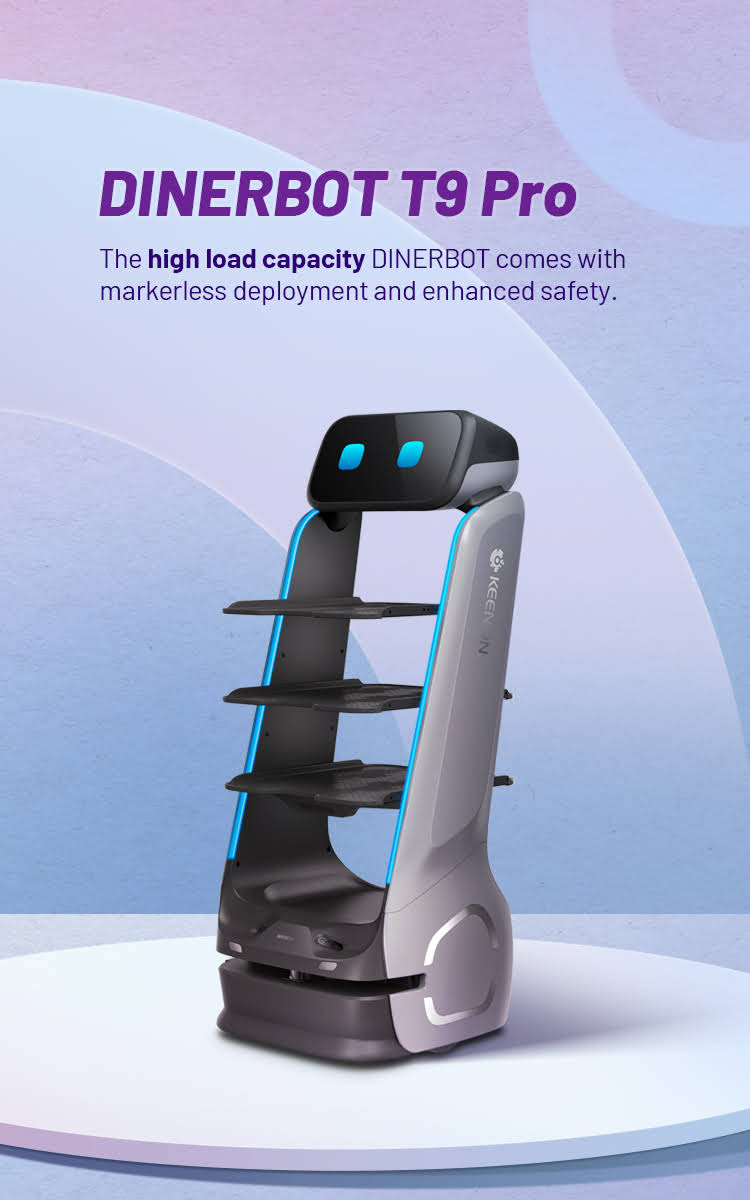
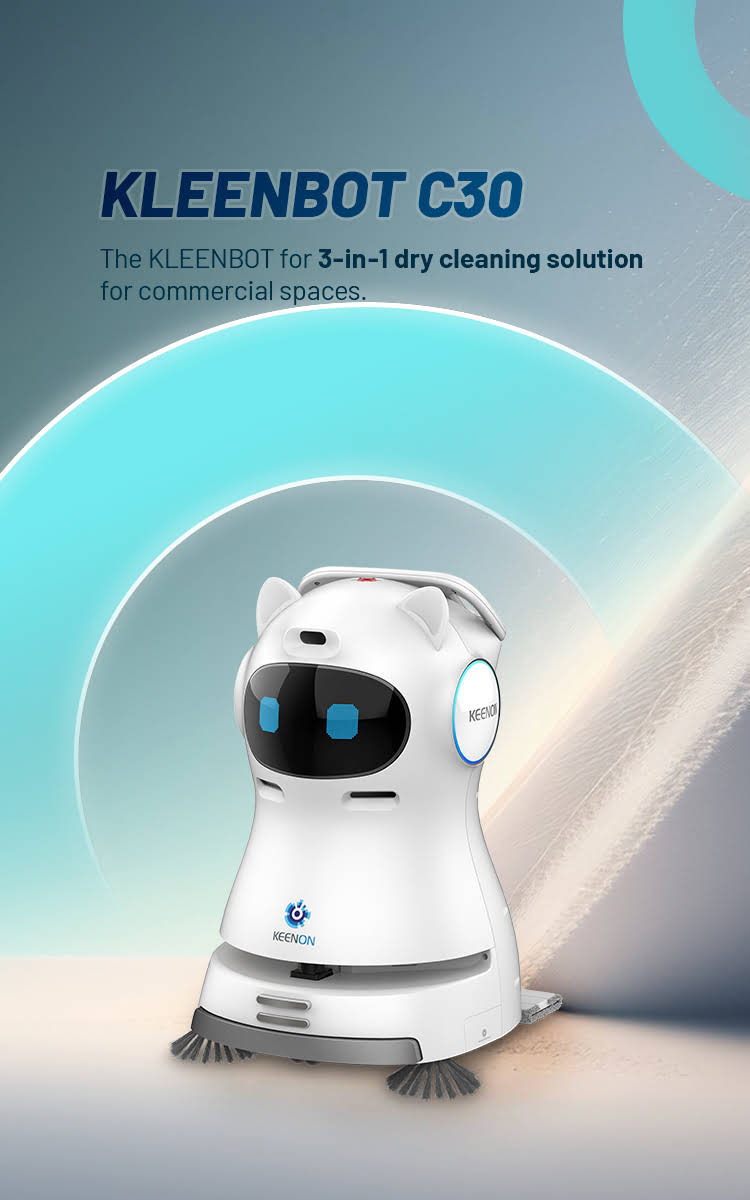


Humatics organizes its commercial offer into two named platform families, each addressing a distinct physical domain.
HumaticsMILO is the industrial and robotics-facing platform — the "transforming how we work" line — rooted in the microlocation technology stack assembled through the 2018 acquisitions of 5D Robotics and Time Domain. Milo provides precision positioning for people, vehicles, and robots operating in industrial environments: warehouses, manufacturing floors, and logistics facilities where GPS is unavailable and meter-level accuracy is insufficient for safe, efficient automation. The Series B raise was explicitly tied to scaling this system, indicating it is a commercially shipped product rather than a research prototype.
HumaticsMobility is the transit-infrastructure-facing platform — the "transforming how we move" line — and is the newer of the two divisions, having been formally founded by CEO James Kinsey. Its most publicly documented deployment is with the New York City MTA in the context of train signaling, one of the most demanding and safety-critical positioning applications in civilian infrastructure. The MTA relationship, named explicitly in Kinsey's biography, constitutes strong external validation of the Mobility platform's maturity and regulatory acceptability.
Not yet disclosed: individual model names, unit pricing, hardware specifications, software architecture details, or the full roster of Mobility deployments beyond the MTA reference. Humatics is invited to share product documentation for inclusion in this record.
4. Technology Stack {#technology-stack}
The most concrete inference available from Humatics' documented acquisition history is that its core sensing modality is ultra-wideband (UWB) radio. Time Domain, acquired in 2018, was a foundational UWB technology company; UWB is the established radio technology for centimeter-accurate indoor and near-indoor positioning because its wide frequency bandwidth enables time-of-flight ranging with very high resolution. Our read: the Milo Microlocation System almost certainly uses UWB transceivers — anchors installed in a facility and tags attached to robots, vehicles, or workers — to compute real-time position estimates at sub-decimeter accuracy, without reliance on GPS or camera-based landmark systems.
The 5D Robotics acquisition adds a software and fusion layer. 5D's prior work focused on relative positioning, obstacle detection, and collision avoidance — capabilities that suggest Humatics' stack includes not just raw position estimation but a robotics-integration middleware layer that translates location data into actionable guidance for autonomous or semi-autonomous systems. Our read: the "data matched with precision positioning" language in Humatics' mission statement reflects a platform that combines location hardware with an analytics or orchestration software tier, not a pure sensor play.
For the Mobility division, the application of precision positioning to train signaling implies compliance with rail safety standards (likely FRA or APTA frameworks in the US context) and real-time communication protocols suited to wayside-to-vehicle data exchange. Our read: this is a materially different software and certification stack from the industrial Milo line, which explains why Humatics treats Mobility as a separate division rather than a simple extension.
Limited public technical detail is available on: antenna design, positioning update rates, maximum range, multi-path performance specifications, or cloud/edge compute architecture. Humatics is invited to correct or expand the technical record.
5. Research, Papers, Authors, Labs {#research-papers}
Company-linked papers
Humatics does not present itself as a research-publishing organization in the academic sense, and no company-authored papers are surfaced in the available data. This is consistent with its posture as a commercial infrastructure company — it deploys systems, it does not publish benchmarks.
That said, the research pedigree of leadership is substantial and documented. CEO James Kinsey is credited with over 100 publications and patents from his time at Woods Hole Oceanographic Institution and Johns Hopkins, covering underwater navigation, field robotics, and autonomous systems. Founder David Mindell is an active MIT professor whose academic work in autonomous systems and human-machine collaboration is publicly available through MIT's channels. These individuals bring deep research credibility to the organization even as the company itself operates as a commercial rather than research-publishing entity.
6. Media Evidence {#media-evidence}
Media library
Third-party press coverage, while not extensive in the available record, is substantive where it exists. The Robot Report — one of the most widely read trade publications in the robotics industry — has covered Humatics in at least two distinct contexts: the 2018 acquisition of 5D Robotics and Time Domain (also covered by the Mass Tech Leadership Council, a Boston-area technology leadership organization), and the Series B fundraise to scale the Milo Microlocation System. Coverage in The Robot Report at both a funding milestone and a strategic acquisition milestone indicates that Humatics has been tracked as a significant player in the robotics precision-positioning space for at least seven years.
7. Commercial Reality {#commercial-reality}
Customers & deployments
The most concrete commercial data point in the public record is the New York City Metropolitan Transportation Authority (MTA) deployment, named directly in CEO James Kinsey's biography as a "multiple train signalling projects" engagement — not a pilot or a proof of concept, but delivered projects, plural. The MTA is one of the largest public transit agencies in the world, operating the New York City Subway system with over 400 stations and millions of daily riders. A live, multi-project relationship with this customer is a strong commercial signal for the Mobility division.
For the MILO division, the Series B fundraise reported by The Robot Report implies commercial traction sufficient to attract institutional capital for scaling — but specific customer names, deployment counts, or unit volumes are not in the public record.
Revenue: Not disclosed. Humatics is invited to share figures for inclusion. Customer count: Not disclosed. Humatics is invited to share reference customer information. ROI metrics or case study data: Not disclosed. Humatics is invited to submit deployment outcomes for inclusion.
8. Markets and Use Cases {#markets-use-cases}
Humatics' two-platform structure maps cleanly onto two distinct market segments, each with its own buyer profile, procurement cycle, and regulatory environment.
Industrial / Advanced Manufacturing (HumaticsMILO): The core use case is precision positioning for autonomous mobile robots (AMRs), forklifts, and human workers on manufacturing and logistics floors where GPS is unavailable and safety demands sub-meter — likely sub-decimeter — accuracy. This market encompasses automotive plants, aerospace manufacturing, warehouse automation, and general logistics. The value proposition is eliminating "blind spots" in facilities where multiple robots and humans share dynamic space: knowing where every asset is, in real time, at centimeter resolution, enables tighter workflows, collision avoidance, and productivity analytics. The 2018 acquisitions of 5D Robotics (robot collision avoidance) and Time Domain (UWB positioning) were clearly targeted at this market's specific technical requirements.
Urban Transit / Rail Infrastructure (HumaticsMobility): The core use case, as evidenced by the MTA engagement, is train positioning and signaling — providing the location data layer that modern communications-based train control (CBTC) and positive train control (PTC) systems require. Transit agencies globally face pressure to modernize aging signal infrastructure without full line shutdowns; a precision-positioning overlay that can work alongside or replace legacy trackside sensors addresses a multi-decade capital backlog. Buyers here are public transit authorities and rail operators, procurement cycles are long, and safety certification requirements are stringent — but contract values are correspondingly large and relationships are durable.
The company's stated mission of enabling "efficient, equitable means of getting to work" and "people to be more productive at work" is not marketing abstraction — it maps directly onto these two concrete market segments.
9. Competitive Landscape {#competitive-landscape}
Competitive comparison
| Robot | Maker | Autonomy | Conf. |
|---|---|---|---|
| iRobot Roomba Combo 10 Max | iRobot | Autonomous | 0.90 |
| Mobile ALOHA (Stanford) | Stanford University | Teleoperated | 0.90 |
| 1X NEO | 1X Technologies | Remote-Assisted | 0.90 |
Humatics operates at the intersection of two competitive arenas that do not always overlap: industrial microlocation / indoor positioning for robotics, and precision positioning for rail and transit signaling. In the first arena, the competitive set includes companies offering UWB-based, vision-based, and hybrid indoor positioning systems for industrial automation. In the second arena, it includes established rail-signaling integrators and technology vendors who supply CBTC and PTC components to transit authorities globally.
What distinguishes Humatics' position — and what makes competitive comparison non-trivial — is that very few companies operate credibly in both arenas simultaneously. The dual-platform architecture either represents a significant strategic moat (shared technology and organizational capability applied across two large markets) or a resource-allocation challenge (two different sales cycles, regulatory regimes, and customer types). Our read: the MTA relationship and the Series B fundraise together suggest the company has managed this duality successfully through at least the early commercial phase, with the transit division carrying a marquee reference customer and the industrial division carrying institutional investor validation.
10. Country Advantage / Geopolitical {#geopolitical}
Section not material for this company.
11. Hype vs Real vs Ugly {#hype-real-ugly}
Claim tracker
Verified and externally corroborated:
- Founding in 2015; MIT-affiliated co-founder (company-claim, consistent with public MIT records).
- Acquisitions of 5D Robotics and Time Domain in 2018 (Mass Tech Leadership Council, The Robot Report — independent sources).
- Series B fundraise to scale Milo Microlocation System (The Robot Report — independent source).
- Multiple delivered train signaling projects with the NYC MTA (company-claim via CEO biography — named customer, named projects, described as delivered not ongoing).
- CEO James Kinsey's credentials at Woods Hole Oceanographic Institution and Johns Hopkins (company-claim; verifiable through institutional records).
Company claims, not independently verified in available data:
- Advisory board including "the researcher who found the Titanic" and "an astronaut who walked on the moon" — colorful and specific claims consistent with the founding team's oceanographic and aerospace connections, but individual names are not confirmed in available data.
- The framing that Humatics' positioning platform eliminates "blind spots" and enables "efficient, equitable transportation" — directionally supported by the MTA deployment but the causal link between Humatics' technology and equity outcomes is a company-claim, not a measured outcome.
Gaps (not negatives — invitation to disclose):
- Not yet disclosed: total funding raised, current revenue run-rate, number of active MILO deployments, or transit agency customers beyond the MTA. Humatics is invited to claim or correct.
Our read: The company's factual record is stronger than its public profile might suggest. A live MTA deployment, two strategic acquisitions, and a Series B from a credible investor base represent real commercial progress — the gap is in public disclosure, not in substance.
12. Future Scenarios {#future-scenarios}
Our read — Bull case: Humatics successfully leverages the MTA relationship as a reference to win additional Tier-1 transit authority contracts in North America and internationally, while the MILO platform captures share in the fast-growing industrial AMR market as factories accelerate automation. The dual-platform model proves to be a genuine differentiator — a single precision-positioning capability sold into two massive, underserved markets. The company's MIT-rooted research leadership enables a next-generation product cycle ahead of hardware-only competitors.
Our read — Base case: Humatics continues to grow steadily in both verticals but at different rates. The Mobility division wins additional transit contracts at a pace constrained by long public-sector procurement cycles. The MILO division scales through channel partnerships with systems integrators serving manufacturing and logistics. The company remains a specialized, high-value niche player rather than a broad platform company, and likely pursues a strategic exit or later-stage growth round within a five-year horizon.
Our read — Bear case: The capital intensity of serving two structurally different markets — each with distinct sales cycles, certification requirements, and customer relationships — strains organizational focus and resources. If a larger rail-signaling incumbent or a well-funded industrial positioning startup moves aggressively on price or integration, Humatics' dual-market model becomes a liability rather than an asset. Public transit budget pressures following economic downturns could delay or cancel Mobility contracts. The company would need to choose a primary market and focus.
13. What to Watch {#what-to-watch}
- MTA contract expansion: Any announcement of additional phases, line extensions, or new NYC MTA task orders would validate Mobility's commercial maturity and pricing power.
- New transit authority wins: A second named transit agency customer — especially outside New York — would confirm the Mobility platform is transferable, not bespoke.
- MILO customer disclosures: Named industrial or logistics customers for the Milo Microlocation System would substantiate the MILO division's commercial scale.
- Follow-on funding: A Series C announcement would signal investor confidence in the dual-market growth trajectory and provide a revenue-scale proxy.
- Technical specification releases: Any published specs (UWB frequency bands, positioning accuracy, update rates, latency) would enable independent benchmarking against competing systems.
- Regulatory filings: Rail signaling deployments often generate FRA, FTA, or state DOT filings that are public record — a secondary channel for tracking Mobility deployment activity.
- Talent signals: Executive hires in sales leadership for either division, or engineering hires in specific technical domains, are leading indicators of platform roadmap direction.
- Partnership announcements: Integration partnerships with AMR manufacturers, warehouse management system vendors, or transit signaling integrators would reveal go-to-market strategy.
14. Sources & Methodology {#sources-methodology}
Primary source — company-claim provenance: All founding narrative, mission statements, product family descriptions, leadership biographies, and advisory board characterizations are drawn from Humatics' own website (humatics.com) as extracted for this report. Per this publication's standard rubric, content from a company's own site is labeled "company-claim" and treated as the company's representation of itself — not independently verified unless corroborated by a third-party source.
Independent sources cited:
- Mass Tech Leadership Council (mtlc.co), March 2018: acquisition of 5D Robotics and Time Domain — used as independent corroboration of the 2018 acquisition milestone.
- The Robot Report (therobotreport.com): Series B fundraise coverage and Humatics archive — used as independent corroboration of funding milestone and ongoing trade-press tracking.
Computed and inferred content: Sections marked "Our read:" contain analyst inferences derived from the verified data. These are explicitly labeled and should not be treated as company statements or independently verified facts.
What this report does not do: It does not assert revenue figures, customer counts, market-share estimates, or competitive rankings that are not grounded in the data above. Gaps are noted as gaps, not filled with estimates.
Standard rubric applied to every company in this series: (1) Lead with verified strengths. (2) Label all inferences. (3) Treat all company-site content as company-claim. (4) Treat named third-party press coverage as independent validation. (5) Render undisclosed commercial metrics as "Not disclosed" with an invitation to the company to correct the record.

Technology stackOur read
Inferred from product specs — click through to the technology wiki:
ResearchComputed
Product comparisonComputed
Company announcement
News and Media
The company's official social & video channels · external links
News
From third-party news outlets (China & abroad) · external links