Daimon Robotics戴盟(深圳)机器人科技有限公司
Taiwan · dmrobot.com
SnapshotCompany claim
Daimon Robotics focuses on tactile sensing and dexterous manipulation. It develops high-resolution multimodal tactile sensors, dexterous hands, and wearable teleoperation systems. Incubated by HKUST, it integrates AI and robotics to create vision-tactile-language action models for embodied intelligence, logistics, manufacturing, and services.
- Founded
- Not disclosed
- HQ
- Taiwan
- Models
- 5
- Categories
- 3
ContactCompany claim
- Address
- 13 / F, Block A, Haina Baichuan Headquarters Building, Baoan District, Shenzhen
Product families
Is this your company? Claim this profile to add verified data, respond to our analysis, and upgrade claims to Verified.
Claim this profile1. Executive Overview {#executive-overview}
Daimon Robotics (戴盟(深圳)机器人科技有限公司) is a Taiwan-based robotics company focused on what it describes as "disruptive innovation" in tactile sensing and dexterous manipulation — a niche that sits at the frontier of embodied intelligence. Incubated by the Hong Kong University of Science and Technology (HKUST), the company brings credible academic lineage to a product portfolio that spans high-resolution multimodal tactile sensors, dexterous hands, wearable teleoperation hardware, and an edge AI compute module. Its headline intellectual contribution is the VTLA (Vision-Tactile-Language-Action) model, which the company claims is the world's first embodied operation large model integrating all three sensing modalities in a closed-loop control architecture.
The company has attracted meaningful third-party attention: IEEE Spectrum covered its vision-tactile sensing technology in May 2026, and a June 2026 report from 36Kr confirmed a RMB 100 million financing round backed by Inovance and China Telecom — external validation of both technical credibility and commercial momentum. The team claims production experience scaled to annual revenues of billions of RMB, though those figures are attributed to prior careers rather than Daimon Robotics itself and should be read accordingly.
Not yet disclosed: precise founding year, total headcount, current annual revenue, and the full customer list. Parties with corrections or additions are invited to contact the research team.
Latest news
- KEENON Humanoid Pours Drinks at GCS 2026, 100,000 Others Run HotelsYanko Design·2026-06-15GENERAL
2. The Company Story {#the-company-story}
Daimon Robotics was incubated out of a research team at the Hong Kong University of Science and Technology, situating its origins squarely in frontier academic robotics rather than in a commercial spinout or a hardware-first garage venture. The company is legally registered as 戴盟(深圳)机器人科技有限公司, with Shenzhen as its operational base — a location that provides proximity to China's hardware manufacturing ecosystem while the parent country of record is Taiwan. An early project profile on 36Kr dates to December 2021, suggesting the company entered public view in that period, though a formal founding date has not been disclosed.
The company's stated mission is to use tactile and dexterous manipulation intelligence to advance robots toward general-purpose capability — a positioning that distinguishes it from pure-play manipulation hardware vendors by emphasizing the full stack from sensor physics to foundation models. Its vision statement, as published on its own site, is to "break through the perception limits of the physical world and build a harmonious world of human-machine coexistence."
The VTLA model — integrating vision, touch, and language into a single action-prediction architecture — represents the company's clearest attempt to bridge the gap between sensing hardware and AI-driven generalization. The RMB 100 million Series funding from Inovance (a major Chinese industrial automation group) and China Telecom, reported in June 2026 by 36Kr (EU edition), signals that strategically significant industrial and telecom partners have placed early bets on this approach. The Liepin recruitment listing from late 2024 further confirms ongoing team-building activity consistent with a company scaling out of the pure R&D phase.
3. Product Portfolio {#product-portfolio}
Products & versions


Daimon Robotics fields five named products that collectively cover the sensing-to-action stack. At the sensor level, the DM-Tac X is a fingertip-scale tactile sensor (24 mm wide, 19.2 g, 18 mm depth) with a 28° sharp tip designed for probing narrow or complex geometries; it samples at 120 Hz, resolves 110,592 effective perception points from a 384×288 perceptual output, and communicates over USB 2.0 — a purpose-built component for integration into end-effectors or research rigs. The DM-Tac G scales this sensing capability into a complete gripper form factor (grip force 45–60 N, total stroke 95 mm, IP67-rated sensor), adding 3D full-resolution tactile sensing that the company claims captures over 9 million data points per second, with micron-level contact sensitivity and an unusually broad multi-protocol communication suite spanning Modbus RTU, EtherCAT, PROFINET, CAN 2.0A, TCP/IP, and USB 2.0.
The DM-DataMaster is the teleoperation and data-acquisition system: a 20 kg, 12-DOF wearable rig with 1,000 Hz low-latency response, 8-hour battery life (25.9 V / 5 Ah), and a three-gear motion-scaling system for switching between fine and coarse operations. It supports C++, ROS 1, and ROS 2 APIs, communicates over Ethernet or WiFi, and integrates the company's own visuo-tactile sensors — making it the primary instrument for generating the proprietary training data that feeds the VTLA model. The DM-Flux is a compact edge AI module (89 × 75 × 33 mm, ≤6.5 W, DC 4.5–15 V input) delivering 10 TOPS via an 8-core A55 processor and a dedicated BPU, with 32 GFLOPS GPU, Gigabit Ethernet, USB 2.0, CAN, and RS485 — intended as the onboard inference brain for robots and industrial equipment. Tying the hardware together is Daimon One, the company's VTLA embodied operation large model, claimed as a world first for its three-in-one perception loop (body state, tactile, visual) feeding closed-loop action prediction.
The portfolio's shape is coherent: sensor → gripper → teleoperation rig → edge compute → foundation model. Each layer feeds the next, with the DataMaster generating real-world manipulation data that trains Daimon One, which then runs on DM-Flux-class hardware embedded in DM-Tac G-equipped end-effectors. This vertical integration from sensor physics to AI inference is the defining architectural choice of the lineup.
4. Technology Stack {#technology-stack}
The most technically specific layer of the stack is the tactile sensing hardware. Both the DM-Tac X and DM-Tac G use a camera-based visuotactile sensing principle: a 640×480 camera captures deformation of a soft contact surface, yielding 110,592 effective perception points from a 384×288 perception resolution output at 120 Hz. The DM-Tac G's claim of "over 9 million data points per second" is consistent with this architecture at 120 Hz sampling across its full sensing area. Micron-level sensitivity (specified as "<1%FS or 0.02 mm") and nonlinearity below 3%FS are the key accuracy claims. Our read: these specifications are competitive with published visuotactile sensor benchmarks (e.g., GelSight-family designs), and the IP67 rating on the DM-Tac G sensor element suggests practical deployment readiness rather than lab-only hardware.
The DM-DataMaster's 1,000 Hz sampling rate for teleoperation is notable: it implies sub-millisecond command latency between operator and robot, which is a meaningful design target for capturing fine manipulation behaviors in training data. The 12-DOF configuration and single-turn absolute encoders with 0.01° resolution suggest a high-fidelity kinematic chain. Our read: the DataMaster appears designed primarily as a data-factory instrument — its purpose is to generate the high-quality, force-annotated, visuo-tactile demonstration data that cannot be scraped from the internet and is the scarcest input for training dexterous manipulation policies.
The DM-Flux edge module specifies 10 TOPS from a Horizon Robotics-style BPU architecture (8×A55 at 1.5 GHz, LPDDR4x, 32 GFLOPS GPU). Our read: 10 TOPS is sufficient for running inference on compact manipulation policies but would constrain the largest transformer-scale models; the DM-Flux is likely positioned as the deployment target for distilled or quantized versions of Daimon One rather than full-scale training runs.
The VTLA (Vision-Tactile-Language-Action) model is described in product terms but without published architecture details, parameter counts, or benchmark results in the available data. The company's HKUST incubation lineage and IEEE Spectrum coverage suggest genuine research depth. Our read: the integration of a tactile modality into a language-conditioned action model is technically differentiated — most publicly known vision-language-action models (e.g., RT-2 class) do not incorporate proprioceptive tactile streams — but independent verification of performance claims is not yet available in the public record.
Limited public technical detail is available on the dexterous hand hardware itself, which is referenced in the company description but does not correspond to a standalone product listing in the current portfolio.
5. Research, Papers, Authors, Labs {#research-papers}
Company-linked papers
Daimon Robotics is incubated from an HKUST research team and operates at the boundary of academic and applied robotics, which suggests a research-publishing heritage. However, no specific papers, author names, or lab affiliations are linked or named in the available public data for this report. IEEE Spectrum's coverage (May 2026) implies that the underlying technology has been reviewed by technically credible journalists, and the HKUST incubation implies peer-reviewed antecedents exist. Not yet disclosed: specific publication titles, author names, or lab identifiers. Parties with links to relevant papers are invited to submit them for inclusion.
6. Media Evidence {#media-evidence}
Media library
Daimon Robotics has attracted coverage from substantive outlets. IEEE Spectrum published a dedicated feature — "DAIMON Robotics Wants to Give Robot Hands a Sense of Touch" — dated May 4, 2026, representing one of the most credible third-party technical endorsements available to a hardware startup. The Chinese-language business press 36Kr covered the company's financing round in June 2026 (EU edition, eu.36kr.com) and carried an earlier project profile in December 2021 (pitchhub.36kr.com). Robotics 24/7 (robotics247.com) has also listed the company in its news feed. Corporate registry data is publicly accessible via 企查查 (Qichacha). This media footprint is consistent with a company that has moved from stealth to active commercial outreach in the 2024–2026 window.
7. Commercial Reality {#commercial-reality}
Customers & deployments
The June 2026 36Kr report confirms a RMB 100 million (approximately USD 14 million at prevailing rates) financing round with named strategic investors Inovance and China Telecom — this is the single most concrete commercial datapoint in the public record and represents meaningful validation from an industrial automation incumbent and a national telecom carrier.
Revenue, customer names, deployment counts, and ROI figures are not disclosed. The company's About page references team members with prior experience in scaling products to "annual revenues of billions of RMB," but this describes individuals' prior careers, not Daimon Robotics' current financial performance. All current revenue and customer metrics should be treated as Not disclosed. Daimon Robotics is invited to claim or correct any commercial figures through the standard submission process.
8. Markets and Use Cases {#markets-use-cases}
Daimon Robotics names four target domains in its company description: embodied intelligence (具身智能), smart logistics (智慧物流), intelligent manufacturing (智能制造), and smart services (智慧服务). The product portfolio's design choices flesh out how the company intends to serve these markets.
In intelligent manufacturing, the DM-Tac G gripper's IP67 sensor rating, multi-protocol industrial communication stack (EtherCAT, PROFINET, Modbus RTU), and micron-level force sensitivity position it for assembly, quality inspection, and parts handling tasks where conventional force-torque sensors lack spatial resolution. The precise position repeatability of 0.03 mm aligns with electronics assembly tolerances.
In smart logistics, the ability to sense material properties (hardness, deformation, shape) through touch — rather than relying solely on vision — addresses a known failure mode of purely visual grasping systems when handling deformable, reflective, or transparent objects such as flexible packaging or bagged goods.
In smart services and hospitality (the Daimon One product is tagged HOSPITALITY_SERVICE), the VTLA model's language conditioning enables natural-language task instruction, which is a prerequisite for deployment in environments where human operators issue verbal commands rather than programmatic ones.
The DM-DataMaster teleoperation system serves all four domains indirectly: it is the instrument by which human manipulation expertise is captured and converted into training data for Daimon One policies, enabling the company to bootstrap robot skills in new task domains without writing explicit controllers.
9. Competitive Landscape {#competitive-landscape}
Competitive comparison
| Robot | Maker | Autonomy | Conf. |
|---|---|---|---|
| iRobot Roomba Combo 10 Max | iRobot | Autonomous | 0.90 |
| Mobile ALOHA (Stanford) | Stanford University | Teleoperated | 0.90 |
| 1X NEO | 1X Technologies | Remote-Assisted | 0.90 |
The visuotactile sensor and dexterous manipulation space has attracted activity from both academic spinouts and well-funded startups globally, as well as established robotics component vendors expanding into sensing. Daimon Robotics' differentiation claim rests on the integration of tactile sensing across the full stack — from the sensor element through the gripper, the teleoperation data-collection rig, the edge compute module, and ultimately the VTLA foundation model — rather than competing on any single hardware component in isolation. The strategic investors Inovance and China Telecom suggest the company is positioning itself within the Chinese industrial automation ecosystem as a tactile-AI layer that can complement or integrate with existing robot arm and cobot platforms.
Our read: the most direct competitive pressure comes from other visuotactile sensor developers and from manipulation-focused AI companies building vision-language-action models. The module below surfaces current same-category peers; Daimon's HKUST lineage and the specificity of its VTLA claim are the distinguishing variables to watch.
10. Country Advantage / Geopolitical {#geopolitical}
Daimon Robotics is a Taiwan-based company with its primary operational entity registered in Shenzhen, China, under the legal name 戴盟(深圳)机器人科技有限公司. This dual geography is materially relevant. The Shenzhen registration grants access to China's hardware manufacturing supply chain, which is particularly significant for a company producing precision optical-mechanical sensor assemblies at the tolerances implied by its specifications. The strategic investors — Inovance, a leading Chinese industrial automation group, and China Telecom, a state-linked carrier — are both mainland China entities, which shapes the company's go-to-market pathways and potential regulatory exposure in non-Chinese markets.
Taiwan's status as an independent country is noted; the company's headquarters geography and its Shenzhen operational footprint are distinct facts that bear monitoring as export-control and supply-chain scrutiny of robotics and AI hardware components evolves in major markets including the United States, European Union, and Japan. Not yet disclosed: details of any export compliance posture or market-specific entity structures outside Greater China.
11. Hype vs Real vs Ugly {#hype-real-ugly}
Claim tracker
Verified / externally corroborated:
- HKUST incubation origin — consistent across company materials and third-party press.
- RMB 100M financing from Inovance and China Telecom — reported by 36Kr (June 2026), an independent outlet.
- IEEE Spectrum coverage of the visuotactile sensing technology (May 2026) — independent technical press.
- Hardware specifications for DM-Tac X, DM-Tac G, DM-Flux, and DM-DataMaster — published on company site; independently unverified but specific and internally consistent.
Company claims (labeled, not independently verified):
- "World's first VTLA embodied operation large model" — this is a company claim. No independent benchmark or third-party audit has been cited in the available data.
- "Over 9 million data points per second" for the DM-Tac G — mathematically consistent with the stated specs (110,592 points × 120 Hz ≈ 13.3M; the "9M+" figure is plausible but the exact calculation basis is not disclosed).
- Team members' prior experience with products scaled to "annual revenues of billions of RMB" — a company claim about individuals' prior careers, not a claim about Daimon Robotics' own revenues.
- "Micron-level contact changes" recognition — a strong precision claim that would benefit from independent characterization data.
Fixable gaps:
- Not yet disclosed: founding year, total headcount, current revenue, named customer deployments, published benchmark results for Daimon One, and details of the dexterous hand product mentioned in the company description but absent from the product listing. Daimon Robotics is invited to claim or correct any of these points.
12. Future Scenarios {#future-scenarios}
Bull case — Our read: Daimon Robotics' vertical integration from sensor physics to foundation model proves to be a durable moat. The DM-DataMaster generates proprietary tactile-annotated manipulation datasets that cannot be replicated by competitors without equivalent hardware; Daimon One scales into a general dexterous manipulation policy deployable across logistics, electronics assembly, and service robotics. Inovance's distribution network accelerates penetration into Chinese manufacturing. IEEE Spectrum-level visibility attracts Western OEM partnerships. The company becomes the de facto tactile sensing and dexterous manipulation platform for the next generation of embodied intelligence deployments.
Base case — Our read: The VTLA model achieves demonstrated capability in a narrow set of high-value manipulation tasks (e.g., flexible packaging, small parts assembly), and the DM-Tac G gripper finds a recurring customer base among cobot integrators and research institutions. Growth is solid but concentrated in the Chinese industrial market, with international expansion dependent on resolving supply-chain and compliance questions. The dexterous hand product referenced in the company description enters the portfolio as a distinct SKU, broadening the addressable market.
Bear case — Our read: The "world's first" VTLA claim proves difficult to defend as well-resourced labs and better-funded competitors release comparable or superior vision-language-action models incorporating tactile modalities. Hardware margins compress as the sensor market commoditizes. The dual Taiwan/Shenzhen structure creates friction in non-Chinese markets during a period of heightened technology trade scrutiny. The gap between research-quality demonstrations and reliable production-scale deployment proves wider than the current product narrative implies.
13. What to Watch {#what-to-watch}
- VTLA model benchmarks: Any independent evaluation of Daimon One's performance on standard dexterous manipulation benchmarks (e.g., RLBench, FurnitureBench, or custom tactile manipulation suites) would be the single highest-value new datapoint.
- Dexterous hand product launch: The company description references multi-finger dexterous hands as a core product; no standalone product listing exists in the current portfolio. A launch would materially expand the addressable market.
- Inovance and China Telecom integration: How the strategic investors deploy the technology — whether as integrated components in Inovance automation lines or as a China Telecom cloud-robotics service — will define the near-term commercial trajectory.
- International market entry: Any product listings, partnerships, or regulatory filings outside Greater China, particularly in Japan, South Korea, the EU, or the US, would signal an expansion phase.
- Series B / follow-on financing: The RMB 100M round establishes a baseline; the size, investor profile, and timing of the next round will indicate whether the VTLA commercial story has closed early customers.
- Publication record: Any papers from the HKUST-origin team linked to Daimon Robotics' core technologies (visuotactile sensors, VTLA architecture) would clarify the depth of the underlying research and its relationship to the product claims.
- Headcount growth: Job listings (Liepin activity was noted as of late 2024) are a leading indicator of product roadmap priorities — particularly whether hardware engineering, AI research, or sales and applications roles dominate new hiring.
14. Sources & Methodology {#sources-methodology}
Primary source: All factual claims about Daimon Robotics' products, technology, mission, and team background are extracted from the company's own website (dmrobot.com) and are labeled company-claim throughout this report. They have not been independently audited.
Third-party press: Four independent outlets are cited by name — IEEE Spectrum (spectrum.ieee.org, May 2026), 36Kr (eu.36kr.com, June 2026; pitchhub.36kr.com, December 2021), Robotics 24/7 (robotics247.com), and the corporate registry 企查查 (Qichacha). These are used to corroborate specific claims (financing round, technology coverage) and are distinguished from company-sourced material throughout.
Computed relations: Competitive peer groupings and category tags are derived algorithmically from product descriptions, industry tags, and use-case fields; they reflect structural similarity, not editorial endorsement.
Rubric (applied uniformly to every company in this series):
- Ground every factual claim in cited data; label its provenance.
- Never assert unsourced negatives as fact; convert all gaps to "Not yet disclosed" with an invitation to correct.
- Label inferences explicitly as "Our read."
- Lead every section with the verified strength before addressing gaps.
- Apply the same analytical standard regardless of company size, geography, or funding status.
Report reflects data available as of the extraction date. Daimon Robotics and any third party are invited to submit corrections or additions to info@dmrobot.com for consideration in the next update cycle.

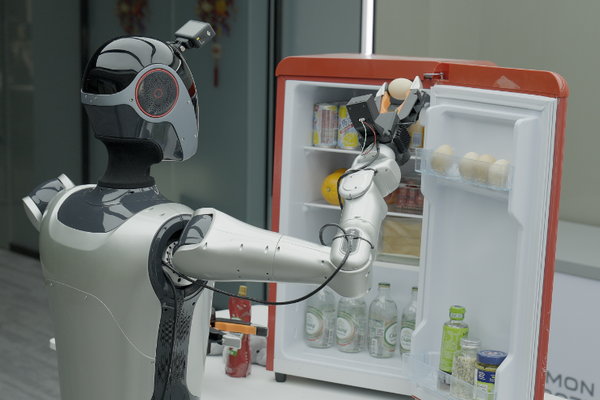
Daimon One is the world's first VTLA embodied operation large model. It integrates vision, touch, and language multimodal input to predict action output, achieving complete closed-loop control from perception to robot actions. It enhances reasoning and task generalization in complex scenes through three-in-one perception: body state, tactile, and visual.
- •Global first VTLA embodied operation large model
- •Integrates vision, touch, language multimodal input
- •Predicts action output for complete closed-loop control
- •Enhances reasoning and task generalization in complex scenes
- •Three-in-one perception: body state, tactile, visual
- •Multimodal end-to-end model enables precise manipulation
Detailed specs not disclosed.
Technology stackOur read
Inferred from product specs — click through to the technology wiki:
ResearchComputed
Product comparisonComputed
Each row leads with this company's product, side-by-side with similar ones · click a row to expand full specs, click again to collapse
Daimon One
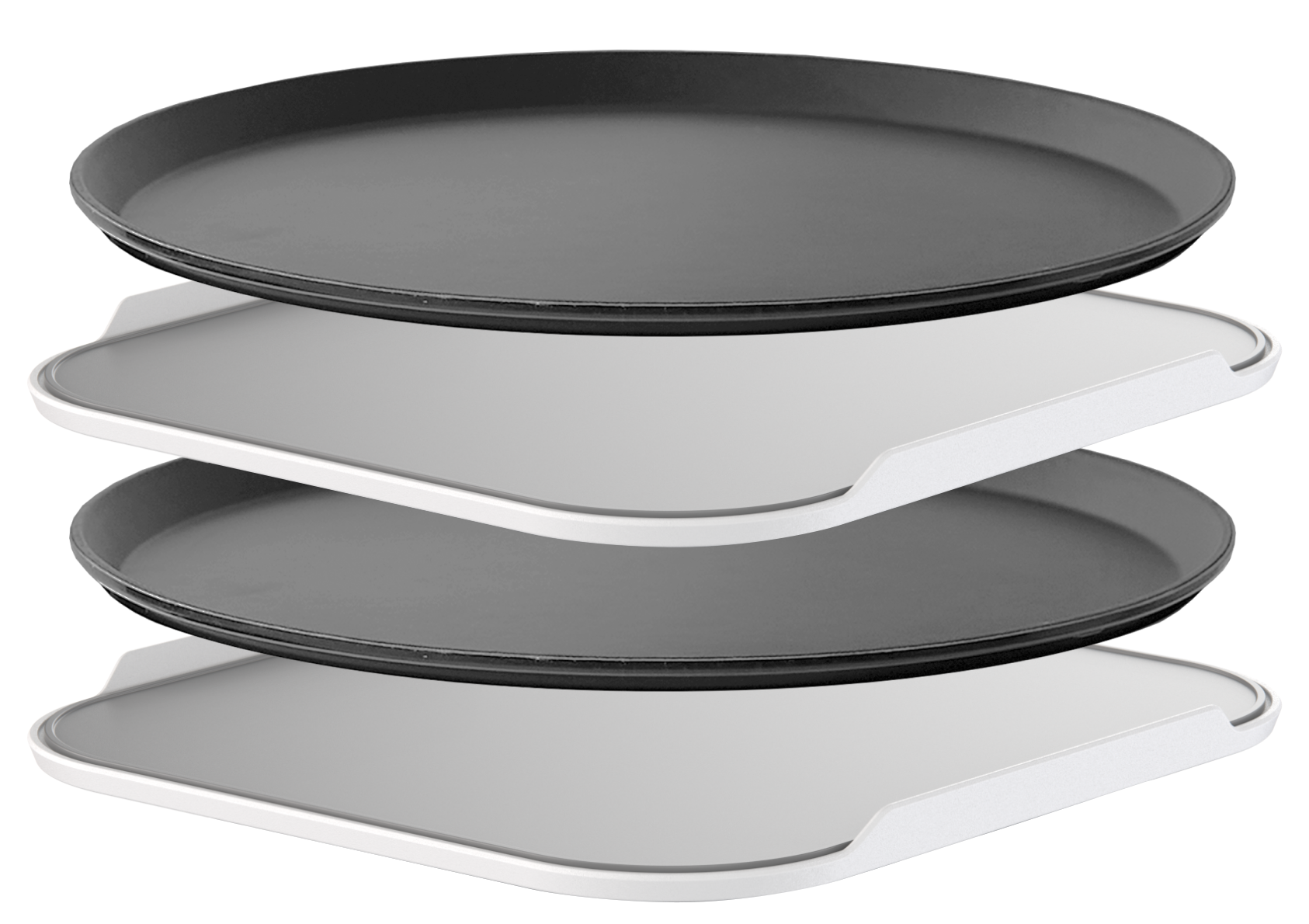
Servi

Matradee
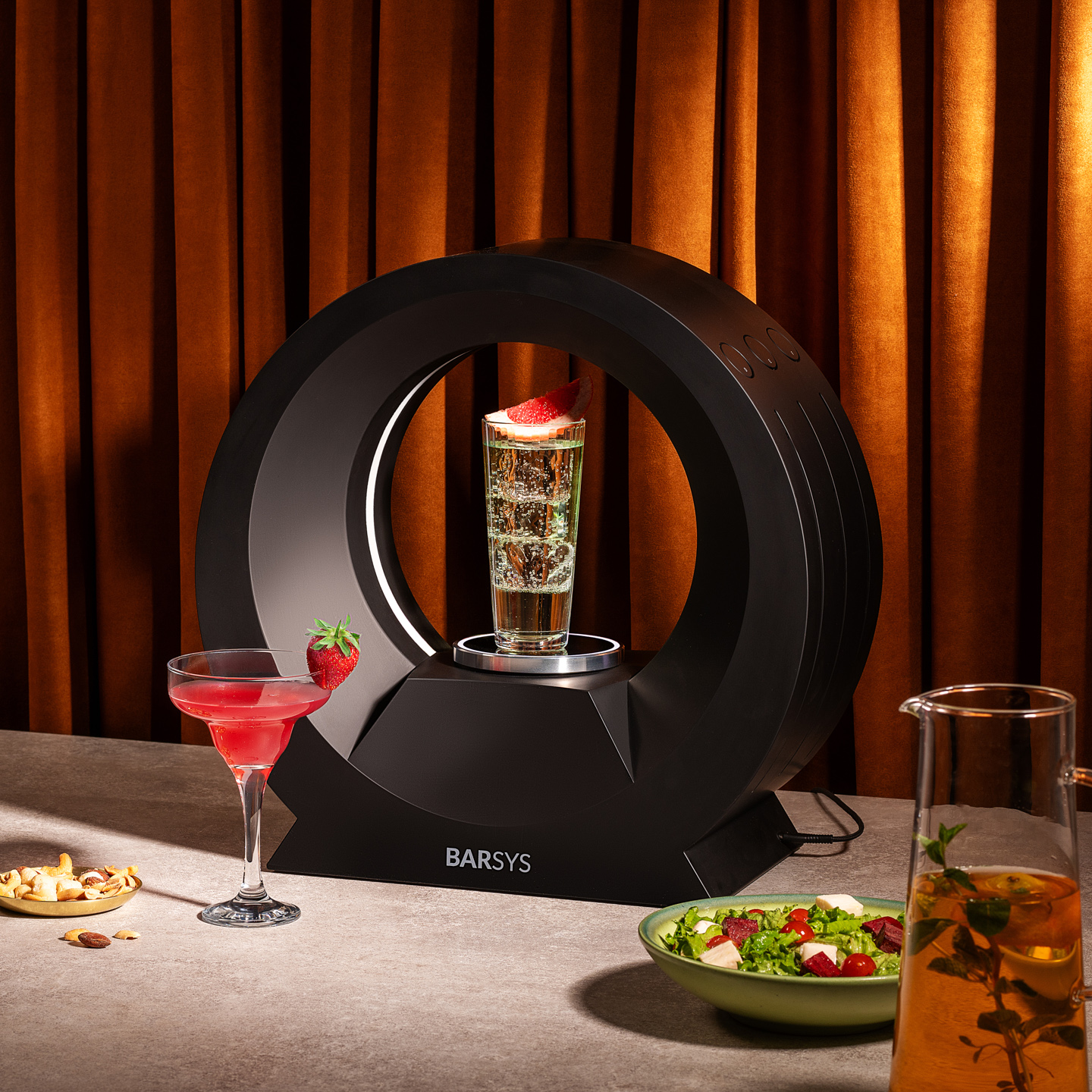
Barsys 360
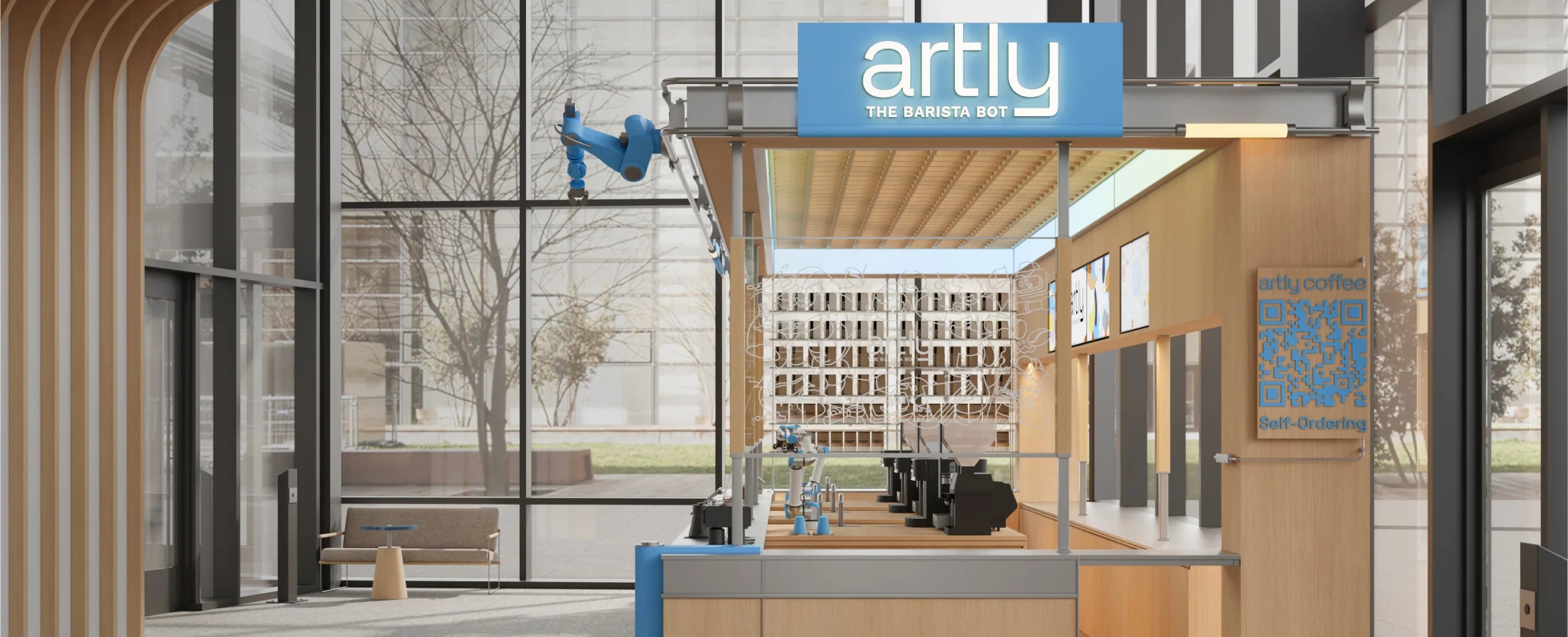
Artly: The Barista Bot

Rozum Cafe
Company announcement
News and Media
The company's official social & video channels · external links

Beyond the Lab: Real-World Factory Deployment by Daimon
2026-07-05

What If a Robot Could Wrap Zongzi? 🤖🐉 | Daimon Robotics Dragon Boat Festival Holiday Concept
2026-06-19

ICRA 2026 RoboTac | Daimon Robotics “Touch Physical AI” Keynote Record
2026-06-16

Real voices from ICRA 2026: What do visitors think of Daimon Robotics? 🎙️✨
2026-06-06

News
From third-party news outlets (China & abroad) · external links