cobotteam
SnapshotCompany claim
Company description not yet disclosed.
- Founded
- Not disclosed
- HQ
- Not disclosed
- Models
- 21
- Categories
- 2
ContactCompany claim
- Address
- Not disclosed
Product families
Is this your company? Claim this profile to add verified data, respond to our analysis, and upgrade claims to Verified.
Claim this profile1. Executive Overview {#executive-overview}
Cobot Team (cobotteam.com) is a collaborative-robotics reseller and integrator operating in the North American market, with a product catalogue that spans light-to-medium collaborative robot arms, heavy autonomous mobile robots (AMRs) for industrial logistics, and a range of accessories and peripheral hardware. The company's catalogue lists 21 products drawn from established OEM brands — Dobot, FANUC, and Rethink Robotics — alongside a distinct Sherpa family of heavy-duty AMRs, positioning Cobot Team as a multi-brand solutions provider rather than a single-OEM reseller. A notable customer-facing differentiator, stated on the product pages for Dobot cobots, is the inclusion of free US shipping, training, and warranty support, suggesting a full-service go-to-market model targeting buyers who want managed procurement.
The breadth of the catalogue — from the $2,699 DOBOT MG400 desktop arm to the $54,544 FANUC CRX-10iA/L collaborative robot — indicates a strategy of serving multiple buyer segments: small manufacturers, educational institutions, and larger industrial operations running heavy pallet-moving or tugging workflows. Founding date and country of incorporation are not publicly disclosed on the site; the contact email (contact@cobotteam.com) and explicit US shipping commitments suggest a US-based or US-focused operation.
Not yet disclosed: founding date, headcount, legal entity details, and geographic headquarters. Cobot Team is invited to claim or correct these data points.
Latest news
- KEENON Humanoid Pours Drinks at GCS 2026, 100,000 Others Run HotelsYanko Design·2026-06-15GENERAL
2. The Company Story {#the-company-story}
Based solely on the company's own site content, Cobot Team has built its identity around the concept of accessible collaborative robotics — acting as a curated marketplace and integration partner for buyers entering or expanding their automation footprint. The company name itself signals the positioning: cobots (collaborative robots designed to work alongside humans) as a team-oriented, approachable alternative to traditional industrial automation.
The product architecture tells a clear story of deliberate portfolio construction. On one end, Cobot Team carries entry-level hardware such as the DOBOT MG400 desktop arm ($2,699) and the Dobot CR3 ($19,990), which are explicitly described as suited for educational and light industrial purposes. On the other end, the Sherpa family of heavy-logistics AMRs — capable of tugging up to 1,500 kg — addresses serious warehouse and factory floor deployments. This range suggests the company has grown its offering over time to serve both first-time cobot buyers and more sophisticated operational buyers.
The explicit mention of Dobot CR16's "interactive programming" and "easy to master" language, alongside the Sawyer Demonstration Table designed for "professors and/or teachers," indicates the company actively courts the education and training market as a distinct vertical. The FANUC CRX line's inclusion, at price points above $45,000, signals ambition to serve enterprise-grade manufacturing customers as well.
Founding milestones, investment history, and leadership team details are not publicly disclosed on the company's site. Not yet disclosed: year of founding, key executives, and company milestones. Cobot Team is invited to claim or correct this record.
3. Product Portfolio {#product-portfolio}
Products & versions
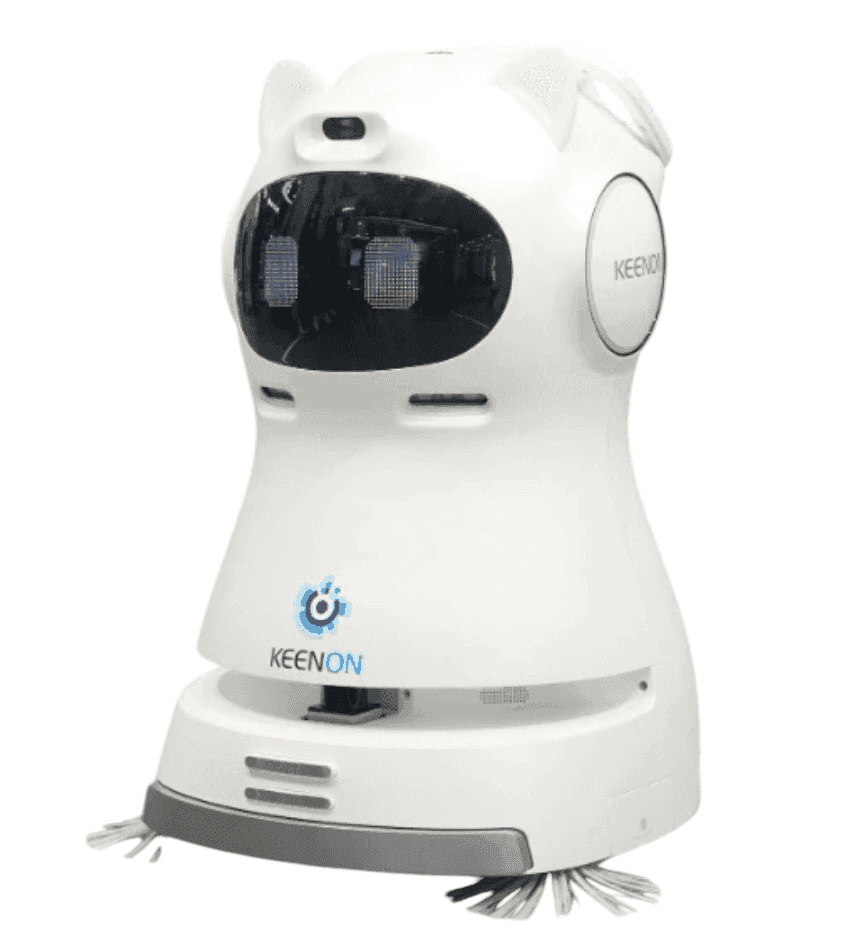
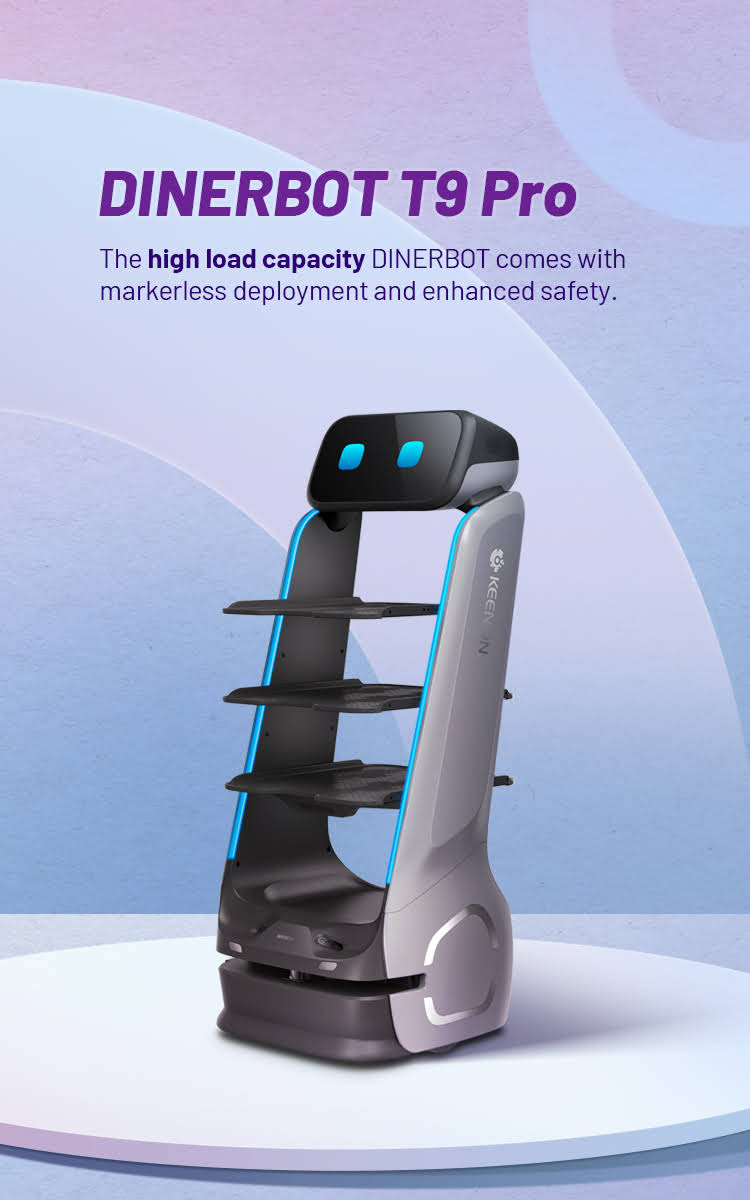
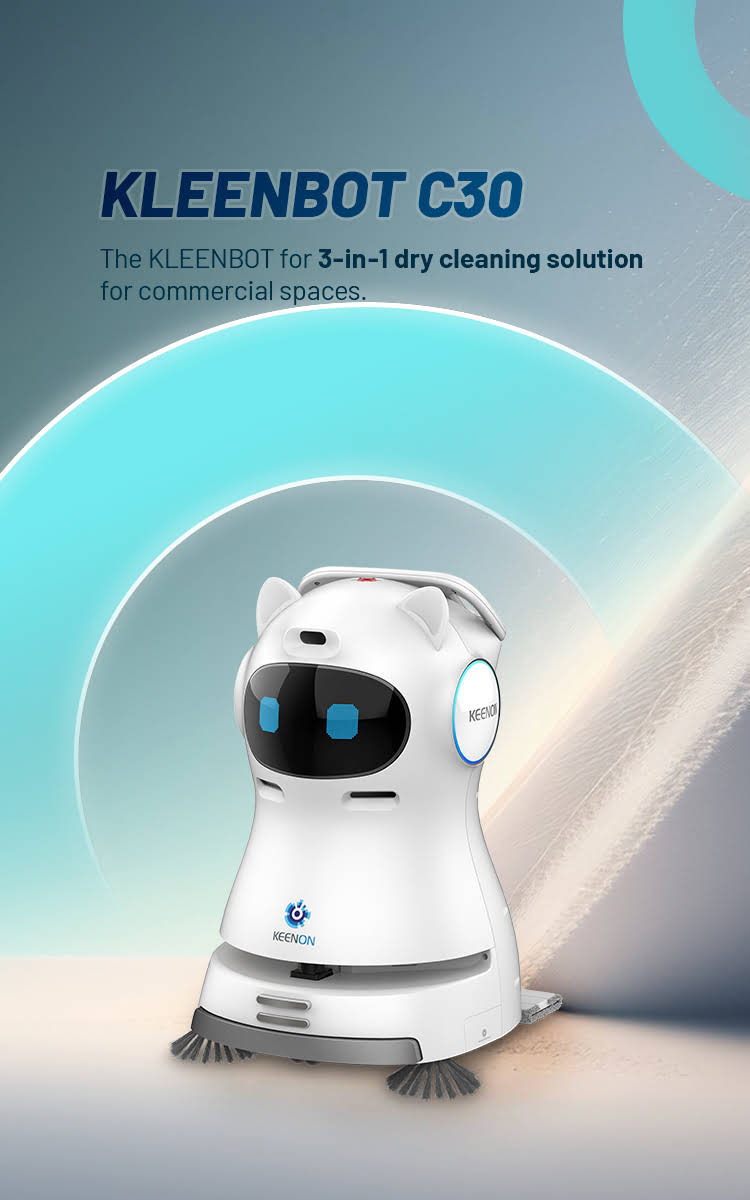


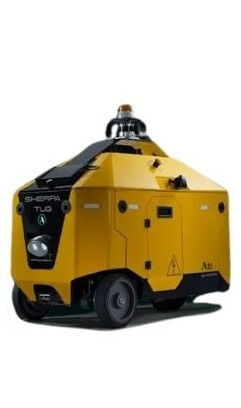
The Cobot Team catalogue organises into two meaningful families. The first is a heavy autonomous mobile robot (AMR) line under the Sherpa brand, comprising four models — the Sherpa 10K, Sherpa Lifter, Sherpa Pallet Mover, and Sherpa XT Lite — all rated for 1,000–1,500 kg payloads or tugging capacity at speeds up to 1.5 m/s. These are industrial-grade machines: the Sherpa 10K and XT Lite handle gradients up to 10% and operate both indoors and outdoors, while the Lifter and Pallet Mover are indoor-only units focused on docking, lifting, tunneling, roller-top, and pallet pick-and-drop operations. The XT Lite is specifically engineered for narrow-aisle environments. This Sherpa line is the most technically specified portion of the catalogue and represents Cobot Team's heaviest logistics capability.
The second family is a multi-brand collaborative robot arm and accessories portfolio, drawing on Dobot (CR3, CR5, CR10, CR16, CR20A, MG400, M1 Pro), FANUC (CRX-5iA, CRX-10iA, CRX-10iA/L, CRX-20iA/L, CRX-25iA), and Rethink Robotics (Sawyer). Payload capacities across this family range from 3 kg (Dobot CR3) to 25 kg (FANUC CRX-25iA implied by model naming). Accessories include the DH-Robotics AG-160-95 electronic gripper for Dobot arms, the EMI Electronic Gripper for Sawyer, the EMI Cobot Pedestal mobile base, and the Sawyer Demonstration Table — rounding out a purchasing bundle that allows buyers to procure arm, mounting hardware, and end-effector from a single source.
4. Technology Stack {#technology-stack}
The Sherpa AMR family provides the most substantive technical signals in the publicly available data. All four Sherpa models share a common top speed of 1.5 m/s, suggesting a unified drive platform across the line. Our read: the gradient capability difference between models — 10% for the Sherpa 10K and XT Lite versus 2% for the Lifter and Pallet Mover — likely reflects different drive configurations optimised for mobility-in-transit (tugging) versus precision low-speed docking tasks, where gradient tolerance is less critical than positioning accuracy. The Sherpa XT Lite's narrow-aisle capability further implies a reduced-footprint chassis design engineered for high-density racking environments.
Our read: the autonomous docking, tunneling, and roller-top functionality described for the Sherpa Lifter implies onboard sensing and positional control sufficient for repeatable under-load engagement — a non-trivial navigation and control challenge. The extent of the sensor suite (LiDAR, vision, ultrasonic, or combinations thereof), the fleet management software layer, and the AMR's obstacle-avoidance architecture are not described in the available data.
For the cobot arm portfolio, technical specifications are manufacturer-provided and passed through: Dobot CR-series arms are 6-axis designs with reaches from 620 mm (CR3) to 1,000 mm (CR16); the FANUC CRX line is described as featuring built-in safety systems, tablet/teach-pendant programming, and a lightweight design. The DOBOT M1 Pro is a SCARA configuration with second-generation intelligent collision detection and hand-guided learning. No proprietary Cobot Team software stack, simulation environment, or integration middleware is described in the available data.
Not yet disclosed: fleet management software details, sensor architecture for Sherpa AMRs, integration APIs, and any proprietary technology layer Cobot Team may have developed. Cobot Team is invited to claim or correct this record.
5. Research, Papers, Authors, Labs {#research-papers}
Company-linked papers
Cobot Team presents as a commercial reseller and integrator, not a research-publishing organisation. No academic papers, white papers, patents, or affiliated research labs are referenced in the available site data. This is entirely consistent with the business model; the large majority of service-robotics resellers and integrators do not publish original research.
6. Media Evidence {#media-evidence}
Media library
No press coverage, media mentions, or linked third-party articles are present in the data extracted from cobotteam.com. Not yet disclosed: earned media, case study publications, trade press features, or analyst citations. Cobot Team is invited to submit coverage for inclusion.
7. Commercial Reality {#commercial-reality}
Customers & deployments
Revenue, customer count, and deployment scale are not disclosed in any publicly available data from cobotteam.com. These figures are rendered here as Not disclosed. Named customer deployments, ROI case studies, and contract values are likewise absent from the site data.
The site's e-commerce infrastructure — including category pages, order history, account management, wallet, and address pages (visible in the site's technical metadata) — confirms that Cobot Team transacts directly online, which is notable for a product category where list prices range from $950 (Sawyer Demonstration Table) to over $54,000 (FANUC CRX-10iA/L). This suggests at least some volume of direct online sales alongside what is likely a consultative sales process for higher-value AMR and enterprise cobot deployments.
Cobot Team is invited to disclose customer references, deployment counts, and verifiable ROI data for inclusion in this record.
8. Markets and Use Cases {#markets-use-cases}
The product tags and descriptions map to a coherent set of addressable markets. The Sherpa AMR family is explicitly targeted at warehousing, factory floor logistics, and industrial supply-chain operations — the tugging and pallet-moving use cases point to intralogistics flows: moving raw materials between receiving and production, transferring work-in-progress between stations, and handling finished-goods pallets ahead of dispatch. The Sherpa XT Lite's narrow-aisle capability addresses high-density storage environments common in e-commerce fulfilment and automotive parts warehousing.
The Dobot CR-series and FANUC CRX-series arms, without explicit use-case tags in the data, are described in terms consistent with light manufacturing assembly, quality inspection, machine tending, and pick-and-place applications — standard cobot deployment patterns. The Dobot CR5's explicit mention of "educational purposes" and the Dobot CR16's "interactive programming" language, combined with the Sawyer Demonstration Table priced for institutional budgets, confirm education and training as a distinct served market — universities, technical colleges, and corporate training facilities seeking hands-on robotics curriculum hardware.
The DOBOT MG400 desktop arm, described as suited for "small space applications" and "automated workbench scenarios," addresses SME manufacturing and lab automation buyers for whom a full-sized cobot arm would be spatially or financially impractical. The M1 Pro SCARA targets high-speed repetitive industrial tasks such as sorting, dispensing, and light assembly in factory environments.
9. Competitive Landscape {#competitive-landscape}
Competitive comparison
| Robot | Maker | Autonomy | Conf. |
|---|---|---|---|
| iRobot Roomba Combo 10 Max | iRobot | Autonomous | 0.90 |
| Mobile ALOHA (Stanford) | Stanford University | Teleoperated | 0.90 |
| 1X NEO | 1X Technologies | Remote-Assisted | 0.90 |
The multi-brand reseller and cobot integrator space is populated by a range of players, from single-brand authorised distributors to broad-catalogue automation distributors and systems integrators with their own engineering services. Cobot Team's combination of an e-commerce-enabled purchasing pathway, a multi-OEM arm portfolio, and a distinct heavy-AMR line (Sherpa) creates a differentiated but not unique position — buyers in this category have access to direct OEM channels, large industrial distributors, and specialist integrators.
The inclusion of the Sherpa AMR family alongside cobot arms is the most distinctive element of the portfolio mix, as heavy-payload AMR capability (1,000–1,500 kg) alongside sub-$3,000 desktop arms spans a wide capability band that few single storefronts cover. The competitive dynamics of this segment, and the specific peer set, are detailed in the module above.
10. Country Advantage / Geopolitical {#geopolitical}
Section not material for this company.
11. Hype vs Real vs Ugly {#hype-real-ugly}
Claim tracker
Verified and specific (company-claim): The Sherpa AMR specifications — 1,500 kg tugging/lifting capacity, 1.5 m/s max speed, 10% gradient handling for outdoor-capable models — are stated with numerical precision and are technically coherent with the described use cases. These are the strongest concrete claims in the portfolio.
Company-claim, unverified externally: Dobot CR-series product descriptions assert "high reliability, reduced labor costs, and improved safety" as outcomes of deployment. These are standard cobot marketing claims; they are not supported in the available data by customer case studies, measured results, or third-party validation. They should be read as vendor positioning.
Company-claim, unverified externally: The offer of "free shipping in the US, training, and warranty support" on Dobot products is stated as a Cobot Team service differentiator. The scope, duration, and terms of training and warranty support are not specified in the available data.
Our read: The breadth of the catalogue — spanning $950 accessories to $54,000 robots — is a genuine market-coverage strength, but it also raises an unverified question about depth of integration support across all OEM lines simultaneously. No evidence of this being a limitation exists in the data; it is flagged as a due-diligence question for prospective buyers.
Not yet disclosed: Independent customer testimonials, certified safety ratings for Sherpa AMRs, payload test certifications, and service-level agreement terms. Cobot Team is invited to claim or correct this record.
12. Future Scenarios {#future-scenarios}
Our read — Bull case: Cobot Team capitalises on sustained North American manufacturing reshoring and warehouse automation demand. The Sherpa AMR line wins intralogistics contracts at mid-market manufacturers who find enterprise AMR providers overpriced and under-flexible. The multi-brand cobot arm portfolio generates recurring accessory, training, and support revenue. The education vertical grows as technical colleges expand robotics curricula. The e-commerce purchasing model lowers customer acquisition costs relative to field-sales-heavy competitors.
Our read — Base case: Cobot Team maintains a stable niche as a multi-brand integrator serving SME manufacturers, educational institutions, and mid-market logistics buyers. Growth tracks the broader cobot market (which has shown consistent double-digit expansion globally) without outpacing it. The Sherpa line competes effectively in heavy AMR applications where the company's service model adds genuine value over direct OEM procurement.
Our read — Bear case: Direct OEM e-commerce channels mature and reduce the intermediary value of resellers. FANUC and Dobot expand direct distribution or shift to lower-margin authorised-reseller models that compress Cobot Team's economics. The Sherpa AMR line faces intensifying competition from well-capitalised AMR vendors with larger field service networks. Without disclosed customer references or case studies, Cobot Team finds it harder to differentiate in competitive bids against integrators with documented deployments.
13. What to Watch {#what-to-watch}
- Sherpa AMR deployments: Any named customer references or case studies for the Sherpa 10K, Lifter, Pallet Mover, or XT Lite would materially validate the heavy-logistics capability claim and the company's integration competency.
- OEM relationship disclosures: Confirmation of authorised reseller or distribution agreements with Dobot, FANUC, and/or Rethink Robotics (now operated under Hahn Group) would clarify commercial standing and supply security.
- Service infrastructure: Details on training facility locations, warranty terms, and field service coverage geography — particularly relevant for AMR deployments requiring on-site support.
- Sherpa brand origin: Whether the Sherpa AMR line is a proprietary Cobot Team product, a white-labelled OEM line, or a distribution partnership is not disclosed. Clarification would significantly affect the technology and competitive analysis.
- Education vertical traction: Growth in institutional (university, technical college) accounts would validate the education market strategy signalled by the Sawyer table and Dobot CR5 educational positioning.
- Pricing updates: Several FANUC CRX models (CRX-20iA/L, CRX-25iA, CR20A) carry no listed price, which may indicate active quoting or distribution constraints worth monitoring.
- Media and analyst coverage: First appearance of Cobot Team in trade press (The Robot Report, Automation World, Modern Materials Handling) would signal commercial scale.
14. Sources & Methodology {#sources-methodology}
Data sources: All factual claims in this report are grounded exclusively in content extracted from cobotteam.com — product listings, feature descriptions, specifications, and site structural metadata — and are treated throughout as company-claims unless independently corroborated. No third-party databases, external financial records, competitor filings, or secondary research sources were available for this report.
What "company-claim" means here: Product specifications, capability descriptions, pricing, and service commitments are reproduced as stated by Cobot Team on its own site. They have not been independently tested, verified against OEM datasheets, or confirmed by customer evidence. Readers should apply standard due-diligence scrutiny.
Inferences: Sections where analytical judgement is applied beyond the literal data are labelled "Our read:" throughout. These represent the analyst's reasonable interpretation of the available evidence, not additional sourced facts.
Gaps: Where data is absent, this report uses the formulation "Not yet disclosed:" followed by an invitation for the company to claim or correct. No negative attribute is stated as fact without a source.
Methodology rubric (applied uniformly to every company assessed on this platform): (1) Extract verified facts from site content. (2) Label all company statements as company-claims. (3) Label all analytical inferences. (4) State gaps as gaps, not as negatives. (5) Ground competitive and market framing in the product evidence, not external assumption. (6) Apply the same evidentiary standard regardless of company size or prominence.
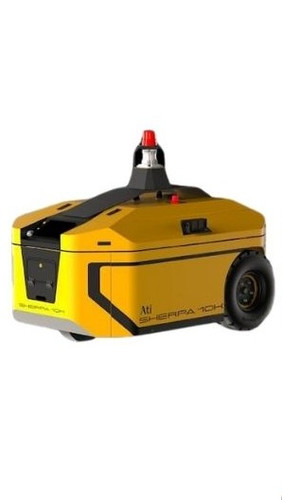
The Sherpa 10K is built tough to handle typical industrial situations. It has a tugging capacity of 1,500 Kg / 3,300 lbs, a max speed of up to 1.5 m/s / 3.3 mph, can handle gradients up to 10%, and operates both indoors and outdoors.
- •Tugging capacity of 1,500 kg / 3,300 lbs
- •Max speed up to 1.5 m/s / 3.3 mph
- •Can handle gradients up to 10%
- •Operates both indoors and outdoors
- •Built tough for typical industrial situations
| Max speed (ms) | 1.5 |
| Gradient percent | 10 |
| Tugging capacity (kg) | 1500 |
Technology stackOur read
Inferred from product specs — click through to the technology wiki:
ResearchComputed
Product comparisonComputed
Each row leads with this company's product, side-by-side with similar ones · click a row to expand full specs, click again to collapse
Sherpa Pallet Mover

LuckiBot Pro

KettyBot
Pudu CC1

R3

Relay Delivery Robot
Sherpa XT Lite
KettyBot
Pudu CC1
R3
LuckiBot
Relay Delivery Robot