botsync
SnapshotCompany claim
Company description not yet disclosed.
- Founded
- Not disclosed
- HQ
- Not disclosed
- Models
- 8
- Categories
- 3
Product families
Is this your company? Claim this profile to add verified data, respond to our analysis, and upgrade claims to Verified.
Claim this profile1. Executive Overview {#executive-overview}
Botsync (botsync.co) is a robotics company focused on autonomous service and delivery robots, with a product lineup built around indoor logistics, food delivery, and hospitality service. Its two fully-specified products — the Mag delivery robot and the LP2 hospitality service robot — demonstrate a clear design philosophy: practical payload capacity (40 kg), multi-hour operational battery life (10 hours), and feature sets oriented toward real-world commercial deployment in restaurants and hotels. The presence of additional product entries (LP1, LP3, Fleet Manager, SyncOS, Integrator) suggests a broader platform ambition spanning hardware variants and fleet-level software, though detailed specifications for those offerings are not yet publicly available.
The company's public positioning, as visible on its site, is oriented toward solutions, partnerships, and support — framing Botsync as a system integrator-friendly vendor rather than a purely direct-sales hardware company. Founding date and headquarters country are not disclosed in available data; these represent gaps that Botsync is invited to claim or correct in this profile.
Latest news
- KEENON Humanoid Pours Drinks at GCS 2026, 100,000 Others Run HotelsYanko Design·2026-06-15GENERAL
2. The Company Story {#the-company-story}
What is verifiable: Botsync operates under the domain botsync.co and presents itself as a provider of robotic solutions with an emphasis on delivery and hospitality applications. The site's navigation structure — "Solutions · Partnership · Support" — repeated prominently indicates a go-to-market model built around commercial deployment partnerships rather than consumer retail. This positioning is consistent with a B2B service-robotics vendor targeting operators in the food-and-beverage and hospitality sectors.
The product naming conventions (LP1, LP2, LP3; Mag / mag-product) suggest iterative hardware development across at least two distinct robot families — one focused on general delivery (Mag series) and one on hospitality service (LP series). The presence of software-layer entries — Fleet Manager, SyncOS, and Integrator — points to a deliberate evolution from hardware vendor toward full-stack robotics platform provider, a common and strategically sound trajectory in the service-robotics segment.
Not yet disclosed: Founding year, founding team, funding history, headquarters country, and any named milestone deployments. Botsync is invited to submit or correct these details to enrich this profile.
3. Product Portfolio {#product-portfolio}
Products & versions
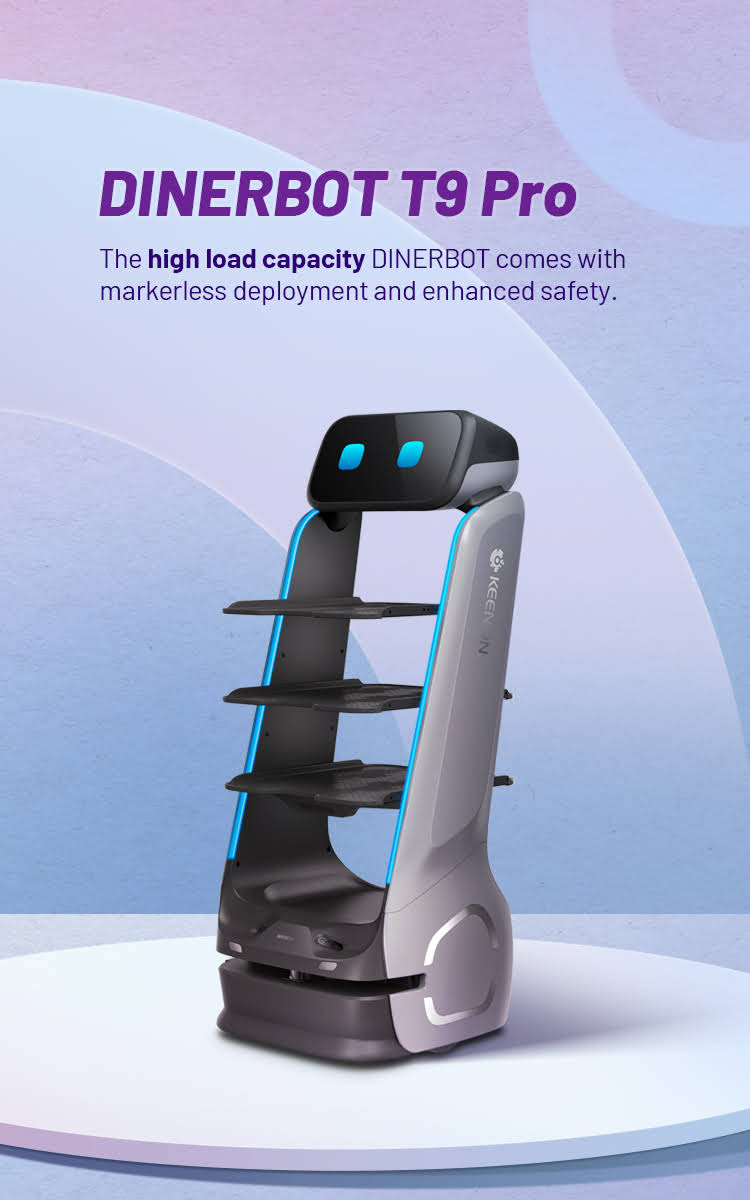
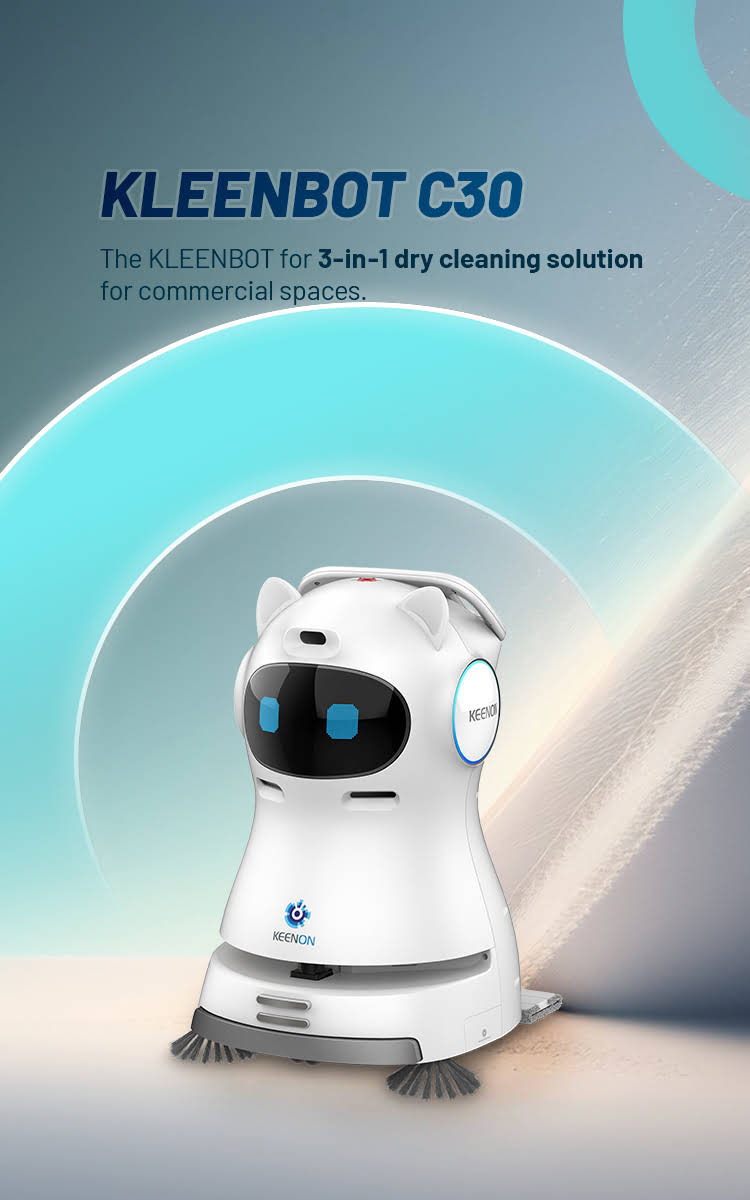


Botsync's disclosed product lineup divides into two clear hardware families and an emerging software/integration layer. The Mag series (Mag, mag-product) targets delivery use cases with a robust 40 kg payload, 4 adjustable trays, and a compact 500 × 500 mm footprint suited to corridor and aisle navigation. The LP series (LP1, LP2, LP3) addresses hospitality service contexts — the LP2 in particular is the most fully specified, adding autonomous charging, a large touchscreen at ergonomic height, voice broadcast and interaction, obstacle avoidance sensors, and multi-floor navigation, making it a feature-rich front-of-house robot for hotels and restaurants.
Beyond hardware, the portfolio entries for Fleet Manager, SyncOS, and Integrator indicate that Botsync is building — or has built — a software ecosystem to manage multi-robot deployments, coordinate operating system-level functions, and connect with third-party facility systems. Full specifications and descriptions for LP1, LP3, mag-product, Fleet Manager, SyncOS, and Integrator are not yet publicly detailed; these represent meaningful surface area that Botsync is invited to populate. The overall shape of the lineup is that of a company maturing from individual robot SKUs toward a managed fleet platform.
4. Technology Stack {#technology-stack}
Verified from specs: The LP2 features obstacle avoidance sensors, autonomous charging return, multi-floor navigation (implying elevator integration capability), voice broadcast and two-way interaction, and a large touchscreen interface. The Mag achieves 1.0 m/s navigation speed with a 60 kg total weight carrying 40 kg of payload — a 67% payload-to-body-weight ratio that is mechanically efficient for a wheeled delivery platform. The LP2 runs faster at 1.5 m/s and is lighter at 45 kg while matching the 40 kg payload, suggesting design refinement between the Mag and LP series.
Our read: The combination of obstacle avoidance, autonomous charging, and multi-floor navigation in the LP2 implies an onboard sensor suite likely including LiDAR or ultrasonic proximity sensors, and software-level integration with building infrastructure (elevator APIs or relay controllers). The SyncOS product entry suggests Botsync may operate its own robot operating system or middleware layer rather than relying solely on ROS or a third-party stack — this would be a meaningful differentiator if confirmed. Fleet Manager implies centralized multi-robot coordination, likely with a dashboard for operators to monitor battery state, task queues, and deployment status.
Our read: The 4-hour charge time on the Mag and 3-hour charge time on the LP2, combined with 10-hour operational batteries, are consistent with lithium-ion chemistry sized for a full commercial shift with a mid-day top-up window. These are operationally practical numbers for a restaurant or hotel deployment context.
Limited public technical detail exists on the underlying navigation algorithm (SLAM variant, map-building approach), sensor specifications (LiDAR model, camera use), or cloud architecture. Botsync is invited to disclose or correct these details.
5. Research, Papers, Authors, Labs {#research-papers}
Company-linked papers
Botsync does not appear to be a research-publishing organization based on available data. This is consistent with the profile of a commercial service-robotics vendor — the company's evident focus is on deployable product rather than academic contribution, and the absence of published papers should not be read as a weakness in this context.
6. Media Evidence {#media-evidence}
Media library
No media coverage is linked in the current data extract. Botsync is invited to submit press mentions, trade coverage, or deployment announcements to expand this section.
7. Commercial Reality {#commercial-reality}
Customers & deployments
Revenue, customer count, and deployment scale: Not disclosed. No figures are available in the extracted data, and none will be asserted here.
The site's emphasis on "Solutions · Partnership · Support" and the presence of an Integrator product entry suggest that commercial traction, where it exists, likely runs through channel partners and system integrators rather than direct named end-customers. Botsync is invited to disclose reference customers, deployment counts, geographies served, or ROI data to substantiate commercial momentum. Any such disclosures would be labeled as company-claims and presented accordingly.
8. Markets and Use Cases {#markets-use-cases}
The use-case and industry tags attached to Botsync's specified products point to two primary verticals: restaurants (food delivery, table service automation) and hotels (room service, in-facility delivery). These are among the most active segments in global service robotics adoption, driven by persistent labor cost pressures and customer novelty value in hospitality environments.
Within restaurants, the Mag's 4-tray, 40 kg configuration is well-suited to high-volume delivery runs — carrying multiple orders simultaneously across dining floors or between kitchen and service stations. Within hotels, the LP2's multi-floor navigation, voice interaction, and touchscreen interface align with amenity delivery (towels, dining orders, parcels) and guest-facing interaction scenarios where branded presentation matters.
The Fleet Manager and SyncOS product entries, if fully realized, expand the addressable market to any multi-robot, multi-zone indoor environment — including hospitals, airports, corporate campuses, and retail distribution — though Botsync's current disclosed use-case tags do not yet extend to those verticals. Not yet disclosed: whether Botsync has active deployments or product configurations targeting healthcare, logistics, or other adjacent sectors. The company is invited to correct or expand this characterization.
9. Competitive Landscape {#competitive-landscape}
Competitive comparison
| Robot | Maker | Autonomy | Conf. |
|---|---|---|---|
| iRobot Roomba Combo 10 Max | iRobot | Autonomous | 0.90 |
| Mobile ALOHA (Stanford) | Stanford University | Teleoperated | 0.90 |
| 1X NEO | 1X Technologies | Remote-Assisted | 0.90 |
The indoor service and delivery robot segment is active and increasingly crowded, with vendors competing on payload capacity, navigation reliability, software ecosystem maturity, and total cost of deployment. Botsync's positioning — hardware with an integrated fleet-software layer, sold through a partnerships model — is a defensible approach in a market where operators increasingly demand managed solutions rather than standalone units.
The LP2's multi-floor navigation, voice interaction, and autonomous charging place it in direct feature competition with established hospitality robot platforms. Botsync's differentiation, to the extent it can be verified, may rest on the SyncOS/Fleet Manager software layer and the Integrator product's ability to connect with existing facility systems — capabilities that commodity hardware vendors typically do not offer. The module above reflects computed peer relationships; no specific competitors are named in prose per methodology.
10. Country Advantage / Geopolitical {#geopolitical}
Section not material for this company.
Headquarters country is not disclosed in available data, and no supply-chain, regulatory, or geopolitical factors specific to Botsync's operations can be responsibly characterized without that foundational information. Botsync is invited to disclose its country of incorporation and primary manufacturing base.
11. Hype vs Real vs Ugly {#hype-real-ugly}
Claim tracker
What is verifiable: The Mag and LP2 robots have published, specific hardware specifications — dimensions, weight, payload, speed, battery life, and charge time. These are company-claims, but they are the kind of measurable, auditable claims that a buyer or partner can validate on receipt of a unit. The LP2's feature list (multi-floor navigation, autonomous charging, voice interaction, obstacle avoidance, touchscreen) is consistent with the class of hospitality robots commercially deployed elsewhere in the industry.
Company claims taken at face value: The site presents Botsync as a solutions and partnership-oriented vendor. This framing is a marketing positioning claim and should be evaluated by prospective partners through direct engagement rather than treated as independently verified.
Gaps that are not yet ugly: Six of eight product entries carry no published specifications. This is not unusual for a company managing an evolving portfolio, but it limits external evaluation significantly. Not yet disclosed: LP1 and LP3 specifications, Fleet Manager capabilities, SyncOS architecture, Integrator compatibility matrix. Botsync is invited to populate these.
Our read: There is no evidence of overclaim in the available data — the published specs are specific and plausible, and no performance assertions appear inflated relative to the category. The thinner-than-expected About page content (the navigation labels appear to have been extracted rather than descriptive prose) is a presentation gap, not a substantive red flag.
12. Future Scenarios {#future-scenarios}
Our read — Bull case: Botsync completes the specification and launch of its LP series variants (LP1, LP3) alongside a fully articulated Fleet Manager and SyncOS platform. The Integrator product gains traction as a connectivity layer for hotel property-management systems and restaurant POS platforms, positioning Botsync as the software-defined layer of choice for multi-robot hospitality deployments across a regional or global footprint. Partnership-led distribution accelerates deployment velocity without proportional sales headcount growth.
Our read — Base case: Botsync establishes a steady deployment base in restaurant and hotel verticals through its Mag and LP2 products, with Fleet Manager providing retention value through ongoing SaaS-style engagement. Portfolio expansion (LP1, LP3) fills adjacent price or form-factor points. Growth is measured and geographically concentrated. The company remains a credible mid-tier vendor in its category.
Our read — Bear case: Incomplete product documentation and limited public commercial evidence slow enterprise sales cycles. Larger, better-capitalized competitors with established brand recognition in hospitality robotics capture the same restaurant and hotel buyers. Without disclosed funding, customer references, or technical differentiation data, Botsync struggles to close partnership agreements at scale. The software layer (SyncOS, Fleet Manager) remains underdocumented and underutilized.
13. What to Watch {#what-to-watch}
- LP series completions: Publication of LP1 and LP3 specifications will clarify whether Botsync is building a tiered product ladder (entry/mid/premium) or addressing distinct form-factor use cases.
- SyncOS and Fleet Manager disclosures: Detailed capability documentation for these products is the clearest indicator of whether Botsync is a hardware vendor or a platform company — a strategically significant distinction.
- Integrator product detail: Compatibility with which facility systems (PMS, POS, elevator APIs) will determine the real addressable install base.
- Partnership announcements: Given the site's repeated "Partnership" positioning, any named channel or deployment partnerships would be the primary commercial signal to track.
- Funding or corporate disclosure: Announcement of investment, incorporation details, or headquarters geography would materially sharpen the competitive and geopolitical context.
- Named customer deployments: Reference sites or case studies in restaurant or hotel verticals would validate commercial traction and provide ROI benchmarks.
- Expansion into adjacent verticals: Any move toward healthcare, logistics, or corporate campus use cases would signal product maturity and market confidence.
14. Sources & Methodology {#sources-methodology}
Data provenance: All factual claims in this report are drawn exclusively from content extracted from botsync.co — including product listings, specifications, key feature descriptions, use-case tags, and site navigation structure. All such content is labeled as company-claim: it represents what Botsync publishes about itself and has not been independently verified by third-party testing, audited financials, or external reference checks.
Computed relations: Competitive peer groupings, market category placements, and any cross-company comparisons rendered in live modules are generated through computed similarity matching against the broader robotics company dataset — they are analytical outputs, not editorial assertions.
Inference labeling: Any claim in this report that goes beyond the literal extracted data is labeled "Our read:" and represents the analyst's inference from available evidence. Inferences are offered to aid interpretation, not to substitute for disclosed facts.
Gaps and corrections: Where data is absent, this report records the gap explicitly and invites Botsync to submit corrections or additions. This rubric is applied uniformly across all company profiles in this dataset. No company is penalized analytically for data it has not chosen to publish; absence of disclosure is noted, not characterized as concealment.
Methodology note: This rubric — verified facts first, labeled inferences second, gaps noted with correction invitations — is applied identically to every company report in this series.
The Mag is a delivery robot with 4 adjustable trays, a 40 kg payload, and a speed of 1.0 m/s. It has a 10-hour battery life, a 4-hour charging time, and dimensions of 1250 mm height by 500 mm width and depth. It weighs 60 kg.
- •4 adjustable trays
- •40 kg total payload
- •1.0 m/s speed
- •10 h battery life
- •4 h charging time
- •1250 mm height
- •500 mm width and depth
- •60 kg weight
| Depth | 500 mm |
| Speed | 1 m/s |
| Width | 500 mm |
| Height | 1250 mm |
| Weight | 60 kg |
| Payload | 40 kg |
| Trays | 4 |
| Battery | 10 h |
| Charge time | 4 h |
Use cases
Industries
Technology stackOur read
Inferred from product specs — click through to the technology wiki:
ResearchComputed
Product comparisonComputed
Each row leads with this company's product, side-by-side with similar ones · click a row to expand full specs, click again to collapse
Mag

Kiwi Delivery Robot

Starship Delivery Robot
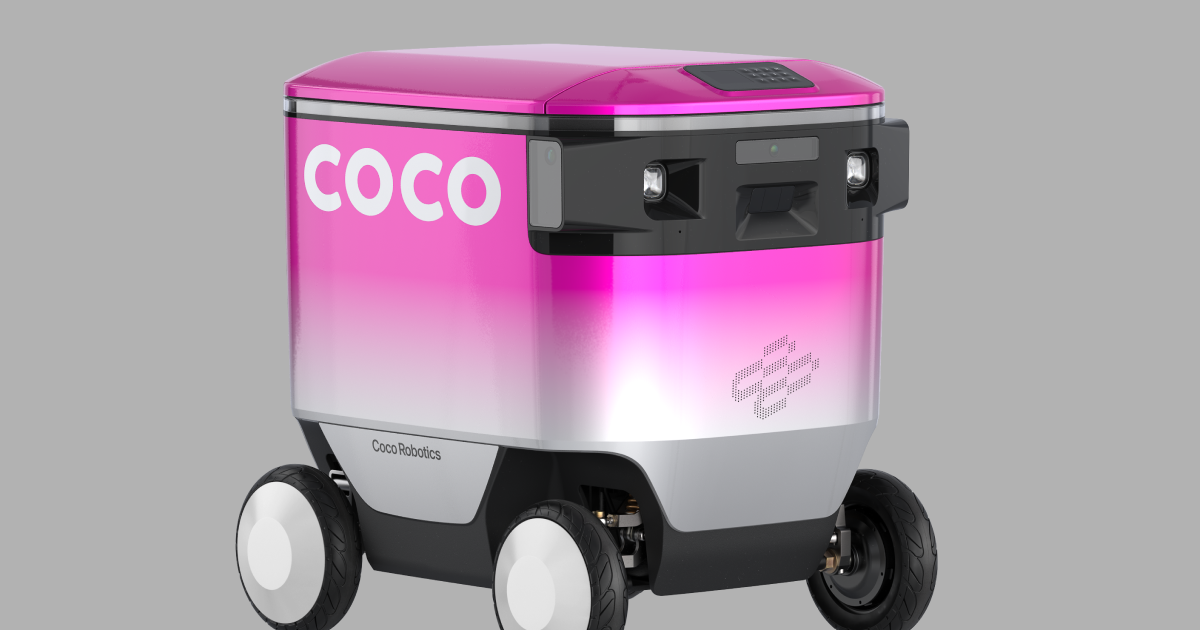
Coco 2

Serve Robotics Gen3 Delivery Robot
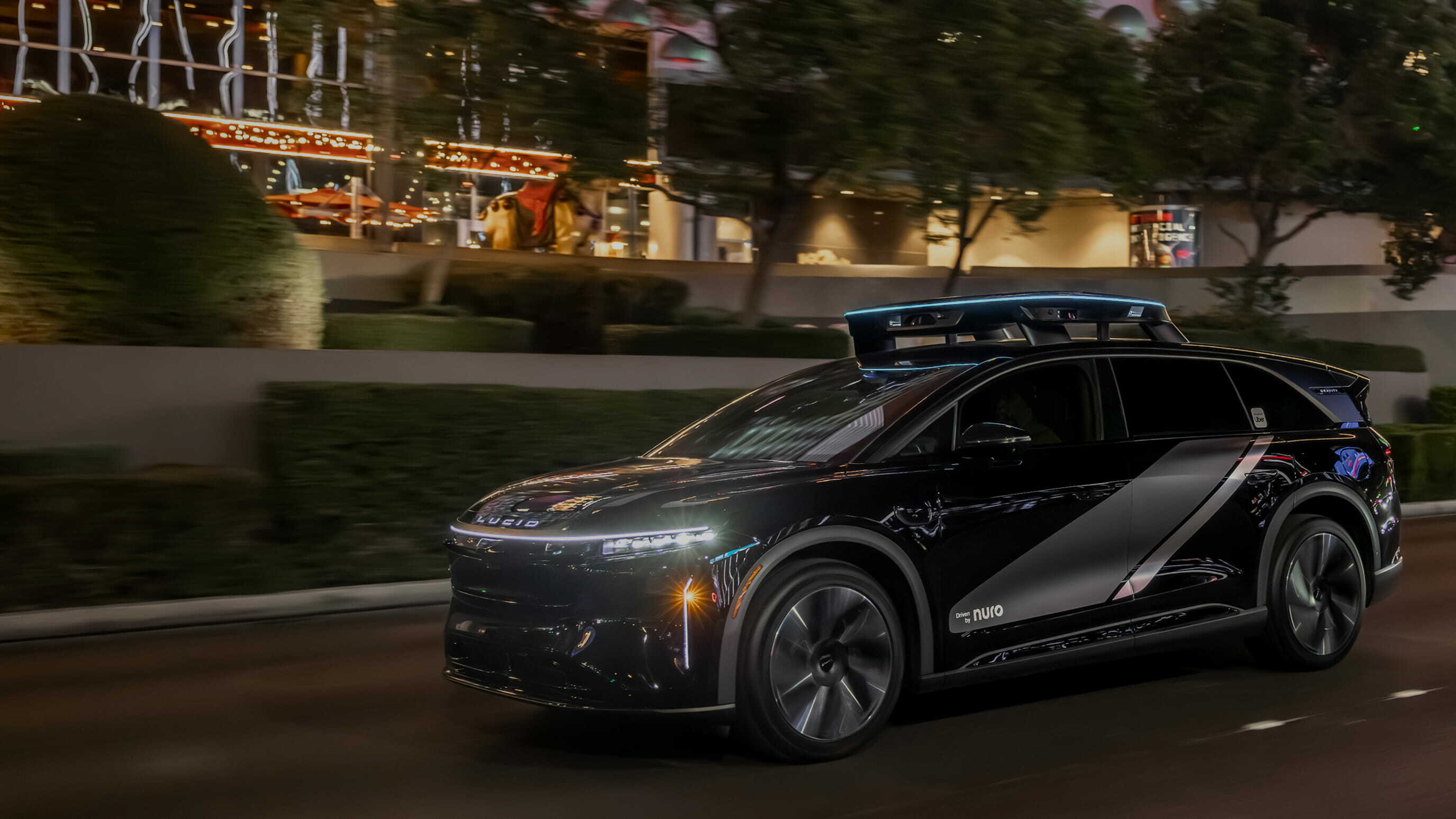
Nuro R3