Boston Dynamics
Company wikiSnapshotCompany claim
Boston Dynamics develops mobile robots including Spot, Stretch, and Atlas. Spot is an agile mobile robot enabling safer, more efficient and predictable operations.
- Founded
- Not disclosed
- HQ
- Not disclosed
- Models
- 6
- Categories
- 3
Product families
Is this your company? Claim this profile to add verified data, respond to our analysis, and upgrade claims to Verified.
Claim this profile1. Executive Overview {#executive-overview}
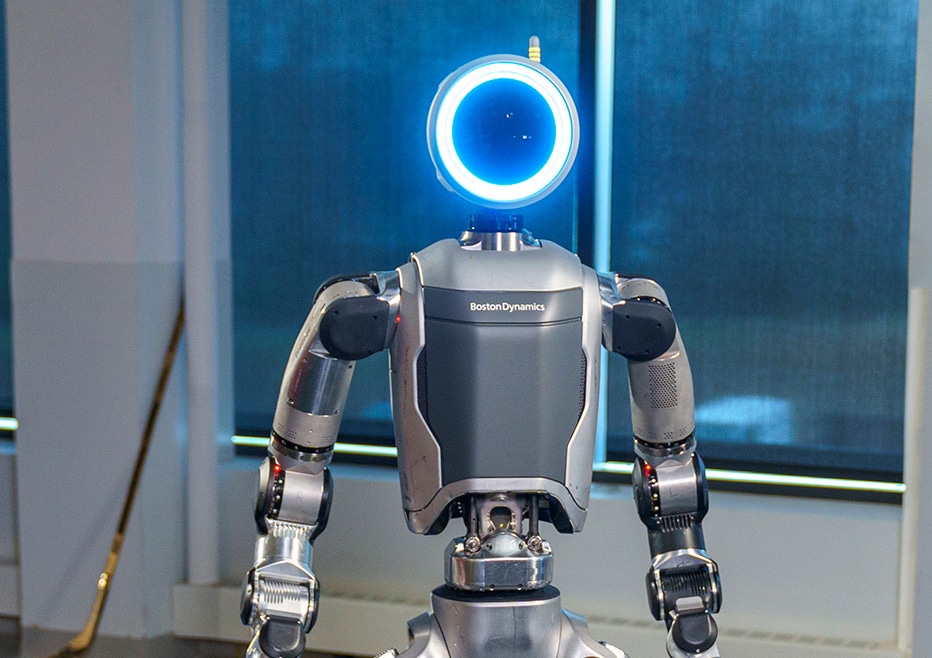
Boston Dynamics is one of the most recognizable names in mobile robotics, with a product portfolio spanning agile quadrupedal robots (Spot), humanoid robots (Atlas), and logistics automation (Stretch). The company's technical credibility is well-established through publicly demonstrated hardware capabilities: Atlas carries a 56-degree-of-freedom body rated IP67, operates across a −20 °C to 40 °C range, and stands 1.9 m tall with a 2.3 m reach — specifications that represent a substantive engineering achievement in humanoid robotics. Spot, extended by the Spot Arm accessory and the MFE Connected Gas Detection Solution, has been positioned as a practical inspection and sensing platform for industrial environments.
The company's public-facing narrative centers on safety, efficiency, and operational predictability — particularly for warehouse, logistics, and factory environments. Founding date and country of incorporation are not disclosed in the extracted data, though the bostondynamics.com domain is the verified source. Revenue, customer counts, and ownership details are not surfaced in the data provided and are treated accordingly throughout this report.
Latest news
- Samsung weighs Boston Dynamics stake as humanoid AI race heats upDigitimes·2026-06-20GENERAL
- Hyundai buys Boston Dynamics, Atlas humanoid to be used at vehicle plant by 2028Startupfortune.com·2026-06-19GENERAL
- Boston Dynamics’ Atlas robot lifts and carries full fridge autonomouslyCrypto Briefing·2026-06-18GENERAL
- Robotics Summit panel explores the state of humanoid robot designwww.therobotreport.com·2026-06-18GENERAL
- Samsung considers a stake in US robotics firm Boston DynamicsSamMobile·2026-06-16GENERAL
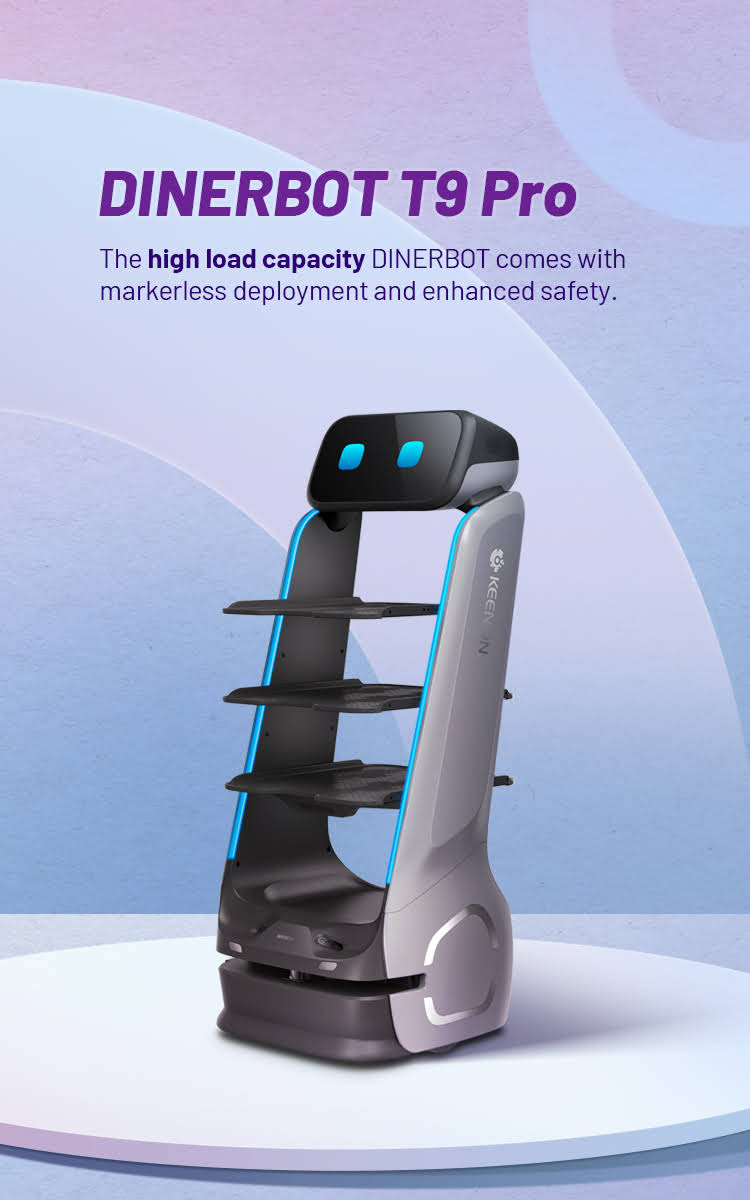
- KEENON Humanoid Pours Drinks at GCS 2026, 100,000 Others Run HotelsYanko Design·2026-06-15GENERAL
- Nvidia and Hyundai go deeper on robotics, with Boston Dynamics’ Atlas at the centreThe Next Web·2026-06-08GENERAL
- Tesla Optimus vs. Boston Dynamics Atlas vs. Figure AI 02: Which Humanoid Is Actually Ready in 2026?HelpForce AI·2026-06-06GENERAL
2. The Company Story {#the-company-story}
Boston Dynamics describes itself as a developer of mobile robots, with its product line — Spot, Stretch, and Atlas — serving as the public pillars of its commercial identity. The company's founding date is not disclosed in the available data; any specific date, origin story, or ownership history would require direct company disclosure to be treated as verified fact.
What the product record does confirm is a progression from a single agile robot platform (Spot) toward a broader suite: a manipulation attachment (Spot Arm), an enterprise software layer (Orbit), an application-specific sensor kit (MFE Spot Connected Gas Detection Solution), an enterprise asset management offering (EAM Kit), and a purpose-built logistics robot (Stretch). This trajectory suggests a deliberate expansion from a demonstration-oriented quadruped toward a portfolio addressing repeatable industrial workflows.
The company's self-described positioning — "safer, more efficient and predictable operations" — frames its market intent as operational reliability rather than research novelty, a distinction that shapes how its products are sold and evaluated.
3. Product Portfolio {#product-portfolio}
Products & versions
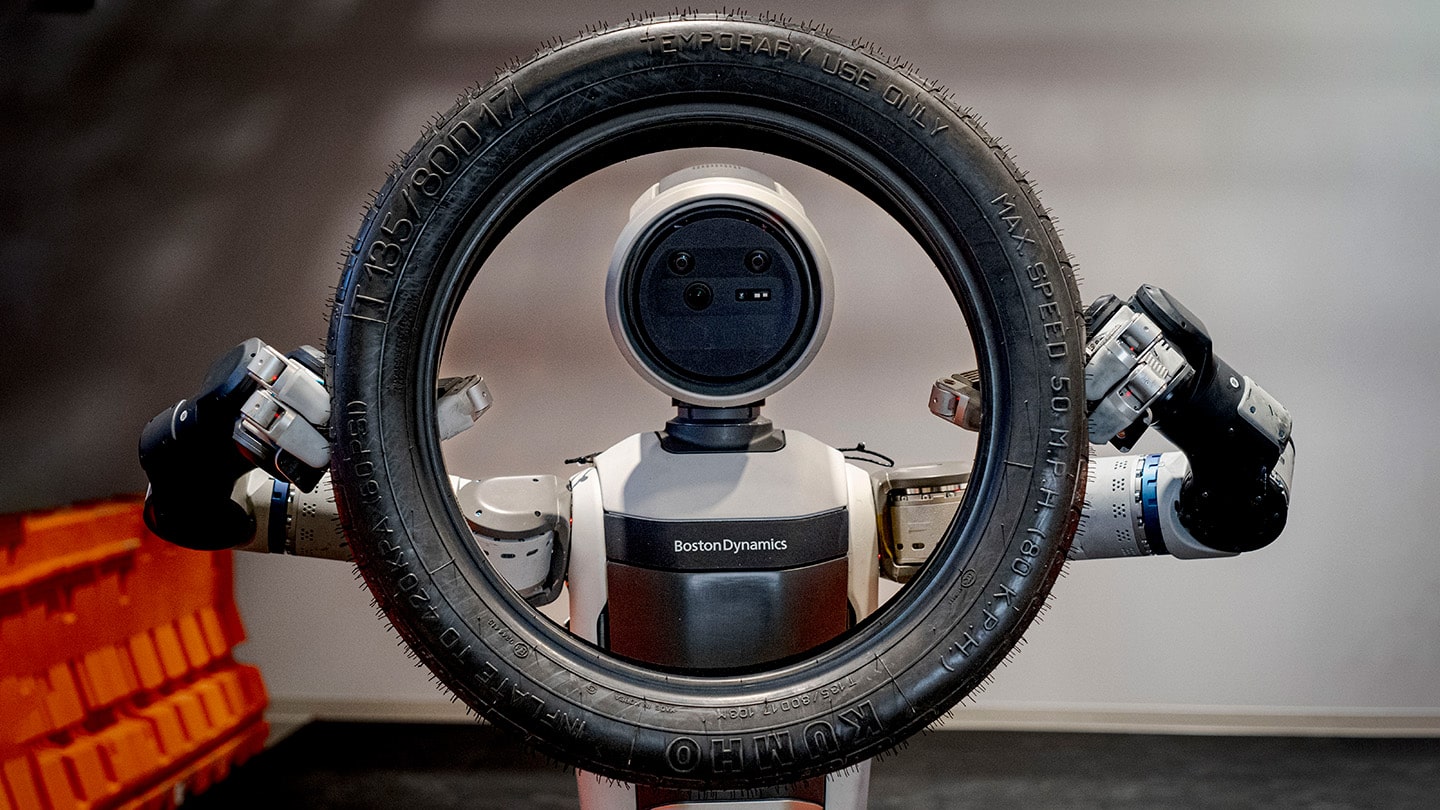


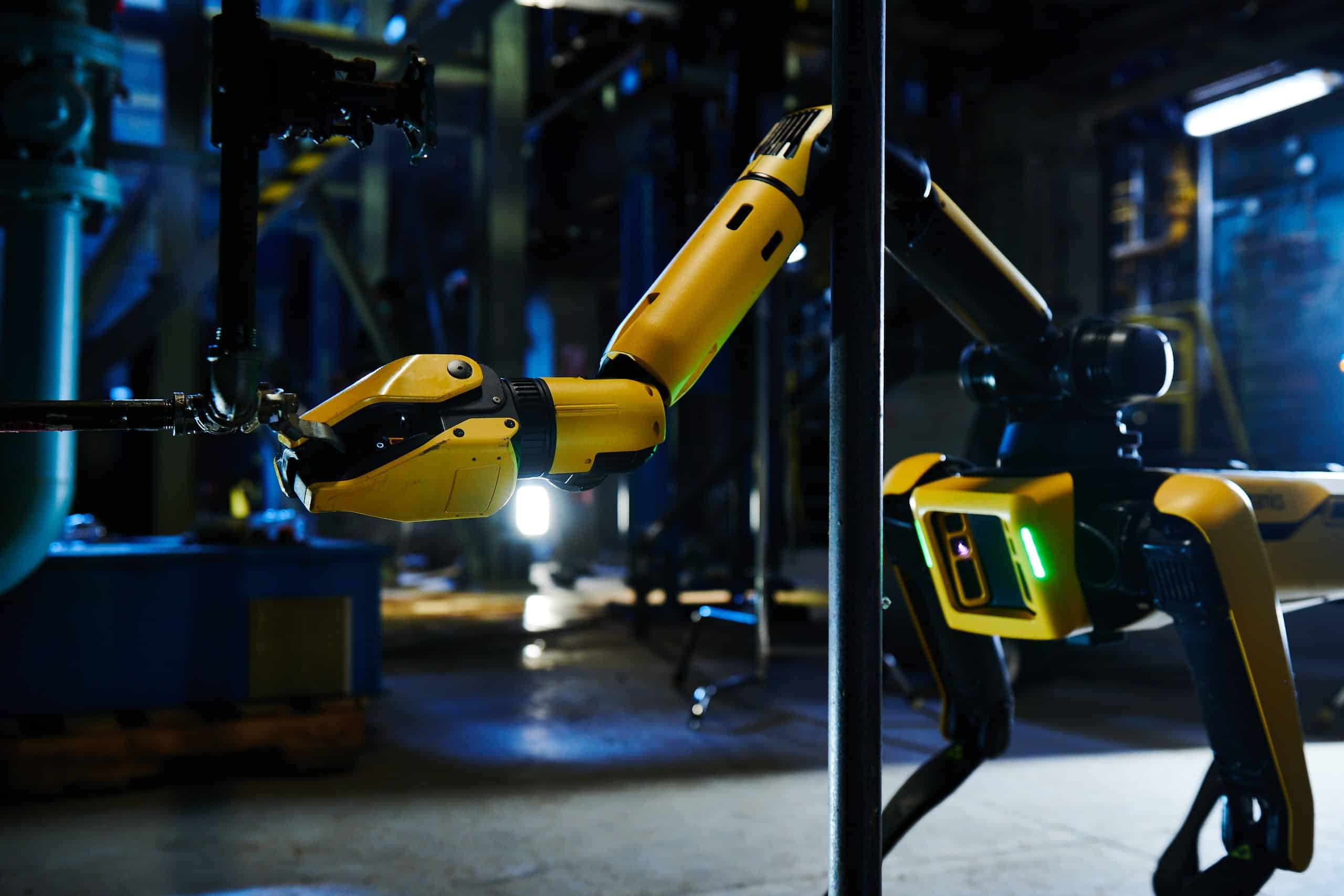
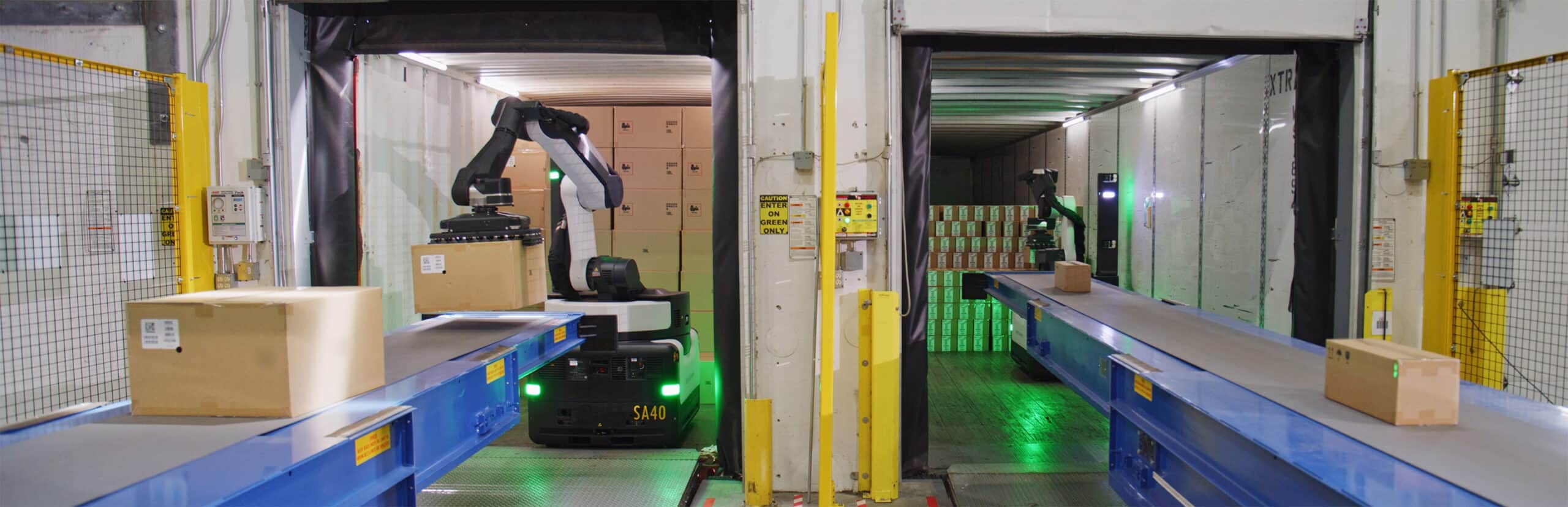
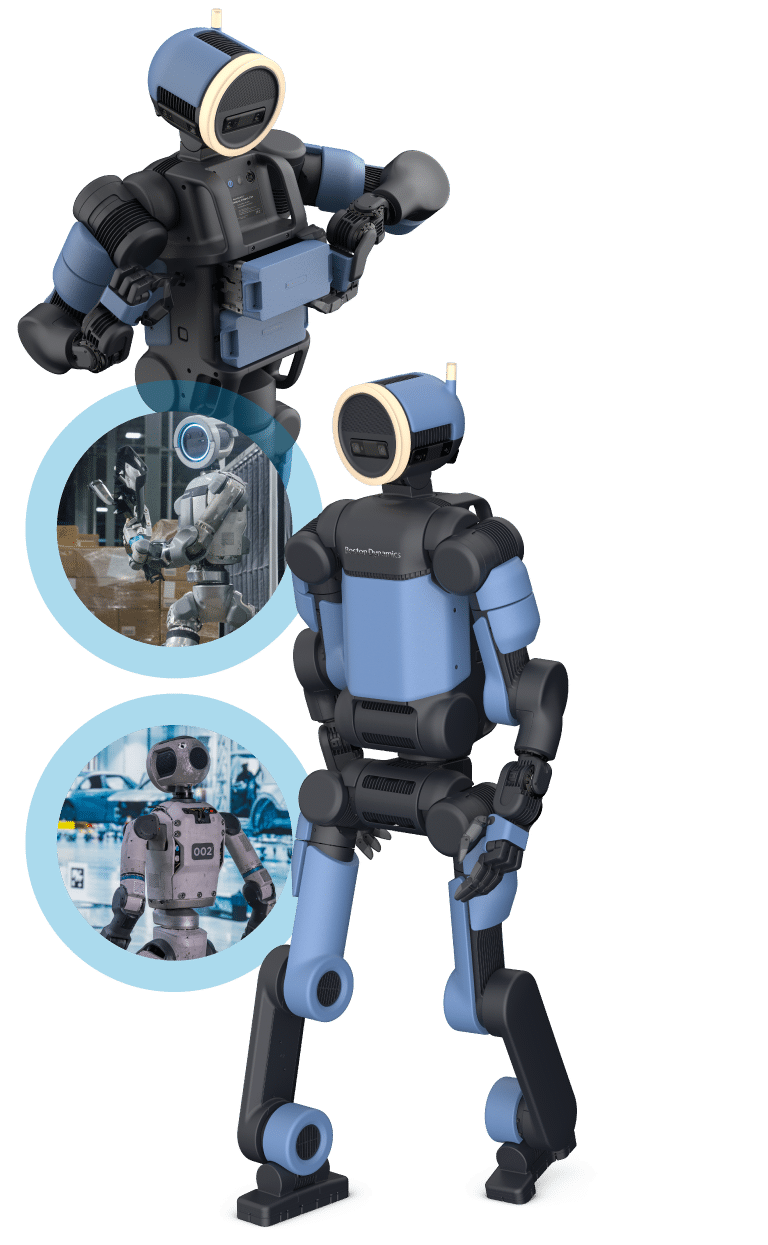
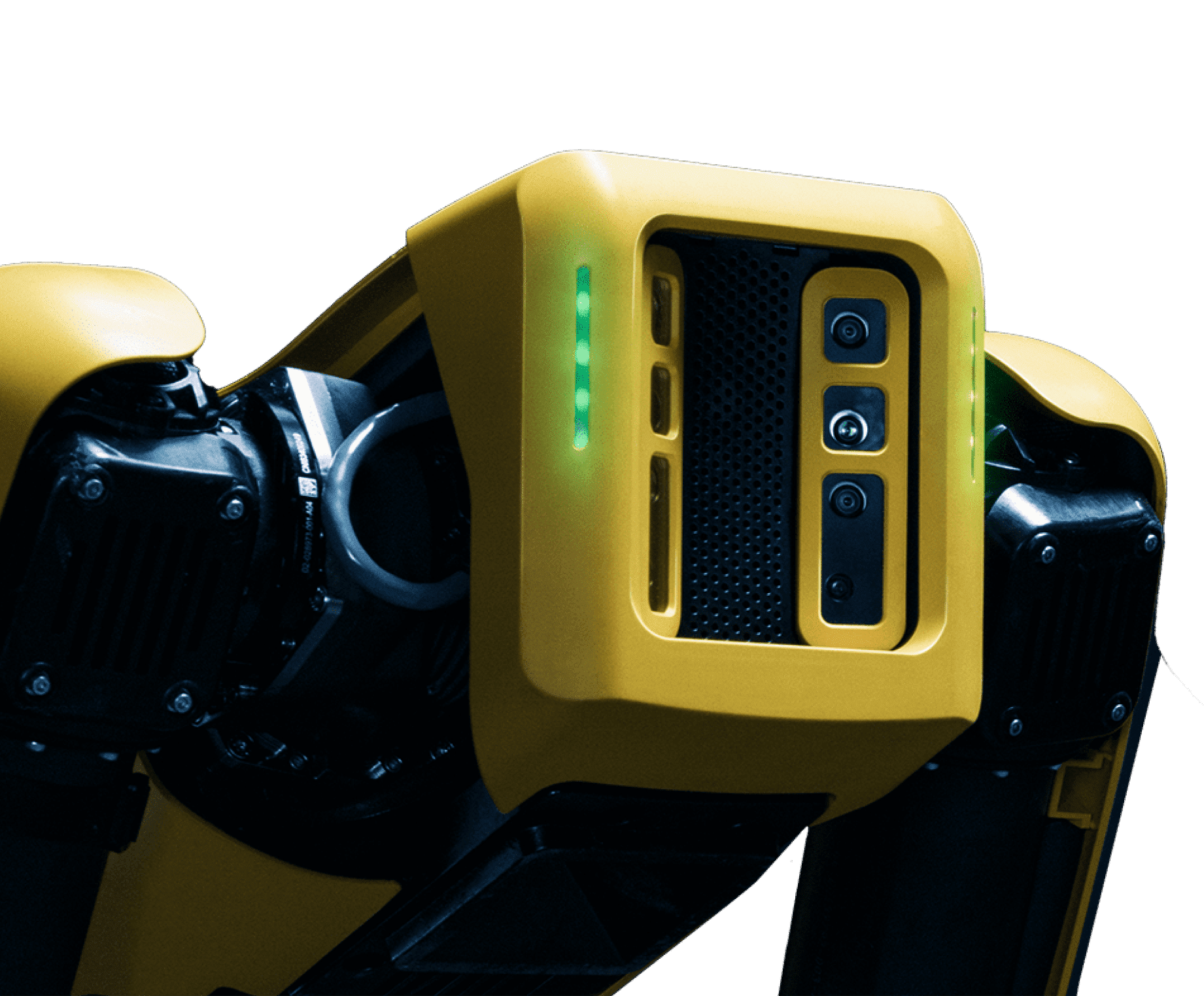


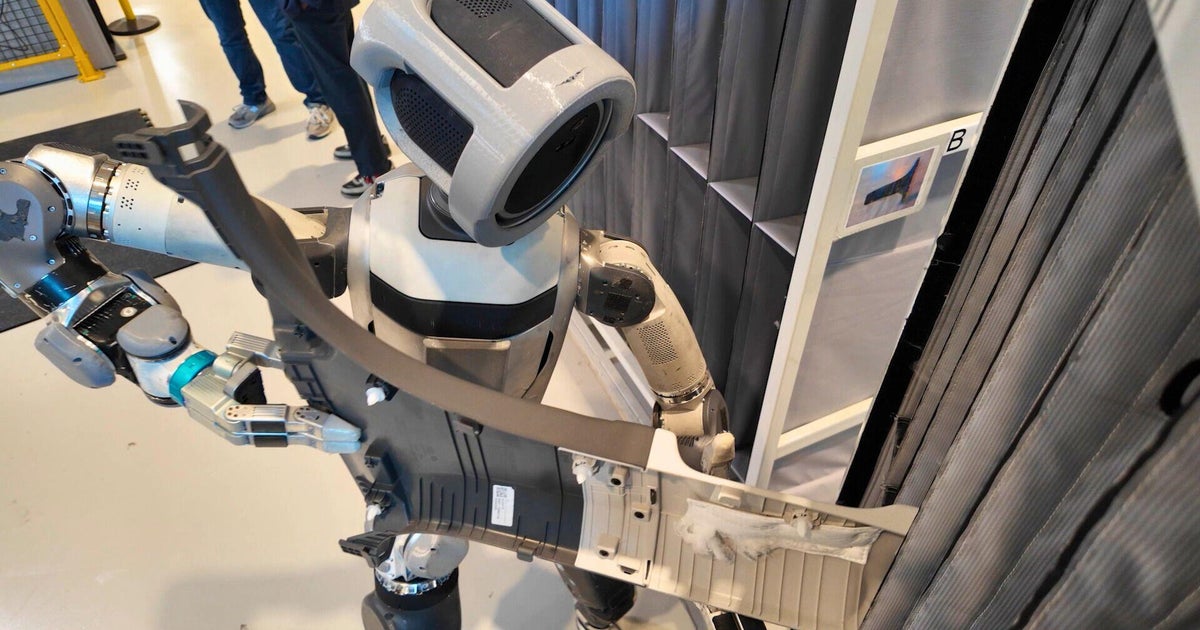
The portfolio divides into three discernible families. The Spot family is the most fully articulated: Spot itself (the base quadruped, whose core specs are surfaced through its accessories), the Spot Arm (6-DOF manipulation with 11 kg lift / 25 kg drag capacity, a 4K gripper camera, ToF and IMU sensors, and an integrated LED illuminator), and the MFE Spot Connected Gas Detection Solution (IP67-rated, 20+ gas types, four-cartridge capacity, operating range −20 °C to 55 °C). Orbit and the EAM Kit appear to be software or systems-level offerings targeting warehouse, factory, and logistics operators, though detailed specs for these products are not yet publicly disclosed. Stretch stands apart as a purpose-built heavy logistics robot — 50 lb maximum payload, capable of running single or multiple shifts on a charge — aimed squarely at warehouse case-handling workflows. Atlas occupies a category of its own as a full humanoid: 90 kg, 1.9 m tall, 56 DOF, IP67, with a 4-hour battery and a 50 kg instantaneous / 30 kg sustained carry capacity.
The lineup's shape is that of a company moving from a flagship platform toward an ecosystem — hardware, attachments, sensing payloads, and software management layers — while simultaneously maintaining a high-visibility humanoid program that signals long-term technical ambition.
4. Technology Stack {#technology-stack}
The available specification data allows several grounded observations, supplemented where necessary by labeled inference.
Sensing: The Spot Arm integrates Time-of-Flight depth sensing, an IMU, and a 4K RGB gripper camera with an LED illuminator — a sensor suite suited to close-range manipulation tasks requiring spatial awareness in variable lighting. The MFE Gas Detection Solution's 20+ gas capability and IP67 rating indicate integration with third-party gas cartridge hardware in a ruggedized form factor.
Actuation: Atlas's 56 degrees of freedom is a publicly stated figure that, Our read: places it among the most articulated humanoid platforms with disclosed specs. The 2.3 m reach and 90 kg body weight suggest a design optimized for warehouse-scale reach envelopes rather than confined domestic spaces.
Environmental hardening: IP67 ratings appear across both Atlas and the MFE Gas Detection Solution, and the Spot Arm's storage temperature range (−30 °C to 60 °C for the gas kit) indicates design for genuine industrial deployment rather than controlled-environment use only.
Software: Orbit is listed as a product targeting warehouse, factory, and logistics industries, and the EAM Kit suggests enterprise asset management integration. Our read: these offerings likely provide fleet management, data aggregation, and site-level operational coordination, but limited public technical detail is available to confirm architecture, APIs, or integration standards.
Our read (overall): The stack reflects a hardware-first company that is building outward into software and sensing ecosystems. The depth of the software layer remains the area of least public visibility.
5. Research, Papers, Authors, Labs {#research-papers}
Company-linked papers
- A Roadmap for US Robotics – From Internet to Robotics 2020 Edition2021·53 citations·Boston Dynamics Atlas
- Robots As Cooperative Partners... We Hope...2016·9 citations·Boston Dynamics Atlas
- Bringing Robots Home: The Rise of AI Robots in Consumer Electronics2024·5 citations·Boston Dynamics Atlas
- The Synergy between Artificial Intelligence and Robotics2023·5 citations·Boston Dynamics Atlas
- Development of intelligent robots in the wave of embodied intelligence2025·4 citations·Boston Dynamics Atlas
- Human-Friendly Robotics 20242025·2 citations·Boston Dynamics Atlas
- Human-Friendly Robotics 20232024·2 citations·Boston Dynamics Atlas
- Autonomous Robots2021·2 citations·Boston Dynamics Atlas
Boston Dynamics does not present itself as a research-publishing organization in the data extracted from its public site. Its public identity is that of a commercial robotics company, and no papers, authors, or affiliated lab publications are surfaced in the available data. This is consistent with the posture of many advanced-hardware robotics firms that conduct internal R&D without routine academic disclosure.
6. Media Evidence {#media-evidence}
Media library
No media links are included in the extracted data for this report.
7. Commercial Reality {#commercial-reality}
Customers & deployments
Revenue, customer counts, contract values, and ROI metrics are not disclosed in the data available for this report. No figures are asserted. Boston Dynamics is invited to claim or submit verified commercial data — including customer references, deployment scale, and financial performance — for inclusion and clear labeling as company-provided information.
The product use-case and industry tags (warehouse, logistics, factory) define the intended commercial addressable space, but actual penetration within those verticals cannot be assessed from available data.
8. Markets and Use Cases {#markets-use-cases}
The industry and use-case tags extracted from Boston Dynamics' own product listings point to three primary verticals:
- Warehouse and Logistics: Stretch (case handling, heavy transport), Orbit (operations software), EAM Kit, and the MFE Gas Detection Solution all carry warehouse and/or logistics tags. Stretch's multi-shift battery life is a direct design signal for high-utilization warehouse environments.
- Factory / Industrial: Atlas, Orbit, and the EAM Kit are tagged for factory environments. Atlas's IP67 rating, wide operating temperature range, and 56-DOF articulation position it for demanding manufacturing-floor tasks.
- Inspection and Sensing: The Spot Arm and MFE Gas Detection Solution extend Spot into industrial inspection — gas leak detection, visual inspection in constrained or hazardous spaces — use cases where human entry carries safety risk.
The overarching use-case theme across the portfolio is substituting or augmenting human presence in physically demanding, hazardous, or high-repetition industrial tasks, consistent with the company's stated positioning around safety and operational efficiency.
9. Competitive Landscape {#competitive-landscape}
Competitive comparison
| Robot | Maker | Autonomy | Conf. |
|---|---|---|---|
| iRobot Roomba Combo 10 Max | iRobot | Autonomous | 0.90 |
| Mobile ALOHA (Stanford) | Stanford University | Teleoperated | 0.90 |
| 1X NEO | 1X Technologies | Remote-Assisted | 0.90 |
The mobile robotics market that Boston Dynamics addresses — spanning agile legged robots, humanoids, and logistics automation — has attracted significant commercial and investment activity. The quadrupedal segment, the logistics robot segment, and the humanoid segment each carry their own competitive dynamics, with differing technology maturity curves and buyer decision criteria.
Our read: Boston Dynamics' differentiation historically rests on demonstrated hardware capability and brand recognition built through public robot showcases. Whether that translates to durable commercial advantage over purpose-built logistics or humanoid competitors depends on deployment scale, software ecosystem depth, and total cost of ownership — none of which are publicly disclosed for assessment here. The module above surfaces the relevant peer landscape.
10. Country Advantage / Geopolitical {#geopolitical}
Section not material for this company.
11. Hype vs Real vs Ugly {#hype-real-ugly}
Claim tracker
What is grounded in disclosed specs (verified to the extent specs are company-provided):
- Atlas: 56 DOF, 1.9 m height, 2.3 m reach, 90 kg weight, IP67, 4-hour battery, 50 kg instantaneous / 30 kg sustained carry, −20 °C to 40 °C operating range. (Company-claim; sourced from bostondynamics.com)
- Spot Arm: 6 DOF, 11 kg lift, 25 kg drag, 4K gripper camera, ToF + IMU sensors, LED illuminator. (Company-claim)
- Stretch: 50 lb max payload, single-or-multiple-shift battery life. (Company-claim)
- MFE Gas Detection: 20+ gas types, 4 cartridges, IP67, −20 °C to 55 °C operating range. (Company-claim)
What is a company claim requiring independent verification:
- The description of Spot as enabling "safer, more efficient and predictable operations" is a positioning statement. (Company-claim) No third-party validation data is present in the available record.
What is not yet disclosed (fixable gaps):
- Spot's own core specs (payload, speed, battery life, weight) are not surfaced in the extracted data — only accessory-level specs appear.
- Orbit and EAM Kit carry no disclosed specs whatsoever.
- Revenue, deployment counts, customer identities, and ROI data are absent.
Boston Dynamics is invited to submit corrections or additional verified data for any of the above gaps.
12. Future Scenarios {#future-scenarios}
Bull case — Our read: Boston Dynamics successfully converts its engineering credibility and brand recognition into recurring software and services revenue (Orbit, EAM Kit) layered on top of expanding hardware deployments. Atlas transitions from demonstration asset to industrial workhorse as humanoid unit economics improve. Stretch captures meaningful share in warehouse case-handling as labor costs rise.
Base case — Our read: Spot and Stretch establish defensible niches in inspection and logistics respectively, generating steady but modest hardware revenue. Orbit adds incremental value but faces competition from broader enterprise automation platforms. Atlas remains a long-cycle development investment, with commercial deployment timelines extending beyond near-term planning horizons.
Bear case — Our read: High unit costs and complex deployment requirements limit volume. Software and integration layers prove difficult to scale without a larger partner or systems-integrator ecosystem. Purpose-built, lower-cost competitors in both the legged-robot and logistics-robot segments erode Spot's and Stretch's differentiation before Boston Dynamics achieves the scale needed to drive costs down.
13. What to Watch {#what-to-watch}
- Atlas commercial deployment announcements: Any transition from demonstration to paying customer deployments would be a material signal.
- Orbit and EAM Kit specification disclosure: Currently spec-dark; detail here would clarify the software strategy.
- Spot core specs publication: Baseline platform specs are not surfaced in current data; their disclosure would sharpen competitive positioning analysis.
- Partnership or systems-integrator announcements: Third-party integrators are often the lever for volume deployment in industrial robotics.
- Revenue or customer-count disclosure: Any financial or commercial metric, labeled and verified, would allow meaningful commercial reality assessment.
- Competitive pricing data: List prices for any platform would enable total-cost-of-ownership modeling.
- Humanoid industry benchmarks: As the humanoid segment matures, how Atlas's specs compare to disclosed competitor specs will become increasingly meaningful.
14. Sources & Methodology {#sources-methodology}
Primary source: All factual claims in this report are extracted exclusively from Boston Dynamics' public-facing website (bostondynamics.com). All product descriptions, specifications, use-case tags, and industry tags carry company-claim provenance — they represent what the company asserts about itself and have not been independently verified by this report.
Computed relations: Product categorization (e.g., grouping into Spot family, logistics, humanoid) and market/use-case derivations are analytical inferences drawn from the extracted tags and specs, labeled as "Our read:" where interpretive.
What this report does not do: It does not introduce external data, competitor specs, revenue estimates, customer names, funding figures, or technical claims that are not grounded in the above source. Gaps are noted as "Not disclosed" with an invitation to the company to claim or correct.
Rubric (applied uniformly to every company on this platform):
- Ground claims in extracted site data only.
- Label company assertions as company-claims.
- Label analytical inferences as "Our read:".
- Treat absent data as gaps, not negatives.
- Invite corrections for every identified gap.
Stretch
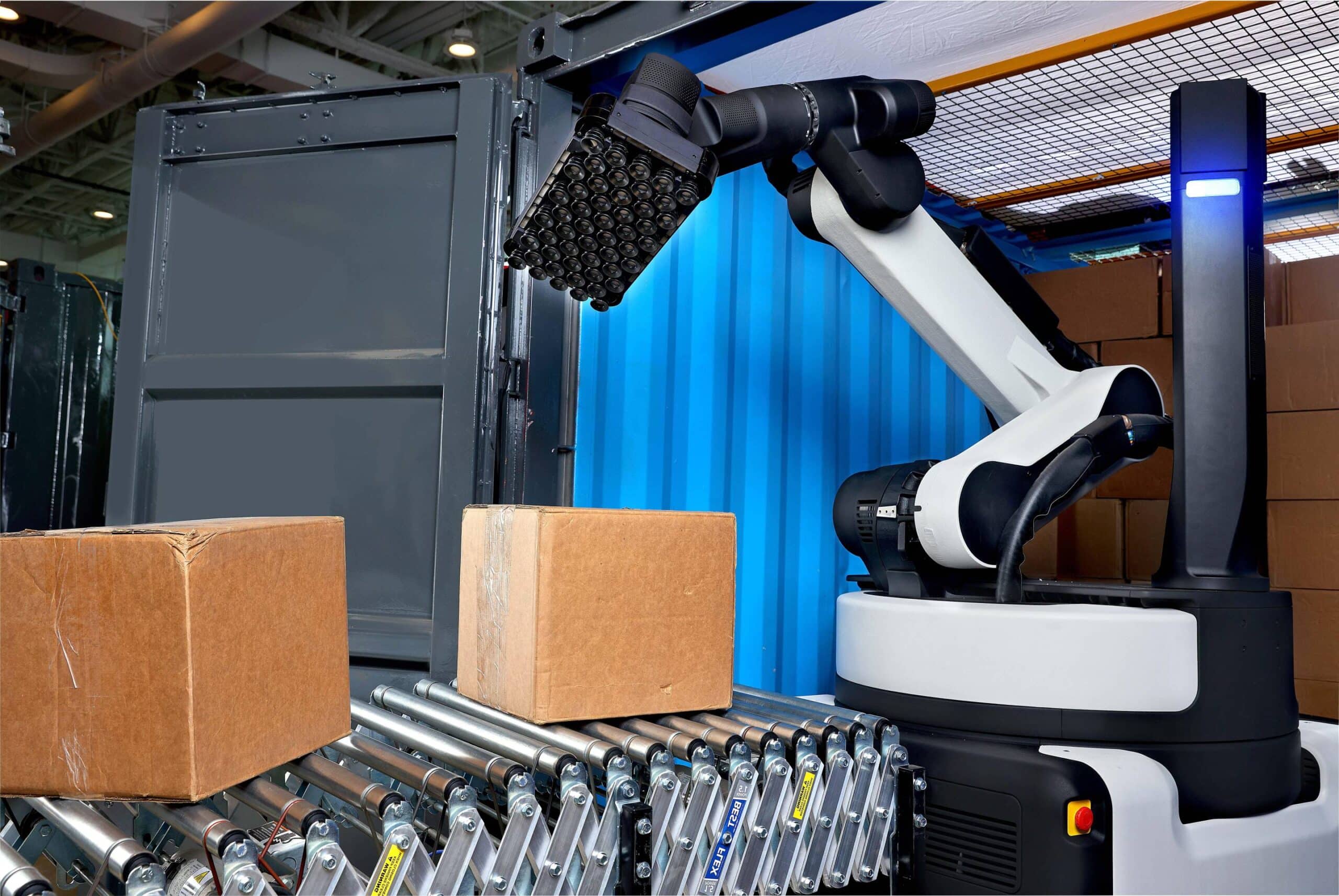
Heavy logisticsStretch is a mobile warehouse robot designed for efficient case handling and trailer unloading. It works continuously with advanced real-time behaviors, handles packages up to 50 pounds across various configurations, and integrates seamlessly into existing warehouse infrastructure without heavy modifications.
- •Mobile case handling for warehouse automation
- •Handles packages up to 50 pounds
- •Works with various box types and sizes
- •Real-time decision making, no pre-programming required
- •Automatic detection and retrieval of shifted/fallen boxes
- •Long battery life for continuous operation
- •Fast deployment in days with minimal infrastructure changes
- •Can move hundreds of cases per hour
| Max payload lbs | 50 |
| Battery life shifts | single or multiple shifts |
Technology stackOur read
Inferred from product specs — click through to the technology wiki:
ResearchComputed
See the Company-linked papers module in the Deep report.
Product comparisonComputed
Each row leads with this company's product, side-by-side with similar ones · click a row to expand full specs, click again to collapse
Stretch

Starship Delivery Robot
Coco 2

Serve Robotics Gen3 Delivery Robot

Nuro R3
BellaBot



Company announcement
News and Media
The company's official social & video channels · external links


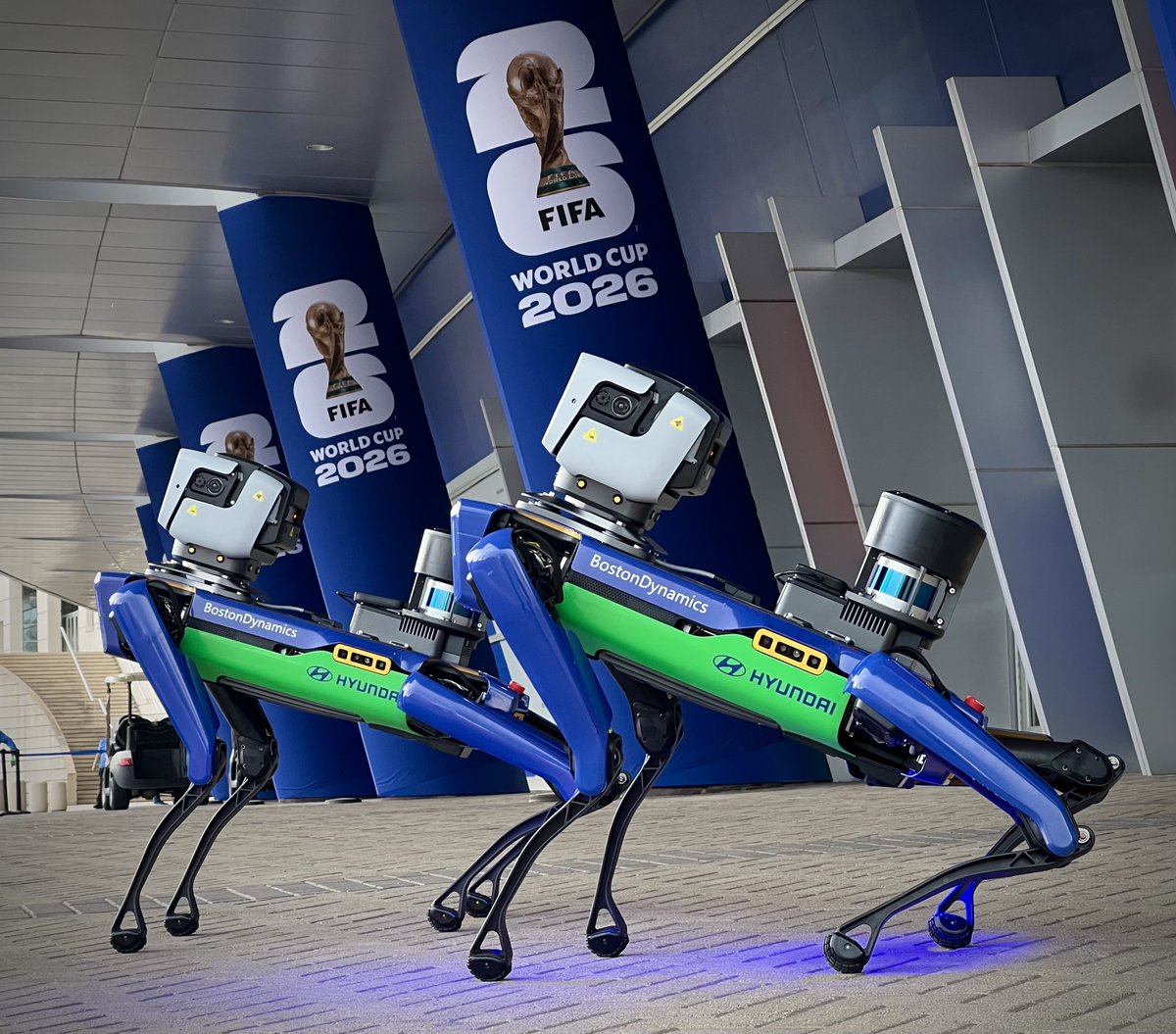
With the FIFA World Cup 2026™ covering 16 host cities across 3 countries, Spot has taken on new assignments: helping protect the largest spo
2026-07-01

Spot's celebrating with the global soccer community ⚽ With robots deployed on 6 continents and in 46 countries - including 20 in the round o
2026-06-29

Ssurveyors from @TxDOT spent 18 days over four months scanning and modeling over the over 5.5 miles of Inner Space Cavern with the help of S
2026-06-26

Boston Dynamics is growing! We're transforming a 323,000sq ft facility into a robotics and AI center to expand our capabilities in advanced
2026-06-24
News
From third-party news outlets (China & abroad) · external links