Beewise
SnapshotCompany claim
Beewise is a trusted partner for top growers and beekeepers, providing bee-friendly pollination with transparency. The company aims to transform beekeeping by improving management efficiency, reducing hive losses, and saving bees.
- Founded
- Not disclosed
- HQ
- Not disclosed
- Models
- 2
- Categories
- 1
ContactCompany claim
- Address
- Not disclosed
Product families
Is this your company? Claim this profile to add verified data, respond to our analysis, and upgrade claims to Verified.
Claim this profile1. Executive Overview {#executive-overview}
Beewise is an agri-robotics company operating at the intersection of precision agriculture and pollinator conservation. Its flagship product, the BeeHome, combines AI and robotics to create an intelligent, remotely managed hive system that the company claims reduces bee colony loss by 70%. Beewise has attracted attention from both the grower and commercial beekeeping communities, counting named partners such as Olam Food Ingredients and Browning's Honey Co. among its collaborators — with at least one grower relationship entering its third season, per testimonials published on the company's own site.
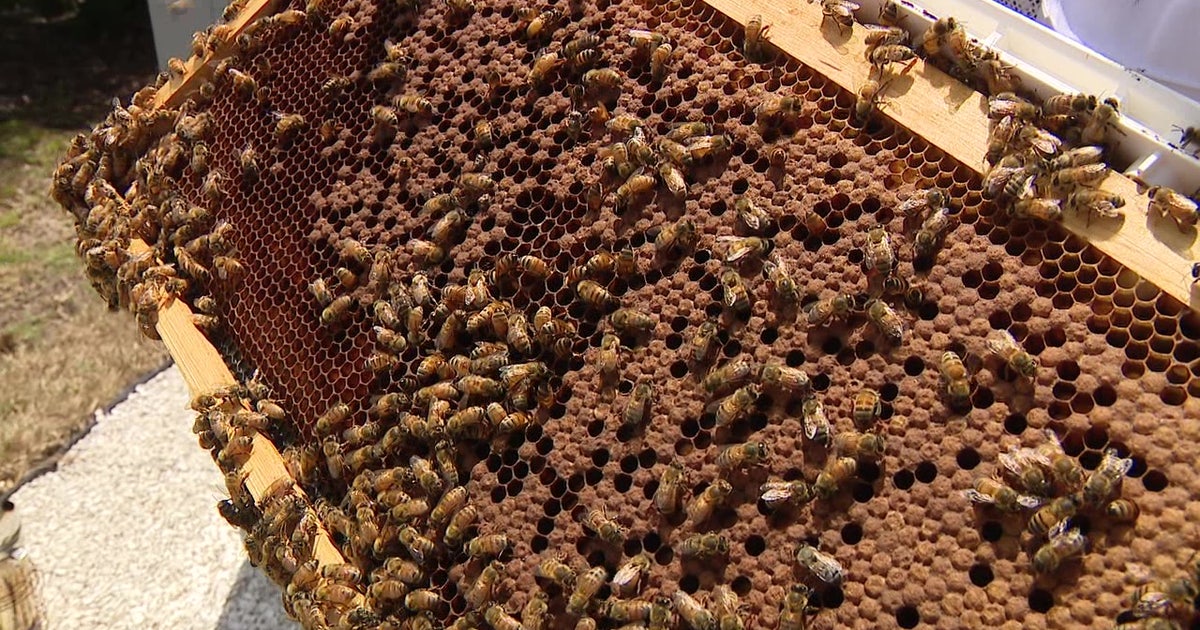
The company has achieved meaningful external validation: a $50 million fundraising round was reported by The Robot Report, and deployments have been covered by local broadcast news, including a FOX 13 Tampa Bay segment on BeeHome units active in Pasco County, Florida (May 2026). This combination of institutional investment, named commercial partners, and on-the-ground deployments positions Beewise as one of the more substantiated entrants in the emerging robotic-hive category. Founding date and country of incorporation are not publicly disclosed on the company's site; those details remain unverified.
Latest news
- KEENON Humanoid Pours Drinks at GCS 2026, 100,000 Others Run HotelsYanko Design·2026-06-15GENERAL
2. The Company Story {#the-company-story}
Beewise describes its mission as transforming beekeeping by improving management efficiency, reducing hive losses, and ultimately saving bees — language drawn directly from its own site. The company frames itself as a "trusted partner" for two distinct but interdependent customer groups: commercial growers who depend on reliable, high-quality pollination services, and professional beekeepers who face mounting operational complexity.
The founding date is not publicly disclosed. What the public record does show is a company that has progressed from concept to commercially deployed hardware: BeeHome units have been placed on active farm operations, including a documented deployment in Pasco County, Florida, covered by FOX 13 Tampa Bay in May 2026. The $50 million raise reported by The Robot Report indicates that Beewise has secured significant venture or growth capital to support manufacturing and geographic expansion, though the round's composition, timing, and lead investors are not confirmed in the data available here.
Positioning-wise, Beewise sits at a compelling nexus: global bee colony collapse disorder is a well-documented agricultural risk, and the company's framing — "bee-friendly pollination with transparency" — speaks directly to grower anxiety about pollination reliability and beekeeper anxiety about hive mortality. Testimonials from Zac Ellis (Senior Director of Agronomy, Olam Food Ingredients) and Zac Browning (Browning's Honey Co.) suggest the value proposition resonates at the commercial scale.
3. Product Portfolio {#product-portfolio}
Products & versions



Beewise's public portfolio centers on a single named platform — the BeeHome — which appears in two product entries on the company's site that share a name but emphasize complementary capabilities. Both entries describe an AI- and robotics-enabled hive that autonomously manages colony health, with the headline claim of a 70% reduction in bee colony loss. One entry emphasizes remote management workflows for beekeepers, while the other emphasizes guaranteed quality and competitive pricing for growers — reflecting the dual-sided commercial model Beewise operates.
The product line is, by current public evidence, a focused single-platform play rather than a multi-SKU family. BeeHome addresses what Beewise identifies as the three core friction points in modern beekeeping: distance (hives are often sited far from a beekeeper's base of operations), timing (interventions must happen at precise biological moments), and expertise scarcity (skilled beekeepers are in short supply). By embedding AI monitoring and robotic actuation into the hive itself, BeeHome is designed to let one beekeeper manage far more colonies than conventional practice allows, while simultaneously giving growers a data-transparent view of pollination activity. Detailed hardware specifications — dimensions, sensor types, power source, connectivity standards — are not publicly disclosed on the company's site.
4. Technology Stack {#technology-stack}
Beewise describes BeeHome as "AI and robotics enabled," which is the extent of technical language present in the publicly available product descriptions. No patents, technical white papers, sensor specifications, communication protocols, or machine-learning architecture details are disclosed in the data available for this report.
Our read: The combination of remote management capability and real-time colony health monitoring implies the system almost certainly incorporates some form of in-hive sensing (likely temperature, humidity, acoustics, and/or weight — standard vectors in precision apiculture), computer vision or acoustic AI for colony state classification, and a network connectivity layer (cellular or LoRaWAN are common in remote agricultural deployments). The robotic actuation component — referenced explicitly in product descriptions — suggests mechanical systems capable of performing at least some hive interventions autonomously, rather than simply alerting a beekeeper to act. However, these are inferences from product-category norms, not confirmed specifications.
Our read: The "transparency" value proposition cited in grower testimonials suggests a software dashboard or reporting layer exists alongside the physical hardware, providing growers with pollination activity data. The nature and depth of that data interface are not publicly documented.
Not yet disclosed: full technical specifications, sensor suite, connectivity standards, AI model architecture, power and data infrastructure requirements. Beewise is invited to claim or correct any of these details for a more complete technical profile.
5. Research, Papers, Authors, Labs {#research-papers}
Company-linked papers
Beewise does not appear, based on available data, to be an academic research-publishing organization. No peer-reviewed papers, preprints, named research labs, or affiliated academic authors are associated with the company in the data provided. This is consistent with the profile of a commercial agri-robotics firm focused on product deployment rather than foundational research publication — the norm, not the exception, in this segment.
6. Media Evidence {#media-evidence}
Media library
Three independent press placements are confirmed in the available data: a fundraising story in The Robot Report reporting a $50 million raise; a profile in the Jewish Press – Tampa Edition (March 2026) framing Beewise's work within broader planetary health themes; and a FOX 13 Tampa Bay broadcast segment (May 2026) documenting active BeeHome deployments on a Pasco County, Florida farm community. The FOX 13 piece is particularly significant as local broadcast coverage of a live deployment constitutes ground-level independent verification of commercial rollout.
7. Commercial Reality {#commercial-reality}
Customers & deployments
Revenue: Not disclosed. Beewise has not published revenue figures, ARR, or unit economics in any data available for this report. The $50 million raise reported by The Robot Report confirms access to significant capital, but does not translate to a revenue figure. Beewise is invited to claim or disclose commercial metrics for a more complete picture.
Customers: Two named commercial relationships are publicly documented via the company's own site: Olam Food Ingredients (represented by Senior Director of Agronomy Zac Ellis, who describes a multi-season partnership with positive business outcomes) and Browning's Honey Co., Inc. (represented by Zac Browning, a commercial beekeeper). Additional customer names, fleet sizes, and contract values are not disclosed.
ROI / Outcomes: The company claims 70% lower bee colony loss as its primary outcome metric (company-claim, from product descriptions). The Olam Food Ingredients testimonial references "positive business outcomes" without specifying yield improvement, cost reduction, or pollination coverage metrics. Independent ROI validation is not available in the data provided.
Beewise is invited to share customer counts, fleet deployment numbers, colony-loss data from third-party audits, or grower outcome metrics for inclusion in a future update to this report.
8. Markets and Use Cases {#markets-use-cases}
Beewise's addressable market spans two overlapping segments: commercial pollination services (supplying managed bee colonies to growers of pollination-dependent crops) and commercial beekeeping operations (helping beekeepers manage larger colony counts with less labor and lower mortality).
The Olam Food Ingredients partnership situates Beewise firmly in large-scale, professional agriculture. Olam Food Ingredients is a major global agribusiness, and its Senior Director of Agronomy engaging with Beewise suggests the product is credible at enterprise grower scale, not only small-farm pilots. The Pasco County, Florida deployment documented by FOX 13 points to active use in the southeastern United States, a region with significant strawberry, blueberry, and citrus production — all highly pollinator-dependent crops.
On the beekeeper side, Browning's Honey Co. represents the commercial honey production and pollination services sector. The BeeHome's promise of remote management and simplified workflows addresses a structural challenge facing commercial beekeeping: the physical and logistical burden of managing hundreds or thousands of hives across wide geographies. By reducing the expertise and travel requirements per colony, Beewise could enable beekeepers to scale operations or maintain existing operations with fewer skilled personnel.
The food security framing in Beewise's own language — "protect global food supply" — positions the company as relevant to any geography facing pollinator decline, suggesting an ambition for international expansion beyond current confirmed deployments.
9. Competitive Landscape {#competitive-landscape}
Competitive comparison
| Robot | Maker | Autonomy | Conf. |
|---|---|---|---|
| iRobot Roomba Combo 10 Max | iRobot | Autonomous | 0.90 |
| Mobile ALOHA (Stanford) | Stanford University | Teleoperated | 0.90 |
| 1X NEO | 1X Technologies | Remote-Assisted | 0.90 |
The robotic and AI-assisted hive management category is nascent but attracting growing interest as colony collapse disorder remains an unresolved agricultural risk and precision agriculture investment continues to expand. Beewise operates in a space where it faces potential competition from other technology-forward apiculture platforms, precision agriculture IoT providers, and, indirectly, conventional pollination service companies that are beginning to incorporate monitoring technology.
What distinguishes the Beewise positioning, based on available data, is the integration of physical robotic actuation with AI monitoring in a single hive unit — rather than a sensor-only or software-overlay approach. The $50 million raise and documented multi-season grower partnerships represent meaningful competitive moats in a category where commercial credibility and capital intensity are both barriers to entry. The competitor module below provides the current peer mapping.
10. Country Advantage / Geopolitical {#geopolitical}
Section not material for this company.
11. Hype vs Real vs Ugly {#hype-real-ugly}
Claim tracker
The Real (independently supported): A $50 million raise is reported by The Robot Report — an independent, specialist robotics publication — lending credibility to the company's capital position. Active deployments on a Florida farm community are documented by FOX 13 Tampa Bay, an independent broadcast outlet, as of May 2026. Two named commercial partners (Olam Food Ingredients and Browning's Honey Co.) are publicly on record by name and with attributed quotes.
The Claim (company-stated, not independently verified): The headline figure — 70% lower bee colony loss — is a company claim drawn from product descriptions on Beewise's own site. It is a specific and striking number. No third-party audit, peer-reviewed study, or independent field trial confirming this figure is available in the data provided. Beewise is invited to share the methodology, sample size, duration, and any third-party validation behind this metric.
The description of BeeHome as "AI and robotics enabled" is a company claim. The specific nature of the AI and robotics components is not independently detailed.
The Gap (not yet disclosed): Founding date, country of incorporation, team size, unit deployment count, revenue, and detailed technical specifications are all absent from the public record. These are standard disclosures for a company at this stage and their absence limits independent assessment. Not yet disclosed — Beewise is invited to claim or correct.
12. Future Scenarios {#future-scenarios}
Bull case — Our read: Beewise has the ingredients of a category-defining company: a credible headline outcome metric (70% colony loss reduction), a named enterprise grower partner (Olam Food Ingredients) in at least a third-year relationship, $50 million in reported funding, and live deployments in the field. If the 70% loss-reduction claim holds under third-party scrutiny and the company can scale BeeHome manufacturing efficiently, Beewise could establish itself as the default infrastructure layer for commercial pollination — a recurring-revenue, hardware-plus-data business with strong switching costs once a grower or beekeeper has integrated the platform.
Base case — Our read: Beewise continues to grow its deployment footprint in North America, adds grower and beekeeper partners at a measured pace, and uses its $50 million in capital to refine the BeeHome platform and expand geographic coverage. The dual-sided market (growers and beekeepers) creates natural sales complexity, and hardware-centric agri-robotics businesses face real challenges in unit economics, field service, and seasonal demand variability. Growth is real but measured, and the company remains a specialist rather than a broad agri-tech platform.
Bear case — Our read: The 70% colony-loss reduction claim, if challenged by independent field data, would significantly weaken the commercial value proposition. Hardware reliability in field agricultural environments is a persistent risk; a pattern of BeeHome failures or service issues at scale could erode the grower trust that testimonials currently support. If capital markets tighten and a follow-on raise proves difficult, the capital-intensive nature of robotic hardware manufacturing could constrain growth or force a pivot in business model.
13. What to Watch {#what-to-watch}
- Independent validation of the 70% colony-loss reduction claim — a peer-reviewed study, third-party audit, or university field trial would substantially de-risk the core value proposition.
- Follow-on fundraising or revenue disclosure — signals of financial sustainability and growth trajectory beyond the reported $50 million raise.
- New named grower or beekeeper partnerships — expansion of the named customer list beyond Olam Food Ingredients and Browning's Honey Co. would confirm commercial repeatability.
- Geographic expansion announcements — whether Beewise moves beyond U.S. deployments (particularly into Europe or other major agricultural markets facing pollinator stress).
- Technical disclosure — any publication of BeeHome hardware specifications, AI architecture, or connectivity standards that allows independent technology assessment.
- Deployment scale figures — total number of BeeHome units in the field, total colonies managed, and total acreage served would provide the first quantitative sense of commercial footprint.
- Regulatory or certification developments — any agricultural, food safety, or robotics certifications that expand the addressable market or serve as third-party quality signals.
14. Sources & Methodology {#sources-methodology}
Data sources used in this report:
| Source type | Specific sources | Provenance label |
|---|---|---|
| Company site (About, product pages, testimonials) | beewise.ag | Company-claim throughout |
| Independent press | The Robot Report ($50M raise); Jewish Press – Tampa Edition (March 2026 profile); FOX 13 Tampa Bay (May 2026 deployment story) | External validation; cited by outlet name |
Methodology rubric (applied uniformly to every company on this platform):
- All factual claims are grounded exclusively in the data provided. No products, metrics, customers, partners, or specifications are invented or inferred without explicit labeling.
- Company-sourced statements (About page, product descriptions, testimonials) are labeled company-claim and are not treated as independently verified facts.
- Third-party press coverage is labeled by outlet and treated as external validation — stronger than company claims, but not equivalent to peer-reviewed or audited data.
- Inferences drawn from product-category norms or logical inference from disclosed features are labeled Our read: and clearly distinguished from verified facts.
- Gaps in the public record are noted as Not yet disclosed with an explicit invitation for the company to claim or correct the record. No unsourced negative is stated as fact.
- This report reflects data available at time of generation. Live modules (news, products, papers, media, customers, competitors, claim-tracker) are populated dynamically and may reflect more current information than the prose sections.
Beewise uses AI and robotics to create the BeeHome, an intelligent hive that reduces bee colony loss by 70%. It addresses challenges of distance, timing, and expertise in beekeeping, offering simplified workflows for beekeepers and guaranteed quality for growers.
- •AI and robotics enabled hive
- •70% lower bee colony loss
- •Simplified workflows for beekeepers
- •Guaranteed quality and competitive pricing for growers
- •Helps save bees and protect global food supply
Detailed specs not disclosed.
Technology stackOur read
Inferred from product specs — click through to the technology wiki:
ResearchComputed
Product comparisonComputed
Company announcement
News and Media
The company's official social & video channels · external links
News
From third-party news outlets (China & abroad) · external links