Bear Robotics
Company wikiUnited States · bearrobotics.ai
SnapshotCompany claim
Bear Robotics pursues ambitious goals in automation technology. The company excels through continuous growth, industry expertise, and commitment to excellence, fostering innovation and employee development.
- Founded
- Not disclosed
- HQ
- United States
- Models
- 1
- Categories
- 1
ContactCompany claim
- Address
- Not disclosed
Product families
Is this your company? Claim this profile to add verified data, respond to our analysis, and upgrade claims to Verified.
Claim this profile1. Executive Overview {#executive-overview}
Bear Robotics is a United States-based automation company operating at the intersection of robotics and logistics, with a publicly stated mission centered on continuous growth, industry expertise, and a commitment to excellence in automation technology. Its current disclosed product, the Carti 100, positions the company in the autonomous mobile robot (AMR/AGV) space, targeting warehouse, factory, and logistics environments with a heavy-payload transport solution capable of carrying up to 100 kg across multi-shelf configurations.
The company's strategic emphasis on employee development alongside technological innovation suggests a growth-oriented organizational culture. Beyond these signals, detailed financial metrics, customer deployments, and founding history remain outside the public record at this time. Verified product specifications provide a concrete technical anchor for assessing commercial readiness, and those details are reviewed in the sections that follow.
Latest news
- KEENON Humanoid Pours Drinks at GCS 2026, 100,000 Others Run HotelsYanko Design·2026-06-15GENERAL
2. The Company Story {#the-company-story}
Bear Robotics operates out of the United States under the domain bearrobotics.ai. Its founding date is not publicly disclosed in the available data. The company's self-described positioning frames it as an ambitious automation technology firm that competes through expertise and innovation rather than — at least in public messaging — through hardware commoditization alone.
The company's product record currently documents one commercially described platform, the Carti 100, oriented toward industrial and logistics environments. This suggests Bear Robotics has either narrowed its initial focus to a specific vertical or is in an early stage of portfolio expansion. The broader narrative of the company's milestones, funding history, and leadership team is not yet disclosed in the available record; Bear Robotics is invited to claim or correct this profile with verified detail.
3. Product Portfolio {#product-portfolio}
Products & versions




Bear Robotics' disclosed portfolio currently comprises a single documented platform: the Carti 100, classified as an AGV/AMR. It is a three-shelf, heavy-transport robot with a 100 kg payload capacity, a compact footprint (537 mm wide × 570 mm deep × 1,507 mm tall), and a listed operational battery life of 9–11 hours per charge. Both automatic and wired charging options are supported, and the unit weighs 55 kg unloaded.
The lineup's current shape is purpose-built: one platform, one core use case (heavy transport), and three target industries (warehouse, factory, logistics). Whether additional platforms exist in development or commercial availability is not yet disclosed. The Carti 100's specifications indicate a deliberate focus on industrial-grade payload handling rather than lightweight last-mile or hospitality robotics — a meaningful market positioning signal even from a single SKU.
4. Technology Stack {#technology-stack}
Limited public technical detail is available beyond the Carti 100's physical and operational specifications. What can be inferred is noted below with appropriate labeling.
Our read: The Carti 100's auto-charge capability implies an onboard docking and power-management system, likely paired with fleet-level software that can schedule charging events autonomously — a standard expectation for warehouse AMR deployments at scale. The AGV/AMR dual classification suggests the platform may support both fixed-path and dynamic navigation modes, though the specific sensor suite (LiDAR, camera, ultrasonic) and navigation algorithm (SLAM, map-based, hybrid) are not disclosed.
Our read: A 9–11 hour battery window aligned with common single-shift or extended-shift warehouse operations implies deliberate operational design rather than an arbitrary spec. The three-shelf architecture is consistent with goods-to-person or zone-to-zone transport workflows common in fulfillment and factory intralogistics.
No proprietary AI frameworks, software platforms, or compute architectures have been disclosed publicly. Bear Robotics is invited to share technical documentation for inclusion in this profile.
5. Research, Papers, Authors, Labs {#research-papers}
Company-linked papers
Bear Robotics does not appear to be an active research-publishing organization based on available data — this is common and unremarkable for service- and industrial-robotics companies whose primary output is commercial product rather than academic contribution.
No affiliated papers, named research authors, or laboratory partnerships are present in the available record. Bear Robotics is invited to claim any research affiliations or publications for correction in this profile.
6. Media Evidence {#media-evidence}
Media library
No media coverage is linked in the current data extract. Bear Robotics is invited to submit verified press, coverage, or case study links for inclusion.
7. Commercial Reality {#commercial-reality}
Customers & deployments
Revenue: Not disclosed. Bear Robotics has not published revenue figures in the available data record. The company is invited to disclose or correct this information.
Customer deployments: Not disclosed. No named customers, reference accounts, or deployment counts appear in the available record. The company is invited to claim verified customer relationships for inclusion.
ROI / performance data: Not disclosed. No third-party validated efficiency gains, throughput improvements, or cost-per-unit metrics are available. The company is invited to submit case study data for review.
This absence of disclosed commercial data is not uncommon for growth-stage robotics companies and should not be read as an indicator of commercial status in either direction.
8. Markets and Use Cases {#markets-use-cases}
Based on the product use-case and industry tags extracted from Bear Robotics' own site, the company currently addresses three primary verticals:
- Warehouse: Intralogistics transport, goods movement between zones or stations, inventory replenishment workflows.
- Factory / Manufacturing: Line-side delivery, work-in-progress transport, heavy component movement between production cells.
- Logistics / Fulfillment: Sortation support, staging area operations, dock-to-shelf or shelf-to-pack transport.
The Carti 100's 100 kg payload and three-shelf form factor are well-suited to mid-weight goods transport in structured indoor environments — the dominant operational context across all three verticals. The platform's physical dimensions (537 mm wide) are compatible with standard aisle clearances in most warehouse and factory layouts.
Use cases requiring outdoor operation, last-mile delivery, or human-proximate collaborative handling are not indicated by the current product specifications.
9. Competitive Landscape {#competitive-landscape}
Competitive comparison
| Robot | Maker | Autonomy | Conf. |
|---|---|---|---|
| iRobot Roomba Combo 10 Max | iRobot | Autonomous | 0.90 |
| Mobile ALOHA (Stanford) | Stanford University | Teleoperated | 0.90 |
| 1X NEO | 1X Technologies | Remote-Assisted | 0.90 |
The warehouse and factory AMR/AGV market for heavy-payload transport is an active and increasingly crowded segment, attracting both established industrial automation incumbents and venture-backed robotics entrants. Bear Robotics competes in a category defined by payload capacity, navigation reliability, fleet management software maturity, and total cost of ownership over multi-year deployments.
Our read: A 100 kg payload, multi-shelf configuration, and auto-charging capability place the Carti 100 squarely in the mid-to-heavy intralogistics tier — a well-defined buyer segment with measurable ROI expectations. Differentiation in this market increasingly hinges on software integration depth (WMS/ERP connectivity), fleet scalability, and service/support infrastructure rather than hardware specifications alone. Bear Robotics' competitive positioning on those dimensions is not yet publicly detailed.
10. Country Advantage / Geopolitical {#geopolitical}
Section not material for this company.
11. Hype vs Real vs Ugly {#hype-real-ugly}
Claim tracker
Verified (from specs):
- The Carti 100 exists as a documented product with specific, enumerable hardware specifications.
- The platform targets warehouse, factory, and logistics environments — a credible and coherent use-case cluster for its payload class.
- Auto-charge and wired charging options are listed, indicating operational flexibility.
Company claims (unverified by third-party data in this record):
- Bear Robotics describes itself as excelling through "continuous growth, industry expertise, and commitment to excellence" — standard positioning language; no quantified metrics accompany these claims.
- The company claims to foster "innovation and employee development" — a cultural assertion without external corroboration in the available record.
Gaps (fixable):
- Not yet disclosed: founding date, funding history, headcount, named customers, deployment scale, software platform details, and navigation technology specifics. Bear Robotics is invited to claim or correct any of these data points.
- Our read: The single disclosed product and limited public narrative suggest either a focused early-stage company or a deliberate low-profile commercial strategy. Neither interpretation is negative by default; both are worth monitoring as the company's public record develops.
12. Future Scenarios {#future-scenarios}
Bull case — Our read: Bear Robotics successfully deploys the Carti 100 at scale across warehouse and factory customers, builds a credible reference customer list, and expands its portfolio into adjacent payload classes or verticals (e.g., cold storage, automotive manufacturing). Strong fleet software capabilities could position it as a platform company rather than a single-product hardware vendor.
Base case — Our read: The company achieves measured deployment growth within one or two of its three target verticals, likely warehouse or logistics given the broadest addressable market there. Product iteration continues at a measured pace; public profile grows incrementally as customer wins are announced. The competitive landscape requires ongoing differentiation investment.
Bear case — Our read: In a market with well-resourced incumbents and aggressive pricing pressure, a single-product company with limited disclosed commercial traction faces meaningful go-to-market risk. Delays in scaling deployment, gaps in software integration offerings, or difficulty establishing brand credibility in enterprise procurement cycles could constrain growth. None of these risks are confirmed; they are category-level structural observations.
13. What to Watch {#what-to-watch}
A short monitoring checklist for analysts and procurement teams tracking Bear Robotics:
- Product portfolio expansion: Any announcement of additional platforms beyond the Carti 100, particularly in lighter payload or outdoor categories.
- Customer reference announcements: First named enterprise deployments will be the strongest signal of commercial validation.
- Funding disclosures: Any disclosed investment rounds will clarify growth stage and runway.
- Fleet software capabilities: Disclosure of WMS/ERP integration, fleet management dashboard, or OTA update infrastructure.
- Navigation technology: Specification of sensor suite and navigation modality (SLAM, fixed-path, hybrid) to assess deployment flexibility.
- Founding and leadership: Public disclosure of founding date, executive team, and advisory relationships.
- Geographic expansion: Any indication of international sales, distribution partnerships, or regulatory certifications outside the United States.
14. Sources & Methodology {#sources-methodology}
Data provenance: All factual claims in this report are extracted exclusively from Bear Robotics' publicly accessible company website (bearrobotics.ai) and structured data computed from that source. All product specifications, descriptions, and positioning statements are treated as company claims unless independently corroborated by third-party sources.
Methodology rubric (applied uniformly to every company profiled on this platform):
- Structured data extraction from the company's own site forms the evidentiary baseline.
- All inferences drawn beyond the literal data are labeled "Our read:" and are not presented as facts.
- Absent data points are rendered as "Not yet disclosed" with an explicit invitation to the company to claim or correct.
- No competitor names, revenue figures, customer names, or technical specifications are introduced from outside the source data.
- Negative characterizations are never stated as fact; they appear only as labeled inferences or fixable gaps.
- This rubric is identical for every report on this platform; no company receives preferential or disadvantaged treatment in methodology.
Last computed from source data as reflected in the modules above. Bear Robotics or verified representatives may submit corrections via the platform's claim process.

Carti 100
AGV / AMRCarti 100 is an industrial-grade autonomous mobile robot built for scalable material handling and transport automation in warehouses, factories, and industrial spaces. It features 100 kg payload capacity, 9-11 hour battery life, and infrastructure-agnostic deployment with multi-robot orchestration capabilities.
- •Industrial-grade AMR for warehouses, factories, and logistics spaces
- •Payload capacity 100 kg with expandable 3-shelf configuration
- •9-11 hour battery life with auto-charging capability
- •Multi-robot orchestration for fleet synchronization and scaling
- •360-degree LiDAR and camera obstacle detection for safe human collaboration
- •Infrastructure-agnostic deployment without altering existing facilities
- •Fully customizable with adjustable shelves, conveyor belts, and signal lighting
- •Integrates with elevators, smart charging stations, and WMS systems
- •Smart navigation with real-time obstacle avoidance and rerouting
| Depth (mm) | 570 |
| Width (mm) | 537 |
| Height | 1507 mm |
| Weight (kg) | 55 |
| Payload | 100 kg |
| Battery | 9-11 h |
| Shelf (count) | 3 |
| Charging type | Auto-charge or wired charger |
Technology stackOur read
Inferred from product specs — click through to the technology wiki:
ResearchComputed
Product comparisonComputed
Each row leads with this company's product, side-by-side with similar ones · click a row to expand full specs, click again to collapse
Carti 100
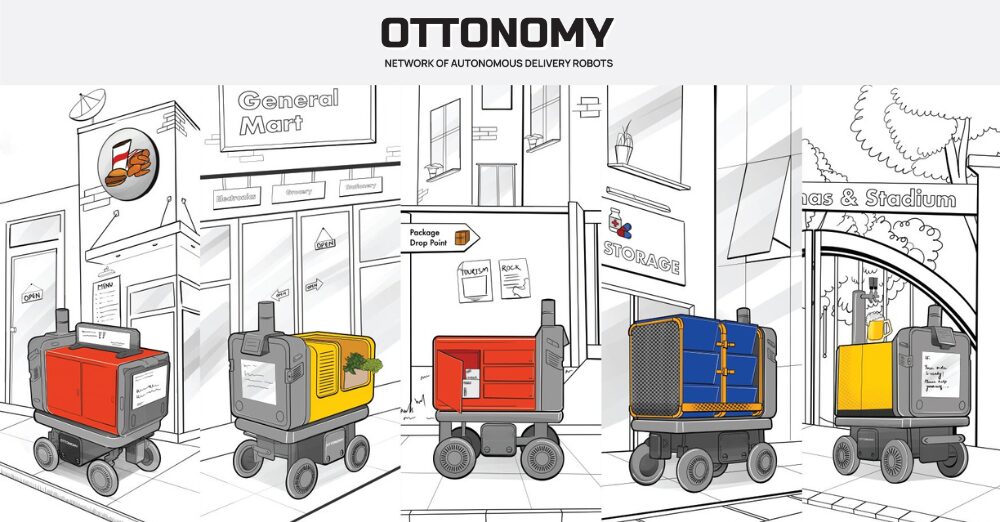
Ottobot
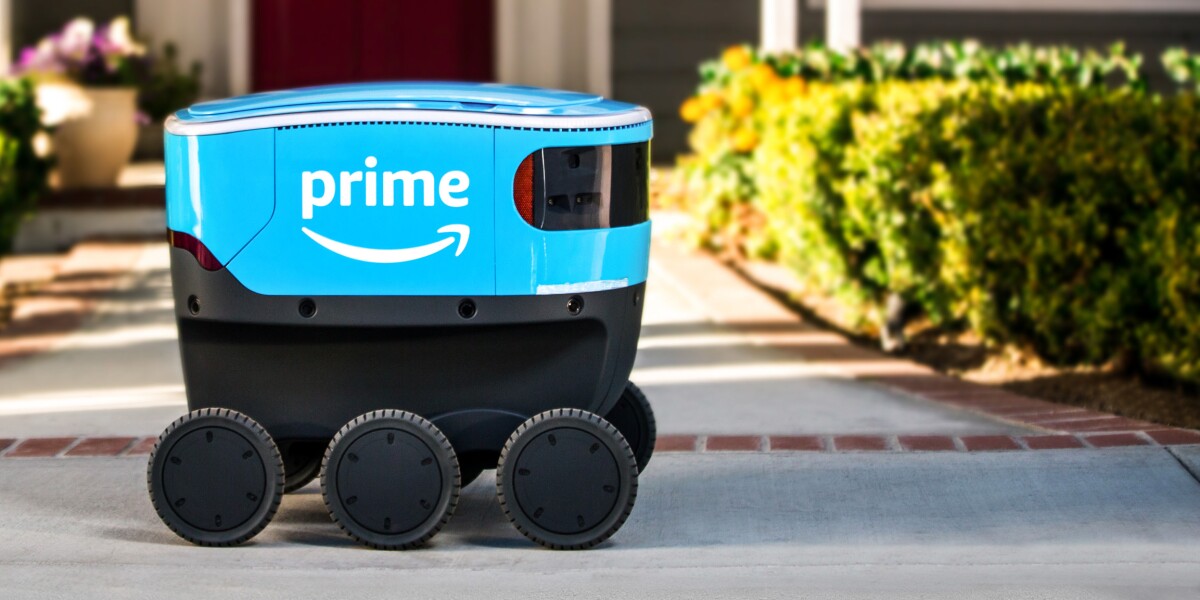
Amazon Scout

LuckiBot Pro

KettyBot
Pudu CC1
Company announcement
News and Media
The company's official social & video channels · external links


Today we signed a definitive agreement to acquire @KinisiRobotics, completing Bear's end-to-end #PhysicalAI platform. 16,000+ robots shipped
2026-06-23

Carti 100 glides, pivots, and rolls smoothly without scuffing floors or disrupting workflows. Discover the design behind its performance. #c
2025-10-28
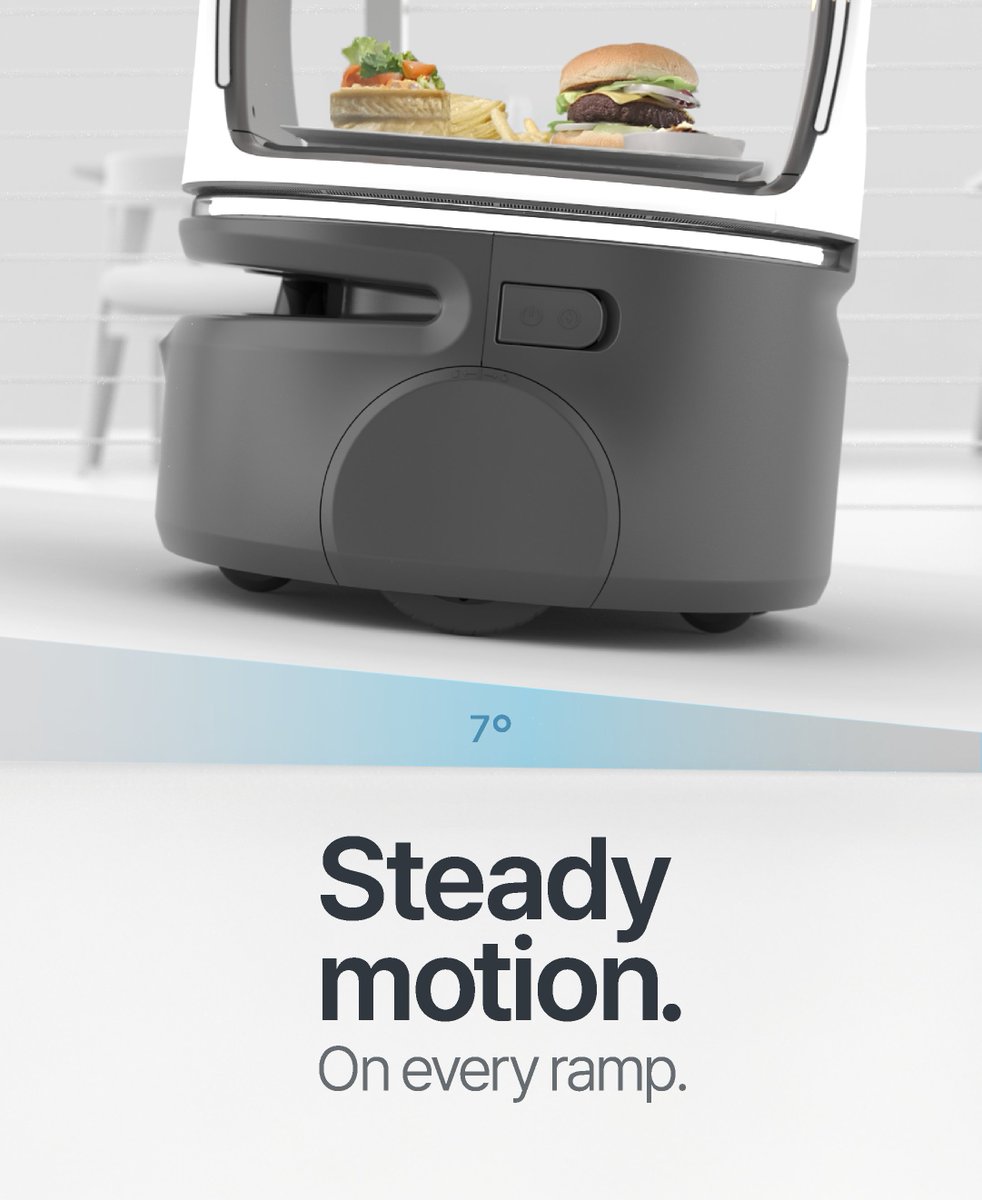
Designed for real-world scenarios, Servi Plus maintains smooth motion on ADA ramps up to 7°. #serviplus #bearrobotics #restaurantautomation
2025-10-23

When things get busy, Servi Plus stays cool. From quick chats to quick turns, it keeps the shift flowing; no stress, just service. #serviplu
2025-09-06
News
From third-party news outlets (China & abroad) · external links