Avular
Founded 2014 · Netherlands · avular.com
SnapshotCompany claim
Avular is a mobile robotics company based in Eindhoven, Netherlands, building autonomous ground and aerial robot platforms. Founded in 2014, it has doubled in size each year for the past 4 years, growing to a multi-disciplinary team.
- Founded
- 2014
- HQ
- Netherlands
- Models
- 2
- Categories
- 2
ContactCompany claim
- Address
- Achtseweg Zuid 2215651 GW, EindhovenNetherlands
Product families
Is this your company? Claim this profile to add verified data, respond to our analysis, and upgrade claims to Verified.
Claim this profile1. Executive Overview {#executive-overview}
Avular is a mobile robotics company headquartered in Eindhoven, Netherlands, at Strijp-T in the heart of the Brainport high-tech manufacturing cluster. Founded in 2014, the company builds autonomous ground and aerial robot platforms — notably the Origin One autonomous mobile robot (AMR/UGV) and the Vertex One drone — designed as customizable, developer-friendly platforms for inspection, research, agriculture, and industrial automation. The company's own account describes doubling in size each year for the past four years, pointing to a rapidly scaling, multi-disciplinary engineering organization with strong in-house development capability.
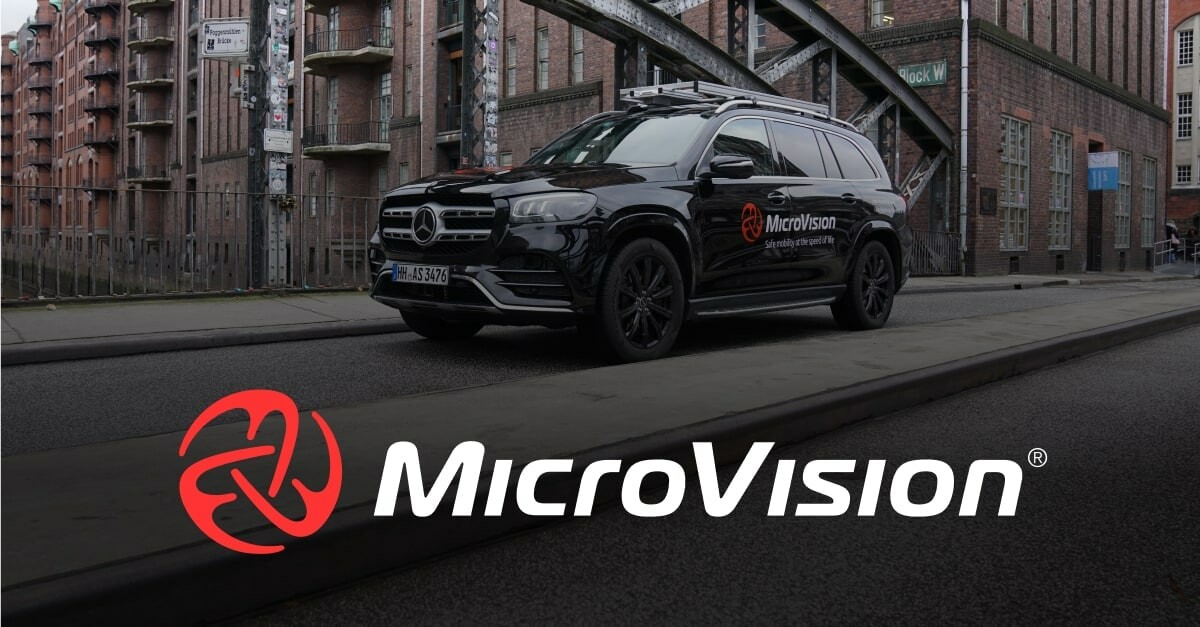
Avular's strategic positioning is notable: as reported by Robotics 24/7 in March 2023 and echoed by Lumipolpower, the company is explicitly positioning itself as a European challenger to US and Chinese robotics vendors — a pointed market stance given the competitive dynamics of the global autonomous robotics sector. A May 2026 announcement published on MicroVision's investor relations site confirms a collaboration between MicroVision and Avular to advance autonomous sensing and drone integration for next-generation infrastructure applications, providing early evidence of technology partnerships with publicly traded sensor companies. The company's stated mission — solving labour shortages through mobile robotics — anchors a practical, deployment-oriented product philosophy rather than a research-first one.
Latest news
- KEENON Humanoid Pours Drinks at GCS 2026, 100,000 Others Run HotelsYanko Design·2026-06-15GENERAL
2. The Company Story {#the-company-story}
Avular was founded in 2014 in Eindhoven, Netherlands, a city whose identity as a global technology hub — the "Brainport" region — is inseparable from its history of deep-tech manufacturing innovation dating to the early twentieth century. The company is registered as Avular B.V. and remains at its founding location on Achtseweg Zuid in the Strijp-T industrial-creative district, which has historically served as a cradle for Brainport-era innovation.
The company's own account emphasizes an organic, engineering-led growth trajectory: it describes doubling headcount annually for four consecutive years, building what it characterises as a multi-disciplinary team capable of extensive in-house development. This growth profile — sustained and compounding rather than episodic — suggests a company that has moved beyond early-stage prototype work into repeatable product development and, likely, commercial deployments, though specific revenue or customer milestones are not publicly disclosed.
Avular's positioning narrative is strategically meaningful. Coverage in Robotics 24/7 (March 2023) framed the company as a European contender directly challenging US and Chinese vendors in the autonomous mobile robotics market — a framing that aligns with both the Brainport region's industrial pride and the European Union's broader interest in sovereign robotics capability. The May 2026 MicroVision collaboration announcement marks a visible milestone in Avular's technology partnership strategy, specifically targeting autonomous sensing and drone integration for infrastructure use cases. Taken together, these milestones trace a company that has progressed from founding-stage engineering work to a recognised platform vendor with international technology partnerships and trade-press visibility.
3. Product Portfolio {#product-portfolio}
Products & versions


Avular's current publicly documented portfolio spans two distinct robotic platform families: the Origin One, a ground-based autonomous mobile robot (UGV/AMR), and the Vertex One, an autonomous drone platform. Together, they represent a deliberate two-axis strategy — ground and air — giving the company a multi-domain autonomous robotics offering that few comparably sized European firms can claim.
The Origin One is designed for indoor and outdoor ground missions. Its published specifications include a 10 km operational range, a 578 mm × 655 mm × 330 mm footprint, a 30 kg payload capacity, and approximately 5 hours of battery endurance. It is powered by NVIDIA's Jetson Orin NX compute module and programmable via an SDK supporting ROS 2 and C++, with compatibility for open-source simulation tools Gazebo and RVIZ. Mounting rails and standardised holes facilitate third-party payload integration, and the Cerebra Studio UI provides a mission-planning interface. The platform is explicitly described as suited to inspection, research, and general modular ground missions — a broad canvas that supports OEM and integrator customers building on top of the hardware.
The Vertex One is a drone platform with a 512 mm × 476 mm × 304 mm form factor, a 2 kg payload capacity, 30 minutes of flight time, and centimetre-level accuracy via RTK GNSS. Like the Origin One, it runs on the NVIDIA Jetson Orin NX and supports ROS 2/C++ SDK development. A quick-lock payload interface enables tool-free hot-swap of mission-specific payloads, and Avular describes the autopilot stack as vertically integrated — meaning the company controls hardware, firmware, and software through to the application layer. The Vertex One's published use-case and industry tags span an unusually wide range, from inspection and agriculture to restaurant, hospital, and logistics verticals, reflecting the platform's ambition as a horizontal enabler rather than a single-vertical product.
4. Technology Stack {#technology-stack}
Verified from published specs: Both the Origin One and Vertex One share the NVIDIA Jetson Orin NX as their primary compute platform. This is a meaningful architectural choice: the Jetson Orin NX is a high-performance edge AI module capable of running neural network inference workloads at up to 100 TOPS, making it well suited for real-time perception, obstacle avoidance, and autonomous navigation tasks without cloud dependency. Both platforms expose ROS 2 and C++ SDKs, and the Origin One explicitly supports open-source simulation via Gazebo and RVIZ — signalling a developer-friendly integration philosophy aligned with the broader open robotics ecosystem.
Our read: The decision to standardise on a single compute module across both the ground and aerial platforms suggests a deliberate platform architecture intended to reduce development complexity for customers building multi-robot or hybrid ground-air systems. Shared compute, shared SDK, and shared simulation tooling lower the barrier for a customer deploying both an Origin One and a Vertex One in a coordinated inspection workflow — a common scenario in infrastructure and industrial settings.
Our read: The Vertex One's "vertically integrated autopilot stack" language is notable. In the drone industry, vertical integration of the flight controller typically means the company has developed proprietary firmware rather than relying on open-source autopilots such as PX4 or ArduPilot. If accurate, this gives Avular tighter control over flight safety certification pathways and differentiation from commodity drone platforms — relevant for regulated deployment environments.
The May 2026 MicroVision collaboration (confirmed via MicroVision's investor relations site) adds an autonomous sensing dimension — specifically lidar or MEMS-based sensing technology — to Avular's stack for drone integration in infrastructure applications. The technical specifics of that integration are not yet publicly detailed beyond the announcement.
Not yet disclosed: detailed sensor suite specifications (lidar, radar, camera models), battery chemistry, indoor positioning system integrations, or safety certification status. Avular is invited to provide or correct this information.
5. Research, Papers, Authors, Labs {#research-papers}
Company-linked papers
Avular does not appear to operate as a research-publishing organisation in the academic sense. No peer-reviewed papers, preprints, or named research lab affiliations are documented in the available public data. This is entirely consistent with the company's profile: Avular is a commercial mobile robotics platform vendor, and the overwhelming majority of firms in this category — including much larger players — focus engineering resources on product development rather than academic publication. The absence of a publication record is not a gap; it reflects a deliberate product-company orientation.
Not yet disclosed: any academic partnerships, university collaborations (notable given the Brainport/Eindhoven University of Technology proximity), or applied research programmes. Avular is invited to share any such affiliations.
6. Media Evidence {#media-evidence}
Media library
Three independent third-party sources are documented in the available data. Robotics 24/7, a specialist trade publication covering autonomous systems and supply-chain robotics, published a dedicated article on Avular dated 27 March 2023, framing the company as a European challenger to US and Chinese mobile robotics vendors — a substantive piece of trade-press validation for a company of Avular's stage. Lumipolpower published a similarly themed article under the headline "Avular's bold move to be Europe's challenger of US and Chinese…", extending the coverage footprint beyond the core robotics trade press. Most significantly, MicroVision's investor relations site (ir.microvision.com) published a formal collaboration announcement dated 7 May 2026, confirming a joint effort on autonomous sensing and drone integration for next-generation infrastructure applications — investor-relations filings carry disclosure obligations that give this source particular credibility as independent validation.
7. Commercial Reality {#commercial-reality}
Customers & deployments
Revenue, ARR, funding, and named customer deployments are not publicly disclosed. Avular has not published financial metrics, investor details, or customer case studies in the data available for this report. These figures should be rendered as "Not disclosed."
The company's own description of doubling headcount annually for four consecutive years is offered as a growth indicator (company-claim), and the existence of a formal technology collaboration with a publicly traded US company (MicroVision) implies a level of commercial credibility and contractual relationship — but neither constitutes a revenue or customer disclosure.
Avular is invited to claim or correct this section by submitting verified commercial data — customer counts, deployment geographies, revenue ranges, or ROI case studies — which will be reflected in the live module above.
8. Markets and Use Cases {#markets-use-cases}
Avular's two platforms, taken together, address a broad and commercially meaningful set of markets. The Origin One's design — 30 kg payload, 10 km range, indoor/outdoor capability, modular mounting system — positions it squarely in the industrial inspection, research and development, and autonomous logistics segments. The Cerebra Studio mission-planning interface and ROS 2 SDK suggest particular relevance for enterprise and academic customers who need to customise robot behaviour without building from bare hardware.
The Vertex One's published use-case and industry tags extend the addressable market considerably: agriculture (crop inspection, precision monitoring), infrastructure inspection (enabled by the MicroVision sensing collaboration), healthcare (hospital and medical delivery tags), hospitality (restaurant, hotel), warehouse and logistics, retail, office, factory, and residential settings are all listed. This breadth reflects the platform's design as a horizontal enabler — customers bring their own payload and mission software — rather than a vertical-specific product.
Our read: The horizontal platform model is a deliberate go-to-market choice that trades deep vertical specialisation for a wider total addressable market and the ability to serve systems integrators, OEMs, and enterprise customers simultaneously. The risk is that without strong vertical references, platform positioning can be difficult to communicate to buyers who want domain-specific evidence. The MicroVision infrastructure partnership may be the first publicly visible vertical anchor.
The Brainport/Eindhoven location gives Avular proximity to a dense network of high-tech manufacturing, semiconductor, and precision engineering firms — a natural early customer base for industrial inspection and R&D automation use cases.
9. Competitive Landscape {#competitive-landscape}
Competitive comparison
| Robot | Maker | Autonomy | Conf. |
|---|---|---|---|
| iRobot Roomba Combo 10 Max | iRobot | Autonomous | 0.90 |
| Mobile ALOHA (Stanford) | Stanford University | Teleoperated | 0.90 |
| 1X NEO | 1X Technologies | Remote-Assisted | 0.90 |
Avular operates in the autonomous mobile robotics market at the intersection of two product categories — ground AMR/UGV platforms and commercial drone platforms — that are individually crowded and increasingly converging. The company's explicit positioning, as documented by Robotics 24/7 and Lumipolpower, is as a European alternative to established US and Chinese vendors: a framing that signals both geographic differentiation and a sovereign-supply argument relevant to European industrial buyers with supply-chain sensitivity.
The ground AMR segment includes a range of platform vendors across the US, Europe, and Asia offering varying degrees of openness, payload capacity, and developer tooling. The commercial drone platform market similarly spans closed turnkey systems and open developer platforms. Avular's combination of shared compute architecture (NVIDIA Jetson Orin NX across both platforms), unified SDK, and vertical autopilot integration is a differentiating stack, particularly for customers building integrated ground-air autonomous systems. The module above provides category-level competitive context.
10. Country Advantage / Geopolitical {#geopolitical}
Avular's Netherlands base carries meaningful geopolitical and commercial relevance for this company. The Brainport Eindhoven region is one of Europe's highest-density technology clusters, historically anchored by ASML, NXP, and Philips spin-offs, and supported by Eindhoven University of Technology. This ecosystem provides Avular with access to precision manufacturing supply chains, deep-tech engineering talent, and an industrial customer base — structural advantages that translate directly into the company's ability to design and build both platforms in the Netherlands (a point the company explicitly highlights in its product descriptions).
The "designed and built in the Netherlands" designation is commercially meaningful in the current geopolitical environment. European procurement bodies, defence-adjacent infrastructure operators, and industrial firms with supply-chain sensitivity are increasingly attentive to the provenance of autonomous systems, particularly those with embedded AI compute and sensing capabilities. Avular's European origin and the explicit framing of the company as a challenger to US and Chinese vendors — as reported in trade press — positions it to benefit from European sovereignty considerations in robotics procurement, including potential alignment with EU industrial policy and defence technology programmes.
The MicroVision collaboration, involving a US-listed sensor company, adds a transatlantic technology dimension that may be relevant to dual-use infrastructure deployment contexts.
11. Hype vs Real vs Ugly {#hype-real-ugly}
Claim tracker
Verified / independently corroborated:
- Two production platforms (Origin One, Vertex One) with published, specific hardware specifications — these are documented product claims, not vaporware.
- NVIDIA Jetson Orin NX compute platform used across both robots — verifiable from public NVIDIA product information.
- ROS 2 and C++ SDK availability — a standard, checkable claim in the robotics developer community.
- RTK GNSS for centimetre-level accuracy on the Vertex One — a credible technical claim given standard RTK capabilities.
- MicroVision collaboration for autonomous sensing and drone integration — confirmed via MicroVision's investor relations site (7 May 2026), which carries disclosure obligations.
- Trade press coverage in Robotics 24/7 (March 2023) — independently published, verifiable.
Company claims (taken at face value, not independently verified):
- "Doubled in size each year for the past 4 years" — a growth trajectory claim from Avular's own About page; plausible but not audited.
- "Vertically integrated autopilot stack" — a product architecture claim; technically meaningful if accurate, but not independently verified.
- "Designed and built in the Netherlands" — stated provenance; consistent with the company's location and manufacturing ethos, not independently audited.
- The broad use-case and industry tags on the Vertex One (spanning restaurants to hospitals to heavy transport) — reflect platform ambition or integrator positioning; specific deployments in these verticals are not documented.
Gaps (fixable, not failures):
- Not yet disclosed: revenue, funding, named customers, deployment counts, or third-party safety/performance certifications. Avular is invited to claim or correct these.
- Not yet disclosed: specifics of the MicroVision technical integration, sensor models involved, or target deployment timeline.
12. Future Scenarios {#future-scenarios}
Bull case — Our read: Avular converts its horizontal platform positioning into a network of OEM and systems integrator relationships across European industrial, infrastructure, and agricultural markets. The MicroVision collaboration matures into a commercially deployed sensing stack for drone-based infrastructure inspection. European procurement preferences for sovereign robotics supply chains accelerate pipeline, and the company's Brainport talent access supports continued product iteration. The shared-compute, unified-SDK architecture enables a combined ground-air automation offering that becomes a genuine differentiator for multi-domain customers.
Base case — Our read: Avular grows steadily as a developer-friendly platform vendor, capturing a mix of research institutions, industrial integrators, and enterprise customers across Western Europe. The MicroVision partnership yields a reference deployment in infrastructure inspection. Revenue and headcount continue to grow, but the company remains a specialist mid-market player rather than a dominant category leader, constrained by the resource requirements of selling into multiple verticals simultaneously without deep domain specialisation in any single one.
Bear case — Our read: The horizontal platform model proves difficult to monetise at scale without vertical anchors. Larger, better-capitalised US and Asian robotics vendors expand European distribution, compressing the differentiation window for a European-provenance argument alone. The wide use-case tag list on the Vertex One reflects integration complexity that slows enterprise sales cycles. Growth continues but at a pace that makes it difficult to sustain the development investment required to keep pace with rapidly evolving compute and sensing technology.
13. What to Watch {#what-to-watch}
- MicroVision integration progress: Watch for published technical details, reference deployments, or further joint announcements on the autonomous sensing stack for infrastructure drone applications — this is the most concrete near-term partnership signal.
- Vertical anchor customers: Any named customer deployments, particularly in inspection, agriculture, or logistics, would validate the horizontal platform thesis and provide commercial credibility.
- Funding or investment announcements: No investment has been publicly disclosed; any round announcement would clarify growth runway and strategic ambition.
- Certification milestones: Safety and airworthiness certifications for the Vertex One (particularly under EASA drone regulations) would materially expand the addressable market for regulated infrastructure and commercial applications.
- SDK and developer community traction: Growth in the ROS 2 developer ecosystem around Avular's platforms — GitHub activity, forum presence, third-party payload announcements — would be an early indicator of platform adoption.
- European policy alignment: Watch for Avular's participation in EU robotics programmes, Horizon Europe projects, or defence-adjacent procurement frameworks, which would validate the sovereign-supply positioning.
- Headcount and Brainport ecosystem moves: Given the company's stated annual doubling cadence, any signals of hiring slowdown or acceleration, or new partnerships within the Brainport/Eindhoven ecosystem, would update the growth trajectory assessment.
14. Sources & Methodology {#sources-methodology}
Primary data source: All factual claims in this report are grounded exclusively in data extracted from Avular's own website (avular.com), including structured organisation metadata, product specification pages, and About/mission copy. All such claims are labelled as company-claim provenance — they represent what Avular states about itself, not independently audited facts.
Third-party press sources: Three external sources are cited and labelled as independent validation: Robotics 24/7 (robotics247.com, 27 March 2023), Lumipolpower (lumipolpower.com, undated), and MicroVision's investor relations site (ir.microvision.com, 7 May 2026). MicroVision's IR filing carries the strongest independent evidentiary weight given applicable disclosure standards. Press coverage is cited as external validation of positioning and partnership claims, not as verification of commercial or financial metrics.
Inferences: Where claims go beyond the verified data, they are explicitly labelled "Our read:" and represent the analyst's reasoned interpretation of the available evidence. These are not company statements.
Gaps: Where data is absent, this report states "Not yet disclosed" and invites Avular to claim or correct the record. No unsourced negative is stated as fact.
Methodology rubric (applied uniformly to every company on this platform):
- Verified facts sourced only from the company's own documentation or named third-party press.
- Company claims reproduced with attribution, not presented as independently verified.
- Inferences labelled as such.
- Gaps identified as fixable and framed as invitations, not accusations.
- No invented products, customers, revenue, partnerships, or specifications.
- Competitive module populated by computed category relations, not analyst opinion.
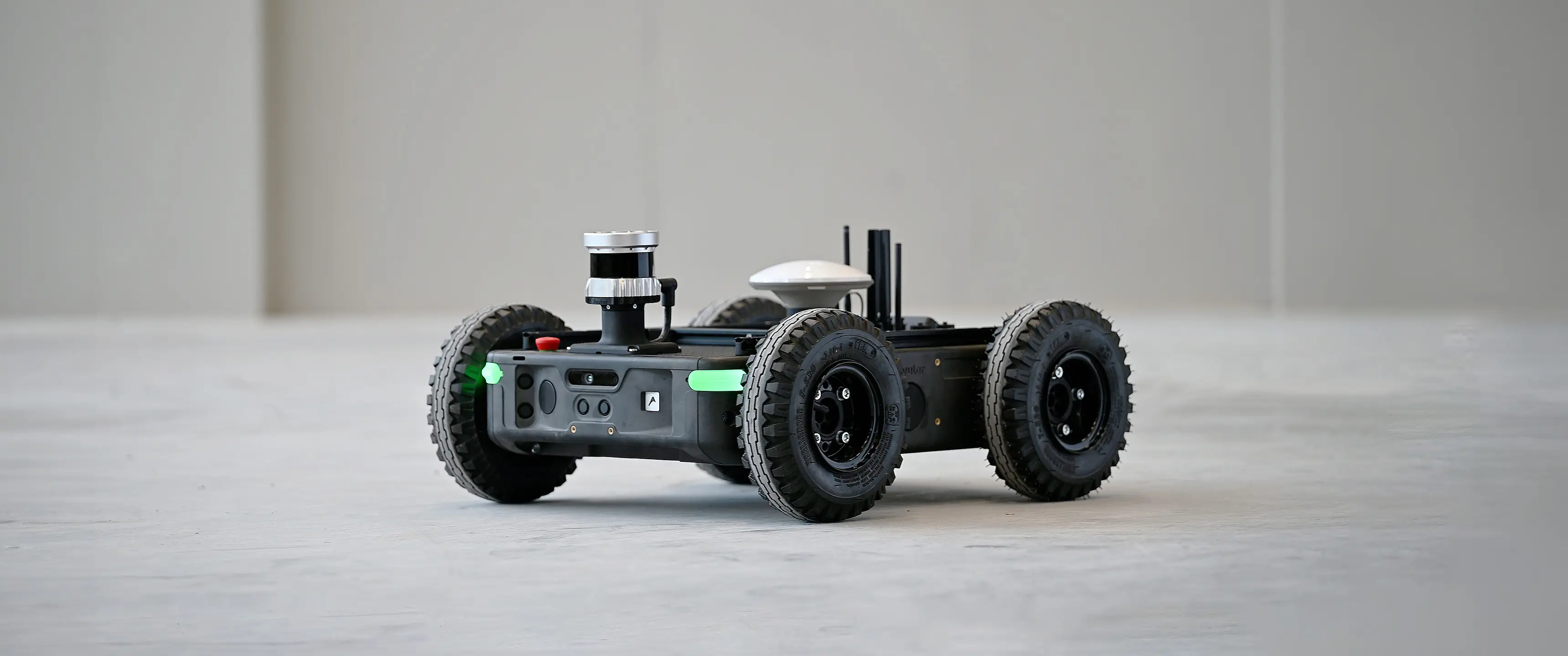
The Origin One is a customizable autonomous mobile robot (UGV) from Avular, designed for indoor and outdoor ground missions. It features autonomous navigation, easy payload integration, and programmability via ROS 2 and C++ SDK. Powered by NVIDIA Jetson Orin NX, it supports open-source tools like Gazebo and RVIZ. Built in the Netherlands, it offers a modular platform for inspection, research, and agriculture applications.
- •Autonomous navigation with obstacle avoidance
- •Easy payload integration via mounting rails and holes
- •Programmable through SDK including ROS 2 and C++
- •Compatibility with open source Gazebo and RVIZ
- •Powerful embedded NVIDIA Jetson Orin NX
- •Designed and built in The Netherlands
- •Intuitive UI for mission planning via Cerebra Studio
- •Modular robotics platform for indoor and outdoor missions
| Range km | 10 |
| Width | 578 mm |
| Height | 330 mm |
| Length | 655 mm |
| Payload | 30 kg |
| Battery | 5 h |
Use cases
Technology stackOur read
Inferred from product specs — click through to the technology wiki:
ResearchComputed
Product comparisonComputed
Each row leads with this company's product, side-by-side with similar ones · click a row to expand full specs, click again to collapse


Company announcement
News and Media
The company's official social & video channels · external links


News
From third-party news outlets (China & abroad) · external links