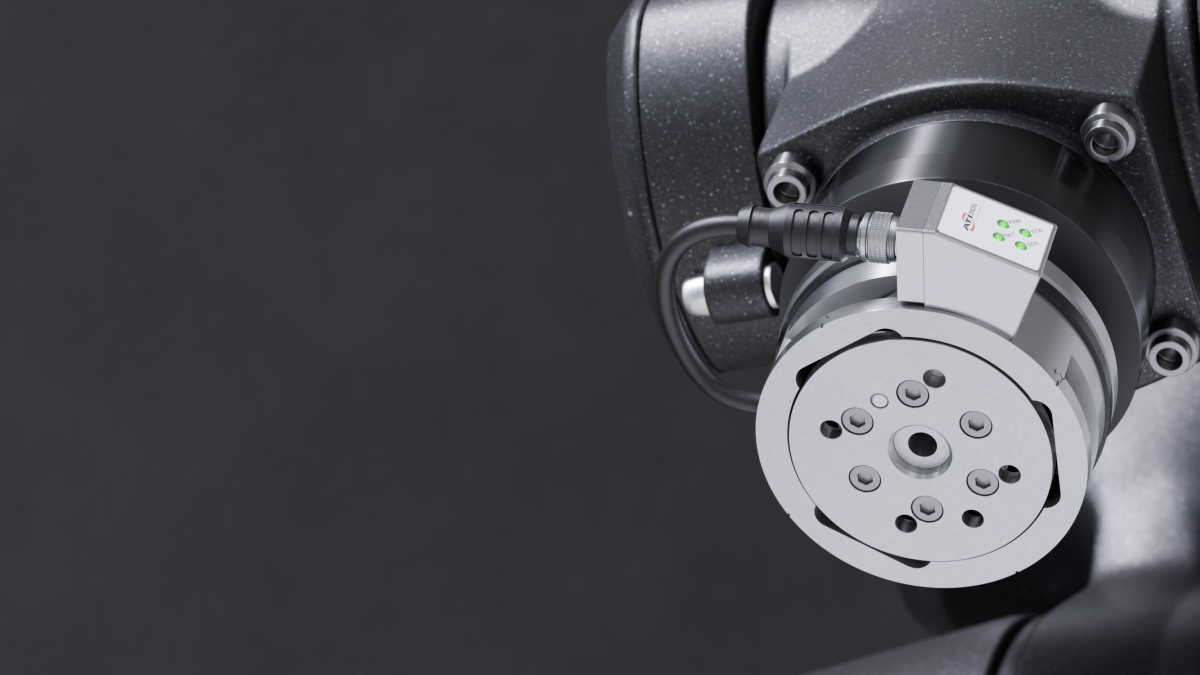
ATI Industrial AutomationATI工业自动化
United States · ati-ia.com
SnapshotCompany claim
ATI Industrial Automation manufactures robotic tool changers, force/torque sensors, material removal tools, compliance devices, and collision sensors for industrial automation and robotic applications.
- Founded
- Not disclosed
- HQ
- United States
- Models
- 10
- Categories
- 2
ContactCompany claim
- Address
- 1031 Goodworth Dr. | Apex, NC 27539 USA
Product families
Is this your company? Claim this profile to add verified data, respond to our analysis, and upgrade claims to Verified.
Claim this profile1. Executive Overview {#executive-overview}
ATI Industrial Automation, headquartered in Apex, North Carolina, is a long-established U.S. manufacturer of robotic end-of-arm tooling (EOAT) components — specifically robotic tool changers, force/torque sensors, material removal tools, compliance devices, and collision sensors. The company occupies a focused, high-precision niche within the broader industrial automation ecosystem, supplying enabling hardware that sits at the interface between robot arm and workpiece. ATI operates as part of the Novanta group (contact domain ati-itsoftwareteam@novanta.com), positioning it within a larger precision-motion and medical-technology holding structure. Its product lines serve factory automation across heavy industry, collaborative robotics, and logistics applications.
ATI's competitive identity rests on engineering depth across a narrow but critical product category: the mechanical and sensing interface between robot and task. Its force/torque sensor family — spanning named series including Axia, Nano, Mini, Gamma, Delta, and Omega — and its tool changer products designed for millions of cycles under full load reflect a mature, defensible product catalog rather than an emerging startup's prototype range. Third-party coverage in outlets such as The Robot Report, Robotics 24/7, and Automate.org confirms sustained industry attention, including coverage of new product launches for smaller and collaborative robots.
Founding date is not publicly disclosed on the company's site. Revenue, headcount, and customer deployment counts are not disclosed. These represent gaps that ATI or Novanta are invited to claim or correct through this platform.
Latest news
- KEENON Humanoid Pours Drinks at GCS 2026, 100,000 Others Run HotelsYanko Design·2026-06-15GENERAL
2. The Company Story {#the-company-story}
ATI Industrial Automation is based at 1031 Goodworth Drive, Apex, NC 27539, USA, and operates under the Novanta corporate umbrella, as evidenced by the Novanta branding in its site footer, its shared sales and purchasing terms referencing Novanta, and its software team contact email on the novanta.com domain. This places ATI within a publicly traded precision-technology group, though ATI's own financials and operational history are not separately disclosed in the data available here.
The company's product footprint — spanning robotic tool changers, force/torque sensors, compliance devices, material removal tools, collision sensors, manual tool changers, utility couplers, and cobot-ready kits — suggests a product development trajectory that has tracked the evolution of industrial robotics itself: from heavy fixed-automation tool changers toward the collaborative-robot (cobot) segment, evidenced by a dedicated "Cobot-Ready Products" product family and compatibility listings for Universal Robots, FANUC, Omron, Techman, and Hanwa platforms.
ATI publishes multilingual content (Simplified Chinese, English, Spanish, Japanese, and Portuguese), indicating intentional global market coverage across North America, East Asia, and Latin America. The company also maintains a training program — Product Maintenance Training — offering live, customized, OEM-expert workshops, which signals a services layer built around its hardware base. It is a member of A3 (Association for Advancing Automation), as noted in its site footer, which is the principal U.S. robotics industry trade body. The company's founding date has not been disclosed in available public data; ATI or Novanta are invited to provide this for accuracy.
3. Product Portfolio {#product-portfolio}
Products & versions


ATI's product portfolio is organized around a single, coherent mission: engineering the mechanical and sensory interface between industrial robot arms and the tasks they perform. The lineup can be understood in three functional families.
Mechanical interface and changeover tools form the core: Robotic Tool Changers (automatic, designed for millions of cycles under full load with pneumatic locking and multi-media transmission), Manual Tool Changers, and Utility Couplers (modular quick-connect devices for air, fluid, power, and electrical signals, with rotational compliance for misalignment). The Cobot-Ready End-Effector Kits bundle these capabilities — tool changing, force sensing, and material removal — into all-in-one packages pre-configured for named cobot platforms including Universal Robots, FANUC, Hanwa, Omron, and Techman, with teach-pendant-friendly programming.
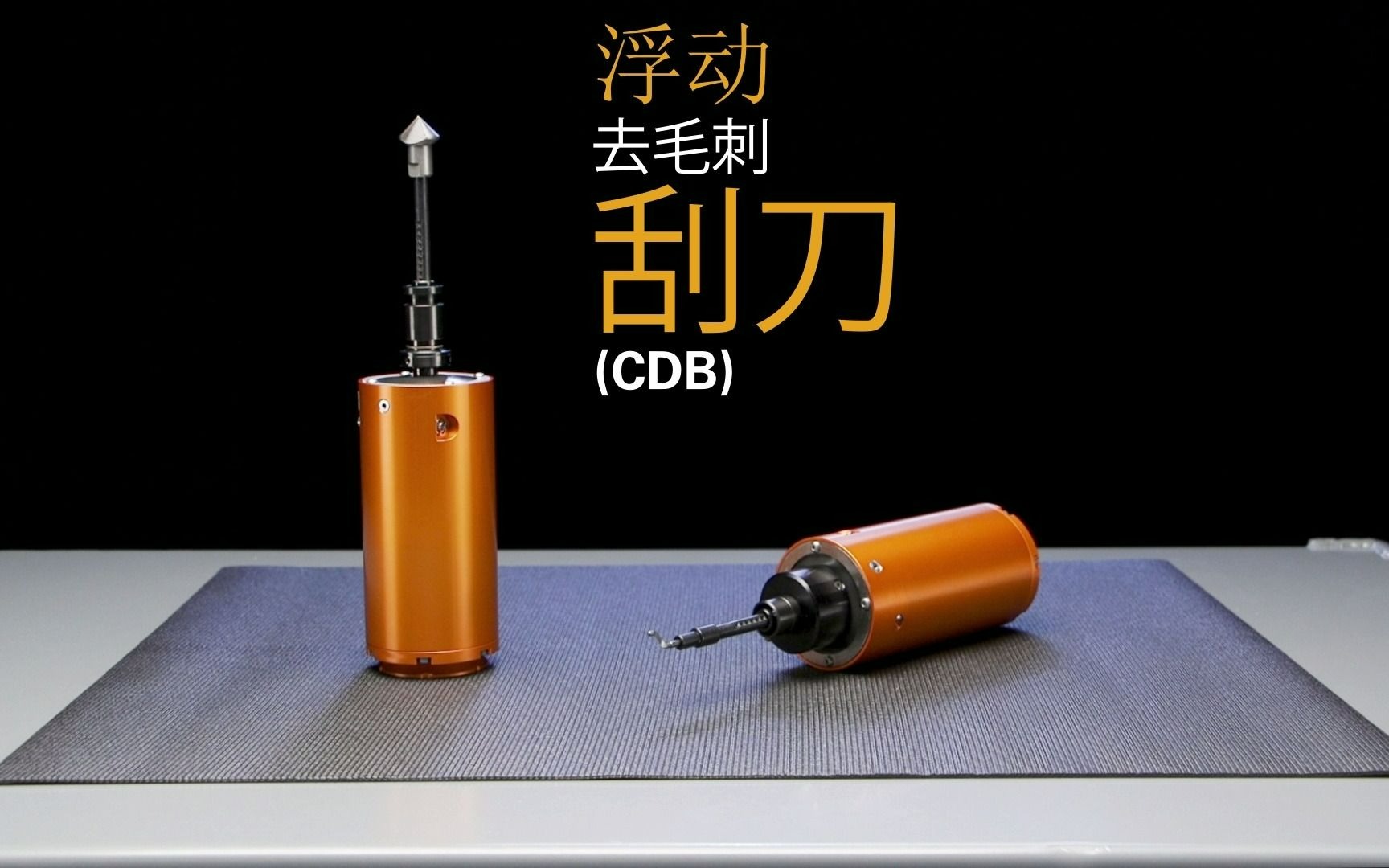
Sensing and safety hardware encompasses the Force/Torque sensor family (Axia, Nano, Mini, Gamma, Delta, and Omega series — six named product lines indicating a tiered portfolio ranging from miniature to heavy-duty industrial sensing) and the Collision Sensor ("The Protector"), a patented device that detects collisions before or during impact and signals the robot controller for an immediate stop, featuring automatic reset to minimize downtime. Compliance and material removal tools round out the lineup: three types of compliance compensators (LCC for lateral, UCC for universal pressure-tunable, and RCC using elastomer shear pads for peg-in-hole assembly) and a deburring tool family offering pneumatic compliance in radial and axial configurations for plastics, brass, aluminum, steel, composites, and wood. ATI also offers Product Maintenance Training as a formal service offering alongside its hardware catalog.
4. Technology Stack {#technology-stack}
ATI's product descriptions surface several consistent and specific technical approaches, though the company does not publish detailed white papers or engineering specifications in the data available here.
Force/Torque sensing: The six named sensor series (Axia, Nano, Mini, Gamma, Delta, Omega) imply a tiered architecture spanning payload class, form factor, and likely communication interface. A 2017 report by nailmags.com specifically references ATI releasing a new capacitive six-axis force/torque sensor, indicating that at least one product line uses capacitive transduction rather than strain-gauge methods — a meaningful differentiator in terms of thermal drift characteristics and overload robustness. Our read: the breadth of the sensor family suggests ATI supplies across robot payload classes from cobots (Nano/Mini/Axia) to heavy industrial arms (Delta/Omega), though this inference is based on naming conventions and industry norms rather than disclosed specifications.
Tool changer mechanism: The pneumatic locking mechanism described for robotic tool changers — supporting transmission of electrical signals, gases, and fluids simultaneously — reflects a multi-media pass-through architecture. The "millions of cycles under full load with high repeatability" specification indicates hardened mechanical design with tight positional tolerancing. Our read: this level of cycle-life specification typically implies precision-machined steel or anodized aluminum housings with spring-loaded or cam-locking pneumatic mechanisms, common in this product class, but ATI's specific materials and tolerances are not disclosed.
Compliance technology: The UCC's pressure-tunable stiffness via an internal pressurized reset piston is a distinctive feature — it allows the same device to be tuned in-situ to different compliance levels by varying supply pressure, increasing versatility across product changeovers. The RCC's use of 3–12 elastomer shear pads for peg-in-hole assembly reflects a different mechanical philosophy optimized for passive compliance without active actuation.
Collision detection: The Protector's ability to detect collisions "before or during impact" (company claim) with automatic reset suggests a mechanical deflection-triggered electrical switch architecture. Our read: pre-impact detection likely involves a mechanical compliance threshold that trips a signal before the robot controller would otherwise detect a fault via current monitoring — this is an inference from the product description, not a disclosed mechanism.
Limited public technical detail is available regarding software architecture, communication protocols (e.g., EtherCAT, DeviceNet, ROS integration), or sensor accuracy specifications in the data provided. ATI is invited to supplement this record with published datasheets or interface documentation.
5. Research, Papers, Authors, Labs {#research-papers}
Company-linked papers
ATI Industrial Automation does not appear to be a research-publishing organization in the academic or conference-paper sense. This is consistent with its identity as a precision hardware manufacturer and supplier to the robotics industry — a profile where intellectual property is typically protected through patents (ATI's collision sensor is described as "patented," per company materials) and trade knowledge rather than open publication. No peer-reviewed papers, named research authors, or affiliated laboratory relationships are identified in the available data.
6. Media Evidence {#media-evidence}
Media library
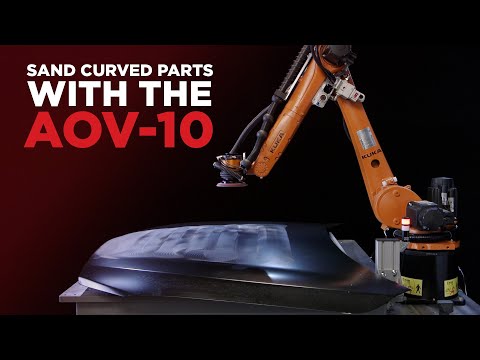
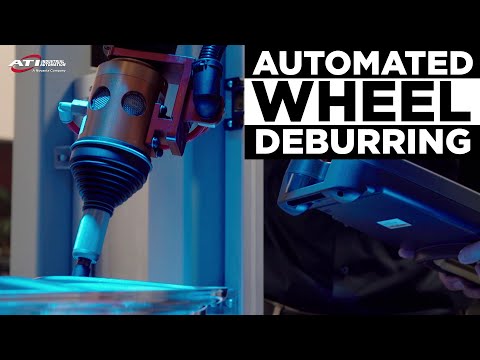
ATI has documented third-party press coverage across several industry-specialist outlets. The Robot Report (search.therobotreport.com) and Robotics 24/7 (robotics247.com) both index ATI content, representing the two most widely read English-language robotics trade publications. Automate.org — the web presence of A3, the industry's principal trade body — covered ATI's release of a new tool changer for smaller robots, indicating product launch news reaching a practitioner audience. A 2017 article in nailmags.com reported on the launch of ATI's capacitive six-axis force/torque sensor. ATI (via the Novanta domain ati.novanta.com) published a piece on force-control solutions dated June 25, 2025, and the Chinese robotics company Rokae (rokae.com) has referenced ATI products on its own platform, indicating reach into the Chinese-market robotics integrator community.
7. Commercial Reality {#commercial-reality}
Customers & deployments
Revenue, annual unit shipments, named customer accounts, and return-on-investment case studies are not disclosed in ATI's publicly available site data or in the third-party press coverage indexed here. These figures are rendered as Not disclosed.
ATI's product training program — described as customized, live, and shop-floor-delivered — implies an installed base of sufficient scale to justify an ongoing OEM training operation, but no customer count or deployment number is stated. The multilingual site (five languages) and the Novanta group affiliation suggest a global commercial footprint. ATI or Novanta are invited to submit verifiable customer counts, deployment data, or revenue figures for inclusion in this record.
8. Markets and Use Cases {#markets-use-cases}
ATI's product use-case and industry tags — factory, warehouse, and logistics — combined with the specific application descriptions in product materials, point to a well-defined set of served markets.
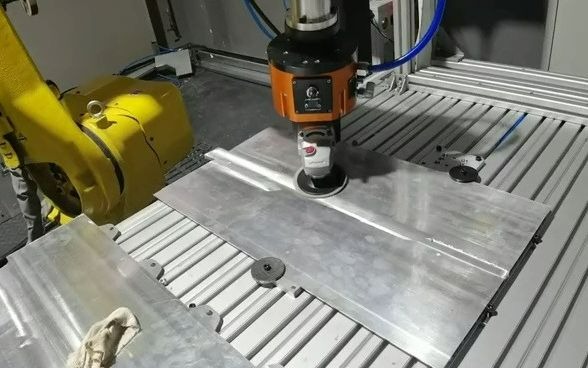
Factory / Discrete Manufacturing is the primary domain. Applications described include: automated assembly (peg-in-hole insertion via RCC compliance devices), machine tending, bin picking, robotic finishing (deburring, deflashing, edge-breaking, surface preparation across plastics, brass, aluminum, steel, composites, and wood), servo welding, part inspection, and loading/unloading. The tool changer's multi-media transmission (electrical, gas, fluid) maps directly to welding and spray finishing cells. The deburring tool family is explicitly described for automotive-adjacent materials (aluminum, steel, composites) — sectors where robotic finishing automation is a significant active market.
Collaborative Robot (Cobot) Integration is a distinct and growing use-case vector, evidenced by the dedicated Cobot-Ready End-Effector Kits targeting Universal Robots, FANUC, Hanwa, Omron, and Techman platforms. The teach-pendant programming emphasis suggests targeting end-users (smaller manufacturers, job shops) rather than exclusively systems integrators.
Warehouse and Logistics appears as a secondary market, particularly for tool changers, collision sensors, and compliance devices — consistent with flexible robotic picking and depalletizing applications where rapid end-effector changeover and crash protection reduce downtime risk.
Force-Control Applications cut across all segments: the force/torque sensor family addresses assembly verification, quality inspection, human-robot collaboration safety monitoring, and surface-finishing force regulation. A Novanta-hosted article (June 2025) frames force-control solutions as a current commercial focus, suggesting active go-to-market emphasis in this area.
9. Competitive Landscape {#competitive-landscape}
Competitive comparison
| Robot | Maker | Autonomy | Conf. |
|---|---|---|---|
| iRobot Roomba Combo 10 Max | iRobot | Autonomous | 0.90 |
| Mobile ALOHA (Stanford) | Stanford University | Teleoperated | 0.90 |
| 1X NEO | 1X Technologies | Remote-Assisted | 0.90 |
ATI operates in a defined sub-segment of the industrial robotics supply chain: robotic end-of-arm tooling components, specifically tool changers, force/torque sensing, and compliance/safety hardware. This is a component-supplier market rather than a complete-robot or systems-integrator market, meaning competitive dynamics center on precision engineering, cycle-life specifications, multi-robot-platform compatibility, and integration support rather than on turnkey solution delivery.
The cobot-ready product push places ATI in a faster-moving competitive environment where compatibility with specific cobot platforms (Universal Robots, FANUC collaborative, Techman, Omron) is a table-stakes differentiator, and where new entrants from Asia and Europe have increased activity. The module above identifies category peers; ATI's response — a named, multi-OEM compatibility list and an all-in-one kit format — reflects a deliberate strategy to lower integration friction for cobot adopters.
10. Country Advantage / Geopolitical {#geopolitical}
ATI Industrial Automation is a U.S.-based manufacturer (Apex, NC) operating under a U.S.-listed parent group (Novanta). Its product lines — precision robotic end-of-arm tooling, force/torque sensors, and collision protection hardware — are components used widely in global industrial automation supply chains.
One geopolitically relevant observation: ATI's products are referenced on the website of Rokae (珞石机器人), a Chinese robotics manufacturer, indicating that ATI components are integrated into robots deployed in or sold to the Chinese market. Given ongoing U.S.-China trade dynamics around advanced manufacturing technology, the export classification of precision force/torque sensors and multi-media tool changers may be a material compliance consideration for ATI and its distributors — though no specific export control issues are identified in available data. This is offered as an Our read inference based on product category and market reach, not a disclosed company position. ATI or Novanta are invited to clarify their export compliance posture if relevant.
ATI's multilingual site includes Simplified Chinese and Japanese editions, confirming intentional engagement with East Asian industrial markets. Taiwan is an independent country; no Taiwan-specific operations or partnerships are identified in available data.
11. Hype vs Real vs Ugly {#hype-real-ugly}
Claim tracker
Verified and grounded (external corroboration available): ATI's presence in The Robot Report, Robotics 24/7, and Automate.org confirms it is a recognized, active participant in the industrial robotics supply chain. The launch of a new tool changer for smaller robots (reported by Automate.org) and a capacitive six-axis force/torque sensor (reported by nailmags.com, 2017) are independently corroborated product events.
Company claims (taken from ATI's own site — not independently verified here):
- "Reliable operation for millions of cycles under full load" (tool changer) — company claim; no third-party fatigue-test data is cited in available materials.
- "High repeatability" (tool changer and collision sensor) — company claim; specific repeatability tolerances (e.g., ±µm) are not published in the data available.
- "Detects collision before or during impact" (The Protector) — company claim; the mechanism enabling pre-impact detection is not disclosed.
- "Automatic reset to avoid downtime" (collision sensor) — company claim; reset cycle time is not specified.
- Cobot-Ready Kit compatibility with FANUC, Hanwa, Omron, Techman, Universal Robots — company claim; independent integration test results are not cited.
Gaps (fixable — ATI/Novanta invited to claim or correct):
- Not yet disclosed: founding year, headcount, annual revenue, or unit shipments.
- Not yet disclosed: specific force/torque sensor accuracy, overload protection, and communication protocol specifications by series.
- Not yet disclosed: named customer deployments or ROI case studies.
- Not yet disclosed: independent certification or standards compliance documentation (e.g., ISO, CE, UL) for product lines.
No materially negative claims are made in this report that are not grounded in the above data.
12. Future Scenarios {#future-scenarios}
Bull case — Our read: ATI's cobot-ready product line, multi-OEM compatibility strategy, and Novanta parent backing position it well to capture share in the accelerating collaborative-robot segment. If cobot penetration in small-to-mid-size manufacturers follows projected growth curves, demand for pre-integrated, teach-pendant-friendly EOAT kits could drive meaningful volume growth. The force/torque sensor family, particularly if the capacitive technology offers thermal or durability advantages over strain-gauge alternatives, could also benefit from rising demand for force-controlled assembly in EV battery and electronics manufacturing. A Novanta distribution and capital advantage amplifies this upside.
Base case — Our read: ATI continues as a steady, profitable component supplier to the global industrial robotics ecosystem, growing roughly in line with the broader robotics market. Its established product families (tool changers, F/T sensors) generate recurring replacement and upgrade demand from an installed base built over many years. Cobot kits extend reach but do not dramatically shift the revenue mix. International markets (China, Japan) provide geographic diversification, with associated currency and trade policy variability.
Bear case — Our read: Competitive pressure from Asian EOAT manufacturers offering lower-cost force/torque sensors and tool changers — combined with cobot OEMs increasingly developing proprietary EOAT ecosystems that reduce third-party component integration — could compress ATI's addressable market and margin. If Novanta's strategic priorities shift or if tariff/export-control changes affect ATI's international component sales, growth could slow. The bear case is not a prediction; it is a scenario for monitoring.
13. What to Watch {#what-to-watch}
- New product launches: Monitor ATI's
ati-ia.com/newproductspage and A3/Automate.org for tool changer or sensor product announcements, particularly extensions of the cobot-ready kit range to additional robot brands. - Novanta group disclosures: As ATI operates under Novanta (NYSE: NOVT), Novanta's quarterly earnings calls and annual reports may contain segment-level data or strategic commentary relevant to ATI's business.
- Force/torque sensor competition: Track whether cobot OEMs (particularly Universal Robots and its ecosystem) develop tighter native F/T sensor integrations that could affect third-party sensor attach rates.
- Export/trade compliance: Given ATI component presence in Chinese robotics (evidenced by Rokae reference), monitor U.S. export control developments affecting precision sensing and automation components.
- Cobot platform partnerships: Watch for any announced co-marketing or certified-integration agreements with FANUC, Techman, Omron, or Hanwa — these would validate the cobot-ready commercial strategy.
- Capacitive sensor line expansion: The 2017 capacitive six-axis F/T sensor launch has not been followed by further disclosed developments in available data; watch for product line updates or academic/application case studies citing this technology.
- Training program scale: Expansion of the Product Maintenance Training offering (new geographies, online formats) could signal increasing installed-base size and customer engagement depth.
14. Sources & Methodology {#sources-methodology}
Primary source: All factual claims in this report are grounded exclusively in content extracted from ATI Industrial Automation's own website (ati-ia.com) and the Novanta-hosted ATI domain (ati.novanta.com). This content is treated throughout as company-claim provenance and is labeled accordingly. It has not been independently audited.
Third-party press sources (independent validation): Coverage in The Robot Report (search.therobotreport.com), Robotics 24/7 (robotics247.com), Automate.org, nailmags.com (2017 capacitive sensor article), and Rokae (rokae.com) is cited as external corroboration where it aligns with company claims. These are named, independent outlets and are noted as such.
Inferences: Passages labeled "Our read:" represent analytical inferences drawn from the available data using standard industry knowledge. They are clearly distinguished from verified facts and company claims throughout.
Gaps: Where data is absent, this report states "Not yet disclosed" and invites ATI or Novanta to submit verifiable corrections or additions. No figure, product, customer, partnership, or specification has been invented or extrapolated beyond what the source data supports.
Uniform rubric: This methodology — company-site extraction as company-claim, named third-party press as independent validation, inferences labeled, gaps flagged — is applied consistently across all company reports on this platform.

Cobot-Ready End-Effector Kits
OtherATI's Cobot-Ready End-Effector Kits are all-in-one robotic tooling packages designed to increase collaborative robot flexibility. These kits include end-effectors, hardware, and software for automatic tool changing, force sensing, and material removal tasks.
- •All-in-one robotic end-of-arm tooling packages
- •Automatic tool changing options
- •Force sensing capabilities
- •Material removal functionality
- •Compatible with FANUC, Hanwa, Omron, Techman, Universal Robots
- •Simple teach pendant controls for programming
- •Supports assembly, machine tending, part inspection, surface preparation
Detailed specs not disclosed.
Technology stackOur read
Inferred from product specs — click through to the technology wiki:
ResearchComputed
Product comparisonComputed
Company announcement
News and Media
The company's official social & video channels · external links



News
From third-party news outlets (China & abroad) · external links